With Marvel’s latest Infinity event wrapping up I started considering what makes a good comic event. Since I started reading comics seven years ago I’ve lived through more than my share of comic events; some of them good, and some of them not so good. I have found that all events of quality seem to share certain characteristics that help them succeed while others fail. A quality, well written plot, characters you care about, consistency, and events that actually matter, all aid in making a great comic event.
Comics can easily be broken up into two parts: art and story. While these two often go hand in hand, event comics are most often driven by story. It’s extremely difficult to carry a story with just art (though not impossible). There have been great comic issues that are more about the art then they are the story, but they tend to be one or two issues at most.
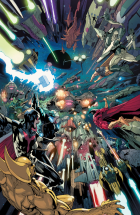
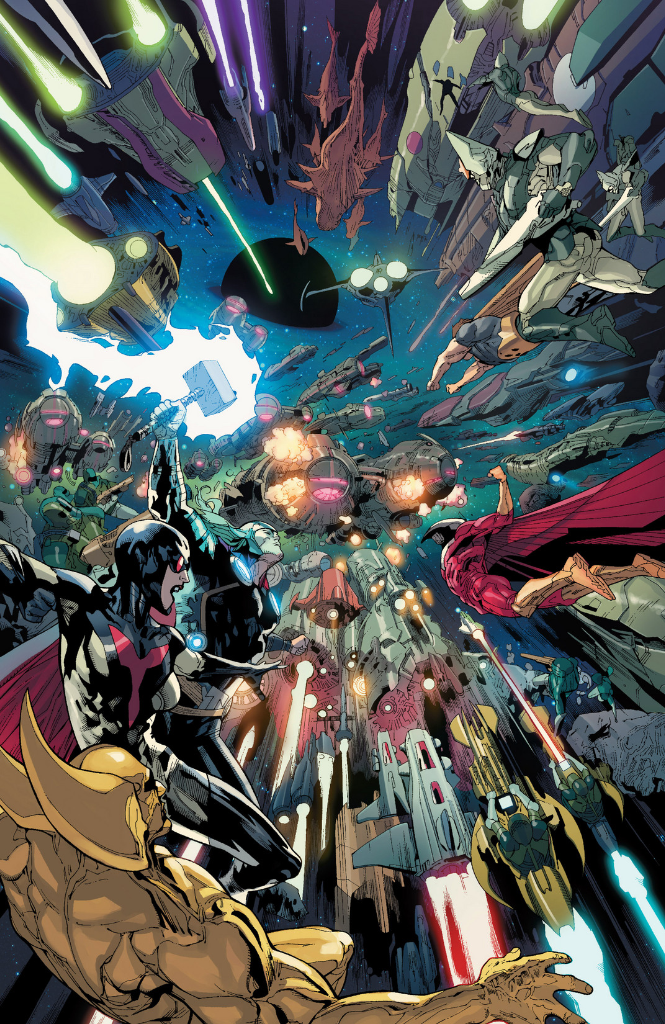
Talk about epic.
Infinity is a great example of how the story, rather than the art, carries the event. Since all three books involved were written by Johnathan Hickman, there is a universe-spanning story with all kinds of interwoven parts that make for a truly engrossing story. Hickman creates entire universes within the series he writes and connects them in surprising ways. This is one of the reasons I love reading his work. It takes a long time, but the payoff at the end is well worth it.
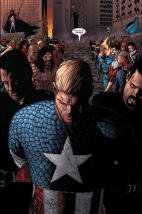
Seven issues wrapped up in seven pages…Seriously!?
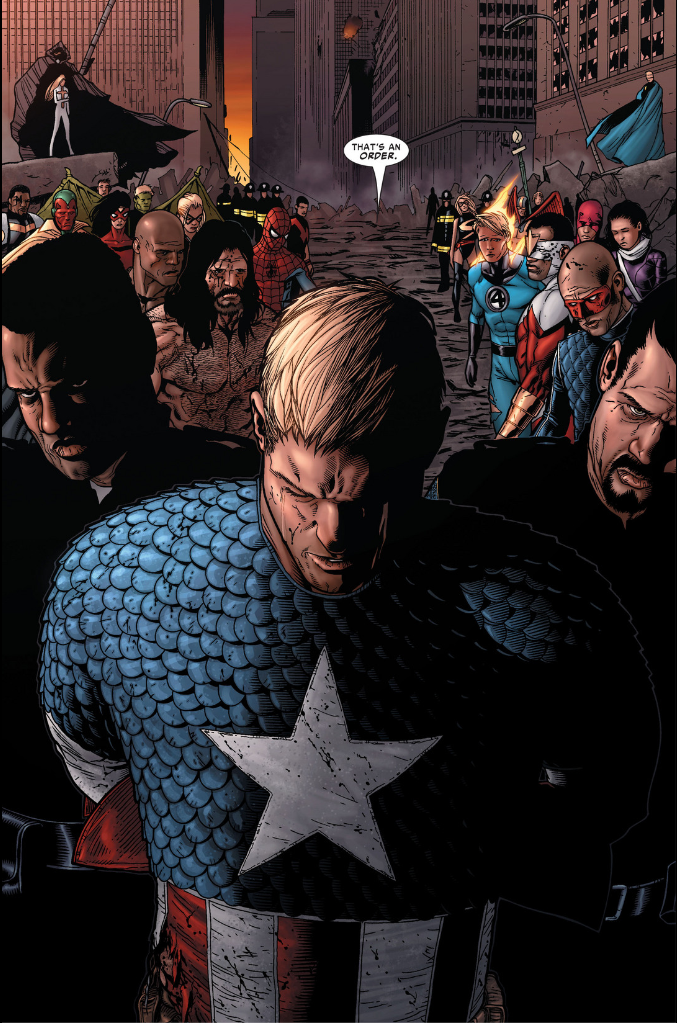
I’ve also been pleased that with recent events, especially at Marvel, there has been a concentrated effort to avoid selling the ending short. Nothing is worse than a writer creating a masterful storyline, and then trying to wrap up the epic story in two pages. For the first couple years I read comics, Marvel was particularly bad at this, with the most egregious examples being Civil War and World War Hulk. Both were pretty solid stories, but as I read the last issue I kept expecting the story to start wrapping up. Unfortunately the end didn’t come until I was almost done with the book. Instead of a real ending, Marvel then wrote a small mini-series to end the event, which seemed far too drawn out. For the life of me, I can’t figure out why they didn’t just put that material into the event itself. It would have flowed much better.
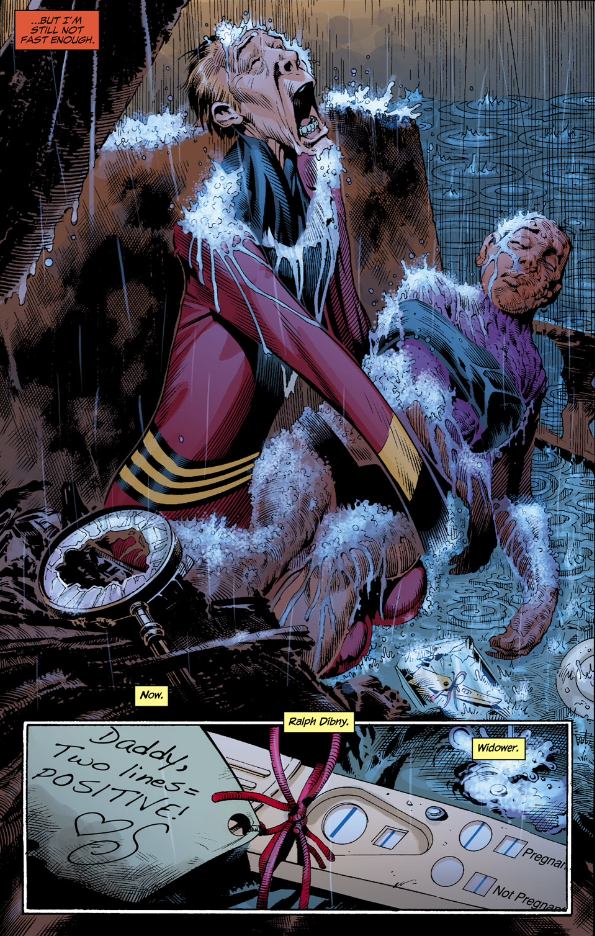
I can’t deny that I love epic tales like Infinity, but I’m also very open to more intimate stories (get your mind out of the gutter). I can be drawn into a story that is almost completely character driven as opposed to action driven. If a writer really knows the characters they are developing, then they can make you feel for the character and take him to emotional depths that are unexpectedly satisfying for the reader. Identity Crisis does just that by taking many of the second tier Justice League heroes and throwing them into some horrible situations to see what happens. I originally read this story arch about six months after getting into comics and it was very impressed by how much I found myself caring about characters, about whom I knew nothing before opening the book. This kind of character driven writing can be just as enjoyable as epic events and is often far more compelling.
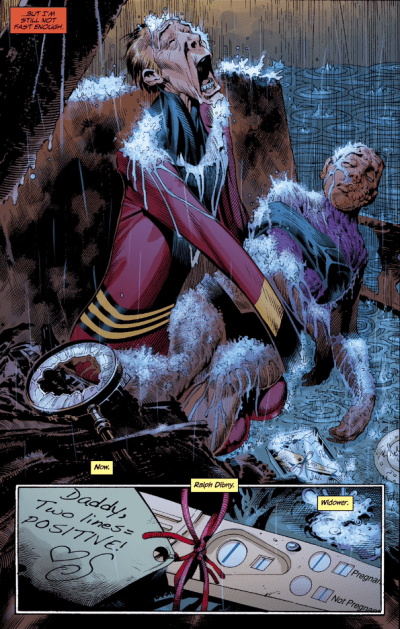
First time I read Identity Crisis I had no idea who these characters were, but I really felt for them anyways.
Many times I’ve heard fans complain that they just don’t care about specific comic events and that frequently lack of caring is due to the characters. I know that I have skipped an event simply because the characters don’t interest me. It’s not so much because they’re characters I don’t know, but often it’s because they’re portrayed in a way I don’t care for. Maybe things seem out of character, or they’re just doing things I don’t find interesting so I’ve stopped reading. On the flip side of this, I’ve also read stories that followed characters that I didn’t know existed. A great example of this is DC’s 52 (not to be confused with The New 52). 52 was a year without Superman, Batman, and Wonder Woman following the events of Infinite Crisis, and instead it followed characters such as Black Adam, Booster Gold, The Question and Batwoman. These were all minor DC characters but I became completely engrossed in their story and wanted more.
Sure a great plot can get the reader interested, but if the characters around which this plot revolves doesn’t keep him interested, then the whole thing is pointless. The one thing I can’t stand is when minor characters are included in stories in ways that don’t matter to the plot line. Frequently this is done via tie-in stories. Sometimes these can be great, like Civil War: Wolverine, but more often than not they are just an attempt to maximize the sales boost that typically accompanies events. I have no problem including these characters in the story. In fact I often like it when they’re done right. It gives me a chance to get to know them and expand my horizons. All I ask is that the author keep them interesting and relevant to the plot line.
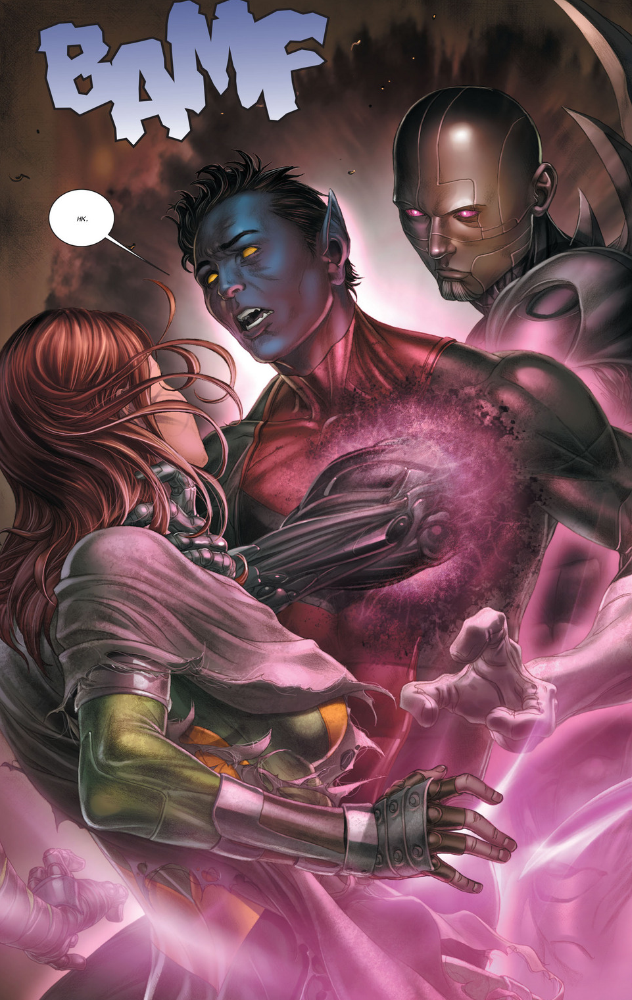
When it comes to event comics, the absolutely number one issues I’ve heard people complain about is that “it doesn’t matter.” So often it feels like an event will wrap up with some big, universe changing occurrence, only to have that undone by the next event. Or worse, the whole event that appeared to have an impact turns out to just be a lead in to yet another event like DC’s Trinity War. In the world of comic books, things are ever changing. Characters die and are subsequently brought back all the time. This is the world of modern comic and the status quo isn’t going to change any time soon, so fans just need to accept it and move on. Having said all of that, if writers are going to do something like kill off or bring back a character, it needs to be done in a way that means something or serves a purpose. In a recent tie-in to Avengers Vs. X-Men, they brought back and then killed off Captain Marvel over the course of a couple issues for no other reason than they could. This served absolutely no purpose and only really served to diminish the character to the level of expendable. I want to see writers do interesting things, to take chances and to further characters, and I fully acknowledge that there are times that in order to accomplish this characters must be sacrificed or resurrected, but do it should be done for a reason, not purely for shock value. The sacrifice of Nightcrawler during Second Coming is a positive example of how the death of a character can used to great effect. Nightcrawler died keeping Hope away from the Sentinal Nimrod. This served to impress upon the reader how important Hope was the X-Men and also managed to throw the X-Men into further chaos as they tried to cope with the loss of a lynchpin of the team.
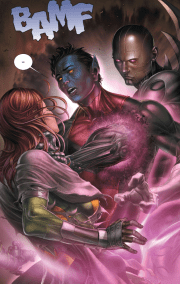
I got a little choked up.
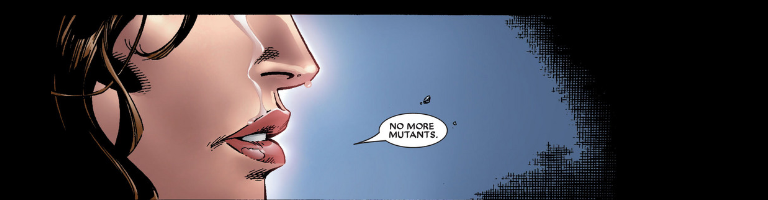
Making things matter doesn’t just apply to individual characters, but also to the universe as a whole. I don’t expect every event to completely rewrite the universe, but I like it when I read something that doesn’t make me feel like my time was wasted. In my opinion, House of M does this best. With three simple words, “No more mutants,” Scarlet Witch undoes everything that has happened in House of M and at the same time completely alters the Marvel landscape. Only recently, at the end of Avengers Vs. X-Men, was a solution found to Wanda’s actions. Not only was this a great and simple plot twist (i.e. good writing) but its consequences lasted far longer than most readers would have expected. It took a little over seven years for things to finally come full circle, which is an eternity in modern comics. This is the kind of epic event that makes comics soap operas for geeks.

One panel changed everything.
One of biggest crimes that a comic event can commit is to lack consistency. A comic event is supposed to be one unified story, so why is it that there are frequently eight different writers and then another eight different artists? Ok, so this might be a little exaggeration, mostly, but my point is that a solid team must be on board for these events. This may unfortunately mean that the ideal artist isn’t available because they can’t do a monthly book for six months. It would be preferable that they do some of the smaller series, maybe a tie-in or a one shot. I would much rather see them this happen than to have a third of the event’s pages drawn by different artists all trying to copy someone else’s style. This kind of inconsistency really becomes jarring and pulls me out of the story. The biggest reason I read comics is the fantastic mix of art and story and when those two don’t mesh or there are blaring inconsistencies in either it’s disappointing. Writers, please note I said both. If writers aren’t meeting their deadlines, then artists can’t meet theirs and then comics have to use fill in artists. Even the best artists still require time to perform their part.
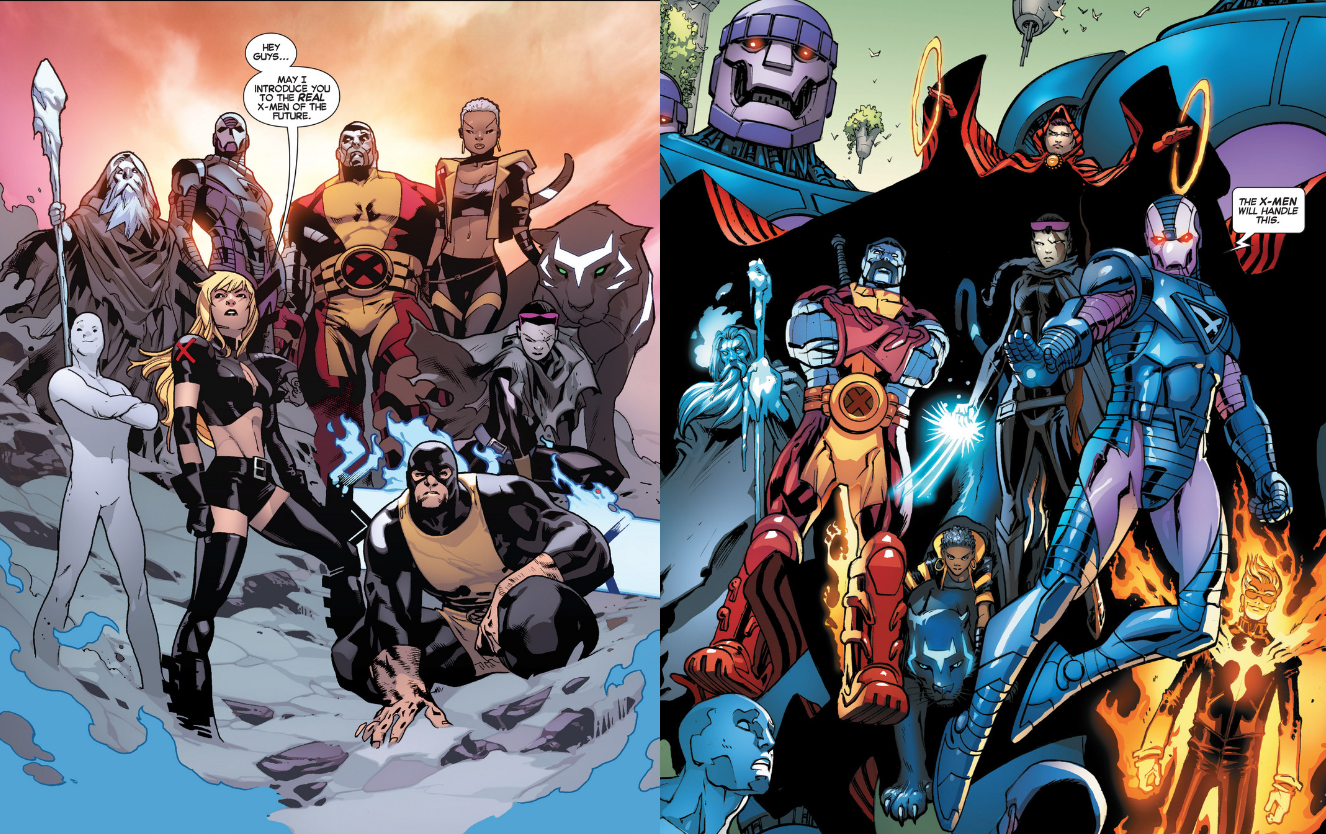
There are, of course, times when having a mix of writers and artists is perfectly fine, but those are the exceptions rather than the rule. Typically those times are when an event doesn’t not have an overarching book, like Marvel’s recent Battle of the Atom did. Battle of the Atom had two issues acting as book ends, but otherwise the action took place within All-New X-Men, Wolverine and the X-Men, Uncanny X-Men, and X-men. This event was written by three different writers (Bendis, Wood, and Aaron) with art by four different artists (Immonen, Lopez, Bachalo, Camuncoli) but it worked because they maintained a consistent level of quality. This quality was also aided by the uniform vision that was guided by Brian Michael Bendis who wrote All-New X-Men, Uncanny X-Men, as well as the event bookend issues.
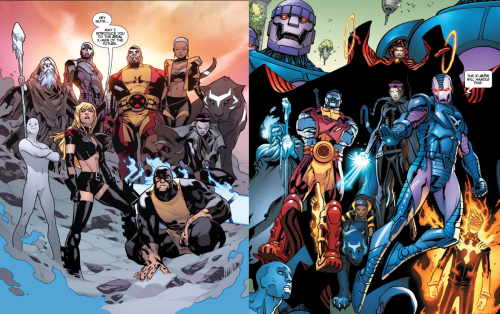
Two different takes on the same characters, but both look great.
With consumers still trying to watch what they spend it’s difficult for these event comics. Those that have managed to balance storytelling, likable characters, consistency and events that matter are the ones we remember, while those that couldn’t get forgotten. It’s a good thing I enjoy most event comics because the reality is that they aren’t going away any time soon. Publishers see them not only as a way to tell a great story but also as a method of driving up sales. Although I would like to think that storytelling is the only thing driving publishers, I’m more realistic than that. I promise that I’ll keep buying them as long as they keep writing good ones. That way everyone wins.


 Therefore I Geek