Category Archives: Andrew Hales

Review: Attack of the Killer Tomatoes!

Sometimes B movies try to take themselves way too seriously. Directors think that the movie is the big break they’re looking for and instead of having fun with it, they end up looking silly. What makes Attack of the Killer Tomatoes! so fantastic is that it is self aware and often exploits its own grade. Just one look at the opening credits reveals this. In between actual opening credit shots are furniture ads and a “space available” sign. Attack of the Killer Tomatoes! is a great example of what the B movie genre can really be. There is no exploitation, no sex, and no excessive violence, just an amusing story full of quirky humor and the generally bizarre.

While much of the movie is nonsense, the plot sticks around for at least forty minutes (far longer than I remember it doing), and maintains some plot threads even after the rest has degraded. The movie follows two separate stories, that of White House Press Secretary Jim Richardson as well as Federal Intelligence Agency agent Mason Dixon and his covert team. Like any good Press Secretary, Richardson’s job is to try and spin the tomato attacks in such as way as to save face for the President. Mason’s job is to investigate the source of the tomato attacks and try to stop them if possible. While hot on the trail, all of Mason Dixon’s team is killed except Lt. Wilbur Finletter, a saber wielding man in a jumpsuit and a deployed parachute (yes, he wears the parachute for the entire movie). In the end, it turns out that Jim Richardson is the mastermind behind the diabolical tomato plot and that he is essentially a “tomato whisperer.”  He hopes that when he stops the attack the surviving people will make him their leader. Richardson meets a disagreeable demise at the business end of the overeager Lt. Finletter’s saber. Naturally this unpleasantness happens just as Richardson was about to tell his secret for controlling the tomatoes.  Eventually the tomatoes are stopped by Mason Dixon’s quick thinking, and the aid of an awful pop song called “Puberty Love”. It had been many years since I’d seen the movie and my memory didn’t serve justice to this bizarre and twisted plot.

Press Secretary Jim Richardson’s journey is one of the more bizarre, yet amusing portions of this movie. His quest begins with a conversation with the President (who is endlessly signing his name on pieces of paper with different pens). Richardson then travels to San Francisco, which is dubbed New York, to recruit the help of a Madison Avenue ad executive.  The exec bursts into a musical number halfway through their interview. The ad campaign they come up with is so ridiculous that it would be unbelievable, except that I’ve seen some really bad commercials in my time.

The best part of Attack of the Killer Tomatoes! is all the little details. Scrolling ads appear on the screen from time to time.  Near the end, the ad type is interrupted by a caps locked plea for help as the typist is apparently eaten by a tomato.  I had to rewind the movie to watch the actual scene, since I was paying attention to the ad the first time.

At one point in the movie there is a Congressional Committee meeting in which all of the congressmen are named after former US presidents such as Polk and Fillmore.  For screen writing this terrible (and it really is) the puns and innuendos are amazingly clever. My absolutely favorite scene involves a briefing in a room that is far too small for the number of people who are in it. People are forced to crawl over each other and the table in order to get to their seats or to get up in front of the group to speak. There is also a Japanese scientist who is dubbed very badly, very intentionally.

Aside from the main plot, there are some other great moments throughout the movie. There is a very convincing helicopter crash in the opening scenes of the movie that I love (Turns out it was actually a real crash, so that explains why it’s so convincing.). The oversized tomatoes actually look pretty good. They are smooth and shiny just like real tomatoes, just much larger. Also, I love the little grumbling sounds that the tomatoes make as they go on their killing spree.  

A surprisingly realistic tomato… except for its size, of course.

Of course Mason Dixon has his obligatory love interest, in the form of reporter Lois Fairchild. Lois’ contributions to the movie are limited, though she does have a couple of amusing moments. In her introductory scene, she says hello to a passerby named Clark with a red cape sticking out from under his coat; and later the movie wraps with a warped version of a stereotypical love scene.

Once the plot devolves, the movie becomes a little difficult to follow. May of the scenes seem to have little relation to the ones that came before and even less to the ones that come after. The movie eventually breaks down into a random group of weirdos stomping on tomatoes in the parking lot of San Diego Stadium.

This is not an uncommon problem for B movies. They often start with a great premise and are able to maintain in for forty five minutes or so, but they then need to fill another 30-45 minutes with scenes that often feel made up on the spot and are not at all in line with the rest of the movie. Attack of the Killer Tomatoes! ranks as one of my top favorite B movies of all times. Not only was it a good movie, but it has spawned several sequels, including one with a very young George Clooney (a review for another day), and a 90’s cartoon series. A definite watch for any fan of B movies. 4 Death Stars.
Leave a comment

Filed under Andrew Hales, Movie Reviews, Movies

New 52 in Review: Week 1

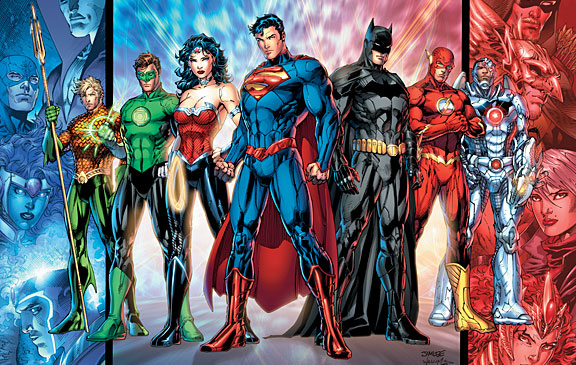
justiceleague

Welcome to Week 1 of the New 52 in Review.  I’d like to thank DC for making my life a bit easier this week by only releasing one book. I’m amazed at their foresight, to know that I’d be writing this post two years later.  In these past two years Justice League is still going strong.  Initially set five years prior to the current day (that would make it 2006), this incarnation of Justice League started off by focusing on the point when the League was first founded and none of the heroes knew each other.  Aside from the obvious costume changes that accompanied the reboot, DC made a change in the roster as well by adding Cyborg as a founding member of the Justice League.

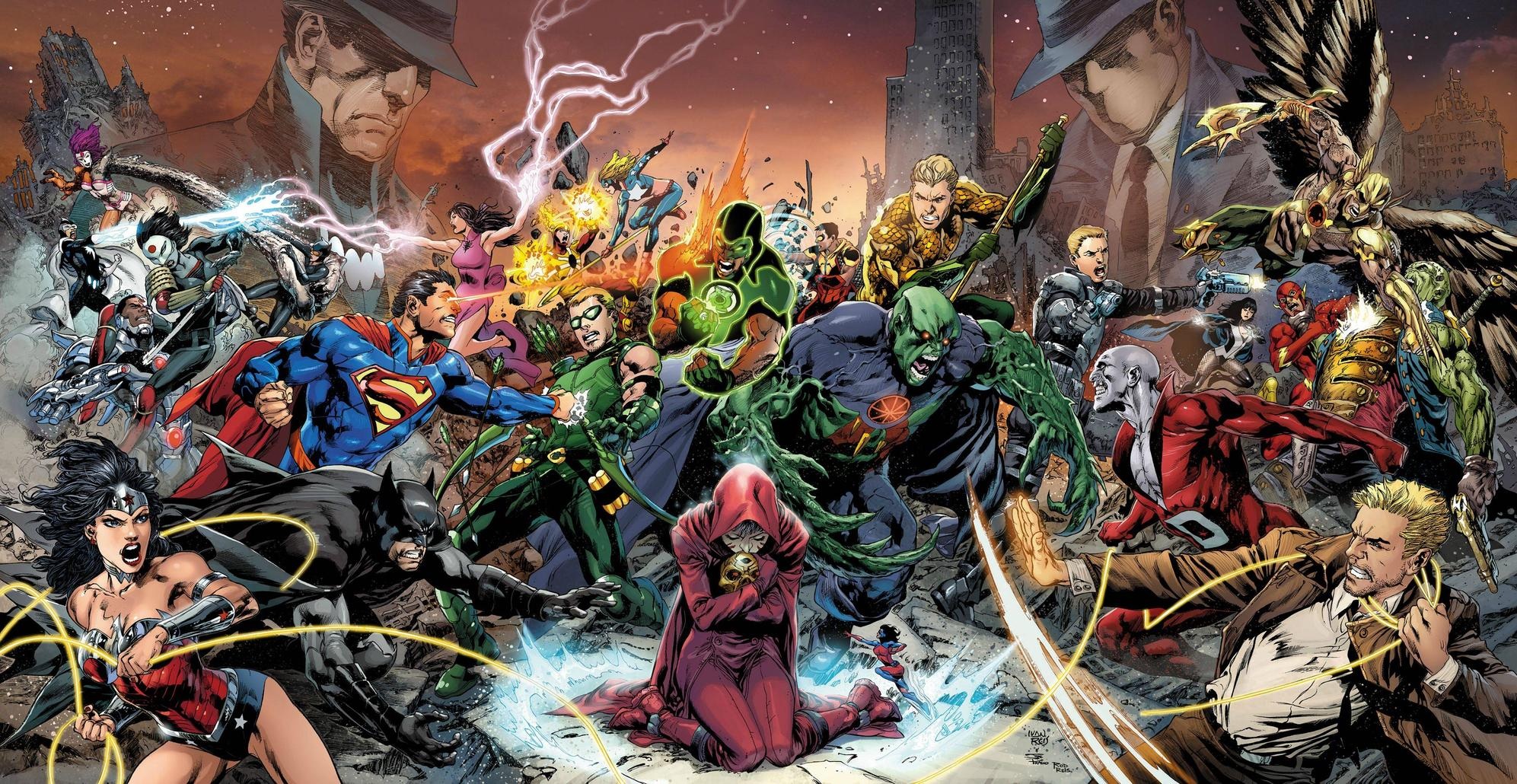
After focusing on the origin of the League in the first arc and jumping ahead to current day for the second arc, the third storyline saw crossover with Aquaman called Throne of Atlantis.  This story was reasonably well received, although generally considered a remake of an older story line. Currently Justice League is involved with DC’s first event comic since the start of the New 52, Trinity War.

There is way too much going on here.

There is way too much going on here.

Under the skillful guidance of Geoff Johns, Justice League has been a strong and consistent book. With many books suffering from editorial mandates and interference, Justice League has managed to maintain a considerably high level of quality. Art by Jim Lee (#1-12) and Ivan Reis (#13-current) has been solid.  Of all the “old school” artists involved with the New 52, Jim Lee appears to have been the most successful, and his performance on Justice League is definitely a contributing factor to its success.

Leave a comment

Filed under Andrew Hales, Comic Reviews, Comics

About the Various Types of Comic Book Stores

Throughout my travels, I have had the chance to visit comic shops in many different places. I have come to realize that while every store has its good and bad qualities, they tend to fall into five categories: the back issue store, the graphic novel store, the hangout store, the mega store, and the scary store.

The Back Issue Store

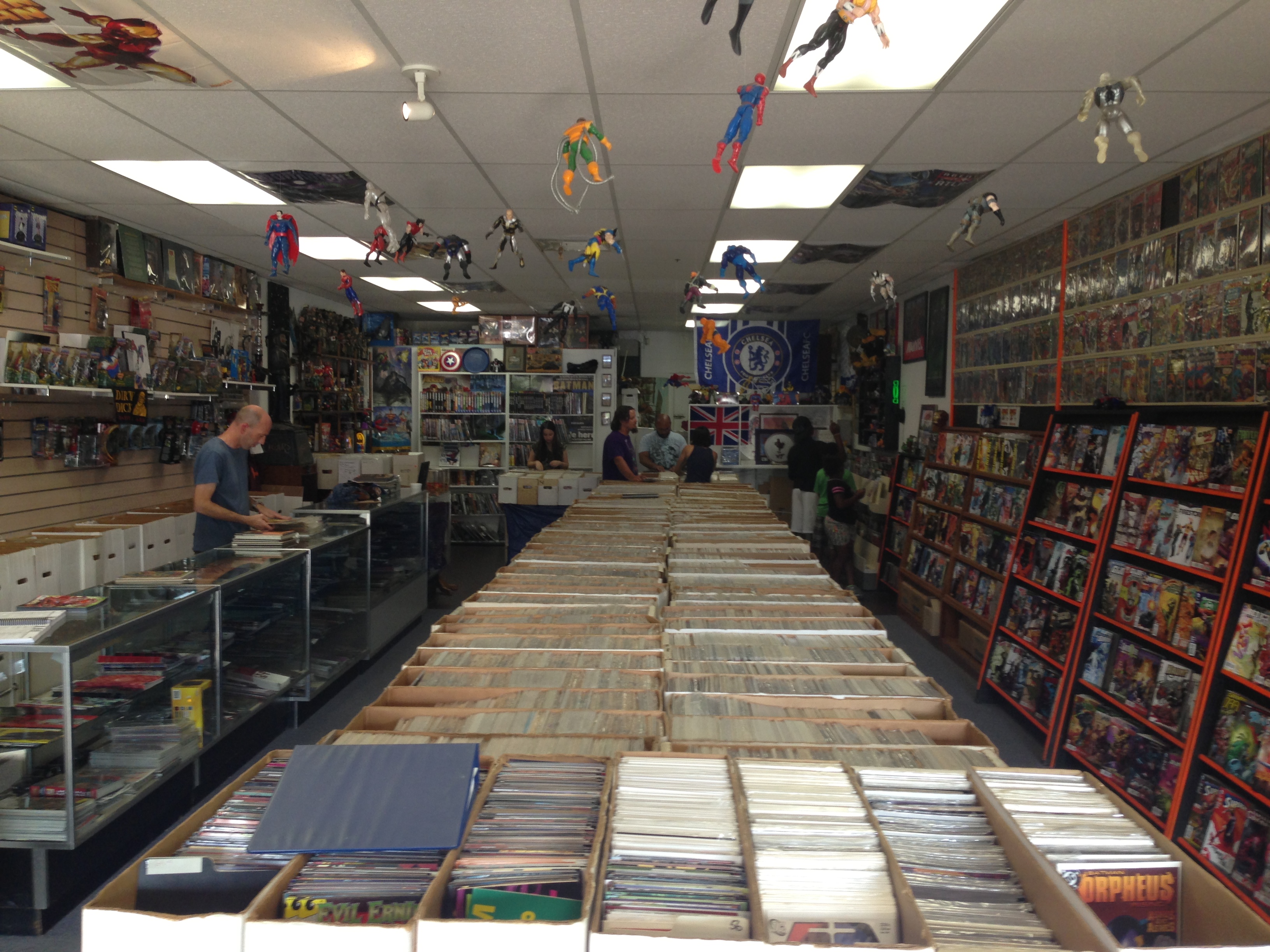
The back issue store—or traditional store—is the stereotypical comic book store. Typically these stores are filled with long and short boxes of older comics. More recent ones tend to be easily accessible on shelves or racks of some kind.

So many comics.

So many comics.

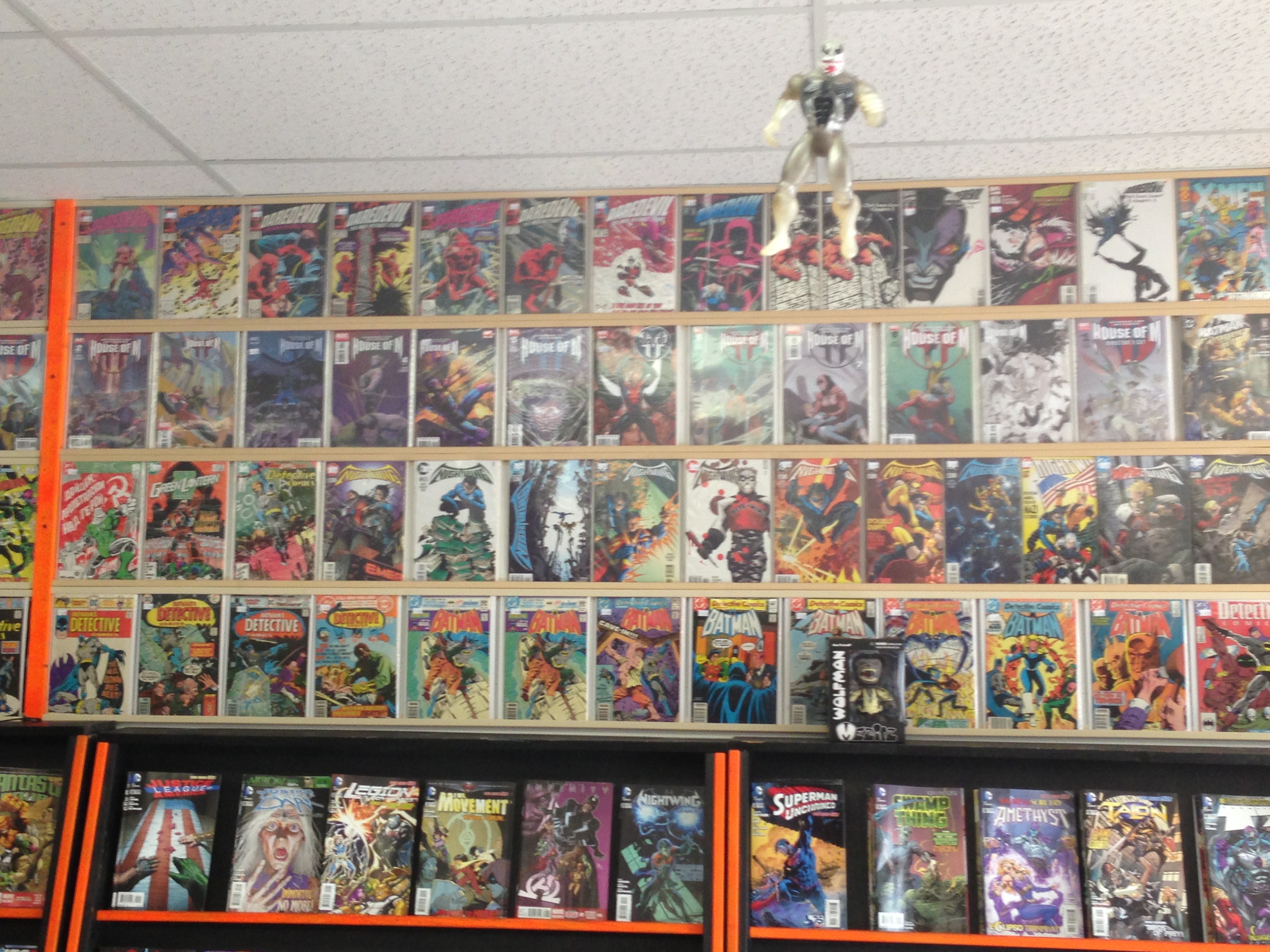
Usually these stores have a selection of “wall books” as well. Wall books are books of higher value that are displayed prominently on a wall somewhere, often (though not always) behind the counter.

These are not behind the counter, as you can see.

These are not behind the counter, as you can see.

I usually can’t afford wall books, but they are always fun to look at. It’s great to see the different books from comic history. Frequently after looking at the wall, I’ve gone home and Googled certain books to find out what makes them special enough to go on the wall. Because there are so many back issues, the issues aren’t usually priced in advance.

Books in these stores are either in price marked boxes (dollar bins, etc) or priced out at the register.

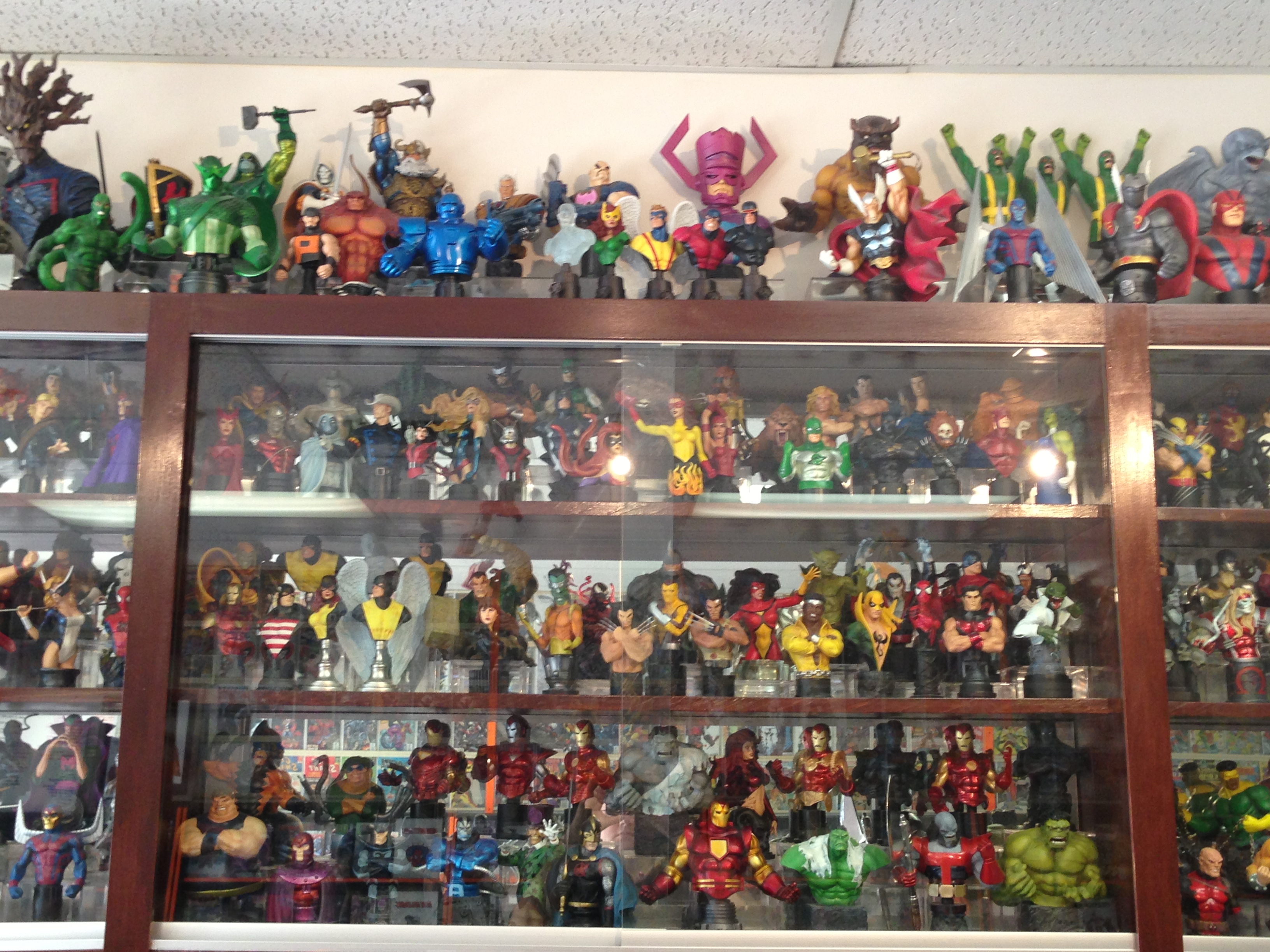
Free space taken up with cool displays.

Free space taken up with cool displays.

Graphic Novel Store

image_5

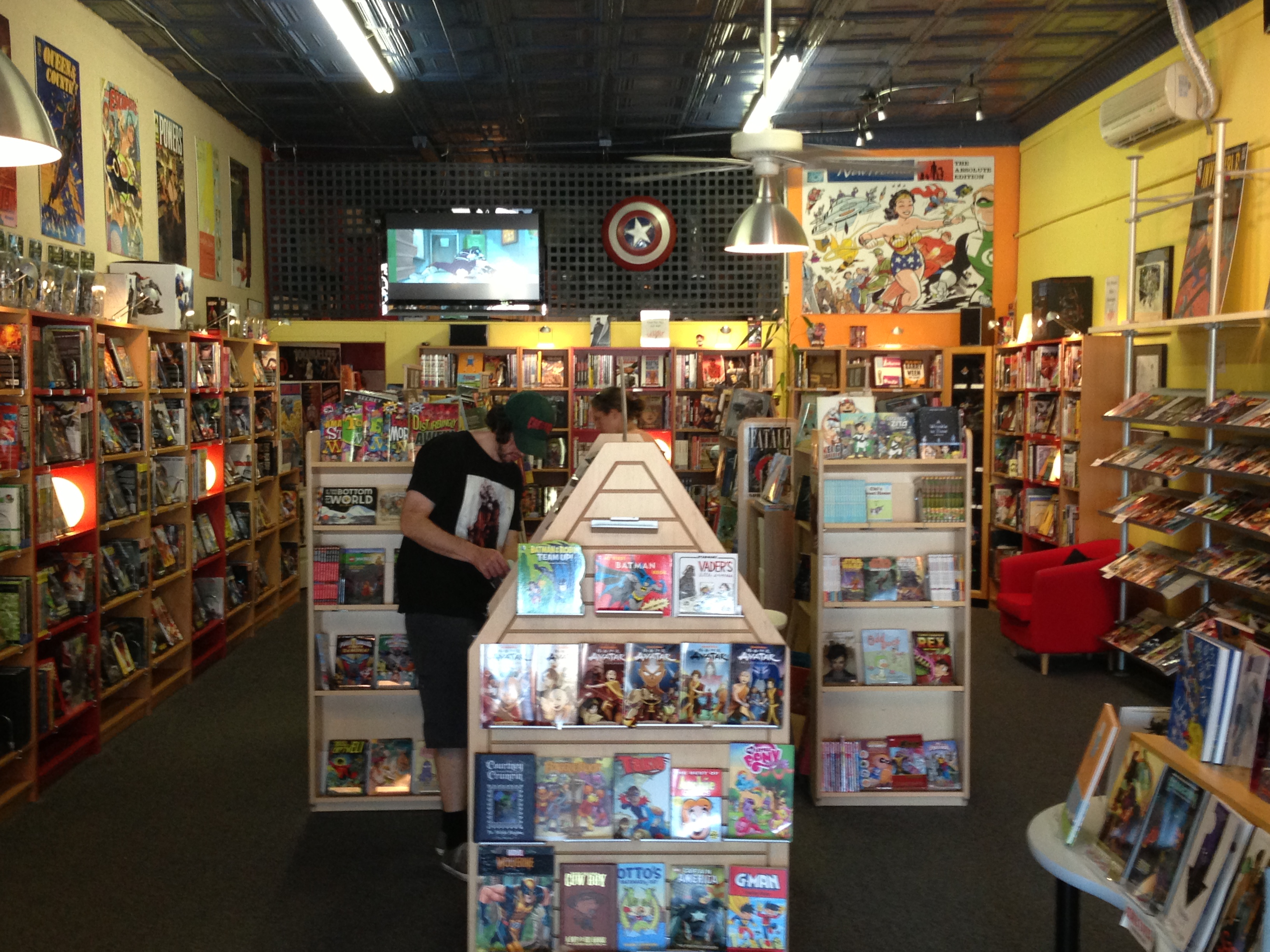
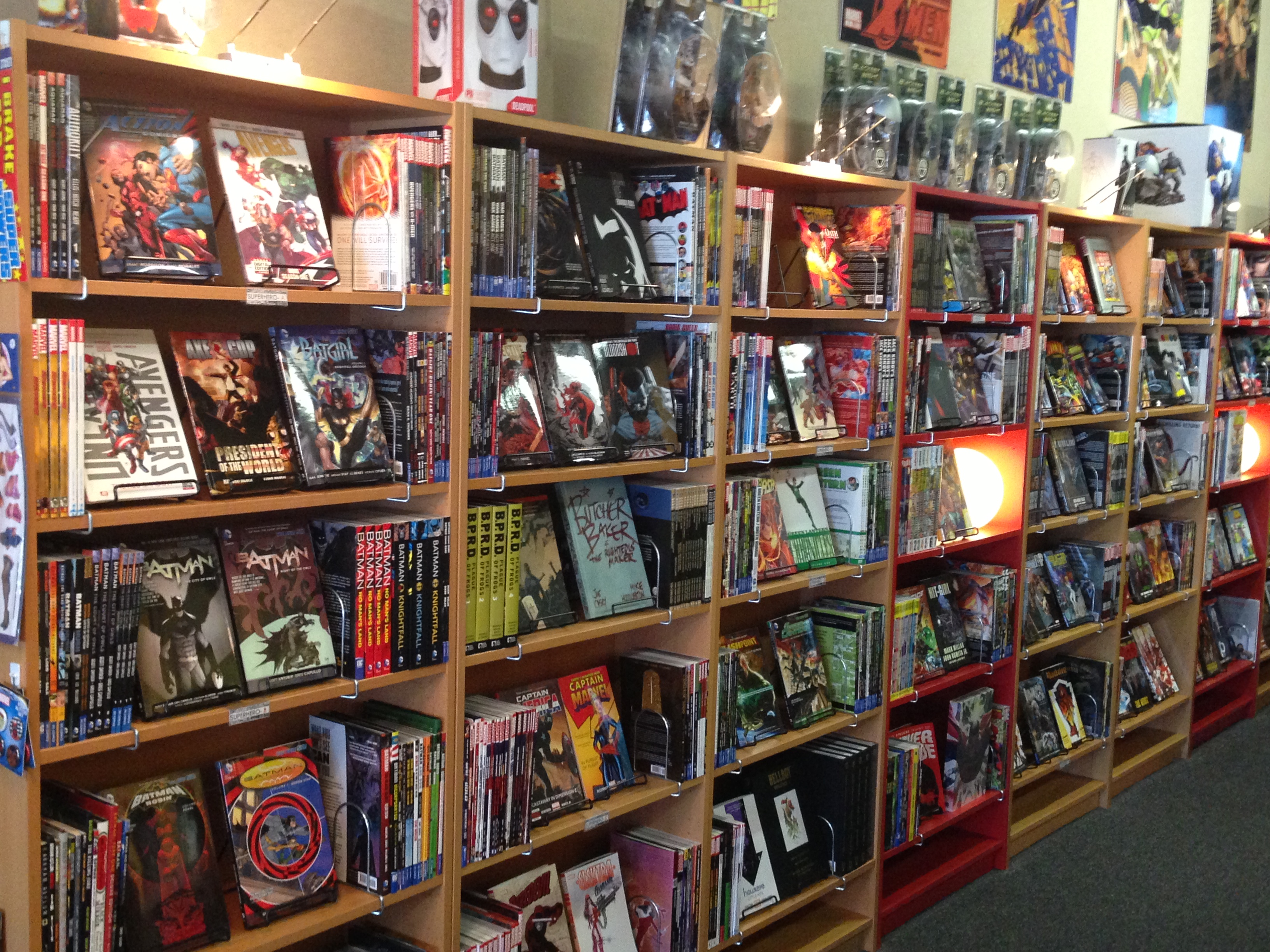
The graphic novel store is one of the most useful ones for people who are new to comics or are on a budget. These stores typically have book cases filled with graphic novels from various publishers.

Graphic Novels as far as the eye can see...

Graphic Novels as far as the eye can see…

Methods of organization vary from store to store, but generally the stores are pretty good about keeping things in some semblance of order. Stores will usually have the most recent week’s comics and a few months of back issues, but not much more than that. image_1

Normally graphic novel stores have significant selection as well, including non-superhero stuff, which is great for people who are interested in the medium but not in capes.

Hangout Store

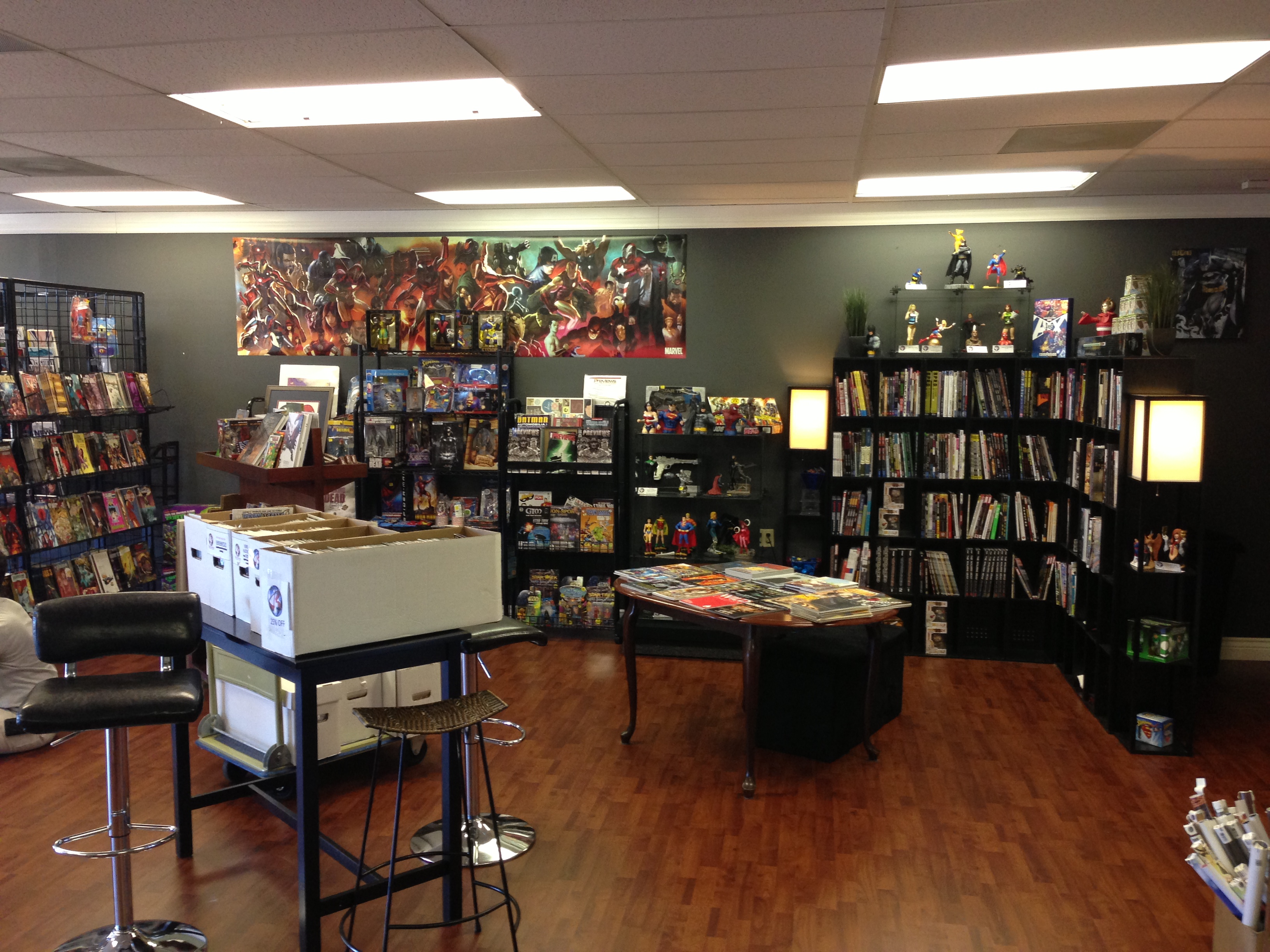
A little bit of everything.

A little bit of everything.

On more than one occasion we at Therefore I Geek have talked about how important it is for geeks to socialize with one another. The hangout store is an ideal place to do this socializing. Here it is guaranteed that most, if not all, of the people share your geek interests. Usually these stores have several tables and chairs that people use for gaming and just general socializing.

Tables for gaming and general hanging out.

Tables for gaming and general hanging out.

A select few of these stores consider themselves reading stores in which you can sit down and read the comics before you buy them. This kind of stores allows you to check out books, moments after you find out they exist and then turn right back around and discuss them. Almost nightly there will be some kind of event going on, whether it be Magic: the Gathering, board games, or miniature gaming. For the geek moving to a new area, this is a great place to start making geeky friends.

Those are some comfy chairs. I can personally testify to this.

Those are some comfy chairs. I can personally testify to this.

Mega Store

I was very lucky (spoiled really) to start reading comics while going to college in New York City. Not only does NYC have a plethora of good comic book stores, they also have Midtown Comics. Stores like Midtown are comic mega stores, which encompass most aspects of the three types of stores I’ve already talked about. They have huge selections of back issues, graphic novels, and other comic book paraphernalia. Often times these stores have more than one location. This is useful because if one store doesn’t have what you’re looking for, it’s possible that one of the other locations does. The size of the store also means that they often have better infrastructure and organization so finding things is easier and prices are usually clearly marked. The downside of stores this size is that there is the potential for customers to get lost in a crowd and not get to develop a more personal relationship with the owner, such as at smaller stores.

Scary Store

Lastly there is the scary store. These are the comic book stores from which stereotypes are derived. Often times they have a dungeon-like feel to them, and some smell of mold or cat urine (Why do so many stores have cats?). Poorly lit and generally unpleasant, these stores either have very little regard for the goods that they sell and treat them badly, or value them far too highly and grossly overcharge people who don’t know any better (I’ve fallen victim to this more than once). Not all scary stores are that way because of physical conditions either. Some fall into this category due to the people who run the store. They are rude, not helpful, or downright creepy. The rudeness is almost worse because what could otherwise be a great store is ruined by one or two bad people. The only true redeeming quality these stores have is that people don’t often go in them and so they frequently have stuff that is hard to find or out of print. I know of one particular store that I can go into and find almost anything I’m looking for, if I’m willing to suffer through the experience.

The reality is that not all comic book stores are made equal, and that’s okay. Not all stores fit into these exact molds. Sometimes stores combine one or more of these traits. The key is finding the store or stores that are best for you. Rarely will you find everything you want in one store, but don’t lose hope. New stores are opening all the time, each one a bit different, with their own unique qualities. If you don’t see what you’re looking for, many stores also are willing to special order stuff for you if they don’t have it in stock, so long as it is in print, or at least available from Diamond. Get out there and take a look. You never know what treasures might be hidden in some store you didn’t know existed.

Therefore I Geek would like to extend a special Thank You to the following stores and their owners for allowing us to photograph their store for use in this article

Back Issue Store – Richard Trinkle, Heroes and Villains

Graphic Novel Store – Greg Thompson, Local Heroes

Hangout Store – Pete and Nikki Newcomb, Borderless

2 Comments

Filed under Andrew Hales, Comics

DC’s New 52: How we got there

Just about two years ago, DC Comics decided it was time to shake things up. This was no surprise. A revolution had been coming for a while, but this time DC was starting over from issue #1 on everything in their universe. When they said everything, they meant everything, including titles that had been around since the beginning, such as Action Comics, Detective Comics, Superman and Batman. Previously these books were untouchable, the holy relics of the comic book industry, and to do something this radical to them was a risky undertaking to say the least. As we approach the two year mark of this experiment, I think it’s worth taking some time to look back and evaluate how each of the New 52 titles is doing. So each Thursday in September (and the last in August. I’m looking at you, Justice League) we’ll take a short look at those books that came out two years earlier.

New52logo1

Before we get into the books themselves, it’s probably a good idea to take a look even further back and see how DC got to the point of needing a completely clean slate. DC has a long and convoluted archive of continuity that has often been intimidating to new comic book readers trying to jump on. More than once DC has tried to pull off a universe-wide reboot, but it hasn’t always gone according to plan.

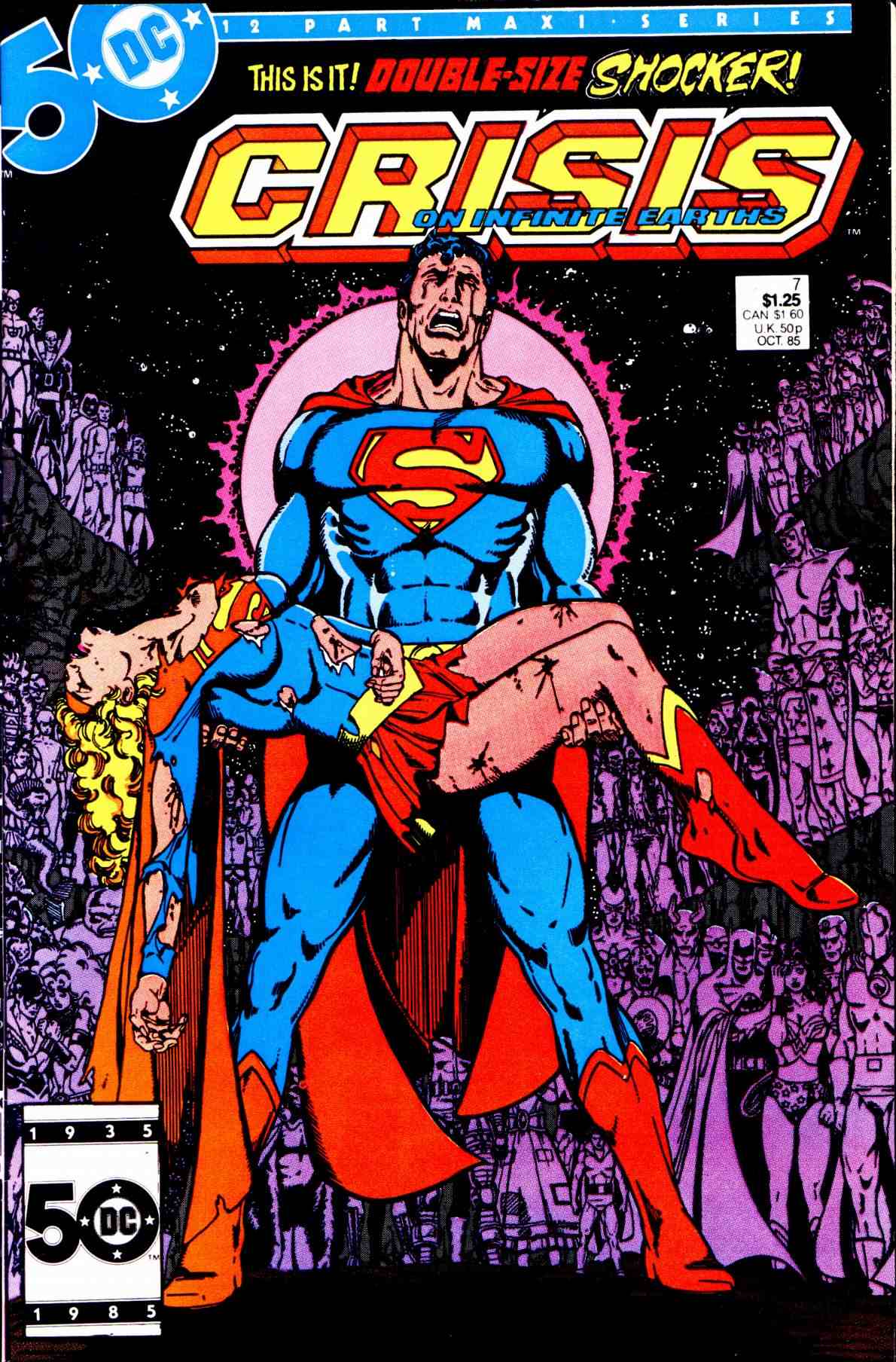
Back in 1985, DC came to the realization that fifty years of uncoordinated continuity had become too unwieldy. How could they explain to new readers that Golden Age Superman was old but alive and working with the Justice Society, while Silver Age Superman was young and a part of the Justice League? Were there two Supermans? The original attempt to explain things away was the Multiverse, an idea that many of these characters existed at the same time, but in parallel universes, each one with its own history. This worked for a while, but after time these different Earths began to cross over with an increasing frequency that once again made it difficult to keep things straight, and it was decided that something had to be done. Enter Crisis on Infinite Earths, a universe-spanning event comic that would radically alter the face of the DCU. By the end, whole swaths of characters had been removed from existence, the Multiverse was eliminated and a single Earth (with a single Superman) was left behind.

Though one of many characters killed during Crisis on Infinite Earths, Supergirl was probably the most popular character to meet her end.

Though one of many characters killed during Crisis on Infinite Earths, Supergirl was probably the most popular character to meet her end.

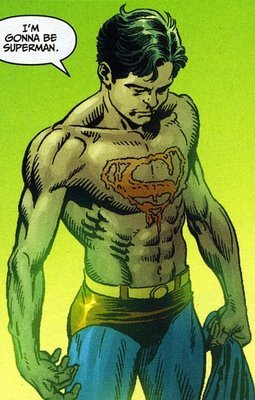
Because carving a Superman logo into your chest is completely normal

Because carving a Superman logo into your chest is completely normal

Soon, events and characters were referred to as Pre- and Post-Crisis and all was well. At least for a little while. Over the next several years, writers began to reintroduce characters and plot elements that had been wiped out in Crisis. What was originally a pretty clean restart slowly began to resemble the Pre-Crisis DCU with all of its twists and turns. Throughout all of this, though, the Multiverse stayed gone. With no Multiverse there was still a limit on how crazy plotlines could get because all the characters had to exist within the same universe. That all came crashing down when the Multiverse was brought back in Infinite Crisis. Following several lead-in mini-series, Infinite Crisis revealed that Golden Age Superman had not perished during Crisis on Infinite Earths, but had, in fact, gone into hiding with his wife Lois, Superboy Prime, and Alexander Luthor (Lex Luthor from a different Earth). When Lois’ health starts to fail, Superman determines that her health will improve if she is returned to her Earth, and they leave their hiding place and begin an attempt to replace the current Earth-1 with their Earth-2. Eventually Superboy Prime goes crazy and kills several heroes and villains, including his Earth-1 counterpart, Connor Kent. Superboy Prime is stopped, but not without causing both Supermans to be depowered and a considerable body count.

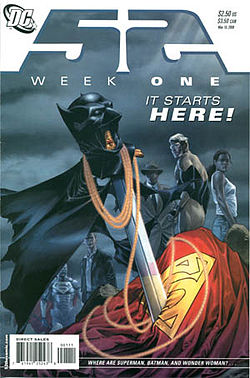
The fallout from Infinite Crisis was taken up by the breakthrough series 52. An ambitious concept, 52 released an issue a week for a full year. Even more shocking was that this series would not include DC’s holy trinity of Superman, Batman, and Wonder Woman. This decision allowed writers to use lesser known heroes, relying on character development rather than just big names. The year started out with a series of stories which are interesting but mostly unrelated, but as the weeks passed the stories became more intertwined until it culminated with the reveal of the existence of fifty-two new parallel universes, created at the end of Infinite Crisis.

250px-Cover_52_Week_One_(May_10,_2006)

Now you may think “at least we’ve made it to the New 52”, but alas, you’d be wrong. Next, fans were made to suffer through Countdown to Final Crisis, a disasterous follow up to 52 which followed 52’s weekly release schedule, but lacked its overall appeal. The storytelling was questionable at best and it was populated by characters that most people didn’t really care about. Additionally, the plotlines became so skewed as the series progressed that by the time it ended they no longer lined up with Final Crisis. Subsequently most of the storylines were retroactively removed from continuity.

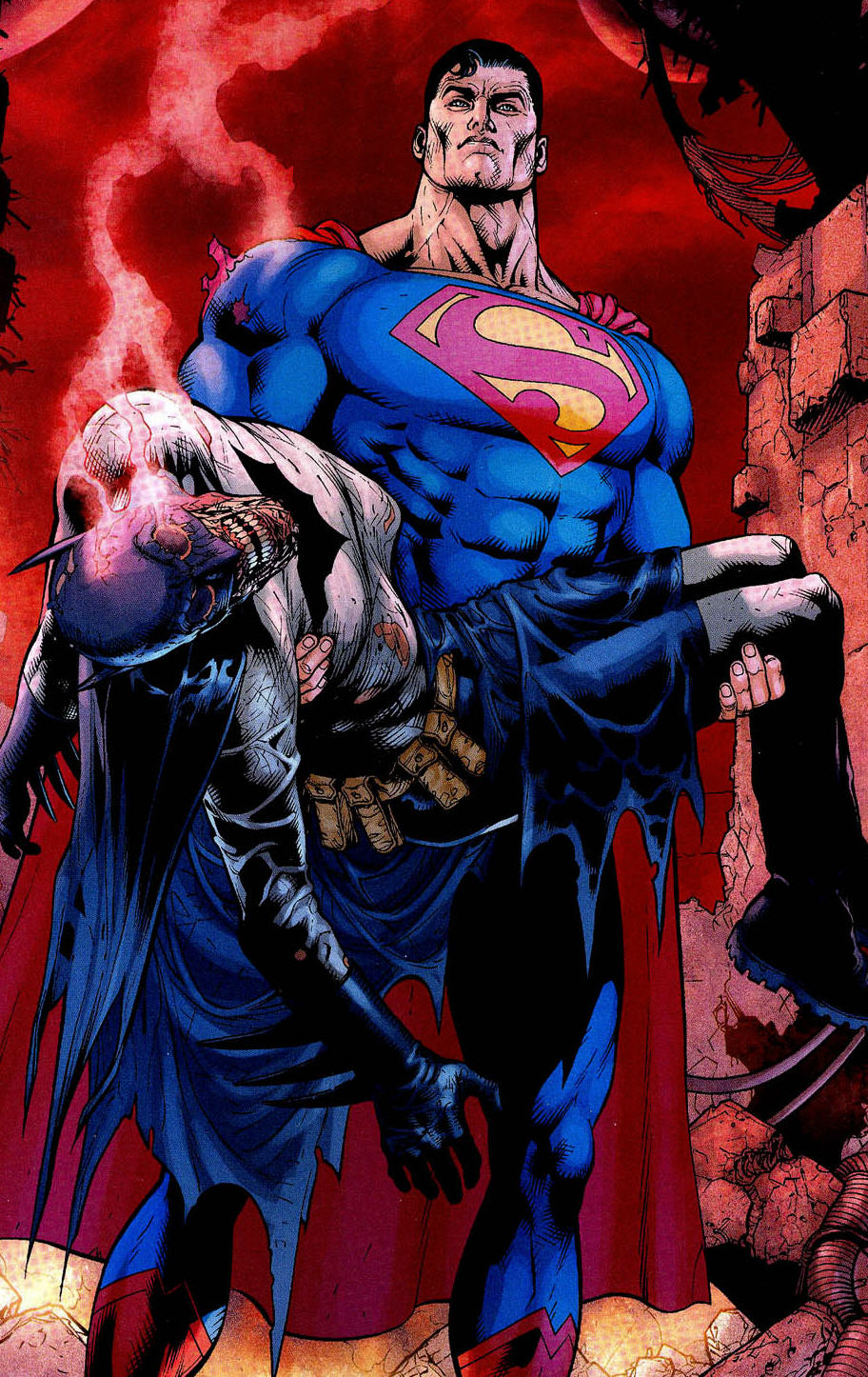
Thankfully Final Crisis turned out much better than its lead-in event. Written by DC’s powerhouse writers Grant Morrison and J.G. Jones, Final Crisis was a well written, if confusing story. Further tapping into lesser known characters, and adding more than a few of his own, Morrison made considerable use of Jack Kirby’s New Gods, most of whom had not seen much use in recent years. Additionally, the Multiverse played a major role in the Final Crisis with the inclusion of the Monitors, a whole race based on one of the key players from Crisis on Infinite Earths. While a great story, Final Crisis was anything but final and did little to help maintain the clean continuity that DC had attempted to setup all those years ago. And oh yeah, Batman died.

Are we starting to see a theme emerge?

Are we starting to see a theme emerge?

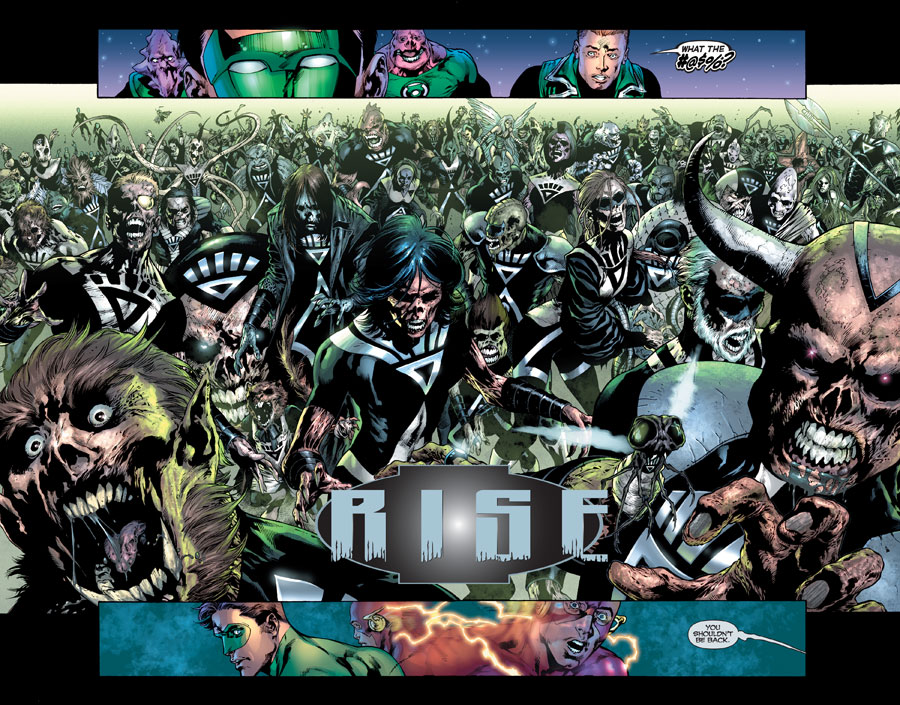
This being comics however, Batman came back (Turns out he was just trapped in the past. Happens to me all the time), just like many characters before him. While he was gone, however, readers were treated to Dick Grayson as Batman, as well as the DCU-spanning Green Lantern event, Blackest Night. As if things hadn’t been confusing enough, Blackest Night brought many dead heroes and their loved ones back to life as Black Lanterns (If your head wasn’t hurting before this, it should be right about now). While impressive for its cosmic scale, Blackest Night was a nightmare for those not intimately familiar with DC’s continuity.

I see dead people...a lot of them.

I see dead people…a lot of them.

The final stop on our journey to the New 52 is Flashpoint. The Flash (Barry Allen) wakes up in what he believes to be an alternate timeline in which Wonder Woman and Aquaman are at war with one another and Batman is Thomas Wayne, whose son Bruce was killed in Crime Alley. Eventually Barry finds out that he is not in an alternate timeline, but in his own timeline that has changed after he attempted to travel back in time to save his mother from dying. Barry is eventually forced to undo what he has done and in the process the DC universe merges with those of its imprints, Vertigo and Wildstorm, and the timeline resets, leaving us with the New 52.

This controlled reboot of the DCU was twenty-six years in the making and took several failed attempts to get right. Through the next five weeks, Therefore I Geek will explore the things DC has gotten thing right and point out areas in which they took a misstep or two. Each week we will discuss the first wave books that were released that week two years ago and see where they’ve been, what’s going on now, and where they are headed. Lucky for you, Week One only consists of one book, Justice League. Stand by for Weeks Two through Five and join us for a look at the state of the DCU.

6 Comments

Filed under Andrew Hales, Comic Reviews, Comics