Author Archives: Andrew Hales

Winning Science June 26, 2013

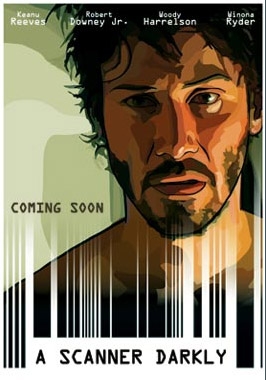
This one almost leaves me speechless. This reminds me of A Scanner Darkly.  I’m not sure what is worse, the fact that my tax dollars paid for a Death Ray, or that my tax dollars paid for a Death Ray that DIDN’T WORK. If you’re gonna waste money on a Death Ray, it had better work, damn it!

Image

At least when Keanu was narcing on himself, he was too stoned to know better. What is the FBI’s excuse?

image

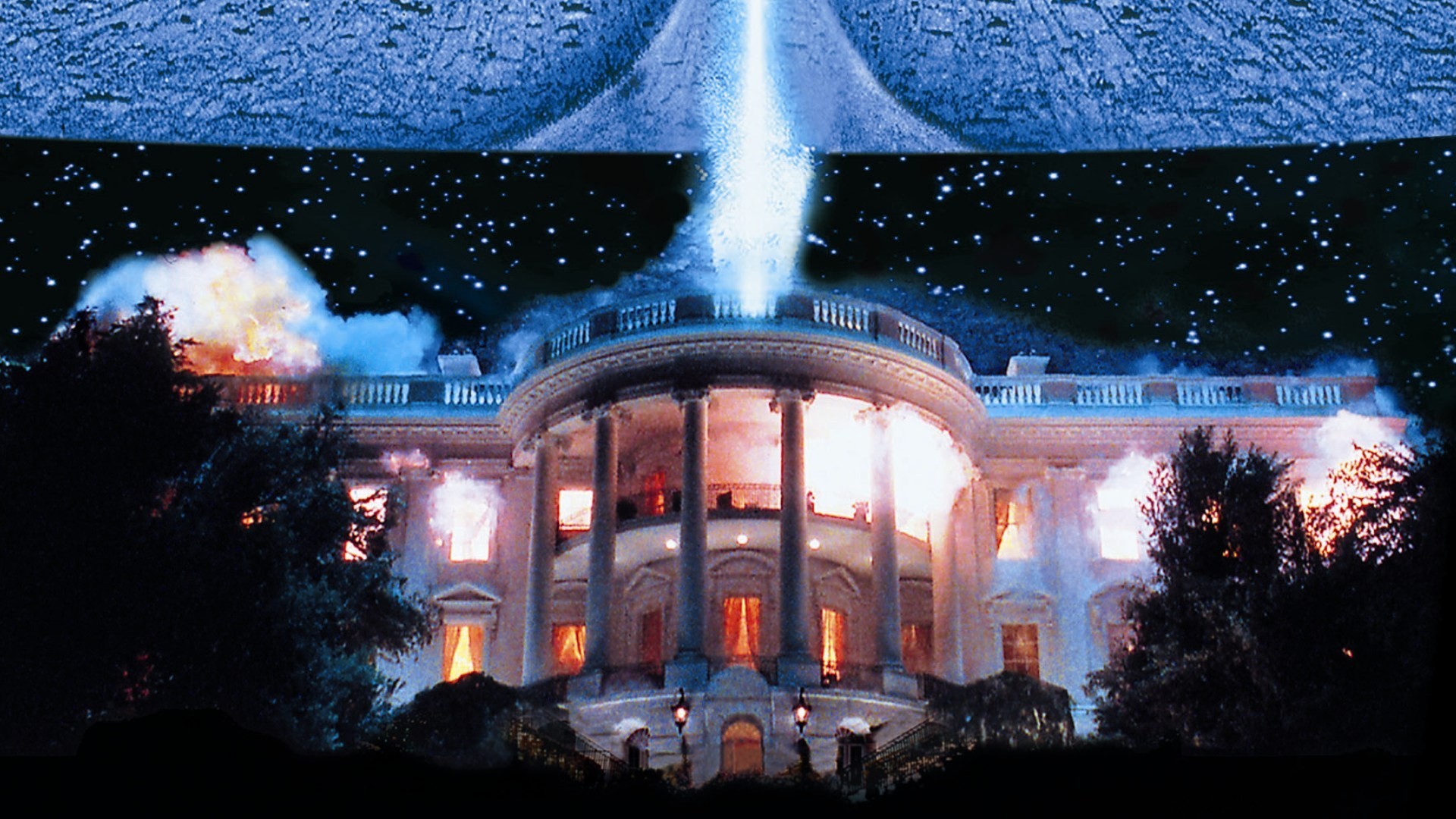
I’ve seen enough movies to know that aliens showing up at our doorstep doesn’t usually end well for humanity.  It probably won’t help their mood if we bombard them with whatever random crap the internet decides we should send them.  Also, Stephen Hawkings basically gave the BBC a recap of the plot of Independence Day, and they apparently didn’t notice.

Image

Come on people, I saw this movie when I was 11. Even Jeff Goldblum figured it out!

As someone with a family history of diabetes, I think this is pretty cool.  It looks like we’re still a long way from functional artificial organs, but every step we take helps us improve life for millions.

Image

However, as someone who went to college, I’m wondering when the artificial liver will be on its way.

Leave a comment

Filed under Winning Science

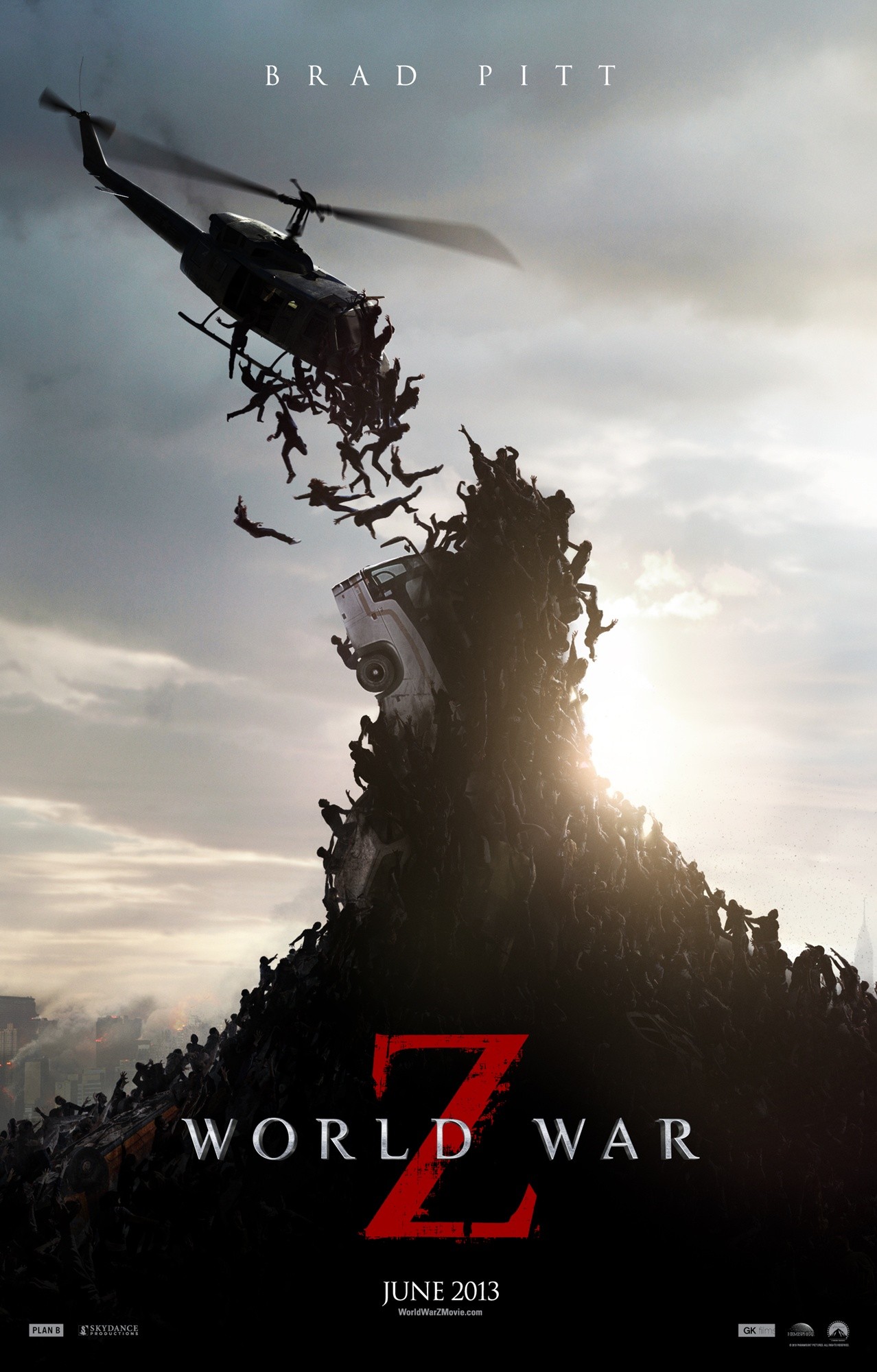
Review: World War Z

Image

I’m kind of over the whole zombie thing. Over the last few years people have gone a little zombie crazy and the market is well beyond saturation at this point.  Also, I was not particularly thrilled to find out that this movie was basically World War Z in name only.  I am a huge fan of the book and had really been looking forward to seeing it made for the big screen.  My enthusiasm quickly faded a few days ago when I came across an interview with author Max Brooks.  Brooks, son of comedy genius Mel Brooks and actress Anne Bancroft, is no stranger to Hollywood and was well aware that his novel wouldn’t make it to the screen intact.  In the interview Brooks said that people should see the movie and judge it strictly as a movie.

Image

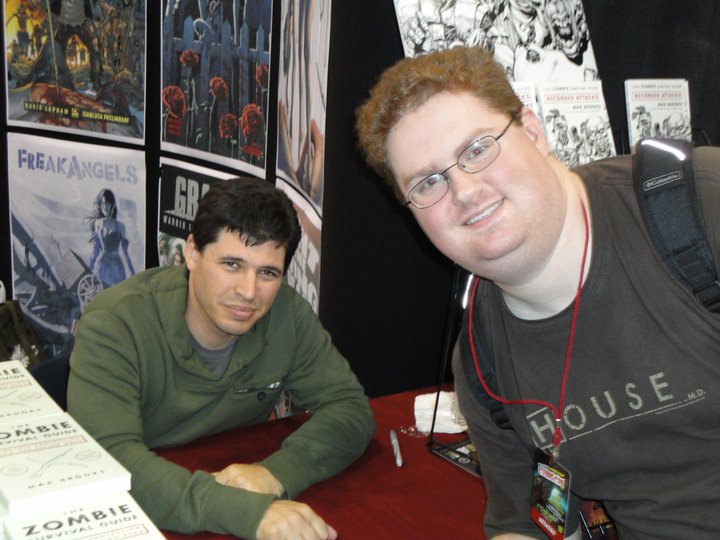
Max Brooks and me at NYCC 2010

While not going so far as to endorse the film, Brooks made a very good point by telling people to evaluate it on its own merit.  I knew there was a very real chance that even though this movie was not going to be the book brought to life, it could still be a pretty good story in its own right.  And so with that thought in mind, I went forth and saw World War Z.

As it turns out, World War Z is a pretty solid action flick.  It is most definitely not the book, but that is okay. A few elements from the book were introduced to give the movie a similar feel, but I don’t really think those were necessary.  The main character Gerry Lane, played by Brad Pitt, is a former UN investigator who is trying to figure out how and where the “zombie” plague began in exchange for his family’s safety onboard a US Navy ship.  I use quotes for “zombie” because the characters in the movie, like those in the book, acknowledge how ridiculous mythical zombies are and use the word only to describe the virus in terms that are easily understandable.  Lane’s search takes him on an impressive tour of much of the globe, hitting South Korea, Israel, Wales, and Nova Scotia. Viewers are treated to some stupendous aerial and wide angle shots of the surrounding scenery (albeit, usually covered with the stumbling infected).  Interspersed among these great shots are some pretty standard, though well-crafted, action sequences.  Since this is a zombie movie, there are plenty of escape scenes and crowd chases, but none of these feel tired or played out, as can often be the case in this genre.   I really appreciated the fact that the film got off to a quick start, giving a brief introduction to the characters and then rolling right into the action.  I absolutely hate when a movie takes forty-five minutes to get finally get to the real heart of the plot and then rushes through it to get to some massive climax.

Often times what makes or breaks a movie like this is the acting.  Aside from Pitt, there weren’t any other big name actors I recognized, but everyone gave a consistent performance across the board.  A big film with plenty of money to spend on effects rarely fails because of the visuals, and a big name, leading actor can only lift the movie so much, so it comes down to the supporting cast to either keep the film afloat, or torpedo it.  The only two really standout performances were by actors playing zombies towards the conclusion.  Both play mindless, spastic undead wonderfully, and give them disturbed personalities of their own.  From bugged-eyed head banging to chattering teeth and dog-like sniffing, they make it truly believable that these creatures, though once human, are now something entirely different.

Image

Whenever Brad Pitt starts running around with the supporting cast, bad things are about to happen.

There are some things that were included that I could have really done without.  First on that list, and probably the ones I find most annoying, are the quick cuts through file footage of riots, wars, natural disasters and the like that start off the movie; and the similarly cut, faux news reports of people fighting back and receiving aid that wraps up the film.  This has been done so many times it honestly makes me want to hurl.  I get what the filmmakers are trying to accomplish but it is cliché and the time for new material has come.  I was also turned off by how fast those who had been bitten turned into zombies.  I think that much of the terror and suspense of a zombie film comes from the impending transformation.  Every time somebody gets bitten it is understood that before long they will be joining the ranks of the undead, but that it will be a slow and horrifying process. Just thinking about it makes the skin crawl.  In World War Z, the whole process from bite to full on zombie takes ten to twelve second.  The virus acts unrealistically rapidly, even faster than almost any kind of venom, poison or nerve agent in real life.

This removes almost any believability from the transformation which doesn’t have much to start with.  My final complaint about the movie concerns the PG-13 rating.  I have nothing against the film having a PG-13 rating, but in order to get this rating, the film makers seriously cut back the on-screen violence.  This led to a few shots that reminded me of R movies that have been cut so they could be shown on cable. What is happening just off screen is obvious and the attempts to avoid showing it just seem awkward.

The movie ends as many zombie movies end:  open to glimmers of hope.  I have yet to hear of a World War Z sequel and while there is room for it if they’d like to do one, the fact that the film was wrapped up enough to stand on its own pleased me.  While World War Z may not be rated among 2013’s greatest movies, it was certainly a strong addition to a genre that often fails to change or adapt and frequently feels played out. There is a real chance that diehard fans of the book will be disappointed if they are unwilling to take the advice of author Max Brooks and judge the movie on its own merits.  As for the rest of us, it’s worth checking out.  World War Z has earned itself a solid 3 Death Stars.

Image

PS,

While this ending sounds pretty Badass, I’m quite happy with the one that made it into the film.

Leave a comment

Filed under Andrew Hales, Movie Reviews, Movies

Editorial | History and Hollywood: the academic irresponsibility of making big box entertainment based on historical time periods & events

I walk into my office almost twenty minutes early, cursing traffic.  If I leave at 8:00 a.m., I arrive fifteen to twenty minutes early, but if I leave at 8:05 a.m., I will inevitably be five minutes late.  Several of my coworkers are already in the office booting up their computers, getting coffee, and chatting about their weekends.  Amy* wanders over to my cubicle.  “So… I saw that movie Lincoln this weekend,” she says, smiling mysteriously into the coffee she is stirring (That has nothing to do with the story. Amy always tries to smile mysteriously.  No one at work is sure why.).  I give her the obligatory response, “Oh really?  What did you think?”

“It was really good!” she answers, “It really made me think about that time in history.  How brave they were, you know?  Also that one black soldier guy at the beginning was hot.”

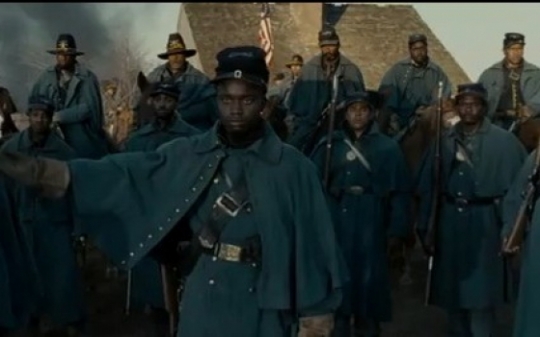
Steam begins to pour from my ears.  “It was a terrible movie,” I reply, because I cannot help myself, “Historically it was wildly inaccurate, from the attitudes and behavior of the characters and the details on the uniforms right down to the actual vote by the state representatives.  I almost walked out of the theater.”
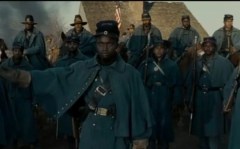
Black soldiers in the Union army as depicted in "Lincoln."

Black soldiers in the Union army as depicted in “Lincoln.”

Amy’s eyes widen and she shakes her head.  “Well, I enjoyed it…” she says, her voice trailing off, and she heads back to her desk.

Yes, I’m the office history geek, and I bristle whenever Hollywood decides to make a movie supposedly based on a historical event or even just a story based within a particular historical time period.  For me, going to see a historical movie is almost always just an opportunity to point out the ridiculous details that the movie gets wrong.  However, the problem is that very few people who see these movies realize that there are any errors at all, meaning that they walk away from the theater with a false understanding of history and no motivation to seek out the truth.
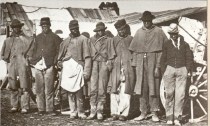
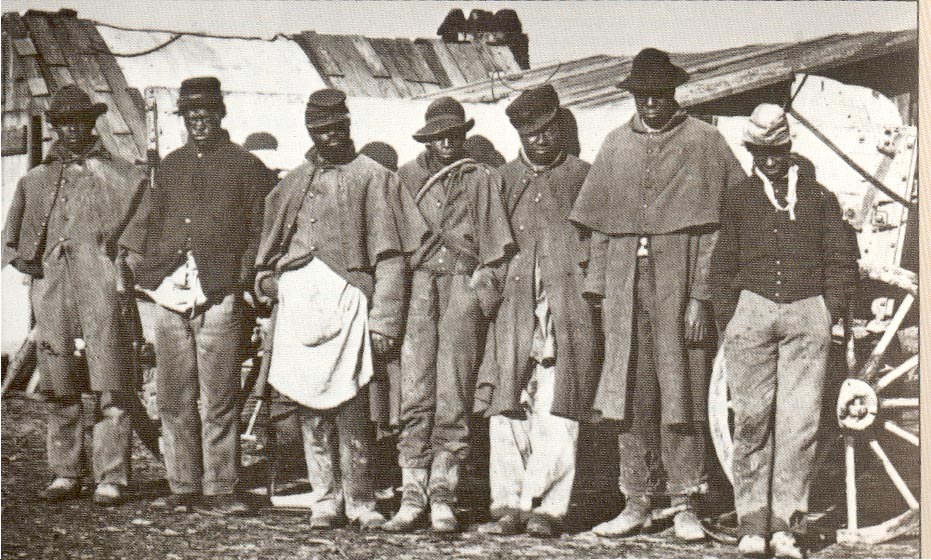
Actual black soldiers in the Union army.

Actual black soldiers in the Union army.

Hollywood has built an empire on storytelling, not on truth telling.  As a general rule, movies have no problems bending the truth or even snapping it in half altogether, as in the 1955 release of The Far Horizons, which pitted Meriwether Lewis and his purported love interest Sacagawea against the nefarious French trapper Charbonneau.  If this had been accurate in the slightest, it would have made for a very awkward road trip, as Sacagawea was, in fact, married to Charbonneau.

Not only are filmmakers unconcerned about the accuracy of their storylines, but they also add modern behavior and attitudes to period roles, presumably to allow modern viewers to identify with the characters.  My least favorite trope is the “independent woman” set in a time period when women were not given political rights or even much of a say in anything.  A great example of this is Cate Blanchett’s role as Marion Loxley in the 2010 film Robin Hood.  If the entertainment industry were to be believed, in every historical era (or at least, in every historical era that makes for good screenplay) there have been hundreds of women not only protesting their downtroddenness verbally, but actually taking up arms, or sneaking into lecture halls and mocking the intellectuals there—presumably to make them see that all women are intelligent, sensible, and mature.

However, all the blame for these awful movies cannot be placed at the feet of the movie industry.  The average consumer is also culpable.  At their very best, the uninformed public is simply lazy, preferring to have their facts served up with a disproportional serving of sugary entertainment.  For proof, one need only look at 2001’s Pearl Harbor.  The deaths of almost 2,500 Americans were, apparently, not dramatic enough, so the writers added a creepy love triangle to both thrill and disturb their audience.

At worst, deliberate ignorance on all levels is at epidemic proportions.  As a former high school tutor, I was aghast at the lack of historical knowledge that I found in tenth and eleventh grade students.  In college history classes the ignorance is even more appalling.  By one’s second year in undergraduate education here in the US, it can be expected that a student will have a decent grasp of United States history, but such is not the case.  Students have plenty to say about the Peace Corps and Habitat for Humanity, but not do even know the name Nathan Hale or John Jay.

While I have heard the argument that these movies and TV shows inspire people to research the history that is presented, I must say that as a whole, the entertainment industry doesn’t point out how far their narrative is from the truth; nor does it make the true stories readily available, and the average person is too lazy to dig for them.  Even if someone were to hear Lincoln’s issues corrected (probably from me!), first impressions generally stick.  It’s much easier to remember the vivid pictures on a 70’ IMAX screen than it is the dry details in black ink on a white page.

I cannot blame the entertainment industry alone for the pitiful lack of historical knowledge in the United States, but I can and will say that it is irresponsible to make so many deliberately inaccurate movies without doing more to make sure the audiences knows that they are not seeing what actually happened.  I also hold each individual responsible for educating themselves about the fascinating subject that is the history of the human race.  Lastly, I put the obligation on those true students of history to speak up when they see inconsistencies and inaccuracies in entertainment.

We have a society that is, as a whole, woefully ill-informed and too lazy to do anything about it; and Hollywood is feeding the problem.  Perhaps with a concerted effort, entertainment can become more accurate, and entertainees can be better educated.

*Name has been changed to protect the not-so-innocent.
3 Comments

Filed under Editorial, Tracy Gronewold

Around the Web June 22, 2013

I understand that tech companies are always trying to find the next big thing that will revolutionize their industry and change the way we live, but I’m pretty sure this one isn’t going anywhere.

Image

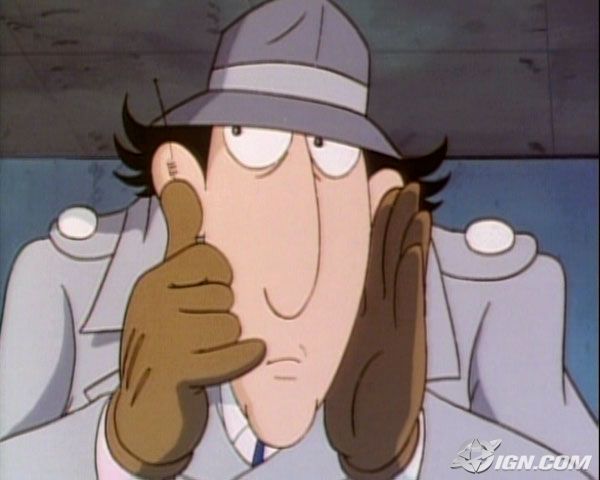
I’m also fairly certain Inspector Gadget should not be the man we look to for inspiration. Literally none of his equipment worked right!

Ever wonder what happens to all that tech that we don’t use any more?  Yahoo provides us with some interesting photos of old technology.

Image

I’d love to know how many people actually remember using these.  If you do, please comment.  I’m feeling a little old on this one.

It’s about time these rules got revised. Time for the FAA to join the 21st Century.

Image

The thought that the $500 iPhone that I bought at the mall could screw up a $260,000,000 plane always worried me, just a little.

This is a really cool way for technology and classic literature to meet.

Image

Not quite sure this is what the Bard had in mind, but I think he’d be pretty impressed that we keep finding new ways to relate to his work.

And to wrap things up, I cannot wait for this movie!

1 Comment

Filed under Around the Web