Tag Archives: Science Fiction

Winning Science May 20, 2014

Pretty much everyone has accidentally put metal in the microwave at some point. The reaction is pretty scary: weird noises and the metal object arcing and sparking, and maybe even jumping around some in the microwave. We all know what happens, but not many of us know why it happens. This article does a pretty good job of summarizing the results of microwaved metal, but in general it has to do with the makeup of metal on a molecular lever. Turns out those material science classes in college weren’t completely pointless.

As a kid, I didn't know these were metal...until i put one in the microwave.

As a kid, I didn’t know these were metal…until i put one in the microwave.

Also, it turns out that grapes in the mircowave are way more dangerous. If you don’t believe me, check out the video at the end of the article.

Like many geeks, I love to read science fiction. One of the most commonly used plot devices is the robot. From I, Robot to Blade Runner and Transformers, these artificial characters dominate stories and are capable of all manner of impressive feats. The sad truth in real life, however, is that robots, while incredibly good at one or two things, excel in very few things, especially when compared to humans. Popular Science offers us a deeper look into the realities of robots and how they compare to their fictional brethren.

Somehow I don't think this guy will be saving the universe any time soon.

Somehow I don’t think this guy will be saving the universe any time soon.

I still want my car to drive me around. Seriously…like ASAP.

Ever wonder what makes a video or article go viral? If you have, you’re not alone. Scientists have just begun to study what makes a person more likely to share a link or video, and the results are interesting. Studies have shown that content that evokes strong emotion is the most likely to get shared. Although those that are positive are the most likely to be shared, negative posts are not far behind. Also surprising is that people who are in an emotionally or physically excited state are more likely to share. Researchers found that people who were active for sixty seconds before looking at online content were more likely to share said content than those who were relaxing beforehand.

Now if only they could explain why cat videos do so well.

Now if only they could explain why cat videos do so well.

This probably explains the daily, raging hate-fest that makes up my local newspaper’s comment section.

Leave a comment

Filed under Weekly, Winning Science

Editorial | Review: ACID

***** SPOILER ALERT *****

This review will be discussing plot points which may be considered spoilers. Consider yourselves warned.

I have gotten my hot little hands on a copy of Acid, the first novel from author Emma Pass.  The author is from the Midlands, UK, and her European roots come out in certain word choices and, of course, measurements.  Fortunately for Therefore I Geek readers, I have read the book and am here to lay out the good, the bad, and the ugly about it.

The Good: The main character in this book is one Jenna Strong, who is in a maximum security, male only prison at the tender age of seventeen for parricide.  The book is set in 2113, in a UK that is completely cut off from the rest of the world.  A lackadaisical government has been thrown out of power by an anti-terrorist arm of the military/police force called ACID (Agency for Crime Investigation and Defense) and a police state has been in place for about 100 years.  As far as the good of this book goes, the well designed acronym is pretty much all it has to offer.  That, and the perfect use of the subjunctive tense.

Continue reading

Leave a comment

Filed under Book Reviews, Books, Editorial, Tracy Gronewold

Editorial |The Silent Character

In the course of writing a novel or a screenplay, authors carefully set up the scene they wish to play out.  In science fiction or fantasy—even more so than in other genres—they create a world, and then populate it with figures that are limited only by the author’s imagination.  However, I submit that in the very best sort of books there is one character that is not created by the author, but is temporarily bound in the world he creates:  the reader.

A book is something like the stage on which a play is performed.  The onlooker sees everything that is going on in the story spread out before him in his mind’s eye.  In a play, the characters can interact with themselves, but they arrange themselves to be visible to the audience as much as possible.  Their gestures are larger than life, their facial expressions more dramatic, and their voices pitched to carry to the unmentioned and usually silent viewers.  Although in most plays the actors never acknowledge the audience, they still consider its response in every action that takes place on stage.

In a good book, the kind that sucks the reader in and completely absorbs him, the same thing happens.  In most of these books, such as Tolkien’s The Hobbit (now a Major Motion Picture), the reader is never directly addressed.  Characters act, interact, and react with each other for the benefit of the audience.  Events are arranged for thrilling suspense.  Action sequences are highlighted, and periods in between them are foreshortened.

Sometimes, although more rarely, the author does directly speak to his readers.  This is usually an aside.  My favorite example of this is from C. S. Lewis in The Lion, the Witch, and the Wardrobe, “”Wherever is this?” said Peter’s voice, sounding tired and pale in the darkness. (I hope you know what I mean by a voice sounding pale.)”  I think I was six years old the first time I read this, and it was a completely novel idea to me (pun entirely intended) to be addressed by an author I already loved and trusted by this point in the book.  However, this style of writing does not happen very often.

Down the beaver hole

Some authors spend more time crafting the story to their audience, such as Piers Anthony.  His world of Xanth is escapist fantasy taken to extremes.  Nearly everything in this fictional universe is designed to be a pun or an inside joke.  The reader is fully engaged as a silent character in his world.  More serious authors tend to make the role of the reader much smaller.  However, even these authors expect the audience to be fully engaged in the story.

In some cases, the author starts off with a good sense of his audience as a silent participant in his world, but then seems to forget their presence, further into the story.  A great example of this is George R. R. Martin’s Song of Ice and Fire series.  The first couple of books read like smooth and beautiful stage productions.  The level of description sets the stage for the reader, without becoming so boring that he skips over large sections.  The action flows at a fluctuating pace:  slowing down during the moments of action and speeding up to skip over slow, boring chains of events, such as Catelyn Stark’s journey to King’s Landing in A Game of Thrones.  In later books, such as A Dance With Dragons, Martin seems to prefer spelling out each and every tiny event, even if it has very little to do with the story.  In cases such as this, I personally feel that extra time in the editing stage of the process is necessary.  (Of course, he doesn’t really have the time for extended editing sessions, but I digress.)

If GRRM doesn’t get the next book out sometime next year… grrmmph mumble mumble…

It seems obvious, then, that the audience to any good story is a silent, third party character which interacts with the world and the characters in it.  When the reader is so enthralled with a book that he or she spends hours or even days after it is closed reliving the events in his imagination, or creating new stories set on the same stage, the author has done his job.

Have you read a book that kept you focused for days, and even made you unwilling to read something else for a little while after you finished it?  Let us know in the comments.  I may even add it to my Reading List of Doom!

1 Comment

Filed under Books, Editorial, Tracy Gronewold

Science Fiction Comics

Science fiction is, of course, a staple of geek culture and always has been, as has comic books. While these two have had a long and intertwined history, up until recently there had been a rather significant lack in quality science fiction comics. Thankfully in the last two years there has been a considerable resurgence in science fiction comics. Given all of these new choices, I’ve decided to go over a few of my personal favorites and some of the newest additions to my weekly pull.
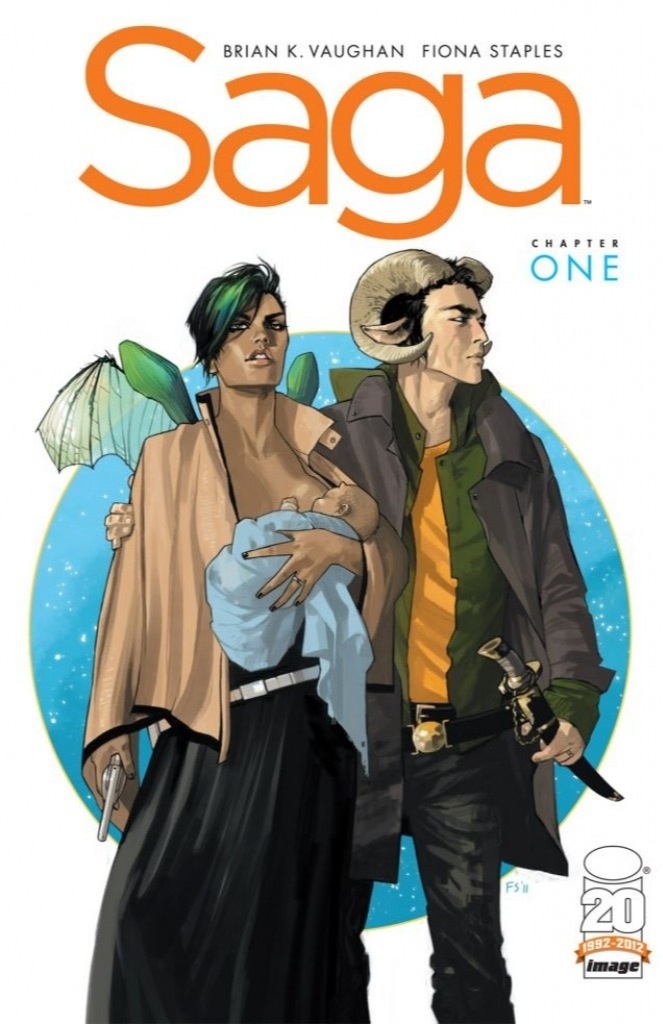
20131219-232534.jpgSaga – Brian K. Vaughan and Fiona Staples

I’ve decided to start with Saga because every week it comes out, it’s the first book I read. Saga is an amazing space epic, but unlike most epics, it is character driven instead of focused on the events that happen around the characters. It’s a sort of modern Romeo and Juliet, with two star-crossed lovers from opposite sides of a generations long war; only they don’t commit suicide, they kick ass instead. I honestly have absolutely no idea where the book is going, both on the large scale and from issue to issue, and I don’t care. I am along for the ride, no matter where it takes me. Vaughan’s writing is fantastic and when paired with art by Staples it becomes something truly unbelievable.
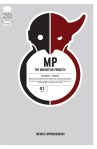
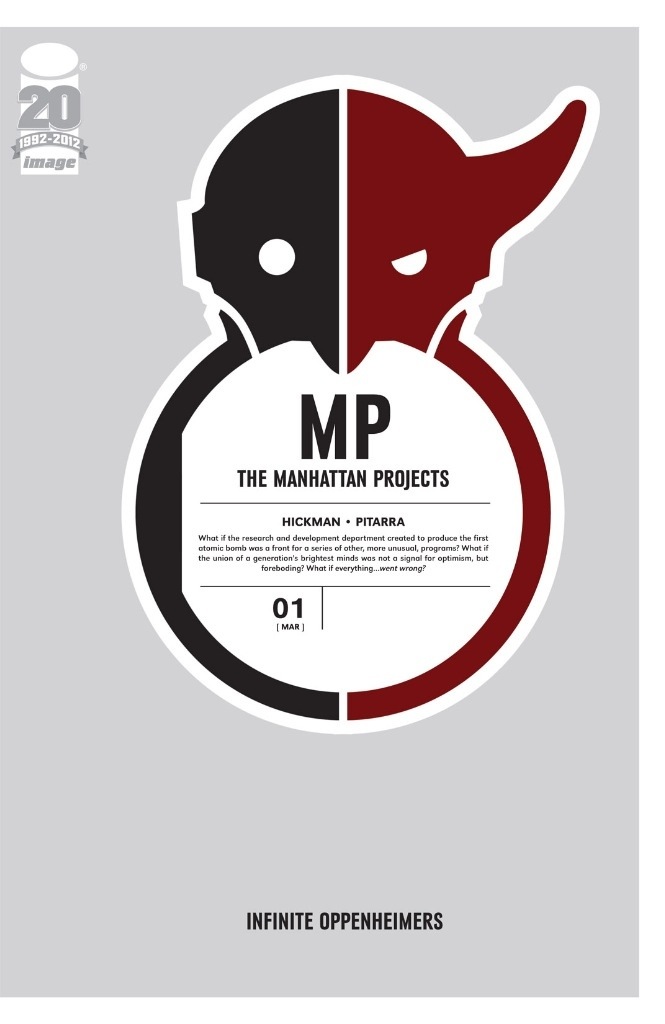
20131219-232528.jpgManhattan Projects – Johnathan Hickman and Nick Pitarra

Imagine that the super-secret Manhattan Project was itself a cover for an even more super-secret science program. That’s the basic plot of Manhattan Projects, but there is far more to it than that. Anyone who is familiar with the real life Manhattan Project will recognize the cast of characters including Robert Oppenheimer, General Leslie Groves, Richard Feynman, and Enrico Fermi among others. That’s about where the similarities end though and Hickman takes characters and events to ever increasingly insane places. There is a lot of fantastic character work and a wonderful subtlety to the art that gives this book an unexpected depth.

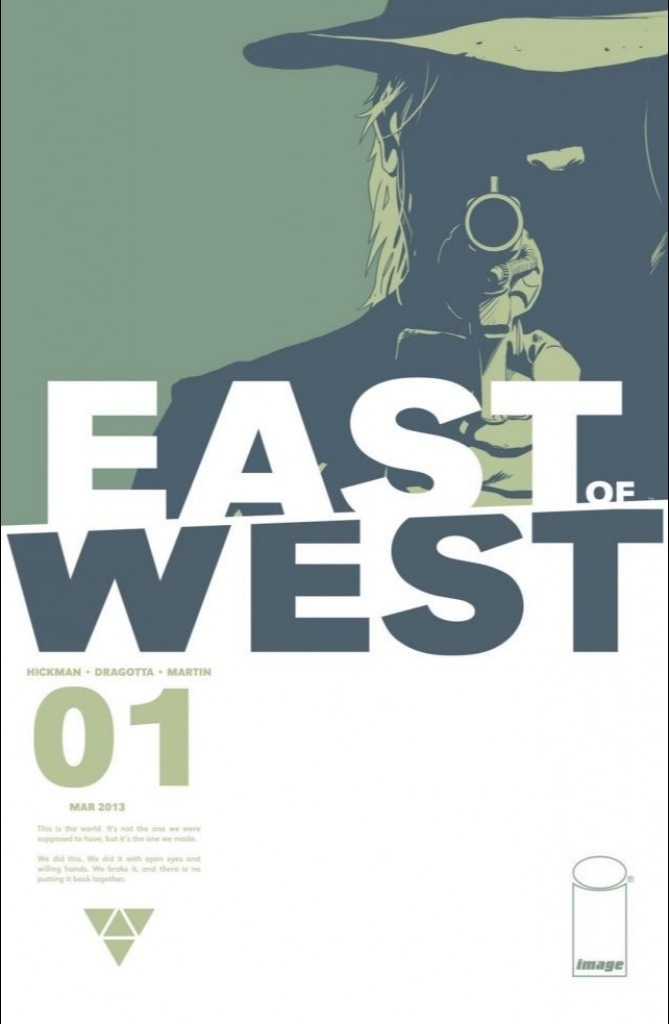
20131219-232523.jpgEast of West – Johnathan Hickman and Nick Dragotta

Where Manhattan Projects is crazy and filled with very weird characters, East of West is much more cerebral, in similar fashion to his current work on Avengers/New Avengers and his previous creator owned work. East of West is set in a near future, alternate reality where the United States has splintered into several different countries with competing ideologies. The political systems only provide a back drop for the larger story, one of the Biblical Four Horseman, Death, has abandoned the other three and now they have begun to hurt him down, to unknown ends. I like this book because it is similar enough to the work Hickman has done in the past, yet the plot remains novel. There have been several interesting plot twists that have made the month between issues seem very long indeed. Dragotta’s art is very clean with some hints of manga influence.
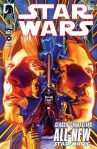
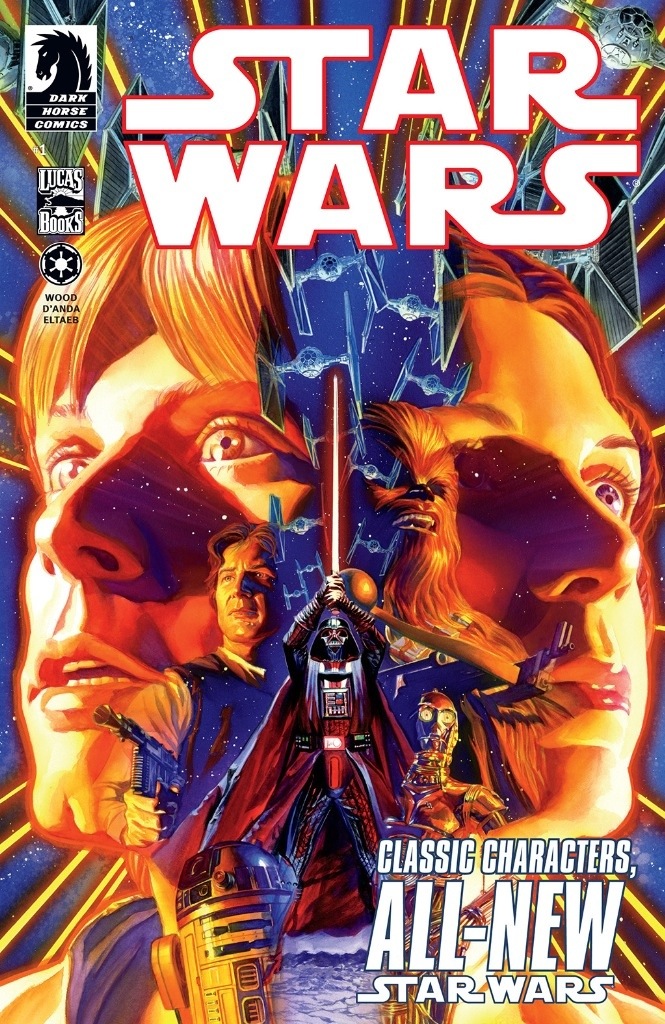
20131219-232512.jpgStar Wars – Brian Wood and Carlos D’Anda

I love Star Wars, especially the original trilogy, and this book hits my Star Wars sweet spot. Set between A New Hope and Empire Strikes Back readers follow all of the familiar heroes as they search for a new home for the Rebel Alliance. Brian Wood has a great sense of who Han, Luke, and Leia are, and it feels like a perfect continuation of the films—only with better dialogue.  D’Anda’s art is perfect for this book. Not only is he capable of clear and exciting action sequences, but he also makes the heroes look just enough like their actors that you know precisely who is whom, but not so much that it looks like he just traced pictures of them.
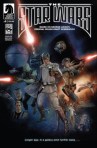
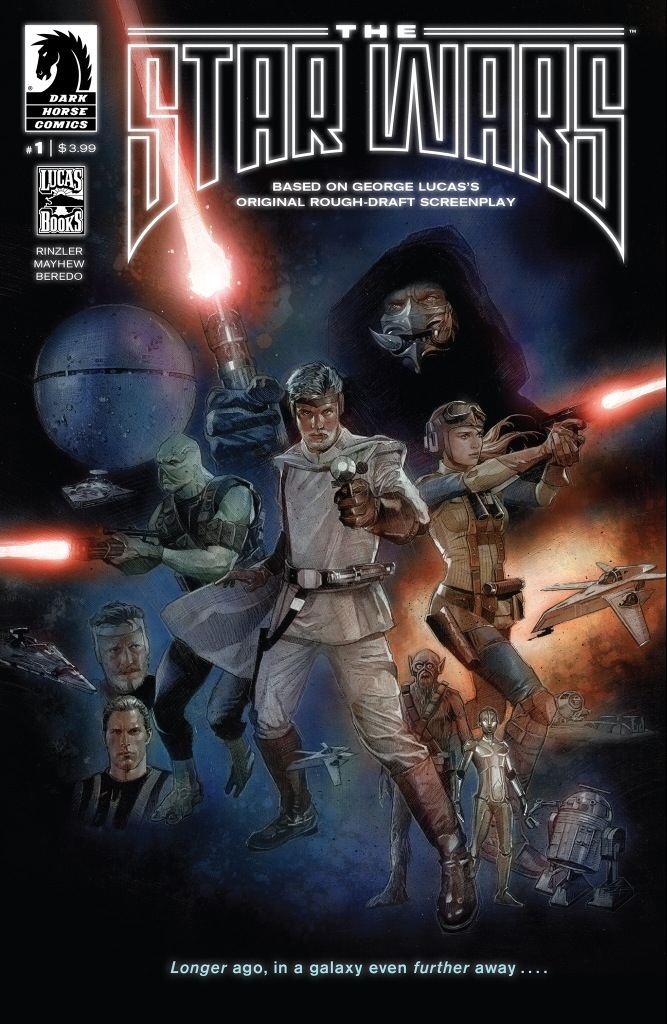
20131219-232518.jpgThe Star Wars – Johnathan Rinzler and Mike Mayhew

Yes, this is a different book than Star Wars. This book is based on George Lucas’ original draft of Star Wars and it has been quite a treat. The Star Wars is full of familiar names and places, but they all apply to different things. It’s like the entire Star Wars universe has been turned on its head and shaken around a bit. Now to be honest, I don’t want this book to last forever and I’m looking forward to seeing the conclusion to the story (though I sense it is still a ways off). What makes this book great is that I never know what part of the Star Wars I know and love is going to show up somewhere unexpected. It’s also pretty crazy to think that this is where Star Wars started.
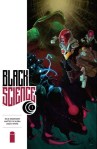
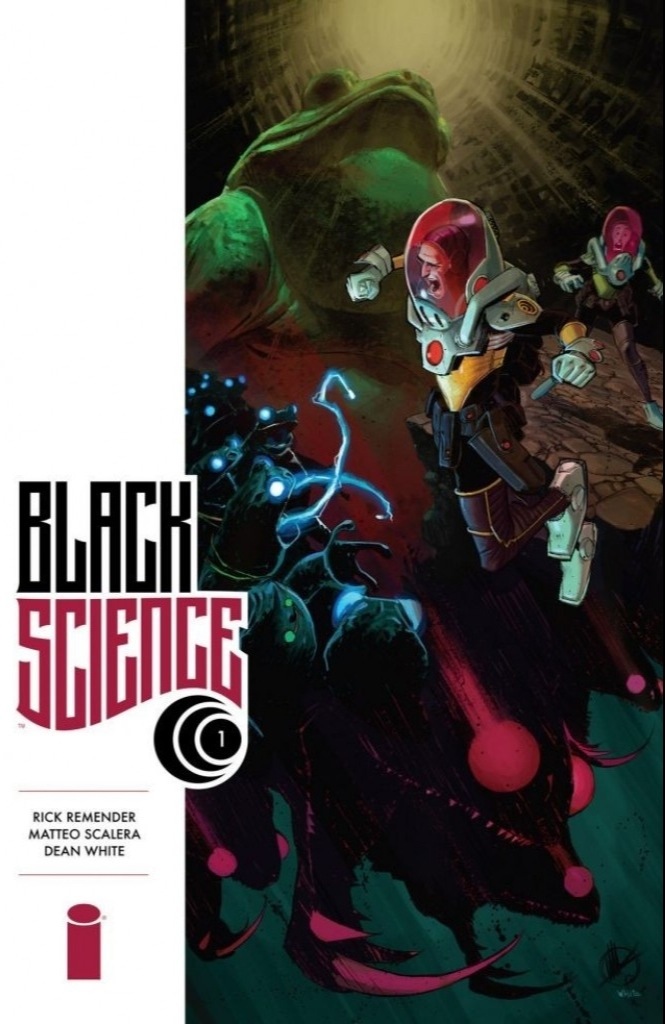
20131219-232538.jpgBlack Science – Rick Remender and Matteo Scalera

This is the newest addition to my pull list and truth be told I’m not 100% sold on it yet. Only being on issue two however, I’m not rushing to judgment just yet.  I am huge fan of Fear Agent, so I’m willing to give Remender the benefit of the doubt and stick this out at least through the first story arc. Black Science follows a group of scientists who have broken through reality into the chaos that lies beyond. Of course what they find there isn’t very nice, and just like black magic in fantasy, this black science makes things go awry. The art is strong with the exception that at times it was difficult to tell female characters apart, though once I get to know them better I suspect that problem will fade. Stay tuned for the inevitable update.

So these are the sci-fi books that I’m currently reading. They are not all the books I read with sci-fi elements and it is certainly not every book that exists (I just don’t have the money…/sad face), but they are the ones I consider pure science fiction. But enough about me, we want to hear about you. What books are you reading? Tell us about your favorites and maybe those that you’re not so fond of and of course, why.
1 Comment

Filed under Andrew Hales, Comics