In the course of writing a novel or a screenplay, authors carefully set up the scene they wish to play out. In science fiction or fantasy—even more so than in other genres—they create a world, and then populate it with figures that are limited only by the author’s imagination. However, I submit that in the very best sort of books there is one character that is not created by the author, but is temporarily bound in the world he creates: the reader.
A book is something like the stage on which a play is performed. The onlooker sees everything that is going on in the story spread out before him in his mind’s eye. In a play, the characters can interact with themselves, but they arrange themselves to be visible to the audience as much as possible. Their gestures are larger than life, their facial expressions more dramatic, and their voices pitched to carry to the unmentioned and usually silent viewers. Although in most plays the actors never acknowledge the audience, they still consider its response in every action that takes place on stage.
 In a good book, the kind that sucks the reader in and completely absorbs him, the same thing happens. In most of these books, such as Tolkien’s The Hobbit (now a Major Motion Picture), the reader is never directly addressed. Characters act, interact, and react with each other for the benefit of the audience. Events are arranged for thrilling suspense. Action sequences are highlighted, and periods in between them are foreshortened.
Sometimes, although more rarely, the author does directly speak to his readers. This is usually an aside. My favorite example of this is from C. S. Lewis in The Lion, the Witch, and the Wardrobe, “”Wherever is this?” said Peter’s voice, sounding tired and pale in the darkness. (I hope you know what I mean by a voice sounding pale.)” I think I was six years old the first time I read this, and it was a completely novel idea to me (pun entirely intended) to be addressed by an author I already loved and trusted by this point in the book. However, this style of writing does not happen very often.

Down the beaver hole
Some authors spend more time crafting the story to their audience, such as Piers Anthony. His world of Xanth is escapist fantasy taken to extremes. Nearly everything in this fictional universe is designed to be a pun or an inside joke. The reader is fully engaged as a silent character in his world. More serious authors tend to make the role of the reader much smaller. However, even these authors expect the audience to be fully engaged in the story.
In some cases, the author starts off with a good sense of his audience as a silent participant in his world, but then seems to forget their presence, further into the story. A great example of this is George R. R. Martin’s Song of Ice and Fire series. The first couple of books read like smooth and beautiful stage productions. The level of description sets the stage for the reader, without becoming so boring that he skips over large sections. The action flows at a fluctuating pace: slowing down during the moments of action and speeding up to skip over slow, boring chains of events, such as Catelyn Stark’s journey to King’s Landing in A Game of Thrones. In later books, such as A Dance With Dragons, Martin seems to prefer spelling out each and every tiny event, even if it has very little to do with the story. In cases such as this, I personally feel that extra time in the editing stage of the process is necessary. (Of course, he doesn’t really have the time for extended editing sessions, but I digress.)

If GRRM doesn’t get the next book out sometime next year… grrmmph mumble mumble…
It seems obvious, then, that the audience to any good story is a silent, third party character which interacts with the world and the characters in it. When the reader is so enthralled with a book that he or she spends hours or even days after it is closed reliving the events in his imagination, or creating new stories set on the same stage, the author has done his job.
Have you read a book that kept you focused for days, and even made you unwilling to read something else for a little while after you finished it? Let us know in the comments. I may even add it to my Reading List of Doom!
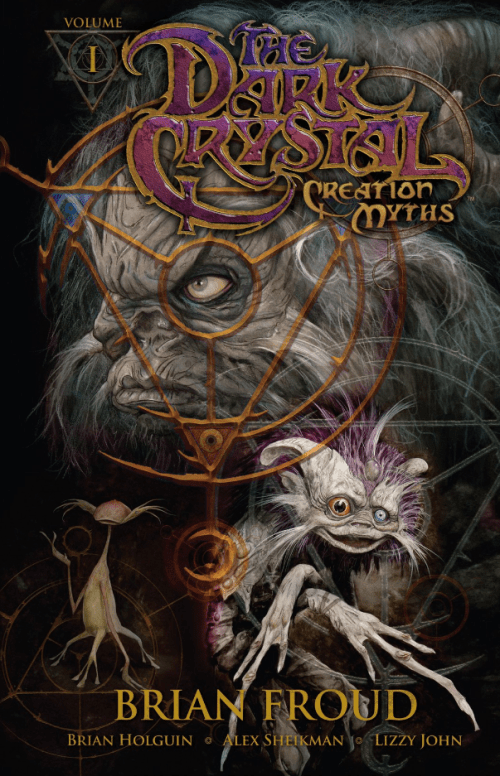 The Dark Crystal: Creation Myths (Archaia)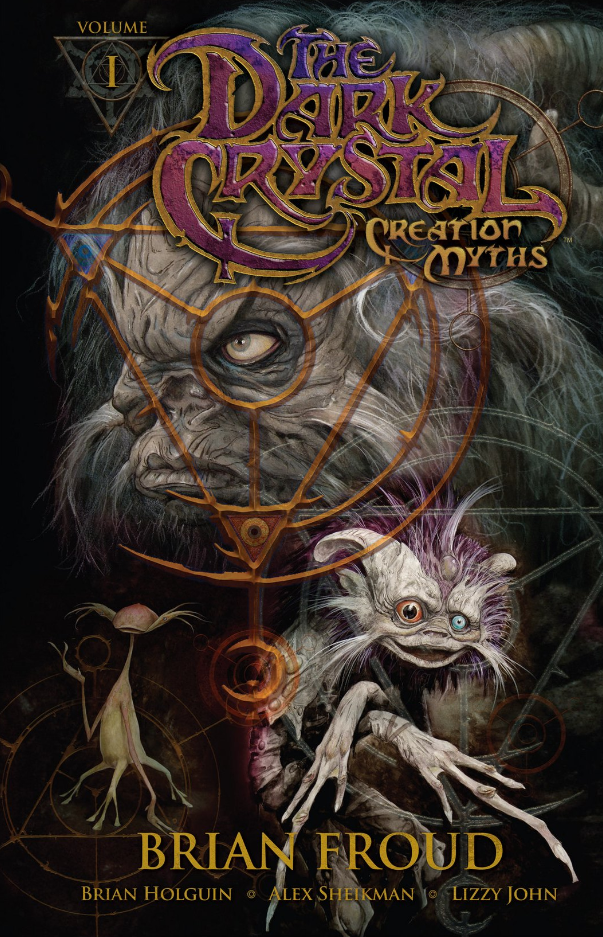


 Therefore I Geek