Tag Archives: Editorial

Editorial | Geek Subculture: parallels in the paranormal

In sociology, anthropology, and cultural studies, a subculture is a group of people with a culture (whether distinct or hidden) which differentiates them from the larger culture to which they belong, for example, if a particular subculture is characterized by a systematic opposition to the dominant culture, it may be described as a counterculture.  Geeks are a fantastic example of a subculture, because we have all of the earmarks of a full sized culture.  Observe.

And on the third day of the week…

Geeks have our own religions and our own denominations.  Do you doubt me?  Our day of worship is Wednesday, “New Comic Book Day,” a day in which we travel to our local comic book store to hear the latest good word.  If Star Trek is a religion—and fans definitely make it sound like one—then it is one with five denominations, Original Series, The Next Generation, Deep Space Nine, Voyager, and Enterprise, each with their own followers.  We also have the religion of fantasy (books and other media), with followers of the prophets J. R. R. Tolkien, C. S. Lewis, Robert Jordan, G. R. R. Martin, Brandon Sanderson, etc.  Fortunately, since there are so many religions in the subculture, geek religions are not exclusive.  These gods are not jealous gods.  A geek can subscribe to as many as he wants!  We are quite tolerant that way.

While the larger American culture loves its football and baseball, and embraces foreign sports such as rugby and soccer, geeks prefer sports on a screen.  I never believed that video gaming could work up a sweat until I recently played my very first console game, Assassin’s Creed II.  Solo gaming isn’t the only geek sport, however.  In fact, there is an entire world of competitive gaming that involves teams and even leagues.  There are even documentaries, like King of Kong,  and not-quite-TVshows about it, such as Felicia Day’s ever popular The Guild.

The guy on the left is actually jealous that Will is not holding him instead.

Geeks have our own set of celebrities too.  Some of these, such as Nathan Fillion and Will Wheaton, are famous in real culture for the roles they have played on TV and in movies, but geeks love them for another reason—they are geeks themselves, and they are not afraid to show it.  J. K. Rowling has become a celebrity outside of her status as an author by interacting with her fans and even cautiously validating fan fiction based on her work.  Of course, my favorite geek celebrity, Joss Whedon, has nearly transcended celebrity status to become a god.  I am not sure if this is simply because of his winning personality, or because he likes to emotionally traumatize his fans by destroying some of their most beloved characters on a whim.

I think that it pretty much goes without saying that geeks have their own movies.  This seems to have bled into the surrounding population culture, however, because the last time I was in the theater to see a truly geeky movie, I could barely find a seat!  Still, movies like The Hobbit et al or any comic book movie ever are filmed for and targeted at geeks first and foremost.

Perhaps the most amusing aspect of the geek subculture, however, is that we have our own brand of shitty television shows.  In fact, we have TV shows that fit into every single television category.  Think about it.  We have paranormal soap operas, such as True Blood, and my own guilty pleasure, Supernatural.  The story telling in these shows is atrocious, and viewers primarily watch for the pretty people in bizarre situations.  There are geek sitcoms too, the short-lived Better Off Ted, and the long-running Big Bang Theory are classic examples of these (just without that annoying laugh track).
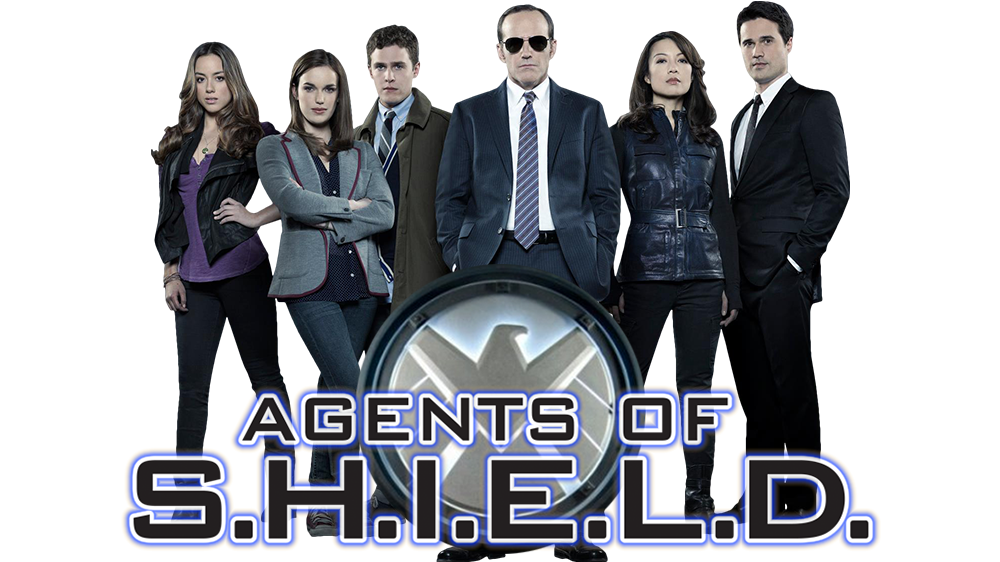
I like these guys, they're just so... pretty.

I like these guys, they’re just so… pretty.

Of course, TV execs have also given the geek subculture some shows that are flagrant pandering.  The more annoying of these is Arrow.  While I’ve only heard good reviews from friends about this show, I find the dialogue to be stilted and the acting to be wooden.  Another TV show that has to be classified here is Agents of S.H.I.E.L.D.  I have high hopes for this show’s future—especially give that it is a Joss Whedon show (see above)—but for now, it just seems to be a show that expects viewers and ratings based on its theme, rather than its content.

Don’t get me wrong, geek subculture has excellent TV shows as well.  In the 90’s there was Buffy the Vampire Slayer, in the late 2000’s there was Dollhouse, and right now there is Continuum, which continues to hold my interest.  HBO gives us the exciting TV dramatization of GRRM’s A Song of Ice and Fire, and Netflix toys with the idea of returning our beloved Firefly (please, let Castle end soon!!).  There is plenty to see on current weekly episodes and available to binge-watch on Netflix.

Perhaps the most amusing geek TV is a relative newcomer:  the geek reality show.  It makes me laugh to see shows such as King of the Nerds (now in season three), and Heroes of Cosplay on TV.  Who knew that one day a geek would be given a confession box moment?

So the subculture has religion, with all its trappings, sports, and entertainment of all sorts.  Geek culture is definitely a vibrant and fulfilling subculture with aspects to appeal to any geek.  Are there any parallels to population culture that I’ve missed?  Let me know your thoughts in the comments, or @thereforeigeek.
6 Comments

Filed under Editorial, Geek Life, Tracy Gronewold

Editorial | Inconsistencies, Deus Ex Machina, and the Modern Fantasy Reader

If there is one thing that I abhor in literature and in real life, it is inconsistency.  I also despise inefficiency and incompetency, but those usually apply to the workplace more than to the bookshelf.  Still, inconsistency stands out as a peeve that has grown from a cute, cuddly pet—an endearing idiosyncrasy—to an enormous, vehement monster, which is ready to jump out and rant away at any time.  Usually this happens when I am alone in my room, but occasionally bursts out during conversations with people who always like me just a little bit less after the fact.

My friends would have me believe—and in fact I actually did believe for quite a while—that I am alone in these crazy tirades, but I have recently learned that I am not.  Indeed an entire generation of readers now thinks the way that I do, and our prayers have been heard by the gods of our beloved genres:  the Authors themselves. Continue reading

5 Comments

Filed under Books, Editorial, Tracy Gronewold

Editorial | Game of Thrones S4 Premiere Reaction & Recap

***** SPOILER ALERT *****

This review will be discussing plot points which may be considered spoilers. Consider yourselves warned.

So that was… quiet.  The Game of Thrones season premiere was not at all what I was expecting, but it gently immersed us fans back into the world of Westeros and the Free Lands.

In case you had forgotten how much you hated Tywin Lannister, I would like to have a moment of silence for Ice, the great sword wielded by Starks time immemorial, that was taken from and used to behead Lord Eddard Stark and has now been melted down into two Valyrian steel swords.  I know that Jaime has not yet become a truly good man, but there is a little part of me that is still bitter over Ned’s death, and that part is angry.  There is only one place that Tywin Lannister could have gotten enough Valyrian steel for two swords.  Jaime would have known that.  But at the same time I understand that there was no way for what Tywin had done to be undone.

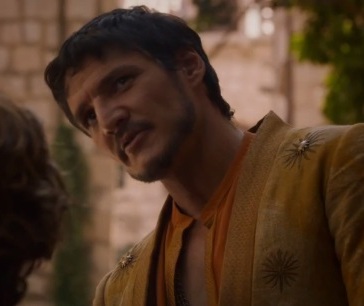
Not my usual, but nice.

Not my usual, but nice.

Oberyn Martell… looks nothing like I pictured, but he plays his role so well that I can already feel my imagined Oberyn turning into the TV show Oberyn.  He’s very suave.  Also, the Dornish love wine and sex.  Seriously.  Tyrion should really consider moving to Dorne. Continue reading

Leave a comment

Filed under Editorial, Television, Tracy Gronewold

Editorial | Review: Noah

***** SPOILER ALERT *****

This review will be discussing plot points which may be considered spoilers. Consider yourselves warned.

The word Ararat has a special meaning for believers of Judeo-Christian teachings.  To them it symbolizes hope, rebirth, cleansing—even the spring of a new world.  Interestingly, the word never makes an appearance in the new Hollywood film Noah, but the symbolism of Mt. Ararat, the final resting place of Noah’s Ark, is steeped into every aspect of the movie.

The first thing to mention about this movie was the acting.  Russell Crowe (Noah), Jennifer Connolly (Naameh, his wife), and Emma Watson (Ila, an orphan girl) are an all star cast, and I would expect nothing but a stellar performance from them.  They did not disappoint.  The supporting roles were filled with really excellent actors as well, with Anthony Hopkins as the surprising choice for Noah’s very elderly grandfather Methuselah, and Ray Winstone as the evil local king/tribe leader Tubal-Cain.  There was a cameo appearance by one of my all time favorite, underappreciated actors Martin Csokas, as Noah’s father Lamech.  The only supporting character that did not have an outstanding performance was Japheth, played by Leo McHugh Carroll, but this makes sense considering the lack of information about him in the source material.

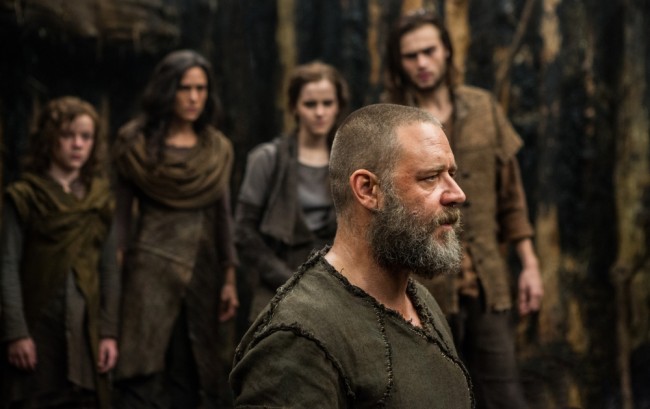
Noah's family

Noah’s family

The relationships in this movie were probably the very best, most honest portrayal of a family that I have seen from Hollywood since the great epics of the late 1950s and 1960s.  True affection and forgiveness is difficult to fake , but between the excellent script and the superb acting through the family focused scenes at the beginning and end, this movie pulled it off.  I loved seeing Naameh (Jennifer Connolly) cuddling a baby Japheth in some of the opening scenes.  It is so easy to forget that babies were just as sweet and fragile 6,000 years ago as they are today.

There was a lot more story—not just Noah’s story—crammed into this film than I was expecting.  The movie started with the story of Man, and his fall.  This was presented in stop action animation and subtitles in a font that disturbingly resembled comic sans.  Three symbols from this initial story are repeated as a motif throughout the movie that alerts the viewer that they are now watching a dream or a prophecy revealed through a trance.  The first symbol is a green snake slithering through the grass, the second is a fruit that pulses like a beating heart, and the third is the silhouette of Cain’s upraised arm and hand grasping a rock to club his brother to death.  I appreciated why the motif was used but the last image was really hard to see, and every time it was used my concentration broke while my brain tried to figure out what I was seeing.

I appreciated that the movie bothered to tell the creation story, and that it did not take sides on the issue.  The story was told by Noah as a voice over a somewhat annoying time lapse animation.  He told the original, Biblical version of creation with each part of creation taking a day to complete, but the animation that flowed with the story seemed to mimic a type of evolutionary influence.  The movie seemed to go out of its way to avoid confrontation in other ways as well, such as strictly using “the Creator” to refer to God.

It seems as though the script writers decided that destruction of the entire world by an enormous flood at the will of the supernatural being who created it all was not enough drama.  In order to add to this, they included additional stressors to the family bond.

While the Biblical account clearly states that Noah, his wife, his sons, and their wives were all aboard the ark when the door was shut, the movie takes a liberal interpretation.  Noah decides that the Creator must be destroying the world to clean up the mess that man has made, and therefore must not want any more men in the new world.  That’s completely fine, though, because Noah and his wife are past child bearing, and the only other woman on the ark—an orphan girl that they took in who is now the love interest of their oldest son Shem—is barren.  Noah refuses to find wives for his other two sons, which is not taken well by the adolescent second son, Ham.  Because Ham is angry at his father’s choice, he does not tell Noah that Tubal-Cain, the erstwhile king of the area, has stowed a ride on the ark, and actively conspires to kill Noah, and repopulate the earth with his own children.

However, Noah’s plan for a humanless planet is thwarted by his wife, who goes to Noah’s grandfather, the aged Methuselah, and asks him to intercede with the Creator for her sons, so that they can have children and be happy.  Methuselah gives his blessing to Shem’s love interest, Ila, and she gets pregnant on the ship.  Noah is angry that his wife has gone behind his back and thwarted what he feels to be the Creator’s plan, and threatens to kill the child if it is a girl, so that there will be no chance at any more human children.  This, of course, leads to quite a bit of screaming and crying on the part of every person on the ark, and an emotional climax that has almost nothing to do with the fact that they have been stranded on a floating box for months with no certainty that they will ever get off.

Another addition to Noah’s story is the Watchers.  These are fallen angels who defied the Creator in support of Adam and his race, and were cast down to Earth.  I appreciated the physics of the story that the script writers were trying to tell:  creatures of light and energy crashing to earth melted the stone, which then cooled around them.  Unfortunately, this was a visually unappealing mess.  I was also left wondering why the stone that formed around them did not erode over the thousands of years that they had been on earth—especially since they were moving a lot.

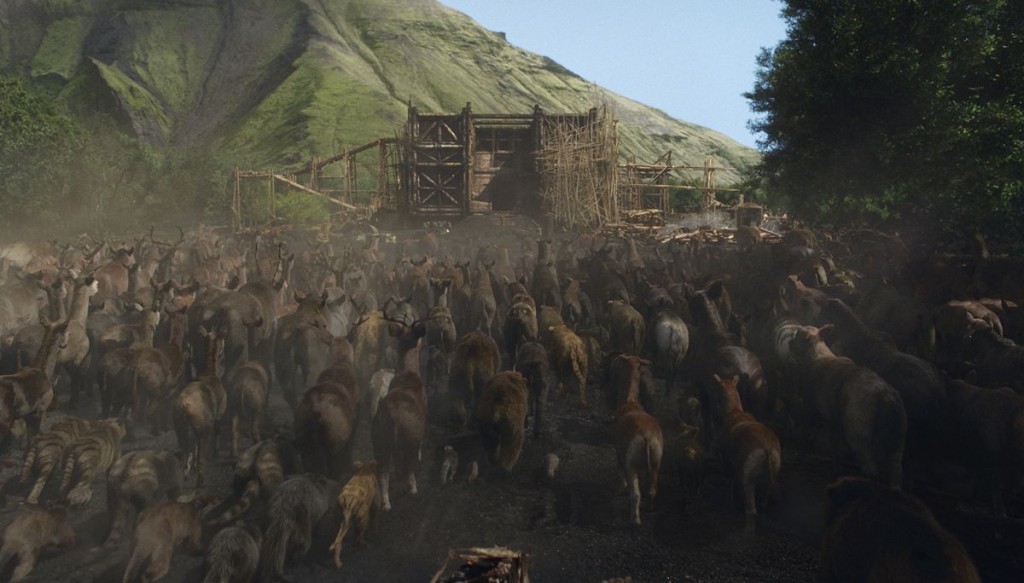
The animals arrive two by two

The animals arrive two by two

Visually this movie was shot to be beautiful, not necessarily to be accurate.  This was obvious through the use of a lot of sound stage settings, with actions designed to showcase silhouetting of characters against a setting sun.  Most of the sets felt very unearthly (Methuselah’s mountain and the black volcanic ash expanses were mostly shot in Iceland).  The visual effects are beautiful, but they do break the viewer’s concentration from time to time.

The biggest problem that I had with this movie was the ambiguity regarding why Noah and his family were told to build the ark and be saved, and the other humans were to be destroyed.  The beginning of the film showed that the murder of Abel by his brother Cain was one of the big influences for humanity veering wildly off the Creator’s track.  However, Noah shows no compunction for killing humans because they’ve killed an animal.  I was confused, and still wonder if the director/writers were trying to equate vegetarianism with being a good person.  Since this is a movie about good versus evil, I would have preferred a sharper distinction between the good and the evil.

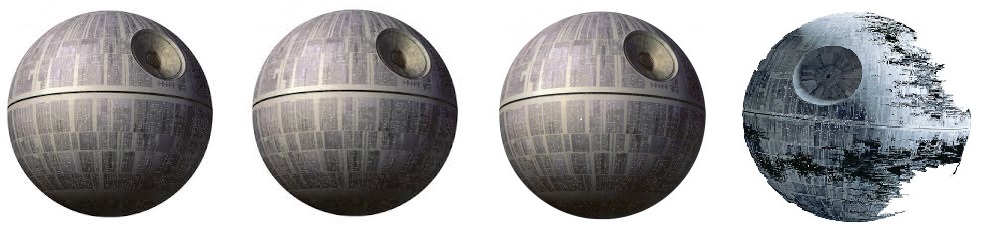
As a moviegoer, I really enjoyed the experience that this film provided, but probably won’t add it to my DVD collection.  As an admirer of the original account of Noah and the Great Flood, I hope that despite the additions to the story, people who have not read the original will be inspired to look it up and see what is really there.  I give this movie three and half Death Stars.3.5 Death Stars

Leave a comment

Filed under Editorial, Movie Reviews, Movies, Tracy Gronewold