Category Archives: Winning Science

Winning Science April 16, 2014

The Cassini spacecraft has discovered what appears to be a new moon being formed in the rings of Saturn. The new moon, named Peggy, is being formed from the ice that makes up Saturn’s rings. While this baby moon is still currently too small to see, the gravitational effects on the rings are visible. Peggy joins the 62 other moons that Saturn has, both official and provisional.

peggy

The moon might be named after a real person, but all I can think about is the guy from the Capital One commercial.

Leave it to the folks at MIT to determine that our furniture is too lazy. They seem to think it should be doing more for us. The Transform projects created a table-ish structure that moves and responds to people. The system senses when a person is nearby using a Kinect (from an Xbox). The table uses 1,152 plastic pins to provide motion. There is also a fantastic video of the table rolling a ball around. Yes, you just read that right, the surface is moving a ball around, in a controlled and complex manner.

rs_560x415-130327085118-1024.wolverine.ls_.32713

Maybe it won’t be too long until we have hospital beds like Yashida’s in The Wolverine. Seems like it could be comfy.

Scientists in Russia have successfully grown a new esophagus and implanted it in a rat.  What is an esophagus? When you drink something and you start coughing because it went “down the wrong pipe,” it should have gone down the esophagus. It’s the part of the body that takes food and liquids (e.g. beer) from the mouth to the stomach. The Russian scientists were able to accomplish this by using a scaffold of existing cells and then allowing stem cells to develop around that scaffold. Not only is this a fascinating advance, but an interesting technique for doing it as well.
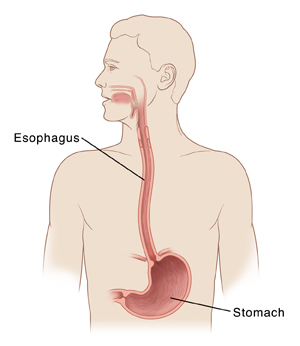
40532_1

I’m pretty partial to my own esophagus because of the whole loving beer and food thing.

 

Leave a comment

Filed under Weekly, Winning Science

Winning Science April 9, 2014

Today CERN announced that they have unambiguous proof of a new exotic hadron. Hadrons are subatomic particles that aid in creating the strong nuclear force that binds atoms together. These new hadrons do not fit in to the current quark model, however, which means that scientists will need to revisit the existing model in order to account for these particles. It’s always really awesome when scientists find out that the universe doesn’t quite work the way they thought it did, because every time it happens humans improve their understand of how things really work.

CERN's Large Hadron Collider

CERN’s Large Hadron Collider

I’d also like to take a moment to point out that–as has happened with other things–I thought baryons were fictitious Star Trek inventions. Once again, foiled by Gene Roddenberry

Back in the day, a navy’s fighting power was measured by the strength of its battleships. With the emergence of the aircraft carrier during WWII, the battleship took a back seat and they have since all been decommissioned. Still, without the battleships’ big guns, there is something missing in the Navy’s arsenal–the ability to “put steel on target” as I have heard it put. Now the US Navy is getting ready to implement the use of rail guns. These weapons can put a non-explosive round on a target up to 100 miles away and the projectile travels in excess of mach 7. (By the way, mach 7 is just over 5,300 mph, which is eighty-eight times faster than the average car on the highway.)

Not only is this weapon super cool, but it can be operated by one sailor and is extremely cost efficient as well. Each round costs $25,000 compared to missiles which range in price from $0.5 million to $1.5 million a piece.

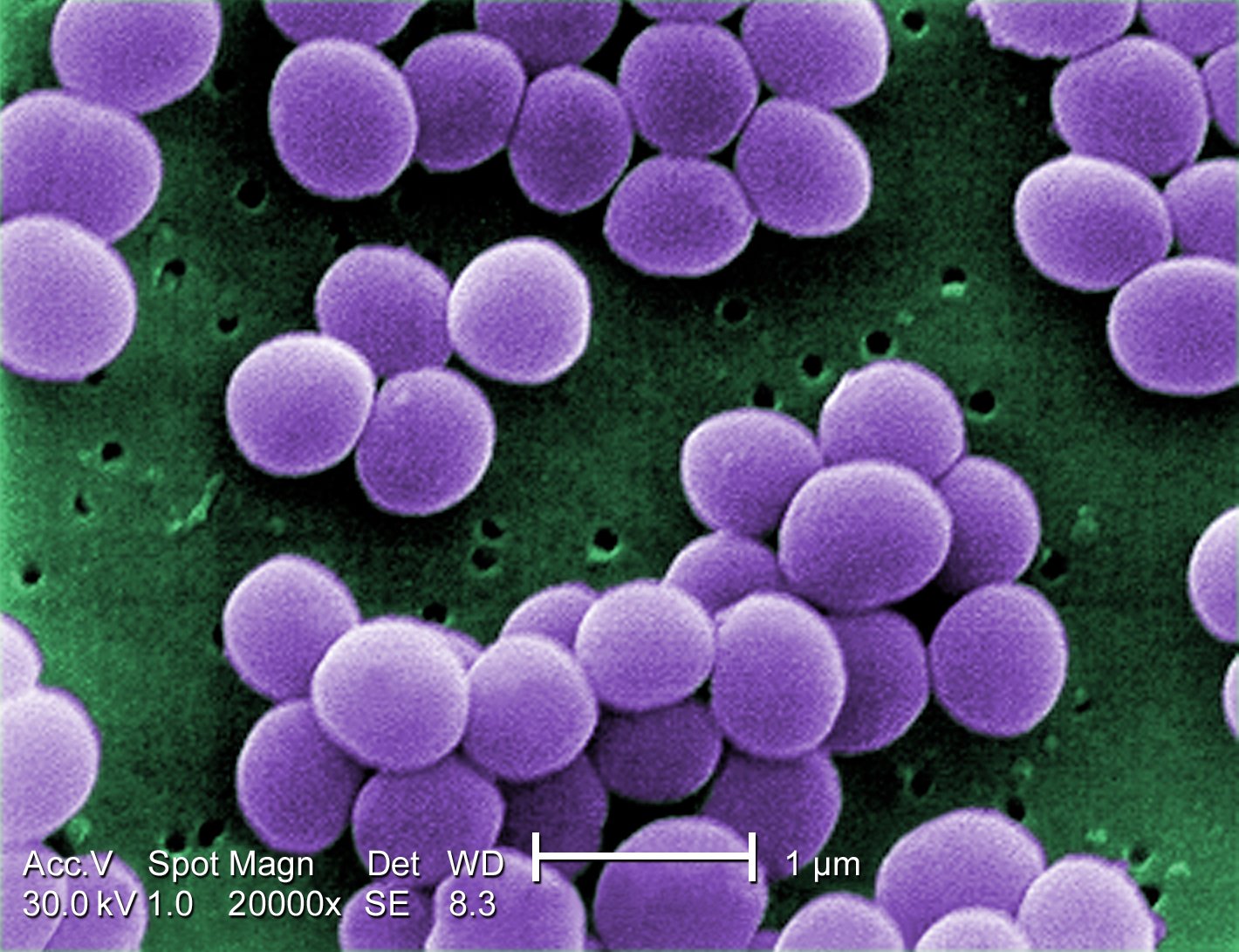
As it turns out, there is a link between use of antibacterial soaps and increased bacterial growth. Persons who have an increased level of triclosan have also shown increased levels of Staphylococcus aureus. When the bacteria are exposed to non-lethal doses of antibiotics they tend to latch on to crevices and hide in biofilms. This leads to a corresponding increase in the amount of bacteria present and can cause an increased risk of infection if that person is undergoing surgery.

Staphylococcus aureus

Staphylococcus aureus

This seems like a particularly appropriate story right now, given that I’ve got some bacteria that are laying me low at the moment.

Leave a comment

Filed under Weekly, Winning Science

Winning Science April 2, 2014

Night vision goggles are pretty standard military equipment. While not everyone may have them, they are readily available if needed. The problem is that goggles can be bulky and limit the field of view. University of Michagan researchers are looking into ways to make night vision contacts. Using graphene and an insulating material, with an electrical current applied, infrared light can be converted to visible light. Eventually, this technology could be used in contact lenses, removing the need for goggles.

The goggles, they do nothing!

The goggles, they do nothing!

One issue still to be figured out is the need for greater light sensitivity.

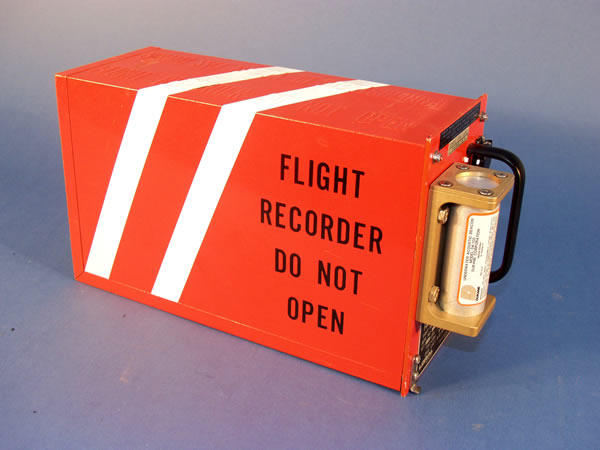
With the presumed crash of Malaysia Airlines Flight 370, the hunt is on to recover the infamous black box before the battery runs out. It turns out that the black box isn’t quite as good as one would assume. While they are remarkably durable, the sonar devices that are designed to allow searcher to find them have batteries that only last thirty days after a crash. This has resulted in the information from a handful of black boxes being lost because the boxes couldn’t be found before the batteries ran out. After one particularly bad crash in 2009, several improvements were recommended, however many American carriers have not yet updated their equipment. There is also the option that instead of using black boxes, airlines could wirelessly send all the data from the plane to a data center where the information can be stored. This of course would require significant improvements to the aircraft and would be costly for the airlines.

Also, it turns out Black Boxes aren't actually black.

Also, it turns out Black Boxes aren’t actually black.

Pilots are also not too hot on this idea because they would essentially be bugged the entire time they are at work.

Twin studies are important in scientific research as they represent the two most identical persons that can exist. The closer two people are to one another, the better scientists can control the experiment. With this in mind, NASA will be conducting a twin experiment of their own. The space agency will be sending Scott Kelly to the International Space Station for a year while his brother Mark will remain here on Earth. Both men will be subjected to the same experiments to determine what, if any, differences there are in humans after prolonged time in space.

nasa_logo

Mark Kelly is the husband of former Congresswoman Gabby Giffords and Scott is a graduate of my alma mater, SUNY Maritime College.

Leave a comment

Filed under Weekly, Winning Science

Winning Science March 26, 2014

Since its IPO, Facebook has been picking up smaller companies on a fairly regular basis in an attempt to improve the company’s profitability. The latest aquisition is Oculus, a company which makes VR headsets for gaming and 3D movies. Sure this is cool technology, but Facebook seems to be stretching a little too far outside its comfort zone with this one.  In this article, Mark Zuckerberg talk at length at where they see the technology going in five or ten years, but the reality is that the tech isn’t that advanced yet and since the Oculus Rift isn’t widely available, it is not clear whether people will even adopt the device in any great numbers.

Oculus Headset

Oculus Headset

When it comes to wearable technology, I think Google Glass is the way to go.

Continue reading

Leave a comment

Filed under Weekly, Winning Science