Category Archives: Editorial

Confessions of a Geek: Literary Influences, Part 2

I lived a very sheltered childhood, and so books have been the staple influence in my life.  My mom read to me when I was very small (we started the Little House on the Prairie series with her reading to me, and ended them with me reading to her).  I was off and running into the wild world of books that ended up taking me all over the world and beyond it.  Some of the authors and books that have influenced me (and this is only a partial list) are below.

  • As a girl, I was obsessed with horses, and thoroughly enjoyed Marguerite Henry’s White Stallion of Lipizza and of course, Misty of Chincoteague, as well as Cinnabar, the One O’clock Fox (although this one was more about the fox than the horses).  I preferred the less well-known books.  White Stallion of Lipizza had me sitting backward on kitchen chairs for months, because that was how the Lipizzaner trainers would stretch the inside of their thighs to fit over the extra wide barrel of those gorgeous horses.
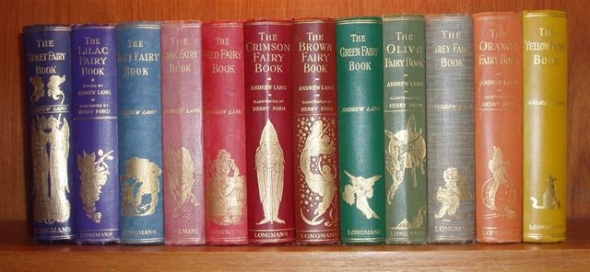
  • The Colored Fairy Books were another huge influence on me.  Andrew Lang took me all over the world, from the snowy, troll infested forests of Germany to the oyster beds off the coast of Polynesia.  I can’t wait to introduce my nephews to this series.
  • C.S. Lewis was a huge influence on me very early on in my life.  I read The Lion, the Witch, and the Wardrobe so early that I cannot remember reading it for the first time.  I lost count of my rereads at number nineteen.  I also read and enjoyed the space trilogy.  Perelandra  was a beautiful picture of an idyllic world that made me ache for a place I had never been.  That Hideous Strength was a book that I read long before I was ready.  It was terrifying, but beautifully written.  Till We Have Faces was amazing and profound.
  • I was also really interested in all of the classic authors; Dickens, Austen, and the Bronte sisters were high on my list.  Unfortunately, thanks to the Great Illustrated Classics, abridged books for children, many of these books were ruined for me.  I couldn’t even get through David Copperfield until I was in my late teens.  That abridged series taught me to loathe spoilers.  I guess the children’s versions had some influence on me as well as the original versions.
  • I continued to read books that I could technically comprehend, but was not old enough to properly digest.  I read Jane Eyre when I was fourteen, and I was not particularly impressed.  I felt that Charlotte Bronte got lost on her way to the conclusion.  On the other hand, after I read Wuthering Heights, I wandered around the house in a funk for a couple of days.
  • One of the greatest influences on my life was a series called The Young Underground, by Robert Elmer.  These books were about a young brother and sister, Peter and Elise Anderson, who smuggle underground newspapers, and later humans, in Nazi occupied Denmark.  These books influenced me, not because of their content, but because my mom used to read them to my siblings and me to keep us close as a family after she had to go back to work.

This can only be a partial list (it’s not even CLOSE to a full one), because there were so very many books that influenced me growing up.  I am happy to say that I continue to find books that change the way I see the world, so the list continues to grow. -t
6 Comments

Filed under Books, Editorial, Geek Life, Tracy Gronewold

Editorial | Review: Battle of Britain

Today’s mobile game review is on a game called “Battle of Britain,” a shoot-em-up, fighter pilot game.  I was actually really excited when I picked this game out, because I saw it as a chance to redeem myself.  When I was very young, my brother got a really cool PC game for Christmas that involved dog fighting in WWII (the kind with US planes fighting it out with German or Japanese planes over the various theaters of World War Two, not a Michael Vick style RPG).   Every time I tried to play the game, my lack of coordination made the plane run off the end of the aircraft carrier.  I never even got airborne.  This game, I had hoped, was going to let me make up for all of that—at least in my mind.

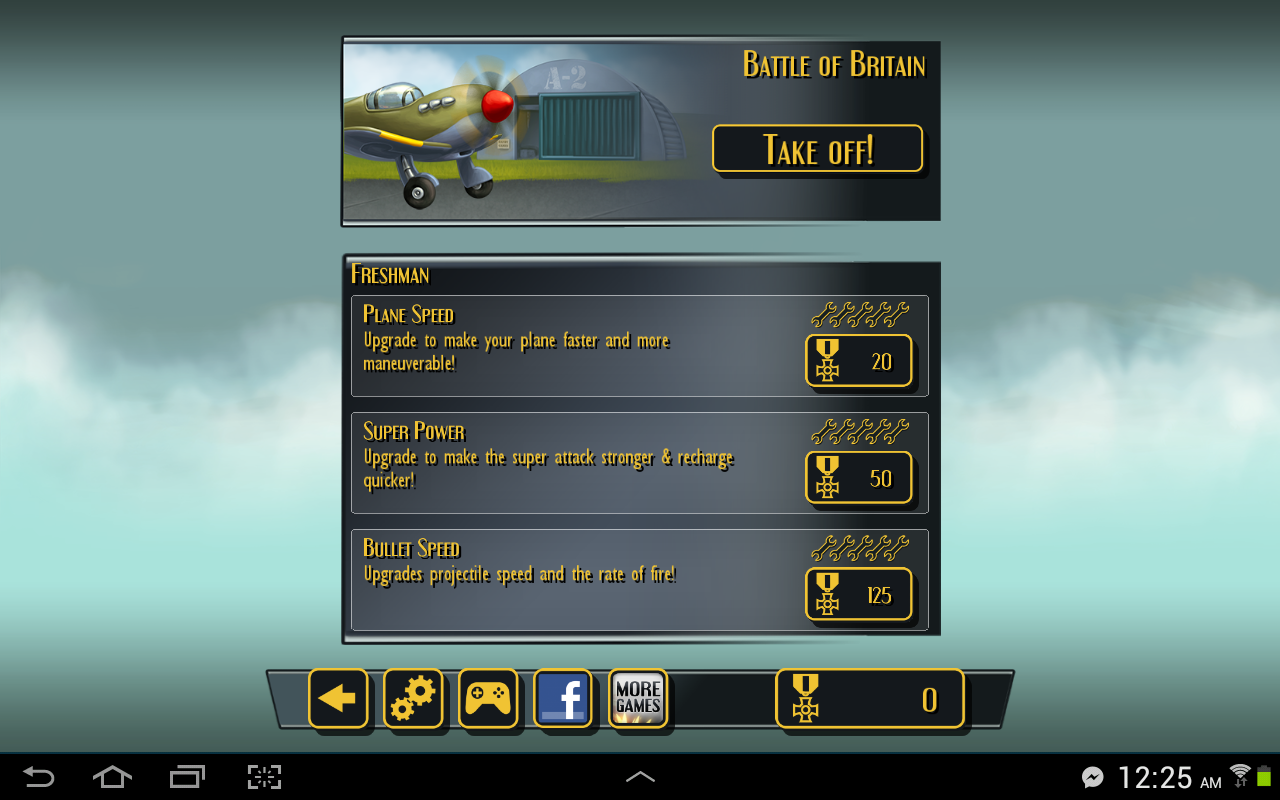
The upgrades are not that hard to get (at least at first).

The upgrades are not that hard to get (at least at first).

The good news for this game is that it is very easy.  I fired it up, and after the usual explanatory screen rolled, I saw a simple start screen that showed that all my upgradable options were at the beginner level.  I hit the button that was conveniently marked “Take Off” and the battle began.

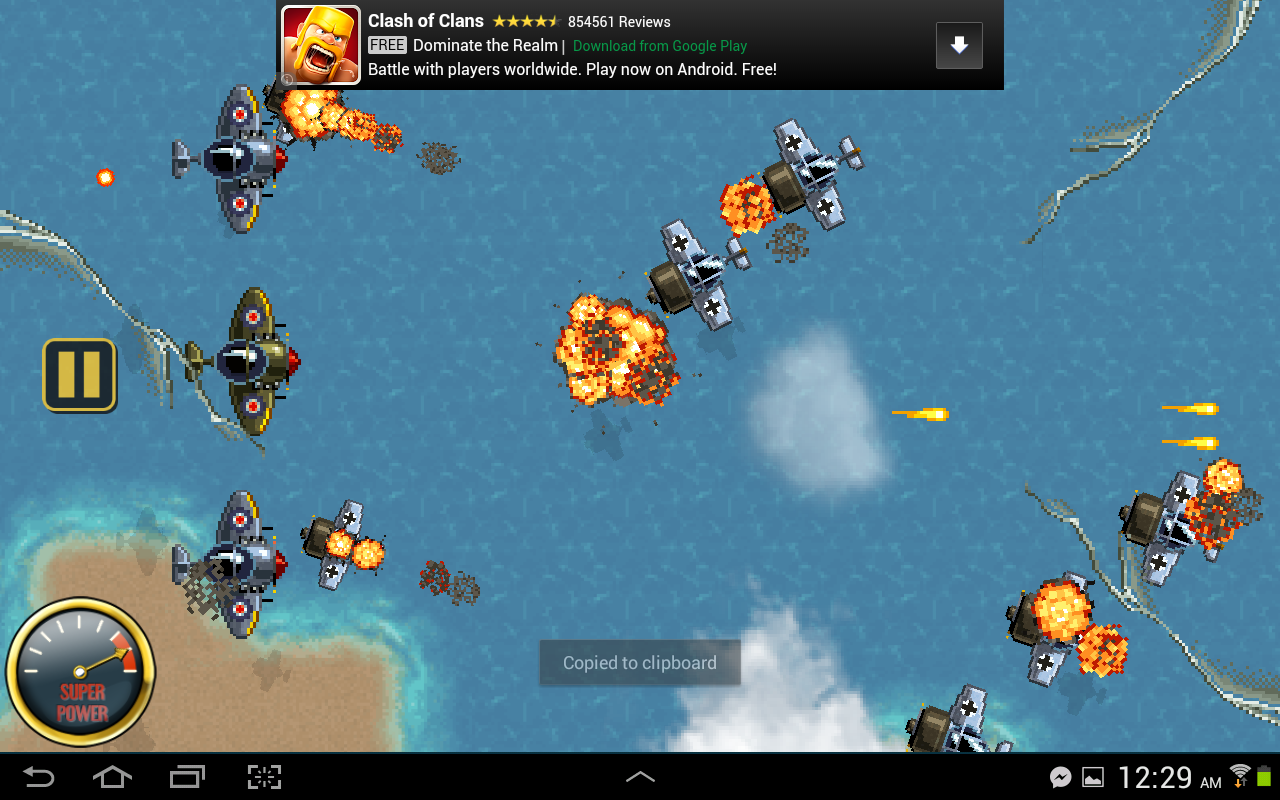
As soon as the player touches the screen, his aircraft begins firing.  No matter where the screen is touched, the plane will fire bullets.   Apparently, ammo is unlimited, which surprised me.  Touching the plane itself on the screen and moving one’s finger around will control the movement of the plane.  The plane only moves up and down, forward and backward.  I was disappointed to see that movement was arcade style, even though my tablet lacks a joystick.

Screenshot_2014-01-06-00-29-21

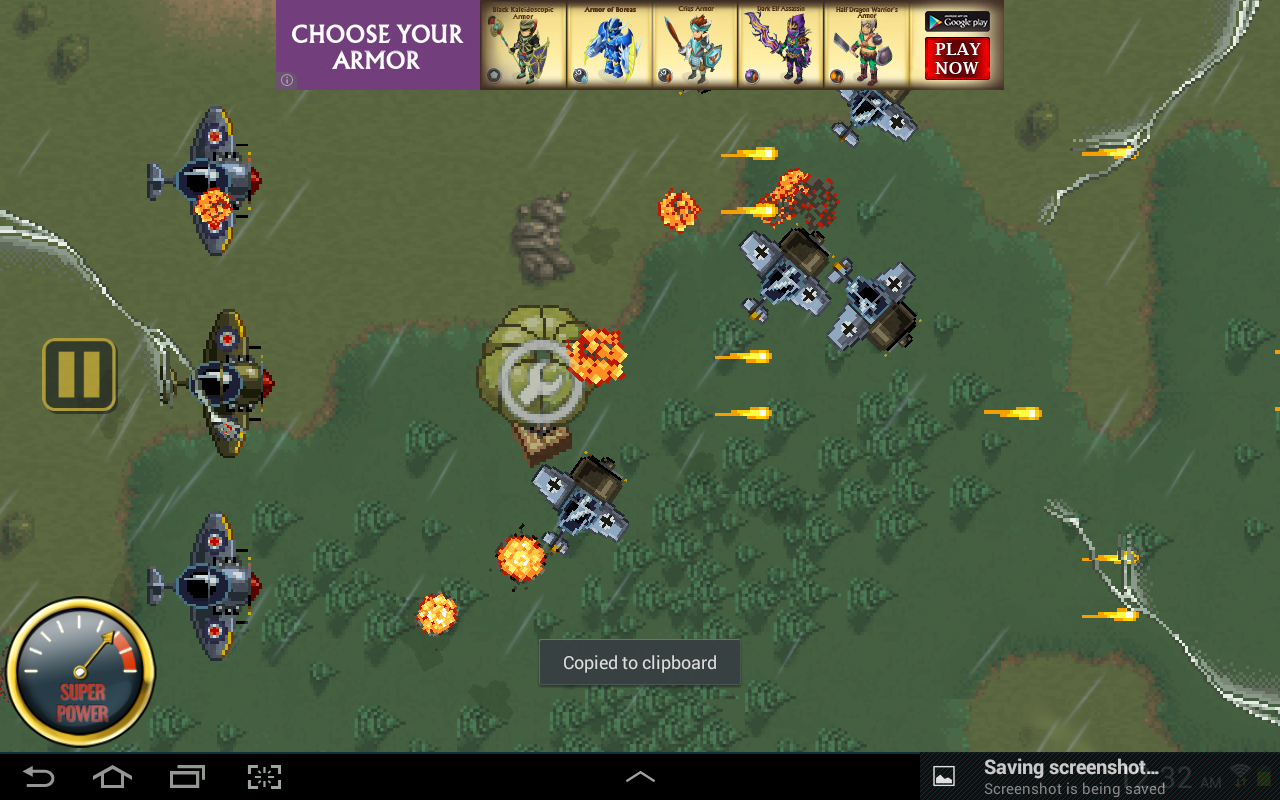
The “super power” barometer at the bottom left continues to rise until it is full–then it can be pressed to give the player an extra boost.

Enemy planes enter the screen thick and fast, and have a much wider range of motion.  Each plane shot down leaves behind a medal, which is the currency for upgrades.  It does seem difficult for the player’s plane to actually be shot down, even if it actually crashes into other planes.  This got boring very quickly.

Large, enemy planes occasionally appear and require a little more effort to kill.  Once defeated, they offer various bonus packages, such as wingman fighter planes for the player, or repairs to the plane.

Screenshot_2014-01-06-00-32-21

This large plane went down and left me with a repair for my plane.

The graphics were very plain, and the color scheme was flat.  This was probably intentional to help portray a WWII game, but only further injured a game that had little to recommend it.

Overall, this game was disappointing and pretty boring.  There was very little incentive to proceed past the first level.  On the plus side, the music for the game was rousing and patriotic; but on the minus side, graphics, style of play, and actual missions were very boring.  I would give this game two and a half out of five death stars.2.5 Death Stars

1 Comment

Filed under Editorial, Game Reviews, Gaming

Editorial |The Silent Character

In the course of writing a novel or a screenplay, authors carefully set up the scene they wish to play out.  In science fiction or fantasy—even more so than in other genres—they create a world, and then populate it with figures that are limited only by the author’s imagination.  However, I submit that in the very best sort of books there is one character that is not created by the author, but is temporarily bound in the world he creates:  the reader.

A book is something like the stage on which a play is performed.  The onlooker sees everything that is going on in the story spread out before him in his mind’s eye.  In a play, the characters can interact with themselves, but they arrange themselves to be visible to the audience as much as possible.  Their gestures are larger than life, their facial expressions more dramatic, and their voices pitched to carry to the unmentioned and usually silent viewers.  Although in most plays the actors never acknowledge the audience, they still consider its response in every action that takes place on stage.

In a good book, the kind that sucks the reader in and completely absorbs him, the same thing happens.  In most of these books, such as Tolkien’s The Hobbit (now a Major Motion Picture), the reader is never directly addressed.  Characters act, interact, and react with each other for the benefit of the audience.  Events are arranged for thrilling suspense.  Action sequences are highlighted, and periods in between them are foreshortened.

Sometimes, although more rarely, the author does directly speak to his readers.  This is usually an aside.  My favorite example of this is from C. S. Lewis in The Lion, the Witch, and the Wardrobe, “”Wherever is this?” said Peter’s voice, sounding tired and pale in the darkness. (I hope you know what I mean by a voice sounding pale.)”  I think I was six years old the first time I read this, and it was a completely novel idea to me (pun entirely intended) to be addressed by an author I already loved and trusted by this point in the book.  However, this style of writing does not happen very often.

Down the beaver hole

Some authors spend more time crafting the story to their audience, such as Piers Anthony.  His world of Xanth is escapist fantasy taken to extremes.  Nearly everything in this fictional universe is designed to be a pun or an inside joke.  The reader is fully engaged as a silent character in his world.  More serious authors tend to make the role of the reader much smaller.  However, even these authors expect the audience to be fully engaged in the story.

In some cases, the author starts off with a good sense of his audience as a silent participant in his world, but then seems to forget their presence, further into the story.  A great example of this is George R. R. Martin’s Song of Ice and Fire series.  The first couple of books read like smooth and beautiful stage productions.  The level of description sets the stage for the reader, without becoming so boring that he skips over large sections.  The action flows at a fluctuating pace:  slowing down during the moments of action and speeding up to skip over slow, boring chains of events, such as Catelyn Stark’s journey to King’s Landing in A Game of Thrones.  In later books, such as A Dance With Dragons, Martin seems to prefer spelling out each and every tiny event, even if it has very little to do with the story.  In cases such as this, I personally feel that extra time in the editing stage of the process is necessary.  (Of course, he doesn’t really have the time for extended editing sessions, but I digress.)

If GRRM doesn’t get the next book out sometime next year… grrmmph mumble mumble…

It seems obvious, then, that the audience to any good story is a silent, third party character which interacts with the world and the characters in it.  When the reader is so enthralled with a book that he or she spends hours or even days after it is closed reliving the events in his imagination, or creating new stories set on the same stage, the author has done his job.

Have you read a book that kept you focused for days, and even made you unwilling to read something else for a little while after you finished it?  Let us know in the comments.  I may even add it to my Reading List of Doom!

1 Comment

Filed under Books, Editorial, Tracy Gronewold

Editorial | Review: Nun Attack Run & Gun

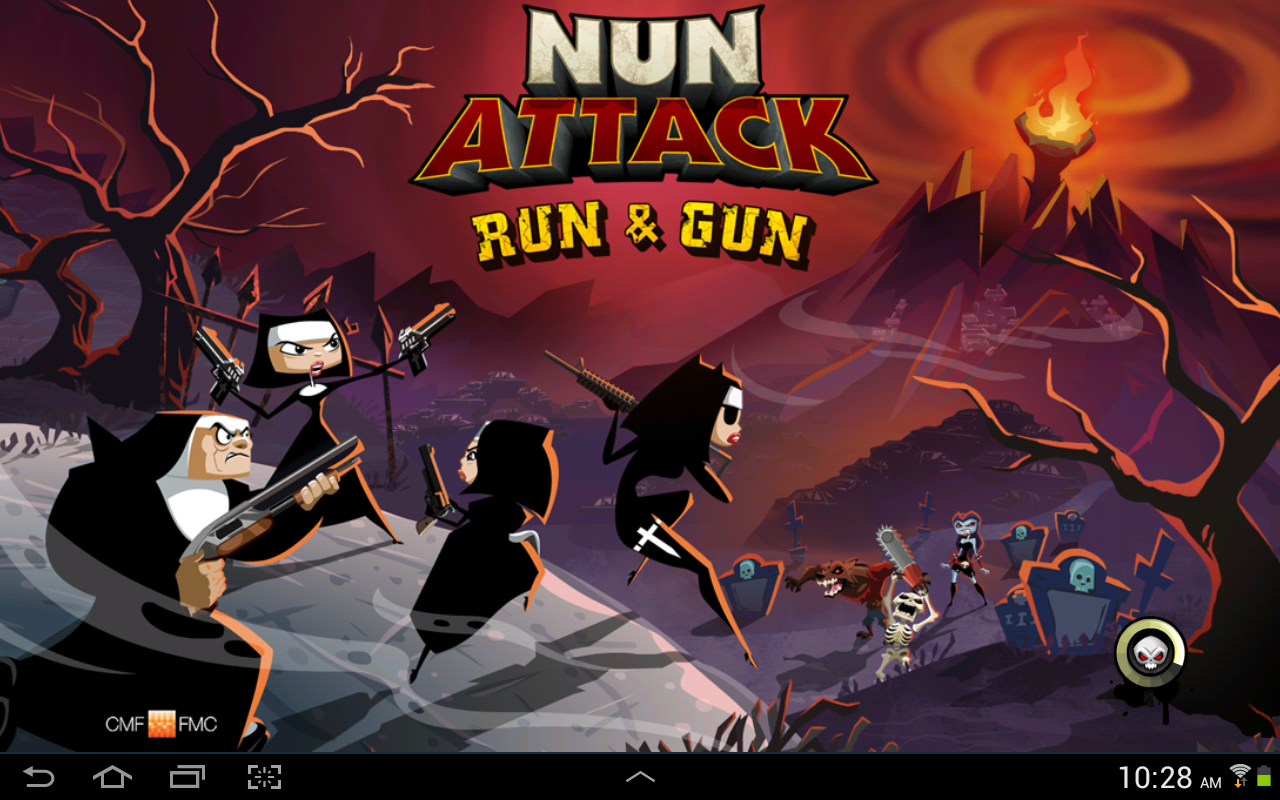
For today’s mobile game review, I went to the Google Play Store’s holiday sale.  There I found a plethora of games and at that point the hard part was choosing just one.  I found a holiday game called Nun Attack: Run & Gun which looked interesting and had a controversial name—double win, in my opinion.  This is just running game with the gun element added for some fun.

It's funny because nuns are usually pacifists

It’s funny because nuns are usually pacifist

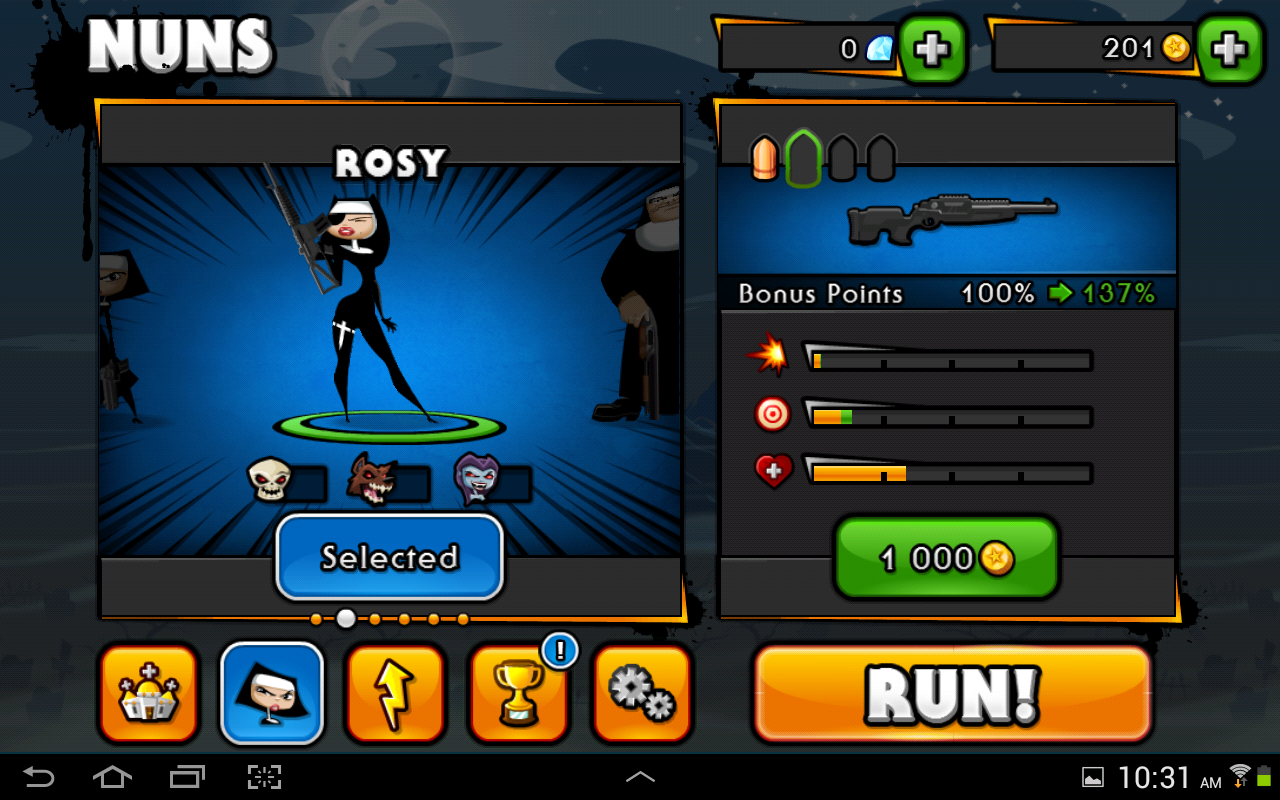
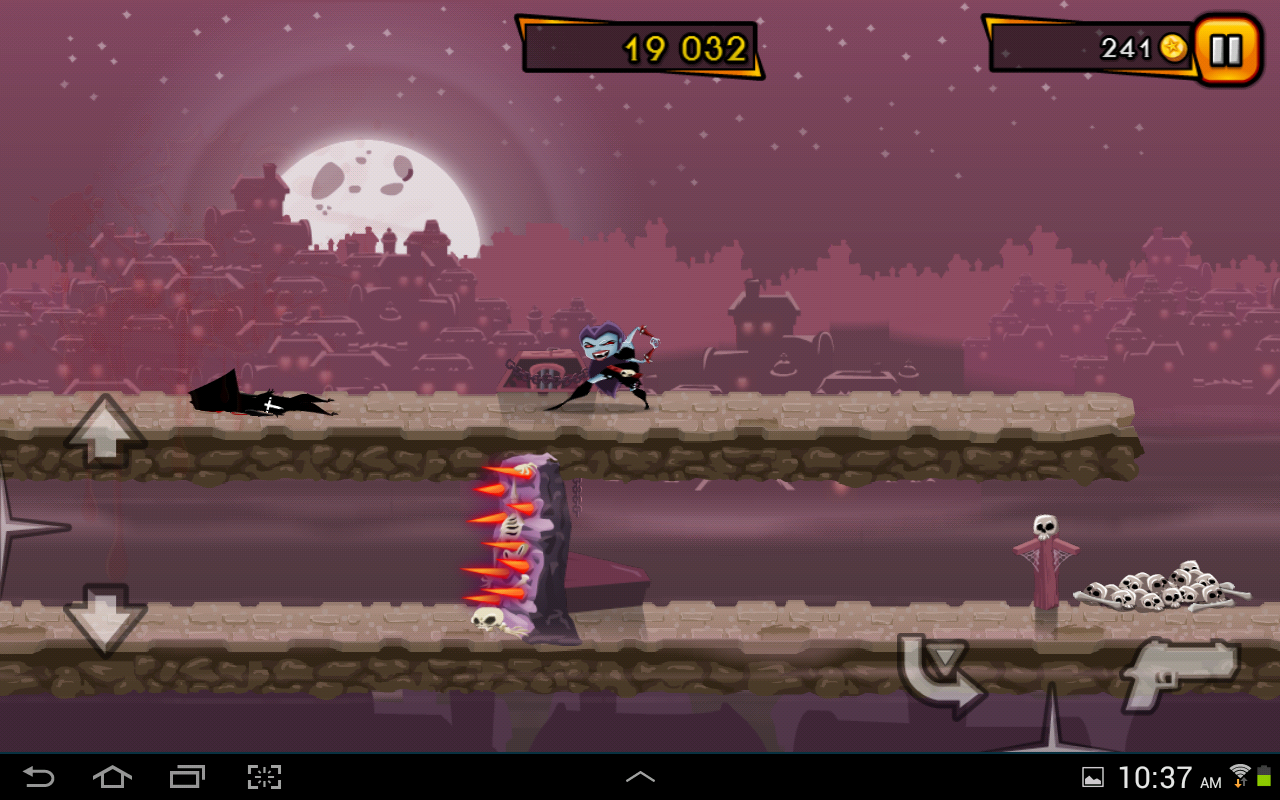
First off, this game is cute and fun.  The graphics are a little edgy, but it works in the setting.  Players get to choose a nun, which is Rosy, a tall, leggy young lady with an eye patch and a semiautomatic rifle, by default at first.  Other nuns can be unlocked later in the game.

The object of the game is to run and gather coins (much like the oh-so-boring Temple Run), but is made more interesting by the addition of skeletons, werewolves, and zombies, which all want a piece of nun.

I wonder how Rosy lost her eye.

I wonder how Rosy lost her eye.

The controls are fairly easy, considering the lack of physical buttons to work with.  Up and down buttons on the left allow Rosy to jump or slide to gather coins and avoid spinning skill saw blades and other deadly objects.  The button on the right allows Rosy to fire her rifle at the evil creatures who wish to prevent her holy work.

As with most mobile games, this game relies on in-game purchases for revenue.  Fortunately, it appears that jewels/diamonds are only used for free revivals (pun intended) for the nuns.  Unlike many games where jewels are required for leveling up, it would appear that it is unnecessary to spend money in this game to fully enjoy it.  Most upgrades to weaponry, etc, are purchased with coins, which are earned in gameplay.  That’s a huge plus for someone like me.   It’s also nice that these coins are generously distributed.  From time to time, the nun will run into a portal, which will take her through a strange rip in the space-time continuum which for whatever reason has been filled with coins.

Screenshot_2013-12-23-10-37-43There are a few things that do get in the way of a perfectly smooth playing experience.  The nuns do not seem to have a very long life span.  I would have preferred that my character could survive a few attacks before she fell on her face and literally bit the dust.

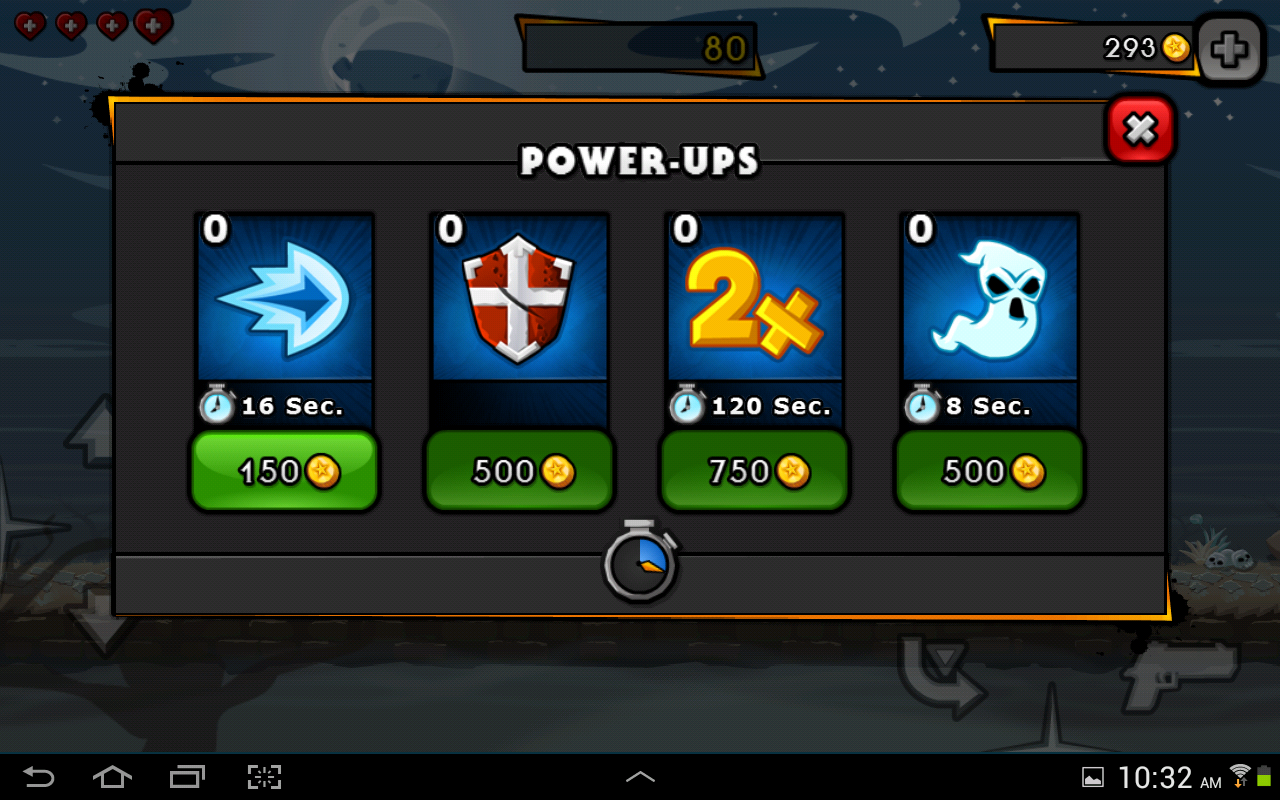
Another big problem for me is that just as the nun starts her run, a popup screen listing the available power-ups appears and stays there until it is manually closed.  This requires me to move my hands away from the important buttons at the bottom of the screen, which is very scary.

Screenshot_2013-12-23-10-32-46

Go away! I’m trying to run.

Lastly, it is both distracting and difficult to find out what the objectives are for each level.  They appear in small black bars at the bottom of the screen during actual gameplay and are not listed anywhere else in the game.  I can either ignore them completely and hope to accidentally achieve them; or I can stare at the bottom of the screen and wait for them to appear, and potentially allow my nun to run into something deadly.

This is really just a run and shoot game—not that the astute player would gather anything different from its name.  I enjoyed playing it, and it gave me a nice chance to take out my anger from my seasonal retail job (Yell at me because you don’t have a coupon for your purchase, will you? Take that, skeletons!!!!).  The game is available in the Google Play Store and in the iTunes App Store.  All things considered, I give it four out of five death stars.

4 Death Stars

Leave a comment

Filed under Editorial, Game Reviews, Gaming