Category Archives: Andrew Hales

Being A Geek

This is an origin story.  I take quite a bit of pride in being a geek, though admittedly it hasn’t always been that way. When I was young, other kids mocked me for my love of science and my slow evolution into a geek.  As I got older, I started to realize what was cool to other kids and what wasn’t.  I would often make fun of things I loved to in order to try to fit in. Finally though, I came to understand that I needed to embrace who I was and just be myself. As I became more confident in my own identity, I lost any doubt that I was a geek, and I began to wonder what exactly that was, and by extension, what made me one. 

If Prof. Indy say it, it must be true.

If Prof. Indy says it, it must be true.

Indiana Jones himself said that 90% of archeology takes place in the library, so I figured I’d start where all great investigations start:  the dictionary. Sure enough, I found a pretty good definition of geek from Webster’s English Language Learner’s Dictionary:

1 : a person who is socially awkward and unpopular : a usually intelligent person who does not fit in with other people

2 : a person who is very interested in and knows a lot about a particular field or activity

It is the second definition that I found the far more interesting, as it supports my own definition of geek, which is: “a person who exhibits a certain, highly elevated degree of passion for a particular topic, which is often outside the mainstream.” For me, being a geek is about learning about and doing the things that I love—regardless of what they are—and finding people that share those same interests with whom to exchange knowledge.

From either my personal definition, or Webster’s, one could infer that any person could be a geek about anything, but that isn’t entirely true. There aren’t exercise geeks or stock market geeks, but there are people who are very interested in and extremely knowledgeable about both (they are called something different).

So what then makes an activity geeky? What allows those that partake in it to proudly bear the title of geek correctly?

The first important characteristic is that it is outside the mainstream of popular culture. This doesn’t mean it has to be way outside the norm, but there does need to be some degree of separation; think the classic stereotype of jocks vs. geeks. For example, playing video games is a pretty common pastime for many people in their teens and twenties—and even some older ones as well. While gaming has become more popular, I would argue that only a limited number of games would be considered truly mainstream, such as Halo or Call of Duty. Though there are millions of casual gamers, Geeks play their games religiously for hours on end, until they know exactly which weapon to use under what circumstances and the exact terrain of every map.
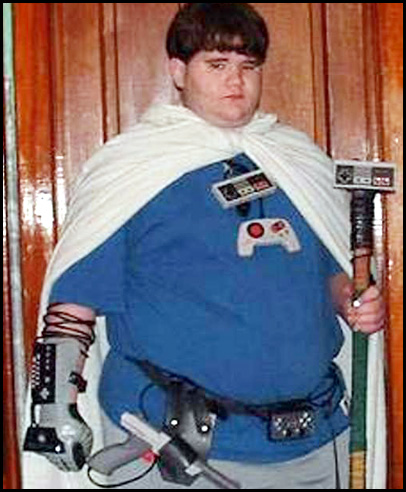
This guy knows every map.

This guy knows every map.

Another great example, and a personal favorite of mine, is comic books. Thanks to movies such as Avengers, the Dark Knight trilogy, and Man of Steel, superheroes appear in our culture and our minds like no other time in their history. I can barely walk down the street or go out to dinner without seeing someone wearing a Batman t-shirt or an ad for Iron Man. But while our society is almost saturated with these characters, the comic books in which they all originate are still largely ignored and in some cases even looked down upon. On the silver screen, these characters are accepted and even adored, but the comic books have never become a social norm.

What separates the average person with perhaps a passing interest in a geeky subject and the true geek, is also the zeal with which they embrace their subject.  There are plenty of people who have read graphic novels such as Watchmen as part of a high school or college class, but unless they became instant fans, just reading doesn’t make them geeks. The geek who deserves the title is the World of Warcraft player who jumps online for a raid, sick as a dog, because there is a slight chance at picking up the rare item he’s coveted for months, or who drives to his local comic stores every week, regardless of the weather, to get his weekly books (I think hurricane conditions are the only ones that have kept me home—a badge of honor.).

I would even have to consider a small, select group of Twilight fans as geeks. This does not apply to most of them. But there are those select few who demonstrate the necessary ardor. Those who pick Team Edward or Team Jacob, talk about the books and movies non-stop, and even ruined comic con for more than a few people. These people are geeks too, albeit annoying ones (Lord, give me strength!). Geekhood is about the passion, and they have it in abundance.

Although the pursuit of knowledge in and of itself is not geeky, a thirst for geeky knowledge is another defining aspect of a geek.  I have seen comic geeks, driven by passion for a particular subject, dig through box after box of back issues just to find a random appearance of their favorite character. The drive needed to persist at this task is impressive (If you disagree, try it for a few hours.  It is way harder than you think. I know; I’ve done it several times). What impresses me even more is that they knew their favorite character could be found in these random and seemingly unrelated titles.  Any ordinary person can read the main comics that focus on their favorite person, but a true geek takes the time and spends the energy to research even non-speaking, background appearances.  To a geek, the acquisition of information is sometimes even more important than the information itself.

Not only do we gather vast storehouses of semi-useless trivia, we also love to share our knowledge, both among those who appreciate it and unsuspecting friends and relatives. There are countless fan sites and forums dedicated to nearly every type of fandom, no matter how seemingly insignificant.  For the consumer desperate to know what was different between the Megatron figure released in Japan and the one in the US, there is someone out there who knows that difference, and will enthusiastically share it.  I myself am quite proud to admit that I own not one, but two different Star Trek Encyclopedias.  My friends have even placed bets on me in a Star Wars trivia contest at New York Comic Con, though sadly I didn’t go nearly as far as they’d hoped.

I have also learned specialized skills, such as dice based probability, that almost completely lack practical application… Except, of course, figuring out the odds of making a successful roll in Warhammer 40K in seconds flat.

The downside of this quasi-savant status, is that geeks have a bit of a “tough love” stereotype when it comes to people who are new and don’t know everything yet.  Reality is that while there are a few jerks with a pathological need to feel superior by belittling people who know less than they, the overwhelming majority of geeks out there are more than happy to share their knowledge and experience, and educate those who are new to geekhood or expanding their existing geek horizons.

It’s the passion that drives geeks to do these things even though they are not something that the rest of society considers normal.  It is important, then, to realize that the same passion that makes a person identify with geeks everywhere should make him proud of his status.  I was once told by a coworker that I shouldn’t mention my love of comics to women because it is creepy. TO HELL WITH THAT! This who I am and I’m not going to hide it or apologize for it just because it’s something that someone doesn’t want to see. We live in a modern society on foundations built by famous geeks—Bill Gates and Steve Jobs for two—and it’s time we stand up and be proud of who we are.  My name is Andrew, I’m a geek, and I couldn’t be happier.
6 Comments

Filed under Andrew Hales, Geek Life

Being Wrong Never Felt So Good

Now, I don’t know about you, but I love being right.  I love being the person who has the correct answer; the one who picks winners.  (I still can’t figure out sports though, I’ve gotten every World Cup Final wrong.)  Even when it comes to comics I love to be the person who knows what plotline will work, which author will do a great job on what books, and even which books will succeed.  Having said that, I have never before been so happy to be completely and utterly wrong.

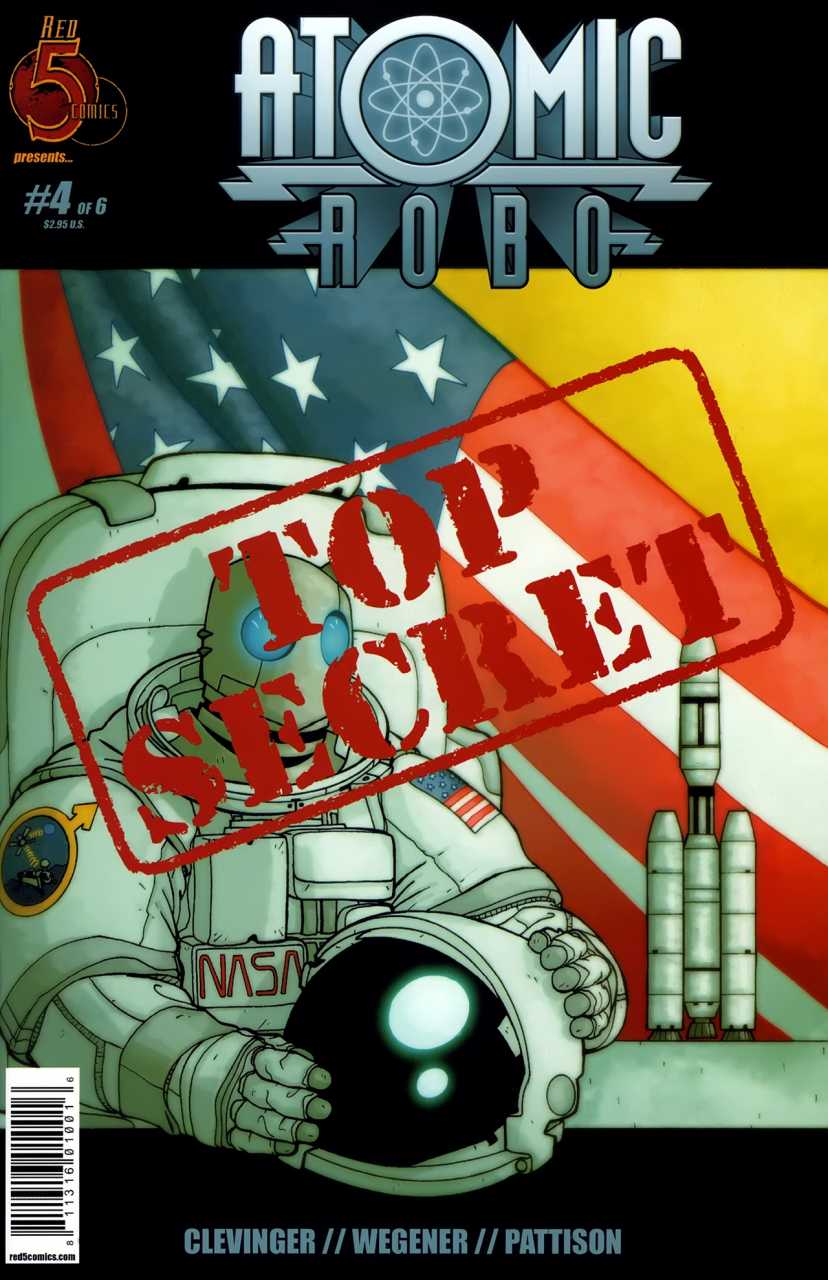
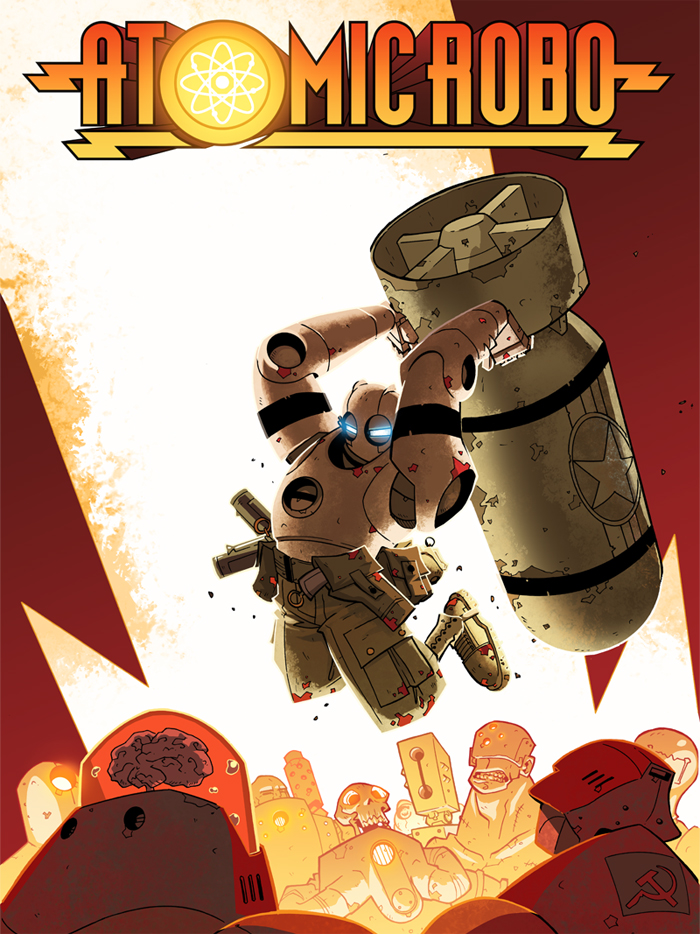
Back in 2007, as a comic book rookie, I was wandering through poorly lit aisles full of sweating, questionable smelling geeks at a Big Apple Con when I came across a booth manned by a creator proudly selling his new book.  I stopped for a minute to look at what he had to offer.  The writer was so excited that energy radiated from him as he talked about his creation.  He told me with great enthusiasm that his first couple issues had almost sold out and he was getting ready for another printing.  The book looked all right, but I wasn’t particularly impressed and didn’t think it would go very far.  As I walked away I filed the name of the book in the back of my mind along with other useless knowledge that’s stored away, waiting for the right moment to whip it out and show off my vast knowledge.  That creator was Brian Clevinger and the book was Atomic Robo.

Image

Flash forward several years to a moment in one of my local comic book shops as I happened across several issues of Atomic Robo.  Like a good little brainiac, I recalled the info I had stored away for just such an occasion, and investigated to find out what was going on with this book I had written off so readily.  As it turned out, not only had the book survived, it had excelled, earning a highly coveted Eisner nomination in 2008. While not a mainstream book, Atomic Robo had managed to carve out a considerable fan following.

I wasn’t quite ready to admit I was wrong, so I waited a few more months, but curiosity finally got the better of me, and I decided to check it out.  Now I wish I had read this sooner.  Atomic Robo feels like a cross between the humor, adventure, and energy of Indiana Jones and the simple art style of Hellboy.

The first volume, Atomic Robo and the Fighting Scientists of Tesladyne is one of the funniest books I’ve read in a very long time.  Throughout the book there is a wonderful sense of adventure.  The stories in this first volume loosely follow the same plot line, following Robo, a sentient robot built by Nicola Tesla, and several adventurer scientists from Tesladyne Industries as they combat giant ants, mobile pyramids with robot mummies, and other things far too weird for the US government to handle.  These stories provide a nice introduction to the world and main character.  Along the way, the story arc occasionally takes humorous side roads into adventures with mobile pyramids and ancient death rays.  My favorite story is the stand alone tale of how Robo receives a letter from the grandchild of one of his former WWII buddies who had died.  It is a touching story about how an immortal robot deals with outliving his friends.  What could otherwise be a tricky subject is told with grace and skill.  Then the story just moves on, as it should.  The book covers the first 6 issues of Atomic Robo and issues 1, 5 and 6 introduce a potential reoccurring villain in the amusingly stereotypical Nazi super-scientist Helsingard while issues 3 and 4 follow Robo to Egypt and a fabulous flashback to Robo’s “manned” mission to Mars.

Each story is complimented superbly by the art, which is wonderfully simple and uses a vivid color pallet, reminiscent of Mignola’s Hellboy issues.  Often, simple art styles run the risk of a lack of expression or emotion, but that is not the case with Scott Wegener’s art.  Despite lacking most human facial features, Robo is able to convey a full range of emotions, which is a serious credit to Wegener.

My only complaint with Atomic Robo and the Fighting Scientists of Tesladyne is that some of the action sequences were a little vague, sometimes making the progression from one panel to the next unclear.  This is such a minor issue that it does not take away from the overall enjoyment of the book.

So far Atomic Robo has completely surprised me in the best way possible, and I have to give it four and a half out of five stars.  The first volume was funny and adventurous, and with 6 more volumes published so far, I cannot wait to jump back into this world and see what is in store for Robo and the gang at Tesladyne.

 Image

1 Comment

Filed under Andrew Hales, Comic Reviews, Comics

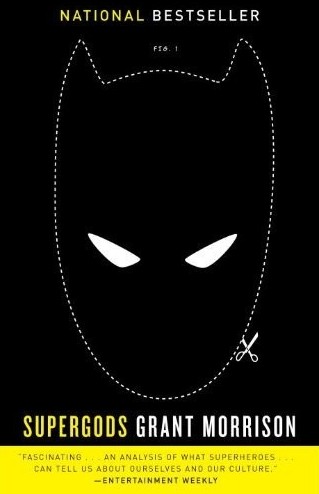
Review: Grant Morrison’s Supergods

Image

Last year’s New York Comic Con got me much more interested in the history of comics.  The second book I’ve read in my pursuit of comic book knowledge is Grant Morrison’s Supergods.  I was already interested knowing that Grant Morrison had written it but when a friend of mine recommended it, I decided to take the plunge.  I don’t always enjoy a Morrison book, but there is no arguing that he is one of the biggest and most influential names in comics right now.  I expected an insightful discussion of comic characters with some of his personal experiences interspersed throughout the book.  What I got was far weirder, far more personal information than I had bargained for.

The book starts off with several chapters dedicated to Golden Age superheroes.  Morrison’s analysis of the beginnings of classic heroes like Superman and Batman was both insightful and enlightening.  He presented these well-known characters in ways I had never thought of them before and made me reevaluate how I saw them.  My favorite of these early chapters dealt mostly with Superman though the 1950’s, after the establishment of the draconian censorship rules of the Comic Code when the plot limitations made writers come up with some very whacky stuff.  Morrison’s description of the off-the-wall adventures of the Man of Steel is quite a bit of fun.  Personally, I’ve never been much of a Superman fan, but this made me want to read some of those old stories.  I was so captivated by these opening chapters I could hardly put the book down.

As Morrison got to the comics of the 60’s and 70’s, he began to incorporate his personal experiences in comics and explain how he got his start in the industry.  This was all pretty interesting and it fit well with the general theme of the book (on occasion he begins to drift off topic, but even then it’s still interesting and at least tangentially related).  In these chapters, Morrison begins talk about some of his favorite of the more esoteric, less well known comics.  The comics he experienced are not the same ones that I enjoyed, although to be fair, I’m an American who grew up in the 90’s and he is a Scot and about 25 years my senior.  I am certain, however, that some of his references would be lost even on many of his Scottish peers.

For me, the wheels really started coming off this ride when Morrison began to talk about his exploration into magic.  That’s right, magic.  While I honestly have no issue with whatever the man chooses to believe, and I was aware that the book was partly an autobiography, I was not prepared for this level of weird.  I felt that it really detracted from the comic history in the book and that both subjects would have been better served by being separated into freestanding volumes.  If Morrison had written an autobiography and included every odd thing from Supergods and anything else he felt like covering, I would still probably have read it.  Grant Morrison is a fascinating man with a real gift for his chosen craft and I would be interested to see what insights could be gleaned from his life experiences, but I would prefer it in a book dedicated to his own personal stories.

This book is filled with comic book history and explores the use of archetypes within our society. It is not, however, a book I would recommend to someone with only a passing interest in comic history or even the average comic fan. Morrison delivers an insightful look at our modern culture through popular art and an interesting depiction of his own person journey to comic book legend, but the mixture of these two often disparate themes tends to dilute the impact of both.

Rating: 3.5 / 5 Death Stars

Image

Leave a comment

Filed under Andrew Hales, Book Reviews, Books

Going Digital

Completely to my surprise, I’ve become a huge fan of digital comics.  There, I’ve said it, and you can’t make me take it back.  I didn’t start off as a fan, but like a new convert learning about Scientology, I didn’t realize it until I was eyeballs deep in it.  For months I had been buying comics that came with free digital copies but I didn’t do anything with them because I didn’t have a device that would allow me to read them properly.  Sure I could have used my phone, but it’s less than satisfying.  That all changed when I received an iPad mini for Christmas, and I have to say that I love this little device.  It is small enough to be truly portable but the screen is big enough that it doesn’t feel like I’m trying to look at something on my phone.  Also there are lots of great apps, some of the best of which are the various apps from each of the major comic book publishers.  Suddenly, I discovered that I now have a device that can make use of all those free digital copy codes that I hadn’t bothered to do anything with.  Thankfully, they were attached to the comic itself; otherwise I would have probably lost them.

The Marvel codes are 12 character alphanumeric codes that must be entered into a website in order to get the digital copies, which is a bit annoying, especially considering that I was new to digital comics and had a considerable backlog.  However, a few hours and about 150 codes later, I was ready to start enjoying my digital comic collection, and man did I ever enjoy them.  Over the course of a Christmas vacation I was able to catch up on months of comics without having to bring a short box around with me or risk damage to my physical copies by shoving them into a backpack.  The image quality is just plain awesome.  It would be easy to assume that reading comic graphics on a digital screen would be a strain but so far all the comics I’ve seen have been excellent.  Although I have glasses and all around pretty crappy vision, I very rarely have an issue reading a page of comics on the screen.  On the rare times I do, I can just double tap the panel I’m having issue with and it automatically zooms in on the panel. It even works for two page spreads by focusing on small areas at a time.  All of the major publisher apps are powered by Comixology, which means that they function in nearly the same way, making it as easy to switch between publishers without too much culture shock.

Another reason I am a big fan of digital comics is that I can find and read many back issues that I wouldn’t easily have access to otherwise. All of the publishers are working to fill in the back catalog of old comics, and while their complete libraries aren’t available yet, quite a few substantial runs are. One of my first strictly digital purchases was Action Comics #1 and Detective Comics #27, ultra rare books that I could never possible hope to hold in my hands.  Now I’ve got them, in digital form.
I also use the digital format to follow and read books that I’ve heard good things about but was unaware of at the time they were released or books I could not justify buying at full price. New books online are priced the same as the physical ones—probably to keep retailers from rioting—but older books are often discounted, making it worthwhile if you don’t mind being a couple months behind reading the book. Some publishers are also looking for new ways expand their digital footprint with things like digital first content or digital codes for other products like trade paperbacks.

Although all digital comics so far use the same developer, Marvel has clearly taken the lead in this digital frontier.  They seem to really be pushing people into the digital realm any way they can.   Many of their titles come with free digital copies.  However, their method of pushing digital copies does have its flaws. The digital copy that comes with the physical comics isn’t really free, since they charge a dollar more for the books that have them, and there isn’t an option to buy the book without the code.  The store attached to the Marvel app runs 99₵ sales every Monday and sometimes has other specials to celebrate comic or real life events.  I have gotten some great comic runs out of these sales, which made me very happy (although my wallet less so).  While other publishers have sales, they are less frequent and often a bit lack luster.  Another really cool thing is that each time a Marvel code is redeemed, the store that sold the book gets a small credit, provided the purchaser specifies their retailer from the provided list.  It may not be much per book, those little bits will add up, helping out local comic stores.

On the other hand, DC prints two versions of the book, one with a code and one without, and the book with the code comes in in a polybag.  Unfortunately, they don’t really explain how their system works.  Until a month ago, I had no idea that’s why they had polybag versions of comics.  While I personally am willing to pay the extra dollar for the digital copy, I can understand why not everyone wants to pay extra for something they aren’t going to use.

As with all new things, there are some downsides. Pricing at times can be inconsistent. Captain America Vol. 7 #1-5 are still $4.00 each despite being up to six months old now even though other titles from the same publisher are down to $1.99 after only a month or two.

Unfortunately, the support is sometimes questionable.  On a couple of occasions I have not been able to redeem codes for various reasons and have submitted help tickets without a response from the publisher.  Other times after returning home from my local comic book store, I’ve opened a book only to find that there isn’t a code inside.  At that point I’m left with the choice to either pay for the comic again, or to do without the digital version.  I’m hoping they will get some of this sorted out in the near future.

I am looking forward to seeing where this interesting new realm of comics is going to take us.  For all my love of digital comics, I will always enjoy having the physical book in my hands, even if I don’t necessarily read it in that form.  For some people, though, this is exactly what they need to keep reading their comics, without cluttering up their house.

The best part is that by expanding how comics are published, they can hopefully spread the joy of comic reading to even more people. With access to comics in all forms increasing and the popularity of comic characters growing, thanks to all the new movies that have come out in recent years, we are hopefully close to a new and wonderful comic book resurgence.

1 Comment

Filed under Andrew Hales, Comics