Tag Archives: Movie Review

Editorial | Review: Noah

***** SPOILER ALERT *****

This review will be discussing plot points which may be considered spoilers. Consider yourselves warned.

The word Ararat has a special meaning for believers of Judeo-Christian teachings.  To them it symbolizes hope, rebirth, cleansing—even the spring of a new world.  Interestingly, the word never makes an appearance in the new Hollywood film Noah, but the symbolism of Mt. Ararat, the final resting place of Noah’s Ark, is steeped into every aspect of the movie.

The first thing to mention about this movie was the acting.  Russell Crowe (Noah), Jennifer Connolly (Naameh, his wife), and Emma Watson (Ila, an orphan girl) are an all star cast, and I would expect nothing but a stellar performance from them.  They did not disappoint.  The supporting roles were filled with really excellent actors as well, with Anthony Hopkins as the surprising choice for Noah’s very elderly grandfather Methuselah, and Ray Winstone as the evil local king/tribe leader Tubal-Cain.  There was a cameo appearance by one of my all time favorite, underappreciated actors Martin Csokas, as Noah’s father Lamech.  The only supporting character that did not have an outstanding performance was Japheth, played by Leo McHugh Carroll, but this makes sense considering the lack of information about him in the source material.
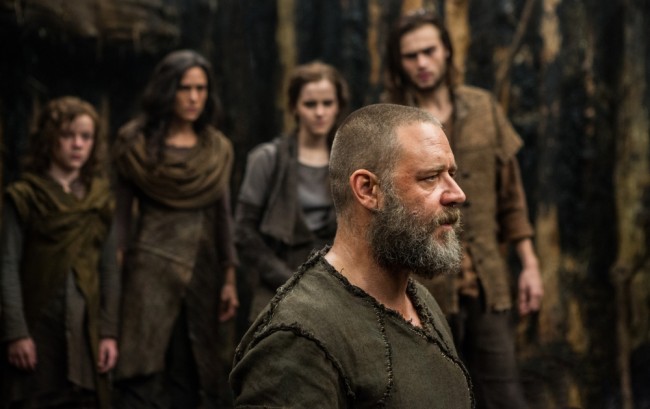
Noah's family

Noah’s family

The relationships in this movie were probably the very best, most honest portrayal of a family that I have seen from Hollywood since the great epics of the late 1950s and 1960s.  True affection and forgiveness is difficult to fake , but between the excellent script and the superb acting through the family focused scenes at the beginning and end, this movie pulled it off.  I loved seeing Naameh (Jennifer Connolly) cuddling a baby Japheth in some of the opening scenes.  It is so easy to forget that babies were just as sweet and fragile 6,000 years ago as they are today.

There was a lot more story—not just Noah’s story—crammed into this film than I was expecting.  The movie started with the story of Man, and his fall.  This was presented in stop action animation and subtitles in a font that disturbingly resembled comic sans.  Three symbols from this initial story are repeated as a motif throughout the movie that alerts the viewer that they are now watching a dream or a prophecy revealed through a trance.  The first symbol is a green snake slithering through the grass, the second is a fruit that pulses like a beating heart, and the third is the silhouette of Cain’s upraised arm and hand grasping a rock to club his brother to death.  I appreciated why the motif was used but the last image was really hard to see, and every time it was used my concentration broke while my brain tried to figure out what I was seeing.

I appreciated that the movie bothered to tell the creation story, and that it did not take sides on the issue.  The story was told by Noah as a voice over a somewhat annoying time lapse animation.  He told the original, Biblical version of creation with each part of creation taking a day to complete, but the animation that flowed with the story seemed to mimic a type of evolutionary influence.  The movie seemed to go out of its way to avoid confrontation in other ways as well, such as strictly using “the Creator” to refer to God.

It seems as though the script writers decided that destruction of the entire world by an enormous flood at the will of the supernatural being who created it all was not enough drama.  In order to add to this, they included additional stressors to the family bond.

While the Biblical account clearly states that Noah, his wife, his sons, and their wives were all aboard the ark when the door was shut, the movie takes a liberal interpretation.  Noah decides that the Creator must be destroying the world to clean up the mess that man has made, and therefore must not want any more men in the new world.  That’s completely fine, though, because Noah and his wife are past child bearing, and the only other woman on the ark—an orphan girl that they took in who is now the love interest of their oldest son Shem—is barren.  Noah refuses to find wives for his other two sons, which is not taken well by the adolescent second son, Ham.  Because Ham is angry at his father’s choice, he does not tell Noah that Tubal-Cain, the erstwhile king of the area, has stowed a ride on the ark, and actively conspires to kill Noah, and repopulate the earth with his own children.

However, Noah’s plan for a humanless planet is thwarted by his wife, who goes to Noah’s grandfather, the aged Methuselah, and asks him to intercede with the Creator for her sons, so that they can have children and be happy.  Methuselah gives his blessing to Shem’s love interest, Ila, and she gets pregnant on the ship.  Noah is angry that his wife has gone behind his back and thwarted what he feels to be the Creator’s plan, and threatens to kill the child if it is a girl, so that there will be no chance at any more human children.  This, of course, leads to quite a bit of screaming and crying on the part of every person on the ark, and an emotional climax that has almost nothing to do with the fact that they have been stranded on a floating box for months with no certainty that they will ever get off.

Another addition to Noah’s story is the Watchers.  These are fallen angels who defied the Creator in support of Adam and his race, and were cast down to Earth.  I appreciated the physics of the story that the script writers were trying to tell:  creatures of light and energy crashing to earth melted the stone, which then cooled around them.  Unfortunately, this was a visually unappealing mess.  I was also left wondering why the stone that formed around them did not erode over the thousands of years that they had been on earth—especially since they were moving a lot.
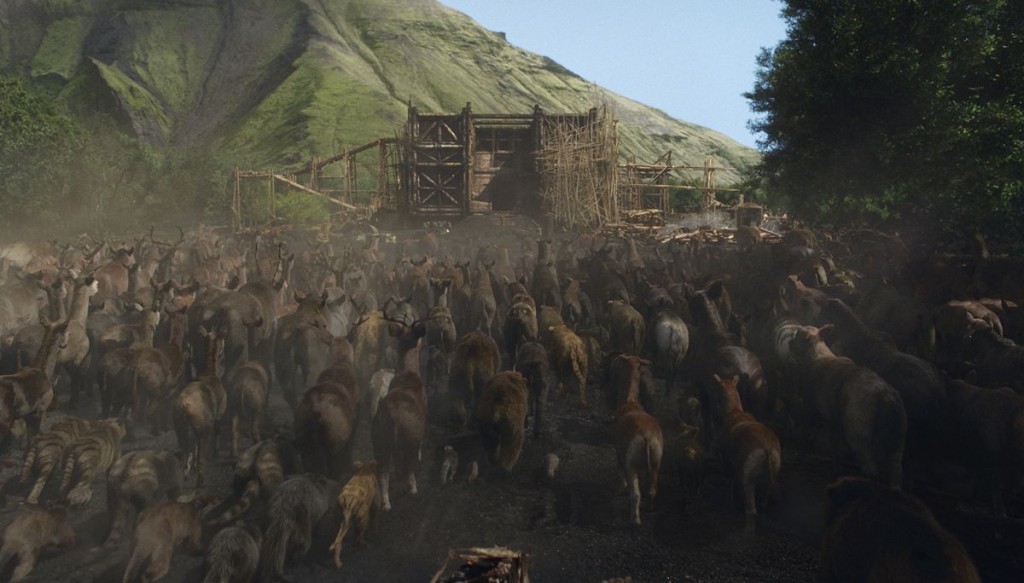
The animals arrive two by two

The animals arrive two by two

Visually this movie was shot to be beautiful, not necessarily to be accurate.  This was obvious through the use of a lot of sound stage settings, with actions designed to showcase silhouetting of characters against a setting sun.  Most of the sets felt very unearthly (Methuselah’s mountain and the black volcanic ash expanses were mostly shot in Iceland).  The visual effects are beautiful, but they do break the viewer’s concentration from time to time.

The biggest problem that I had with this movie was the ambiguity regarding why Noah and his family were told to build the ark and be saved, and the other humans were to be destroyed.  The beginning of the film showed that the murder of Abel by his brother Cain was one of the big influences for humanity veering wildly off the Creator’s track.  However, Noah shows no compunction for killing humans because they’ve killed an animal.  I was confused, and still wonder if the director/writers were trying to equate vegetarianism with being a good person.  Since this is a movie about good versus evil, I would have preferred a sharper distinction between the good and the evil.

As a moviegoer, I really enjoyed the experience that this film provided, but probably won’t add it to my DVD collection.  As an admirer of the original account of Noah and the Great Flood, I hope that despite the additions to the story, people who have not read the original will be inspired to look it up and see what is really there.  I give this movie three and half Death Stars.3.5 Death Stars
Leave a comment

Filed under Editorial, Movie Reviews, Movies, Tracy Gronewold

Review: The Hobbit: The Desolation of Smaug

***** SPOILER ALERT *****

This review will be discussing plot points which may be considered spoilers. Consider yourselves warned.

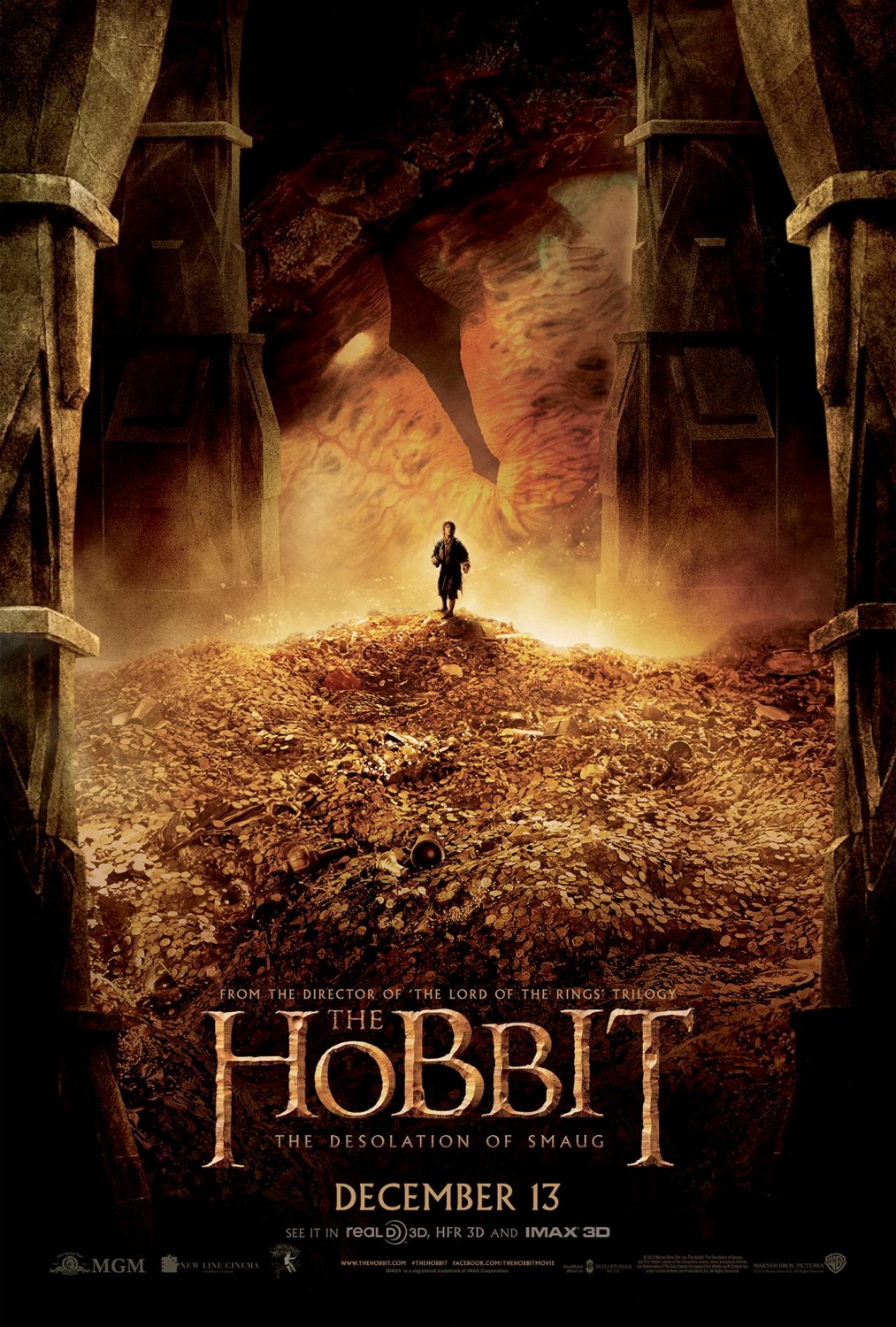
hobbit_the_desolation_of_smaug_ver30_xlg

As I write this review I am in the middle of a Lord of the Rings marathon. I have to admit that going to see The Hobbit: The Desolation of Smaug has put me in the mood for as much of Middle Earth as I can get my hands on. Unfortunately the reason I’m in this mood is because I’m longing for a good story from Middle Earth. As excited as I was for this movie, I afraid that it leaves much to be desired.

After an enjoyable introductory scene, much like those in Lord of the Rings, The Desolation of Smaug picks up just as Bilbo and the dwarves begin their passage into Mirkwood. I was pretty pleased with this portion of the film, but I just felt that it was over far too quickly. Several chapters of the book were dedicated to Mirkwood, and only around twenty or thirty minutes of the film were spent there. While the film portrays the confusion that the company feels admirably, it sets in far too quickly and then is resolved rather abruptly. This demonstrates the major flaw in the movie:  timing.  When these films were first announced, there were only supposed to be two films, but a third was added later. Regularly throughout The Desolation of Smaug some scenes which are canon from the books are compacted in order to make room from extra stuff, often to the movie’s detriment.

Now it’s pretty well known that I am a fanboy and that Lord of the Rings falls into the long list of things I love. Despite this love I am not a purist, which is to say I understand when changes must be made in order to actually make the film.  Some of this extra material I enjoyed—especially the parts which come from appendixes or other material from J.R.R. Tolkien. Watching Gandalf investigate and then confront the necromancer in Dol Guldur was great. This provides some great moments that really place The Hobbit in context. While the story is primarily about the dwarves’ return to Erebor, it is also the build up to Lord of the Rings, and there are scenes that allow us to see all the pieces moving into place.  My issue is that these changes come at the expense of the real story. Scenes from the book were compressed in order to make room for this extra material.

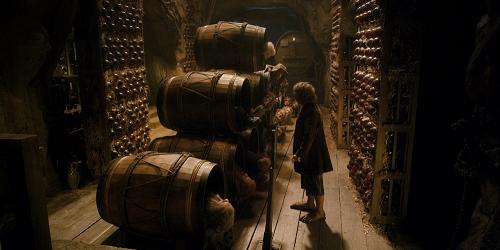
Shortly Bilbo will realize that there is a hole in his plan.

Shortly Bilbo will realize that there is a hole in his plan.

In other places, scenes were extended considerably. The prime example of this was the dwarves’ escape by barrel. There was a good long chase scene down the river that involved the dwarves getting away first from the wood elves and then from the same orc band that has been chasing them through most of the movie. Although an important scene in the book, and one that I have always felt was among Tolkien’s most clever, it was a relatively short part. Not only was this scene extended in the movie, parts of it became more than a little ridiculous. At one point the barrel carrying Bombur managed to get tossed out of the river and rolled down the river bank, taking out dozens of orcs in the process.  Then Bombur proceeds to pop his arms out of the barrel and take on several more orcs before jumping back into the river. Further on, Legolas rides down the river standing on the heads of two dwarves, all the while, shooting down orcs. This whole sequence becomes rather disappointing because of this outrageousness.

Still other portions are purely fictitious. The inclusion of the female elf Tauriel has no basis in the books. Her character was included almost exclusively to include additional female cast members, which is a questionable reason at best. I honestly didn’t mind her character, aside from the fact that she was obviously not part of the original book and therefore all her scenes seemed like someone trying to mimic Tolkien’s style. Tauriel also plays a part in the most egregious portion of the movie. During the barrel escape, Kili is shot in the leg by an orc and is eventually left behind in Laketown, along with three other dwarves, when the company proceeds on to Erebor. This whole plot point was completely unnecessary and only underscores the fact that the third movie should never have been added. If there were only two movies, filler material like this wouldn’t be needed and they would have been able to stick to the fantastic story that already existed.

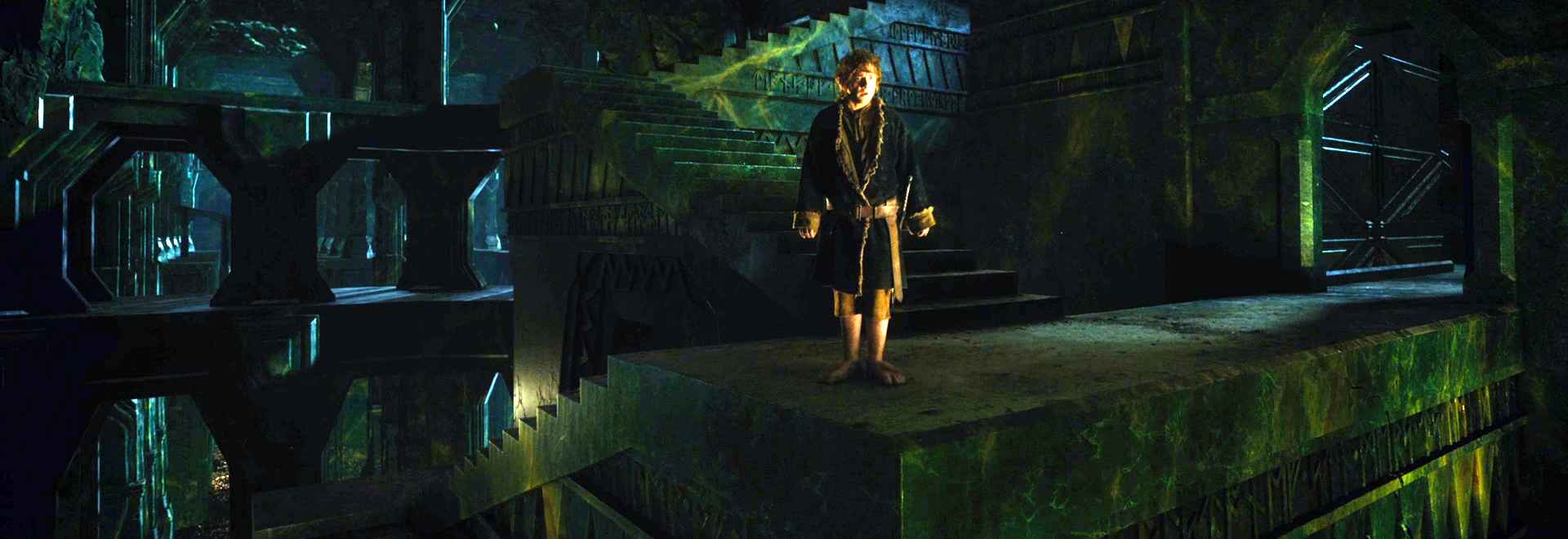
One of many great Erebor interior shots.

One of many great Erebor interior shots.

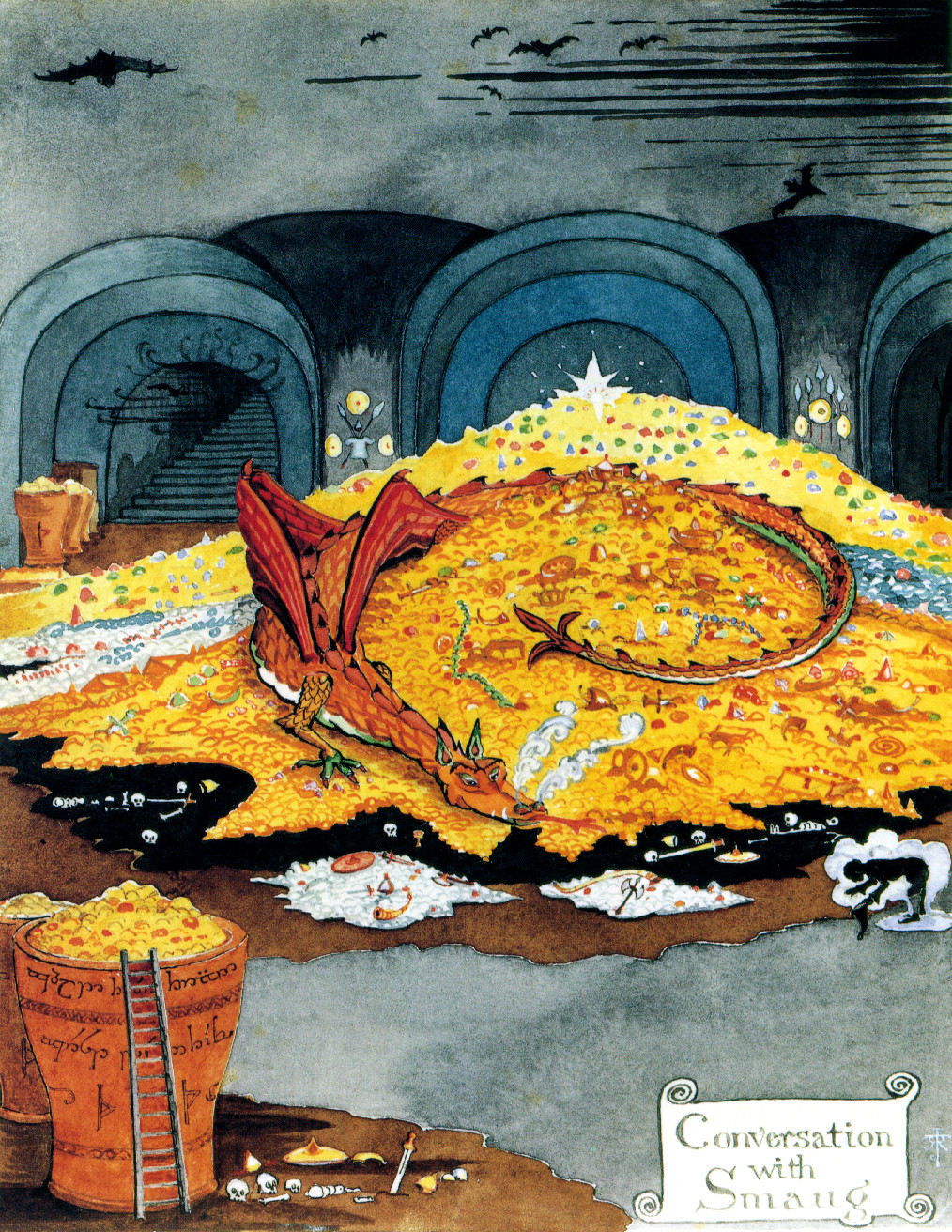
After all of that, it probably sounds like I hated the movie, and that just isn’t the case. For one, the movie looked absolutely amazing. From the halls of the Thranduil to the Lonely Mountain, the entire movie was a visual treat. I’m especially fond of the dwarven style. It all looks very angular but refined and elegant in its own way. Unlike the orcs who are angular in a jagged and chaotic way, dwarf creations show considerable thought and skill. Beyond the look of the dwarves is of course their grand nemesis, Smaug. I could not be more pleased with the way Smaug turned out. It’s obvious that the Peter Jackson drew upon available sources and previous artist renditions of Smaug when creating the visual for the character. Especially when compared to Bilbo, Smaug appears as more a force of nature than a fellow cast member. The dragon is absolutely enormous and terrifying. Jackson must be a firm believer in “Go big or go home” because the movie makers went all out on Smaug.

This is the image of Smaug I always think of, and it was pretty spot on, aside from relative size.

This is the image of Smaug I always think of, and it was pretty spot on, aside from relative size.

In no way, shape, or form do I regret seeing The Hobbit: The Desolation of Smaug, but I do think that there was plenty of room for improvement. The film suffered from being stretched too thin when it came to source material (like butter over too much bread), though when they stuck to the original content the movie was at its strongest. While not the movie I was hoping for, I am still excited to see the ending of the trilogy next year. Three out of five Death Stars.

3 Death Stars

3 Comments

Filed under Andrew Hales, Movie Reviews, Movies

Review: Thor: The Dark World

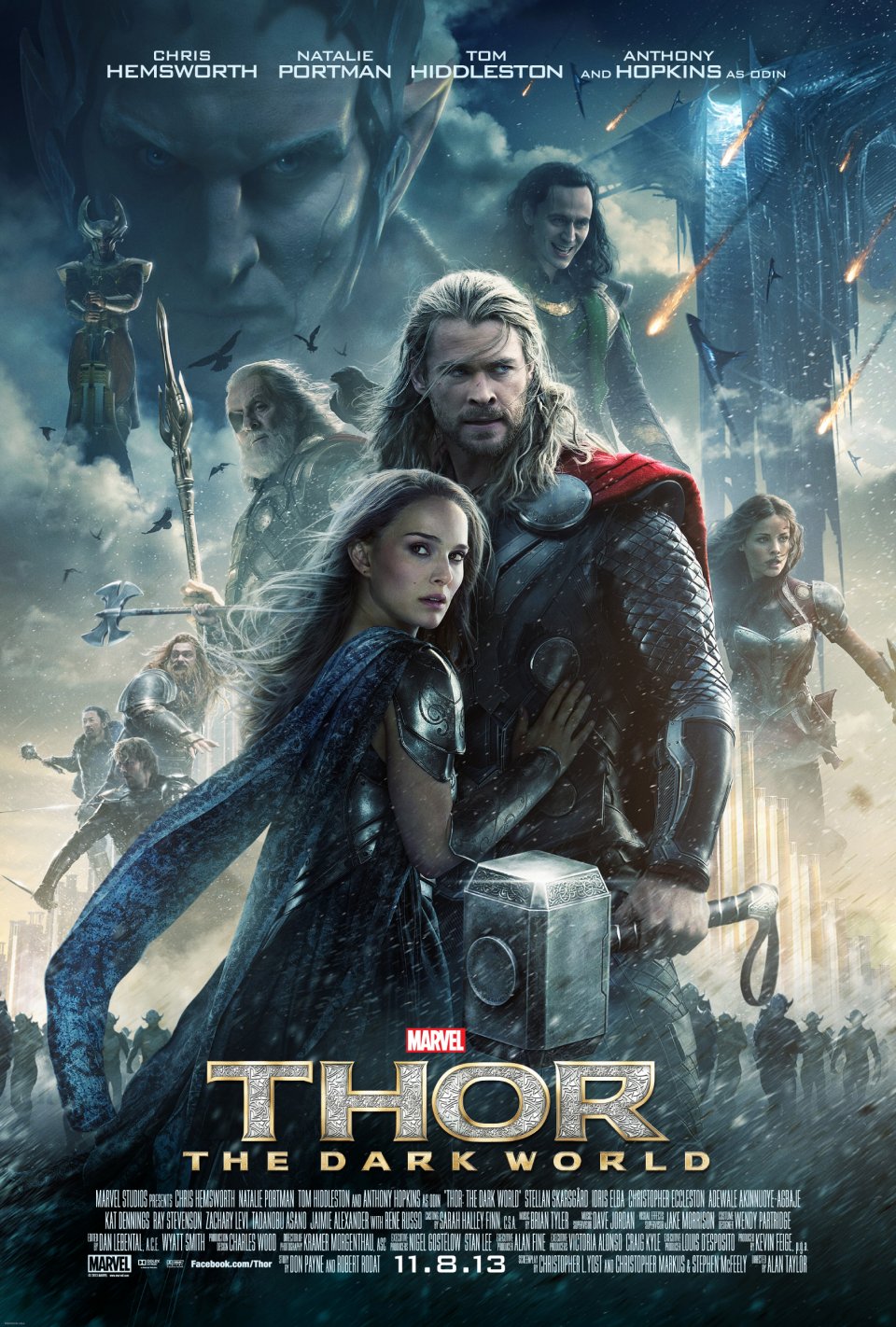
thor the dark world poster

Thor has returned and better than before.  Thor: The Dark World aptly takes the original concept and improves upon it with a nice mix of increased action, further character development, and great touches of humor.

Thor: The Dark World begins with Thor (Chris Hemsworth) and the Warriors Three in the middle of a battle. Since the destruction of the Bifrost, the Nine Realms have been at constant war and it falls to the Asgardian heroes to restore peace. While Thor strives to bring peace to other realms, Loki (Tom Hiddleston) has been brought back to Asgard in chains and sent to the dungeon to rot—though he is still visited by his mother, Frigga (Rene Russo).  Back on Earth, Jane Foster (Natalie Portman) and Darcy (Kat Dennings) are investigating strange phenomena that is very similar to what they witnessed when Thor first appeared. All is well until Jane stumbles across dimensional lines and discovers an ancient weapon, taken from the Dark Elves after they were defeated by Thor’s grandfather thousands of years ago. The phenomenon that Jane is studying turns out to be a convergence of the Nine Realms, which the surviving leader of the Dark Elves, Malekith (Christopher Eccleston), plans to use to return the world to darkness. Really, it’s just another day in the Marvel Universe.

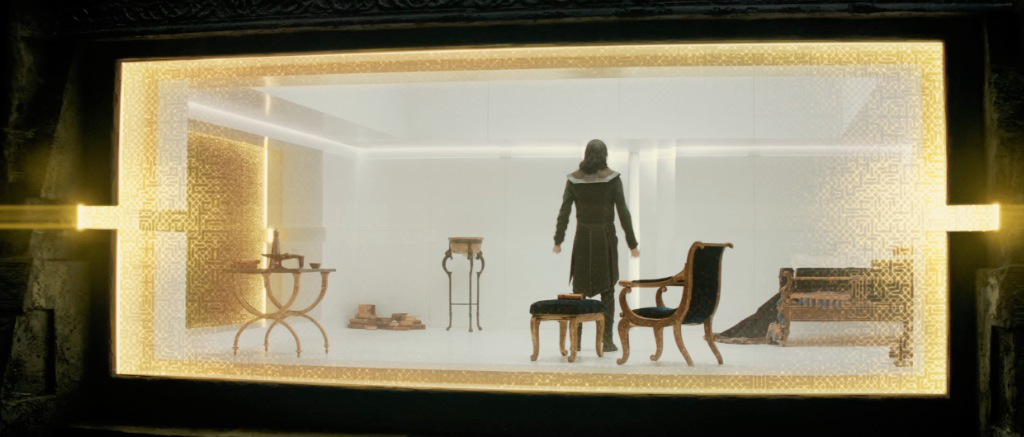
As jail cells go, Loki's isn't so bad.

As jail cells go, Loki’s isn’t so bad.

Between Thor and Thor: The Dark World there was a change in directors. While Kenneth Branagh was a capable director, I’m not sure that an action movie based on a comic book was really best suited to his Shakespearean training. The Dark World was directed by Alan Taylor, who can count six episodes of Game of Thrones as part of his considerable directing portfolio.  Taylor brings a different feel to the film with stronger action sequences and a greater sense of adventure. It certainly helps that The Dark World has an extra twenty million dollars in its budget—thanks, no doubt, to the success of The Avengers. That extra money shows in the addition of several locations, most of them in the various realms, as well as a much expanded Asgard.

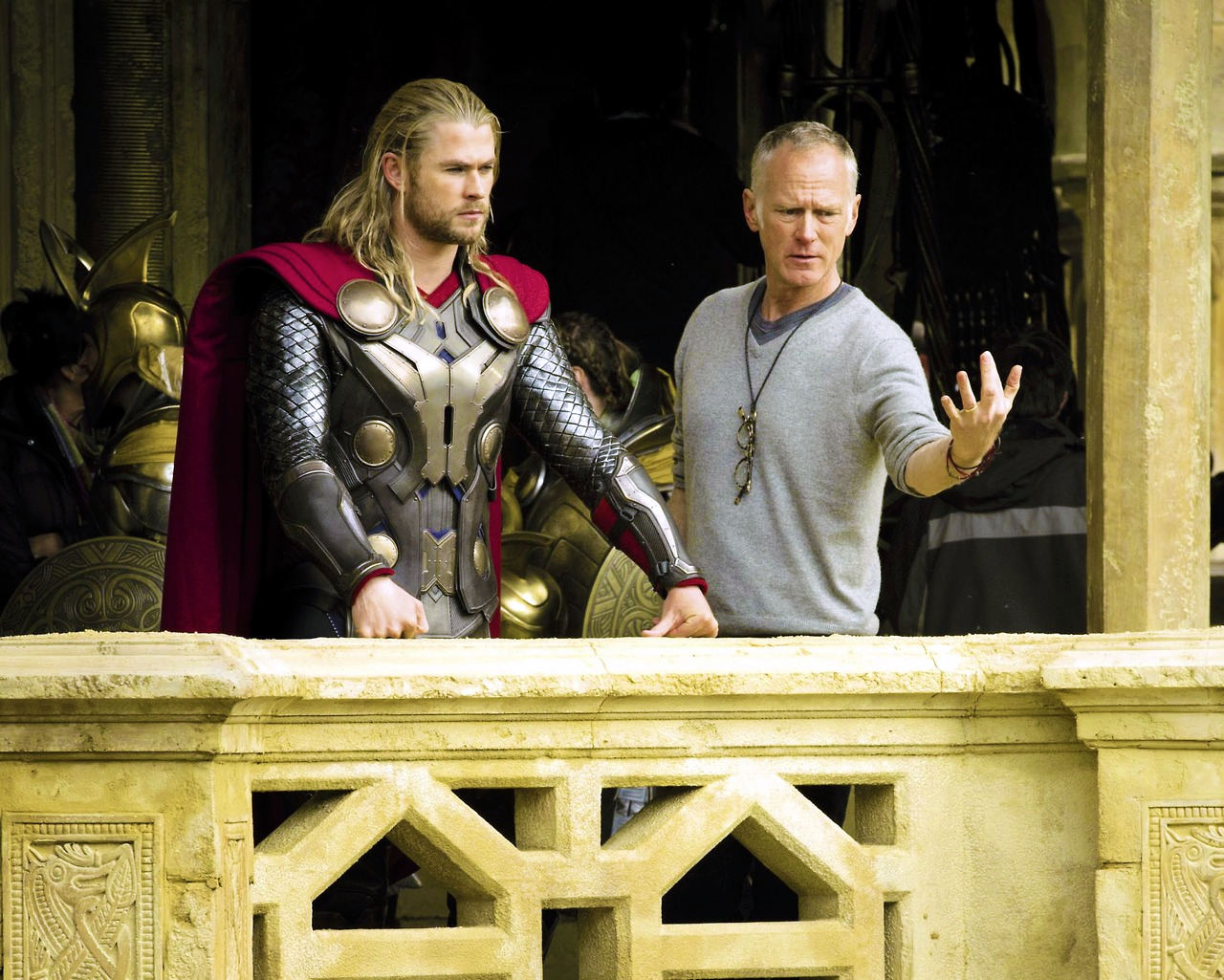
Chris Hemsworth with director Alan Taylor.

Chris Hemsworth with director Alan Taylor.

Each of these locations has its own fight sequence, and some have more than one.  For my money, the best fight scenes are the opening flashback battle with the Dark Elves, and Malekith’s assault on Odin’s palace. Both were fantastically imagined, especially the Dark Elves. With a few exceptions, most of the Dark Elves wore masks that completely obscured their faces and made them appear to be mindless drones. Unfortunately, the fight between Thor and the Kursed didn’t really work for me. I had been looking forward to it for a significant part of the movie and, with the exception of the very end, it came off as lack luster.

With all the increased action, one might think that there would be less time for character development, but this is simply not the case. One of the things this film does well is to make use of existing characterization. Both Thor and Loki were in The Avengers, so The Dark World doesn’t try to cover the same ground.  Instead, it takes what is already there and expands upon it. Loki is a particularly interesting character this time around. For obvious reasons Loki despises Odin, but he still maintains an odd affection for Frigga, his adopted mother.  Even though he attempts to hide his feelings, he is often driven to act on these feelings. Loki will always be a difficult character to get a good handle on, purely based on his nature as the god of mischief.  His motivations are constantly hidden and shifting. This time around—more than either of his two previous appearances on the big screen—we really get to see this changeable and mysterious nature in action.

After the events of Thor and The Avengers, Thor demonstrates that he has also changed, showing that he has maintained his new found maturity. So often movies like this become repeats of the same plot:  prideful character is humiliated so they can learn the error of their ways and then rise up to beat the bad guy.  Audiences love stories like this, but when the same character keeps doing the same thing in every movie, it gets old.

I also really enjoyed seeing more of one of my favorite characters, Darcy. While a fairly minor character in the first Thor movie, Darcy got more screen time this time around, adding to the film’s humorous elements.

A great trio that help provide comic relief.

A great trio that help provide comic relief.

The Dark World builds tonally off of The Avengers and is full of humor that helps keep the movie from being too dark. There is no one scene that is designed purely for humor, but there are little one and two line jokes and sight gags throughout the whole film that manage to prevent a fairly dark film from getting lost and becoming a real downer. While certainly not as clever as a Joss Whedon script, there are plenty of well developed sequences that lead to amusing payoffs. One setup in particular involved throwing trash and other random objects, especially shoes, through a dimensional rift and watching them reappear from another rift. Sometimes these objects don’t reappear, but of course they are discovered later in the movie.

My only serious complaint about the movie is with the last scene. While the acting was good and the scene itself wrapped up the movie nicely, it looked like utter crap. It looks as though the scene was shot during reshoots, against a green screen instead of a full throne room set, and was they rushed through post-production in order to meet the release date. No other part of the movie has this issue and in fact, I was very impressed with the visuals up until this point. With the constant change in location there is great potential for some of the lesser used places to not look as good, and this was just not the case.

Overall, I’m very pleased with the way Thor: The Dark World turned out. It was both a self-contained story and also helped to advance the overall Marvel Universe storyline. Without giving too much away, I was also very excited about the Easter Egg at the end of the credits. It’s a great setup for next summer’s big Marvel blockbuster. I give Thor: The Dark World four Death Stars.

2 Comments

Filed under Andrew Hales, Movie Reviews, Movies

Review: Ender’s Game

***** SPOILER ALERT *****

This review will be discussing plot points which may be considered spoilers. Consider yourselves warned.

***** DISCLAIMER *****

This is a review of the movie Ender’s Game and of the movie only. There will not be any discussion of the author or his personal politics. If you wish to discuss such things there are plenty of places for you to do so, however we request that you refrain from doing so here.

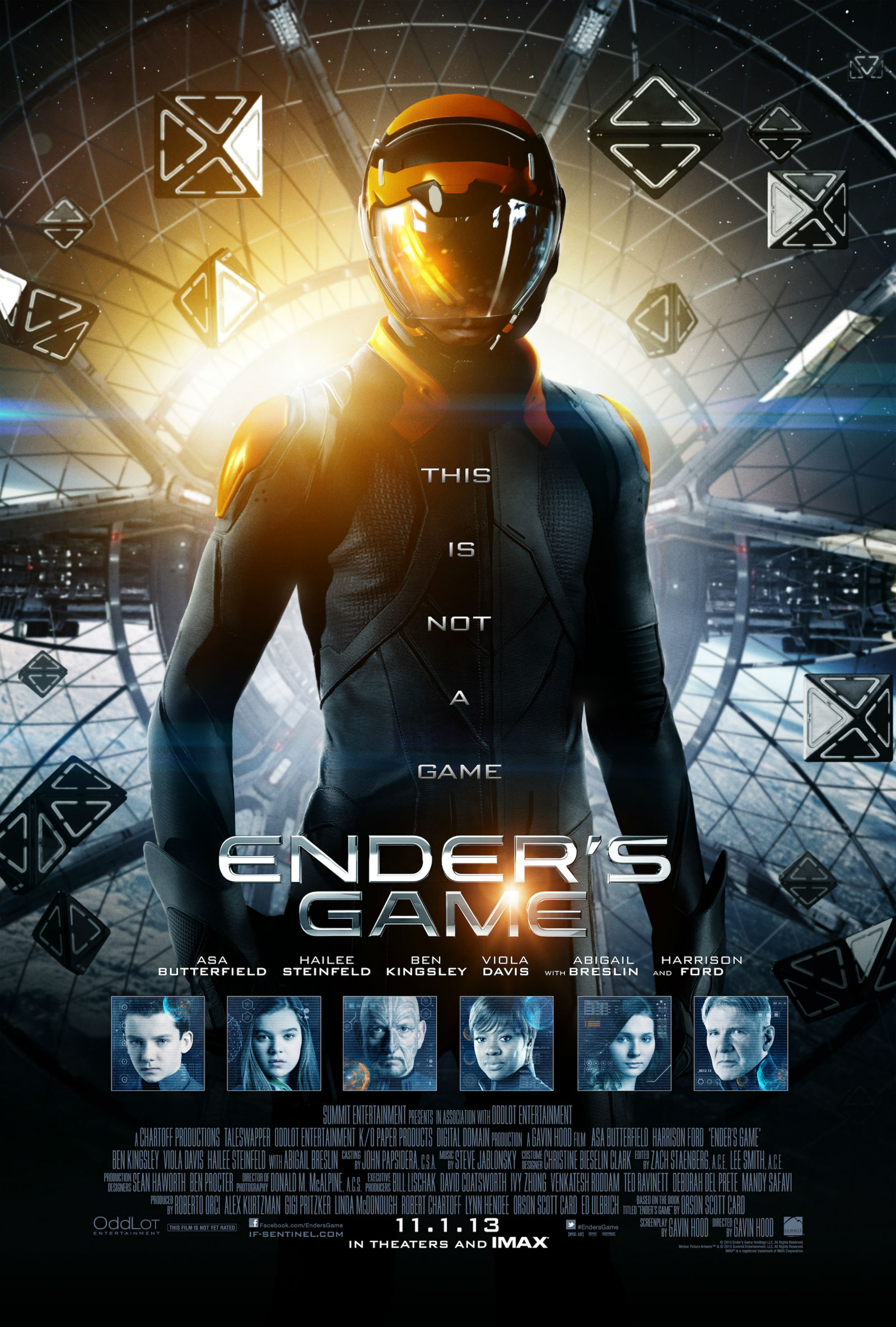
Enders-Game-Final-HR

Aliens attack Earth, kick our ass, and Earth barely survives. This basic setup is nothing new and yet it sets the scene for the beginning of Ender’s Game. What makes Ender’s Game special however is where the film takes this setup. Instead of running over the well trodden paths, this film chooses to take the road less travelled and does so quite well.

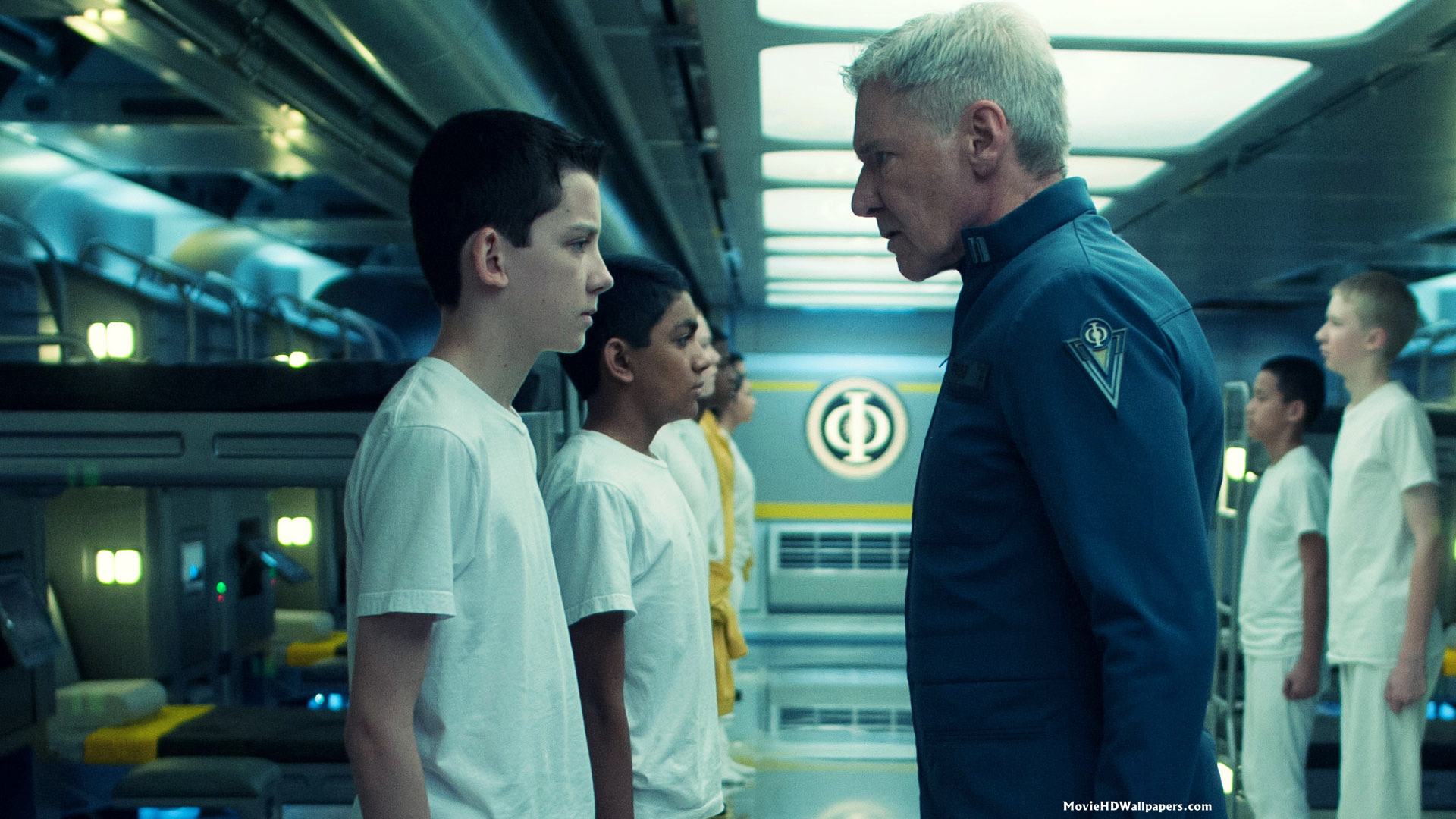
Ender’s Game is about Ender Wiggin (Asa Butterfield), a brilliant young boy who is part of a military selection program for training to be a military commander. When the monitoring device implanted in Ender’s neck is removed he thinks he has been passed over for entrance into the military school. Ender has very little time to be concerned about this, as he is attacked by older boys shortly thereafter and Ender beats one of them severely. That night at home, Ender and his family are approached by Col. Graff (Harrison Ford) who informs them that the monitor removal was the final test, and not only has Ender not washed out, but he has been selected to move on. Thus begins an incredible adventure that takes viewers from Earth all the way out into deep space.

Asa Butterfield and Harrison Ford

Asa Butterfield and Harrison Ford

It’s been about ten years since I’ve read Ender’s Game, but this film seems pretty true to the book that I remember. Obviously the filmmakers can’t be expected to put the entire book into the movie and cuts had to be made, but I feel that they chose those cuts well. In fact, the cuts felt more like time compression. The most obvious instance of this is Battle School. This particular portion of Ender’s training takes up the majority of the book and while it is a major focus of the movie, the section has been clearly shortened. There are only a handful of training battles shown in the movie and—while they are even more fantastic looking than what I had imagined— far fewer battles than I remember from the book. The only real downside to this is that it doesn’t show the same progression of difficulty that is readily apparent in the book.  Any time where there is a repetitive action, like the battles, the time compression comes into play.

The other major cuts revolve around the Mind Game. The game still plays a significant part in the movie, but in the book Ender runs through the game over and over again until he solves a problem, at which point he runs into a new problem and starts the cycle over. By cutting out much of this, movie makers are able to maintain the importance of this plot device without spending too much time on it.

This plays into one of the movie’s strengths:  that of pacing. This is a movie that keeps on moving. At no point did I feel bogged down in obscure details of the story. The plot pushed forward at a brisk pace throughout the movie, developing characters and giving them challenges of ever increasing magnitude. The climax of the movie presents a stunning scenario that would be impossible for anybody but Ender to overcome.

I loved the way this movie looked. The zero g battle room is awesome. I love that because there is no gravity in the battle room the director doesn’t feel obligated to stick with conventional camera angles. It was very refreshing to see these unconventional angles interspersed with the more common shooting style.

The Battle Room.

The Battle Room.

The other scenes I loved were those in the combat simulations at Command School. All the kids sit in an auditorium with Ender and his senior commanders on an elevated platform and all around them are wonderful looking projections of the ensuing battle simulation. Scenes like this made the movie visually appealing as well as engaging from a plot standpoint.

Command School

Command School

Historically, one of the toughest aspects of a film like this is the casting. It’s easy enough to find one or two good kids, but finding almost an entire child cast of this caliber is remarkable. Asa Butterfield does an amazing job as Ender. He provides the right mix of brilliance, empathy, and emotional detachment without being wooden—no easy feat!  It would have been very easy for Ender to come off as merely a bad impersonation of Data from Star Trek: The Next Generation.  Butterfield makes the viewer feel for Ender, by showing emotion when it’s required but not so much that he breaks character.

The supporting cast is also wonderful.  Ender’s sister Valentine, played by Abigail Breslin, provides a welcome bit of warmth.  Where Ender is mostly rational and only slightly warm, Valentine is empathy personified–the trait for which she was dropped from the military selection program. Among the best supporting actors in the film is Moises Arias who plays Bonzo Madrid, one of Ender’s company commanders. Bonzo is a complete control freak and mild sociopath and Arias plays this without being over the top and becoming silly. Even though Bonzo is honestly a little jerk, moviegoers still feel for him because he is just a kid, struggling to achieve his potential and impress those in power over him.

Ender’s Game demonstrates the disturbing nature of child soldiers in dystopian science fiction stories. Although it’s used less frequently than other plot devices, it’s one of the most unsettling, in part because onlookers see those who should be innocent acting with cunning and violent intent. In modern society, the international system has taken great pains to ensure that children like this are not forced to fight, and yet moviegoers find themselves rooting for a child soldier, in the form of Ender.  In the end Ender becomes the supreme commander he was born to be, and the audience is left asking what was the cost to Ender and to themselves as a society. I give Ender’s Game 4.5 Death Stars.

4.5 Death Stars

1 Comment

Filed under Andrew Hales, Movie Reviews, Movies