Tag Archives: Jupiter

Oculus Rift, a Gateway to New Worlds

I have a cool job working at a NASA Visitor Center, and occasionally, that means that I get to do some really cool things—some of which are creating or helping design and build exhibits to share exciting information with the public in engaging ways. The other day, I had the opportunity to experience a demonstration on how the Oculus Rift goggles could be used as a learning adventure and I must say, the hype surrounding the technology is well deserved.

For those who have not heard, Oculus Rift is a virtual reality hardware that is completely immersive and allows the user to look and move around in a virtual world. Since the earliest hints of this technology, gamers have been giddy at the possibilities. The ability to “get into the game” in a more visceral way has been a gamer fantasy for a long time. Imagine sitting in an X-Wing and having a space dogfight with a squadron of TIE Fighters. You will have complete control of the craft with the controller, but also the ability to look around the cockpit with a full, 3D, 360 degree view by actually turning your head. It is an amazing and exciting concept!


Oculus Rift headset

Practical people may prefer a more pragmatic application.   They can get excited about a full, room simulation that has been created to train teams on bomb disposal. One man puts on the Oculus and is able to walk around in a virtual room, find a bomb, and then relay what he sees to teammates so that they, in turn, can give him step-by-step instructions to diffuse the situation.

What is amazing about the Oculus is how seamless the world is, as the user moves around in it. I was able to walk through a couple of demonstrations of informational simulations that placed me in space, using the headset. The first simulation was called 6000 Moons and described the different uses of satellites, explained how different orbits help facilitate different functions, and gave a very cool visual of what all of the satellites look like as they circle the earth all at once. If each satellite were part of an alien invasion force, we’d be screwed! It looked like a swarming mass of insects around their queen.
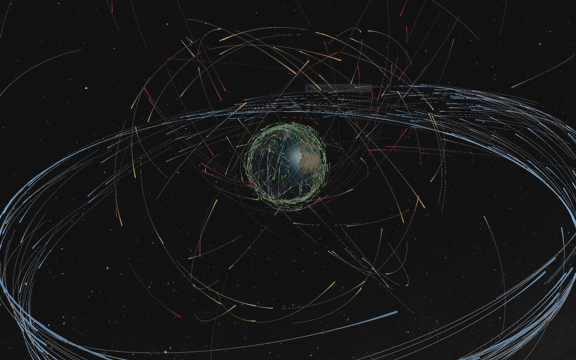
Promotional image of 6000 Moons from binsoftware.com


The informational clips were all automated, and propelled the viewer through space at certain times while a narrator explains what the viewer is seeing. Because the technology works through motion detection, a three-dimensional tour can be designed and the world can be viewed at any angle. The immersive effect comes in from the ability to look above and below, and even turn completely around in your chair and still be in space. There are no hard stops to keep you inside a proscribed area. There are no graphical seams or lines depicting programming limits. It’s just you in space. After watching 6000 Moons, my first thought was, “What about a tour of the Solar System!?” So I asked the question and, even though it wasn’t the purpose of the visit, I was shown a beta version of a tour called Titans of Space.

This simulation starts with a view of Earth with the Moon circling it and the Sun ominously close. As the narration went on about the various particulars of our home planet, I was busy looking around. I looked back over my shoulder and was startled when I saw… my shoulder! Of course, it wasn’t really my shoulder. This program had a simulated body to act as an anchor for the experience. I must say that it was a good choice that added to the natural feel. Some trade-off is made for loss of view, but for those like me who suffer from motion sickness, the reference point allows for a much more comfortable tour.

Titans of Space, photo from blog.dcxn.com

After the smaller planets were described, the next planet was Jupiter and here was where the name of the program, Titans of Space, started to make sense. The background music turned ominous and the planet filled the space in front of me. It was imposing and intimidating—feelings I don’t normally associate with a description of the Solar System. I felt compelled to look away to get my bearings and I was rewarded with a view of the Sun behind me and a silhouette of all of the planets I had passed in front of it. I was actually in space! This was not a frame by frame look at a world, in which only the part being focused on is rendered. I was actually being moved through a digital world around objects programmed in relative scale and distance. It was awesome and amazing and by the end of the tour, which went on to describe the largest known stars, I felt very, very small.

The Oculus Rift is coming for mass consumption very soon—right now it is scheduled for release in the first quarter of next year. I’m not sure yet how the gaming world will react. There are a lot of interesting possibilities, but it will take some experimentation to figure out which are good ideas and which are just impractical because of movement limitations. Either way, if this sort of tech is up your alley, it’s coming, and it’s coming fast. If you’re lucky enough to live in the Hampton Roads area of Virginia, it’s coming to a museum near you and possibly within the next two months.   You’ll definitely want to see this.

A big thanks to binsoftware and the folks at The Virtual Reality Learning Experience for their efforts in utilizing this new technology for public education and use.

– by Kurt Klein
1 Comment

Filed under Geek Life, Kurt Klein

Winning Science March 13, 2015

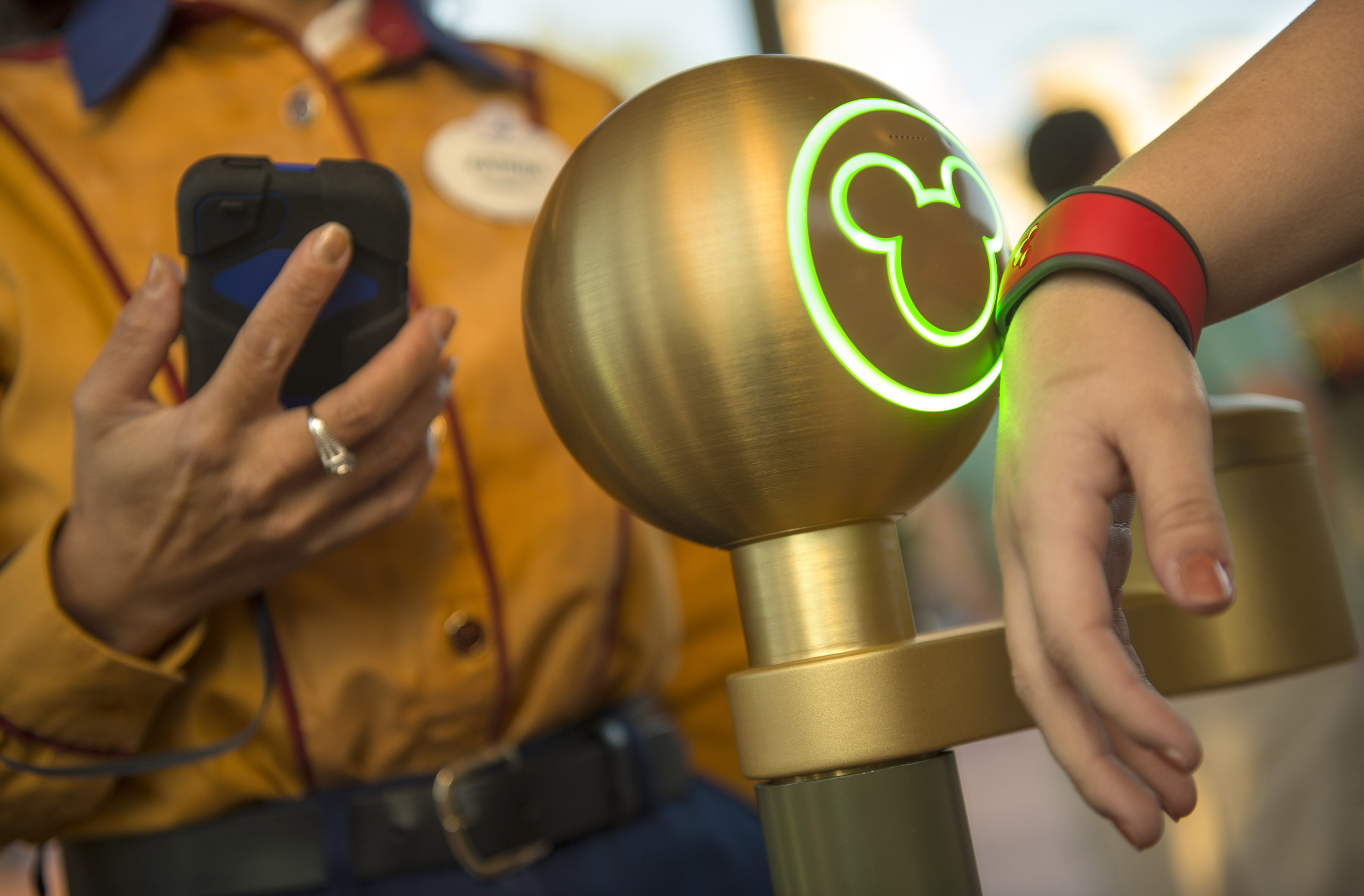
When the US Navy started talking about using electromagnetic catapults to launch planes, I distinctly remember someone saying that if Disney was having issues with similar tech, the Navy had absolutely no hope. While this might have been hyperbole, it is also true that Disney is regularly pushing the edges of technology in order to bring a better experience to park goers. The latest of these innovations is the Magic Band. Wired has a wonderful article this week about both the tech and process that went into making the magic, as well as the extensive, untapped potential that exists within the current hardware. I had no idea the amount of work that went into the development, or the one BILLION dollar price tag that went along with it. Then again, Disney never does things in half measures.

Disney-MagicBand
Of all the corporations following my every move, I find Disney much less worrisome than most. Continue reading

1 Comment

Filed under Weekly, Winning Science

Winning Science March 5, 2014

All the way back in October, Motorola announced it would begin working on development of modular cellphones. Having just performed surgery on my “older” iPhone to remove the cameras, I’m a big fan of the idea that I could design my own phone that doesn’t have a camera, or at least a camera that is easily removable. As far as consumers go, I am not alone. Retailers and phone developers however are not quite so hot on this idea. They are very dependent on the majority of the population who stare at the calendar, waiting for that day they can ditch their old phone in order to get the latest and greatest. In order for these phones to catch on, retailers and manufactures will need to change their models a bit and we all know how much they love change.

www.macworld.com

Like this, just more versatile.

I’m very proud of my phone surgery… I only lost one screw.

Did you know that NASA estimates there to be 500,000 pieces of garbage in Earth orbit? 17,000 of those pieces are trackable (coffee cup size and larger). Over fifty years of manned space flight and satellites has resulted in considerable amounts of space junk that is beginning to cause problems. There have been several instances in recent memory in which the International Space Station has been required to adjust its orbit due to this debris. There are, however, several competing plans to help alleviate this problem, including a new European spacecraft which will attempt capture the offending debris. There are still several technical hurdles to overcome, such as fuel and how to deal with the debris that is tumbling.

Like this, only with space helmets.

Like this, only with space helmets.

This seems like the interstellar version of a guy using a stick with a nail on the end.

That protein rich diet might not be so good for you after all. According to a new study, a diet high in animal proteins (meat, dairy, etc) may significantly increase the risk of cancer in persons 50-65. The study followed people for 18 years and found a significant increase of cancer in those middle aged persons who had ate larger amounts of animal proteins. They also noticed a 75% increase in deaths from any cause in that group. Those who got their protein from other sources however did not have this increased risk. More astounding was that people who ate more animal protein after age 65 actually lived longer.

steak

Note to self, put down the steaks at 50, pick back up at 65.

Those of us who support continuing space exploration got a bit of a boost in the President’s new budget. In the budget submitted by the President’s NASA administrator there is funding for a fly-by mission to Jupiter’s moon Europa. Scientists are excited by this prospect since Europa is thought to be made of ice with a vast ocean of liquid water beneath. This of course would make it an ideal place to send manned missions to, once we get to that stage. For now though, we will have to settle for more probes.

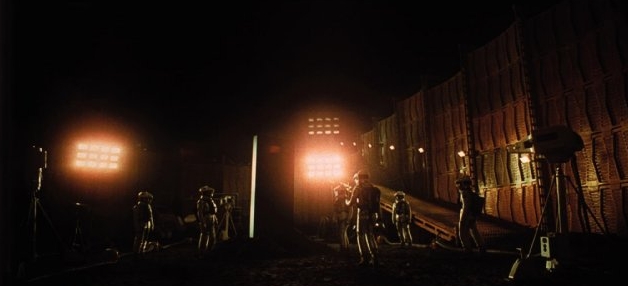
Bad things happen when you screw with the Monoliths.

Bad things happen when you screw with the Monoliths.

Personally though, I’ve seen 2001, I already know what’s out there.

Leave a comment

Filed under Winning Science

Winning Science August 14, 2013

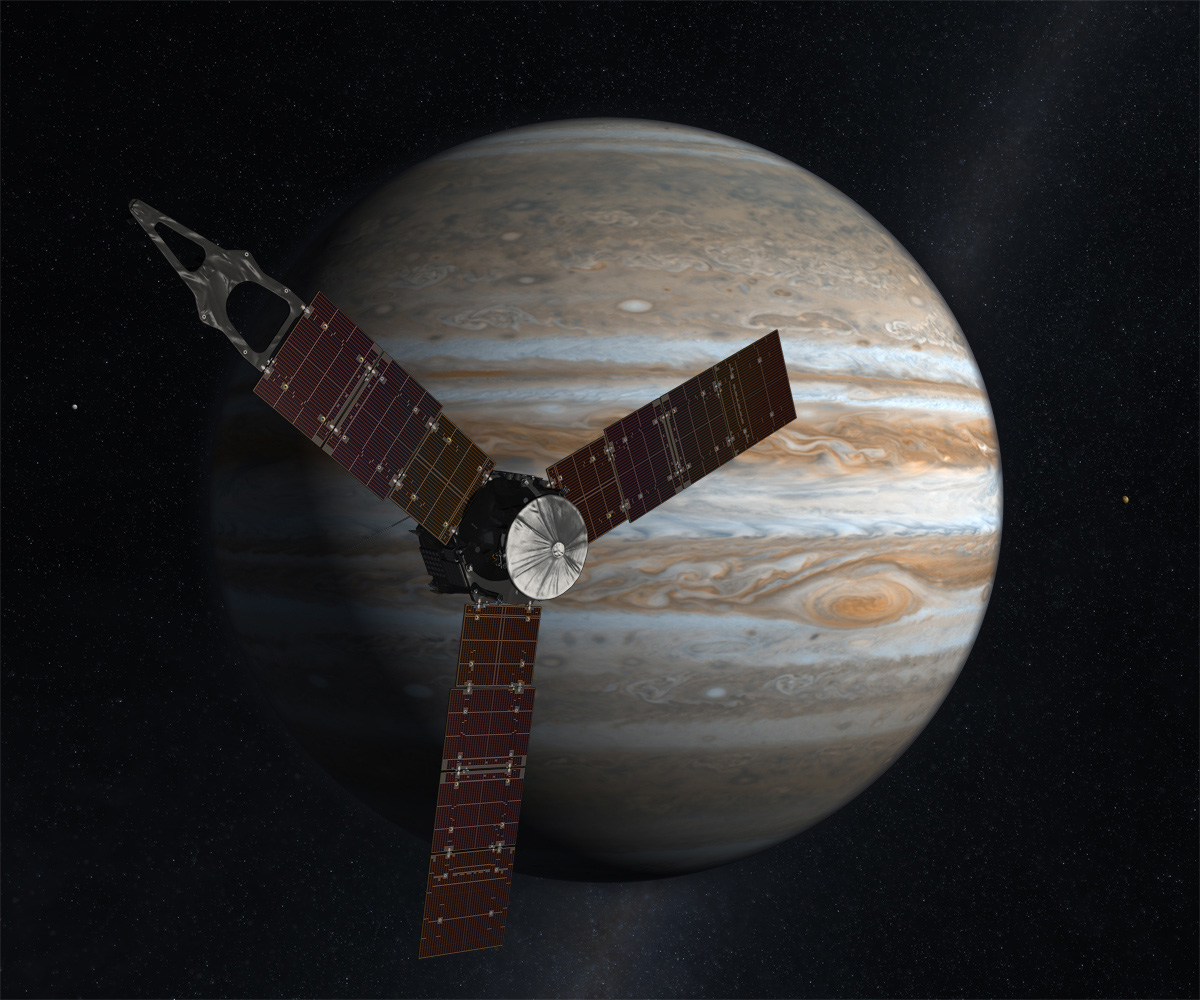
All the in-the-know geeks are talking about space news these days, it seems.  NASA’s space probe Juno is halfway to the planet Jupiter on a five year voyage to check out the sights and sounds.

junos_c

A five year mission…really? There had better be some boldly going.

Interestingly enough, Jupiter is also on MY list of places to visit, right after Disney World and Alpha Centauri.

The researchers who have been living in a dome to simulate life on Mars have finally emerged after a four month experiment to determine the types of foods that could be consumed by astronauts headed to the Red Planet.  Apparently, they all craved Nutella while they were there.

If this is the future of space travel I may need to reconsider my desire to go into space.

If this is the future of space travel I may need to reconsider my desire to go into space.

They also made a Cajun jambalaya out of Spam—not my choice of ingredients, but hey! Spam is definitely non-perishable.

Scientists have created a list of twelve asteroids that they say could be captured and studied.  Not only is cost a factor in roping an asteroid, but scientists also have to beware accidentally propelling an asteroid directly into the earth and causing a catastrophe.  These twelve asteroids, they say, are of an easily manageable size.

Think this, only much bigger.

Think this, only much bigger.

I never had a pet rock, but somehow the idea of a pet asteroid is far more appealing!

Leave a comment

Filed under Winning Science