
Category Archives: Winning Science

Winning Science January 9, 2014

Scientists from the US and Canada making use of the Spitzer Space Telescope to study brown dwarfs have made some interesting discoveries. These celestial bodies which are not quite stars, but not quite planets may have rain in the form of molten iron.  Picture being in a deluge, only instead of water, super hot, melted metal is pouring from the sky.  Scientists identified the weather patterns by looking at the infrared light that the brown dwarfs emit and observing variations in it, which indicate changes in weather.
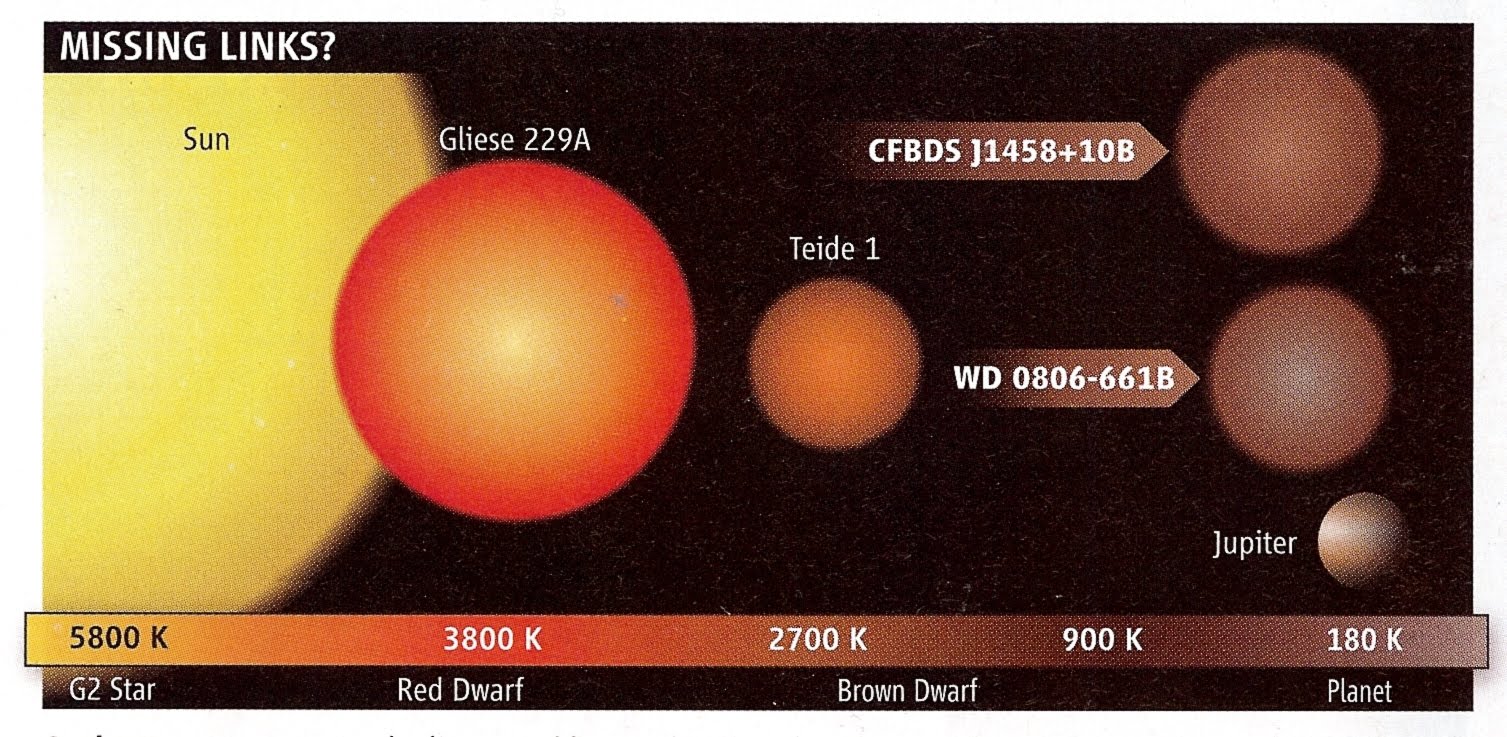
Brown dwarfs fall somewhere in the middle between stars and planets.

Brown dwarfs fall somewhere in the middle between stars and planets.

Somehow this makes Seattle’s weather not seem so bad.

Ever since the Fukushima disaster the nuclear industry has been looking for new ways to turn itself around. Their latest attempt to do so is the Small Modular Reactor (SMR). These reactors are less than 300 Mw, but are often much smaller than this. The reactor can be built in a factory somewhere and then transported to wherever it is needed.  Because of their size and design features these reactors are safer than their larger counterparts and can be placed underground, making them less vulnerable to terror attacks (an unfortunate modern design consideration). The Russians are already jumping on the SMR bandwagon with a modified version of their submarine reactor mounted on a barge.

reactorx-large

An example of a SMR.

SMRs are actually not a new concept. The US Army experimented with Stationary Low-Power Reactors in the 1950’s for use in arctic stations. Unfortunately, the design and operation was flawed, resulting in the SL-1 meltdown which killed three operators.

Former Canadian Defense Minister Paul Hellyer is up to his old tricks again. Mr Hellyer is the only official of a major government to publicly admit to the existence of aliens. You know, those little grey guys that Mulder and Scully were chasing down back in the 90’s. Hellyer made his first public declaration in 2005 and has since stated there are eighty different species of aliens, most of which either don’t care or are not willing to help us.  Of course, they don’t help us because we are too “warlike” and because we have nukes.

Cue spooky music.

Cue spooky music.

Somehow I get the feeling that they are fully capable of dealing with nukes, having mastered interstellar travel and all that.


Leave a comment

Filed under Winning Science

Winning Science December 24, 2013

Recently DARPA (Defense Advanced Research Projects Agency) held a robot Olympics in sunny Miami.  At stake is not only pride, but also one million dollars in additional research funding for any team that makes it through this first round.  The winning team after the second round will earn another two million. The robots are competing in several events which mimic tasks that humans might have to do in emergency situations, such as climbing ladders or turning valves. During the accident at Fukushima several valves could have been operated to significantly reduce the severity of the accident.  Unfortunately, due to radiation levels, human operators couldn’t reach them.  It’s hoped that these robots, or ones similar to them will be able to perform tasks where and when humans are unable to, preventing or at least reducing potential disasters.

lifesaving-robots-03-1213-lgnIt might be here to save my life, but this one looks way too much like Godzilla for my personal comfort.

Today is the 45th anniversary of the beautiful earthrise photo taken by the astronauts on Apollo 8. To commemorate this event, NASA’s Goddard Space Center has put together a computer generated recreation using photographs from the command module, the audio record of mission, as well as new data provided by NASA’s Lunar Reconnaissance Orbiter (LRO). It’s very interesting to listen to these events unfold (and more than a little humorous listen to Jim Lovell trying to find color film) and to hear the wonder in the voices of the astronauts.

I always like it when NASA takes the time to remember these cool little moments in the history of space exploration.

Yesterday Mikhail Kalashnikov, the inventor of the infamous AK-47 assault rifle died at the age of 94. No matter what your thoughts may be about guns and warfare, it is an undisputed fact that the AK-47 has been one of the most influential pieces of technology of the second half of the 20th century. The AK-47 has become synonymous with rebellions and insurgencies, cementing it’s place in the American collective memory during the Vietnam War. While the gun itself was more of a group effort and a conglomeration of several designs, Kalashnikov was likely chosen by Stalin because he best fit the image that the Soviets wanted to project. Regardless of how much of the design actually came from him, Kalashnikov became almost as much of a symbol as the rifle which carries his name.

Kalashnikov with his creation (kind of).

Kalashnikov with his creation (kind of).

Driving home the point of the rifle’s influence, the flags of Mozambique and Hezbollah and the coat of arms for Zimbabwe and East Timor all feature the AK-47

Leave a comment

Filed under Winning Science

Winning Science December 18, 2013

At the University of Cambridge in England, British scientists have printed eye cells. Yes, that’s right, printed. These scientists were able to make two types of eye cells from rats. The next step is to attempt to make a photoreceptor cell that will translate light into signals that are understood by the brain. This type of research will hopefully lead to a cure for many forms of blindness, specifically those that are the result of diseases which cause loss of nerve cells.

An-Eye

I am constantly and pleasantly surprised by the new advances in medical technology.

New research from Oregon Health and Science University suggests that alcohol, when consumed in moderation, can actually increase your immune system. While several other studies have demonstrated other benefits of moderate drinking, this is the first to show the effects on the immune system. Alcohol was made free available to monkeys, and just like people they drank in various amounts. At various times during the fourteen month study the monkeys were given vaccinations and those monkeys who had an average blood alcohol content of 0.02-0.04 had a higher immune response to the vaccination. Not surprising however is that monkeys with a blood alcohol of 0.08, the legal limit in humans for driving, showed a significant decrease in immune response.

Shutterstock-monkey-drinking

With fourteen months of drunken monkeys, where are all the YouTube videos?

Wired provides us with a really informative and interesting opinion piece from Thad Starner, a lead working on Google Glass. Starner has been working on wearable technology since the mid 90’s and some of his goals with Google Glass are quite surprising. The most interesting to me was the fact that this kind of technology is actually designed to increase human to human interaction. The idea is to make the technology more rapidly available in order to reduce the interference that comes from using the technology. It takes on average twenty seconds for someone to pull out their phone and unlock it before they can even look at whatever it is they pulled the phone out for in the first place. Google Glass aims to reduce this to just a couple seconds. They’ve also designed the display to be out of a persons normal eye line so that it won’t interfere with people look at one another.

google-glass1

Now I really want to give Google Glass a test drive.

Leave a comment

Filed under Winning Science

Winning Science December 11, 2013

If you’re like me, you’ve tried escaping from the annoyances of real life by playing one of various MMOs. Personally, I have played World of Warcraft, Star Trek Online, and Star Wars: The Old Republic. It seems, however, that real life might be trying to follow us into these imaginary realms. The New York Times is reporting that federal intelligence services (NSA, FBI, CIA) have been snooping for terrorists inside games like WoW and Second Life. Because of the nature of these games, the potential covert communication and transferring of funds does exist.  While it’s true there is some risk, experts say that the risk is less than one might think since game companies collect considerable data about players, which might compromise the secrecy of any potential gamer terrorists.

Turns out the Lich King isn't the only bad guy in the game.

Turns out the Lich King isn’t the only bad guy in the game.

I really want to know where I apply to play WoW for the CIA.  I think I could live with that job.

Researchers at MIT are working on a new biosuit that may soon replace the bulky space suits to which we are all accustomed. Surprisingly, it only takes one third of an atmosphere (about 5 psi) to keep a human alive in a vacuum. Current space suits provide this pressure through a combination of rigid structure and positive air pressure, whereas these new suits use polymers, elastics, and a special, active material to achieve this. Additionally, the MIT team is working on a different suit that can be worn to help reduce the muscle loss that occurs in zero g.

This had better not be what the future of space travel looks like.

This had better not be what the future of space travel looks like.

If the future of space exploration is about to become more form-fitting, I really need to get in better shape.

Speaking of the future of space exploration, Mars One, the project that is planning a manned mission to Mars, is adding a new, more achievable mission to its plans. Mars One is intending to land an unmanned craft on the red planet in 2018. The probe will consist of two parts, an orbiter and a lander. The orbiter will remain in orbit as Mars’ first permanent satellite, while the lander will perform a water extraction experiment, as well as several other experiments designed by students and chosen in a competition.

mars-one-banner-set-1-720_300

Let’s hope Mars One will be better at successfully landing stuff on Mars than NASA is.

Finally, a little holiday DIY project for you. If you hate untangling Christmas lights, make your own. With some tape, an LED, a few pennies and a lemon (yes…a lemon) you can make your own little light. Now all you need is 69,999 more and you can make a truly spectacular holiday display.

It's ok little fellas, you can be useful too!

It’s ok little fellas, you can be useful too!

I wish I had known about this before I cashed in 638 pennies. This would have been way cooler than the $6.38 I got instead.

Leave a comment

Filed under Winning Science