Category Archives: Winning Science

Winning Science June 11, 2013

It’s no secret that tattoos have become a part of geek culture. It’s gotten to the point that several conventions have had tattoo shops present so that attendees can get inked right on the spot. These tattoos are of course done by your standard human tattoo artist, but in the not too distant future, that may change. Recently, French students jury-rigged their MakerBot 3D printer with a pen and began drawing on people. Not satisfied with just using a pen, they eventually installed a full tattoo machine. While the machine can only do simple designs and there are still a few other technical issues to work out, the machine is off to an impressive start.

MakerBot_Replicator2_Front_View-700x466

I’d like to know if these kinds of modifications void the printer’s warranty.

Long, long ago, in the early days of Around the Web (ok, so it was like a year ago…I’m allowed to be dramatic every now and again) we featured an article that discussed a frozen mammoth with actual flowing blood. Well now Harvard Medical School students are working to bring the mammoth back to life, in part by modifying genes of the Asian elephant to match those of the mammoth. This is not the first time something like this has been attempted. In fact an extinct species was successfully brought back in 2003, though the clone died from a lung defect. The real problem is the lack of funding, which is preventing research from progressing further.

Of course there are still the ethical questions that must be addressed.

Lastly, we have a very interesting interview with Fabian Cousteau, grandson of Jacques Cousteau. Fabian Cousteau is continuing his grandfather’s legacy by taking part in a 31 day mission on the ocean floor. While the interview is a little lengthy, it’s definitely worth a watch. Cousteau discusses the mission, takes some questions from the internet, and then gives the audience a tour of the facility. Underwater, otherwise known as inner space, is one of the last two truly unexplored regions, and it’s easier to access than outer space.

Screen-Shot-2013-06-10-at-11.41.15-AM

Mission 31

I’m not sure I could live in such a small space for 31 days.

Leave a comment

Filed under Weekly, Winning Science

Winning Science May 28, 2014

The day has finally come when we here at Therefore I Geek can legitimately mix beer and science (without drinking while writing…I do that plenty already). Scientists at White Labs, a California yeast distributor, and a Belgian genetics lab have teamed up to map the genome of different types of brewing yeast. The goal is to eventually breed custom yeast, which would in turn yield custom flavors in beer. While genetic modification has been available for years, most brewers have shied away from modified yeast due to the public movement against GMOs. The most likely use of these different yeast strains will be by craft brewers as large breweries guard their yeast very carefully.

index_24

Who knows what interesting flavor and aroma combinations are headed our way in the not-too-distant future. Hurray beer!

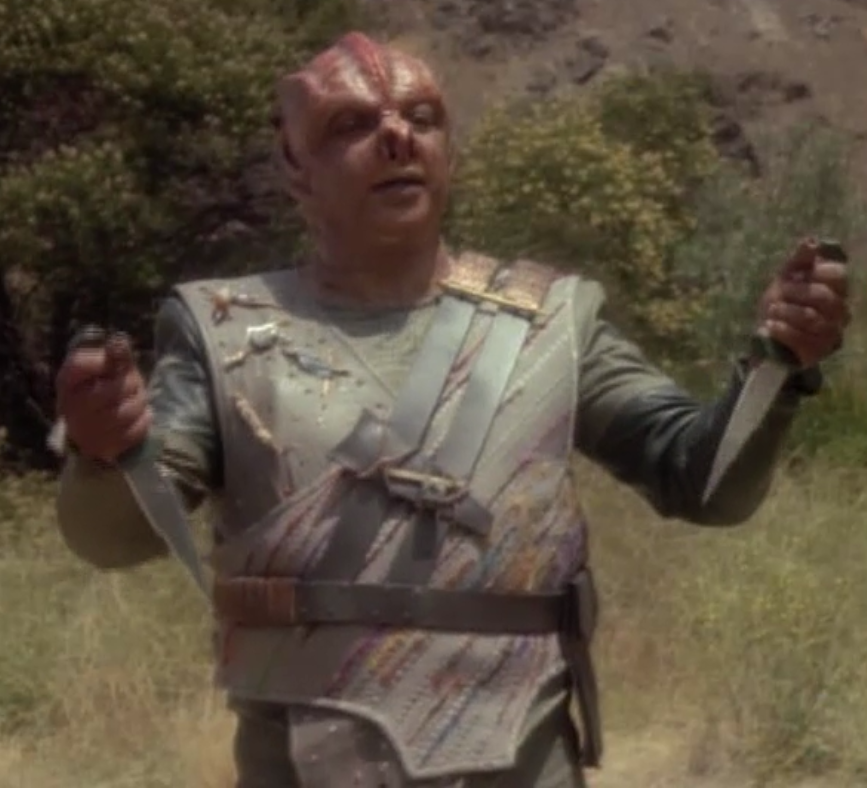
I love Star Trek but was always troubled by the fact that most aliens in the show look essentially like humans.  First contact and communicating with a new set of aliens was just a matter of learning their language.  The closest Star Trek ever got to really adapting to cultural differences was my absolute least favorite episode “Darmok,” in which Picard has to communicate with an alien captain who expresses everything using some epic story.  Recently, NASA published a book on just this topic called  Archaeology, Anthropology and Interstellar Communication. The book takes the time to discuss all sorts of different problems that might exist when trying to communicate with life forms that could be completely different than us. The book also provides a pretty good history of SETI, the search for extraterrestrial intelligence.

Not like this.

Not like this.

NASA has pulled the ebook version while they wait for printed versions to come out.

As the world turns…Ok, I’m not going to start talking about soap operas, but I will talk about the mathematics and physics behind the way the Earth actually turns. Science has a great explanation of the experiment that demonstrates how fast the Earth turns. The original experiment in 1851 provided the first quantitative measurements of how fast the rotation actually is. The pendulum continues to swing on a straight line, but its direction changes as the earth rotates.  If a person did the pendulum experiment at the North or South Pole for six hours, he would actually find the 90 degree change in direction, as expected. Since the original experiment was done in Paris (which is obviously not at one of the poles) the value in that location, though exactly as expected, is less than it would be if done at the poles.

A Foucault Pendulum

A Foucault Pendulum

I love simple experiments like this. Science does not always need to super complex.

Leave a comment

Filed under Weekly, Winning Science

Winning Science May 20, 2014

Pretty much everyone has accidentally put metal in the microwave at some point. The reaction is pretty scary: weird noises and the metal object arcing and sparking, and maybe even jumping around some in the microwave. We all know what happens, but not many of us know why it happens. This article does a pretty good job of summarizing the results of microwaved metal, but in general it has to do with the makeup of metal on a molecular lever. Turns out those material science classes in college weren’t completely pointless.

As a kid, I didn't know these were metal...until i put one in the microwave.

As a kid, I didn’t know these were metal…until i put one in the microwave.

Also, it turns out that grapes in the mircowave are way more dangerous. If you don’t believe me, check out the video at the end of the article.

Like many geeks, I love to read science fiction. One of the most commonly used plot devices is the robot. From I, Robot to Blade Runner and Transformers, these artificial characters dominate stories and are capable of all manner of impressive feats. The sad truth in real life, however, is that robots, while incredibly good at one or two things, excel in very few things, especially when compared to humans. Popular Science offers us a deeper look into the realities of robots and how they compare to their fictional brethren.

Somehow I don't think this guy will be saving the universe any time soon.

Somehow I don’t think this guy will be saving the universe any time soon.

I still want my car to drive me around. Seriously…like ASAP.

Ever wonder what makes a video or article go viral? If you have, you’re not alone. Scientists have just begun to study what makes a person more likely to share a link or video, and the results are interesting. Studies have shown that content that evokes strong emotion is the most likely to get shared. Although those that are positive are the most likely to be shared, negative posts are not far behind. Also surprising is that people who are in an emotionally or physically excited state are more likely to share. Researchers found that people who were active for sixty seconds before looking at online content were more likely to share said content than those who were relaxing beforehand.

Now if only they could explain why cat videos do so well.

Now if only they could explain why cat videos do so well.

This probably explains the daily, raging hate-fest that makes up my local newspaper’s comment section.

Leave a comment

Filed under Weekly, Winning Science

Winning Science April 30, 2014

Today is the launch of Amazing Spider-Man #1 and The Amazing Spider-Man 2 comes out in theaters tomorrow. How fitting, then, that Wired gives us a great article about the physics behind Spidey’s most famous piece of paraphernalia, his webs. Being an engineer, I’m familiar with most of the equations used in the article, but I had never put much thought into what the physical requirements must be for the webs. To pull of some of Spidey’s more impressive feats, the webs would need to be five times stronger than a steel cable.

Nobody does Spider-Man's webs quite like Todd McFarlane.

Nobody draws Spider-Man’s webs quite like Todd McFarlane.

I also really enjoyed the preemptive comment responses. This man has dealt with the internet before.

Observing un-contacted native tribes has always been a tough thing to do. Frequently contact eventually results the destruction of the very culture that is being observed. In an effort to prevent this from happening but still learn about the tribes, researchers are turning to Google Earth to monitor the behavior and activity of some tribes. This form of observation will also help set up buffer regions around the tribes to prevent inadvertent contact.

I see you...

I see you…

While this is a pretty great use of technology, it’s also a high tech form of voyeurism. Just a little creepy.

NASA has chosen to honor none other than William Shatner with their highest award, the Distinguished Public Service medal. This is a real no brainer. I’d bet considerable amounts of money that you couldn’t walk twenty feet in a NASA building without finding someone who has been inspired by the adventures of Captain James T. Kirk and his successors. Shatner has also been a vocal supporter of the NASA and of space exploration in general.

William Shatner with Ricardo Montalban in the episode Space Seed.

William Shatner with Ricardo Montalban in the episode “Space Seed”.

I had no idea he was Canadian. Guess I’m not quite the trekkie I thought I was.  😦


Leave a comment

Filed under Weekly, Winning Science