Category Archives: Reviews

DC’s New 52: How we got there

Just about two years ago, DC Comics decided it was time to shake things up. This was no surprise. A revolution had been coming for a while, but this time DC was starting over from issue #1 on everything in their universe. When they said everything, they meant everything, including titles that had been around since the beginning, such as Action Comics, Detective Comics, Superman and Batman. Previously these books were untouchable, the holy relics of the comic book industry, and to do something this radical to them was a risky undertaking to say the least. As we approach the two year mark of this experiment, I think it’s worth taking some time to look back and evaluate how each of the New 52 titles is doing. So each Thursday in September (and the last in August. I’m looking at you, Justice League) we’ll take a short look at those books that came out two years earlier.
New52logo1

Before we get into the books themselves, it’s probably a good idea to take a look even further back and see how DC got to the point of needing a completely clean slate. DC has a long and convoluted archive of continuity that has often been intimidating to new comic book readers trying to jump on. More than once DC has tried to pull off a universe-wide reboot, but it hasn’t always gone according to plan.

Back in 1985, DC came to the realization that fifty years of uncoordinated continuity had become too unwieldy. How could they explain to new readers that Golden Age Superman was old but alive and working with the Justice Society, while Silver Age Superman was young and a part of the Justice League? Were there two Supermans? The original attempt to explain things away was the Multiverse, an idea that many of these characters existed at the same time, but in parallel universes, each one with its own history. This worked for a while, but after time these different Earths began to cross over with an increasing frequency that once again made it difficult to keep things straight, and it was decided that something had to be done. Enter Crisis on Infinite Earths, a universe-spanning event comic that would radically alter the face of the DCU. By the end, whole swaths of characters had been removed from existence, the Multiverse was eliminated and a single Earth (with a single Superman) was left behind.
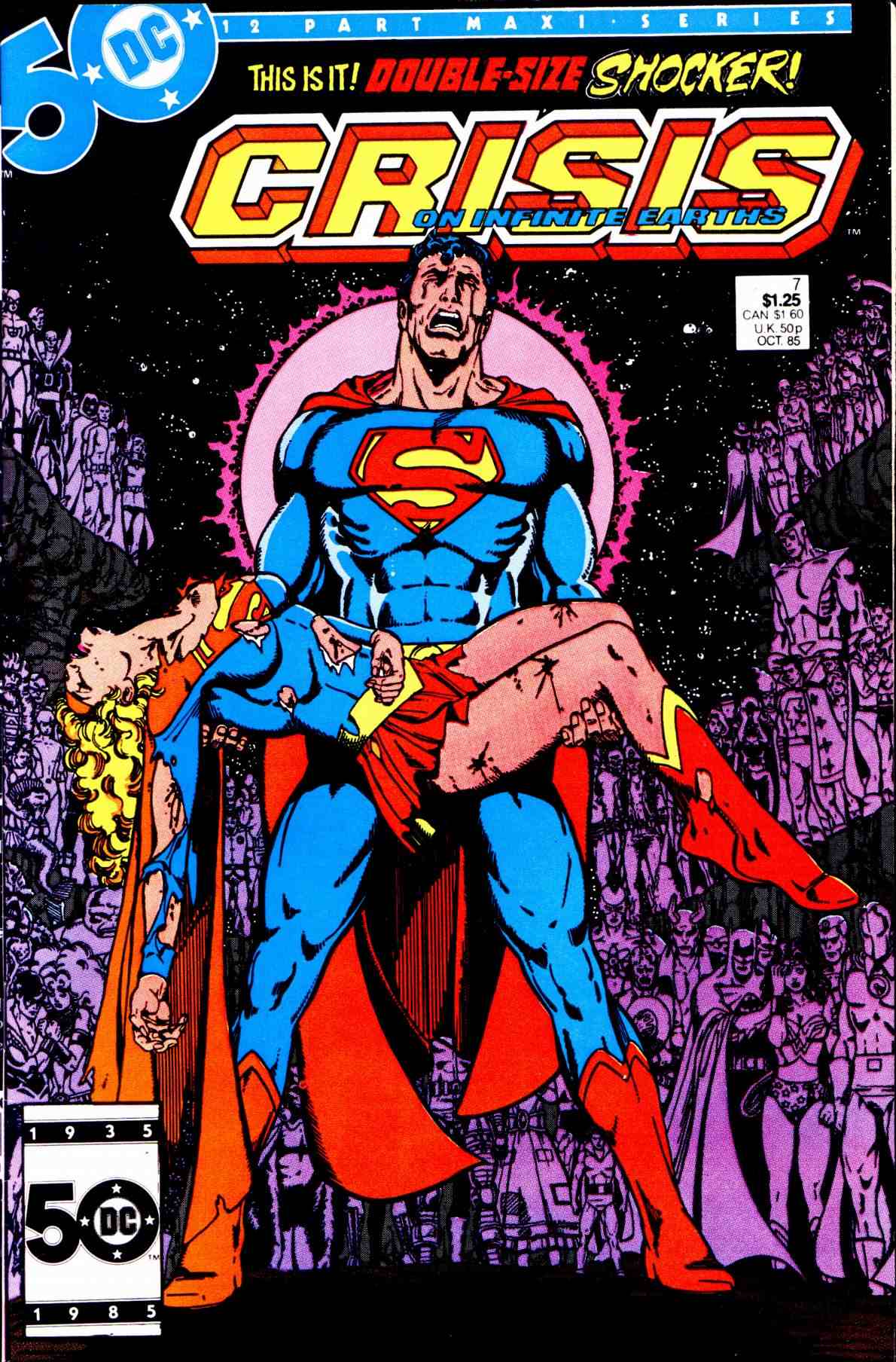
Though one of many characters killed during Crisis on Infinite Earths, Supergirl was probably the most popular character to meet her end.
Though one of many characters killed during Crisis on Infinite Earths, Supergirl was probably the most popular character to meet her end.

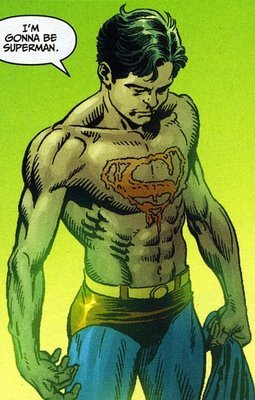
Because carving a Superman logo into your chest is completely normal

Because carving a Superman logo into your chest is completely normal

Soon, events and characters were referred to as Pre- and Post-Crisis and all was well. At least for a little while. Over the next several years, writers began to reintroduce characters and plot elements that had been wiped out in Crisis. What was originally a pretty clean restart slowly began to resemble the Pre-Crisis DCU with all of its twists and turns. Throughout all of this, though, the Multiverse stayed gone. With no Multiverse there was still a limit on how crazy plotlines could get because all the characters had to exist within the same universe. That all came crashing down when the Multiverse was brought back in Infinite Crisis. Following several lead-in mini-series, Infinite Crisis revealed that Golden Age Superman had not perished during Crisis on Infinite Earths, but had, in fact, gone into hiding with his wife Lois, Superboy Prime, and Alexander Luthor (Lex Luthor from a different Earth). When Lois’ health starts to fail, Superman determines that her health will improve if she is returned to her Earth, and they leave their hiding place and begin an attempt to replace the current Earth-1 with their Earth-2. Eventually Superboy Prime goes crazy and kills several heroes and villains, including his Earth-1 counterpart, Connor Kent. Superboy Prime is stopped, but not without causing both Supermans to be depowered and a considerable body count.

The fallout from Infinite Crisis was taken up by the breakthrough series 52. An ambitious concept, 52 released an issue a week for a full year. Even more shocking was that this series would not include DC’s holy trinity of Superman, Batman, and Wonder Woman. This decision allowed writers to use lesser known heroes, relying on character development rather than just big names. The year started out with a series of stories which are interesting but mostly unrelated, but as the weeks passed the stories became more intertwined until it culminated with the reveal of the existence of fifty-two new parallel universes, created at the end of Infinite Crisis.
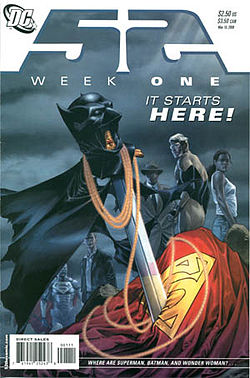
250px-Cover_52_Week_One_(May_10,_2006)

Now you may think “at least we’ve made it to the New 52”, but alas, you’d be wrong. Next, fans were made to suffer through Countdown to Final Crisis, a disasterous follow up to 52 which followed 52’s weekly release schedule, but lacked its overall appeal. The storytelling was questionable at best and it was populated by characters that most people didn’t really care about. Additionally, the plotlines became so skewed as the series progressed that by the time it ended they no longer lined up with Final Crisis. Subsequently most of the storylines were retroactively removed from continuity.

Thankfully Final Crisis turned out much better than its lead-in event. Written by DC’s powerhouse writers Grant Morrison and J.G. Jones, Final Crisis was a well written, if confusing story. Further tapping into lesser known characters, and adding more than a few of his own, Morrison made considerable use of Jack Kirby’s New Gods, most of whom had not seen much use in recent years. Additionally, the Multiverse played a major role in the Final Crisis with the inclusion of the Monitors, a whole race based on one of the key players from Crisis on Infinite Earths. While a great story, Final Crisis was anything but final and did little to help maintain the clean continuity that DC had attempted to setup all those years ago. And oh yeah, Batman died.
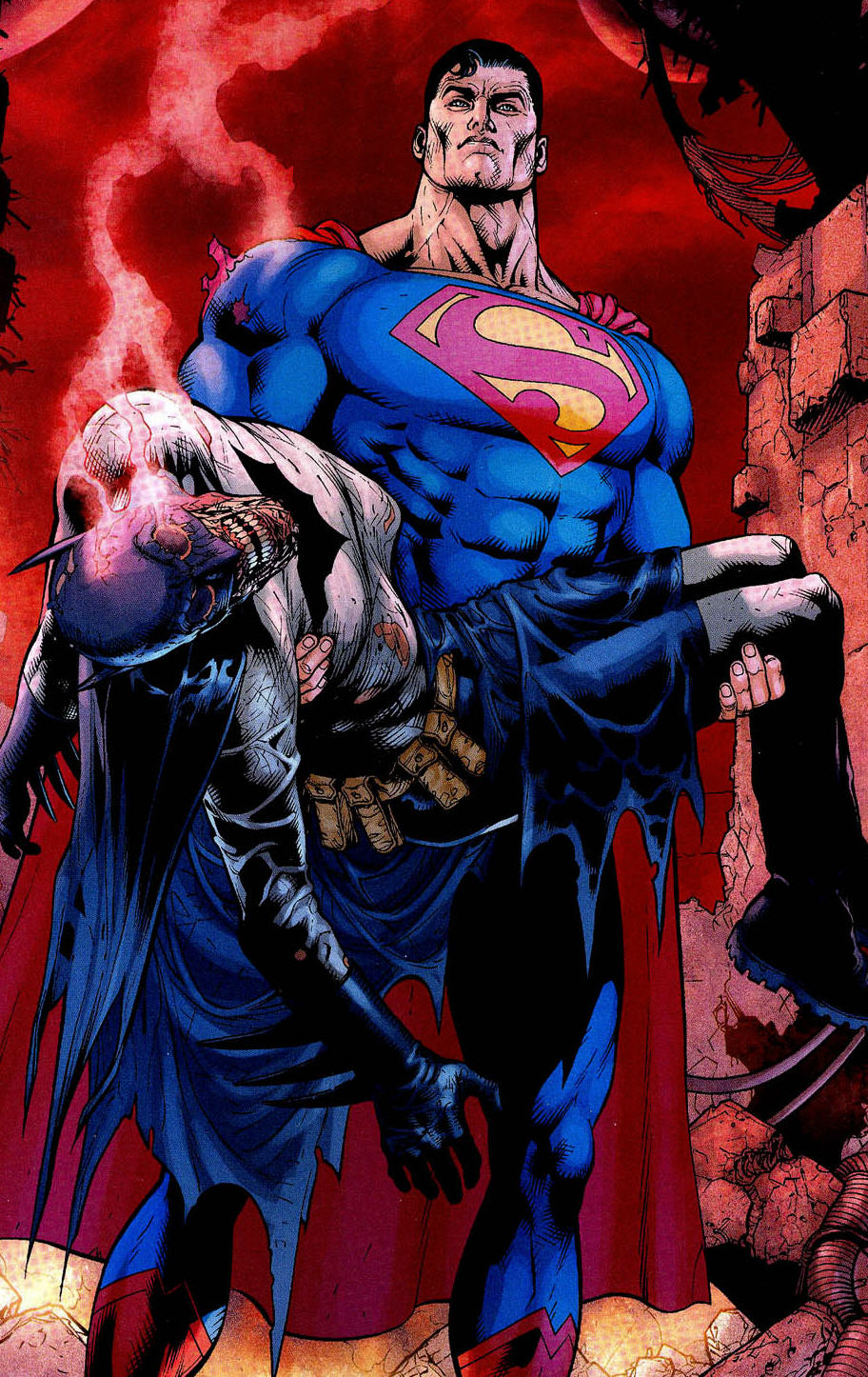
Are we starting to see a theme emerge?

Are we starting to see a theme emerge?

This being comics however, Batman came back (Turns out he was just trapped in the past. Happens to me all the time), just like many characters before him. While he was gone, however, readers were treated to Dick Grayson as Batman, as well as the DCU-spanning Green Lantern event, Blackest Night. As if things hadn’t been confusing enough, Blackest Night brought many dead heroes and their loved ones back to life as Black Lanterns (If your head wasn’t hurting before this, it should be right about now). While impressive for its cosmic scale, Blackest Night was a nightmare for those not intimately familiar with DC’s continuity.
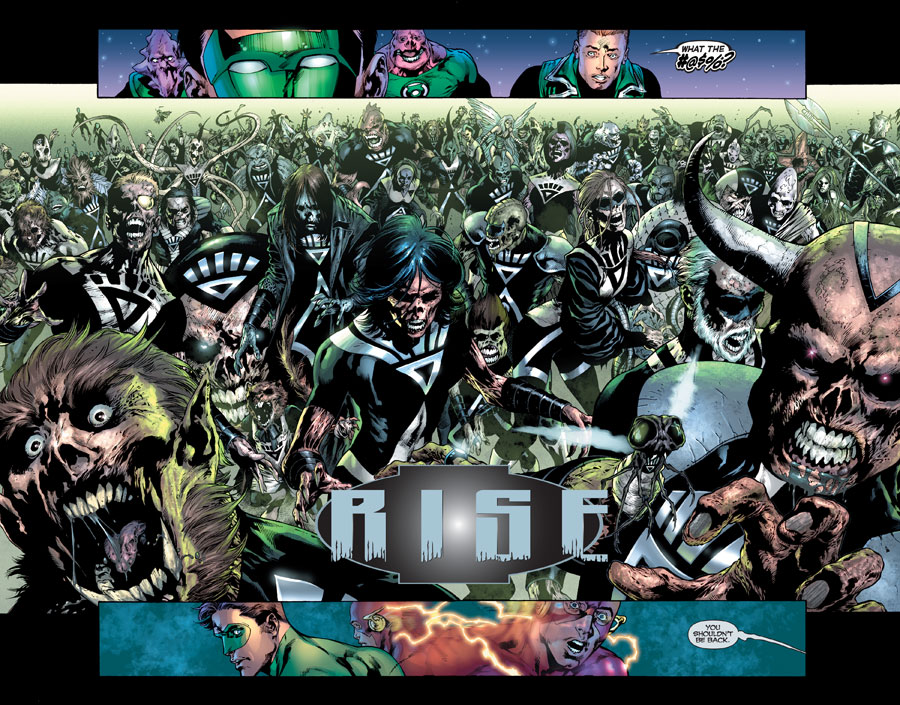
I see dead people...a lot of them.

I see dead people…a lot of them.

The final stop on our journey to the New 52 is Flashpoint. The Flash (Barry Allen) wakes up in what he believes to be an alternate timeline in which Wonder Woman and Aquaman are at war with one another and Batman is Thomas Wayne, whose son Bruce was killed in Crime Alley. Eventually Barry finds out that he is not in an alternate timeline, but in his own timeline that has changed after he attempted to travel back in time to save his mother from dying. Barry is eventually forced to undo what he has done and in the process the DC universe merges with those of its imprints, Vertigo and Wildstorm, and the timeline resets, leaving us with the New 52.

This controlled reboot of the DCU was twenty-six years in the making and took several failed attempts to get right. Through the next five weeks, Therefore I Geek will explore the things DC has gotten thing right and point out areas in which they took a misstep or two. Each week we will discuss the first wave books that were released that week two years ago and see where they’ve been, what’s going on now, and where they are headed. Lucky for you, Week One only consists of one book, Justice League. Stand by for Weeks Two through Five and join us for a look at the state of the DCU.

6 Comments

Filed under Andrew Hales, Comic Reviews, Comics

Review: Kickass 2

kick_ass_2_poster

Sometimes a movie comes out that changes everything. A movie so earth shattering that you are forced to re-evaluate your entire life. These movies are so rare that we must cherish them and walk away pondering their insights. Kickass 2 isn’t one of these movies. In fact, it’s nowhere close to being one of those movies. Even though I won’t be making any major life altering decisions after seeing Kickass 2, that doesn’t mean I didn’t enjoy it.

Kickass 2 is exactly what it set out to be: an edgy tale of real life superheroes who truly don’t have any clue what they’re doing. A sequel to 2010’s Kickass, and based on Mark Millar’s comic of the same name, Kickass 2 picks up after the events of the original. Kickass, the main character, is in retirement and Hit Girl is underground, though still training and preparing as if she weren’t. Much of the film deals with Kickass as he finds and joins a team of superheroes, all of whom are inspired by the actions he has taken as the world’s first superhero. There is almost a demented Avengers feel to the movie as the team is introduced, playing off the traditional comic book story of assembling the new team to fight a big threat. The plot fits within the already established world, but, like the first one, it’s still a bit farfetched. One scene in particular with supervillian Mother Russia really pushed the limits of what is believable. She manages to take out ten police officers in some particularly bizarre methods without so much as a scratch to herself. There have been many great movies (like The Matrix) that push the limits of the believable, but they tend not to be set in the present day reality. Certain elements of the movie, such as the training sessions, although exaggerated, were believable; while others like the attack on the poker game were over the edge.

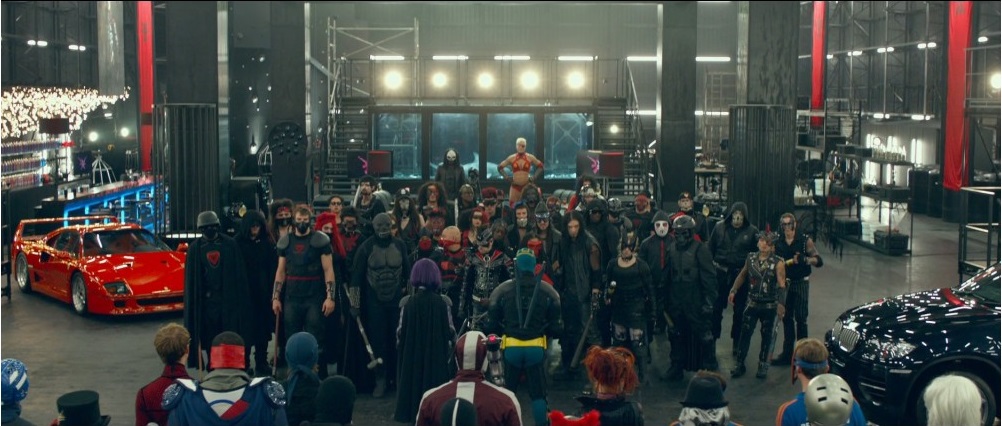
The action sequences provided a pleasant mix of choreographed fights and clever dialogue which moved the story forward, without an excessive amount of shaky camera work and without going too crazy with the gore. The first Kickass was as much about trying to shock the audience as it was about the story. This time around most of the serious violence was saved for the major fight at the end of the movie. There was, of course, some included throughout the movie, but not quite as much as Kickass. Also, the blood and violence was considerably less cartoonish. Speaking of the final fight scene, Kickass 2 had a nice comparison between the supervillains all dressed in black and red and the superheroes who were in a whole rainbow of different colored costumes. Although a bit obvious, it did make things clear who the villains and heroes were.

kick-ass-2

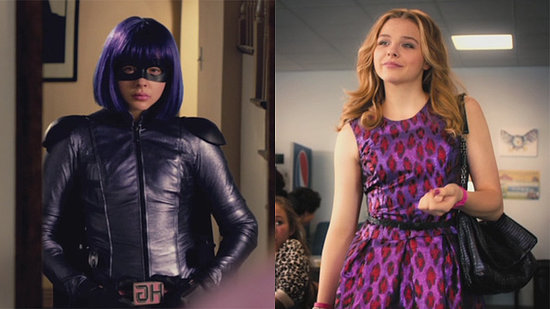
As far as the actors go, I enjoyed almost every performance. Aaron Taylor-Johnson plays a very believable geek but was able to get in fantastic shape for this role. Talk about making people feel inadequate; he has muscles I didn’t know existed. Recently Kickass 2 made news even before it was released due to Jim Carrey’s criticism of the violence in the film in the light of Newtown, CT. Carrey’s performance in the movie was respectable though not excellent. He was good, but I think his statements after the fact overshadowed the performance. The standout performance of the movie has to go to Chloe Grace Moretz as Hit Girl. She was good in Kickass, but she was even better this time around. A very talented 16 year old, Chloe was really the driving force behind the story. Although the story is about Kickass and is told by him, as times it seems like a Hit Girl story with bits of Kickass thrown in the middle to break things up. While I loved seeing Hit Girl beat the crap out of Kickass in an attempt to make him tougher, my favorite scene involved her getting even with the school bullies in an incredibly fitting way.

Chloe Grace Moretz as Hit Girl/Mindy

Chloe Grace Moretz as Hit Girl/Mindy

Overall there wasn’t anything specific I didn’t like; it’s just a second tier superhero movie. When compared to the original movie, Kickass 2 is a considerable improvement. There is a much more cohesive plot line, which is a result of the source material being completed well in advance of the movie (Due to health reasons, Mark Millar had to delay Kickass the comic significantly and the last issue was released at almost the same time as the film, leading to the plot of the movie being fuzzy at times.). Kickass 2 proved to be just about everything I look for in a sequel. It gave us further character development; introduced new and interesting characters, both good and bad; and most importantly it wasn’t just a pure rehash of the first film. If you really enjoyed the first one, then check out Kickass 2 in theaters. Otherwise, it’s worth the wait for Redbox. I give this movie 3.5 Death Stars.

1 Comment

Filed under Andrew Hales, Movie Reviews, Movies

Review: Dark Star

DarkStar

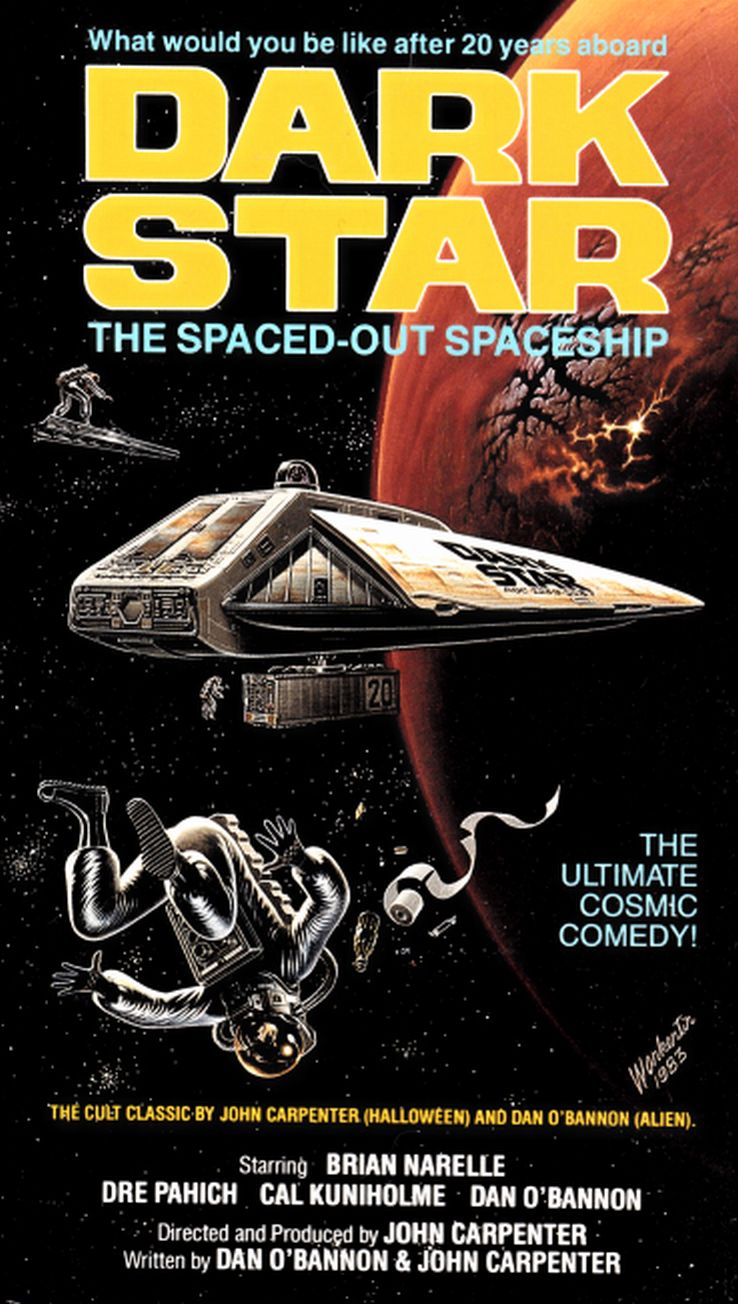
“…instead of the most impressive student film ever made, we had the least impressive professional film ever made”. This is how writer Dan O’Bannon described Dark Star, a zany space adventure that is far more influential to both film makers and the movie going public than most people are aware. The plot follows the crew of the deep space scout ship Dark Star as they travel the galaxy looking for unstable planets to demolish. As they continue their travels, their ship is falling apart around them, and due to their near light speed transits only three years has passed for them.

This is one of my favorite B movies, hands down. It hits me in all the right places, from campy humor to science fiction adventure. It also tickles my geek fancy because so many people who became famous later were involved with this movie early in their career. There is lots of geek trivia to be found in this film. Although it was a student film that was expanded into a full length feature, as a B movie, the effects, writing and acting are really of a higher than expected quality.

Dark Star was a stepping stone in the career of one of Hollywood’s most prolific, though maybe not best, directors. Originally, it was the master thesis for John Carpenter, later known for movies such as Halloween and Escape from New York. This movie really set the tone for the B movies for which Carpenter would become known and established a higher bar when it came to quality of B movies in the 70’s.  Movies don’t necessarily have to be good to have an impact.  Low budget films are often the perfect place for new talent to make their name.

By today’s standards, Dark Star’s effects are unimpressive and beyond antiquated, but it was released in 1974, three years before Star Wars was released and changed the special effects game. While the movie obviously produced by people who were just starting out in their field of, the effects are campy without being over the top or just plain bad.  Rather than try to be overly ambitious, the movie creators chose to stick with simple ones that could be pulled off with relative ease. Many of these effects were designed by Ron Cobb who would later gain notoriety for his work as a conceptual designer on many blockbuster films such as Star Wars, The Abyss, and of course Alien.

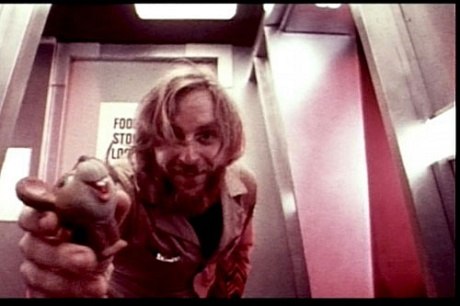
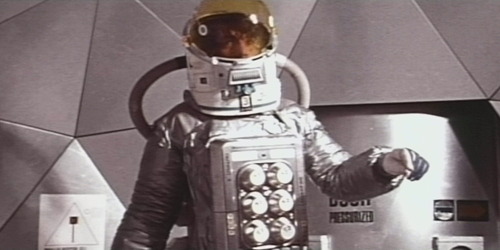
Dark Star is the first film written by Dan O’Bannon, who would later go on to write Alien and Return of the Living Dead (the first movie in which zombies crave brains). The characters are reasonably well developed, especially O’Bannon’s own character of Pinback.  As it turns out, Pinback isn’t actually Pinback.  Instead he is Fuel Specialist Bill Frugge who was wearing Pinback’s spacesuit after the real Pinback committed suicide. When it came time for launch Frugge couldn’t figure out how to work the spacesuit’s radio to inform people that he wasn’t Pinback so he got shipped off instead.  Being out of place, Pinback provides an amusing commentary on events and a significant lack of professionalism.

Dan O'Bannon's Pinback

Dan O’Bannon’s Pinback

Dark Star also provides a believable look into what life would be like for a crew stuck on a small spaceship for three years.  The ship is falling apart, crew members have died, and those that remain have to stave off boredom and attempt to maintain their sanity.  One crew member spends all his time in an observation dome look out at the stars and Pinback himself has adopted a pet alien.

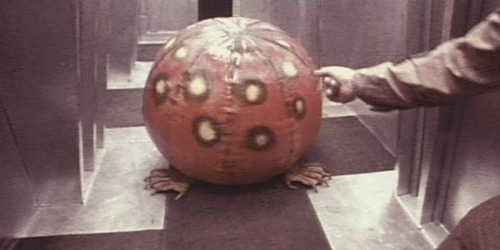
The alien is played by a painted beach ball with rubber monster claws for feet. The seams of the beach ball are even still visible underneath the paint. Despite this, the alien is still one of the best elements of this movie.  The scenes in which Pinback chases the alien through the ventilation system later became the inspiration for Alien.  (Dark Star is basically the story of truck drivers in space as a dark comedy, whereas Alien makes that same idea into a beautiful horror film.)  So while the beach ball alien bears no resemblance to the Xenomorph, it is, in fact, its early ancestor.

If this cost more than $10 I'd be very surprised.

If this cost more than $10 I’d be very surprised.

There is very little about this film that I don’t enjoy.  However, there are several times where the dialogue is too quiet because of that what is going on in the scene becomes lost. Since the plot is pretty thin that start this only serves to add confusion. The space suits are another complaint of mine. Most of the suit is fine—especially for low budget science fiction—but the chest pieces on both space suits are baking pans. I’m not joking here. One is most definitely a muffin pan and the other is a deep metal baking pan with an air filter attached to it. I know these guys were working with a limited budget, but have to believe that they could have scraped together an extra 20 bucks for some kind of busted electronics they could have used instead of such obviously recognizable household items.

Tell me that isn't a muffin pan.

Tell me that isn’t a muffin pan.

Dark Star is a B movie to be sure, but it is one of the truly outstanding ones. The number of people who got their starts on this movie and the other movies it has spawned or been referenced by gives this movie a longevity that would not be expected of what is essentially an overgrown student film. With everything that Dark Star has to offer, I give it 4.5 Death Stars.

4.5 Death Stars

Leave a comment

Filed under Andrew Hales, Movie Reviews, Movies

Editorial | Review: Saga

With the upcoming release of the thirteenth installment of Brian Vaughan’s Saga, now seems as good a time as any to briefly review the previous twelve issues.

As someone relatively new to comics in general, I was pleased to start Saga right at the beginning, before realities split and the universe has been reimagined with a new history four or five times (I’m looking at you, DC Comics).  Fiona Staples’ artwork in the book is simple, but not overly so.  Action is clear and it is easy to understand what is happening.

Their facial expressions capture the essence of these characters, but the controversial pose is unnecessary.

The story is narrated by the infant who is being born in the first frames of the book, as a memoir.  This makes the entire issue (and subsequent ones) feel like a prologue to the main storyline, but no main storyline ever actually appears.  Instead, the narrative follows the exploits (sexploits?) of Alana and Marko, two creatures who are defying a centuries long feud between their species to fall in love.  Alana gives birth to their daughter, Hazel, the story narrator and then the pair begins a mad dash to get somewhere that they and their daughter would be safe.

Alana is a winged creature from the planet Landfall.  She seems to be undereducated and has a brash attitude that has helped her survive a hard life, but makes me concerned for the survival of her marriage.  Her husband Marko’s character seems likeable and a little bit ordinary.  His people are from one of Landfall’s moons, called Wreath, and sport mountain goat horns growing from their heads.  He is disillusioned with violence and warfare but is torn between a pacifist life and protecting his new family.

The characters are all fairly believable, considering that the main couple has either wings or horns, and that the supporting cast includes an enormous half woman/half spider, and a race of humanoids with old fashioned tube television sets for heads.  The writing style is clear and concise.  The problem that I have is that there is no discernible plot line.  The adventures are told in a rambling fashion and feel as though they are leading up to some main plot, which never materializes.

The top half of a ghost wants to permanently bond with my infant’s soul? Sure! What could go wrong?

I appreciate the effort Vaughan makes to flavor Saga with unusual elements; and some of the strangeness of the characters and locations really appealed to my sense of whimsy.  I liked the idea of a spaceship forest, where the fruit of the trees is not edible, but rather rocket fueled.  Another interesting character was the Lying Cat, a large jungle cat who hisses, “Lie!” at anyone who attempts to twist the truth in its presence.

While the artwork is crisp and easy to follow, I did find that the art was occasionally unnecessarily graphic (read: lots of gratuitous sex).  Considering that the writing was not lazy and that the stories progressed well on their own, it seemed ridiculous that the book would work so hard to shock its audience.  The cover art especially seemed chosen to be deliberately controversial.

All in all, I enjoyed Saga, and I look forward to the next six issue story arc, but I do not see that it merits the critical acclaim it has received.  From me, it gets four out of five Death Stars.

4 Death Stars

1 Comment

Filed under Comic Reviews, Comics, Editorial, Tracy Gronewold