Category Archives: Movie Reviews

Review: I, Frankenstein *Spoiler Alert*

***** SPOILER ALERT *****

This review will be discussing plot points which may be considered spoilers. Consider yourselves warned.

file_177013_1_i-frankenstein-final

In the summer of 1816, a young Mary Shelley began writing what would become Frankenstein. Since it was published in 1818, that revolutionary novel has become the inspiration for countless other works including over a dozen films. The most recent of those movies is I, Frankenstein, based on the graphic novel of the same name. While I, Frankenstein may not be the best of the movies inspired by Shelley, it is by no means the worst and makes for a fun afternoon at the cinema.

I, Frankenstein picks up shortly after Mary Shelley leaves off, with the monster (Aaron Eckhart) returning to bury Victor Frankenstein in the Frankenstein family grave yard. As he is shoveling the dirt over Victor, the monster is attacked by unknown aggressors. These aggressors make mention of someone named Naberius, who–ominously–wants the monster alive.  The monster fights back and is rescued by a pair of gargoyles, who apparently exist on earth to fight demons of the type that had just attempted to carry him off. Now the monster is unwillingly pulled into a war between the demons who attacked him and the gargoyles.

Several quick scenes later the gargoyle queen Leonore (Miranda Otto) has named the monster Adam and he has gone back into hiding. The movie skips ahead two hundred years, the demons have come looking for him, and Adam has decided to come back to the civilized world and rid himself of this threat. Through several twists and turns the audience has come to find out the demon prince Naberius (Bill Nighy) wants to create an army of soulless, reanimated human bodies like Adam so he can bring back all the demons that the gargoyles have banished over the centuries.

Over all the movie isn’t bad. The casting choices are the brightest parts of this movie. Aaron Eckhart plays the reluctant protagonist very well. While his portrayal of Adam is reminiscent of the tormented Two Face in The Dark Knight, there are significant differences in the two characters. I was especially pleased with Eckhart’s physicality through the whole movie. There were plenty of fight scenes and Eckhart held his own. While he might not be the size of the traditional Frankenstein’s monster, the size difference never bothered me.
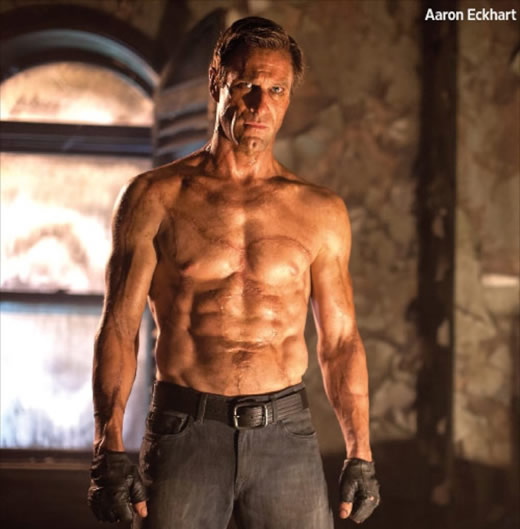
Aaron Eckhart as Adam.

Aaron Eckhart as Adam.

It was also nice to see Miranda Otto back on screen. Most movie goers would recognize Otto as Eowyn from The Lord of the Rings. She did a pretty good job as the gargoyle queen. This time around she had a much more regal bearing than she did as Eowyn, which is fitting given her character’s status. Bill Nighy was an adequate villain; unfortunately, he always plays the same character and after a few movies it gets redundant.

The movie runs ninety-two minutes but it certainly didn’t feel like it. The action starts within the first couple minutes of the movie and doesn’t let up for more than a minute or two until just before the credits roll. The plot was predictable at times, but not disappointingly so. At one point the gargoyles turn on Adam and begin to hunt him in hopes of destroying him so that Naberius can’t get Adam. This was a pretty obvious plot device and I saw it coming way in advance.

I am still a bit confused by the whole demon and gargoyle war.  There may have been more backstory and explanation in the graphic novel on which this movie was based, but if so, it didn’t make it past the cutting room floor. While I applaud the film makers for not going with the stereotypical angels vs. demons, the gargoyles really were just a stand in for angels, only slightly less powerful. Throughout the movie I was consistently impressed with the incorporation of original Frankenstein story elements. Sure some things had to be changed to make the plot work, but it was never the major details and the creators were otherwise surprisingly faithful.

The dialogue was perhaps the component of this movie that moved the slowest and dragged the other pieces down.  Sure, the word “shall” sounds wonderful in Elizabethan era plays, but “will” is a perfectly good stand in, and probably should have been used more liberally in this movie.  I also took issue with Queen Leonore’s declaration at the beginning of the film, “God is no longer the only one who can make man.”  Statements like this came across as stilted and a little campy.

Visually the movie was clearly spawned from the Underworld creators.  It could have easily been set in the same universe. The sets were huge and impressive.  Overall the feeling was one of decaying grandeur.  Most of the movie takes place at night, so everything is dark.  The cathedral of the gargoyles is absolutely gorgeous and seems to be based on the gothic cathedrals of France—most likely Notre Dame.  In the alleys of the Parisian style city, water seems to always be dripping and puddles seem to be a structural inevitability.  The lab in which the female lead, Dr. Terra Wade, is attempting to create life seems normal until it becomes obvious that the ceiling is perhaps forty feet above her head.  The evil Dr. Molokai’s lair, filled with 10,000 human corpses waiting to be inhabited by demon spirits, is much larger, and also resonates with dripping.  I was slightly annoyed that the city in which the story takes place was never actually named. Based on the number of abandoned buildings, I’m forced to assume it all takes place in Newark, New Jersey.

This could easily have been a filming location.

This could easily have been a filming location.

The cinematography of this movie was nothing special.  There were some great camera shots and effects, but at times the whole movie had cheap feeling. I have a hard time putting my finger on it, but it reminds me a lot of old episodes of Star Trek: The Next Generation that were shot on video tapes. That soft focus that was the best they could do with the technology they had available. Unfortunately that is not the same technology that we have today, and there is no good reason for this look.

I, Frankenstein makes for a good popcorn flick. Unless you have the undying urge to go see this in the theatre, you can wait to see it on DVD. I enjoyed myself and I give it three Death Stars.  Tracy gives it four Death Stars, so the average of the two of us is Therefore I Geek’s rating of three and a half Death Stars.  I’m also going to make a point of finding the graphic novel and getting better acquainted with it.3.5 Death Stars
Leave a comment

Filed under Andrew Hales, Movie Reviews, Movies

Review: 47 Ronin

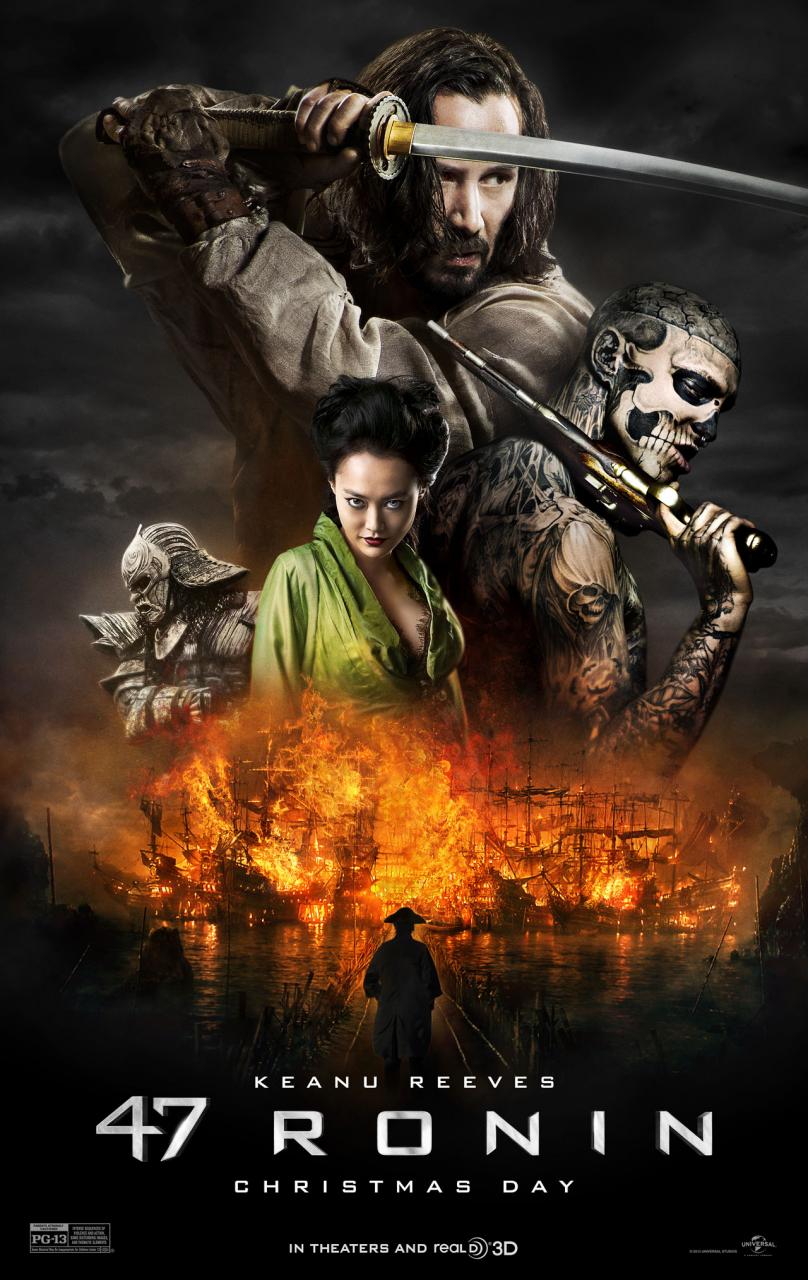
hr_47_Ronin_11

I love samurai movies. I own the Criterion Collection edition of several of Kurosawa’s major works and they are among the prized pieces of my movie collection. With this in mind I went to see 47 Ronin. Despite claims that it was done in the same tradition as Kurosawa, I had no expectations that 47 Ronin would live up to that. All I was really hoping for was a faithful, artistic retelling of the Japanese legend. What I got was a disappointing mess. At almost every turn 47 Ronin managed to do the wrong thing.

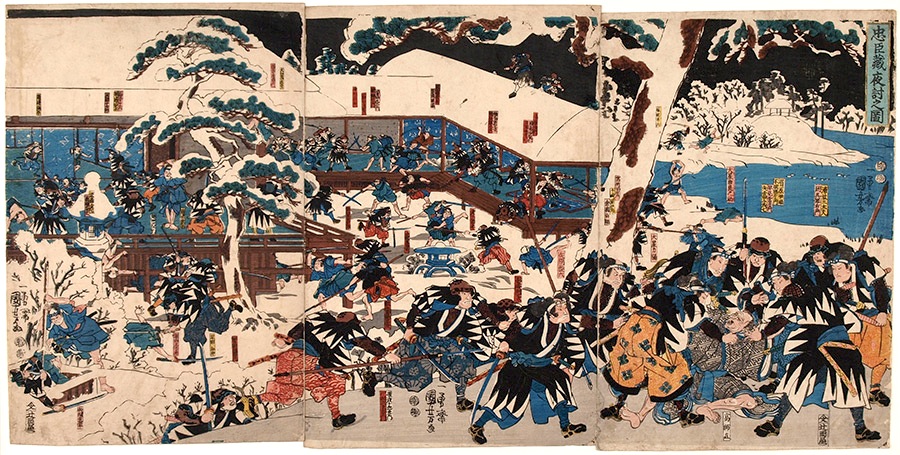
The original legend of the forty-seven ronin is a classic Japanese tale about forty-seven masterless samurai lead by Oishi who avenge their master’s death. Their master, Lord Asano, had been goaded into attacking a court official, Kira, in Edo Castle over a perceived slight. Assaulting a court official was a grave crime and the master was forced to commit ritual suicide. Forty-seven of the disgraced master’s samurai vowed to avenge their master and waited two years to fulfill their promise. After completing their mission, they turned themselves in and were also required to commit suicide, an unfortunate but honorable end to their quest. The story has become an example of the best that the samurai culture has to offer; honor, duty and loyalty.

Japanese woodblock print of the forty-seven samurai

Japanese woodblock print of the forty-seven samurai.

The witch, played by Rinko Kikuchi, was a very bizarre and frequently creepy addition.  According to this movie, she placed Lord Asano (Min Tanaka) under a spell, which is what made him attack Lord Kira (Tadanobu Asano) with whom she is in league; rather than the original story plot in which Kira goads him into it.  The whole idea comes across as somewhat forced and unnecessary. There also was a big deal made of her eyes, which have Heterochromia iridum (fancy name for her eyes being different colors). While this was an interesting little touch, the movie spent considerable screen time on close-ups of her face, trying to show off this feature but without any real explanation. Do all witches have eyes like this? I’m fairly certain the answer is no. Even when she transformed into animals (all of which were pretty awful looking CGI) they still had the two-toned eyes.  She comes across as creepy.  She’s not spooky, Stephen King kind of creepy, but more like the “I need adult supervision” kind of creepy. One scene in particular between the witch and Mika (Kô Shibasaki) was both creepy and bizarrely sexual and just made me mildly uncomfortable.

It's the eyes.

It’s the eyes.

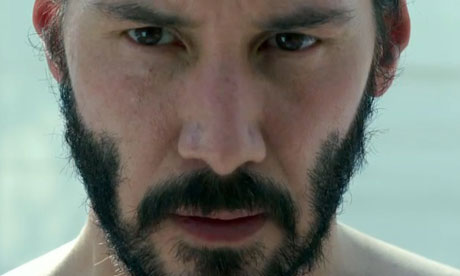
Hands down the biggest problem with this movie was of course Kai, the half-breed, played by none other than Keanu Reeves. /Sigh/ I’m almost at a loss of where to begin, but I think I’ll start with the character himself. Into this entirely Japanese cast the film makers dropped a half white, half Japanese character who was apparently trained by demons as a child to be a killer. He then escapes, is found by Lord Asano, and raised by the lord.  However, he was forced to live outside the lord’s house in a hut (Japanese xenophobia prevented him from being an equal).  Of course, the lord’s daughter Mika doesn’t care and becomes Kai’s companion.

Finally when Kai is grown up and the witch shows up with Lord Kira, he is the only one who can tell she’s a witch (apparently because he was raised by demons). I swear I’m not making up any of this, and in fact I’m leaving some of it out. It’s a mix of ridiculous and cliché that I could not have come up with after a week-long bender. I get why the studio would want to have included a white character, as there are not many big name Japanese actors, but to then add in all of this other crazy stuff just confuses the hell out of me. As for Keanu himself, he won’t be winning any awards for this performance, except for maybe a Razzy.  Reeves spent most of the film mumbling out dialogue and then staring blankly at either the camera or his fellow cast members.

This is about as emotional as he gets.

This is about as emotional as he gets.

For a movie that claimed to be the successor to Akira Kurosawa’s work, it falls spectacularly short of that high mark. The scale of the movie was probably the only element that came anywhere near it.  Kurosawa was capable of massive scenes, such as those in the movie Ran.  In this movie there were a couple of shots in which I could see that the film makers had done at least a little of their homework. These however were the only glimmers of hope, and the overwhelming majority were in the first thirty minutes of the movie.

When it comes to Japanese culture, however, the film makers were less than studious. Frequently, characters spoke out of turn or insinuated themselves into situations in ways that would have been unacceptable in Japanese society. There were also issues from time to time with the sword choreography. At times the fighting was much more of a western style as opposed to a Japanese style, using stabs and thrusts with a sword that isn’t designed for those kinds of moves. If it weren’t for the costumes, there were several times that I would have forgotten this story takes place in feudal Japan. Even the costumes often looked cheap and not in keeping with the standards that Kurosawa set for movies of this type.

Overall this movie was just a mess. While I didn’t feel like my money was wasted, I certainly cannot recommend this movie to anyone. If someone out there would like to make a movie about the forty-seven ronin that is really good, I encourage you to make it quickly so that we can all forget about this one.  I give it one Death Star.

6a00d8341c53c653ef015434875dc7970c-800wi

2 Comments

Filed under Andrew Hales, Movie Reviews, Movies

Review: The Hobbit: The Desolation of Smaug

***** SPOILER ALERT *****

This review will be discussing plot points which may be considered spoilers. Consider yourselves warned.

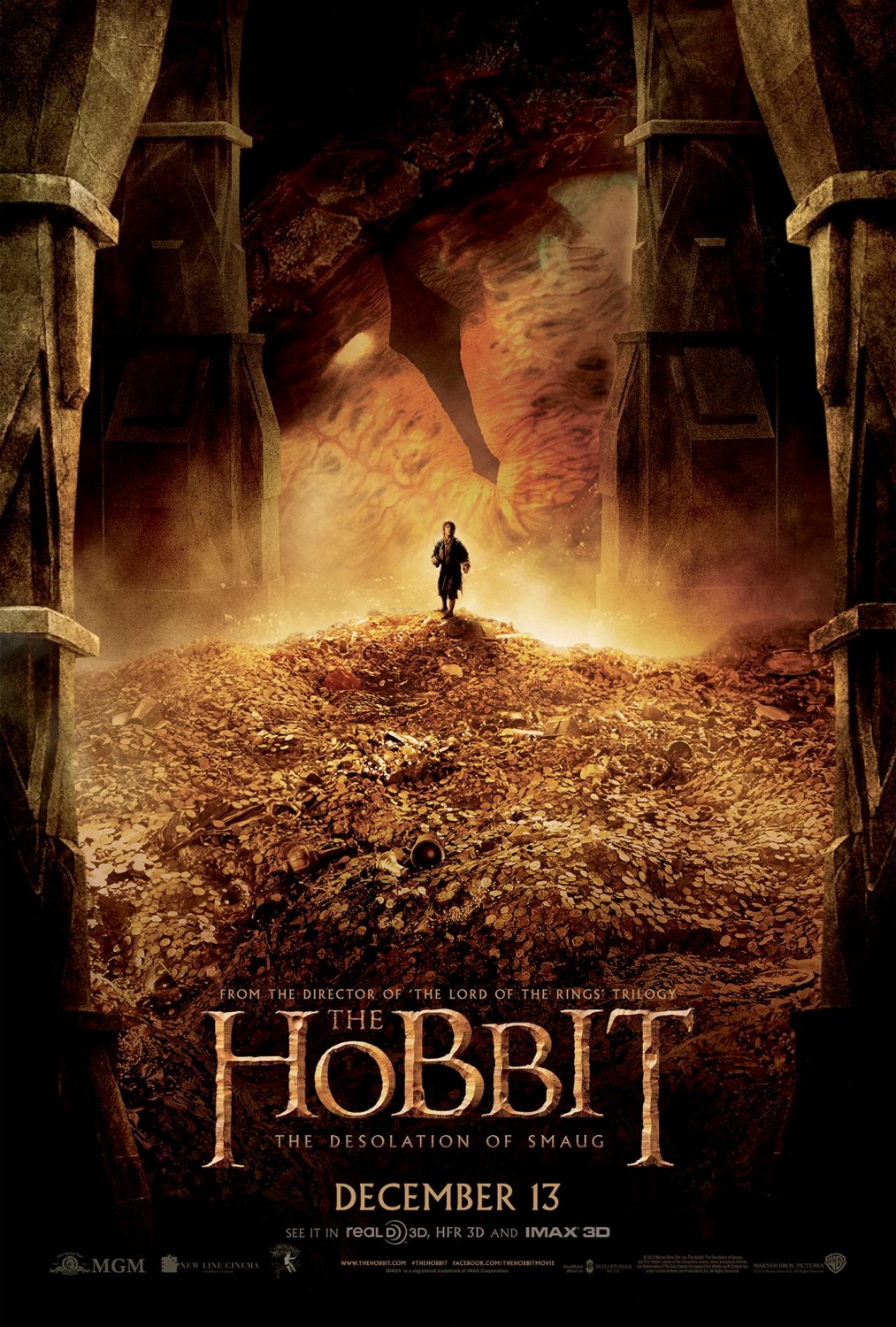
hobbit_the_desolation_of_smaug_ver30_xlg

As I write this review I am in the middle of a Lord of the Rings marathon. I have to admit that going to see The Hobbit: The Desolation of Smaug has put me in the mood for as much of Middle Earth as I can get my hands on. Unfortunately the reason I’m in this mood is because I’m longing for a good story from Middle Earth. As excited as I was for this movie, I afraid that it leaves much to be desired.

After an enjoyable introductory scene, much like those in Lord of the Rings, The Desolation of Smaug picks up just as Bilbo and the dwarves begin their passage into Mirkwood. I was pretty pleased with this portion of the film, but I just felt that it was over far too quickly. Several chapters of the book were dedicated to Mirkwood, and only around twenty or thirty minutes of the film were spent there. While the film portrays the confusion that the company feels admirably, it sets in far too quickly and then is resolved rather abruptly. This demonstrates the major flaw in the movie:  timing.  When these films were first announced, there were only supposed to be two films, but a third was added later. Regularly throughout The Desolation of Smaug some scenes which are canon from the books are compacted in order to make room from extra stuff, often to the movie’s detriment.

Now it’s pretty well known that I am a fanboy and that Lord of the Rings falls into the long list of things I love. Despite this love I am not a purist, which is to say I understand when changes must be made in order to actually make the film.  Some of this extra material I enjoyed—especially the parts which come from appendixes or other material from J.R.R. Tolkien. Watching Gandalf investigate and then confront the necromancer in Dol Guldur was great. This provides some great moments that really place The Hobbit in context. While the story is primarily about the dwarves’ return to Erebor, it is also the build up to Lord of the Rings, and there are scenes that allow us to see all the pieces moving into place.  My issue is that these changes come at the expense of the real story. Scenes from the book were compressed in order to make room for this extra material.

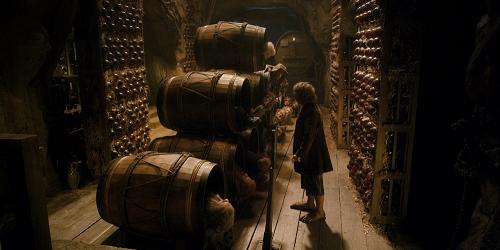
Shortly Bilbo will realize that there is a hole in his plan.

Shortly Bilbo will realize that there is a hole in his plan.

In other places, scenes were extended considerably. The prime example of this was the dwarves’ escape by barrel. There was a good long chase scene down the river that involved the dwarves getting away first from the wood elves and then from the same orc band that has been chasing them through most of the movie. Although an important scene in the book, and one that I have always felt was among Tolkien’s most clever, it was a relatively short part. Not only was this scene extended in the movie, parts of it became more than a little ridiculous. At one point the barrel carrying Bombur managed to get tossed out of the river and rolled down the river bank, taking out dozens of orcs in the process.  Then Bombur proceeds to pop his arms out of the barrel and take on several more orcs before jumping back into the river. Further on, Legolas rides down the river standing on the heads of two dwarves, all the while, shooting down orcs. This whole sequence becomes rather disappointing because of this outrageousness.

Still other portions are purely fictitious. The inclusion of the female elf Tauriel has no basis in the books. Her character was included almost exclusively to include additional female cast members, which is a questionable reason at best. I honestly didn’t mind her character, aside from the fact that she was obviously not part of the original book and therefore all her scenes seemed like someone trying to mimic Tolkien’s style. Tauriel also plays a part in the most egregious portion of the movie. During the barrel escape, Kili is shot in the leg by an orc and is eventually left behind in Laketown, along with three other dwarves, when the company proceeds on to Erebor. This whole plot point was completely unnecessary and only underscores the fact that the third movie should never have been added. If there were only two movies, filler material like this wouldn’t be needed and they would have been able to stick to the fantastic story that already existed.

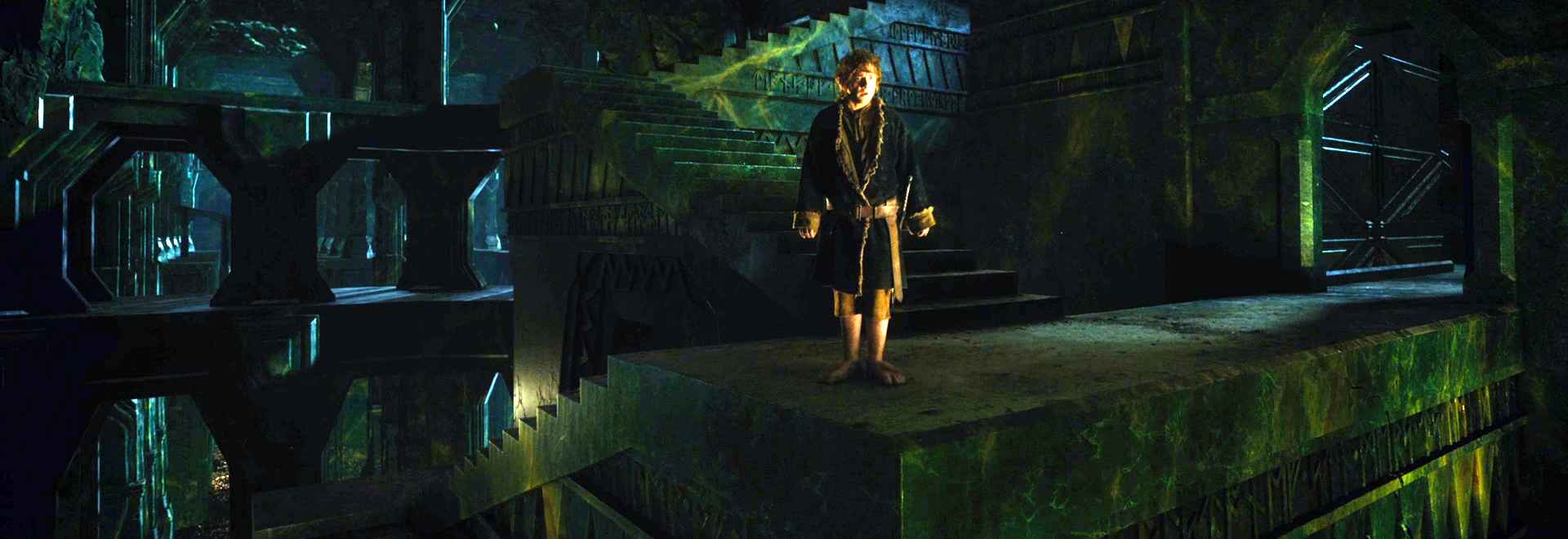
One of many great Erebor interior shots.

One of many great Erebor interior shots.

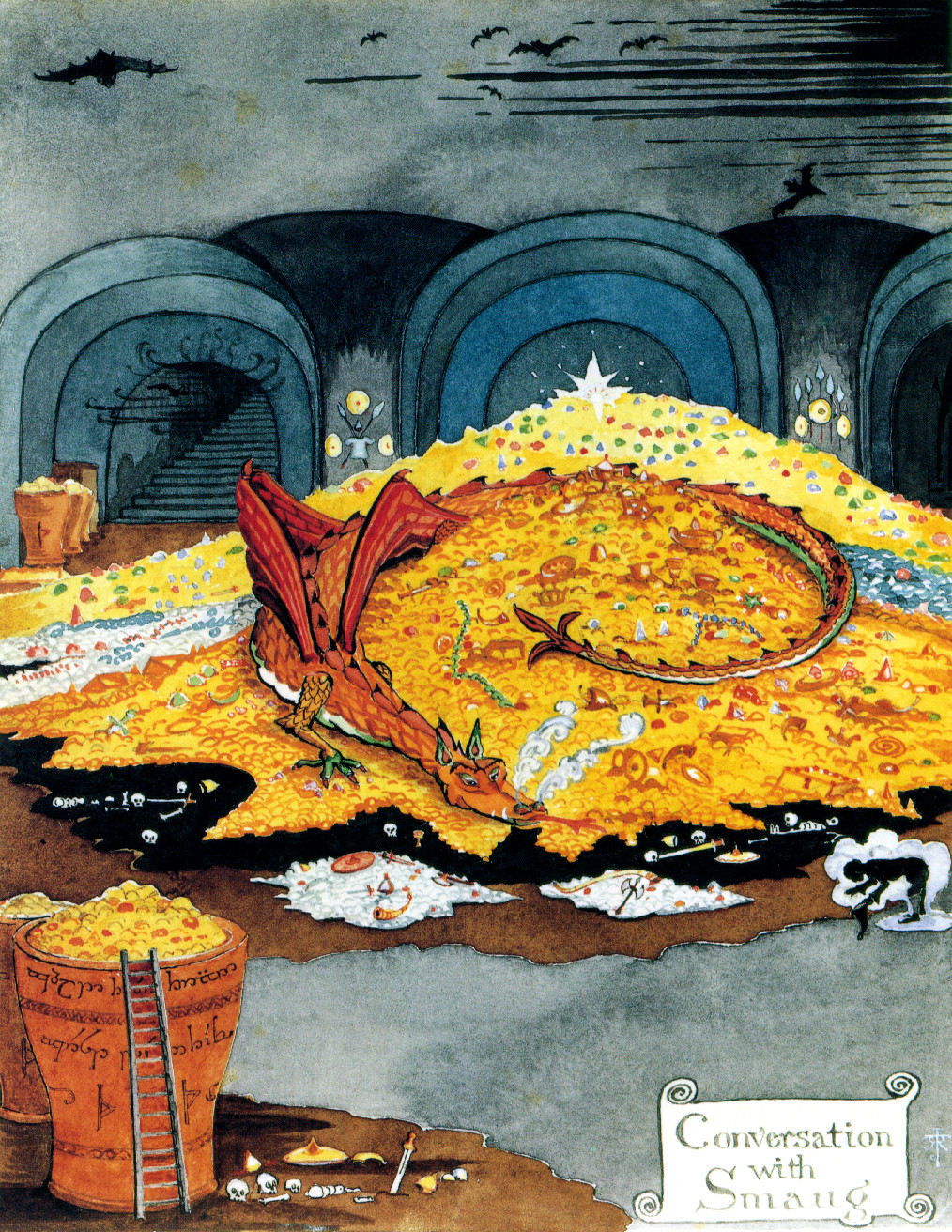
After all of that, it probably sounds like I hated the movie, and that just isn’t the case. For one, the movie looked absolutely amazing. From the halls of the Thranduil to the Lonely Mountain, the entire movie was a visual treat. I’m especially fond of the dwarven style. It all looks very angular but refined and elegant in its own way. Unlike the orcs who are angular in a jagged and chaotic way, dwarf creations show considerable thought and skill. Beyond the look of the dwarves is of course their grand nemesis, Smaug. I could not be more pleased with the way Smaug turned out. It’s obvious that the Peter Jackson drew upon available sources and previous artist renditions of Smaug when creating the visual for the character. Especially when compared to Bilbo, Smaug appears as more a force of nature than a fellow cast member. The dragon is absolutely enormous and terrifying. Jackson must be a firm believer in “Go big or go home” because the movie makers went all out on Smaug.

This is the image of Smaug I always think of, and it was pretty spot on, aside from relative size.

This is the image of Smaug I always think of, and it was pretty spot on, aside from relative size.

In no way, shape, or form do I regret seeing The Hobbit: The Desolation of Smaug, but I do think that there was plenty of room for improvement. The film suffered from being stretched too thin when it came to source material (like butter over too much bread), though when they stuck to the original content the movie was at its strongest. While not the movie I was hoping for, I am still excited to see the ending of the trilogy next year. Three out of five Death Stars.

3 Death Stars

3 Comments

Filed under Andrew Hales, Movie Reviews, Movies

Review: Thor: The Dark World

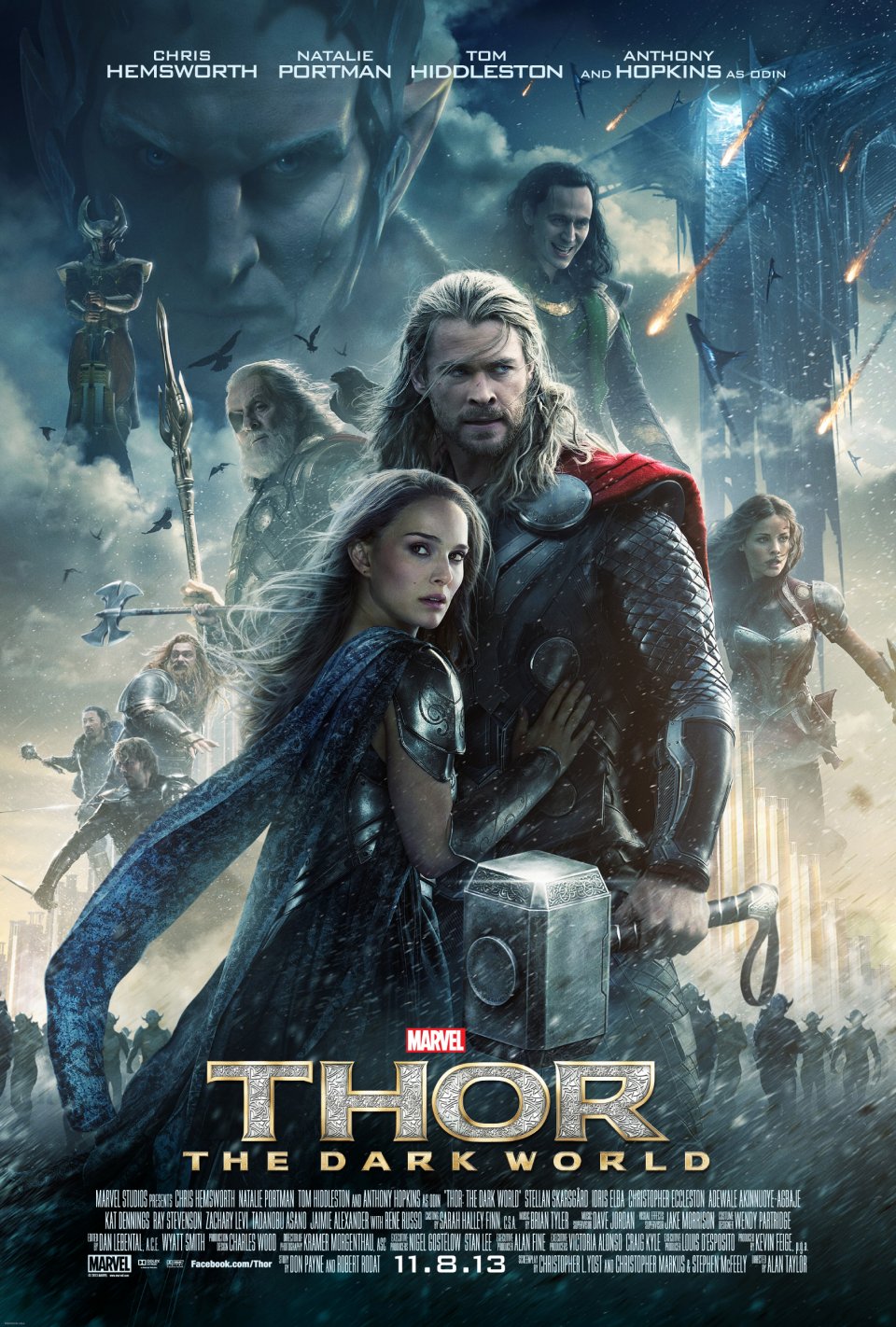
thor the dark world poster

Thor has returned and better than before.  Thor: The Dark World aptly takes the original concept and improves upon it with a nice mix of increased action, further character development, and great touches of humor.

Thor: The Dark World begins with Thor (Chris Hemsworth) and the Warriors Three in the middle of a battle. Since the destruction of the Bifrost, the Nine Realms have been at constant war and it falls to the Asgardian heroes to restore peace. While Thor strives to bring peace to other realms, Loki (Tom Hiddleston) has been brought back to Asgard in chains and sent to the dungeon to rot—though he is still visited by his mother, Frigga (Rene Russo).  Back on Earth, Jane Foster (Natalie Portman) and Darcy (Kat Dennings) are investigating strange phenomena that is very similar to what they witnessed when Thor first appeared. All is well until Jane stumbles across dimensional lines and discovers an ancient weapon, taken from the Dark Elves after they were defeated by Thor’s grandfather thousands of years ago. The phenomenon that Jane is studying turns out to be a convergence of the Nine Realms, which the surviving leader of the Dark Elves, Malekith (Christopher Eccleston), plans to use to return the world to darkness. Really, it’s just another day in the Marvel Universe.

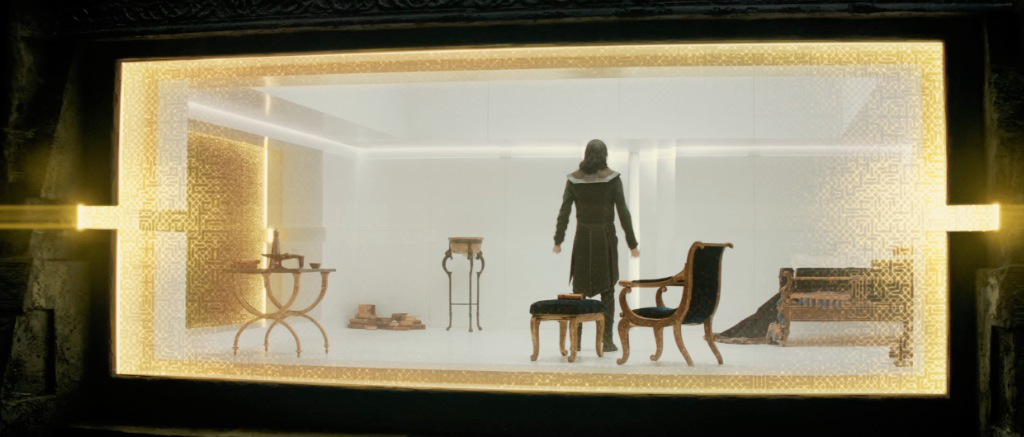
As jail cells go, Loki's isn't so bad.

As jail cells go, Loki’s isn’t so bad.

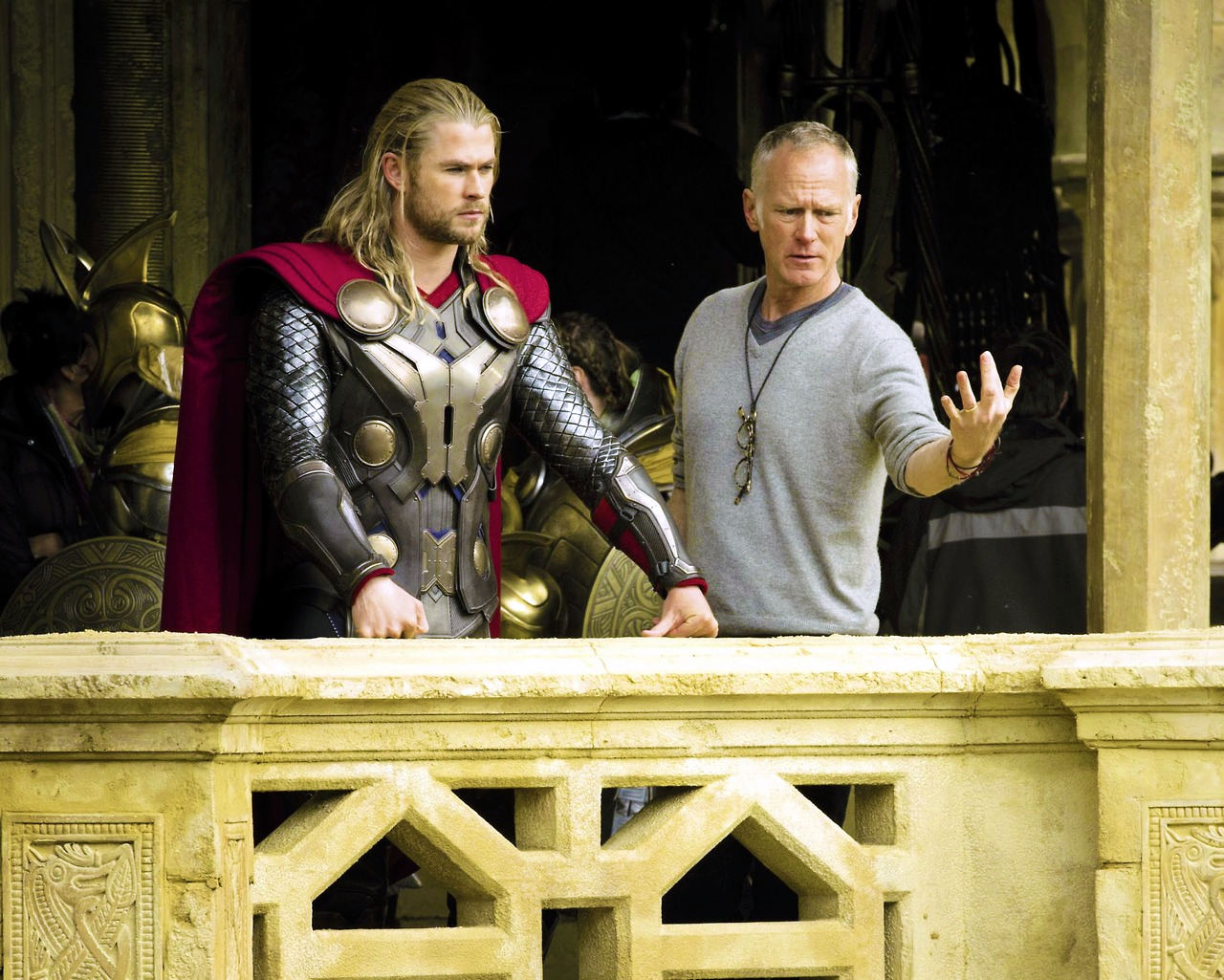
Between Thor and Thor: The Dark World there was a change in directors. While Kenneth Branagh was a capable director, I’m not sure that an action movie based on a comic book was really best suited to his Shakespearean training. The Dark World was directed by Alan Taylor, who can count six episodes of Game of Thrones as part of his considerable directing portfolio.  Taylor brings a different feel to the film with stronger action sequences and a greater sense of adventure. It certainly helps that The Dark World has an extra twenty million dollars in its budget—thanks, no doubt, to the success of The Avengers. That extra money shows in the addition of several locations, most of them in the various realms, as well as a much expanded Asgard.

Chris Hemsworth with director Alan Taylor.

Chris Hemsworth with director Alan Taylor.

Each of these locations has its own fight sequence, and some have more than one.  For my money, the best fight scenes are the opening flashback battle with the Dark Elves, and Malekith’s assault on Odin’s palace. Both were fantastically imagined, especially the Dark Elves. With a few exceptions, most of the Dark Elves wore masks that completely obscured their faces and made them appear to be mindless drones. Unfortunately, the fight between Thor and the Kursed didn’t really work for me. I had been looking forward to it for a significant part of the movie and, with the exception of the very end, it came off as lack luster.

With all the increased action, one might think that there would be less time for character development, but this is simply not the case. One of the things this film does well is to make use of existing characterization. Both Thor and Loki were in The Avengers, so The Dark World doesn’t try to cover the same ground.  Instead, it takes what is already there and expands upon it. Loki is a particularly interesting character this time around. For obvious reasons Loki despises Odin, but he still maintains an odd affection for Frigga, his adopted mother.  Even though he attempts to hide his feelings, he is often driven to act on these feelings. Loki will always be a difficult character to get a good handle on, purely based on his nature as the god of mischief.  His motivations are constantly hidden and shifting. This time around—more than either of his two previous appearances on the big screen—we really get to see this changeable and mysterious nature in action.

After the events of Thor and The Avengers, Thor demonstrates that he has also changed, showing that he has maintained his new found maturity. So often movies like this become repeats of the same plot:  prideful character is humiliated so they can learn the error of their ways and then rise up to beat the bad guy.  Audiences love stories like this, but when the same character keeps doing the same thing in every movie, it gets old.

I also really enjoyed seeing more of one of my favorite characters, Darcy. While a fairly minor character in the first Thor movie, Darcy got more screen time this time around, adding to the film’s humorous elements.

A great trio that help provide comic relief.

A great trio that help provide comic relief.

The Dark World builds tonally off of The Avengers and is full of humor that helps keep the movie from being too dark. There is no one scene that is designed purely for humor, but there are little one and two line jokes and sight gags throughout the whole film that manage to prevent a fairly dark film from getting lost and becoming a real downer. While certainly not as clever as a Joss Whedon script, there are plenty of well developed sequences that lead to amusing payoffs. One setup in particular involved throwing trash and other random objects, especially shoes, through a dimensional rift and watching them reappear from another rift. Sometimes these objects don’t reappear, but of course they are discovered later in the movie.

My only serious complaint about the movie is with the last scene. While the acting was good and the scene itself wrapped up the movie nicely, it looked like utter crap. It looks as though the scene was shot during reshoots, against a green screen instead of a full throne room set, and was they rushed through post-production in order to meet the release date. No other part of the movie has this issue and in fact, I was very impressed with the visuals up until this point. With the constant change in location there is great potential for some of the lesser used places to not look as good, and this was just not the case.

Overall, I’m very pleased with the way Thor: The Dark World turned out. It was both a self-contained story and also helped to advance the overall Marvel Universe storyline. Without giving too much away, I was also very excited about the Easter Egg at the end of the credits. It’s a great setup for next summer’s big Marvel blockbuster. I give Thor: The Dark World four Death Stars.

2 Comments

Filed under Andrew Hales, Movie Reviews, Movies