Category Archives: Movies

Review: Thor: The Dark World

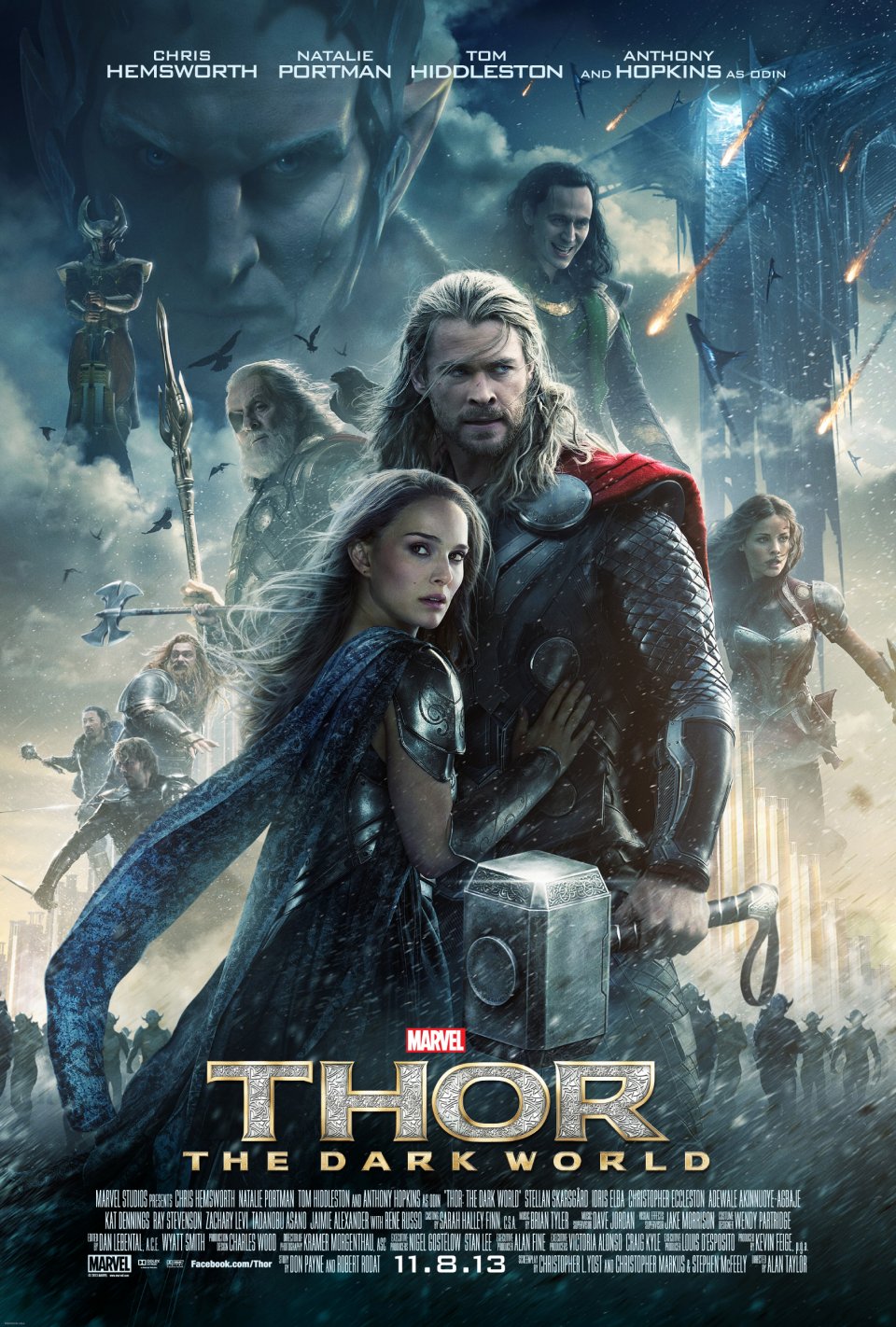
thor the dark world poster

Thor has returned and better than before.  Thor: The Dark World aptly takes the original concept and improves upon it with a nice mix of increased action, further character development, and great touches of humor.

Thor: The Dark World begins with Thor (Chris Hemsworth) and the Warriors Three in the middle of a battle. Since the destruction of the Bifrost, the Nine Realms have been at constant war and it falls to the Asgardian heroes to restore peace. While Thor strives to bring peace to other realms, Loki (Tom Hiddleston) has been brought back to Asgard in chains and sent to the dungeon to rot—though he is still visited by his mother, Frigga (Rene Russo).  Back on Earth, Jane Foster (Natalie Portman) and Darcy (Kat Dennings) are investigating strange phenomena that is very similar to what they witnessed when Thor first appeared. All is well until Jane stumbles across dimensional lines and discovers an ancient weapon, taken from the Dark Elves after they were defeated by Thor’s grandfather thousands of years ago. The phenomenon that Jane is studying turns out to be a convergence of the Nine Realms, which the surviving leader of the Dark Elves, Malekith (Christopher Eccleston), plans to use to return the world to darkness. Really, it’s just another day in the Marvel Universe.
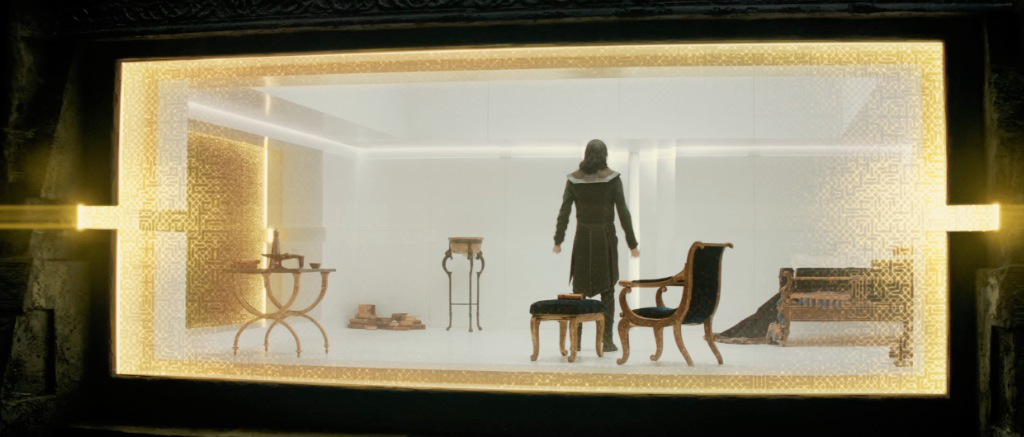
As jail cells go, Loki's isn't so bad.

As jail cells go, Loki’s isn’t so bad.

Between Thor and Thor: The Dark World there was a change in directors. While Kenneth Branagh was a capable director, I’m not sure that an action movie based on a comic book was really best suited to his Shakespearean training. The Dark World was directed by Alan Taylor, who can count six episodes of Game of Thrones as part of his considerable directing portfolio.  Taylor brings a different feel to the film with stronger action sequences and a greater sense of adventure. It certainly helps that The Dark World has an extra twenty million dollars in its budget—thanks, no doubt, to the success of The Avengers. That extra money shows in the addition of several locations, most of them in the various realms, as well as a much expanded Asgard.
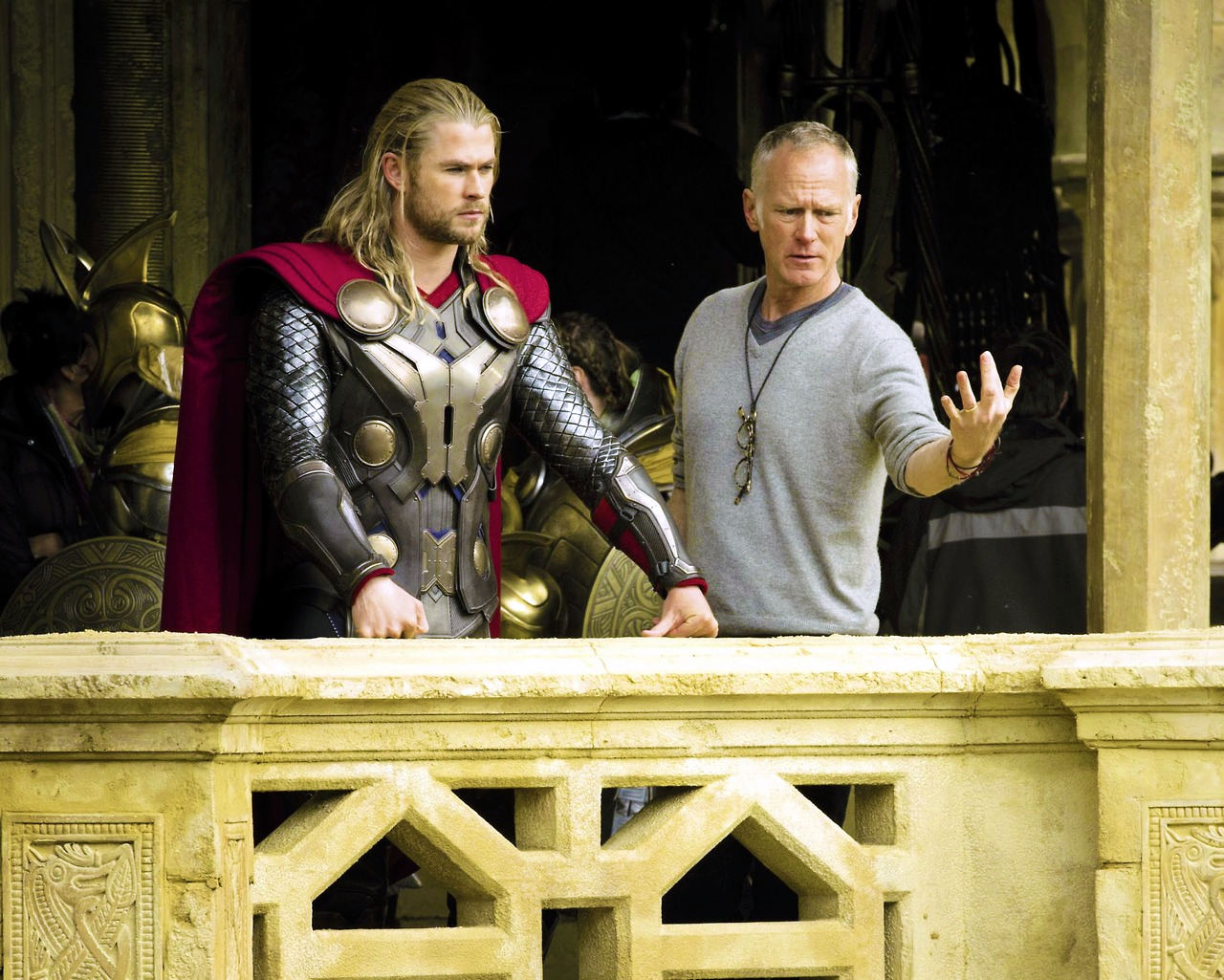
Chris Hemsworth with director Alan Taylor.

Chris Hemsworth with director Alan Taylor.

Each of these locations has its own fight sequence, and some have more than one.  For my money, the best fight scenes are the opening flashback battle with the Dark Elves, and Malekith’s assault on Odin’s palace. Both were fantastically imagined, especially the Dark Elves. With a few exceptions, most of the Dark Elves wore masks that completely obscured their faces and made them appear to be mindless drones. Unfortunately, the fight between Thor and the Kursed didn’t really work for me. I had been looking forward to it for a significant part of the movie and, with the exception of the very end, it came off as lack luster.

With all the increased action, one might think that there would be less time for character development, but this is simply not the case. One of the things this film does well is to make use of existing characterization. Both Thor and Loki were in The Avengers, so The Dark World doesn’t try to cover the same ground.  Instead, it takes what is already there and expands upon it. Loki is a particularly interesting character this time around. For obvious reasons Loki despises Odin, but he still maintains an odd affection for Frigga, his adopted mother.  Even though he attempts to hide his feelings, he is often driven to act on these feelings. Loki will always be a difficult character to get a good handle on, purely based on his nature as the god of mischief.  His motivations are constantly hidden and shifting. This time around—more than either of his two previous appearances on the big screen—we really get to see this changeable and mysterious nature in action.

After the events of Thor and The Avengers, Thor demonstrates that he has also changed, showing that he has maintained his new found maturity. So often movies like this become repeats of the same plot:  prideful character is humiliated so they can learn the error of their ways and then rise up to beat the bad guy.  Audiences love stories like this, but when the same character keeps doing the same thing in every movie, it gets old.

I also really enjoyed seeing more of one of my favorite characters, Darcy. While a fairly minor character in the first Thor movie, Darcy got more screen time this time around, adding to the film’s humorous elements.

A great trio that help provide comic relief.

A great trio that help provide comic relief.

The Dark World builds tonally off of The Avengers and is full of humor that helps keep the movie from being too dark. There is no one scene that is designed purely for humor, but there are little one and two line jokes and sight gags throughout the whole film that manage to prevent a fairly dark film from getting lost and becoming a real downer. While certainly not as clever as a Joss Whedon script, there are plenty of well developed sequences that lead to amusing payoffs. One setup in particular involved throwing trash and other random objects, especially shoes, through a dimensional rift and watching them reappear from another rift. Sometimes these objects don’t reappear, but of course they are discovered later in the movie.

My only serious complaint about the movie is with the last scene. While the acting was good and the scene itself wrapped up the movie nicely, it looked like utter crap. It looks as though the scene was shot during reshoots, against a green screen instead of a full throne room set, and was they rushed through post-production in order to meet the release date. No other part of the movie has this issue and in fact, I was very impressed with the visuals up until this point. With the constant change in location there is great potential for some of the lesser used places to not look as good, and this was just not the case.

Overall, I’m very pleased with the way Thor: The Dark World turned out. It was both a self-contained story and also helped to advance the overall Marvel Universe storyline. Without giving too much away, I was also very excited about the Easter Egg at the end of the credits. It’s a great setup for next summer’s big Marvel blockbuster. I give Thor: The Dark World four Death Stars.
2 Comments

Filed under Andrew Hales, Movie Reviews, Movies

Review: Ender’s Game

***** SPOILER ALERT *****

This review will be discussing plot points which may be considered spoilers. Consider yourselves warned.

***** DISCLAIMER *****

This is a review of the movie Ender’s Game and of the movie only. There will not be any discussion of the author or his personal politics. If you wish to discuss such things there are plenty of places for you to do so, however we request that you refrain from doing so here.

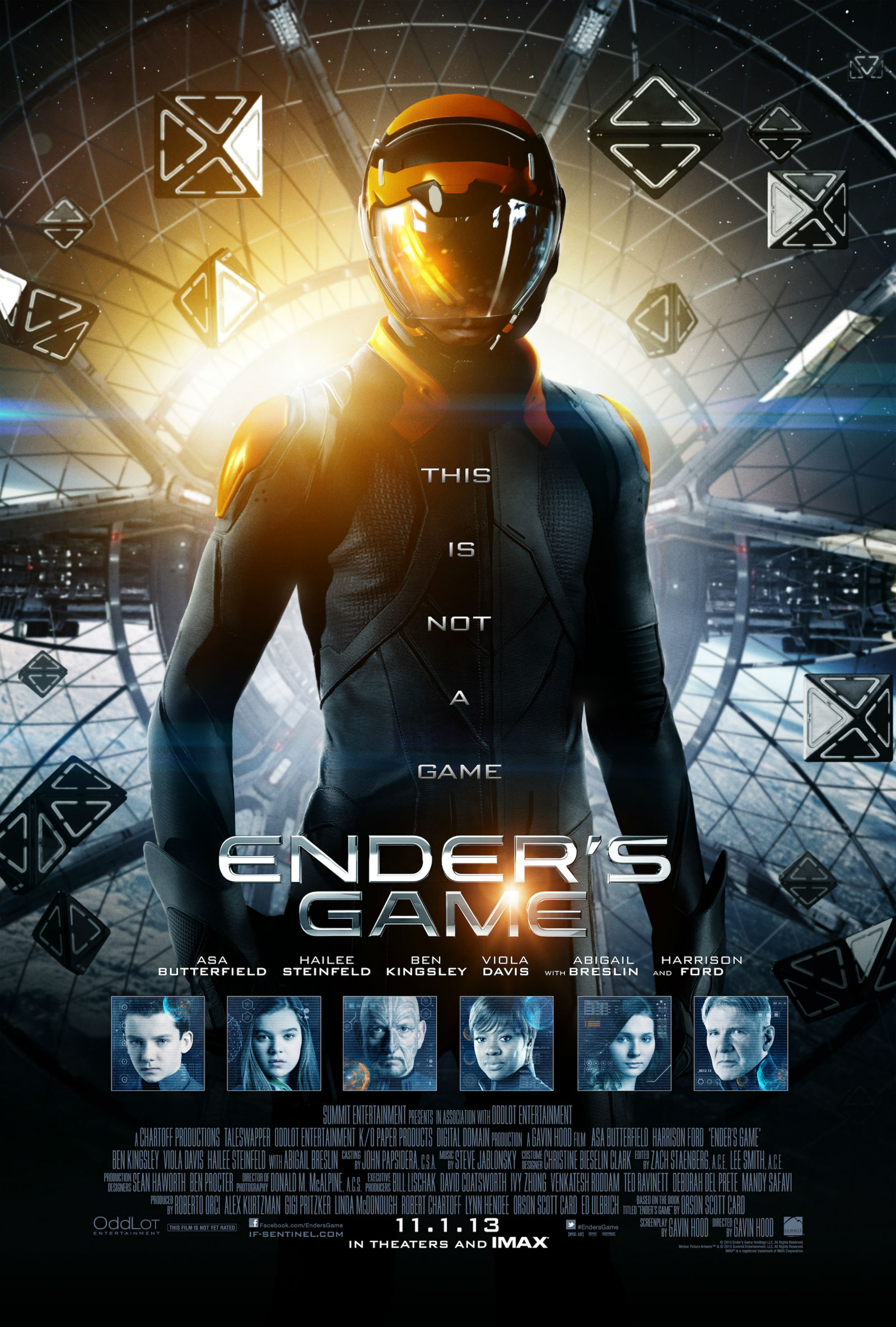
Enders-Game-Final-HR

Aliens attack Earth, kick our ass, and Earth barely survives. This basic setup is nothing new and yet it sets the scene for the beginning of Ender’s Game. What makes Ender’s Game special however is where the film takes this setup. Instead of running over the well trodden paths, this film chooses to take the road less travelled and does so quite well.

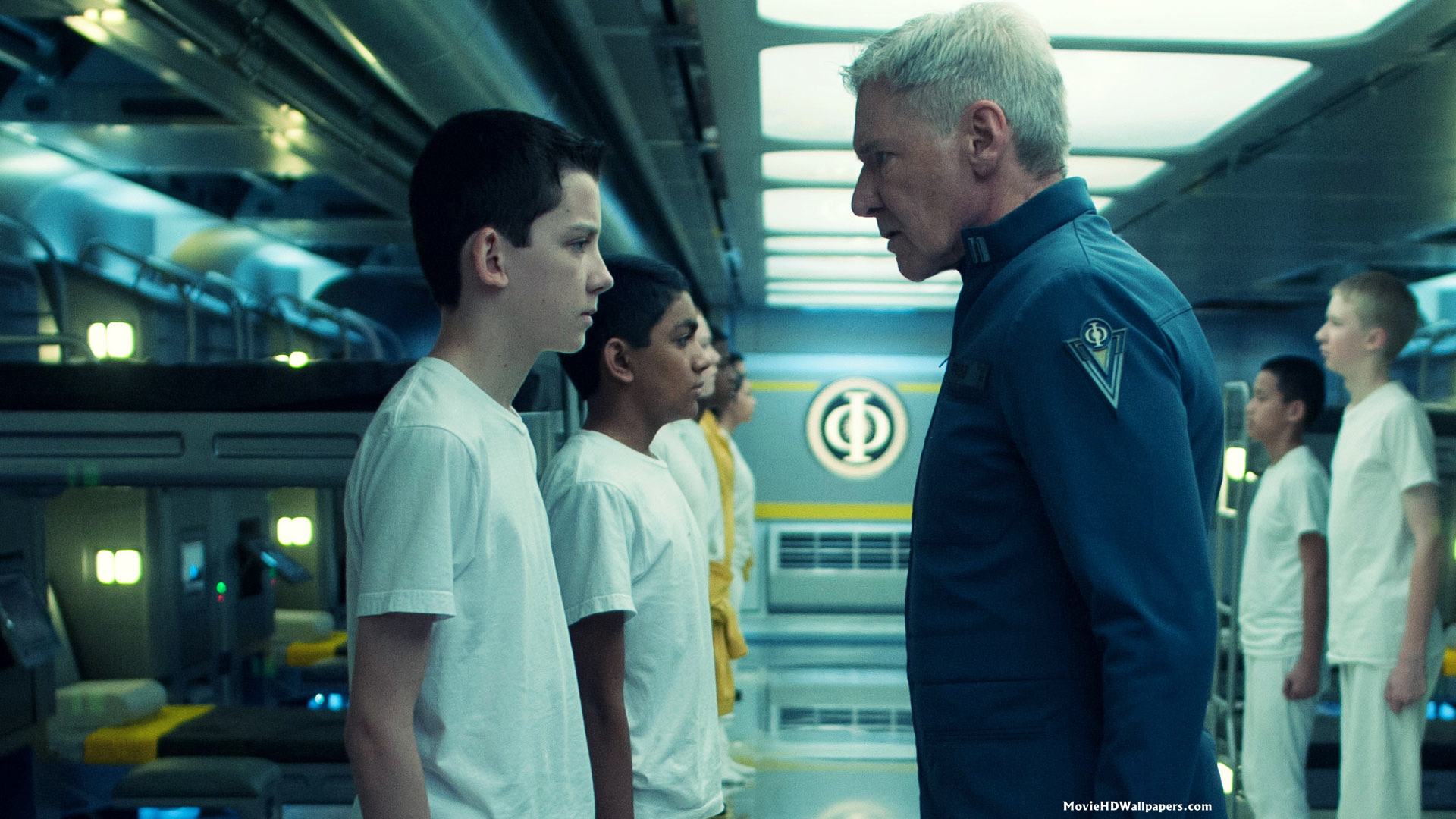
Ender’s Game is about Ender Wiggin (Asa Butterfield), a brilliant young boy who is part of a military selection program for training to be a military commander. When the monitoring device implanted in Ender’s neck is removed he thinks he has been passed over for entrance into the military school. Ender has very little time to be concerned about this, as he is attacked by older boys shortly thereafter and Ender beats one of them severely. That night at home, Ender and his family are approached by Col. Graff (Harrison Ford) who informs them that the monitor removal was the final test, and not only has Ender not washed out, but he has been selected to move on. Thus begins an incredible adventure that takes viewers from Earth all the way out into deep space.

Asa Butterfield and Harrison Ford

Asa Butterfield and Harrison Ford

It’s been about ten years since I’ve read Ender’s Game, but this film seems pretty true to the book that I remember. Obviously the filmmakers can’t be expected to put the entire book into the movie and cuts had to be made, but I feel that they chose those cuts well. In fact, the cuts felt more like time compression. The most obvious instance of this is Battle School. This particular portion of Ender’s training takes up the majority of the book and while it is a major focus of the movie, the section has been clearly shortened. There are only a handful of training battles shown in the movie and—while they are even more fantastic looking than what I had imagined— far fewer battles than I remember from the book. The only real downside to this is that it doesn’t show the same progression of difficulty that is readily apparent in the book.  Any time where there is a repetitive action, like the battles, the time compression comes into play.

The other major cuts revolve around the Mind Game. The game still plays a significant part in the movie, but in the book Ender runs through the game over and over again until he solves a problem, at which point he runs into a new problem and starts the cycle over. By cutting out much of this, movie makers are able to maintain the importance of this plot device without spending too much time on it.

This plays into one of the movie’s strengths:  that of pacing. This is a movie that keeps on moving. At no point did I feel bogged down in obscure details of the story. The plot pushed forward at a brisk pace throughout the movie, developing characters and giving them challenges of ever increasing magnitude. The climax of the movie presents a stunning scenario that would be impossible for anybody but Ender to overcome.

I loved the way this movie looked. The zero g battle room is awesome. I love that because there is no gravity in the battle room the director doesn’t feel obligated to stick with conventional camera angles. It was very refreshing to see these unconventional angles interspersed with the more common shooting style.

The Battle Room.

The Battle Room.

The other scenes I loved were those in the combat simulations at Command School. All the kids sit in an auditorium with Ender and his senior commanders on an elevated platform and all around them are wonderful looking projections of the ensuing battle simulation. Scenes like this made the movie visually appealing as well as engaging from a plot standpoint.

Command School

Command School

Historically, one of the toughest aspects of a film like this is the casting. It’s easy enough to find one or two good kids, but finding almost an entire child cast of this caliber is remarkable. Asa Butterfield does an amazing job as Ender. He provides the right mix of brilliance, empathy, and emotional detachment without being wooden—no easy feat!  It would have been very easy for Ender to come off as merely a bad impersonation of Data from Star Trek: The Next Generation.  Butterfield makes the viewer feel for Ender, by showing emotion when it’s required but not so much that he breaks character.

The supporting cast is also wonderful.  Ender’s sister Valentine, played by Abigail Breslin, provides a welcome bit of warmth.  Where Ender is mostly rational and only slightly warm, Valentine is empathy personified–the trait for which she was dropped from the military selection program. Among the best supporting actors in the film is Moises Arias who plays Bonzo Madrid, one of Ender’s company commanders. Bonzo is a complete control freak and mild sociopath and Arias plays this without being over the top and becoming silly. Even though Bonzo is honestly a little jerk, moviegoers still feel for him because he is just a kid, struggling to achieve his potential and impress those in power over him.

Ender’s Game demonstrates the disturbing nature of child soldiers in dystopian science fiction stories. Although it’s used less frequently than other plot devices, it’s one of the most unsettling, in part because onlookers see those who should be innocent acting with cunning and violent intent. In modern society, the international system has taken great pains to ensure that children like this are not forced to fight, and yet moviegoers find themselves rooting for a child soldier, in the form of Ender.  In the end Ender becomes the supreme commander he was born to be, and the audience is left asking what was the cost to Ender and to themselves as a society. I give Ender’s Game 4.5 Death Stars.

4.5 Death Stars

1 Comment

Filed under Andrew Hales, Movie Reviews, Movies

Review: Godzilla (1954)

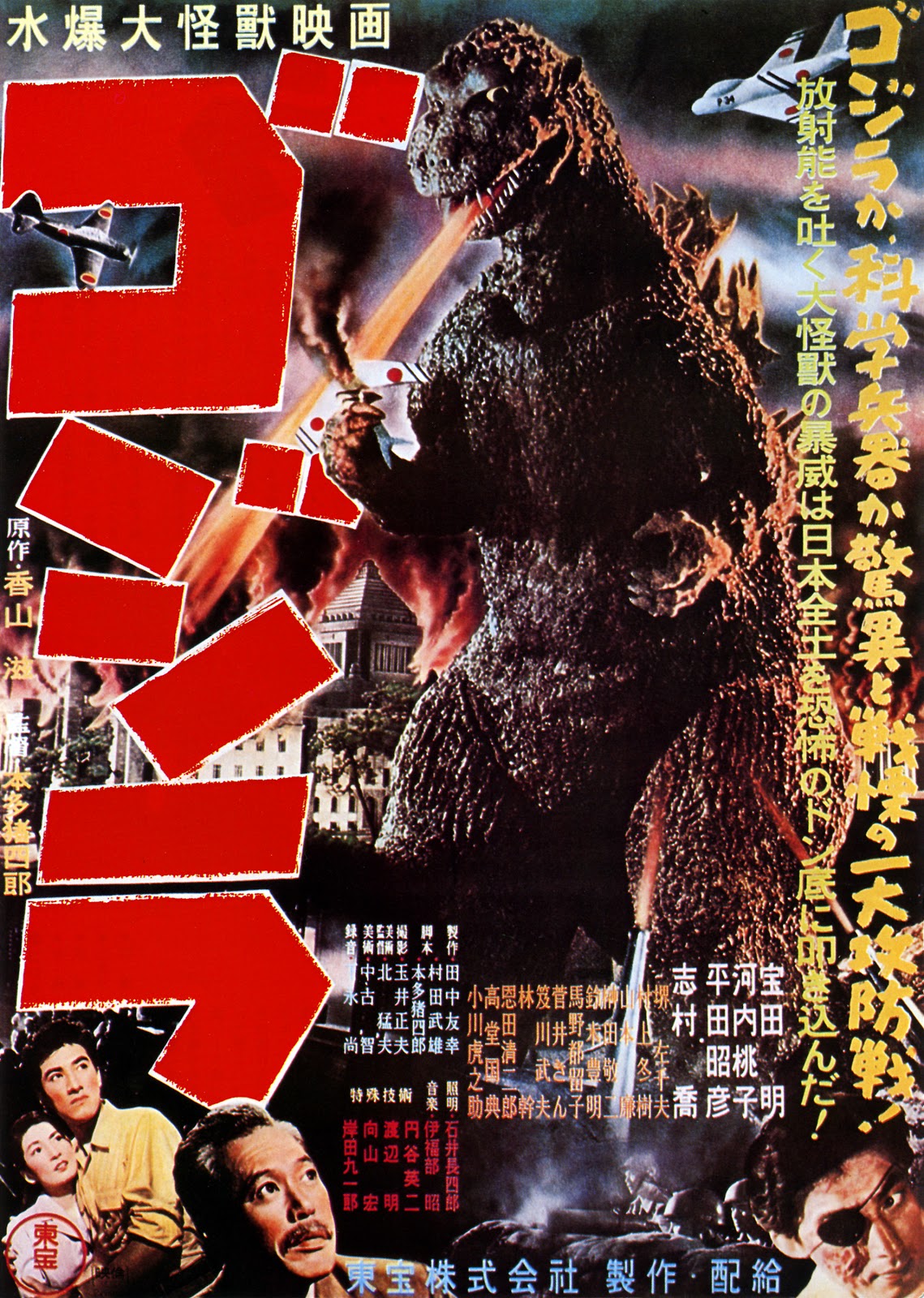
Gojira_1954_Japanese_poster

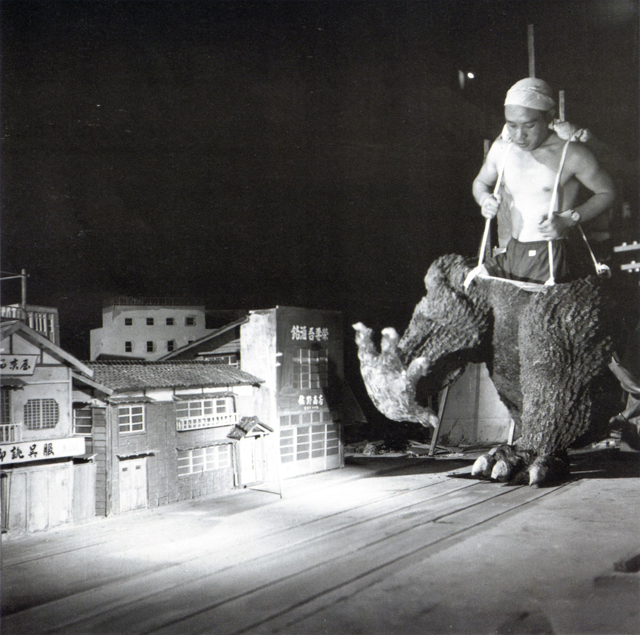
Man in foam rubber suit.

Man in foam rubber suit.

1954’s Gojira is a piece of film history.  For those of you scratching your heads, Gojira is more commonly known in the United States as Godzilla—everyone’s favorite foam rubber monster. When most people think of Godzilla, they think of men in sketchy looking, foam rubber suits fighting each other in a model town, crushing everything in their process (poor Tokyo). This stereotype might be true for some of the later movies, but the original Godzilla is much more complex than that. Not only is it a classic B movie, but it also provides us with some valuable insight into post war Japanese culture.

The most important thing to realize about Godzilla is that there is a plot, despite popular belief to the contrary. In fact, not only is there a plot, but it’s a pretty good one. The film starts off with the mysterious sinking of a fishing vessel; a flash of light from under the water and the ship is engulfed in flames and sinking. Shortly thereafter another boat shows up to investigate the scene of the first sinking and it too is destroyed in spectacular fashion. While the Japanese Coast Guard investigates, a fishing village on the island of Odo is ravaged by what is first thought to be a storm, though there are reports of a giant monster that caused the damage. The Japanese government sends a scientific team to investigate, and they discover enormous, radioactive footprints throughout the village. Between the radiation and the discovery of a trilobite (a small creature thought to be extinct millions of years ago), the scientific team concludes that the creature must be from the Jurassic period.  Soon after Godzilla himself is sighted on the island.

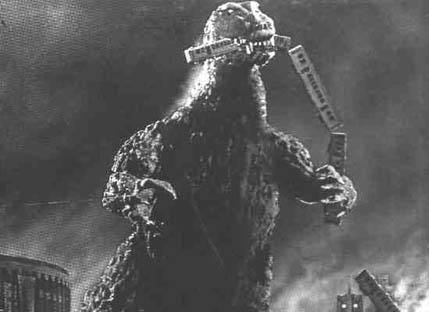
Mmmmm, train...nom nom nom.

Mmmmm, train…nom nom nom.

The Japanese Coast Guard decides that Godzilla is too much of a threat and must be destroyed and attempts to do so with depth charges.  Of course this goes poorly for them and only drives Godzilla to attack Tokyo harbor.  Eventually Godzilla is driven off, but not before turning Tokyo into a flaming ruin.  In a final act of desperation, Japanese scientists release the Oxygen Destroyer into the water of Tokyo harbor, killing all living things in the harbor, including Godzilla.

To begin, the incidents involving the fishing vessels mirror a real life incident in which the crew of a Japanese fishing vessel were exposed to extreme radiation from an American underwater Hydrogen bomb test. While film makers caught considerable flack from critics and the public for this parallel, it tapped into the Japanese cultural mindset. Godzilla was released only nine years after the end of WWII and the horrors of the nuclear bombs were still fresh in everyone’s minds. In the 1950’s, there was still a lot that was unknown about the effects of radiation, but the fear of radiation is still a very real concern for the Japanese even today.

When the senior scientist presents his results to the Japanese government he immediately blames the H-bomb tests not only for disturbing Godzilla, but also for causing his mutation in the first place.  The Japanese government wants to destroy Godzilla, but the scientists want to study him, especially his resistance to high level radiation, in an implicit effort to better treat those who’d been exposed to radiation.

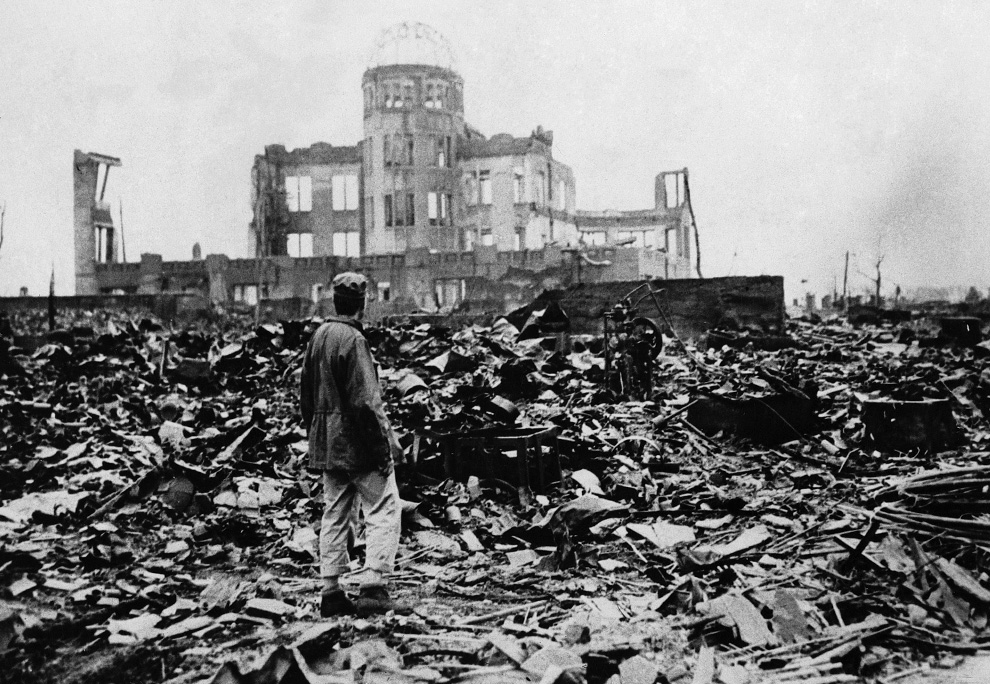
Godzilla’s attack of Tokyo harbor leaves the entire city in ruins, between his crushing things under foot and breathing fire all over the city. The scenes of a devastated city, filled with rubble and flames must have also hit home with Japanese audiences who remembered living through the firebombing of their cities. The fact that a monster movie like this can so directly tap into the pulse of Japanese society speaks volumes about its quality.

Aftermath of Hiroshima, an image still fresh in the mind of Japanese movie goers.

Aftermath of Hiroshima, an image still fresh in the mind of Japanese movie goers.

There are many things I love about Godzilla; chief among these is the miniature work. Well before the advent of computer generated special effects, the only options available to film makers were to film full-sized events (like Buster Keaton in The General) or use miniatures. Full sized effects are often one shot attempts, expensive and very limited in scope. Miniatures, on the other hand, allow for a world of options, can be repeated if the shot isn’t to the directors liking and are reasonably inexpensive. The real trouble with miniature work is that, done wrong, they can look terrible. Thankfully, the work in Godzilla is surprisingly good. Most of the work was masterfully done, with incredible attention to detail. There were also several occasions where the film makers blended miniature work with live actors.  Several scenes of destruction showed live actors on a set which was then destroyed (in miniature) after a quick cut.  It is almost impossible to tell the difference between several of these sets and their miniature counterparts.  There is only one time the miniature work disappoints me and that is when jets finally chase off Godzilla. The jets themselves look like cheap models made from balsa wood and the wires attached to them and the rockets they fire are very visible.

I also thoroughly enjoyed the science aspects of the film. From the use of actual Geiger-Muller Counters, to the discovery of the trilobite in the foot print, there is factually accurate science all over the film. My favorite reference was to the discovery of Strontium-90 in the footprint, which—after a few minutes of Google searches—I discovered is actually an isotope found several weeks after the detonation of an atomic weapon.

Even the ending of the movie is dependent on science, although that science is unfortunately utter garbage. The idea of an Oxygen Destroyer is completely ridiculous though it does serve a purpose, aside from ridding th0e world of Godzilla. The Oxygen Destroyer is a weapon that is even more dangerous than the atomic bomb and it isn’t used until there are no other options left and even then the creator dies with his creation to ensure that it can never be used again. Given what they experienced as a culture, it’s no surprise that the Japanese have this feeling towards a weapon of mass destruction and the willingness of a scientist to sacrifice himself in order to prevent it from being used by anyone ever again.

This man was willing to die to prevent another Hiroshima.

This man was willing to die to prevent another Hiroshima.

Even though it is a monster movie, Godzilla is definitely worth checking out. If you need more proof of this movie’s excellence, just look to the fact that the year it was released if won the Japanese Movie Association award for Best Special Effects and was nominated for Best Picture, losing to Kurasawa’s Seven Samurai. Without a doubt this film warrants five Death Stars.

1 Comment

Filed under Andrew Hales, Movie Reviews, Movies

Review: Attack of the Killer Tomatoes!

Sometimes B movies try to take themselves way too seriously. Directors think that the movie is the big break they’re looking for and instead of having fun with it, they end up looking silly. What makes Attack of the Killer Tomatoes! so fantastic is that it is self aware and often exploits its own grade. Just one look at the opening credits reveals this. In between actual opening credit shots are furniture ads and a “space available” sign. Attack of the Killer Tomatoes! is a great example of what the B movie genre can really be. There is no exploitation, no sex, and no excessive violence, just an amusing story full of quirky humor and the generally bizarre.

While much of the movie is nonsense, the plot sticks around for at least forty minutes (far longer than I remember it doing), and maintains some plot threads even after the rest has degraded. The movie follows two separate stories, that of White House Press Secretary Jim Richardson as well as Federal Intelligence Agency agent Mason Dixon and his covert team. Like any good Press Secretary, Richardson’s job is to try and spin the tomato attacks in such as way as to save face for the President. Mason’s job is to investigate the source of the tomato attacks and try to stop them if possible. While hot on the trail, all of Mason Dixon’s team is killed except Lt. Wilbur Finletter, a saber wielding man in a jumpsuit and a deployed parachute (yes, he wears the parachute for the entire movie). In the end, it turns out that Jim Richardson is the mastermind behind the diabolical tomato plot and that he is essentially a “tomato whisperer.”  He hopes that when he stops the attack the surviving people will make him their leader. Richardson meets a disagreeable demise at the business end of the overeager Lt. Finletter’s saber. Naturally this unpleasantness happens just as Richardson was about to tell his secret for controlling the tomatoes.  Eventually the tomatoes are stopped by Mason Dixon’s quick thinking, and the aid of an awful pop song called “Puberty Love”. It had been many years since I’d seen the movie and my memory didn’t serve justice to this bizarre and twisted plot.

Press Secretary Jim Richardson’s journey is one of the more bizarre, yet amusing portions of this movie. His quest begins with a conversation with the President (who is endlessly signing his name on pieces of paper with different pens). Richardson then travels to San Francisco, which is dubbed New York, to recruit the help of a Madison Avenue ad executive.  The exec bursts into a musical number halfway through their interview. The ad campaign they come up with is so ridiculous that it would be unbelievable, except that I’ve seen some really bad commercials in my time.

The best part of Attack of the Killer Tomatoes! is all the little details. Scrolling ads appear on the screen from time to time.  Near the end, the ad type is interrupted by a caps locked plea for help as the typist is apparently eaten by a tomato.  I had to rewind the movie to watch the actual scene, since I was paying attention to the ad the first time.

At one point in the movie there is a Congressional Committee meeting in which all of the congressmen are named after former US presidents such as Polk and Fillmore.  For screen writing this terrible (and it really is) the puns and innuendos are amazingly clever. My absolutely favorite scene involves a briefing in a room that is far too small for the number of people who are in it. People are forced to crawl over each other and the table in order to get to their seats or to get up in front of the group to speak. There is also a Japanese scientist who is dubbed very badly, very intentionally.

Aside from the main plot, there are some other great moments throughout the movie. There is a very convincing helicopter crash in the opening scenes of the movie that I love (Turns out it was actually a real crash, so that explains why it’s so convincing.). The oversized tomatoes actually look pretty good. They are smooth and shiny just like real tomatoes, just much larger. Also, I love the little grumbling sounds that the tomatoes make as they go on their killing spree.  

A surprisingly realistic tomato… except for its size, of course.

Of course Mason Dixon has his obligatory love interest, in the form of reporter Lois Fairchild. Lois’ contributions to the movie are limited, though she does have a couple of amusing moments. In her introductory scene, she says hello to a passerby named Clark with a red cape sticking out from under his coat; and later the movie wraps with a warped version of a stereotypical love scene.

Once the plot devolves, the movie becomes a little difficult to follow. May of the scenes seem to have little relation to the ones that came before and even less to the ones that come after. The movie eventually breaks down into a random group of weirdos stomping on tomatoes in the parking lot of San Diego Stadium.

This is not an uncommon problem for B movies. They often start with a great premise and are able to maintain in for forty five minutes or so, but they then need to fill another 30-45 minutes with scenes that often feel made up on the spot and are not at all in line with the rest of the movie. Attack of the Killer Tomatoes! ranks as one of my top favorite B movies of all times. Not only was it a good movie, but it has spawned several sequels, including one with a very young George Clooney (a review for another day), and a 90’s cartoon series. A definite watch for any fan of B movies. 4 Death Stars.

Leave a comment

Filed under Andrew Hales, Movie Reviews, Movies