Category Archives: Andrew Hales

Event Comics

With Marvel’s latest Infinity event wrapping up I started considering what makes a good comic event. Since I started reading comics seven years ago I’ve lived through more than my share of comic events; some of them good, and some of them not so good. I have found that all events of quality seem to share certain characteristics that help them succeed while others fail.  A quality, well written plot, characters you care about, consistency, and events that actually matter, all aid in making a great comic event.

Comics can easily be broken up into two parts:  art and story.  While these two often go hand in hand, event comics are most often driven by story. It’s extremely difficult to carry a story with just art (though not impossible).  There have been great comic issues that are more about the art then they are the story, but they tend to be one or two issues at most.  
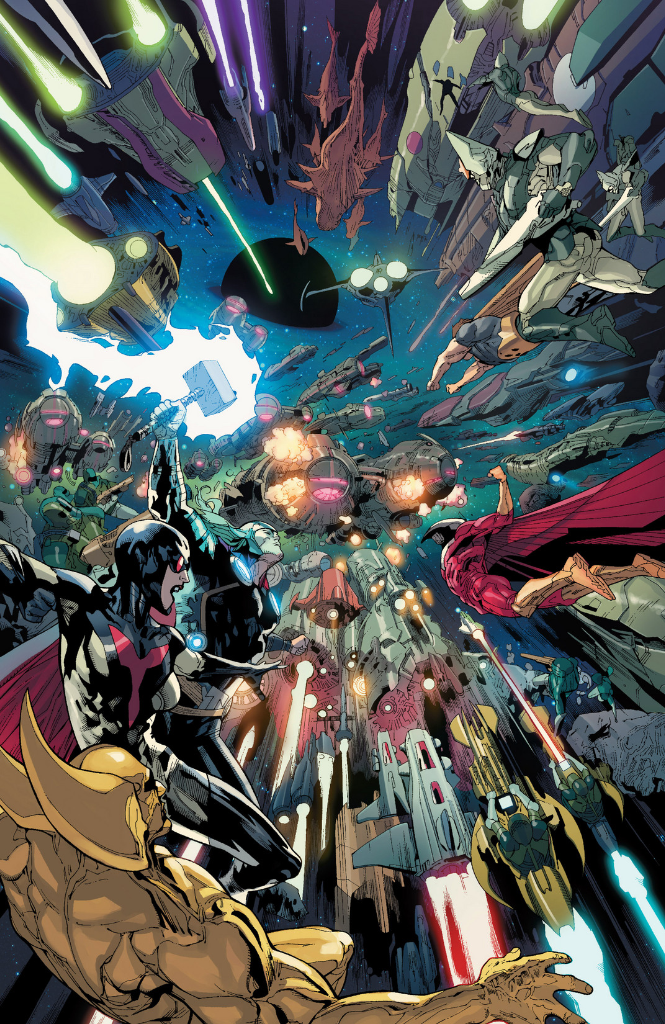
Talk about epic.

Talk about epic.

Infinity is a great example of how the story, rather than the art, carries the event. Since all three books involved were written by Johnathan Hickman, there is a universe-spanning story with all kinds of interwoven parts that make for a truly engrossing story.  Hickman creates entire universes within the series he writes and connects them in surprising ways. This is one of the reasons I love reading his work.  It takes a long time, but the payoff at the end is well worth it.
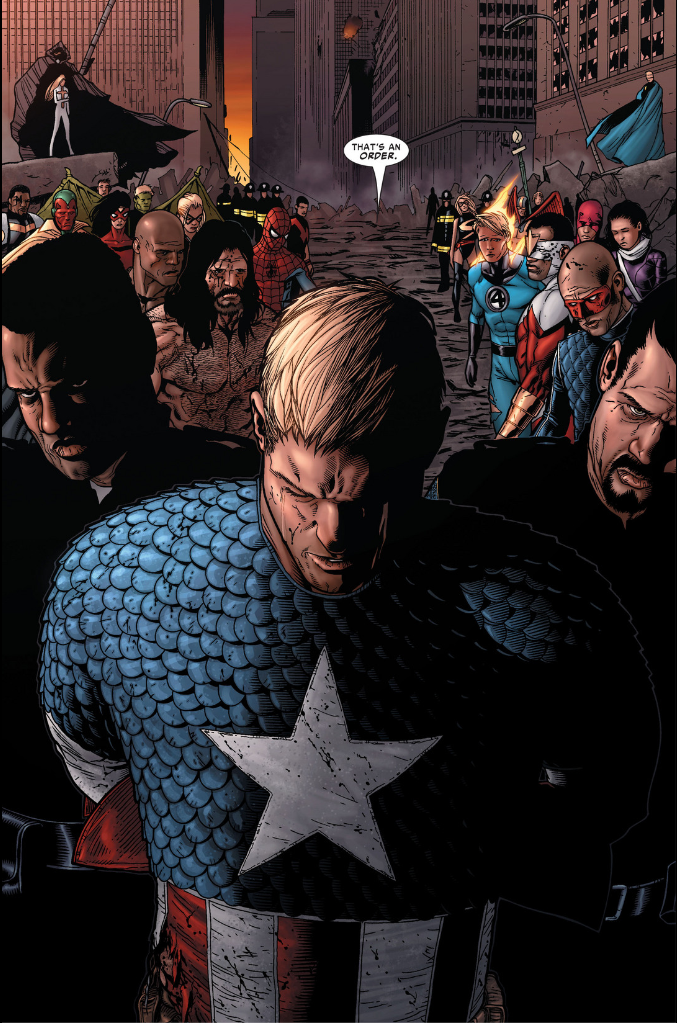
Seven issues wrapped up in seven pages...Seriously!?

Seven issues wrapped up in seven pages…Seriously!?

I’ve also been pleased that with recent events, especially at Marvel, there has been a concentrated effort to avoid selling the ending short.  Nothing is worse than a writer creating a masterful storyline, and then trying to wrap up the epic story in two pages.  For the first couple years I read comics, Marvel was particularly bad at this, with the most egregious examples being Civil War and World War Hulk.  Both were pretty solid stories, but as I read the last issue I kept expecting the story to start wrapping up. Unfortunately the end didn’t come until I was almost done with the book. Instead of a real ending, Marvel then wrote a small mini-series to end the event, which seemed far too drawn out. For the life of me, I can’t figure out why they didn’t just put that material into the event itself.  It would have flowed much better.

I can’t deny that I love epic tales like Infinity, but I’m also very open to more intimate stories (get your mind out of the gutter). I can be drawn into a story that is almost completely character driven as opposed to action driven. If a writer really knows the characters they are developing, then they can make you feel for the character and take him to emotional depths that are unexpectedly satisfying for the reader.  Identity Crisis does just that by taking many of the second tier Justice League heroes and throwing them into some horrible situations to see what happens. I originally read this story arch about six months after getting into comics and it was very impressed by how much I found myself caring about characters, about whom I knew nothing before opening the book.  This kind of character driven writing can be just as enjoyable as epic events and is often far more compelling.  
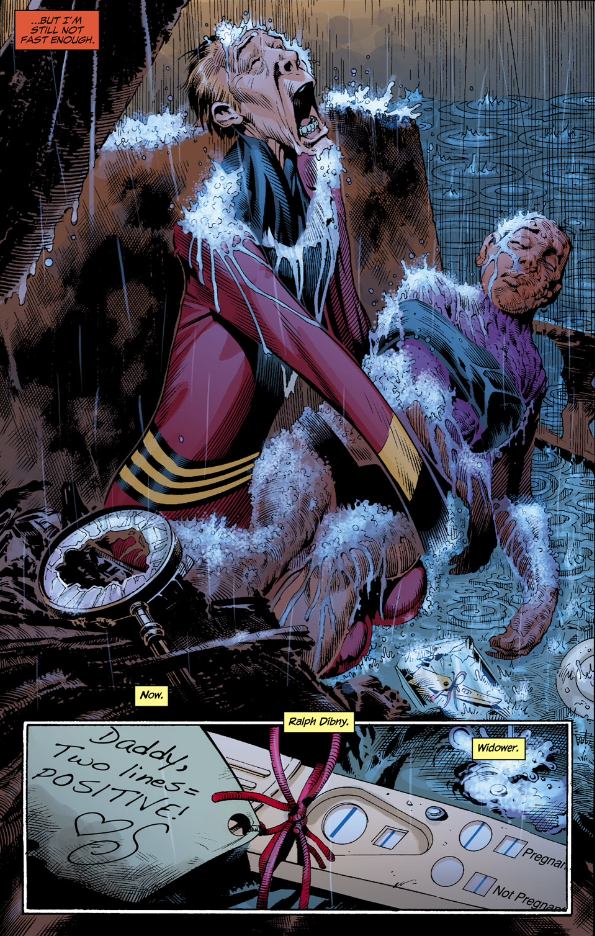
First time I read Identity Crisis I had no idea who these characters were, but I really felt for them anyways.

First time I read Identity Crisis I had no idea who these characters were, but I really felt for them anyways.

Many times I’ve heard fans complain that they just don’t care about specific comic events and that frequently lack of caring is due to the characters. I know that I have skipped an event simply because the characters don’t interest me. It’s not so much because they’re characters I don’t know, but often it’s because they’re portrayed in a way I don’t care for. Maybe things seem out of character, or they’re just doing things I don’t find interesting so I’ve stopped reading. On the flip side of this, I’ve also read stories that followed characters that I didn’t know existed. A great example of this is DC’s 52 (not to be confused with The New 52).  52 was a year without Superman, Batman, and Wonder Woman following the events of Infinite Crisis, and instead it followed characters such as Black Adam, Booster Gold, The Question and Batwoman. These were all minor DC characters but I became completely engrossed in their story and wanted more.

Sure a great plot can get the reader interested, but if the characters around which this plot revolves doesn’t keep him interested, then the whole thing is pointless. The one thing I can’t stand is when minor characters are included in stories in ways that don’t matter to the plot line. Frequently this is done via tie-in stories. Sometimes these can be great, like Civil War: Wolverine, but more often than not they are just an attempt to maximize the sales boost that typically accompanies events.  I have no problem including these characters in the story.  In fact I often like it when they’re done right.  It gives me a chance to get to know them and expand my horizons. All I ask is that the author keep them interesting and relevant to the plot line.

When it comes to event comics, the absolutely number one issues I’ve heard people complain about is that “it doesn’t matter.”  So often it feels like an event will wrap up with some big, universe changing occurrence, only to have that undone by the next event.  Or worse, the whole event that appeared to have an impact turns out to just be a lead in to yet another event like DC’s Trinity War.  In the world of comic books, things are ever changing. Characters die and are subsequently brought back all the time. This is the world of modern comic and the status quo isn’t going to change any time soon, so fans just need to accept it and move on.  Having said all of that, if writers are going to do something like kill off or bring back a character, it needs to be done in a way that means something or serves a purpose.  In a recent tie-in to Avengers Vs. X-Men, they brought back and then killed off Captain Marvel over the course of a couple issues for no other reason than they could.  This served absolutely no purpose and only really served to diminish the character to the level of expendable.  I want to see writers do interesting things, to take chances and to further characters, and I fully acknowledge that there are times that in order to accomplish this characters must be sacrificed or resurrected, but do it should be done for a reason, not purely for shock value.  The sacrifice of Nightcrawler during Second Coming is a positive example of how the death of a character can used to great effect.  Nightcrawler died keeping Hope away from the Sentinal Nimrod.  This served to impress upon the reader how important Hope was the X-Men and also managed to throw the X-Men into further chaos as they tried to cope with the loss of a lynchpin of the team.
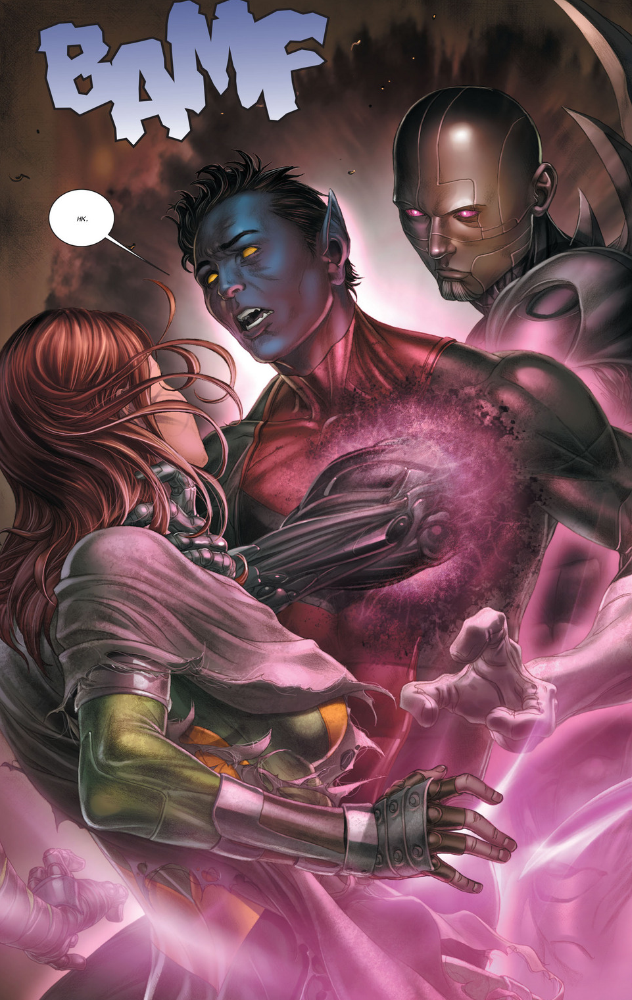
I got a little choked up.

I got a little choked up.

Making things matter doesn’t just apply to individual characters, but also to the universe as a whole.  I don’t expect every event to completely rewrite the universe, but I like it when I read something that doesn’t make me feel like my time was wasted.  In my opinion, House of M does this best.  With three simple words, “No more mutants,” Scarlet Witch undoes everything that has happened in House of M and at the same time completely alters the Marvel landscape.  Only recently, at the end of Avengers Vs. X-Men, was a solution found to Wanda’s actions.  Not only was this a great and simple plot twist (i.e. good writing) but its consequences lasted far longer than most readers would have expected.  It took a little over seven years for things to finally come full circle, which is an eternity in modern comics. This is the kind of epic event that makes comics soap operas for geeks.
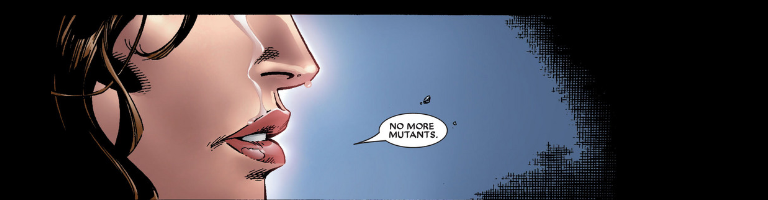
One panel changed everything.

One panel changed everything.

One of biggest crimes that a comic event can commit is to lack consistency.  A comic event is supposed to be one unified story, so why is it that there are frequently eight different writers and then another eight different artists? Ok, so this might be a little exaggeration, mostly, but my point is that a solid team must be on board for these events. This may unfortunately mean that the ideal artist isn’t available because they can’t do a monthly book for six months.  It would be preferable that they do some of the smaller series, maybe a tie-in or a one shot.  I would much rather see them this happen than to have a third of the event’s pages drawn by different artists all trying to copy someone else’s style. This kind of inconsistency really becomes jarring and pulls me out of the story. The biggest reason I read comics is the fantastic mix of art and story and when those two don’t mesh or there are blaring inconsistencies in either it’s disappointing. Writers, please note I said both.  If writers aren’t meeting their deadlines, then artists can’t meet theirs and then comics have to use fill in artists. Even the best artists still require time to perform their part.

There are, of course, times when having a mix of writers and artists is perfectly fine, but those are the exceptions rather than the rule. Typically those times are when an event doesn’t not have an overarching book, like Marvel’s recent Battle of the Atom did. Battle of the Atom had two issues acting as book ends, but otherwise the action took place within All-New X-Men, Wolverine and the X-Men, Uncanny X-Men, and X-men. This event was written by three different writers (Bendis, Wood, and Aaron) with art by four different artists (Immonen, Lopez, Bachalo, Camuncoli) but it worked because they maintained a consistent level of quality. This quality was also aided by the uniform vision that was guided by Brian Michael Bendis who wrote All-New X-Men, Uncanny X-Men, as well as the event bookend issues.
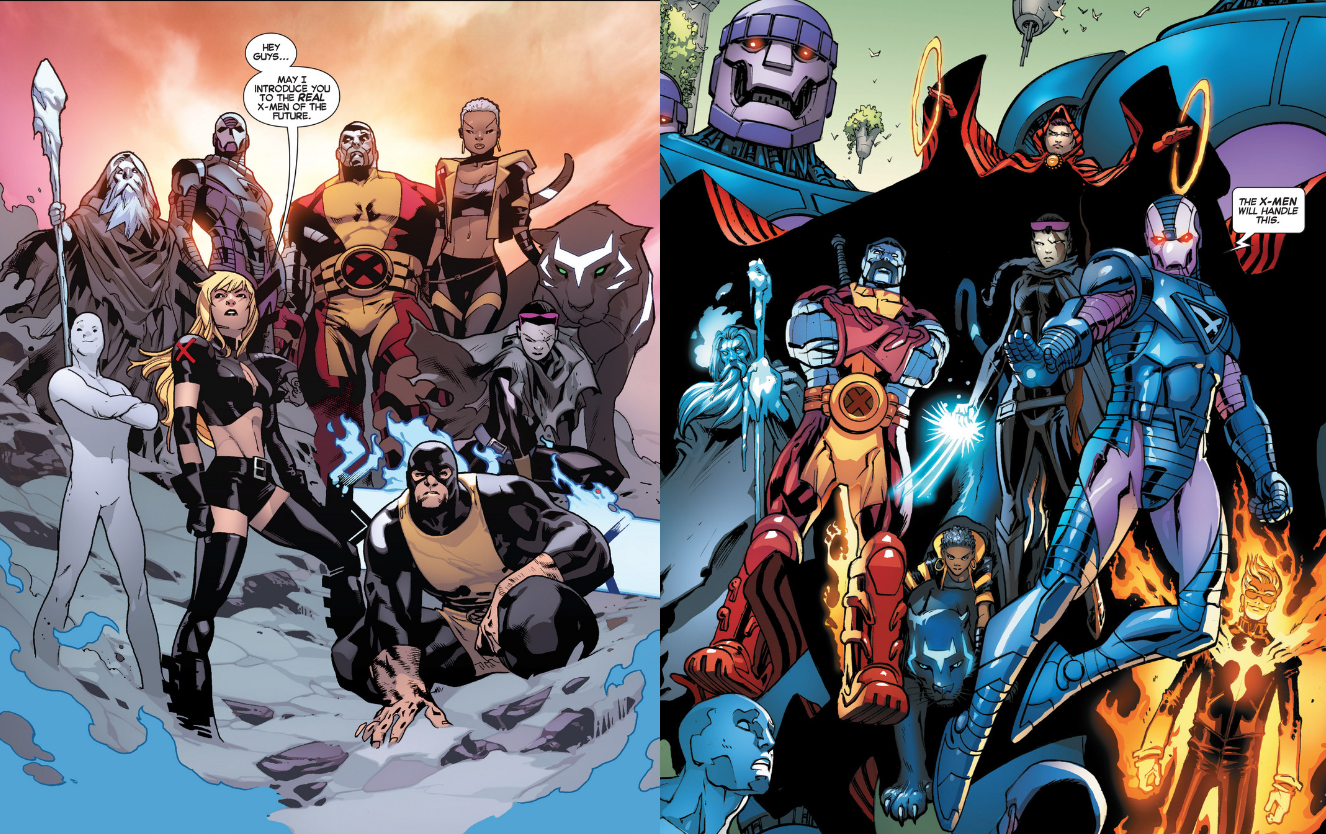
Two different takes on the same characters, but both look great.

Two different takes on the same characters, but both look great.

With consumers still trying to watch what they spend it’s difficult for these event comics. Those that have managed to balance storytelling, likable characters, consistency and events that matter are the ones we remember, while those that couldn’t get forgotten. It’s a good thing I enjoy most event comics because the reality is that they aren’t going away any time soon.  Publishers see them not only as a way to tell a great story but also as a method of driving up sales.  Although I would like to think that storytelling is the only thing driving publishers, I’m more realistic than that. I promise that I’ll keep buying them as long as they keep writing good ones.  That way everyone wins. 
Leave a comment

Filed under Andrew Hales, Comics

VA Comicon: The Good, The Bad and The Ugly

banner_VAconThis past weekend was one of my local comic shows, the VA Comicon. While very different than events like New York Comic Con, these small, local shows are actually some of the most important in the comic industry. They allow fans of all kinds to get together, buy and sell comics and other geek paraphernalia, but more importantly they allow geeks to meet and socialize while not requiring they shell out $85 for a weekend pass. Unfortunately these small events also have some considerable drawbacks. So without further ado, Therefore I Geek presents The Good, The Bad and The Ugly of the VA Comicon.

The Good

It had been about four years since I’d made the relatively short trip from Hampton Roads to Richmond for a VA Comicon, but this year I decided to do it.  Much like when I last attended, there was a big name—Rob Liefeld—intended to draw people in.  Last time I jump on the chance to get autographs from Chris Claremont, Michael Golden, and Larry Hama, but they were nowhere near the draw that Liefeld is.

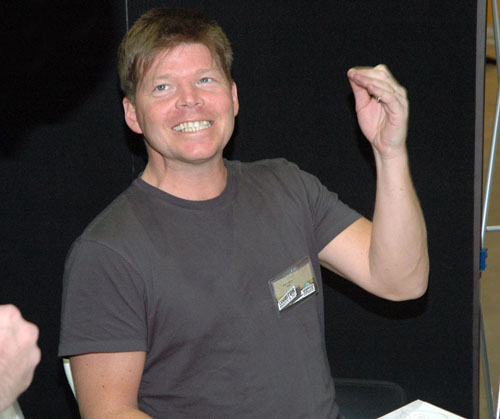
Rob Liefeld, a.k.a He Who Shall Not Be Named.

Rob Liefeld, a.k.a He Who Shall Not Be Named.

It was so great to see that this local convention has grown so much in the past few years. The show has grown so much in fact that they had to move venues. The location, at the Richmond International Raceway, was a plain, but clean building that allowed for a rather spacious convention experience.

In addition to have more people in attendance, the number and quality of exhibitors has improved.  In addition to Liefeld, Brian Clevinger and Scott Wegener of Atomic Robo were present. It was nice to see these guys again, but at a smaller show after the craziness of NYCC. There were also several booths selling all kinds of interesting stuff. Check out the end of the post for links to my favorites.

The Bad

Local shows like this are a great way for fans to who don’t have the opportunity to go to large cons to get out and have at least some of the experience. That having been said, a fair number of these people are lacking in convention etiquette. For starters, on more than one occasion I was accosted by the smell of someone who hadn’t showered recently. Unlike many small shows, this one was blessed with a spacious hall and therefore I was not pressed up against people.  If I can smell someone from a couple feet away, they have a body odor problem. There were also several times where people would essentially block the entire aisle for no apparent reason. In larger conventions I see this as almost unavoidable given the sheer number of people who are in the space, but here more than once people could have simply stepped two feet to the right or left and made space for people to pass.

The Ugly

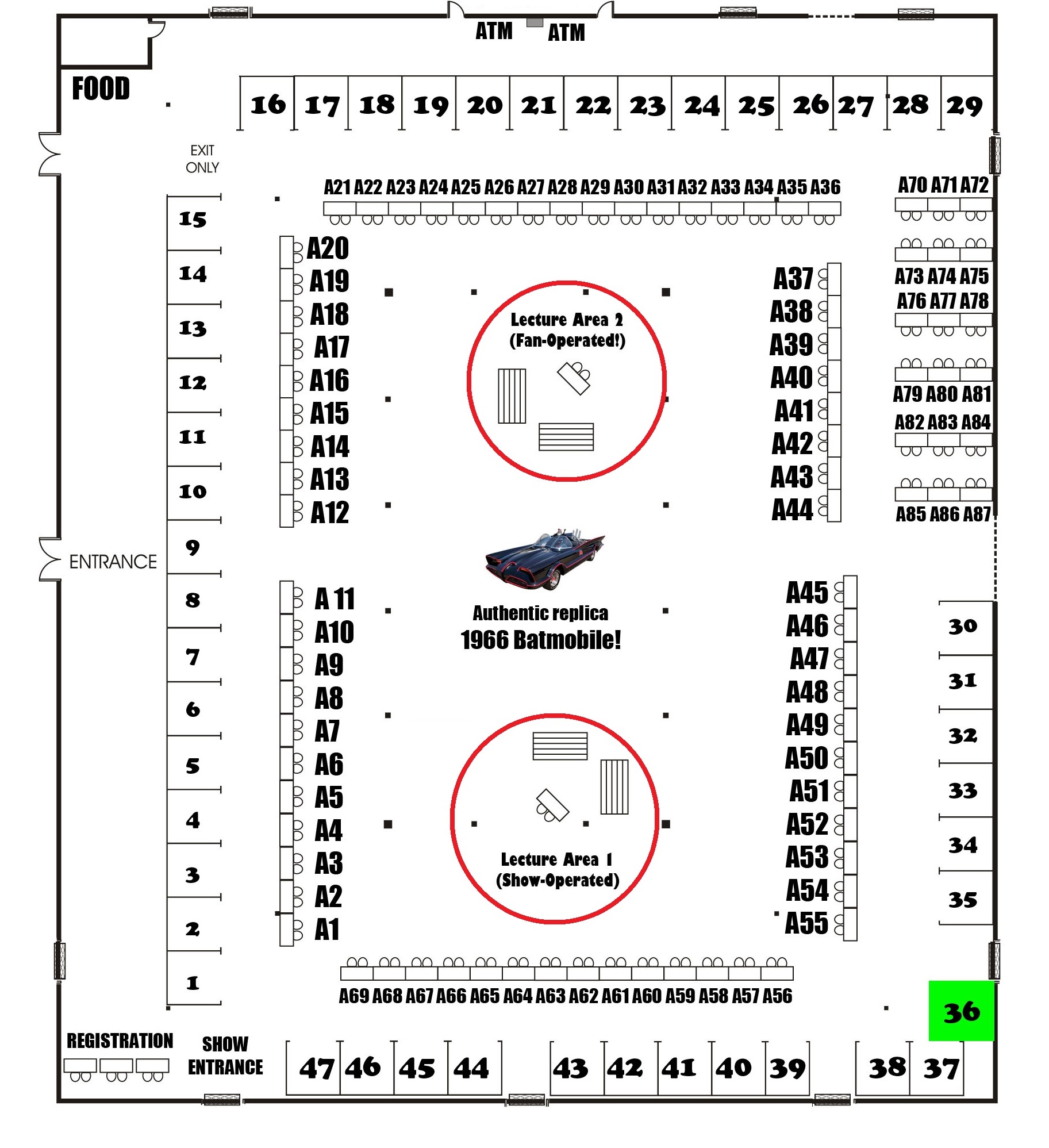
The convention layout had some incredible flaws. In my mind, the most egregious of these was how panels were addressed. Basically they had a couple sets of metal bleachers were set up in the middle of the room and the person conducting the panel sat or stood in front of them and tried to talk over the crowd milling around booths behind them. This is no way to attract people to either attend said panels or host them. Panels can be one of the most memorable things about a con and these were severally bungled. What I have seen at other conventions that don’t have separate rooms available for panels, is having a small area segregated off with curtains and a small sound system present so that panel-goers aren’t stuck in the middle of the con and the speaker can be heard. Panel isolation doesn’t have to be anything fancy, but it makes a difference.

The red circles indicate areas where panels should not be located.

The red circles indicate areas where panels should not be located.

A bit of line management would also be helpful. Rob Liefeld’s line ran diagonally across nearly the entire 36,000 square foot room. This meant it had to cross the aisle twice and cut through the middle of the con floor (also right past the panel area) and behind all of the exhibitors booths. I made about four passes around the con floor and each time I passed the line, the single person running it was trying to figure out if someone was or was not in line and where the line actually was. A slightly better floor layout and a couple of extra volunteers and this could have gone much more smoothly.

Conclusion

This wrap up may seem a bit negative, but I had a really good afternoon. VA Comic Con, don’t get down on yourselves, you did a great job. I’m really pleased to see how much things have grown in just the last few years while I’ve been absent. I’m looking forward to the next convention.

Don’t forget to check out the links!

Altruistic – Wood products with a geek flavor

Pixel Who – Doctor Who Pixel Art

Super Sox Shop – Handmade Sox, Swords, Stuffies, and Sacks

Desktop Gremlins – Paper Craft Books

Geek Boy Press – Geek Apparel

Leave a comment

Filed under Andrew Hales, Events

Why I love Wednesday

Wednesday is the best day of my week—and no, it’s not because it’s “hump day.” (If you bring up the Geico commercial, I will hurt you.)  Don’t get me wrong, I’m glad my week is half over, but the main reason I’m excited for Wednesday is that it’s New Comic Book Day:  the greatest of all days.

As someone who loves comics, Wednesday trips to my local comic book store have taken an almost religious connotation. I go at nearly the same time every week, to the same store, by the same route, much as other people go to church. Not that I think reading comics is the same as going to church, but the consistency with which comic lovers show up, week in and week out, does draw a few parallels.

I look forward to new comics all week, because I can’t wait to see what is going to happen next. I usually tease myself early in the week by looking over Midtown Comics’ list of what is coming out in the week. I peek at covers and try to guess what might be happening inside, knowing full well that covers rarely give things away anymore.  Sometimes I’ll read the little blurb telling me what the comic is about, but I usually try not to spoil them too much. I want to read the comic unbiased in order to draw my own conclusions.

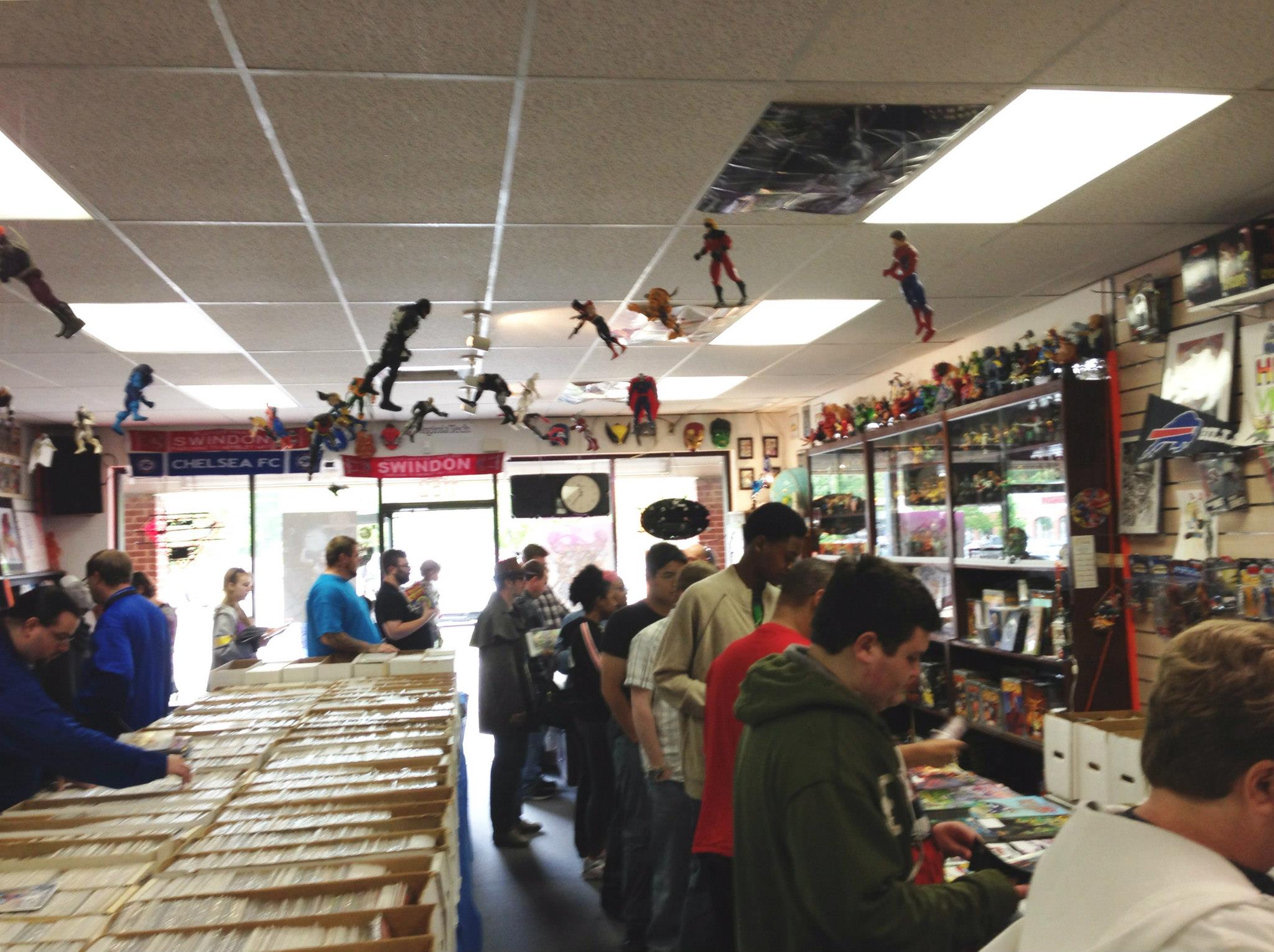
Geeks being Geeks, together.

Geeks being Geeks, together.

New Comic Book Day also provides me with a chance to be social in a community dedicated to an activity which lends itself to solitary participation.  Aside from the store owner, who always provides lively conversation, there are plenty of other folks present.  The best part is that I know they are all there for the same reason I am! While we may not be the most naturally social group, we can sure go on about new comics. We talk about what we like and don’t like, the latest gossip or rumor to come from publishers, and books that we’ve enjoyed that we think other people might also be interested in. Some days I have to get my books and leave pretty quickly, and don’t get much time to talk, but other days these conversations can go on for well over an hour.

When I get my new books in hand I give them a quick thumb through to see what they’re all about. Usually I save this for when I get in the car, but there are some books (like Saga) that I just can’t wait to take a look at, and so I check them out as soon as I get them in my hands.  This is mostly to satisfy myself while I drive home.  My local comic book store is a little bit of a drive from my house, so I have to be patient before I can read my comics. Once I get home though, there’s no stopping me. I read my favorites first and then I’ll switch to whatever grabs my eye. Typically I’ll take all the issues that come with digital copies, enter in the codes, and then read them all together. I’m not as good about reading those that don’t have codes (sorry DC), but if they are something good, like Batman I’ll still dive into them.

Comics are suspenseful by design. The fact that there is a continuing story—not unlike that of a soap opera—and that we have to wait a month between issues (except All-New X-Men, which comes out every eighteen seconds) cliff hangers are almost a given. This keeps fans coming back week after week, and month after month, just to see if Spider-Man will be able to overcome whatever foe has a diabolical scheme this time. By the time I have finished my stack I am already super excited to see what is going to happen next month, but I have to be patient and wait it out.

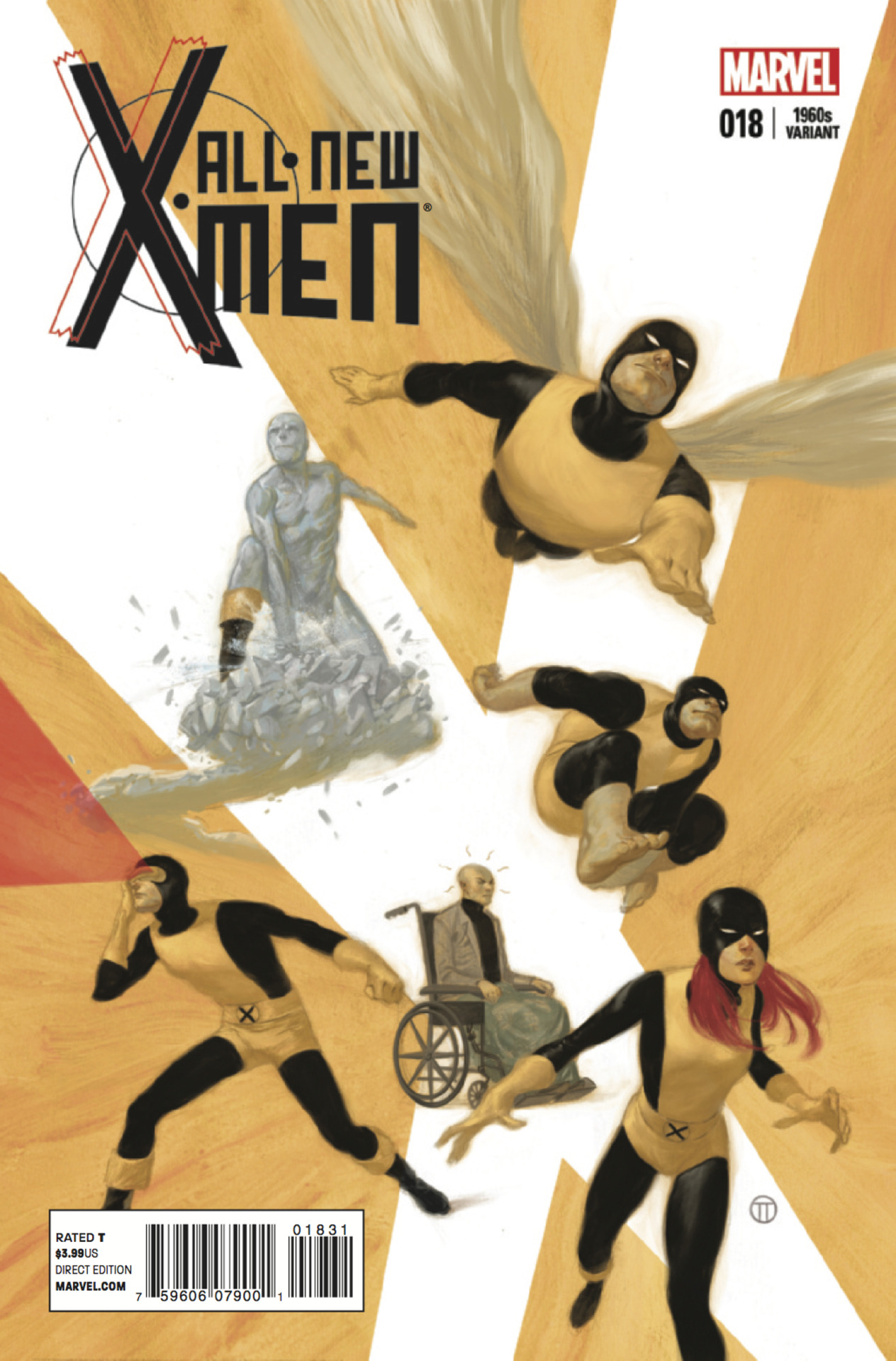
Issue 18 came out 6 minutes after issue 1. I don't know how that happened.

Issue 18 came out 6 minutes after issue 1. I don’t know how that happened.

I try to enjoy life’s simple pleasures as much as possible and New Comic Book Day is one of those.  No matter what kind of day I’ve had, I can always sit down on my couch in some comfy cloths with a nice cup of tea and make my day better, just by reading some brand new comics and losing myself in their wonderful stories.

Leave a comment

Filed under Andrew Hales, Comics

What Might Have Been

There is a curse on our society.   It is a dangerous and insidious plague that works its way into the very heart of the most precious part of our lives:  our entertainment.  I am, of course, referring to DVD bonus features.  While tempting and tantalizing, they have cursed us with the knowledge of what might have been.  This extra content often reveals the director’s original vision, before things like budget and other physical constraints get in the way.  Without this knowledge, fans are more than happy with the final product, but with the additional knowledge we begin to ask ourselves how much more would we have loved what might have been.

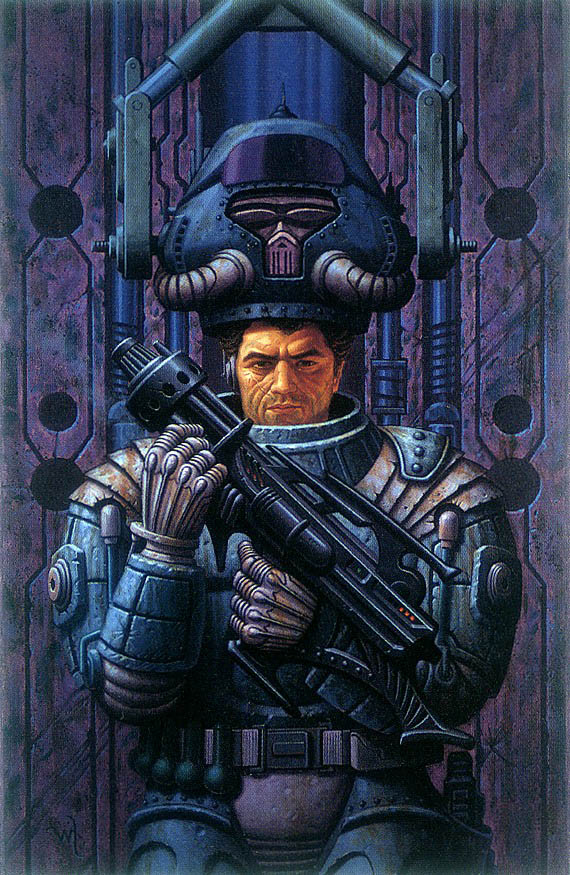
An artists vision of what Starship Trooper's power armor looks like.

An artists vision of what Starship Trooper‘s power armor looks like.

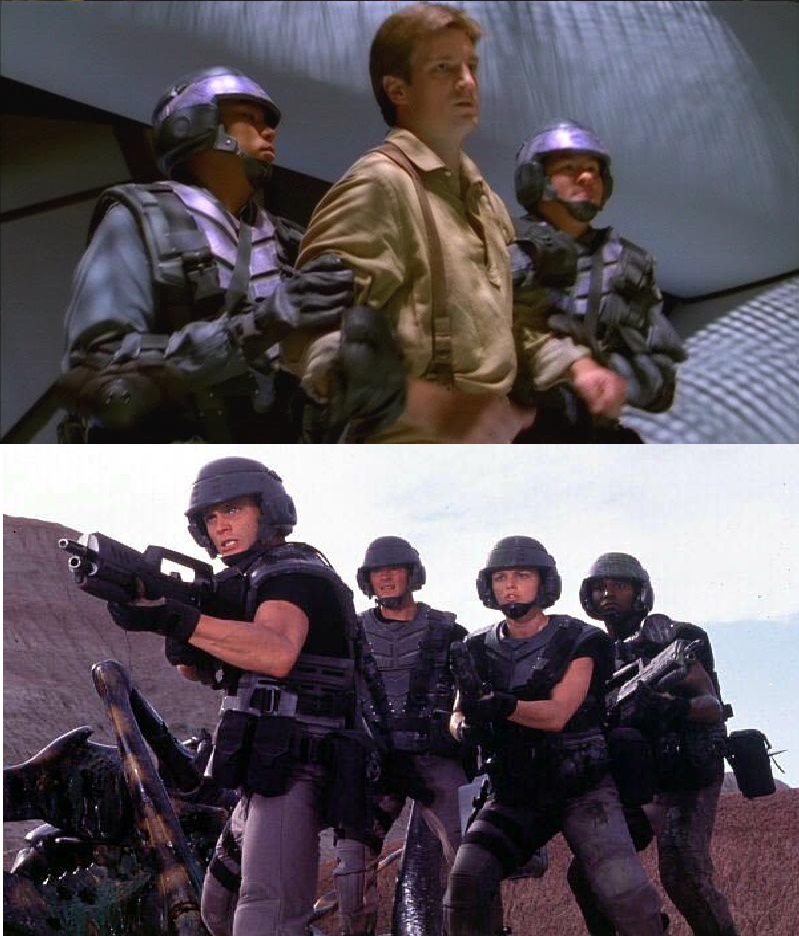
Starship Troopers is my favorite book, hands down.  I’ve read it at least a half dozen times.  Robert Heinlein crafted a fantastic science fiction universe, and the centerpiece of that universe is the Mobile Infantry, with their suits of powered armor.  These suits protect the infantrymen and provide them with enhanced strength, sensory perception, communications, and weaponry. These suits are described in the book as looking like giant, armored gorillas. Of course, this is not what appeared in the film. Instead, it was a box office disaster that didn’t have powered armor at all. That being said, the movie has some redeeming qualities as a B movie and I was willing to accept the movie for what it is—that is, until I saw the special features.  In them, director Paul Verhoeven spoke very excitedly about what he was planning to do with the suits.  Special feature interviews with Verhoeven show various concepts of what the suits might have looked like and, while they were all very different, they were all really cool looking. Instead we got really crappy body armor (This same armor made an appearance in episode two of Firefly).  Had I never seen Verhoeven’s original vision, I would have never expected anything other than the final movie version.

If you thought the armor looked familiar, you were not going crazy.

If you thought the armor looked familiar, you are not going crazy.

While Starship Troopers was an all-around disappointment, of which the armor was just one small part, J.J. Abrams’ Star Trek was an awesome film. Abrams was able to successfully reboot the franchise while still retaining the aesthetic, the positive vision of the future, the characterizations, etc. that made Star Trek so amazing in the first place.

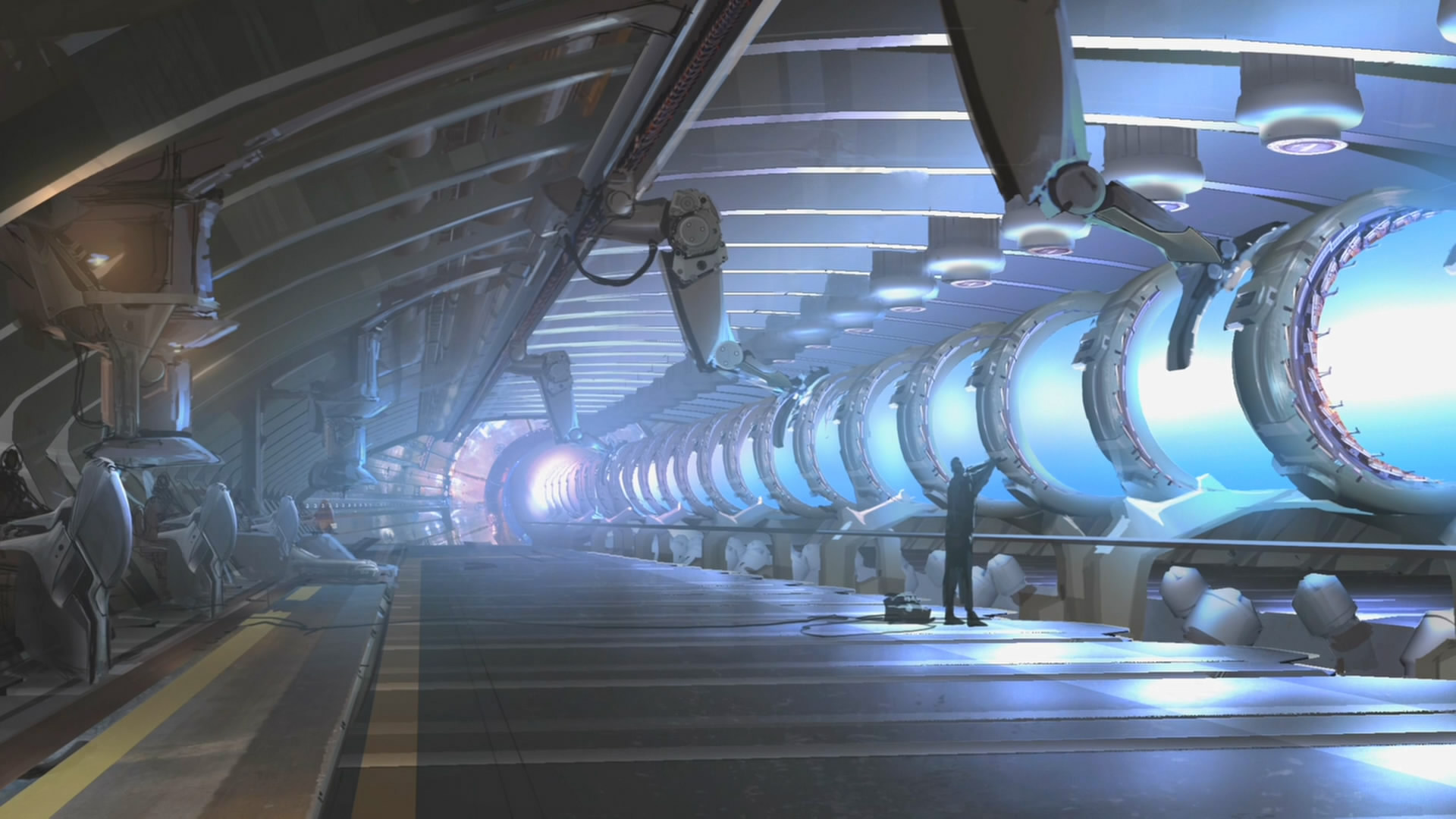
USS_Enterprise_engineering_concept_2

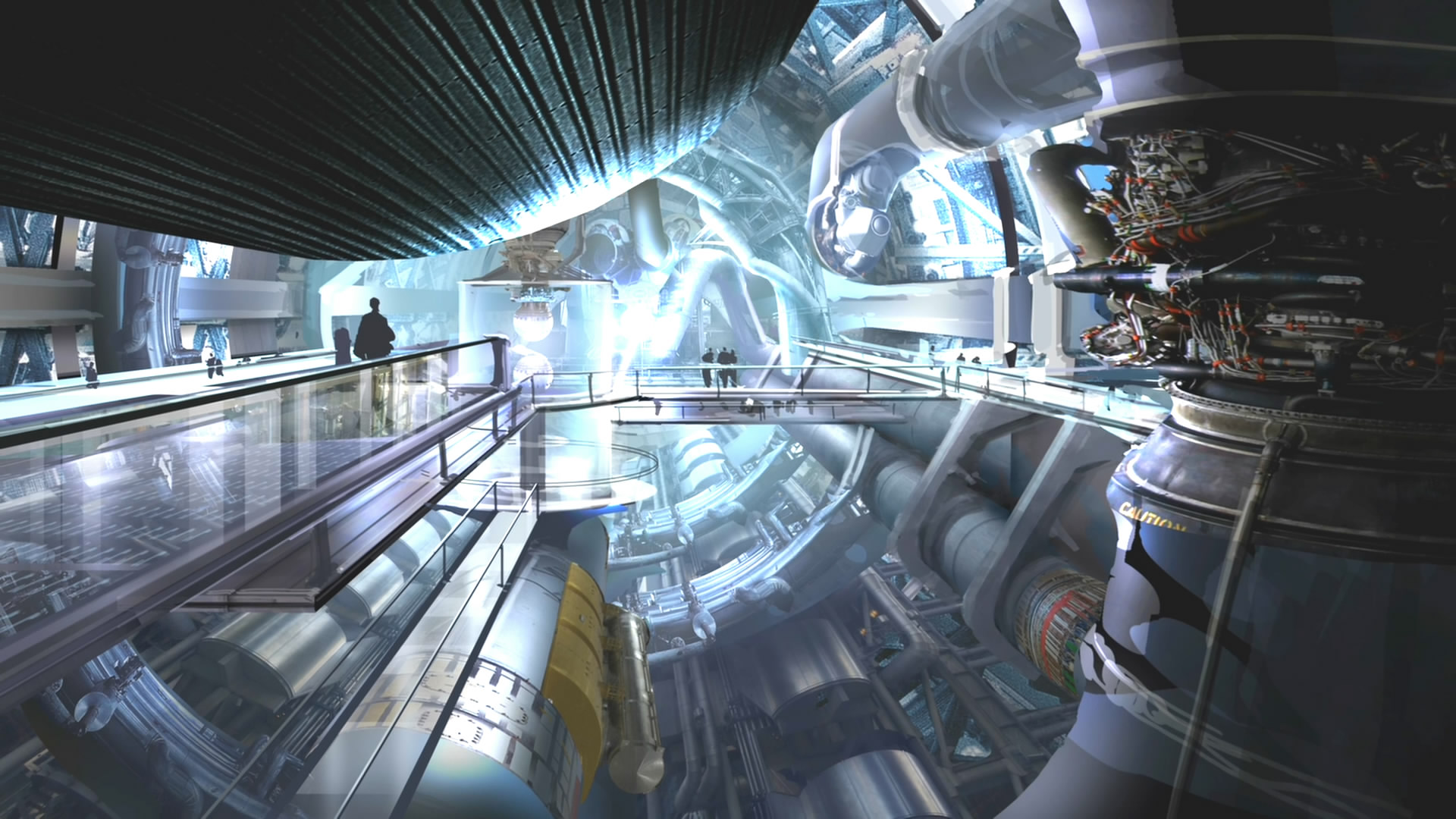
Accompanying the reboot is a refreshingly streamlined Enterprise. Everything looks so shiny and sleek. Well, almost everything. The engineering spaces are completely out of place with the new look.  They have more in common with the engine room of a modern cargo ship than with any of the previous incarnations of Star Trek engineering spaces.  I felt that this disconnect detracted from the film and for quite a while I was forced to wonder why J.J. Abrams made that particular choice. When my answer finally came, I was both pleased and disappointed.  Again, thanks to DVD special features (ok, this time it was Blu Ray) I was shown the original designs for engineering. Everything I could have hoped for, it was streamlined, and meshed perfectly with the rest of the redesign. So what the hell happened? Turns out it was the almighty dollar sign. There just wasn’t enough money in the budget to make everything happen, and since it isn’t as integral to the film, engineering was forced to take one for the team. Unfortunately, now that I have seen the concept art, I can’t help but think about what the engine room could have looked like and how cool it would have been.

USS_Enterprise_engineering_concept_1

Of course DVDs are not the only place to get these kinds of behind the scenes secrets. Thanks to the internet there is a plethora of information and it usually doesn’t take more than thirty seconds of searching on Google to find it. In recent years studios have gone so far as to release concept art well in advance of the movie’s release in order to drum up as much excitement and anticipation as possible. I’ve always thought this was tremendously risky. What if the final product doesn’t live up to the expectations of the fans? If they didn’t already have this information, they would have never known and might have been satisfied with what they actually got.

DVD special features are great. They can be lots of fun, but they also carry with them the inherent danger of ruining the final product for the fans. One must be careful not to become too fixated on those things that might have been.  Instead we should be content with what we have and leave the speculation for someone else.

Leave a comment

Filed under Andrew Hales, Movies