
Few things make me happier than geeking out about something. My speech clocks at 110 mph. I start getting twitchy, my sentences make less and less sense; my eyes grow to the size of saucers and I may even get goosebumps (This is as close to heaven as I have gotten and I love it.). I know I’m not the only one who gets this way. I can tell when most of my friends hit this point and it’s fun to watch as an outside observer, and know that this must be what it’s like for them when I hit that same point. But what happens when geek goes too far? How does one know when a line has been crossed and what can be done?
We’ve all been there when someone has crossed the line and everything becomes super awkward. I almost always see this happen when I’m next in line for an autograph. It usually starts off harmless enough. The fan in front of me says something to the effect of “I’m a really big fan and I love the work you did on…” and that is perfectly acceptable. I’ve been known to say the same thing, when I’m not being painfully shy. Although I’m sure they hear this a couple hundred times during the course of a convention, it’s also probably nice to hear that people appreciate what they do. When the conversation moves beyond this, however, things start to get a bit dicey. Some are very gregarious and they like to have conversations with the fans they meet. I’ve been rather fortunate to have short conversations with Walter Koenig and James Marsters and both men were extremely pleasant to talk with. (Walter Koenig apologized for Star Trek VI and to this day I have no idea why.) Unfortunately, this isn’t always the case however and it’s often the fault of the fans. Even bystanders get a little freaked out when “that guy” takes what could have been a pleasant, short conversation and makes it weird and uncomfortable. As much as you may want to tell Leonard Nimoy that watching a certain episode of Star Trek saved your marriage and that you owe him everything up to and including your first born child, he doesn’t want or need to hear this.
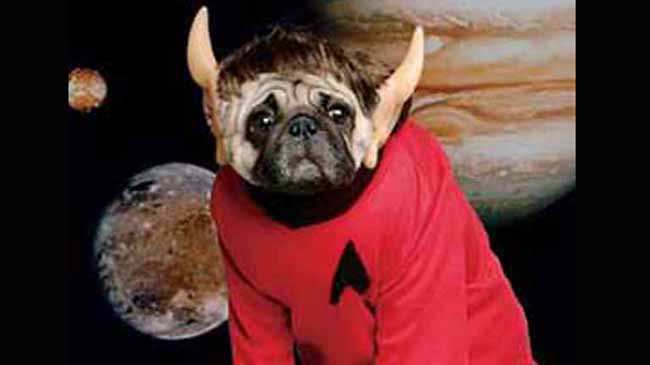
And he definitely wants no part of this.
So how do you know when you’re pushing your luck? First, it is important to pick up on signals from people around you, especially the person you’re talking to. If you’re excited, it may be tough to do that, but these signs are often the most telling ones. Every so often, take a quick glance around and see what people are doing. If they start looking away or getting really quiet, or if the person you’re talking to begins to avert their eyes, then it’s time to dial things back a bit. You may not be there quite yet, but if you fail to change course, you will plow over that line at full speed. If you already know you can go a bit overboard it may also help you to bring a friend along to keep you out of trouble. (There may or may not have been a detailed plan for my friend to bail me out if I got arrested after meeting Jewel Staite.) It’s what friends are for. They can quietly tap you on the elbow or something equally subtle to let you know that you’re going too far. Of course, if things get really out of control, they can grab you and drag you away. After all, your friend may only be embarrassed; security will likely see how many times you will bounce when they toss you out the front door.
Picking up on other people’s cues is important, but it is equally important to be able to read yourself in these situations. Unfortunately, we geeks as a collective are pretty bad at doing this and often by the time we do pick up on our own signals, it’s already far too late to save ourselves. Being more aware of what these signs are can help you avoid getting into this situation. As you’re waiting in line or as you’re talking to your favorite celebrity, take a moment in your head to evaluate yourself for these signs (if you need help, ask somebody…please). If you find that they’re starting to show just take a deep breath and try to relax for a moment. Remember, just because Nathan Fillion was on Firefly, he is still a person just like you.
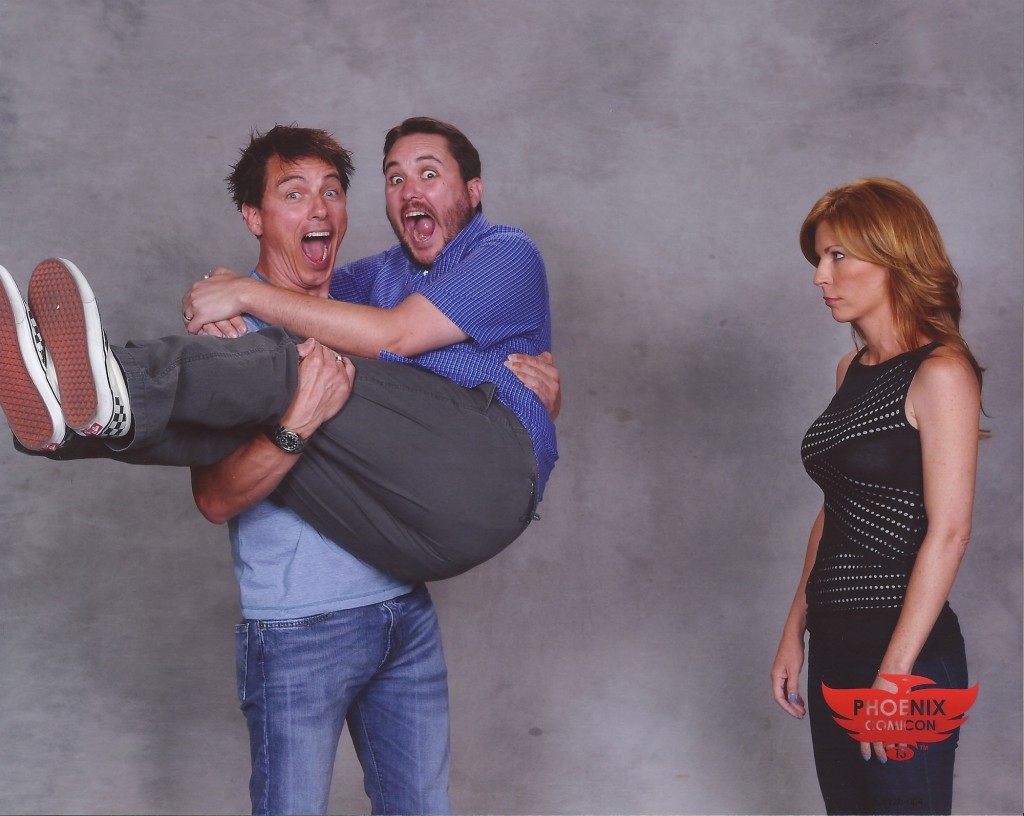
Why is that man holding Will Wheaton?
Why not?
Things can also take a turn for the worse when fans want to take pictures or get a hug. Some celebs are completely cool with it. Adam Baldwin reached out and gave me the most welcoming hand shake I think I’ve ever had and was more than willing to take some pictures with people. Some, like Will Wheaton, are famous for their amazing interactions with fan. Others, typically with older, more well-known names, are more reserved and are not comfortable with these kinds of things. Sometimes it is because they want you to pay for a picture with them, and sometimes it’s because they just want a little more personal space. It’s important to respect their requests and not get pushy. Typically, if there are rules such as no pictures, there will be signs posted around the person or a handler who is walking up and down the line making it clear to the people waiting.
In my own experience, the best way to prevent going too far is to fall slightly on the conservative side of interaction. This is not to say that you can’t talk to celebrities, but always try to hold a little in reserve. If you’re having a great conversation with the person, then by all means, tell them how much you love their work. It’s ok to let them know how much you enjoyed what they do, but just keep it reasonable and under control. If celebrities didn’t want to interact with their fans, then they wouldn’t go to conventions and other places we gather. I’ve lost track of the number of interviews I’ve seen where some actor says how blown away they are by the amount of fan love they have received, especially if this is their first event. We geeks can be a wonderful people to those we choose to embrace; we just need to make sure we maintain some level of composure. If we do that, we ensure a good time is had by all.




 Therefore I Geek