Author Archives: Andrew Hales

Winning Science November 20, 2013

First up this week, NASA has discovered life! Rather unfortunately for them, it’s in their clean rooms. The same bacteria was also found two years earlier in a European Space Agency clean room. This new strain of bacteria is capable of surviving the multiple sterilization methods used by NASA and most other space-faring nations. Not only is this stuff sturdy, it is so different from anything else ever seen that it justifies giving it a completely new genus, not just determining it to be a new species.

nasa_logo

At least NASA is finding new life forms, even if it is in their clean rooms. Maybe we should just move the clean rooms to Mars and claim victory.

Turns out that our primitive ancestors got around quite a bit. A mapping of ancient genomes shows that there was some cross breeding between Nethanderthals, Denisovans, and another, as of yet unidentified, primitive human ancestor. Various racial groups obtained different amounts DNA from this new source. Most groups from outside Africa have ~2%, while some of those living in Australia and New Zealand have as high as 4%.
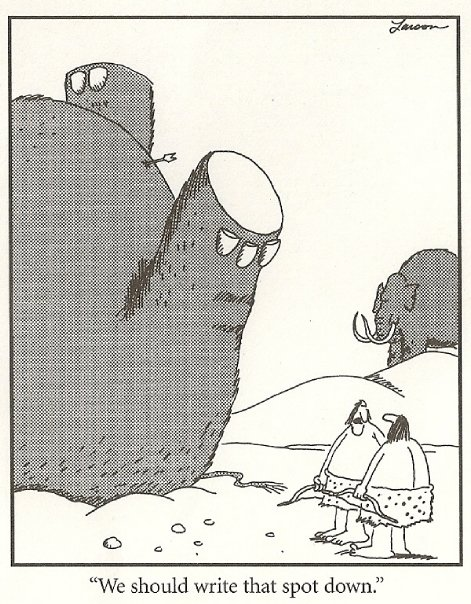
Thanks to Gary Larson this is how I always picture cavemen.

Thanks to Gary Larson this is how I always picture cavemen.

It’s a little depressing to know that my primitive ancestors were way better at picking up women than I am.

Graphene is a fantastic material that has been around for about ten years, but only recently have we begun to realize its true potential. The material is both super strong and more conductive than copper. This is one of those materials that, like plastics, has the potential to revolutionize our whole world and these are just a few possibilities.

This is just one of the things Graphene can prevent.

This is just one of the things Graphene can prevent.

My personal favorite didn’t make that particular list.

I’m a huge proponent of people taking jobs in the sciences. While everyone doesn’t need to be a scientist, I do believe that we need more people going into these fields to help propel us into the kind of future in which we all wish to live. Having said that, not all jobs in science are nice, clean jobs that only require sitting in a lab. As Popular Science shows us, there are many science jobs that are not for those with a weak stomach.

There is far too much science that revolves around poop.

There is far too much science that revolves around poop.

They’ve also thrown in a few awesome ones, just to tease us.
Leave a comment

Filed under Winning Science

What Might Have Been

There is a curse on our society.   It is a dangerous and insidious plague that works its way into the very heart of the most precious part of our lives:  our entertainment.  I am, of course, referring to DVD bonus features.  While tempting and tantalizing, they have cursed us with the knowledge of what might have been.  This extra content often reveals the director’s original vision, before things like budget and other physical constraints get in the way.  Without this knowledge, fans are more than happy with the final product, but with the additional knowledge we begin to ask ourselves how much more would we have loved what might have been.

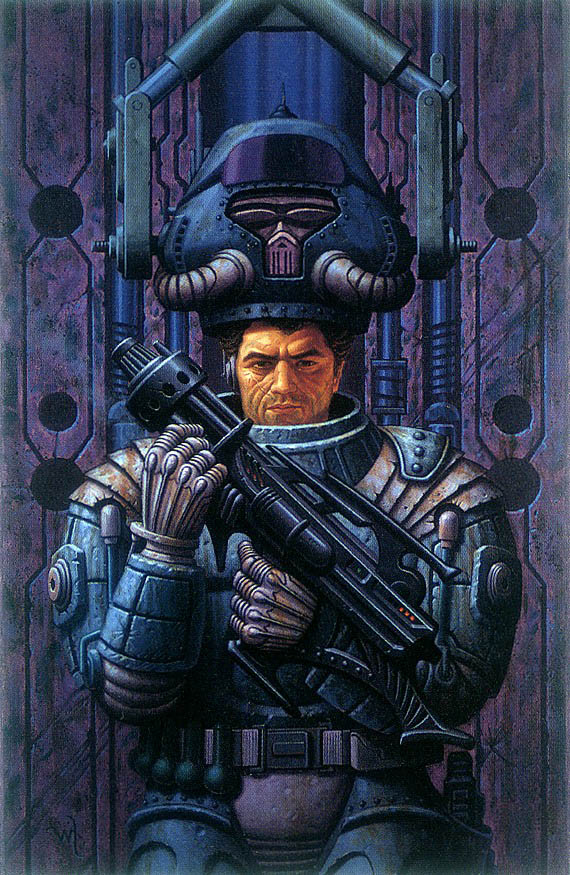
An artists vision of what Starship Trooper's power armor looks like.

An artists vision of what Starship Trooper‘s power armor looks like.

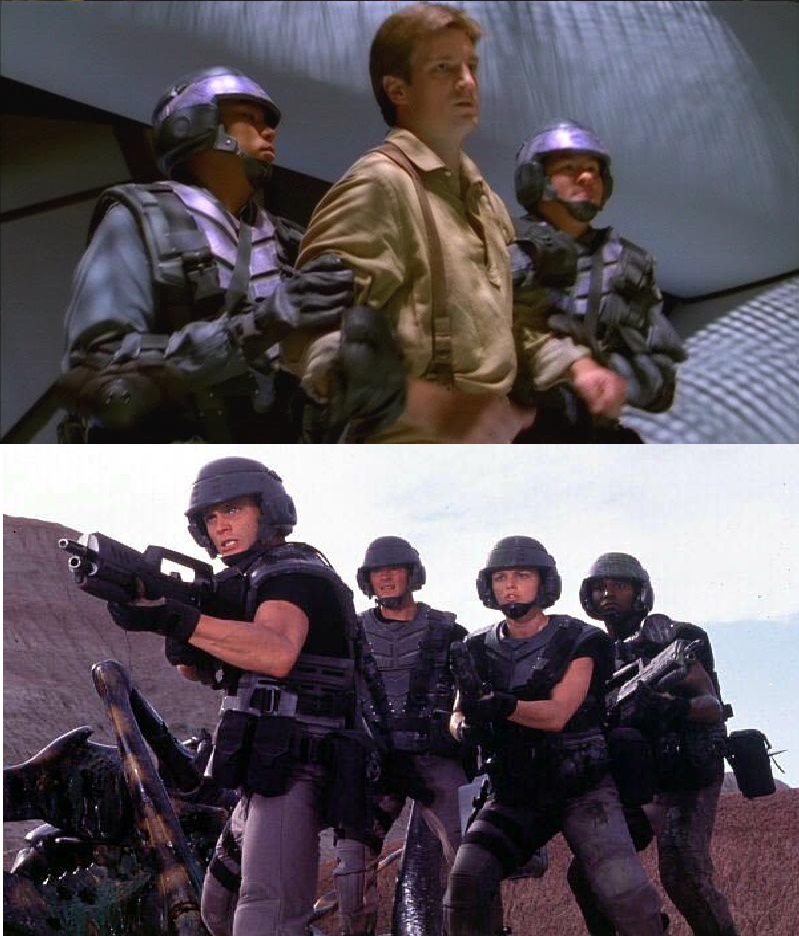
Starship Troopers is my favorite book, hands down.  I’ve read it at least a half dozen times.  Robert Heinlein crafted a fantastic science fiction universe, and the centerpiece of that universe is the Mobile Infantry, with their suits of powered armor.  These suits protect the infantrymen and provide them with enhanced strength, sensory perception, communications, and weaponry. These suits are described in the book as looking like giant, armored gorillas. Of course, this is not what appeared in the film. Instead, it was a box office disaster that didn’t have powered armor at all. That being said, the movie has some redeeming qualities as a B movie and I was willing to accept the movie for what it is—that is, until I saw the special features.  In them, director Paul Verhoeven spoke very excitedly about what he was planning to do with the suits.  Special feature interviews with Verhoeven show various concepts of what the suits might have looked like and, while they were all very different, they were all really cool looking. Instead we got really crappy body armor (This same armor made an appearance in episode two of Firefly).  Had I never seen Verhoeven’s original vision, I would have never expected anything other than the final movie version.

If you thought the armor looked familiar, you were not going crazy.

If you thought the armor looked familiar, you are not going crazy.

While Starship Troopers was an all-around disappointment, of which the armor was just one small part, J.J. Abrams’ Star Trek was an awesome film. Abrams was able to successfully reboot the franchise while still retaining the aesthetic, the positive vision of the future, the characterizations, etc. that made Star Trek so amazing in the first place.

USS_Enterprise_engineering_concept_2

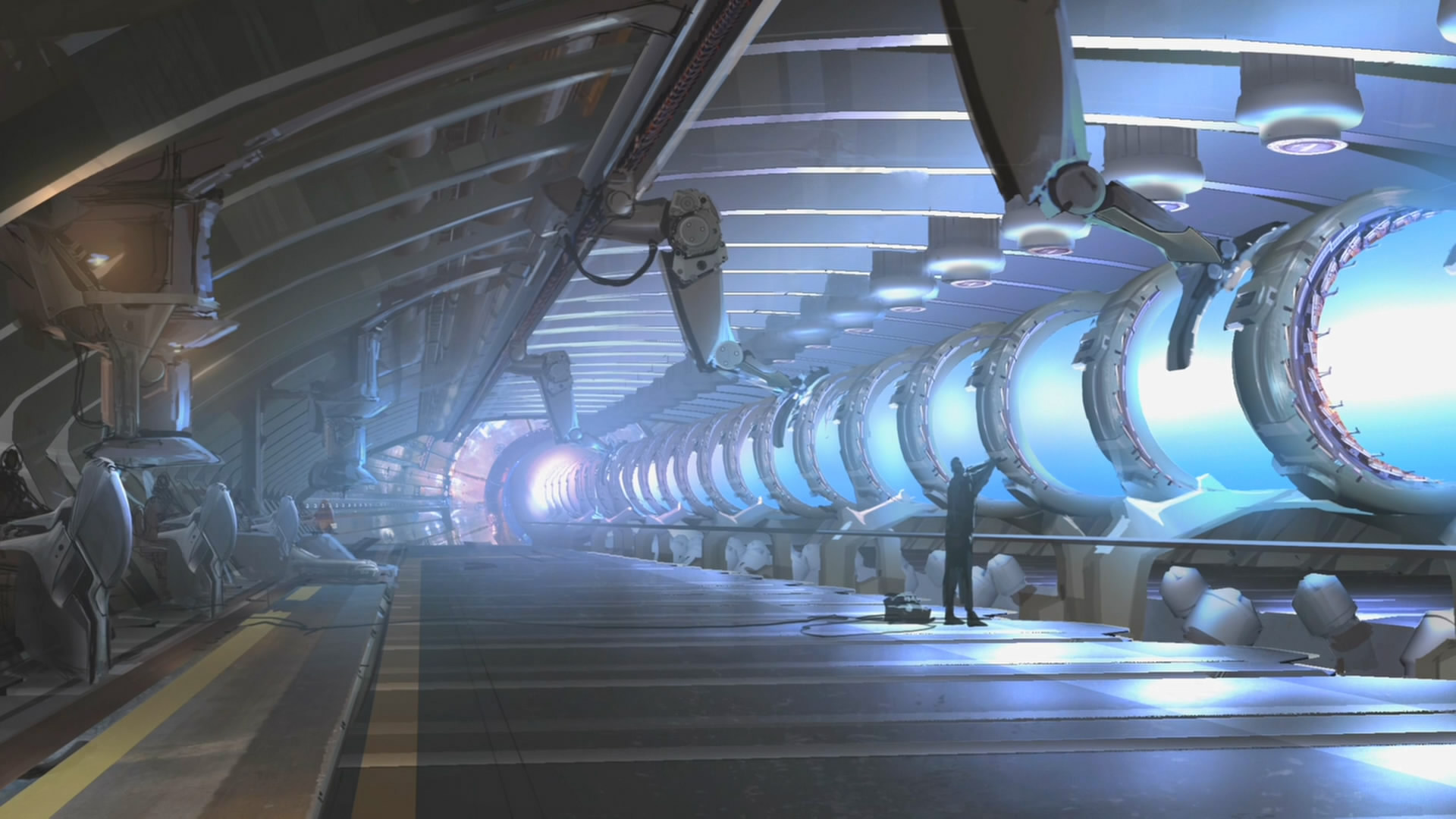
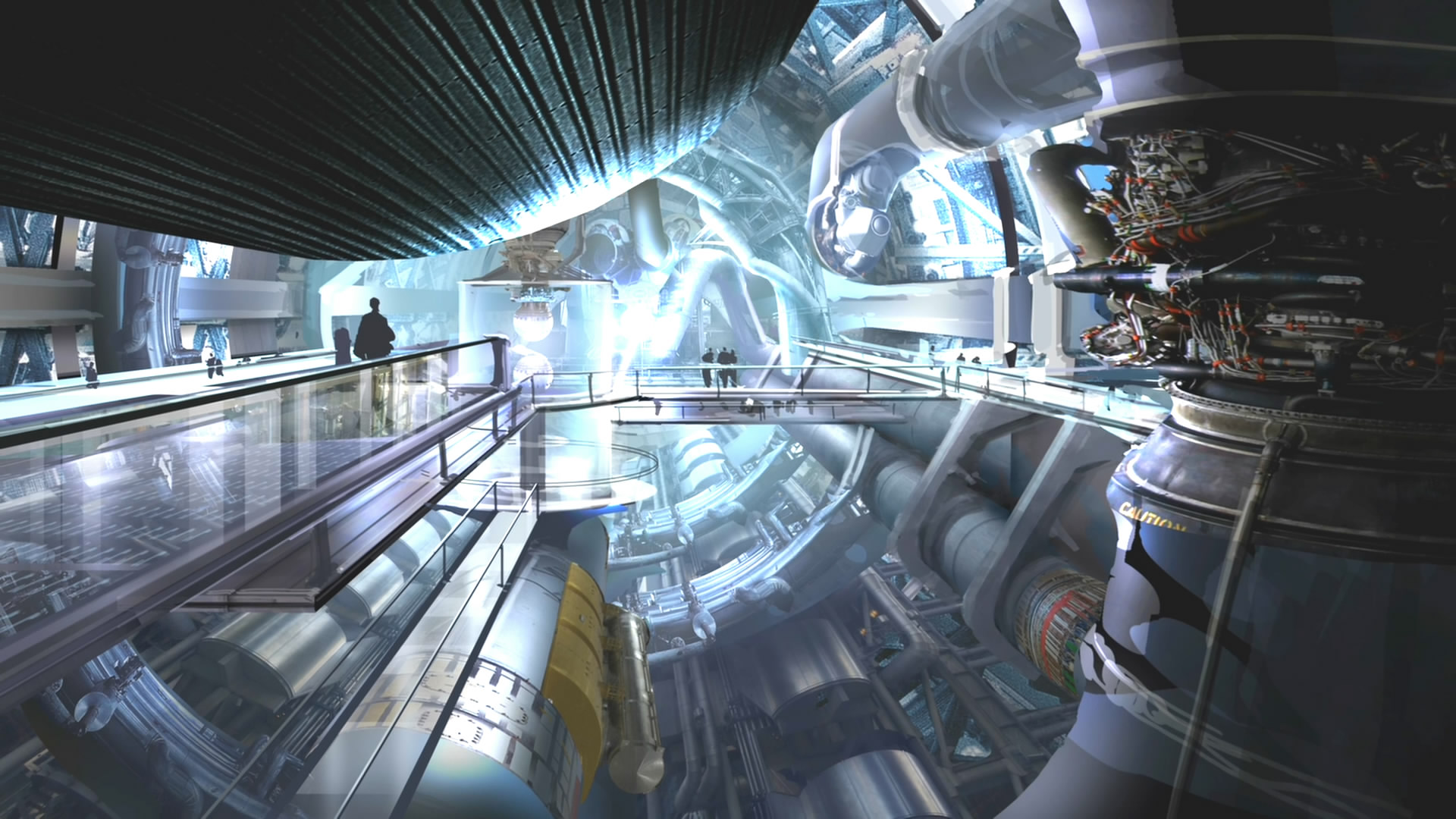
Accompanying the reboot is a refreshingly streamlined Enterprise. Everything looks so shiny and sleek. Well, almost everything. The engineering spaces are completely out of place with the new look.  They have more in common with the engine room of a modern cargo ship than with any of the previous incarnations of Star Trek engineering spaces.  I felt that this disconnect detracted from the film and for quite a while I was forced to wonder why J.J. Abrams made that particular choice. When my answer finally came, I was both pleased and disappointed.  Again, thanks to DVD special features (ok, this time it was Blu Ray) I was shown the original designs for engineering. Everything I could have hoped for, it was streamlined, and meshed perfectly with the rest of the redesign. So what the hell happened? Turns out it was the almighty dollar sign. There just wasn’t enough money in the budget to make everything happen, and since it isn’t as integral to the film, engineering was forced to take one for the team. Unfortunately, now that I have seen the concept art, I can’t help but think about what the engine room could have looked like and how cool it would have been.

USS_Enterprise_engineering_concept_1

Of course DVDs are not the only place to get these kinds of behind the scenes secrets. Thanks to the internet there is a plethora of information and it usually doesn’t take more than thirty seconds of searching on Google to find it. In recent years studios have gone so far as to release concept art well in advance of the movie’s release in order to drum up as much excitement and anticipation as possible. I’ve always thought this was tremendously risky. What if the final product doesn’t live up to the expectations of the fans? If they didn’t already have this information, they would have never known and might have been satisfied with what they actually got.

DVD special features are great. They can be lots of fun, but they also carry with them the inherent danger of ruining the final product for the fans. One must be careful not to become too fixated on those things that might have been.  Instead we should be content with what we have and leave the speculation for someone else.

Leave a comment

Filed under Andrew Hales, Movies

Editorial | Editing 101: “How to… edit without losing the writer’s voice”

In honor of the six month anniversary (birthday?) of Therefore I Geek, I would like to present some “how to” tips for editors.  I especially want to stress correcting grammar and syntax without losing the original writer’s voice.

The first time I was presented with a request for editing (it was a friend’s high school paper), I ripped into it.  With a red pen I circled phrases that I felt belonged in a different spot and drew arrows to where I thought they should go.  I struck through whole paragraphs and drew question marks over the original writing.  Ordinary punctuation and spelling errors were the fewest of my corrections.  My friend rewrote his entire paper in my image, and I thought it was good.  It was good.  He got an A.  However, the paper wasn’t actually his by that point:  it was mine.

I’ve learned, through trial and error, that there is a way to edit that doesn’t involve inserting my voice into a piece by someone else.  After all, if I had wanted to write it, I would have.  There have been moments when a writer and I have pounded our fists on the table and glared at each other in a disagreement over the best turn of phrase.  This is somewhat ridiculous, and can be easily avoided.

So how does one edit a piece to be the best it can be, without losing the author’s style?  It is always a good idea to keep in mind the overall tone of the piece of writing.  A research paper will have a very different quality from a blog post.  Blog posts are informal, and a writer can get away with a lot of casual and dialectic grammar that would otherwise meet with disapproval.

The editing process starts with a basic edit for simple grammar changes.  Then, a thorough read-through will make the areas which need work clear.  Sometimes, sentences sound too similar, and need to be re-worded.  Rather than changing the sound of the sentence, it is better to simply rearrange the author’s words to give the sentence a different cadence.  For instance, if there have been several sentences in a row that begin with a counter-factual clause and end with a factual one, switch the two.

Example:  It is easy to believe that an editor should insert their own style into a sentence, but it is preferable to leave the author’s choice of words intact.

Corrected:  It is preferable to leave the author’s choice of words intact, even though editors may find it easier to insert their own style into the sentence.

This does not mean that it is wrong to cut out redundant sentences, or to consolidate multiple weak sentences into one strong, cohesive sentence.  It is merely important that the author not get lost in the editing.

Next, it is a good idea to check for weak wording.  Many writers are trying get the thoughts in their heads down on paper as quickly as possible.  If they cannot think of the correct noun or verb, it is easier to just use banal phrases as place holders, so they can move on to the next thought before it is lost.  A good editor will point these out to the author for replacement.  Over the course of their relationship, the editor may know the correct word, and simply replace it in the sentence and move on.  If the entire phrase or sentence is trite, however, it may be in the best interests of having a singly voiced piece to just mark the phrase as awkward, or needing to be re-written.  The author can then make the choice of wording.

Sometimes the best advice that an editor can give to the writer is to erase what he’s written and start again.  If the editor is confused, the audience will also be confused.  I’ve often found, under these circumstances, that I can work with the writer to improve whole pages.  When we work together, it is more likely that the writer’s work will sound like it belongs to him, and not to me.

A good working relationship between a writer and an editor means that the writer’s voice is not lost during the editing process.  As the great poet Anonymous once said, “There is no such thing as good writing, only good re-writing.”

4 Comments

Filed under Editing 101, Editorial, Tracy Gronewold

Around the Web November 15, 2013

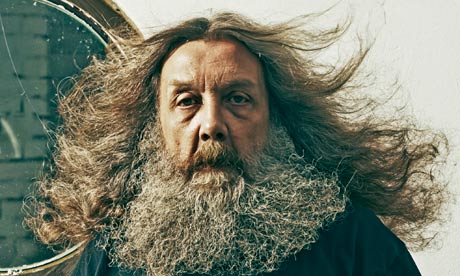
This coming Monday is legendary comic writer Alan Moore’s 60th birthday.  The outspoken Moore is arguably the most influential comic writer of the last thirty years (if not longer).  His most famous work, Watchmen, made Time Magazine‘s list of the 100 greatest novels. Please note that this list is not for graphic novels, but NOVELS.  That means it’s on the same list as To Kill a Mockingbird, Lord of the Rings, The Great Gatsby, and 1984, among many others.  Alan Moore has also had a considerable number of his works made into films (Watchmen, From Hell, League of Extraordinary Gentlemen).

Alan Moore

In early celebration of Mr. Moore’s milestone birthday, we would like to share a magical journey with Mikey Mason and Alan’s most distinctive facial feature, his beard.

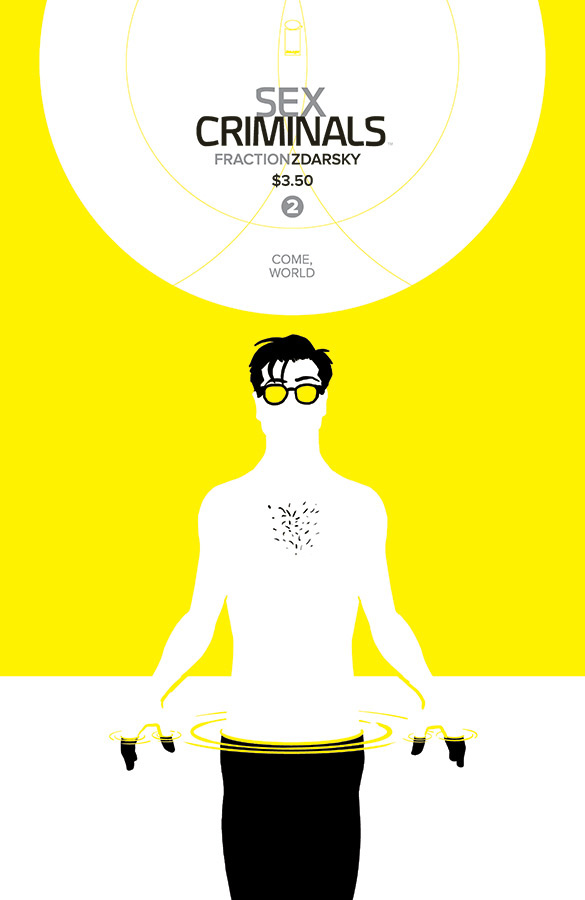
In further comic news, Apple has decided to pull Matt Fraction’s Sex Criminals from the iOS Marketplace. It’s not at all surprising that Apple has chosen not to allow issue three after choosing not to sell issue two, but what is surprising, and more than a little concerning is their decision to pull issue one from the market a full two months after it was released.  Apple is known for being exceptionally tight-lipped about how they determine what content is suitable. While no one questions whether Apple should be free to make any policy they want regarding what is sold through their apps, there is a concern that their policy is becoming de facto censorship. Without clear definitions of what is or is not disqualifying, it is up to someone at Apple, instead of the consumer, to determine whether something is offensive.

sexcrim2-cov

After the final vestiges of the Comic Code were officially reversed two years ago, it would be a real shame to see retailers setting up their own private versions of the Code.

Leave a comment

Filed under Around the Web