Author Archives: Andrew Hales

Science Fiction Comics

Science fiction is, of course, a staple of geek culture and always has been, as has comic books. While these two have had a long and intertwined history, up until recently there had been a rather significant lack in quality science fiction comics. Thankfully in the last two years there has been a considerable resurgence in science fiction comics. Given all of these new choices, I’ve decided to go over a few of my personal favorites and some of the newest additions to my weekly pull.
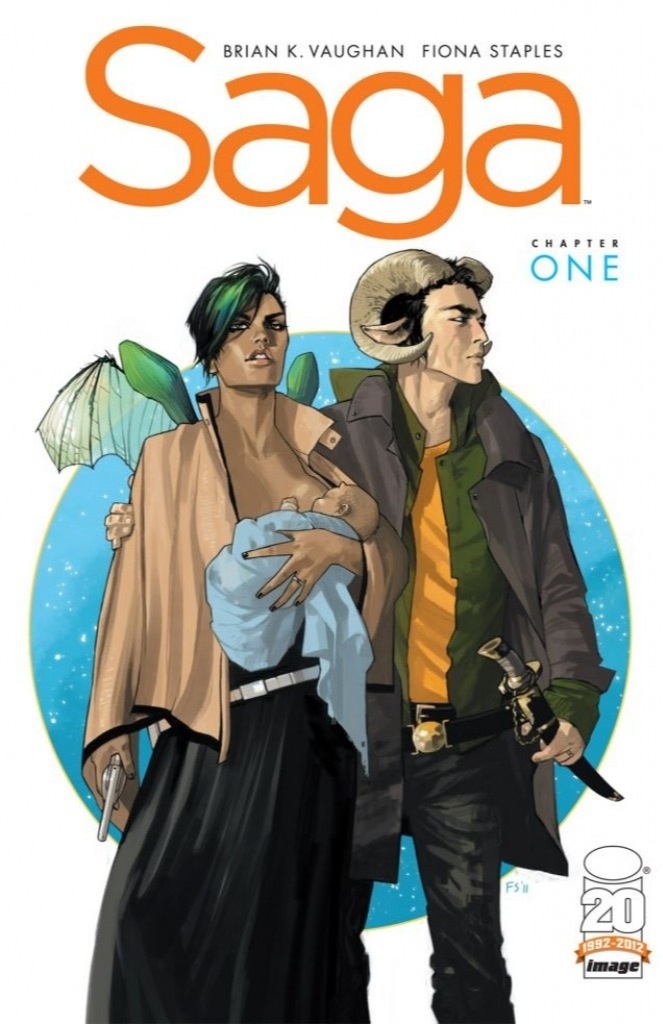
20131219-232534.jpgSaga – Brian K. Vaughan and Fiona Staples

I’ve decided to start with Saga because every week it comes out, it’s the first book I read. Saga is an amazing space epic, but unlike most epics, it is character driven instead of focused on the events that happen around the characters. It’s a sort of modern Romeo and Juliet, with two star-crossed lovers from opposite sides of a generations long war; only they don’t commit suicide, they kick ass instead. I honestly have absolutely no idea where the book is going, both on the large scale and from issue to issue, and I don’t care. I am along for the ride, no matter where it takes me. Vaughan’s writing is fantastic and when paired with art by Staples it becomes something truly unbelievable.
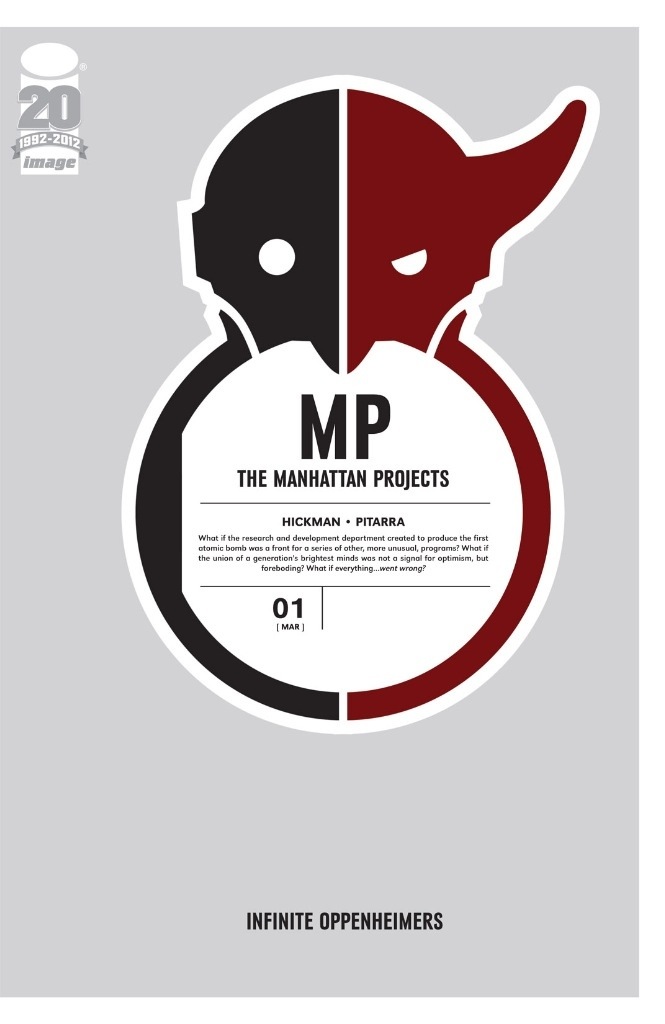
20131219-232528.jpgManhattan Projects – Johnathan Hickman and Nick Pitarra

Imagine that the super-secret Manhattan Project was itself a cover for an even more super-secret science program. That’s the basic plot of Manhattan Projects, but there is far more to it than that. Anyone who is familiar with the real life Manhattan Project will recognize the cast of characters including Robert Oppenheimer, General Leslie Groves, Richard Feynman, and Enrico Fermi among others. That’s about where the similarities end though and Hickman takes characters and events to ever increasingly insane places. There is a lot of fantastic character work and a wonderful subtlety to the art that gives this book an unexpected depth.
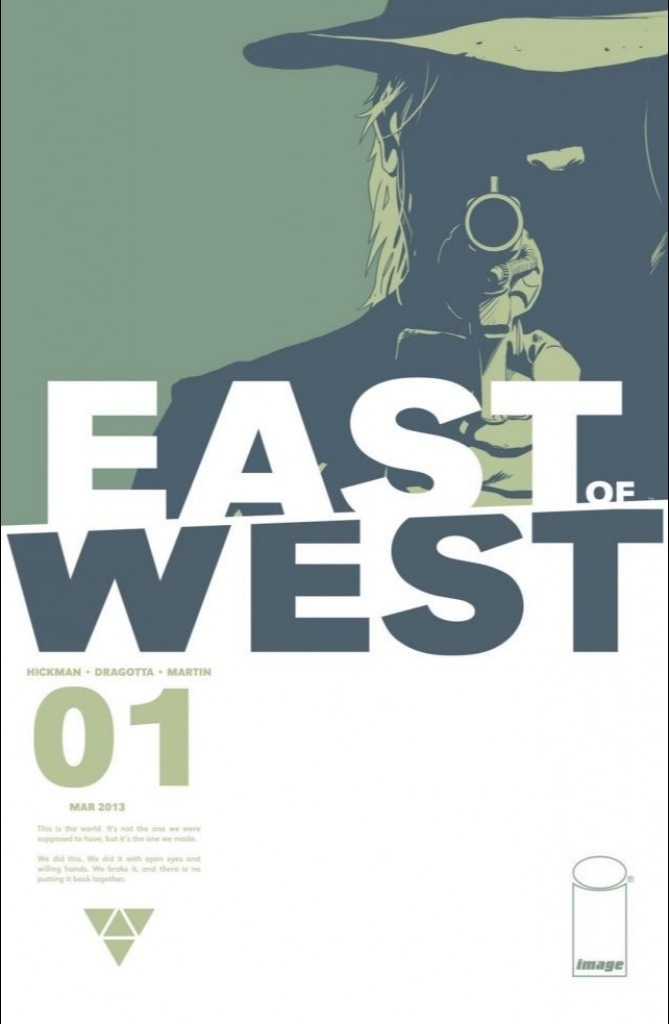
20131219-232523.jpgEast of West – Johnathan Hickman and Nick Dragotta

Where Manhattan Projects is crazy and filled with very weird characters, East of West is much more cerebral, in similar fashion to his current work on Avengers/New Avengers and his previous creator owned work. East of West is set in a near future, alternate reality where the United States has splintered into several different countries with competing ideologies. The political systems only provide a back drop for the larger story, one of the Biblical Four Horseman, Death, has abandoned the other three and now they have begun to hurt him down, to unknown ends. I like this book because it is similar enough to the work Hickman has done in the past, yet the plot remains novel. There have been several interesting plot twists that have made the month between issues seem very long indeed. Dragotta’s art is very clean with some hints of manga influence.
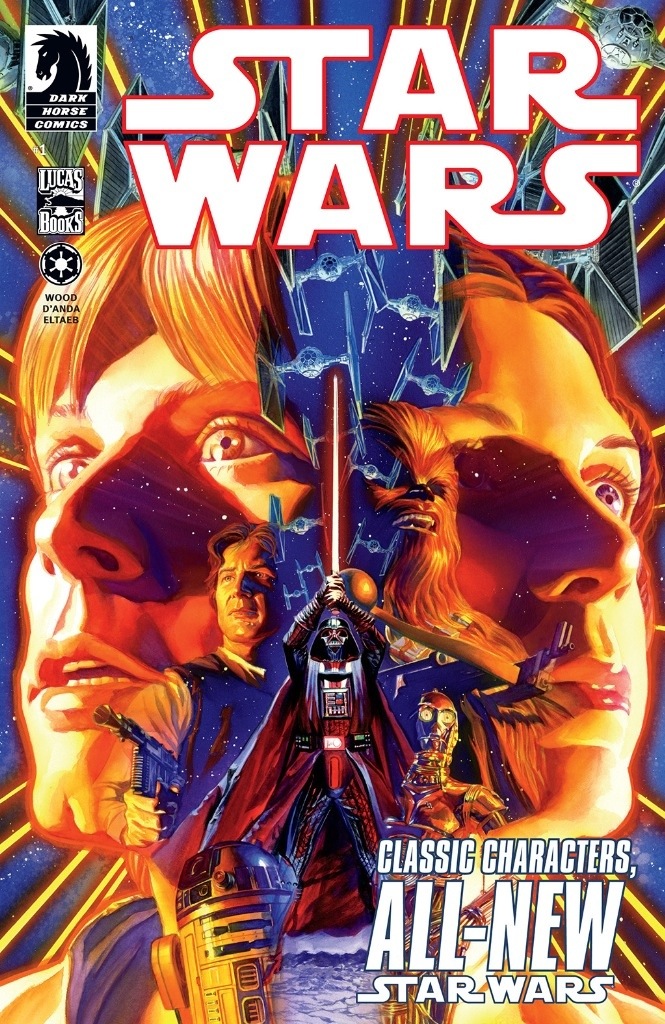
20131219-232512.jpgStar Wars – Brian Wood and Carlos D’Anda

I love Star Wars, especially the original trilogy, and this book hits my Star Wars sweet spot. Set between A New Hope and Empire Strikes Back readers follow all of the familiar heroes as they search for a new home for the Rebel Alliance. Brian Wood has a great sense of who Han, Luke, and Leia are, and it feels like a perfect continuation of the films—only with better dialogue.  D’Anda’s art is perfect for this book. Not only is he capable of clear and exciting action sequences, but he also makes the heroes look just enough like their actors that you know precisely who is whom, but not so much that it looks like he just traced pictures of them.
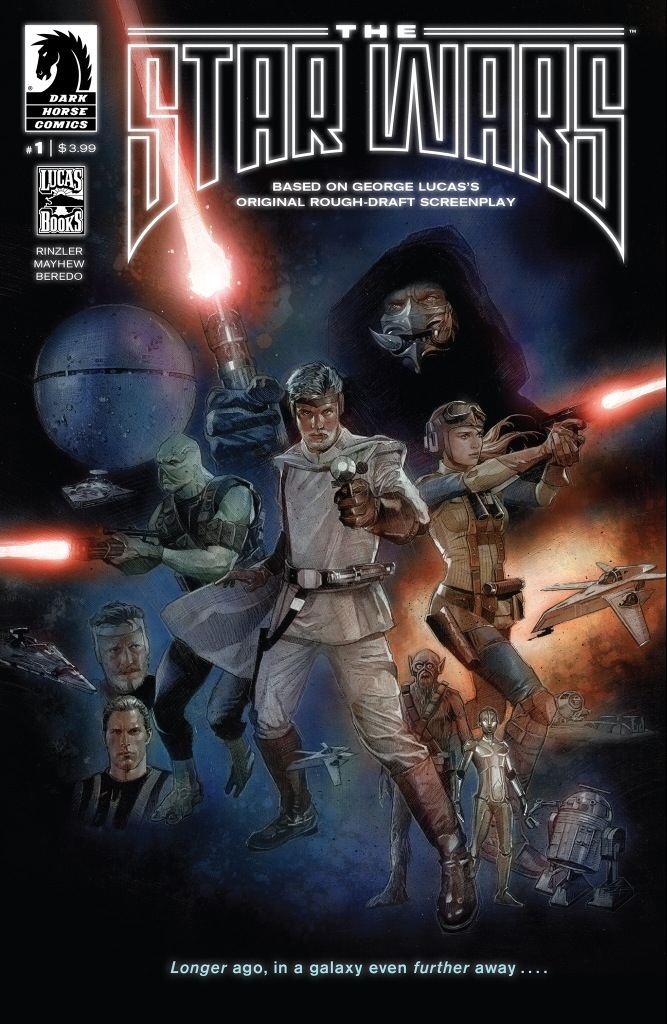
20131219-232518.jpgThe Star Wars – Johnathan Rinzler and Mike Mayhew

Yes, this is a different book than Star Wars. This book is based on George Lucas’ original draft of Star Wars and it has been quite a treat. The Star Wars is full of familiar names and places, but they all apply to different things. It’s like the entire Star Wars universe has been turned on its head and shaken around a bit. Now to be honest, I don’t want this book to last forever and I’m looking forward to seeing the conclusion to the story (though I sense it is still a ways off). What makes this book great is that I never know what part of the Star Wars I know and love is going to show up somewhere unexpected. It’s also pretty crazy to think that this is where Star Wars started.
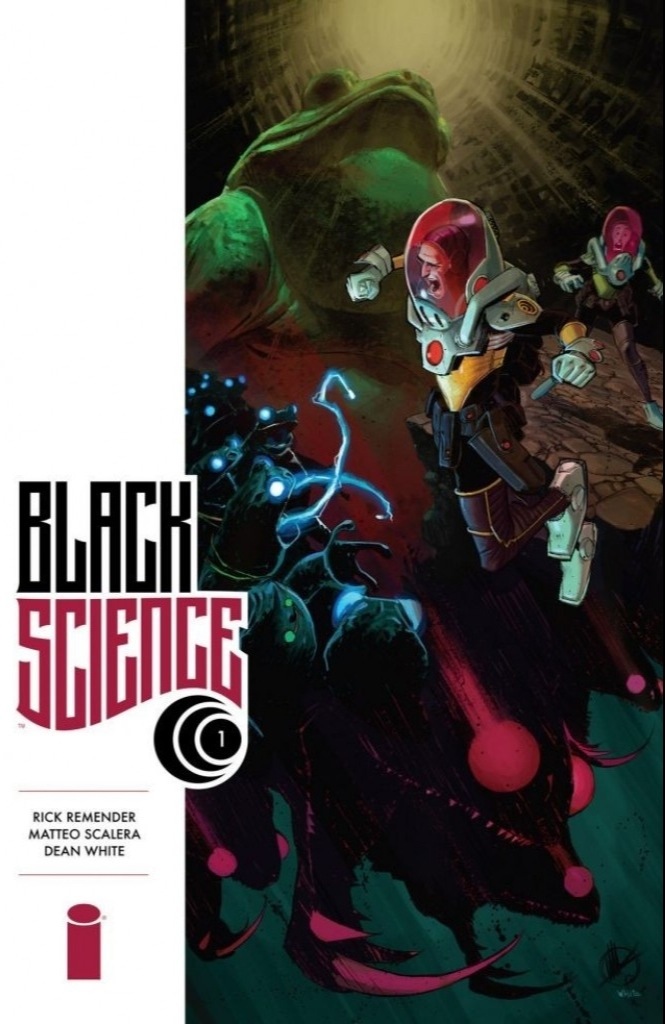
20131219-232538.jpgBlack Science – Rick Remender and Matteo Scalera

This is the newest addition to my pull list and truth be told I’m not 100% sold on it yet. Only being on issue two however, I’m not rushing to judgment just yet.  I am huge fan of Fear Agent, so I’m willing to give Remender the benefit of the doubt and stick this out at least through the first story arc. Black Science follows a group of scientists who have broken through reality into the chaos that lies beyond. Of course what they find there isn’t very nice, and just like black magic in fantasy, this black science makes things go awry. The art is strong with the exception that at times it was difficult to tell female characters apart, though once I get to know them better I suspect that problem will fade. Stay tuned for the inevitable update.

So these are the sci-fi books that I’m currently reading. They are not all the books I read with sci-fi elements and it is certainly not every book that exists (I just don’t have the money…/sad face), but they are the ones I consider pure science fiction. But enough about me, we want to hear about you. What books are you reading? Tell us about your favorites and maybe those that you’re not so fond of and of course, why.

1 Comment

Filed under Andrew Hales, Comics

Winning Science December 18, 2013

At the University of Cambridge in England, British scientists have printed eye cells. Yes, that’s right, printed. These scientists were able to make two types of eye cells from rats. The next step is to attempt to make a photoreceptor cell that will translate light into signals that are understood by the brain. This type of research will hopefully lead to a cure for many forms of blindness, specifically those that are the result of diseases which cause loss of nerve cells.

An-Eye

I am constantly and pleasantly surprised by the new advances in medical technology.

New research from Oregon Health and Science University suggests that alcohol, when consumed in moderation, can actually increase your immune system. While several other studies have demonstrated other benefits of moderate drinking, this is the first to show the effects on the immune system. Alcohol was made free available to monkeys, and just like people they drank in various amounts. At various times during the fourteen month study the monkeys were given vaccinations and those monkeys who had an average blood alcohol content of 0.02-0.04 had a higher immune response to the vaccination. Not surprising however is that monkeys with a blood alcohol of 0.08, the legal limit in humans for driving, showed a significant decrease in immune response.

Shutterstock-monkey-drinking

With fourteen months of drunken monkeys, where are all the YouTube videos?

Wired provides us with a really informative and interesting opinion piece from Thad Starner, a lead working on Google Glass. Starner has been working on wearable technology since the mid 90’s and some of his goals with Google Glass are quite surprising. The most interesting to me was the fact that this kind of technology is actually designed to increase human to human interaction. The idea is to make the technology more rapidly available in order to reduce the interference that comes from using the technology. It takes on average twenty seconds for someone to pull out their phone and unlock it before they can even look at whatever it is they pulled the phone out for in the first place. Google Glass aims to reduce this to just a couple seconds. They’ve also designed the display to be out of a persons normal eye line so that it won’t interfere with people look at one another.

google-glass1

Now I really want to give Google Glass a test drive.

Leave a comment

Filed under Winning Science

Review: The Hobbit: The Desolation of Smaug

***** SPOILER ALERT *****

This review will be discussing plot points which may be considered spoilers. Consider yourselves warned.

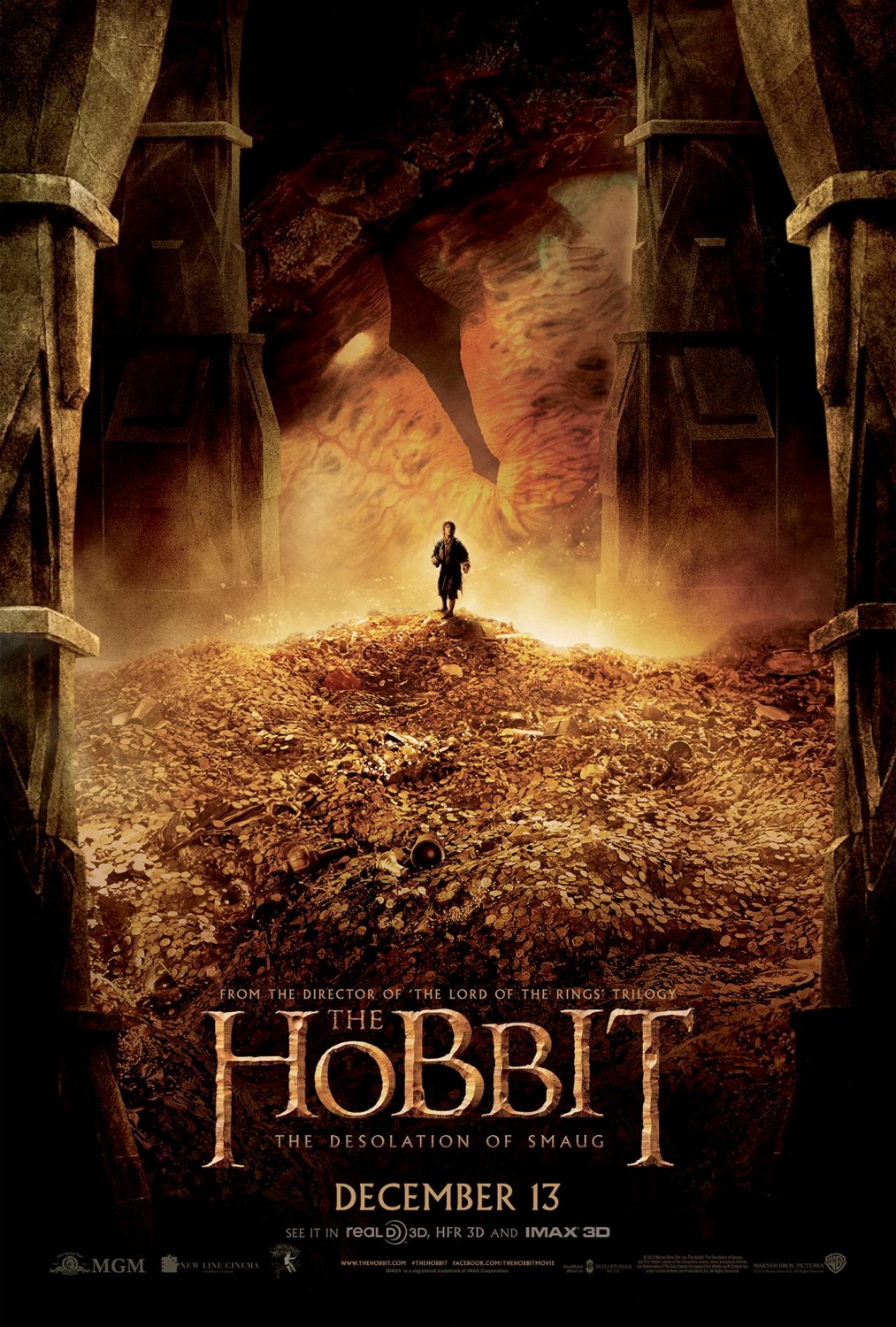
hobbit_the_desolation_of_smaug_ver30_xlg

As I write this review I am in the middle of a Lord of the Rings marathon. I have to admit that going to see The Hobbit: The Desolation of Smaug has put me in the mood for as much of Middle Earth as I can get my hands on. Unfortunately the reason I’m in this mood is because I’m longing for a good story from Middle Earth. As excited as I was for this movie, I afraid that it leaves much to be desired.

After an enjoyable introductory scene, much like those in Lord of the Rings, The Desolation of Smaug picks up just as Bilbo and the dwarves begin their passage into Mirkwood. I was pretty pleased with this portion of the film, but I just felt that it was over far too quickly. Several chapters of the book were dedicated to Mirkwood, and only around twenty or thirty minutes of the film were spent there. While the film portrays the confusion that the company feels admirably, it sets in far too quickly and then is resolved rather abruptly. This demonstrates the major flaw in the movie:  timing.  When these films were first announced, there were only supposed to be two films, but a third was added later. Regularly throughout The Desolation of Smaug some scenes which are canon from the books are compacted in order to make room from extra stuff, often to the movie’s detriment.

Now it’s pretty well known that I am a fanboy and that Lord of the Rings falls into the long list of things I love. Despite this love I am not a purist, which is to say I understand when changes must be made in order to actually make the film.  Some of this extra material I enjoyed—especially the parts which come from appendixes or other material from J.R.R. Tolkien. Watching Gandalf investigate and then confront the necromancer in Dol Guldur was great. This provides some great moments that really place The Hobbit in context. While the story is primarily about the dwarves’ return to Erebor, it is also the build up to Lord of the Rings, and there are scenes that allow us to see all the pieces moving into place.  My issue is that these changes come at the expense of the real story. Scenes from the book were compressed in order to make room for this extra material.

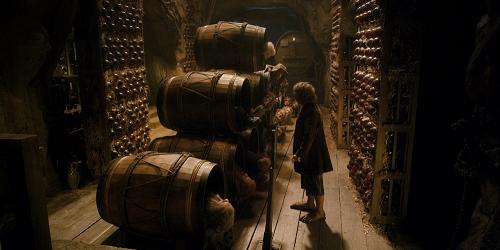
Shortly Bilbo will realize that there is a hole in his plan.

Shortly Bilbo will realize that there is a hole in his plan.

In other places, scenes were extended considerably. The prime example of this was the dwarves’ escape by barrel. There was a good long chase scene down the river that involved the dwarves getting away first from the wood elves and then from the same orc band that has been chasing them through most of the movie. Although an important scene in the book, and one that I have always felt was among Tolkien’s most clever, it was a relatively short part. Not only was this scene extended in the movie, parts of it became more than a little ridiculous. At one point the barrel carrying Bombur managed to get tossed out of the river and rolled down the river bank, taking out dozens of orcs in the process.  Then Bombur proceeds to pop his arms out of the barrel and take on several more orcs before jumping back into the river. Further on, Legolas rides down the river standing on the heads of two dwarves, all the while, shooting down orcs. This whole sequence becomes rather disappointing because of this outrageousness.

Still other portions are purely fictitious. The inclusion of the female elf Tauriel has no basis in the books. Her character was included almost exclusively to include additional female cast members, which is a questionable reason at best. I honestly didn’t mind her character, aside from the fact that she was obviously not part of the original book and therefore all her scenes seemed like someone trying to mimic Tolkien’s style. Tauriel also plays a part in the most egregious portion of the movie. During the barrel escape, Kili is shot in the leg by an orc and is eventually left behind in Laketown, along with three other dwarves, when the company proceeds on to Erebor. This whole plot point was completely unnecessary and only underscores the fact that the third movie should never have been added. If there were only two movies, filler material like this wouldn’t be needed and they would have been able to stick to the fantastic story that already existed.

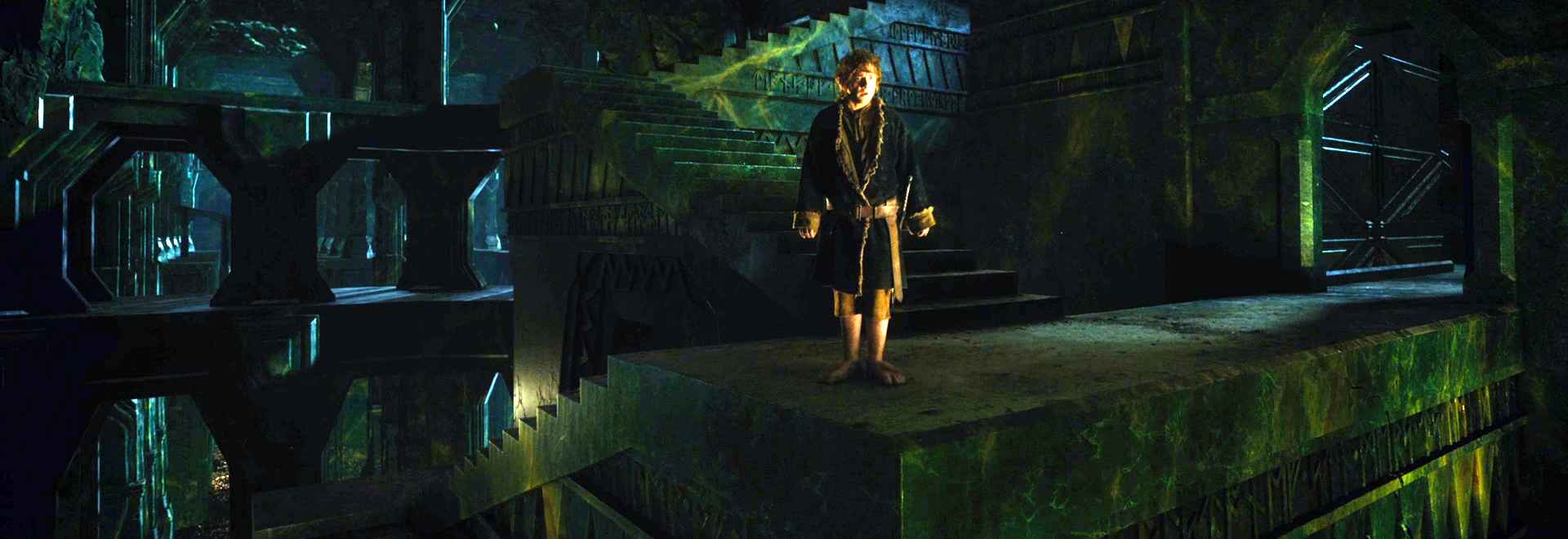
One of many great Erebor interior shots.

One of many great Erebor interior shots.

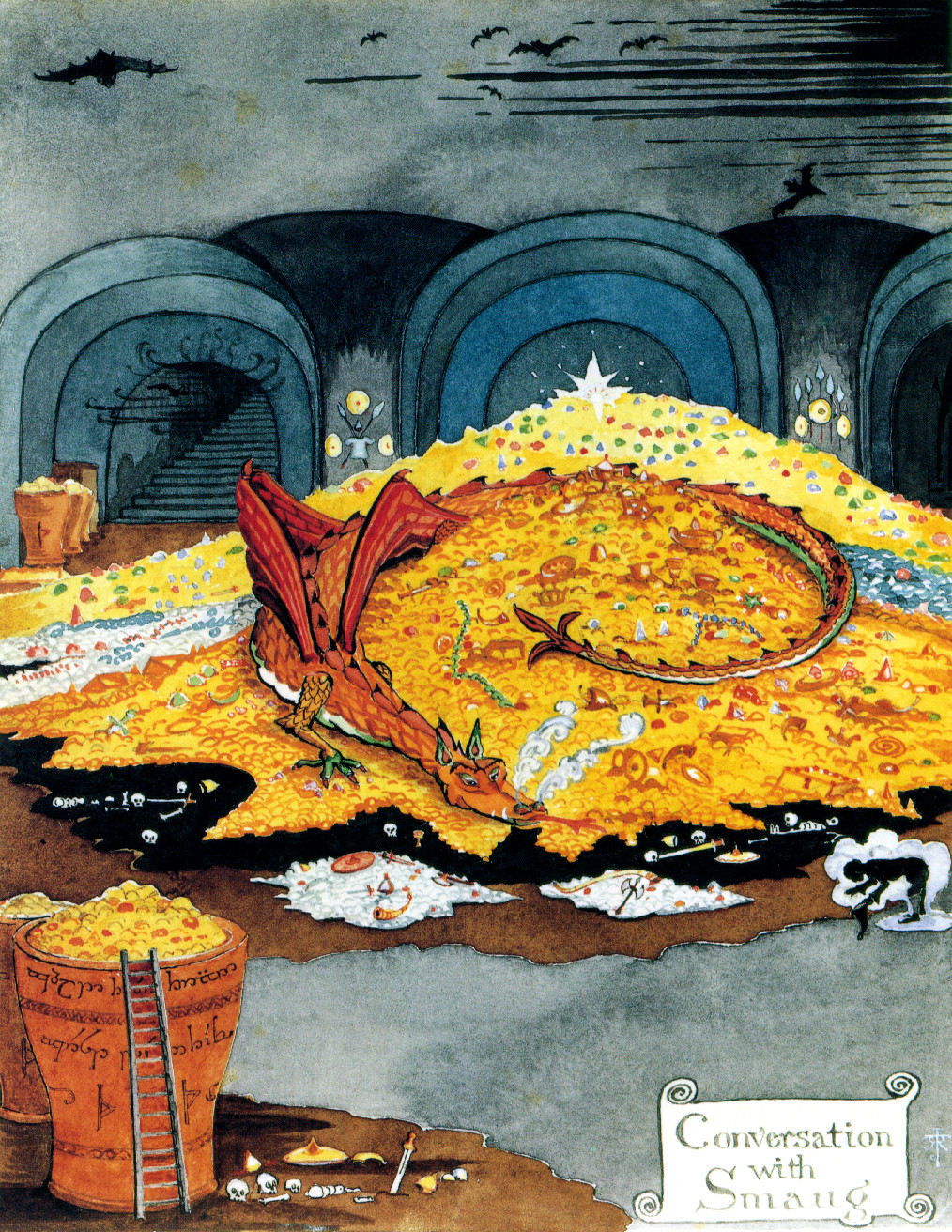
After all of that, it probably sounds like I hated the movie, and that just isn’t the case. For one, the movie looked absolutely amazing. From the halls of the Thranduil to the Lonely Mountain, the entire movie was a visual treat. I’m especially fond of the dwarven style. It all looks very angular but refined and elegant in its own way. Unlike the orcs who are angular in a jagged and chaotic way, dwarf creations show considerable thought and skill. Beyond the look of the dwarves is of course their grand nemesis, Smaug. I could not be more pleased with the way Smaug turned out. It’s obvious that the Peter Jackson drew upon available sources and previous artist renditions of Smaug when creating the visual for the character. Especially when compared to Bilbo, Smaug appears as more a force of nature than a fellow cast member. The dragon is absolutely enormous and terrifying. Jackson must be a firm believer in “Go big or go home” because the movie makers went all out on Smaug.

This is the image of Smaug I always think of, and it was pretty spot on, aside from relative size.

This is the image of Smaug I always think of, and it was pretty spot on, aside from relative size.

In no way, shape, or form do I regret seeing The Hobbit: The Desolation of Smaug, but I do think that there was plenty of room for improvement. The film suffered from being stretched too thin when it came to source material (like butter over too much bread), though when they stuck to the original content the movie was at its strongest. While not the movie I was hoping for, I am still excited to see the ending of the trilogy next year. Three out of five Death Stars.

3 Death Stars

3 Comments

Filed under Andrew Hales, Movie Reviews, Movies

Editorial | Editing 101: “How to… Avoid Pissing off the Writer”

As an editor, one of the scariest things I have to do is… edit someone else’s work.  It may sound odd, because it is my job, but it is the truth.  As an editor, I’m responsible for taking the brain child of another human being, and making just enough changes so that readers can understand it, while making sure the author’s voice is never lost.

A large part of the fear comes from the fact that telling another person that their work needs improvement is never easy for either party.  It is important that I as an editor point out the flaws in writing as gently as possible.  At the same time, it is always hard for anyone to accept criticism without taking it too personally.

First of all, it is important that an editor and a writer have a good working relationship.  It is a bonus if they have a solid friendship.  Often when two stubborn people bump heads over the correct word to use in a sentence—and believe me, both writers and editors are inherently stubborn; it’s in their genetics—only a healthy relationship will allow them to back away from the situation.  This relationship also allows them to see each other as humans, and not just the faceless creator or modifier of words on a page.  Often, this relationship (and sometimes a significant distance between them) is all that will keep an editor from killing her blog writer.  Not that I speak from personal experience, of course.

Secondly, as an editor, it is important to have respect for the person whose work is being edited.  I have found that when I personally respect the person whose writing I am editing, I am much more likely to be cautious in how I approach changes.

I never tell a writer that their ideas are stupid.  As far as I am concerned, every idea is excellent—it is sometimes merely a diamond in the rough.  It may require a little cut and polish to truly shine.  Instead I find ways to point out how their ideas can be improved, or that their particular audience may not be the most appreciative of a piece of writing.

I keep my words respectful as well.  Sometimes just the choice of language in discussing someone’s work is the difference between making them angry, and actually getting a fantastic final piece of writing.

Lastly, and I have mentioned this before, it is incredibly important to retain the author’s voice in his piece.  If I think that a sentence or paragraph is awkward or unclear, I usually will just say as much to the author, and allow him or her to rewrite it in the way that seems best.  If they prefer that I give them suggestions, then I do so, but in a style as close to theirs as I can write.  This is much easier if I do have a good working relationship or a friendship with the person.

Being a good editor comes down to the attitude with which I handle the person writing the piece.  To make sure that I don’t piss off the writer, I try to establish a good relationship with him, hold him and his work in regard, and I do my best to preserve his voice within his work.

Have you ever worked with someone that you pissed off too badly to continue working together?  Let us know in the comments.

Leave a comment

Filed under Editing 101, Editorial, Tracy Gronewold