Author Archives: Andrew Hales

Confessions of a Geek: Literary Influences, Part 2

I lived a very sheltered childhood, and so books have been the staple influence in my life.  My mom read to me when I was very small (we started the Little House on the Prairie series with her reading to me, and ended them with me reading to her).  I was off and running into the wild world of books that ended up taking me all over the world and beyond it.  Some of the authors and books that have influenced me (and this is only a partial list) are below.

  • As a girl, I was obsessed with horses, and thoroughly enjoyed Marguerite Henry’s White Stallion of Lipizza and of course, Misty of Chincoteague, as well as Cinnabar, the One O’clock Fox (although this one was more about the fox than the horses).  I preferred the less well-known books.  White Stallion of Lipizza had me sitting backward on kitchen chairs for months, because that was how the Lipizzaner trainers would stretch the inside of their thighs to fit over the extra wide barrel of those gorgeous horses.
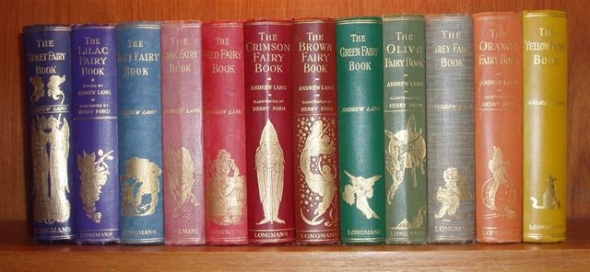
  • The Colored Fairy Books were another huge influence on me.  Andrew Lang took me all over the world, from the snowy, troll infested forests of Germany to the oyster beds off the coast of Polynesia.  I can’t wait to introduce my nephews to this series.
  • C.S. Lewis was a huge influence on me very early on in my life.  I read The Lion, the Witch, and the Wardrobe so early that I cannot remember reading it for the first time.  I lost count of my rereads at number nineteen.  I also read and enjoyed the space trilogy.  Perelandra  was a beautiful picture of an idyllic world that made me ache for a place I had never been.  That Hideous Strength was a book that I read long before I was ready.  It was terrifying, but beautifully written.  Till We Have Faces was amazing and profound.
  • I was also really interested in all of the classic authors; Dickens, Austen, and the Bronte sisters were high on my list.  Unfortunately, thanks to the Great Illustrated Classics, abridged books for children, many of these books were ruined for me.  I couldn’t even get through David Copperfield until I was in my late teens.  That abridged series taught me to loathe spoilers.  I guess the children’s versions had some influence on me as well as the original versions.
  • I continued to read books that I could technically comprehend, but was not old enough to properly digest.  I read Jane Eyre when I was fourteen, and I was not particularly impressed.  I felt that Charlotte Bronte got lost on her way to the conclusion.  On the other hand, after I read Wuthering Heights, I wandered around the house in a funk for a couple of days.
  • One of the greatest influences on my life was a series called The Young Underground, by Robert Elmer.  These books were about a young brother and sister, Peter and Elise Anderson, who smuggle underground newspapers, and later humans, in Nazi occupied Denmark.  These books influenced me, not because of their content, but because my mom used to read them to my siblings and me to keep us close as a family after she had to go back to work.

This can only be a partial list (it’s not even CLOSE to a full one), because there were so very many books that influenced me growing up.  I am happy to say that I continue to find books that change the way I see the world, so the list continues to grow. -t
6 Comments

Filed under Books, Editorial, Geek Life, Tracy Gronewold

Confessions of a Geek: Literary Influences, Part 1

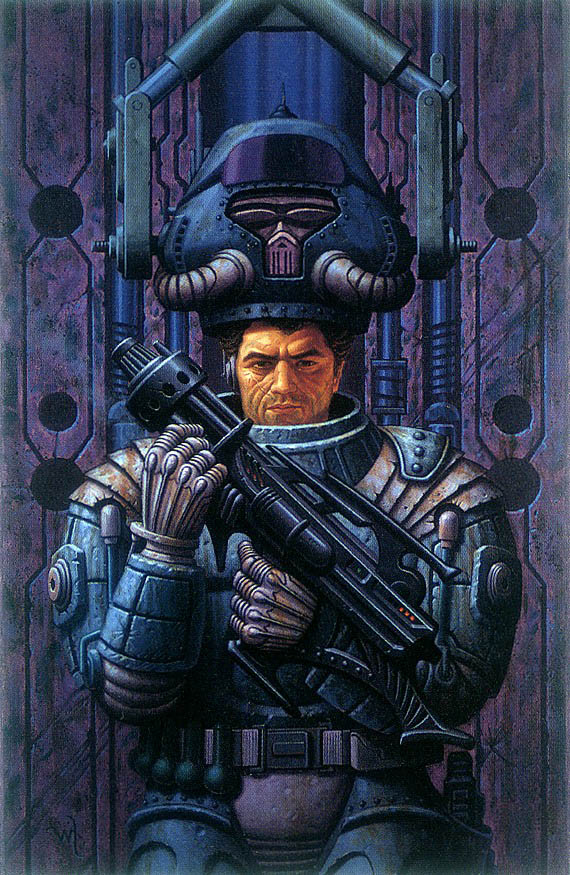
An artists vision of what Starship Trooper's power armor looks like.

An artists vision of what Starship Trooper’s power armor looks like.

A few weeks ago I was looking over a friend’s Facebook page and noticed they had posted a list of movies and/or books that had influenced them. It was a nicely mixed list and I soon found myself considering the books that had influenced me. I have decided to share with you three separate lists of books, movies and comics that have influenced me and a little of the reasoning behind why. Today we’re going to start with books, in no particular order (well, they’re in the order in which I thought of them).

  • Starship Troopers – This is one of my all-time favorite books. Robert Heinlein masterfully combines a science fiction, war story with Libertarian political views, without ever making it seem preachy.  While I don’t agree with all of the political things that Heinlein has to say, they do make for interesting thoughts and debates.
  • The Hobbit – Honestly, this almost goes without saying. Like many of my generation (and my parent’s generation) this was my first introduction to the fantasy genre.  The Hobbit really is just that, an introduction.  Tolkien gives just enough of all the various pieces to make readers want more without feeling as though they’ve been cheated.  It’s also a pretty light read, which cannot be said of The Lord of the Rings.
  • The Lion, The Witch, and The Wardrobe – Keeping with fantasy for a moment, this is the C.S Lewis classic. I first came across this book sometime around third or fourth grade (maybe earlier) and was so immediately enthralled that I read the entire thing in a single night. This was the first time that I have been so in love with a book that I physically could not put it down.
  • Fear and Loathing in Las Vegas – Anyone who has read Hunter S. Thompson knows exactly how bizarre his work can be. Underneath the layers of drug use and general weirdness in his books There is a surprisingly accurate and thoughtful look at America. I certainly don’t share Mr. Thompson’s political views, but from time to time there are things in his work that I find myself agreeing with.
  • Marvel Comics: The Untold Story – There are two things that have fueled my interest in comics history:  a panel about the history of censorship in comics at the 2012 NYCC and Marvel Comics: The Untold Story, which I also got at NYCC. This book was so good that despite being in the middle of two other books, I dropped everything else I was reading and read this as much as possible. It reads more like a novel than a history and makes the reader feel like they know all the people personally. It has also had the effect of driving me to get more books on the history of comics.
  • Horus Heresy: Horus Rising – I picked this book up on a whim in college and then spent every moment of the next three days that I was not in class (and probably somewhere I should have been in class) reading.  This series isn’t always very good, but it has reminded me that I can enjoy purely indulgent fiction. And I’ve read TWENTY-TWO of the books, so they’ve had to have some influence.
  • Complete Works of Shakespeare – This is cheating a little, I know. Shakespeare is not only one of the greatest works of literature in the world, but it has also had a considerable impact on my life.  I started reading Shakespeare in fourth grade and it opened up a whole new world of ideas to me. Back in high school I was vice-president of school’s Shakespeare Society.  Some of my favorite books and movies even now are adaptations of Shakespearean works.

To Be Continued…

4 Comments

Filed under Andrew Hales, Books, Geek Life

Editorial | Review: Battle of Britain

Today’s mobile game review is on a game called “Battle of Britain,” a shoot-em-up, fighter pilot game.  I was actually really excited when I picked this game out, because I saw it as a chance to redeem myself.  When I was very young, my brother got a really cool PC game for Christmas that involved dog fighting in WWII (the kind with US planes fighting it out with German or Japanese planes over the various theaters of World War Two, not a Michael Vick style RPG).   Every time I tried to play the game, my lack of coordination made the plane run off the end of the aircraft carrier.  I never even got airborne.  This game, I had hoped, was going to let me make up for all of that—at least in my mind.

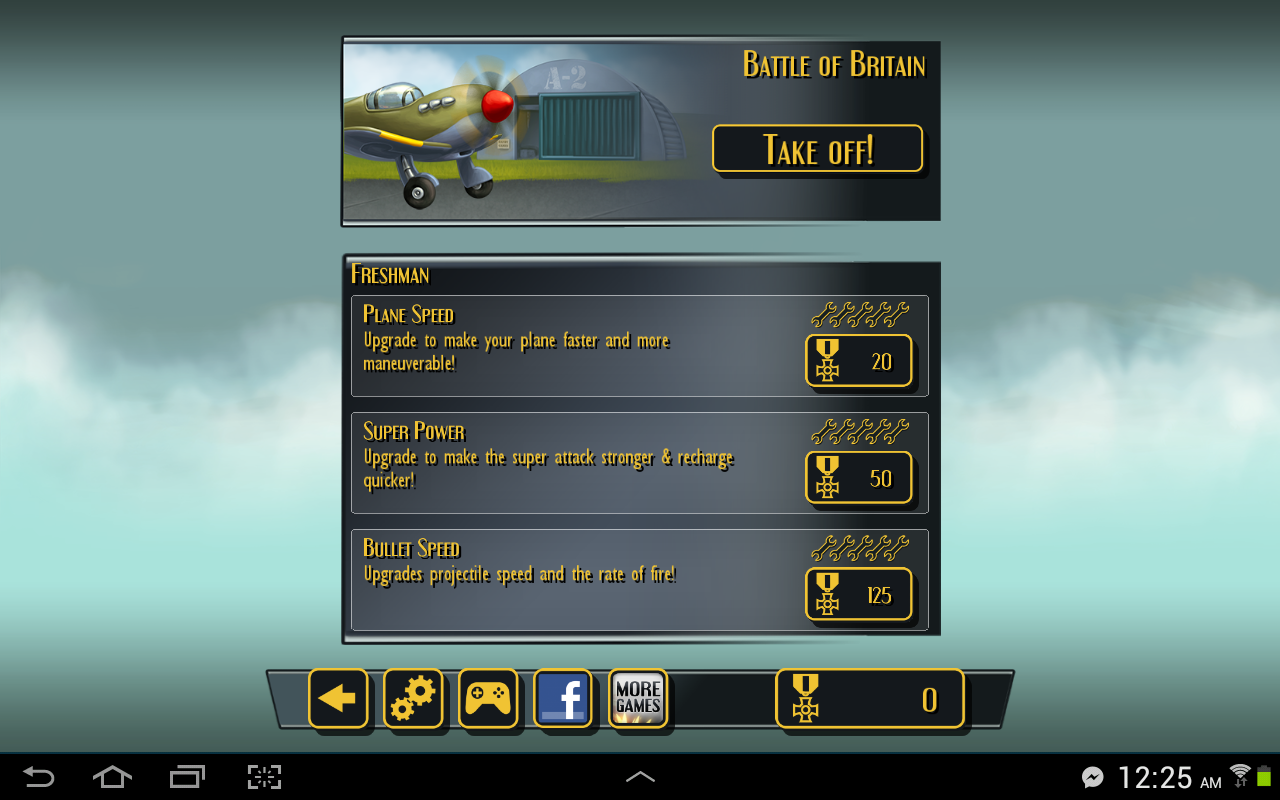
The upgrades are not that hard to get (at least at first).

The upgrades are not that hard to get (at least at first).

The good news for this game is that it is very easy.  I fired it up, and after the usual explanatory screen rolled, I saw a simple start screen that showed that all my upgradable options were at the beginner level.  I hit the button that was conveniently marked “Take Off” and the battle began.

As soon as the player touches the screen, his aircraft begins firing.  No matter where the screen is touched, the plane will fire bullets.   Apparently, ammo is unlimited, which surprised me.  Touching the plane itself on the screen and moving one’s finger around will control the movement of the plane.  The plane only moves up and down, forward and backward.  I was disappointed to see that movement was arcade style, even though my tablet lacks a joystick.

Screenshot_2014-01-06-00-29-21

The “super power” barometer at the bottom left continues to rise until it is full–then it can be pressed to give the player an extra boost.

Enemy planes enter the screen thick and fast, and have a much wider range of motion.  Each plane shot down leaves behind a medal, which is the currency for upgrades.  It does seem difficult for the player’s plane to actually be shot down, even if it actually crashes into other planes.  This got boring very quickly.

Large, enemy planes occasionally appear and require a little more effort to kill.  Once defeated, they offer various bonus packages, such as wingman fighter planes for the player, or repairs to the plane.

Screenshot_2014-01-06-00-32-21

This large plane went down and left me with a repair for my plane.

The graphics were very plain, and the color scheme was flat.  This was probably intentional to help portray a WWII game, but only further injured a game that had little to recommend it.

Overall, this game was disappointing and pretty boring.  There was very little incentive to proceed past the first level.  On the plus side, the music for the game was rousing and patriotic; but on the minus side, graphics, style of play, and actual missions were very boring.  I would give this game two and a half out of five death stars.2.5 Death Stars

1 Comment

Filed under Editorial, Game Reviews, Gaming

Geeks You Should Know: Rene Descartes

With that long hair and facial hair, Descartes is already half way to a hipster.

With that long hair and facial hair, Descartes is already halfway to a hipster.

Rene Descartes was born March 31, 1596 in France. In 1606 he began attending Jesuit College in La Fleche and studied there until 1614. His curriculum included a study of the classics, as well as current understandings of physics, metaphysics and math. From 1616 to 1618 he studied law at Poitiers, but he never made use of his law education. Shortly after graduating he became a gentleman soldier and continued to serve until 1622. Descartes started to develop his theories during his time as a soldier but didn’t given them his full attention until after his return to France. In 1637 Descartes published Discourse on the Method of Rightly Conducting the Reason and Seeking Truth in the Sciences, the work he is most well known for. Descartes died in 1650 in Sweden, where he was the personal philosophy tutor for Queen Christina.

Why we care:

Descartes is most famous for his statement “Cogito ergo sum” meaning “I think, therefore I am”. This frequently gets misunderstood to be, “I exist because I think.” This is an obvious problem given how many people that we all know who don’t think and yet still exist. What Rene was actually getting at is the idea that we exist because we believe we exist.  He brought a more scientific approach to philosophy.  The idea of leaving all accepted notions and preconceptions behind and starting from a clean slate was revolutionary. This approach earned Descartes a place as the father of modern philosophy.

What Descartes is less known for, though it may be far more important, is his introduction of analytical geometry. Anyone who has taken a high school algebra course is more than familiar with the standard x-y coordinate system. Here in the U.S. we refer to this as a Cartesian coordinate system, but it is in fact an invention of Descartes (Cartesian comes from the Latin name Descartes used, Cartesuis). This is one of the most fundamental pieces of modern mathematics and it exists thanks to Descartes.

In addition to the x-y axis, he also gave us laws of refraction, explanations for rainbows, and an account of the formation of the solar system, though he suppressed much of this theory due to the pope’s attacks on Galileo. Descartes even developed laws of motion which were a precursor to Newton’s Laws, although they failed to incorporate vector forces. Descartes managed to impact multiple branches of thought and science and his work has had a lasting impact on the world, making him a Geek to Know.

2 Comments

Filed under Geek Life, Geeks You Should Know