Tag Archives: The Hobbit

Review: The Hobbit: The Battle of Five Armies

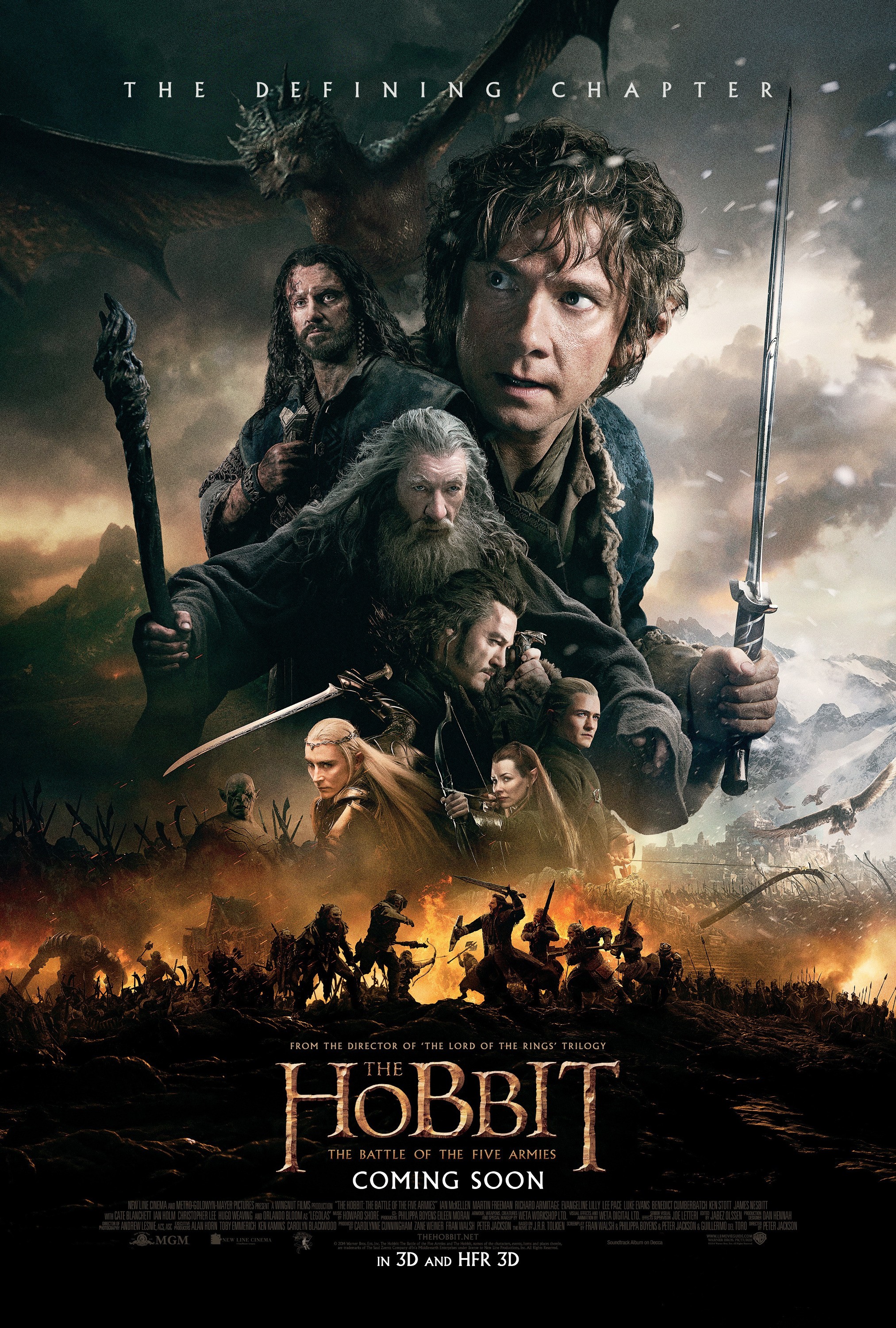
hobbit_the_battle_of_the_five_armies_FNL_poster

It’s been a while since I’ve seen a movie that is more appropriately named than The Hobbit: The Battle of Five Armies. The third installment of The Hobbit film franchise certainly beats out its most recent predecessor and is at least equal to the first film in many respects. While still suffering from some of the flaws that hurt The Hobbit: The Desolation of Smaug, The Battle of Five Armies manages to bring about a satisfactory ending to the trilogy.

The Battle of Five Armies picks up almost immediately where Desolation of Smaug leaves off. I was fairly relieved that we didn’t have to bother sitting through a history lesson at the beginning of the movie and instead jumped right into the action. I do not have an issue with the historical stuff that has been added to the movie, but it would have otherwise made the beginning rather slow. Instead the movie was off to a running start before jumping into the added material.

In general I have to say the death of Smaug was well done. As with the rest of the movie, certain creative liberties were taken, especially when it comes to dialogue, but I can live with that. The exchange between Smaug and Bard just before Bard kills Smaug is fairly standard villain monologue-ing and, while not particularly interesting, it didn’t detract from the movie. I would like to ask why the windlass wasn’t used. We saw one in Desolation of Smaug, but what the hell happened to it? If they didn’t intend to use it later in the movie, why did they show it in the first place?

One of the things that most helped The Battle of Five Armies is the fact that in many places J.R.R. Tolkien’s The Hobbit is rather light on details. Most of the battle itself takes place while Bilbo is knocked unconscious. This allows for the movie to show all kinds of things happening in the battle without running the risk of not following canon, which is what tends to anger fans most. With this kind of freedom, I have to admit, it was one impressive battle. In fact, I would have to estimate that the battle took up an hour of the movie, at least. Pretty much everything I had wanted and expected was present. There were armies of men, dwarves, elves and orcs all slugging it out on the open plains in front of the mountain and on the streets of Dale. Each of the armies seemed to take turns holding the upper hand and on more than one occasion I found myself wondering how the heroes would wind up turning the tide. Of course, since I’ve read the book, the end result was never in doubt for me, which is slightly disappointing, though I have always been one who is more interested in how a story gets where it is going than where it is going in the first place.

For the most part, the acting was on par with the previous movies. Martin Freeman does a great job as Bilbo Baggins. Freeman gives the audience some really great moments from the heart, and his Bilbo is always trying to do the right thing, even when it is extremely difficult. It is nearly impossible to find fault with Ian McKellen’s portrayal of Gandalf; the man was simply born to play that role. He is thoroughly capable of being both serious and humorous and of moving between the two rapidly as the situation requires. My favorite new addition was that of Billy Connolly as Dain, Thorin’s cousin and leader of the dwarf army. He was both tough and sassy, especially when speaking to the elven king. I had very high hopes for the dwarf army and Connolly basically filled them all. As for the rest of the cast, many of the other actors gave solid performances, though none were particularly stand out.
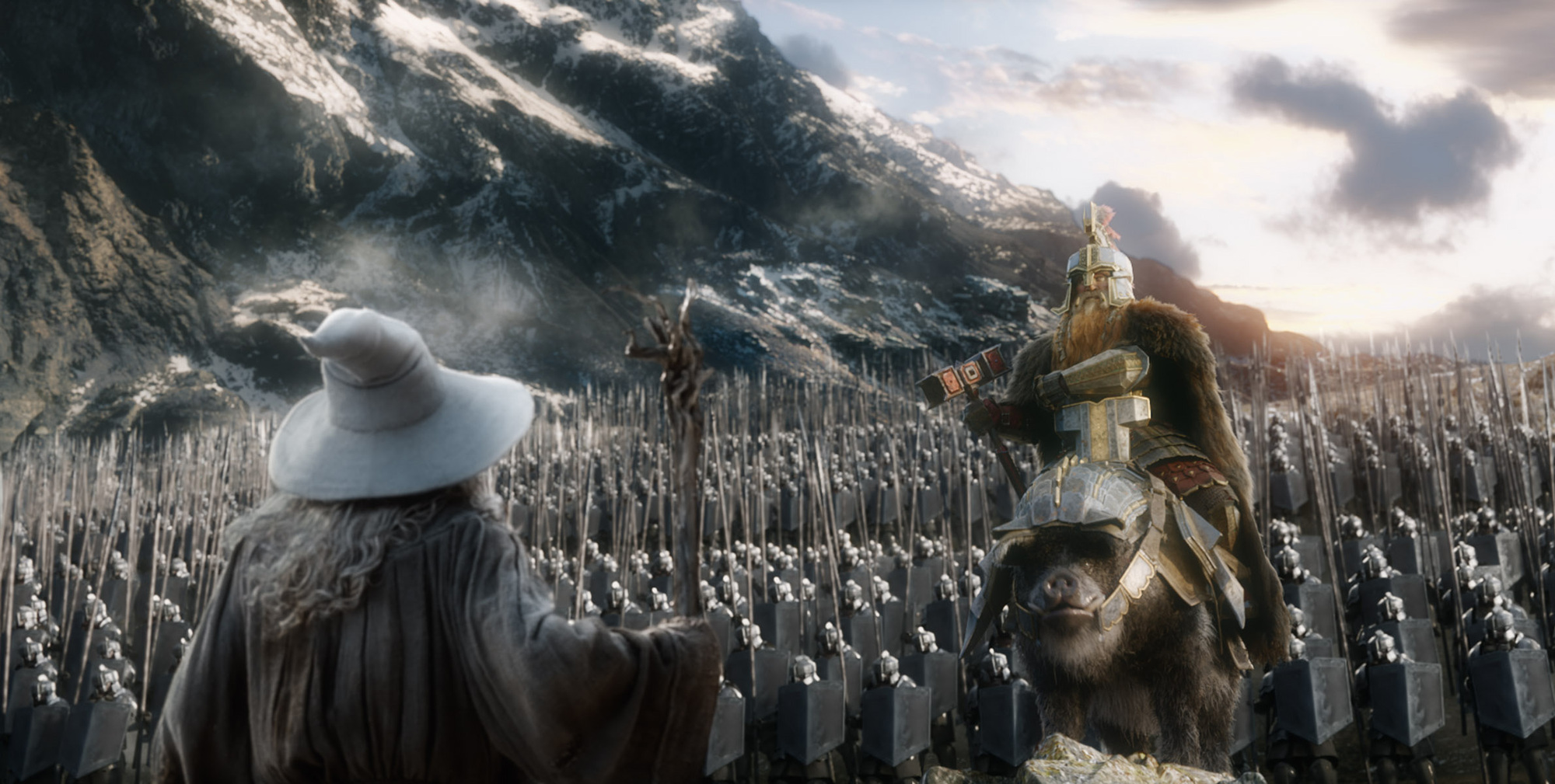
Gandalf and Dain

Gandalf and Dain

As far as complaints go, I really only had a couple. The first of those is the carryover from Desolation of Smaug. All of the extra crap that was added to the second movie to make it its own film had to be resolved at the end of Battle of Five Armies. Once again it felt forced and didn’t really fit with the rest of the story. Thankfully, it was done pretty quickly, so the audience didn’t have to suffer through more than twenty minutes of it. These scenes also gave rise to what was probably the worst performance in the film: that of Lee Pace as Thranduil, the elven king. Pace’s character was consistently wooden and detached and brought down the quality of any scene he was in. There was also a vacant look in his eyes that was more than a little unsettling. My final complaint was the completely abandonment of the laws of physics during one particular portion of the battle. While I am more than willing to set aside some things for the sake of a good story, this got to the point of being completely unbelievable. At one point Legolas was running up stones, like they were stairs, as they were falling down the face of a frozen waterfall. Elf or not, this just simply doesn’t work.

Overall, The Battle of Five Armies was pretty much what I expected it to be. While an improvement over the previous film, it still failed to live up to the standards set by Lord of the Rings. While maybe not to the point of waiting for Netflix or Redbox, nobody should feel the urge to drop what they’re doing and immediately go see this movie. 3.5/5 Death Stars
3.5 Death Stars

4 Comments

Filed under Andrew Hales, Movie Reviews, Movies

Confessions of a Geek: Literary Influences, Part 1

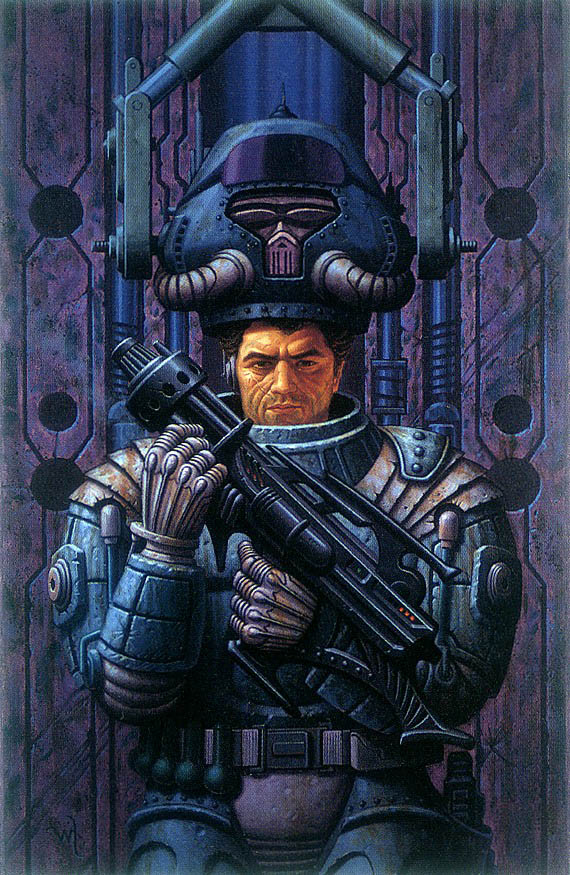
An artists vision of what Starship Trooper's power armor looks like.

An artists vision of what Starship Trooper’s power armor looks like.

A few weeks ago I was looking over a friend’s Facebook page and noticed they had posted a list of movies and/or books that had influenced them. It was a nicely mixed list and I soon found myself considering the books that had influenced me. I have decided to share with you three separate lists of books, movies and comics that have influenced me and a little of the reasoning behind why. Today we’re going to start with books, in no particular order (well, they’re in the order in which I thought of them).

  • Starship Troopers – This is one of my all-time favorite books. Robert Heinlein masterfully combines a science fiction, war story with Libertarian political views, without ever making it seem preachy.  While I don’t agree with all of the political things that Heinlein has to say, they do make for interesting thoughts and debates.
  • The Hobbit – Honestly, this almost goes without saying. Like many of my generation (and my parent’s generation) this was my first introduction to the fantasy genre.  The Hobbit really is just that, an introduction.  Tolkien gives just enough of all the various pieces to make readers want more without feeling as though they’ve been cheated.  It’s also a pretty light read, which cannot be said of The Lord of the Rings.
  • The Lion, The Witch, and The Wardrobe – Keeping with fantasy for a moment, this is the C.S Lewis classic. I first came across this book sometime around third or fourth grade (maybe earlier) and was so immediately enthralled that I read the entire thing in a single night. This was the first time that I have been so in love with a book that I physically could not put it down.
  • Fear and Loathing in Las Vegas – Anyone who has read Hunter S. Thompson knows exactly how bizarre his work can be. Underneath the layers of drug use and general weirdness in his books There is a surprisingly accurate and thoughtful look at America. I certainly don’t share Mr. Thompson’s political views, but from time to time there are things in his work that I find myself agreeing with.
  • Marvel Comics: The Untold Story – There are two things that have fueled my interest in comics history:  a panel about the history of censorship in comics at the 2012 NYCC and Marvel Comics: The Untold Story, which I also got at NYCC. This book was so good that despite being in the middle of two other books, I dropped everything else I was reading and read this as much as possible. It reads more like a novel than a history and makes the reader feel like they know all the people personally. It has also had the effect of driving me to get more books on the history of comics.
  • Horus Heresy: Horus Rising – I picked this book up on a whim in college and then spent every moment of the next three days that I was not in class (and probably somewhere I should have been in class) reading.  This series isn’t always very good, but it has reminded me that I can enjoy purely indulgent fiction. And I’ve read TWENTY-TWO of the books, so they’ve had to have some influence.
  • Complete Works of Shakespeare – This is cheating a little, I know. Shakespeare is not only one of the greatest works of literature in the world, but it has also had a considerable impact on my life.  I started reading Shakespeare in fourth grade and it opened up a whole new world of ideas to me. Back in high school I was vice-president of school’s Shakespeare Society.  Some of my favorite books and movies even now are adaptations of Shakespearean works.

To Be Continued…

4 Comments

Filed under Andrew Hales, Books, Geek Life

Editorial |The Silent Character

In the course of writing a novel or a screenplay, authors carefully set up the scene they wish to play out.  In science fiction or fantasy—even more so than in other genres—they create a world, and then populate it with figures that are limited only by the author’s imagination.  However, I submit that in the very best sort of books there is one character that is not created by the author, but is temporarily bound in the world he creates:  the reader.

A book is something like the stage on which a play is performed.  The onlooker sees everything that is going on in the story spread out before him in his mind’s eye.  In a play, the characters can interact with themselves, but they arrange themselves to be visible to the audience as much as possible.  Their gestures are larger than life, their facial expressions more dramatic, and their voices pitched to carry to the unmentioned and usually silent viewers.  Although in most plays the actors never acknowledge the audience, they still consider its response in every action that takes place on stage.

In a good book, the kind that sucks the reader in and completely absorbs him, the same thing happens.  In most of these books, such as Tolkien’s The Hobbit (now a Major Motion Picture), the reader is never directly addressed.  Characters act, interact, and react with each other for the benefit of the audience.  Events are arranged for thrilling suspense.  Action sequences are highlighted, and periods in between them are foreshortened.

Sometimes, although more rarely, the author does directly speak to his readers.  This is usually an aside.  My favorite example of this is from C. S. Lewis in The Lion, the Witch, and the Wardrobe, “”Wherever is this?” said Peter’s voice, sounding tired and pale in the darkness. (I hope you know what I mean by a voice sounding pale.)”  I think I was six years old the first time I read this, and it was a completely novel idea to me (pun entirely intended) to be addressed by an author I already loved and trusted by this point in the book.  However, this style of writing does not happen very often.

Down the beaver hole

Some authors spend more time crafting the story to their audience, such as Piers Anthony.  His world of Xanth is escapist fantasy taken to extremes.  Nearly everything in this fictional universe is designed to be a pun or an inside joke.  The reader is fully engaged as a silent character in his world.  More serious authors tend to make the role of the reader much smaller.  However, even these authors expect the audience to be fully engaged in the story.

In some cases, the author starts off with a good sense of his audience as a silent participant in his world, but then seems to forget their presence, further into the story.  A great example of this is George R. R. Martin’s Song of Ice and Fire series.  The first couple of books read like smooth and beautiful stage productions.  The level of description sets the stage for the reader, without becoming so boring that he skips over large sections.  The action flows at a fluctuating pace:  slowing down during the moments of action and speeding up to skip over slow, boring chains of events, such as Catelyn Stark’s journey to King’s Landing in A Game of Thrones.  In later books, such as A Dance With Dragons, Martin seems to prefer spelling out each and every tiny event, even if it has very little to do with the story.  In cases such as this, I personally feel that extra time in the editing stage of the process is necessary.  (Of course, he doesn’t really have the time for extended editing sessions, but I digress.)

If GRRM doesn’t get the next book out sometime next year… grrmmph mumble mumble…

It seems obvious, then, that the audience to any good story is a silent, third party character which interacts with the world and the characters in it.  When the reader is so enthralled with a book that he or she spends hours or even days after it is closed reliving the events in his imagination, or creating new stories set on the same stage, the author has done his job.

Have you read a book that kept you focused for days, and even made you unwilling to read something else for a little while after you finished it?  Let us know in the comments.  I may even add it to my Reading List of Doom!

1 Comment

Filed under Books, Editorial, Tracy Gronewold

Review: The Hobbit: The Desolation of Smaug

***** SPOILER ALERT *****

This review will be discussing plot points which may be considered spoilers. Consider yourselves warned.

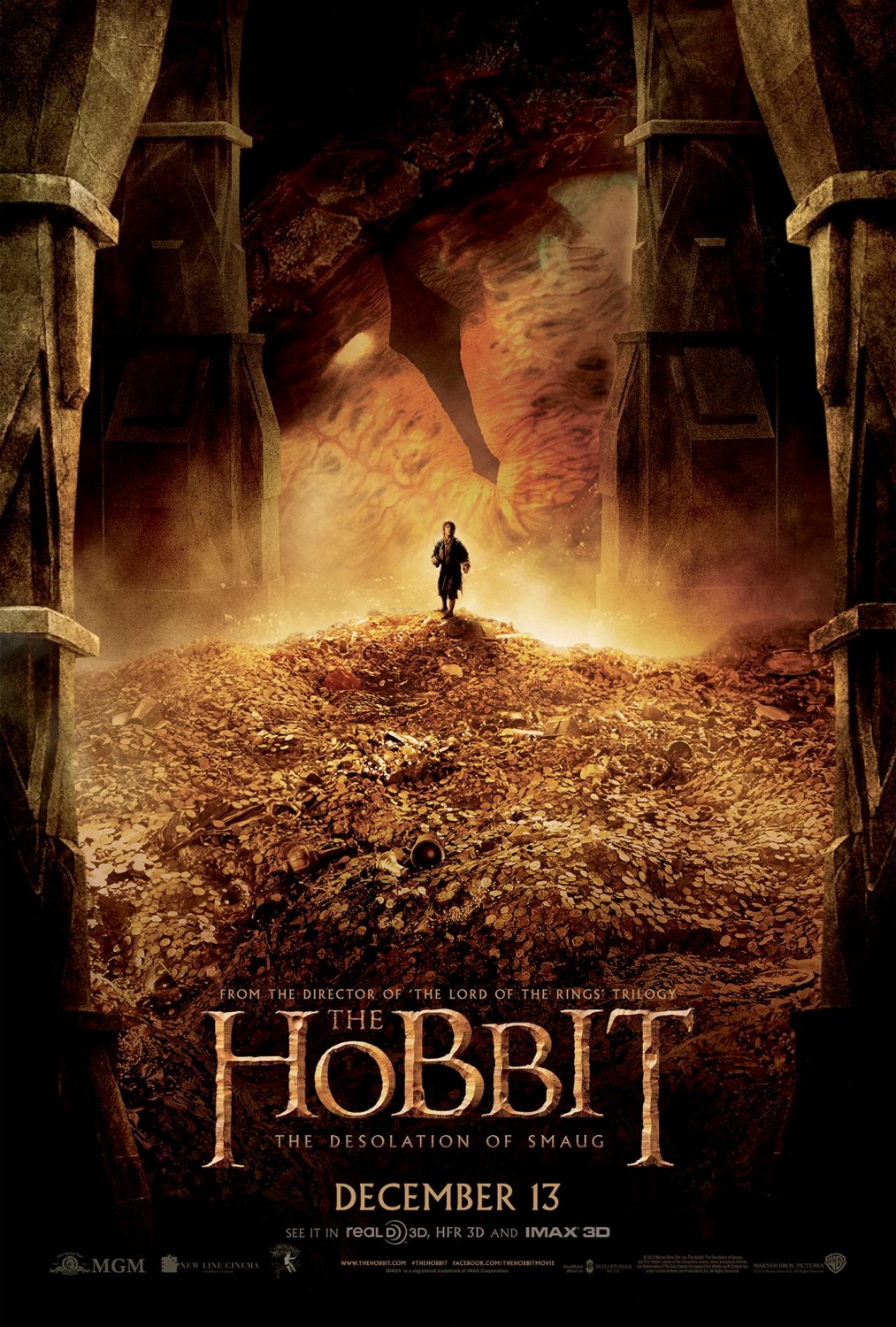
hobbit_the_desolation_of_smaug_ver30_xlg

As I write this review I am in the middle of a Lord of the Rings marathon. I have to admit that going to see The Hobbit: The Desolation of Smaug has put me in the mood for as much of Middle Earth as I can get my hands on. Unfortunately the reason I’m in this mood is because I’m longing for a good story from Middle Earth. As excited as I was for this movie, I afraid that it leaves much to be desired.

After an enjoyable introductory scene, much like those in Lord of the Rings, The Desolation of Smaug picks up just as Bilbo and the dwarves begin their passage into Mirkwood. I was pretty pleased with this portion of the film, but I just felt that it was over far too quickly. Several chapters of the book were dedicated to Mirkwood, and only around twenty or thirty minutes of the film were spent there. While the film portrays the confusion that the company feels admirably, it sets in far too quickly and then is resolved rather abruptly. This demonstrates the major flaw in the movie:  timing.  When these films were first announced, there were only supposed to be two films, but a third was added later. Regularly throughout The Desolation of Smaug some scenes which are canon from the books are compacted in order to make room from extra stuff, often to the movie’s detriment.

Now it’s pretty well known that I am a fanboy and that Lord of the Rings falls into the long list of things I love. Despite this love I am not a purist, which is to say I understand when changes must be made in order to actually make the film.  Some of this extra material I enjoyed—especially the parts which come from appendixes or other material from J.R.R. Tolkien. Watching Gandalf investigate and then confront the necromancer in Dol Guldur was great. This provides some great moments that really place The Hobbit in context. While the story is primarily about the dwarves’ return to Erebor, it is also the build up to Lord of the Rings, and there are scenes that allow us to see all the pieces moving into place.  My issue is that these changes come at the expense of the real story. Scenes from the book were compressed in order to make room for this extra material.

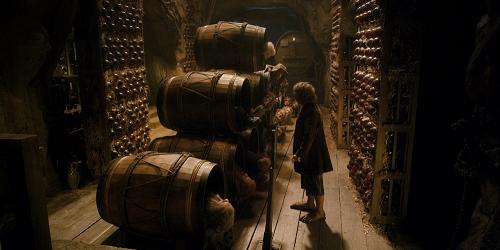
Shortly Bilbo will realize that there is a hole in his plan.

Shortly Bilbo will realize that there is a hole in his plan.

In other places, scenes were extended considerably. The prime example of this was the dwarves’ escape by barrel. There was a good long chase scene down the river that involved the dwarves getting away first from the wood elves and then from the same orc band that has been chasing them through most of the movie. Although an important scene in the book, and one that I have always felt was among Tolkien’s most clever, it was a relatively short part. Not only was this scene extended in the movie, parts of it became more than a little ridiculous. At one point the barrel carrying Bombur managed to get tossed out of the river and rolled down the river bank, taking out dozens of orcs in the process.  Then Bombur proceeds to pop his arms out of the barrel and take on several more orcs before jumping back into the river. Further on, Legolas rides down the river standing on the heads of two dwarves, all the while, shooting down orcs. This whole sequence becomes rather disappointing because of this outrageousness.

Still other portions are purely fictitious. The inclusion of the female elf Tauriel has no basis in the books. Her character was included almost exclusively to include additional female cast members, which is a questionable reason at best. I honestly didn’t mind her character, aside from the fact that she was obviously not part of the original book and therefore all her scenes seemed like someone trying to mimic Tolkien’s style. Tauriel also plays a part in the most egregious portion of the movie. During the barrel escape, Kili is shot in the leg by an orc and is eventually left behind in Laketown, along with three other dwarves, when the company proceeds on to Erebor. This whole plot point was completely unnecessary and only underscores the fact that the third movie should never have been added. If there were only two movies, filler material like this wouldn’t be needed and they would have been able to stick to the fantastic story that already existed.

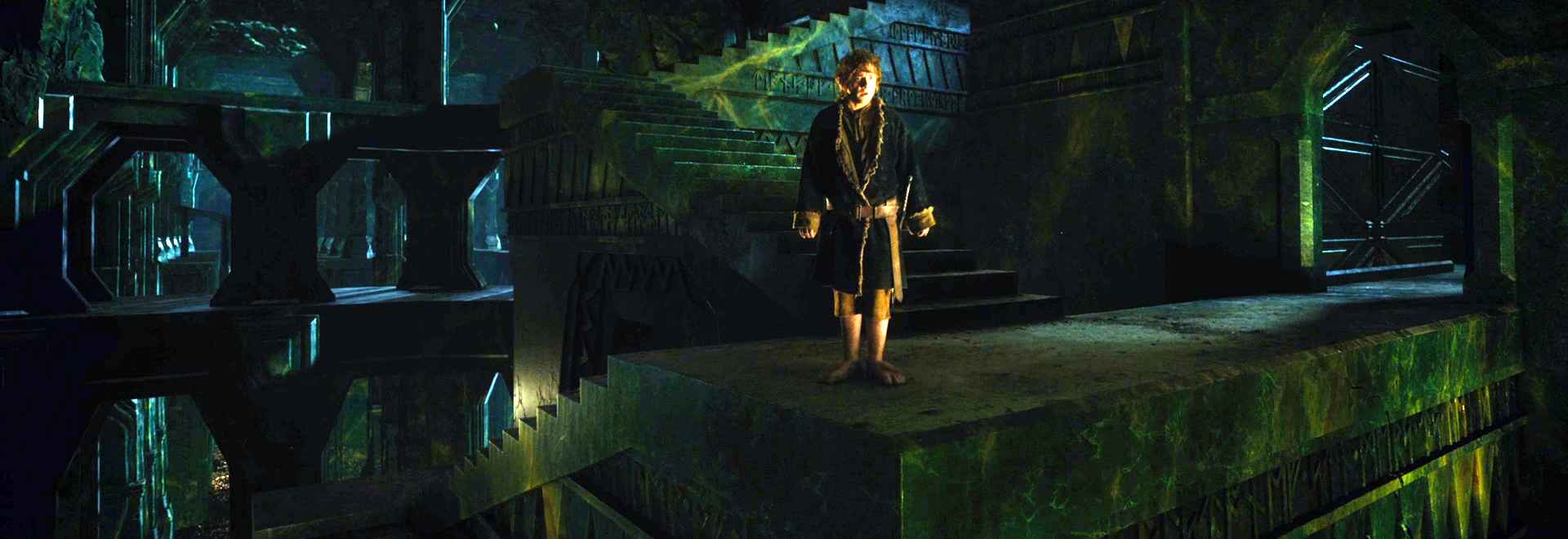
One of many great Erebor interior shots.

One of many great Erebor interior shots.

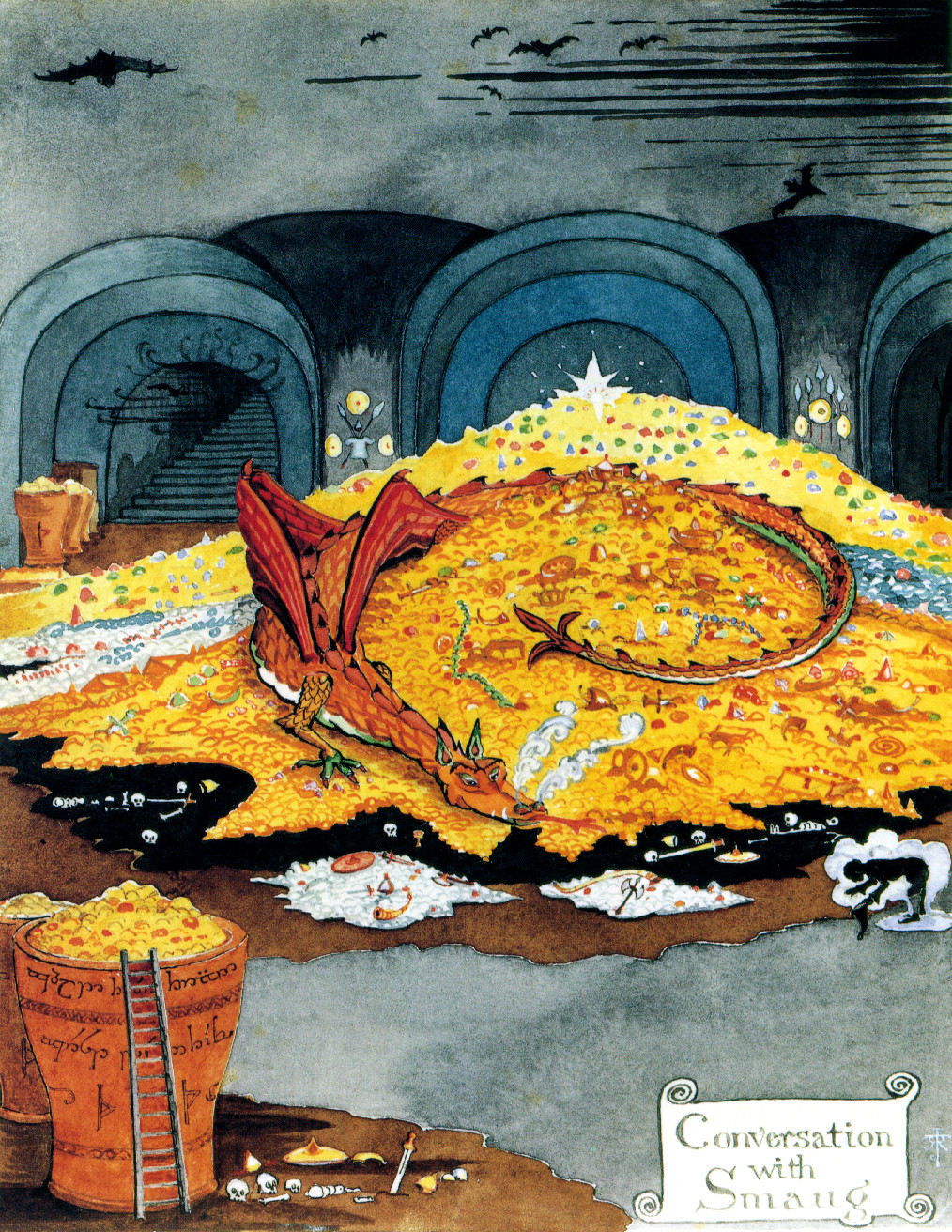
After all of that, it probably sounds like I hated the movie, and that just isn’t the case. For one, the movie looked absolutely amazing. From the halls of the Thranduil to the Lonely Mountain, the entire movie was a visual treat. I’m especially fond of the dwarven style. It all looks very angular but refined and elegant in its own way. Unlike the orcs who are angular in a jagged and chaotic way, dwarf creations show considerable thought and skill. Beyond the look of the dwarves is of course their grand nemesis, Smaug. I could not be more pleased with the way Smaug turned out. It’s obvious that the Peter Jackson drew upon available sources and previous artist renditions of Smaug when creating the visual for the character. Especially when compared to Bilbo, Smaug appears as more a force of nature than a fellow cast member. The dragon is absolutely enormous and terrifying. Jackson must be a firm believer in “Go big or go home” because the movie makers went all out on Smaug.

This is the image of Smaug I always think of, and it was pretty spot on, aside from relative size.

This is the image of Smaug I always think of, and it was pretty spot on, aside from relative size.

In no way, shape, or form do I regret seeing The Hobbit: The Desolation of Smaug, but I do think that there was plenty of room for improvement. The film suffered from being stretched too thin when it came to source material (like butter over too much bread), though when they stuck to the original content the movie was at its strongest. While not the movie I was hoping for, I am still excited to see the ending of the trilogy next year. Three out of five Death Stars.

3 Death Stars

3 Comments

Filed under Andrew Hales, Movie Reviews, Movies