Tag Archives: Review

Editorial | Review: Much Ado About Nothing

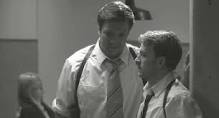
Angel fans, rejoice!!  Fred and Wesley have finally gotten their happily ever after!!!  Ok, not really—but I still felt a little twinge of rightness in the casting of Benedick and Beatrice in Joss Whedon’s Much Ado About Nothing.  Here’s the good, the bad, and the ugly of this film according to me.

image

Together at last!

The first scene made me instantly cringe and prepare for a long hour and a half—awkward speech and several actors deliberately not looking at the camera gave me that “indie” feeling—but the instant that Alexis Denisoff (Benedick) opened his mouth—the second scene he was in, for those counting—all anxiety fled.  This man was made for the boards!  His delivery was spot on, and his facial expressions and body language completely clarified any contextual issues in a form of English that is five centuries old.

Amy Acker sparkled as the witty, aggressive Beatrice.  It is a character that can easily appear abrasive, but that is not a word that can ever be applied to Acker.  The dynamic between these two characters completely overtakes the primary plotline, which is the rocky road to marriage for Claudio and Hero.

Whedon, unable to leave his mark on the script, instead brands his work with brilliant direction and non-speaking asides.  Notably, Beatrice mocks Benedick during an interlude by a fire pit, and repeatedly brushes away the amorous advances of the man sitting next to her with barely a thought; Leonato, worn out by a two day bender, falls asleep in the middle of Claudio’s formal request for his daughter’s hand, and is sharply woken by Beatrice; the watchmen, recast as Don Pedro’s private security, lock their keys in their car and become frantic.  Another brilliant move was in casting Conrade, henchman of Don John, as a woman.  This allowed for an interesting twist in their relationship (pun entirely intended), and made Don John appear even more depraved.

image

Because Nathan Fillion.

I occasionally felt that the dialogue could have been enunciated more clearly—several lines were lost in conversation—but considering how meticulous the Bard was about infusing his plays with tongue-twisters and puns, this is understandable.

The fact that the entire film is clearly a summer party and that it was filmed in the director’s own house, gives it a feeling of intimacy that is unusual for Shakespeare.  Ultimately, I left the theater feeling not as though I had just watched a Shakespearean play, but that I had just watched a group of funny, witty people carry out a party weekend in Elizabethan English.  Very funny, very witty people—and I want so badly to be friends with all of them.  Much Ado About Nothing is sweet, sexy, subtle, and smart. I highly recommend it.

“The play’s the thing…”  Yes it is, my dear Joss, yes it is.

Four out of five death stars.

4 Death Stars

Leave a comment

Filed under Editorial, Movie Reviews, Movies, Tracy Gronewold

Review: Queen and Country Definative Edition: Vol. 1

Image

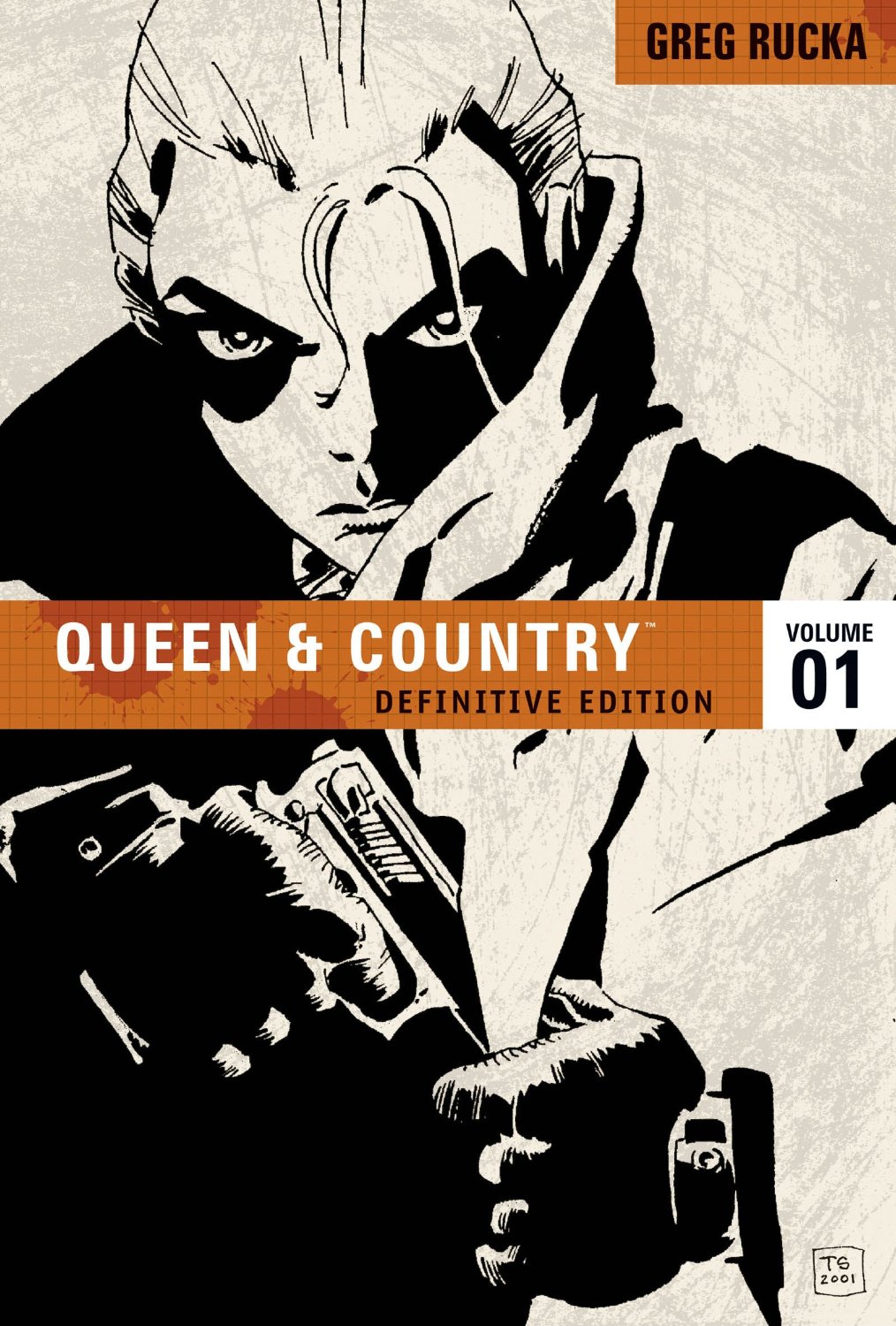
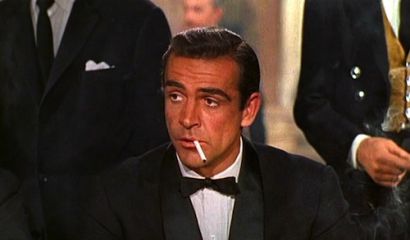
Americans have a bizarre fascination with almost all things British. Maybe this comes from our history as formerly rebellious subjects of the Royal Majesty, or maybe it’s just because we think British people talk funny. Very near the top of British things we love is anything having to do with British spies. Americans have made twenty three James Bond films for crying out loud. If that’s not an obsession, I don’t know what is. In the realm of comics, the 007 role is filled by Queen and Country by Greg Rucka. While Bond shows the life of spies as glamorous (is there really a glamorous side of a spy’s life?), Queen and Country is closer to reality and is full of fantastic and intriguing details that make for a wonderful page turner.

Image

Sorry Sean, it’s just too good to be true.

Queen and Country is unlike most comics in several ways. Written in short arcs, each story is a stand-alone tale involving a particular mission undertaken by the MI-6 operatives Tom Wallace, Tara Chase, and Edward Kittering (called Minders 1-3 respectively) under the leadership of Director of Operations (D. Ops), Paul Crocker. Although Chase is the primary protagonist (even though she is Minder 2), the other Minders and D. Ops all get plenty of time in the spotlight and seem to hardly be secondary characters. Writer Greg Rucka very skillfully shows the difficulties these characters are forced to go through, both physically and mentally as they try to protect Great Britain from all of its foreign enemies while trying to maintain their humanity. The reality of the intelligence community is that it often stresses people beyond the limits of what most people can endure and then ask them to sacrifice the very things that make them able to cope with this stress. Rucka’s adroit use of these types of details make it easy to believe that he is telling true stories relayed into comic book form. Queen and Country provides an extraordinary look into the world of international espionage while still holding on to the human element in the lives of the Minders.

Queen and Country Definitive Edition: Vol. 1 consists of 3 stories, “Operation: Broken Ground,” “Operation: Morningstar,” and “Operation: Crystal Ball.”

“Operation: Broken Ground” deals with the assassination of a Russian arms dealer by Chase and the fallout afterwards. After a successful post-assassination escape, Chase must deal with Russian hit squads coming after her as well as the guilt she has from killing another human being (even if he did deserve it). I found starting off the series with a character study like this to be a rather daring choice. What makes it even better is that it is very well done. I found myself asking how I would respond if I were in the same situation.

Of the three stories in Volume 1, I was most amazed by “Operation: Morningstar,” which tells about how Minders 1 and 3 are trying to retrieve intelligence that had been obtained by a recently murdered journalist in Afghanistan. To an audience today this doesn’t seem to be all that out of the ordinary as Afghanistan has been a part of lives for the last twelve years. What makes this storyline so incredible is that was written and published pre-9/11. It is a spy story taking place in Taliban-controlled Afghanistan, and shows the terrible conditions and treatment by terrorists of the people living under their heel—and it was all written before September 11, 2001. The foresight revealed in this story is both stunning and rather unnerving. The story itself is well written and has a great sense of suspense and intrigue.

The final story, “Operation: Crystal Ball,” involves a defector trying to give details of a terror plot and the race to prevent the attack. The first issue of this story also shows us how the characters deal with the events of 9/11 and its impact on their field in particular.

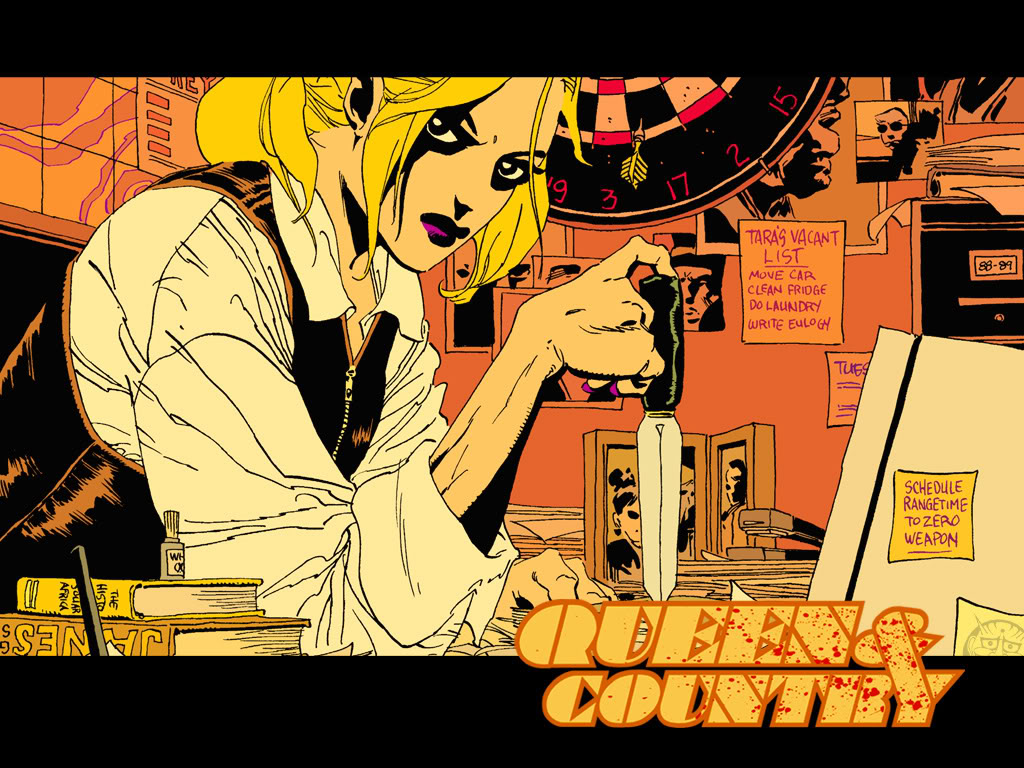
The art for each of the individual arcs is pretty good. While frequently on the cartoonish side, the black and white illustrations rarely seem out of place and are typically very easy to follow even during action sequences with very little dialogue. The Definitive Edition also includes some great one page splashes from Tim Sale between issues. Something that is rather helpful to new readers is the character roster that is included before the start of each story arc. Since the art changes with every new story—and sometimes in the middle of a story—this roster is useful in helping readers identify characters.

Image

Tim Sale’s amazing depiction of Tara Chase.

These changes are my only real complaint. I would have liked to see a bit more consistency from arc to arc. This might be a result of reading all the stories in a combined format the way I did, but the wildly different styles, though all well done, made this feel much less cohesive. Using artists with similar styles would have provided a more unified feel to the whole collection.

After finishing Queen and Country Definitive Edition Vol. 1 all I wanted was more. I want more of these characters, more adventures and more political intrigue. I’ve already picked up the next volume and it is on the top of my reading stack. I would recommend this to anyone who is looking for a comic outside of the normal superhero genres or anyone who loves spies and political intrigue.

1 Comment

Filed under Andrew Hales, Comic Reviews, Comics

Review: World War Z

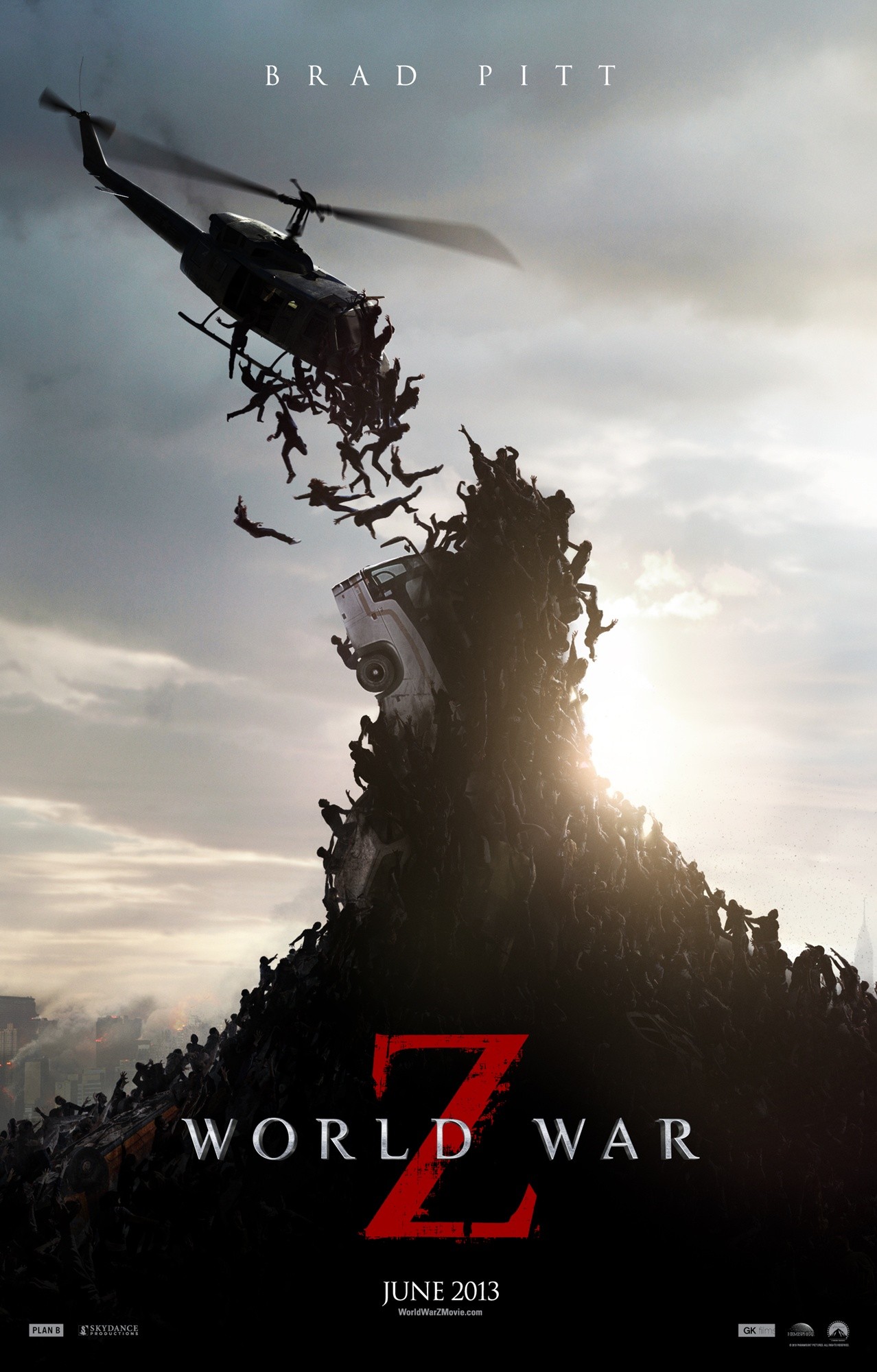
Image

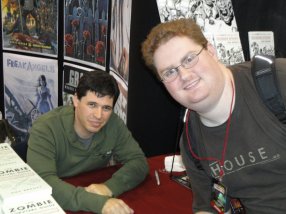
I’m kind of over the whole zombie thing. Over the last few years people have gone a little zombie crazy and the market is well beyond saturation at this point.  Also, I was not particularly thrilled to find out that this movie was basically World War Z in name only.  I am a huge fan of the book and had really been looking forward to seeing it made for the big screen.  My enthusiasm quickly faded a few days ago when I came across an interview with author Max Brooks.  Brooks, son of comedy genius Mel Brooks and actress Anne Bancroft, is no stranger to Hollywood and was well aware that his novel wouldn’t make it to the screen intact.  In the interview Brooks said that people should see the movie and judge it strictly as a movie.
Image

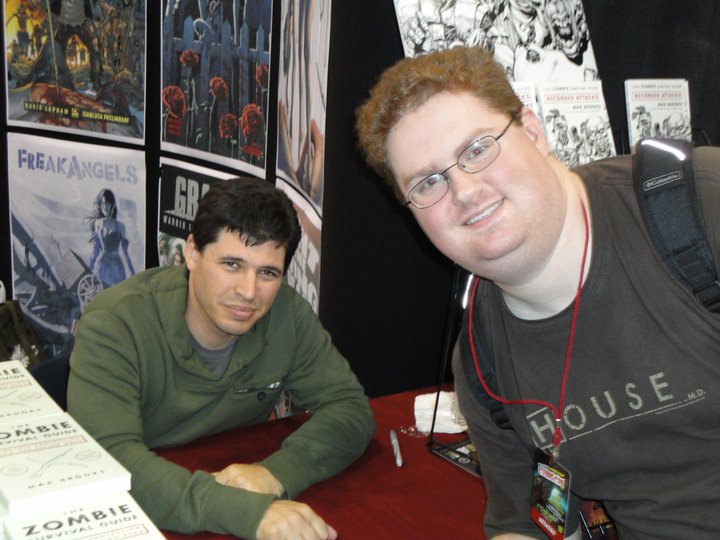
Max Brooks and me at NYCC 2010

While not going so far as to endorse the film, Brooks made a very good point by telling people to evaluate it on its own merit.  I knew there was a very real chance that even though this movie was not going to be the book brought to life, it could still be a pretty good story in its own right.  And so with that thought in mind, I went forth and saw World War Z.

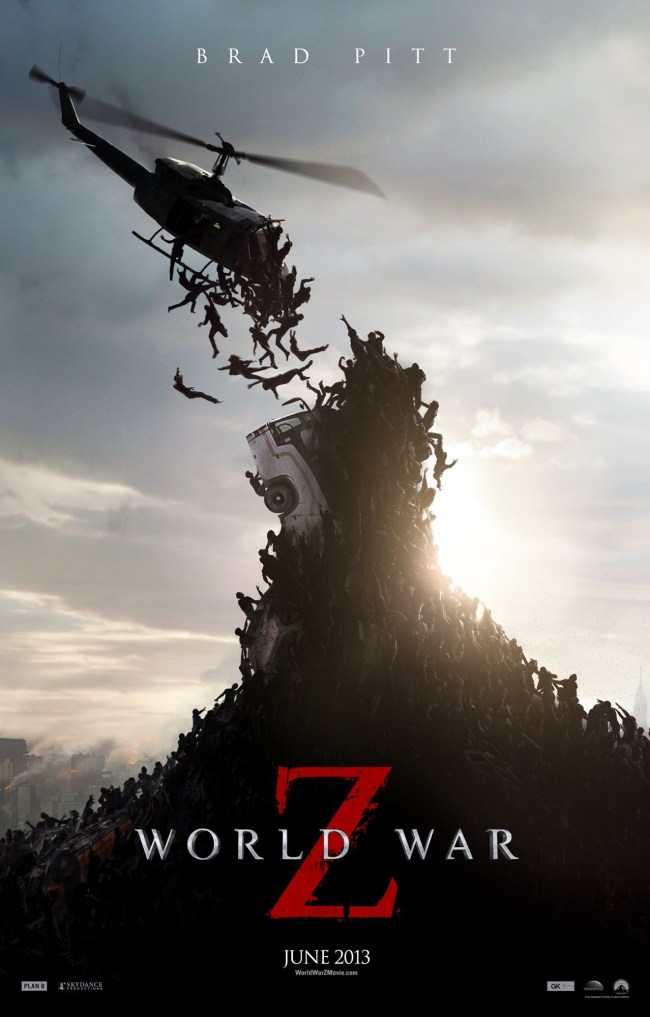
As it turns out, World War Z is a pretty solid action flick.  It is most definitely not the book, but that is okay. A few elements from the book were introduced to give the movie a similar feel, but I don’t really think those were necessary.  The main character Gerry Lane, played by Brad Pitt, is a former UN investigator who is trying to figure out how and where the “zombie” plague began in exchange for his family’s safety onboard a US Navy ship.  I use quotes for “zombie” because the characters in the movie, like those in the book, acknowledge how ridiculous mythical zombies are and use the word only to describe the virus in terms that are easily understandable.  Lane’s search takes him on an impressive tour of much of the globe, hitting South Korea, Israel, Wales, and Nova Scotia. Viewers are treated to some stupendous aerial and wide angle shots of the surrounding scenery (albeit, usually covered with the stumbling infected).  Interspersed among these great shots are some pretty standard, though well-crafted, action sequences.  Since this is a zombie movie, there are plenty of escape scenes and crowd chases, but none of these feel tired or played out, as can often be the case in this genre.   I really appreciated the fact that the film got off to a quick start, giving a brief introduction to the characters and then rolling right into the action.  I absolutely hate when a movie takes forty-five minutes to get finally get to the real heart of the plot and then rushes through it to get to some massive climax.

Often times what makes or breaks a movie like this is the acting.  Aside from Pitt, there weren’t any other big name actors I recognized, but everyone gave a consistent performance across the board.  A big film with plenty of money to spend on effects rarely fails because of the visuals, and a big name, leading actor can only lift the movie so much, so it comes down to the supporting cast to either keep the film afloat, or torpedo it.  The only two really standout performances were by actors playing zombies towards the conclusion.  Both play mindless, spastic undead wonderfully, and give them disturbed personalities of their own.  From bugged-eyed head banging to chattering teeth and dog-like sniffing, they make it truly believable that these creatures, though once human, are now something entirely different.
Image

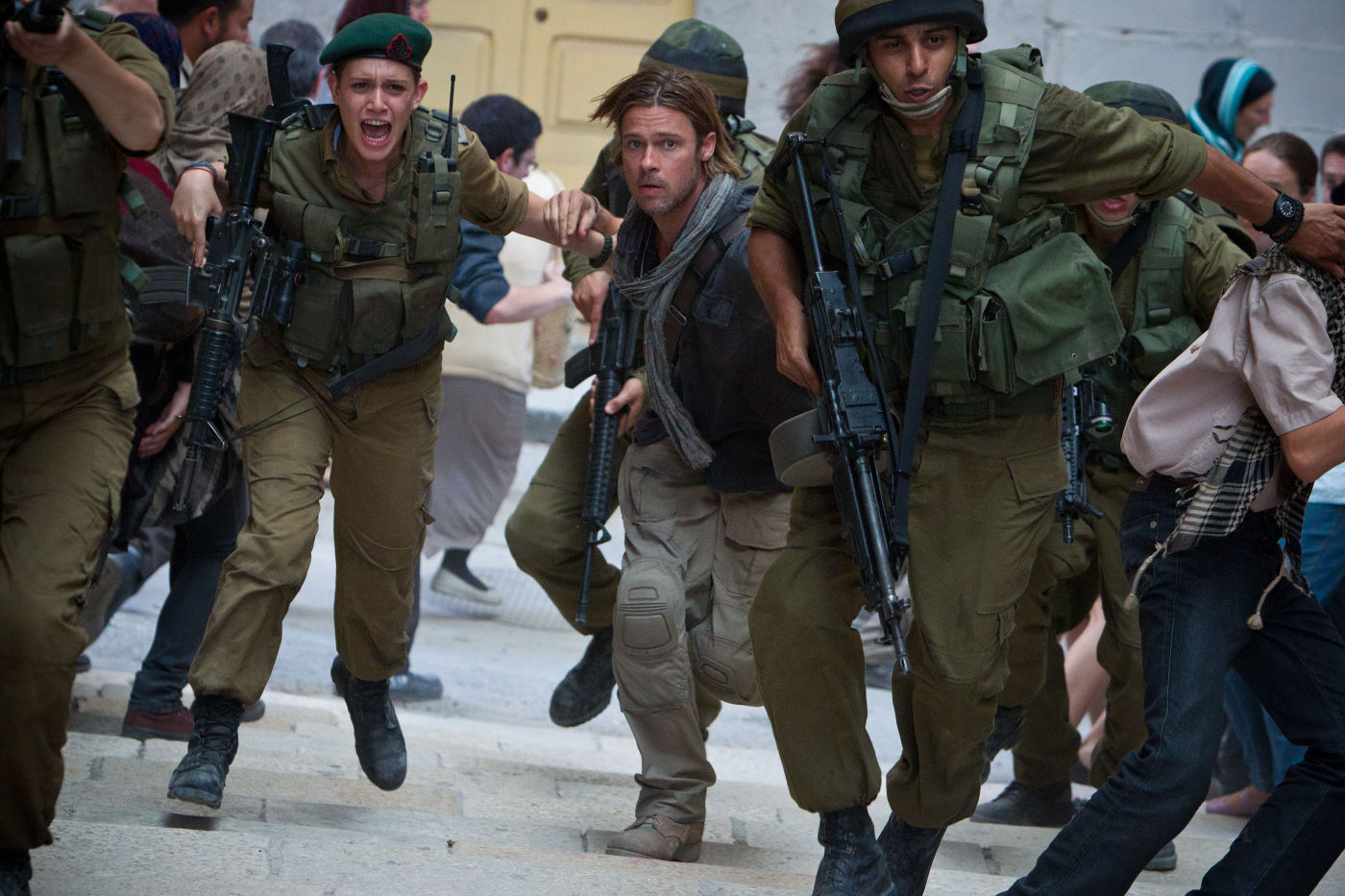
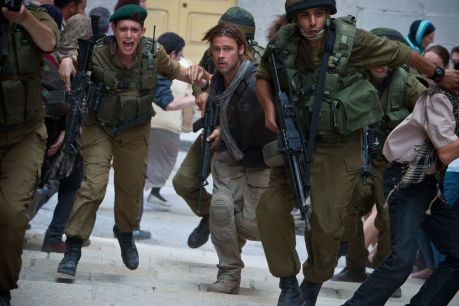
Whenever Brad Pitt starts running around with the supporting cast, bad things are about to happen.

There are some things that were included that I could have really done without.  First on that list, and probably the ones I find most annoying, are the quick cuts through file footage of riots, wars, natural disasters and the like that start off the movie; and the similarly cut, faux news reports of people fighting back and receiving aid that wraps up the film.  This has been done so many times it honestly makes me want to hurl.  I get what the filmmakers are trying to accomplish but it is cliché and the time for new material has come.  I was also turned off by how fast those who had been bitten turned into zombies.  I think that much of the terror and suspense of a zombie film comes from the impending transformation.  Every time somebody gets bitten it is understood that before long they will be joining the ranks of the undead, but that it will be a slow and horrifying process. Just thinking about it makes the skin crawl.  In World War Z, the whole process from bite to full on zombie takes ten to twelve second.  The virus acts unrealistically rapidly, even faster than almost any kind of venom, poison or nerve agent in real life.

This removes almost any believability from the transformation which doesn’t have much to start with.  My final complaint about the movie concerns the PG-13 rating.  I have nothing against the film having a PG-13 rating, but in order to get this rating, the film makers seriously cut back the on-screen violence.  This led to a few shots that reminded me of R movies that have been cut so they could be shown on cable. What is happening just off screen is obvious and the attempts to avoid showing it just seem awkward.

The movie ends as many zombie movies end:  open to glimmers of hope.  I have yet to hear of a World War Z sequel and while there is room for it if they’d like to do one, the fact that the film was wrapped up enough to stand on its own pleased me.  While World War Z may not be rated among 2013’s greatest movies, it was certainly a strong addition to a genre that often fails to change or adapt and frequently feels played out. There is a real chance that diehard fans of the book will be disappointed if they are unwilling to take the advice of author Max Brooks and judge the movie on its own merits.  As for the rest of us, it’s worth checking out.  World War Z has earned itself a solid 3 Death Stars.
Image

PS,

While this ending sounds pretty Badass, I’m quite happy with the one that made it into the film.
Leave a comment

Filed under Andrew Hales, Movie Reviews, Movies

Being Wrong Never Felt So Good

Now, I don’t know about you, but I love being right.  I love being the person who has the correct answer; the one who picks winners.  (I still can’t figure out sports though, I’ve gotten every World Cup Final wrong.)  Even when it comes to comics I love to be the person who knows what plotline will work, which author will do a great job on what books, and even which books will succeed.  Having said that, I have never before been so happy to be completely and utterly wrong.

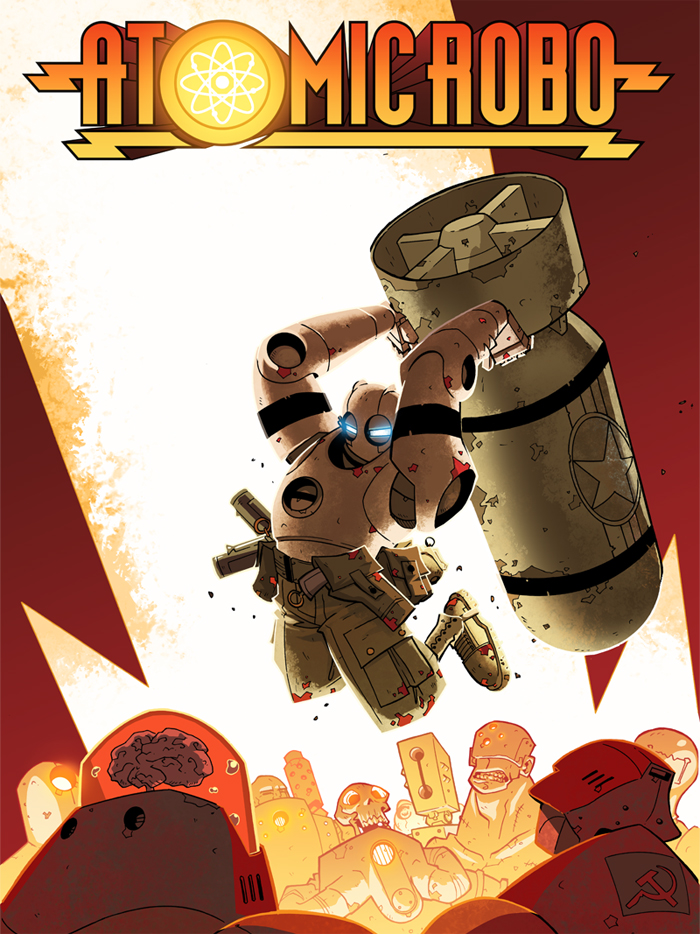
Back in 2007, as a comic book rookie, I was wandering through poorly lit aisles full of sweating, questionable smelling geeks at a Big Apple Con when I came across a booth manned by a creator proudly selling his new book.  I stopped for a minute to look at what he had to offer.  The writer was so excited that energy radiated from him as he talked about his creation.  He told me with great enthusiasm that his first couple issues had almost sold out and he was getting ready for another printing.  The book looked all right, but I wasn’t particularly impressed and didn’t think it would go very far.  As I walked away I filed the name of the book in the back of my mind along with other useless knowledge that’s stored away, waiting for the right moment to whip it out and show off my vast knowledge.  That creator was Brian Clevinger and the book was Atomic Robo.

Image

Flash forward several years to a moment in one of my local comic book shops as I happened across several issues of Atomic Robo.  Like a good little brainiac, I recalled the info I had stored away for just such an occasion, and investigated to find out what was going on with this book I had written off so readily.  As it turned out, not only had the book survived, it had excelled, earning a highly coveted Eisner nomination in 2008. While not a mainstream book, Atomic Robo had managed to carve out a considerable fan following.

I wasn’t quite ready to admit I was wrong, so I waited a few more months, but curiosity finally got the better of me, and I decided to check it out.  Now I wish I had read this sooner.  Atomic Robo feels like a cross between the humor, adventure, and energy of Indiana Jones and the simple art style of Hellboy.

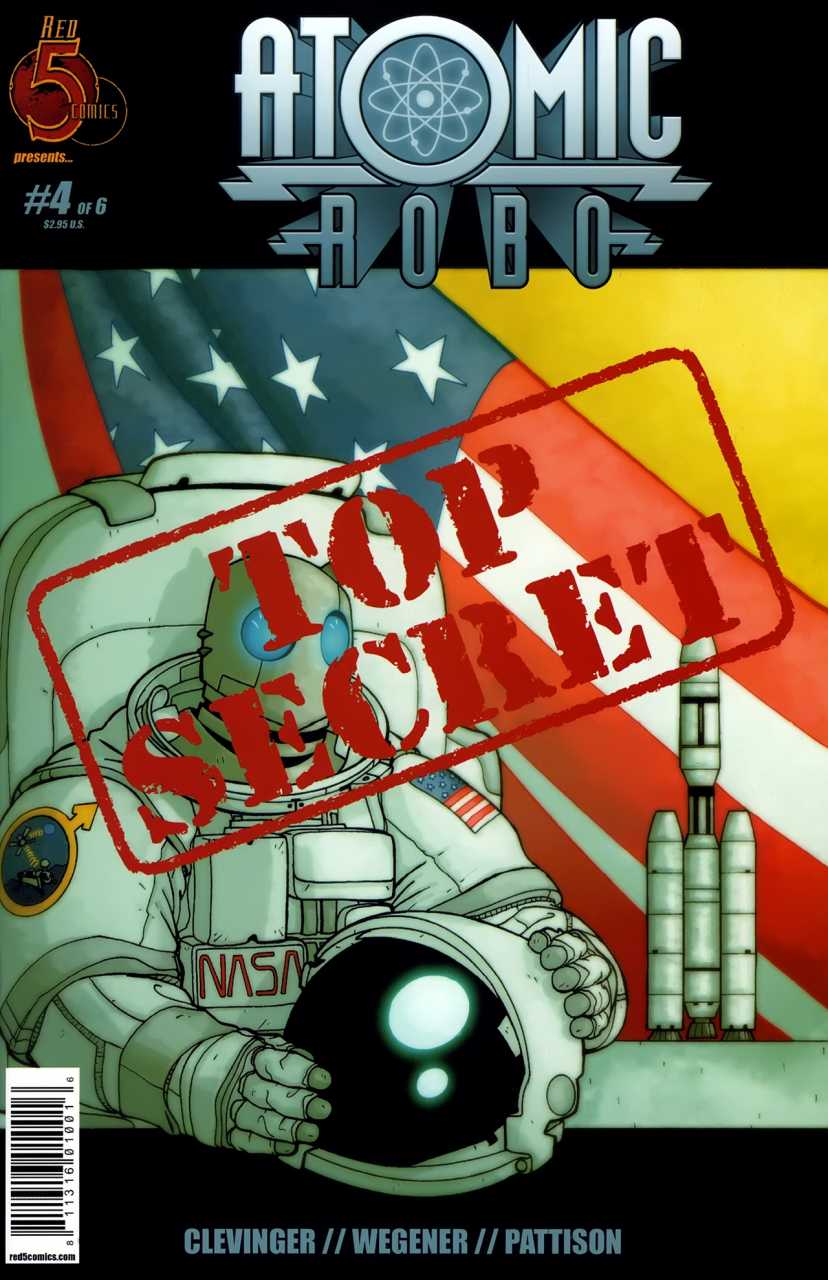
The first volume, Atomic Robo and the Fighting Scientists of Tesladyne is one of the funniest books I’ve read in a very long time.  Throughout the book there is a wonderful sense of adventure.  The stories in this first volume loosely follow the same plot line, following Robo, a sentient robot built by Nicola Tesla, and several adventurer scientists from Tesladyne Industries as they combat giant ants, mobile pyramids with robot mummies, and other things far too weird for the US government to handle.  These stories provide a nice introduction to the world and main character.  Along the way, the story arc occasionally takes humorous side roads into adventures with mobile pyramids and ancient death rays.  My favorite story is the stand alone tale of how Robo receives a letter from the grandchild of one of his former WWII buddies who had died.  It is a touching story about how an immortal robot deals with outliving his friends.  What could otherwise be a tricky subject is told with grace and skill.  Then the story just moves on, as it should.  The book covers the first 6 issues of Atomic Robo and issues 1, 5 and 6 introduce a potential reoccurring villain in the amusingly stereotypical Nazi super-scientist Helsingard while issues 3 and 4 follow Robo to Egypt and a fabulous flashback to Robo’s “manned” mission to Mars.

Each story is complimented superbly by the art, which is wonderfully simple and uses a vivid color pallet, reminiscent of Mignola’s Hellboy issues.  Often, simple art styles run the risk of a lack of expression or emotion, but that is not the case with Scott Wegener’s art.  Despite lacking most human facial features, Robo is able to convey a full range of emotions, which is a serious credit to Wegener.

My only complaint with Atomic Robo and the Fighting Scientists of Tesladyne is that some of the action sequences were a little vague, sometimes making the progression from one panel to the next unclear.  This is such a minor issue that it does not take away from the overall enjoyment of the book.

So far Atomic Robo has completely surprised me in the best way possible, and I have to give it four and a half out of five stars.  The first volume was funny and adventurous, and with 6 more volumes published so far, I cannot wait to jump back into this world and see what is in store for Robo and the gang at Tesladyne.

 Image

1 Comment

Filed under Andrew Hales, Comic Reviews, Comics