Tag Archives: movies

Comfort Movies and Why We Love Them

This holiday weekend, like most holiday weekends, involves many traditions including beach trips, cook outs, and one of my personal favorites, TV movie marathons.  After a long day out in the hot sun BBQing or splashing in a pool, few things are quite as enjoyable as coming home, flopping down on the couch and turning on the TV to see that some cable network is running an all day long marathon of your favorite movie series.  It doesn’t seem to matter how many times I’ve seen Star Wars, I am always willing to spend a few hours sitting around watching Han, Luke, and Leia as they battle the evil Galactic Empire. As Mom’s mac & cheese or meatloaf is comfort food for the stomach, so favorite movies are a sort of comfort food for the brain, making us come back to them time after time.  A true “comfort movie” is well made, universally understood, and has been watched over and over.

These movies speak to us in ways that other movies don’t and take us to places we’ve only seen in our imaginations.  Although there are plenty of movies the tap into our imagination, these particular movies give birth to fully realized universes, completely self-contained and yet ever expanding, of such a sweeping scope that they blow us away.  They tell us stories of action and adventure on such an epic scale that even the most adventurous of us find it difficult to fathom.  For a few hours we can travel through the galaxy fighting evil aliens or go on missions as the most elite of secret agents only find ourselves still on the couch at the end of the escapade, satisfied, but no worse for wear.

Not only do comfort movies speak to our imagination, they also tap into something deeper. The use of mythological archetypes in Star Wars is well documented. George Lucas was a student of the late mythologist and author Joseph Campbell and Campbell’s influence can be seen throughout the original trilogy.  By using these archetypes, Lucas made Star Wars, both plot and characters, instantly recognizable and relatable. Although it was told in a new and different way, the story felt familiar, like ancient lore that just hadn’t quite been able to take form until this movie.  With Campbell’s help as a consultant, Lucas tapped into those shared cultural ideas that speak to us all, regardless of our personal backgrounds.  Many of the characters in the movie are mirror images of figures that can be found in myths from around the world.  It is amazing that Star Wars still resonates just as strongly with new viewers thirty six years after its release as it did when it first came to theaters. It inspires them, just as the myths that Star Wars was derived from inspired countless generations before.

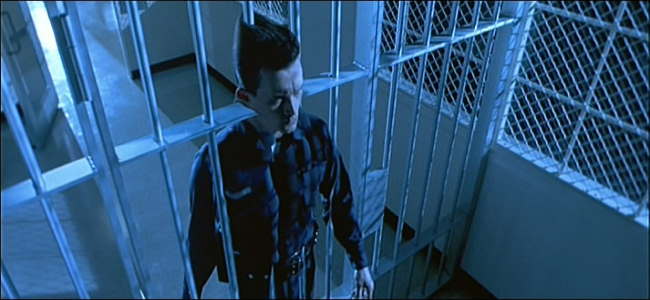
It’s not just the cultural significance of these movies that make us love them. They also look fantastic. Who doesn’t remember watching Indy trying to swap an idol for a bag of sand or seeing Terminator 2: Judgment Day’s T-1000 walk right through the metal bars of the mental hospital’s security doors to get at John Connor.  These movies are made with love and care, and their creators obviously put more than a little bit of themselves into them.  It shows.  From casting to special effects, each element was carefully thought out and the best choices made.  Often, these choices pay great dividends as the film holds up long after other contemporary films look like complete garbage.  Twenty two years later the T-1000 still looks amazing, and yet similar effects, such as the Silver Surfer, don’t hold up even a few years after the movie’s release. It’s the high level of artistry and care, pushing the boundaries of available technology, and a bit of dumb luck that sets certain movies above the rest.  For Star Wars, George Lucas had to create a whole special effects studio and they in turn had to build all their equipment from scratch.  It was over a year before they were able to shoot any of the effects scenes, but despite Lucas’ continual updates, the original film still looks great.
Image

This still looks so cool!

Even a film’s score makes a difference. Who doesn’t know the “Imperial March” from Star Wars and doesn’t understand its evil undertones?  More than once I’ve started humming the theme when a menacing someone walks past me at work.  Everyone around me understands what is going on and the significance of the melody without my having to say a word.

Comfort movies are also enjoyable because they are familiar.  Like a favorite pair of jeans, they are broken in to fit just right and feel great.  We’ve watched them dozens of times and can quote their entirety by heart.  Even though we know exactly what is going to happen we still watch eagerly.  We love these movies because we know them so well.  We can sit around with our friends and have an in depth conversation, packed full of minutia and quotable lines and not get bored.

Kevin Smith really hit on this familiarity in his movie Clerks, when Dante and Randall discuss the contractors who were working on the second Death Star when it was destroyed.  At face value, a conversation this serious about an invented scenario in a made up world is absolutely ridiculous and yet I know I’ve had more than my fair share of discussions just like this.  In fact, the ability to have this type of conversation with others who also know them by heart adds to our enjoyment of our favorite films. We know there are aspects that make no sense or have no bearing in reality and yet we choose to accept this as part of the movie’s charm and instead use it as fuel for these colorful exchanges that only enhance our enjoyment of and our connection to the universe in which they are set.

The right mixture of these elements gives these movies a certain “X” factor—something we can’t quite analyze quantitatively and yet we know exists.  Comfort movies fill an important spot in our lives that isn’t contented by anything else.  They are the reliable entertainment that we can turn to like an old friend to make us feel at ease.  This is why we love them so much.
Leave a comment

Filed under Andrew Hales, Movies

Editorial | History and Hollywood: the academic irresponsibility of making big box entertainment based on historical time periods & events

I walk into my office almost twenty minutes early, cursing traffic.  If I leave at 8:00 a.m., I arrive fifteen to twenty minutes early, but if I leave at 8:05 a.m., I will inevitably be five minutes late.  Several of my coworkers are already in the office booting up their computers, getting coffee, and chatting about their weekends.  Amy* wanders over to my cubicle.  “So… I saw that movie Lincoln this weekend,” she says, smiling mysteriously into the coffee she is stirring (That has nothing to do with the story. Amy always tries to smile mysteriously.  No one at work is sure why.).  I give her the obligatory response, “Oh really?  What did you think?”

“It was really good!” she answers, “It really made me think about that time in history.  How brave they were, you know?  Also that one black soldier guy at the beginning was hot.”

Steam begins to pour from my ears.  “It was a terrible movie,” I reply, because I cannot help myself, “Historically it was wildly inaccurate, from the attitudes and behavior of the characters and the details on the uniforms right down to the actual vote by the state representatives.  I almost walked out of the theater.”

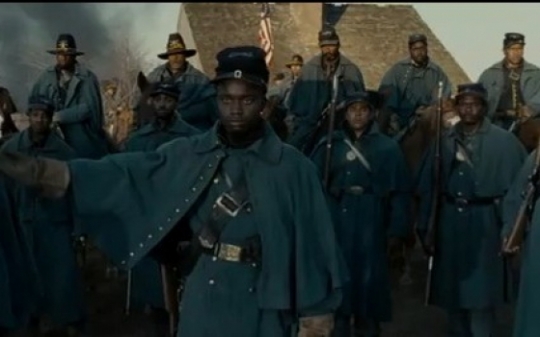
Black soldiers in the Union army as depicted in "Lincoln."

Black soldiers in the Union army as depicted in “Lincoln.”

Amy’s eyes widen and she shakes her head.  “Well, I enjoyed it…” she says, her voice trailing off, and she heads back to her desk.

Yes, I’m the office history geek, and I bristle whenever Hollywood decides to make a movie supposedly based on a historical event or even just a story based within a particular historical time period.  For me, going to see a historical movie is almost always just an opportunity to point out the ridiculous details that the movie gets wrong.  However, the problem is that very few people who see these movies realize that there are any errors at all, meaning that they walk away from the theater with a false understanding of history and no motivation to seek out the truth.

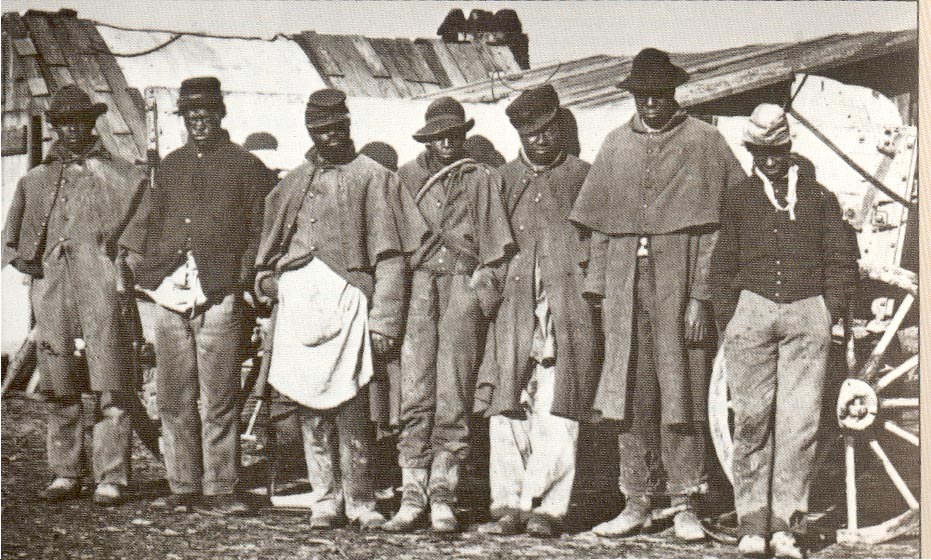
Actual black soldiers in the Union army.

Actual black soldiers in the Union army.

Hollywood has built an empire on storytelling, not on truth telling.  As a general rule, movies have no problems bending the truth or even snapping it in half altogether, as in the 1955 release of The Far Horizons, which pitted Meriwether Lewis and his purported love interest Sacagawea against the nefarious French trapper Charbonneau.  If this had been accurate in the slightest, it would have made for a very awkward road trip, as Sacagawea was, in fact, married to Charbonneau.

Not only are filmmakers unconcerned about the accuracy of their storylines, but they also add modern behavior and attitudes to period roles, presumably to allow modern viewers to identify with the characters.  My least favorite trope is the “independent woman” set in a time period when women were not given political rights or even much of a say in anything.  A great example of this is Cate Blanchett’s role as Marion Loxley in the 2010 film Robin Hood.  If the entertainment industry were to be believed, in every historical era (or at least, in every historical era that makes for good screenplay) there have been hundreds of women not only protesting their downtroddenness verbally, but actually taking up arms, or sneaking into lecture halls and mocking the intellectuals there—presumably to make them see that all women are intelligent, sensible, and mature.

However, all the blame for these awful movies cannot be placed at the feet of the movie industry.  The average consumer is also culpable.  At their very best, the uninformed public is simply lazy, preferring to have their facts served up with a disproportional serving of sugary entertainment.  For proof, one need only look at 2001’s Pearl Harbor.  The deaths of almost 2,500 Americans were, apparently, not dramatic enough, so the writers added a creepy love triangle to both thrill and disturb their audience.

At worst, deliberate ignorance on all levels is at epidemic proportions.  As a former high school tutor, I was aghast at the lack of historical knowledge that I found in tenth and eleventh grade students.  In college history classes the ignorance is even more appalling.  By one’s second year in undergraduate education here in the US, it can be expected that a student will have a decent grasp of United States history, but such is not the case.  Students have plenty to say about the Peace Corps and Habitat for Humanity, but not do even know the name Nathan Hale or John Jay.

While I have heard the argument that these movies and TV shows inspire people to research the history that is presented, I must say that as a whole, the entertainment industry doesn’t point out how far their narrative is from the truth; nor does it make the true stories readily available, and the average person is too lazy to dig for them.  Even if someone were to hear Lincoln’s issues corrected (probably from me!), first impressions generally stick.  It’s much easier to remember the vivid pictures on a 70’ IMAX screen than it is the dry details in black ink on a white page.

I cannot blame the entertainment industry alone for the pitiful lack of historical knowledge in the United States, but I can and will say that it is irresponsible to make so many deliberately inaccurate movies without doing more to make sure the audiences knows that they are not seeing what actually happened.  I also hold each individual responsible for educating themselves about the fascinating subject that is the history of the human race.  Lastly, I put the obligation on those true students of history to speak up when they see inconsistencies and inaccuracies in entertainment.

We have a society that is, as a whole, woefully ill-informed and too lazy to do anything about it; and Hollywood is feeding the problem.  Perhaps with a concerted effort, entertainment can become more accurate, and entertainees can be better educated.

*Name has been changed to protect the not-so-innocent.

3 Comments

Filed under Editorial, Tracy Gronewold