Tag Archives: Jack Kirby

Making a Hero Does Not Make a Villain

Lately, I’ve noticed a trend in our society that I’m starting to find a little disturbing. It seems, at least in my opinion, that whenever the collective we decides to honor someone, whether it be in an article, video, or just in conversation, we must also vilify someone else. Whether it’s a politician touting his own qualities while simultaneously insisting that the other party is out to destroy the country and the world, or in sports where the star player of one team is lauded by his fans who believe the opposing team is scum, this sort of negativity seems to permeate nearly every aspect of life.
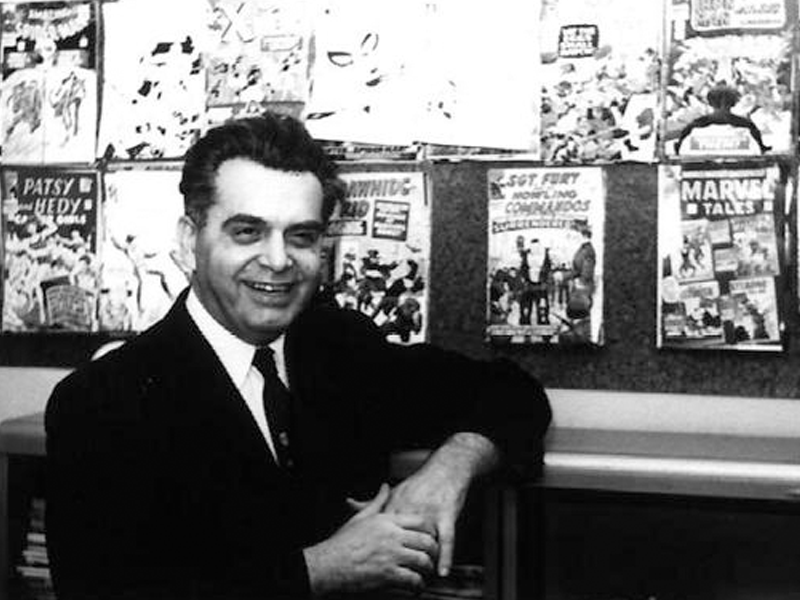
jack-kirby-museumWhen it comes to geek culture, I’ve noticed it most with comics, specifically when it comes to creators getting credit for ideas, storylines, and characters. For many years, this was the debate about Jack Kirby and Stan Lee. Each man had his own camp, filled with fans who were believed that their man was solely responsible for the creation of Marvel’s plethora of characters and that the other was riding their hero’s coat tails. For a long time this debate, though heated, remained civil, due in part large to the fact that since Stan Lee’s name was all over just about everything Marvel published, most people believed it was Stan who took the leading role. After all, if Jack Kirby had really been the creator, why wasn’t his name there instead of Stan’s? Or at least that’s how the argument went.
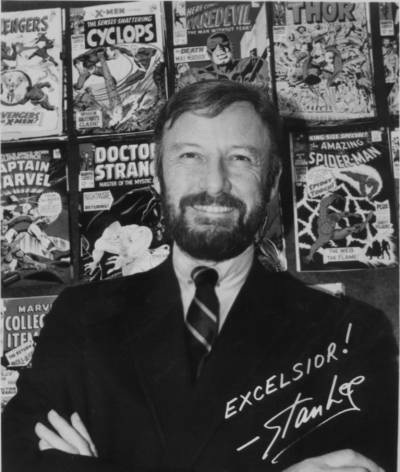
Stan 68 bwAs time went on, however, and more people became involved and began to take sides, the arguments became less civil and it seemed that in order to talk about the great work Jack Kirby did, fans had to insist that Stan Lee was stealing credit and that he treated Jack poorly. I was not in Marvel during the time that the events that sparked bad blood purportedly occurred, though I’m sure that some of them probably did. What gets me is that fans often can’t seem to separate the two ideas. There is no need to bring up one man while speaking about the achievements of the other.

More recently, a similar situation has been playing out for fans of DC between Bob Kane, the acknowledged creator of Batman, and Bill Finger, the man who by nearly every account (including a 1989 admittance by Kane) is responsible for most of the concepts associated with Batman. I have absolutely no issue with recognizing the efforts of Bill Finger. I love Batman and because of that I have a great deal of respect and affection for the contributions Finger made. However, I don’t understand why nearly every article I read about Finger has to include statements to the effect that Bob Kane stole credit. Again, I’m not trying to debate whether Kane did or did not steal credit; I’m trying to figure out why vilification of Kane is always attached to a discussion of Finger’s achievements.
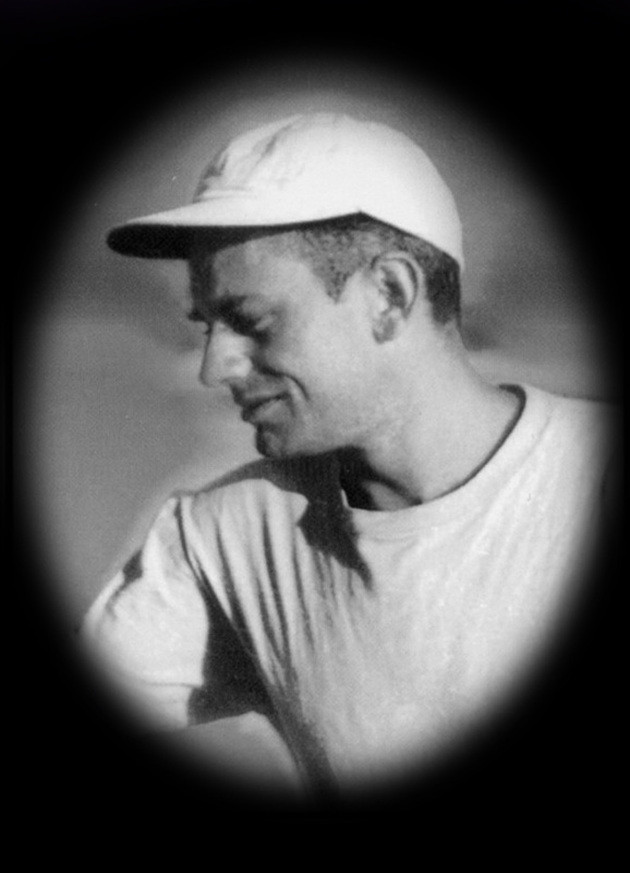
Bill Finger

Bill Finger

I feel that this need to vilify someone often stems from an idea that is very familiar to comic books fans; where you have a hero, you must have a villain. Deep down inside, there is some kind of need to find a villain when presented with a hero, and if one is not immediately apparent, someone is assigned to the role. Nowhere is this more prevalent than in comic books— their brightly colored pages are filled with beings that are more than just heroes, they are superheroes. In many respects we fans tend to carry over expectations from creation to creator and sometimes those creators fall short. Those who behave like mere mortals can become villains simply because they do not live up to the ideal we have set for them. They are humans who acted like humans. They did things that were in their own interests, nothing more. That does not make them villains, certainly not to the extent they’re made out to be.

This type of ugly debate diminishes the achievements of the person being honored. Constantly paralleling one man’s accomplishments with the allegedly nefariousness deeds of another will leave fans and casual readers unable to separate the two. No longer can a person just think about all of the awesome work that Jack Kirby did, much of which Stan Lee had no involvement in whatsoever, but instead becomes mentally derailed by the second argument about who must have credit for it. Men like Finger and Kirby deserve to be honored and recognized for their contributions and not have their names constantly attached to those of other men.

Additionally, perpetual arguing and laying blame sustains division among fans. Arguing will never get at the truth of which creator deserves which credit. This is less of an issue with Kane and Finger since Kane has admitted in the past that Finger deserves more credit and people are less deeply entrenched, but when it comes to Jack and Stan, it’s been a verbal and legal battlefield for decades. I’ve already discussed what I think is the most likely way events unfolded based on how I interpret the facts, but to this day I feel like I am among the few who have remained somewhat objective and not just jumped in with one camp or the other.

The reality is that we need to give credit where credit is due to the best of our ability, and should dial down the aggression and look at the facts to get as close to the truth about these creator feuds as possible. There are plenty of times where debates about credit are appropriate, but we should do our best to keep that separate from our respect for the achievements of great people.
1 Comment

Filed under Andrew Hales, Comics

Stan and Jack

Aside from those of its beloved characters, Marvel itself has an amazing origin story.  In November of 1961 Stan Lee and Jack Kirby released the first issue of Fantastic Four. Soon the two had several more titles under their belts such as Iron Man, The Incredible Hulk, The Avengers and The X-Men.  All the while the two men worked together using the Marvel method of writing comics, which was born more out of necessity than anything else. The Marvel method consists of a writer giving a brief outline of the issue to the artist, the artist plotting out the story, and the writer coming back and adding in all the dialogue to match both the art and plot summary.  In the 50’s Stan was Editor-in-Chief and writing nearly all of Marvel’s comics, which required him to cut corners, hence the plot summaries—some of which were only a paragraph or two long. This has unfortunately lead to a rather ugly fight between Stan and Jack (and now Jack’s estate).

The underlying problem is that the Marvel method leaves quite a bit of room when it comes to determining who really gave these characters their shape. On one hand it is possible that Stan provided Jack with fairly clear details and descriptions for these characters in his summaries and that while Jack certainly added something to them, it was mostly based on what Stan had provided him.  It is also just as likely that Stan was somewhat vague on the details, as was often the case, and that it was Jack that filled in the missing parts in order to really flesh out the characters. With the exact details of events lost to history, it’s pure speculation at this point as to what actually happened.

Stan 68 bw

Over the last few decades the tension between the two has led to a growing schism among fans of classic Marvel comics, with fans picking sides between Jack and Stan (Teams Edward and Jacob can suck it!). For a very long time there was a general public consensus that Stan was responsible for most of Marvel’s characters in large part because Stan was both the public face of Marvel and was much more personable than Jack. Newspaper interviews would go on and on about how wonderful Stan was while dedicating only a paragraph or so to Jack, often describing him in unflattering and sometimes insulting terms. It’s much easier to give credit to someone who is amiable and intentionally doesn’t correct people when credit is given erroneously. I can’t imagine that in the beginning Stan went out of his way to discredit Jack, though it is apparent that he made little, if no attempt to correct people.

jack-kirby-museum

Of course Jack is not wholly without blame in this circumstance. There is some evidence that makes me believe that Jack was never a big fan of Stan’s. This stems from years earlier when Jack was fired from Timely Comics (the predecessor of Marvel) because he and Joe Simon were going to a hotel during their lunch breaks to do work for DC. The publisher of Timely (Stan’s cousin) found out about their deal shortly after a very young Stan began tagging along for their lunch time sessions, and Jack and Joe both blamed Stan for this discovery. Years later, both Joe and Jack would be working for Stan, a position, I’m sure, in which neither was thrilled to be.  Towards the end of his life Jack also made grandiose claims that he was solely responsible for the creation most of the Marvel characters created during the 60’s.

When it comes to actual ownership rights, I must admit I fall into the crowd that says Marvel has the rights.  Certainly I am no legal expert, but given the circumstances under which the work was done, it seems that Jack was hired to do specific work for Marvel and that at the time Marvel had expectations that they would own the work. No one ever expected comics to become the industry they are today, with multi-million dollar blockbuster movies and these characters plastered on thousands of products. Even though they are masterfully crafted, these were still just stories for kids. It seems more than a little revisionist to look back from today and say that these men should have known better and that contacts should have been made clearer with rights explicitly delineated.  There was just no way of knowing.

Although I believe Marvel owns the rights, there is still the matter of doing the right thing. There is no excuse for the way Marvel, as a corporation, treated Jack; and as the head of Marvel, Stan had an ethical responsibility to put a stop to it, and he didn’t.  From the rejection of requests to return old original pages, to the blatant refusal to grant any credit to Kirby, Marvel did the wrong thing every chance they got.

This is too often the case when it comes to older creators who never expected their work to amount to anything other than an immediate paycheck.  Both Marvel and DC have made considerable sums off the characters and have shown very little compassion and respect to the men who created them.  The whole situation is made worse by the fact that Jack Kirby is not alone in this situation.

In the end, I think Stan began to believe his own hype and Jack became overly bitter.  During a radio interview on his birthday, Jack Kirby received a phone call from Stan, calling to wish him a happy 70th birthday on the air.  To me this shows that somewhere inside, Stan had an affection and respect for Jack and the work they did together and that maybe if Stan had stopped with the birthday greeting, it might have been the first step towards mending fences. But Stan, always the self-promoter, couldn’t stop there, and once again had to throw some barbs at Jack. It is a great shame that even by the time that Kirby died, these two men couldn’t come close to seeing eye to eye.

I believe that Stan and Jack are both right and both wrong. Given the unique method in which the Marvel method works, it had to have taken a collaborative effort to make these wonderful comics. Stan provided some great ideas which Jack improved upon with some of his own ideas and both men shaped the final product. While both men have had some level of success separately, neither has come close to the magic they achieved together.


Links:

Interview with Jack Kirdy on his 70th birthday – Stan enters the conversation at minute 19, and throws barbs at minute 33:30.

Marvel Comics: The Untold Story – Provides even more details about how Marvel worked behind the scenes. Highest possible recommendation.

Jack Kirby Museum – Working to create a permanent museum dedicated to the work of Jack Kirby.

4 Comments

Filed under Andrew Hales, Comics, Comics History

What I Have Learned About Inkers

I’ve been reading comics pretty heavily for the last seven years and only recently have I started to truly appreciate the subtle art form that is inking. Now you may be asking yourself, what is inking? Aside from the answer given to us by Chasing Amy, inking is the intermediate process that takes a comic page from pencils to full colored pages. Back in the old days this actually involved an artist, usually a different artist than the one who drew the pages in pencil, going over the original pencil images in ink, providing additional definition and shading to the image. After being inked the image would then be colored—sometimes by the inker, sometimes by a third artist.  These days, artists usually do ink digitally.

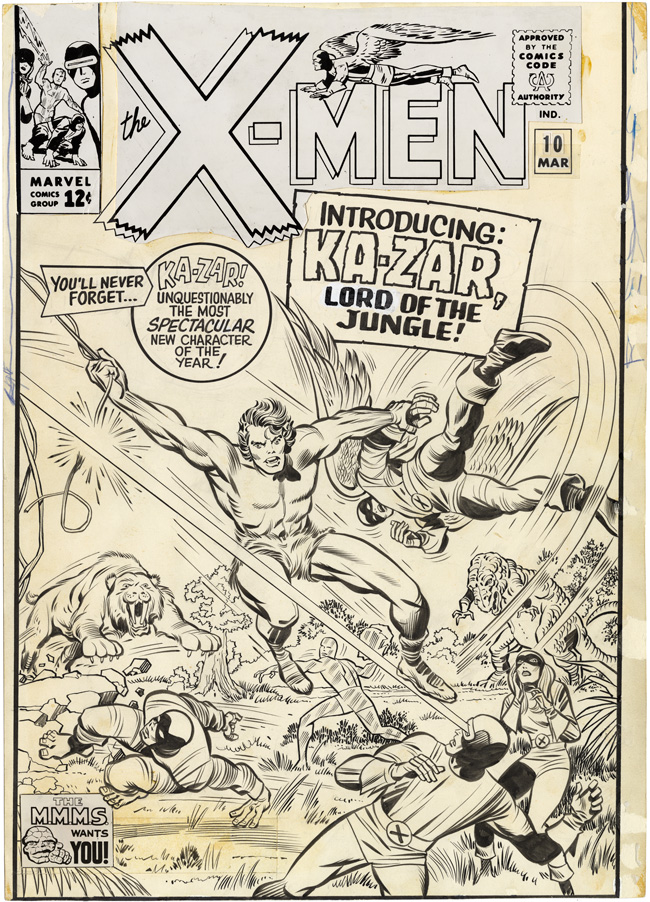
What had never really occurred to me was how important inkers actually are to the visual appeal of comics.  My New Year’s Resolution this past year was to read more X-Men comics and I figured there was no better place to start than the beginning:  X-Men #1 by Stan Lee and Jack Kirby.  In the world of comics it is well known that Jack Kirby is a big deal, to say the least, but in early X-Men issues I was very unimpressed with his art.  At some point around issue six however, something changed. The art was considerably better than in the previous issue. It took me longer than I care to admit to realize that the difference was a new inker on the book.

After this realization I sat down and started doing a comparison between the different inking styles. Flipping back and forth between different pages, I found that the difference was like night and day. The first several issues had very heavy lines with excessive amounts of black throughout the page. Details were barely visible and the overall aesthetic was rather unimpressive. The subsequent issues were amazing. The lines were light and clean with wonderful little details hidden all over the page. Not only did this change my opinion of Jack Kirby (which is probably more important) but it also made me realize how much the inker had to contribute to the final comic product.  Jack Kirby is recognized as one of the finest comic artists that has ever lived and if a bad inker can seriously detract from Kirby’s work, then one cannot underestimate the importance of an inker.

Beautiful Kirby art from X-Men #10.

Beautiful Kirby art from X-Men #10.

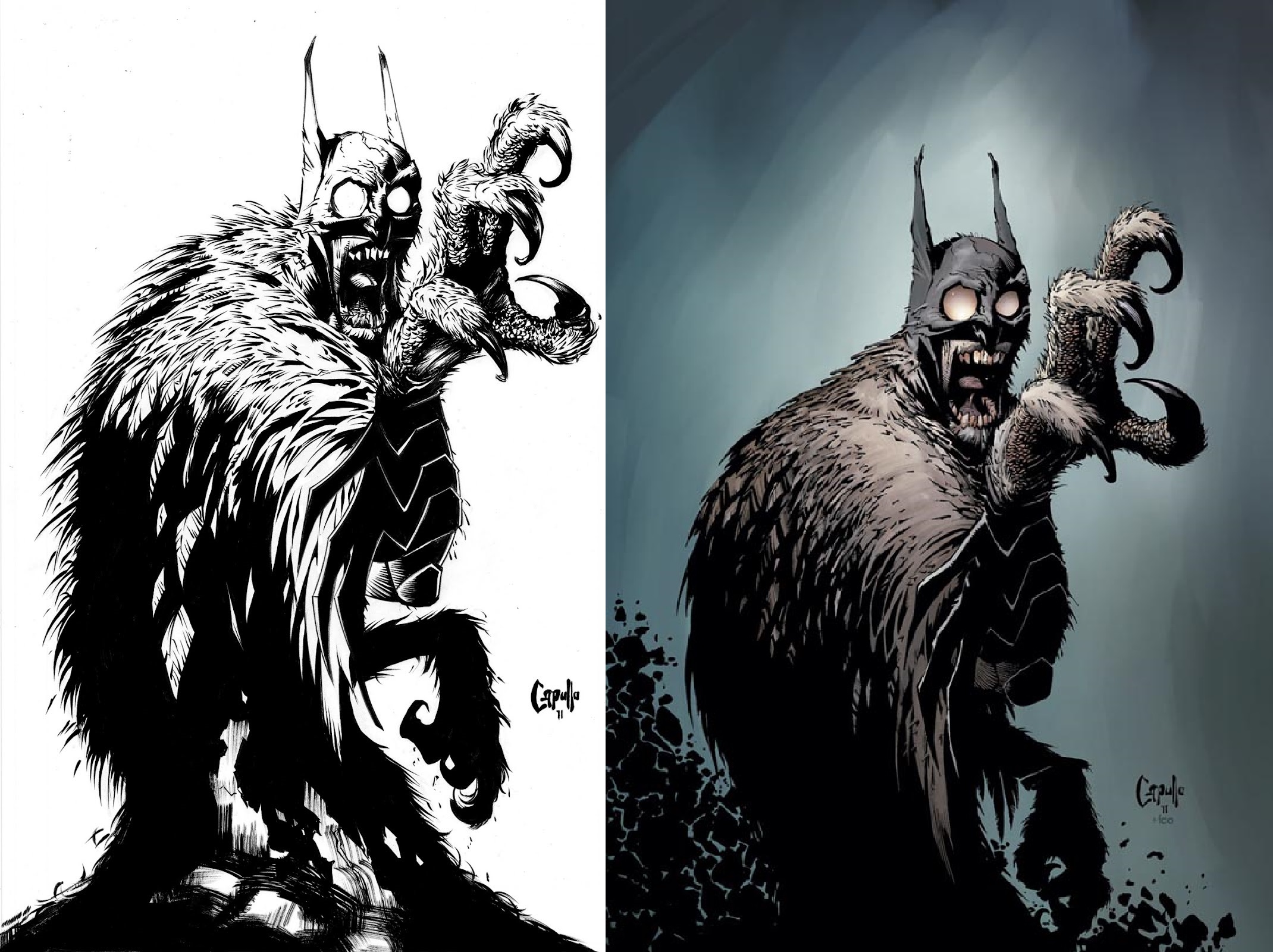
This is evident even in modern comics. Snyder and Capullo’s run on Batman has been the shining star of DC’s New 52 and it is in no small part due to Greg Capullo’s art. Even with this stand out art, with each change of inker (and there have been several) the art changes slightly, but noticeably. None of the inkers have done a bad job, and there is something to be said for every artist giving the work their own personal touch, but it would also be nice to maintain a certain level of consistency throughout a run, and especially through individual story lines.

Greg Capullo Batman #6

Greg Capullo Batman #6

I am far from completing my exploration of inkers. I have only just scratched the surface and I intend to continue learning until I have a much greater understanding of inkers, how they do what they do, and its importance to the comic industry.

3 Comments

Filed under Andrew Hales, Comics

Around the Web September 13, 2013

This has been a great week for tech announcements. Everyone I know has been talking about the latest Apple Press Conference, but for me the more interesting news came from Sony. They have announced a new preferal called the PS Vita TV. This device allows you play your PS Vita games on your TV using a standard PS3 Dual Shock Controller.

PSVitaLarge

The box will also allow you to stream video services such as Netflix and Hulu and play your PS4 remotely (with a PS4 controller of course).

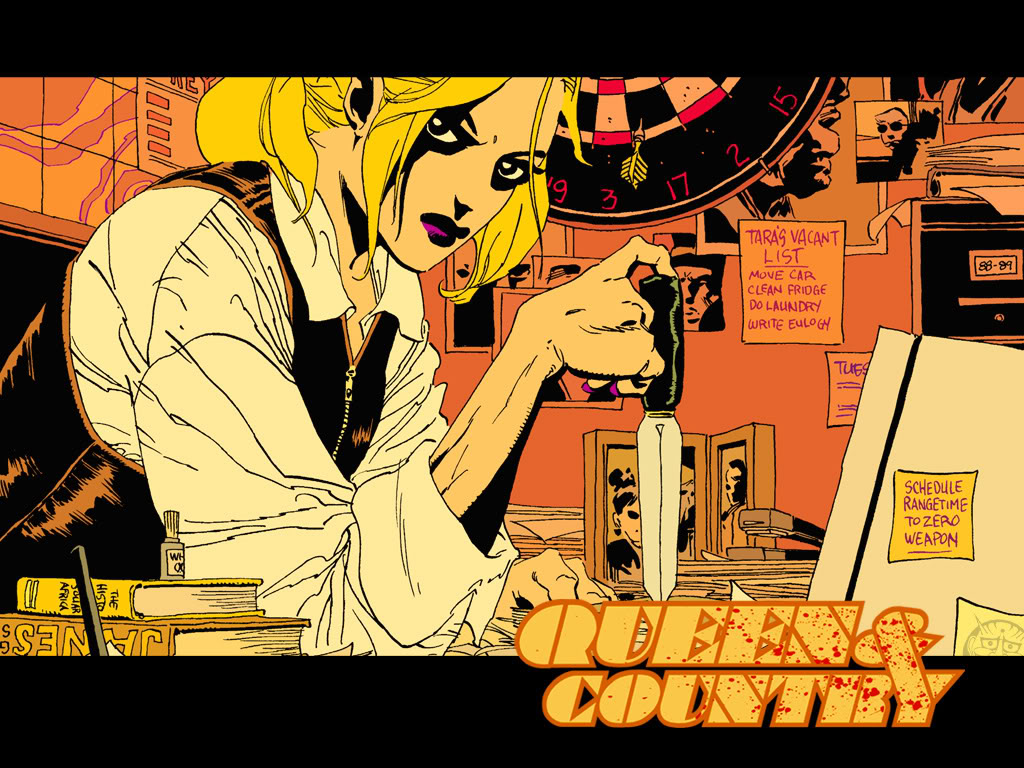
A while back I wrote about how awesome Greg Rucka’s Queen and Country is. Turns out, actress Ellen Paige is interested in playing British secret agent Tara Chase. Things are still in the early stages, but I’d love to see this project come to life.

tim sale

Check out Greg Rucka’s optimistic tweet about the news.

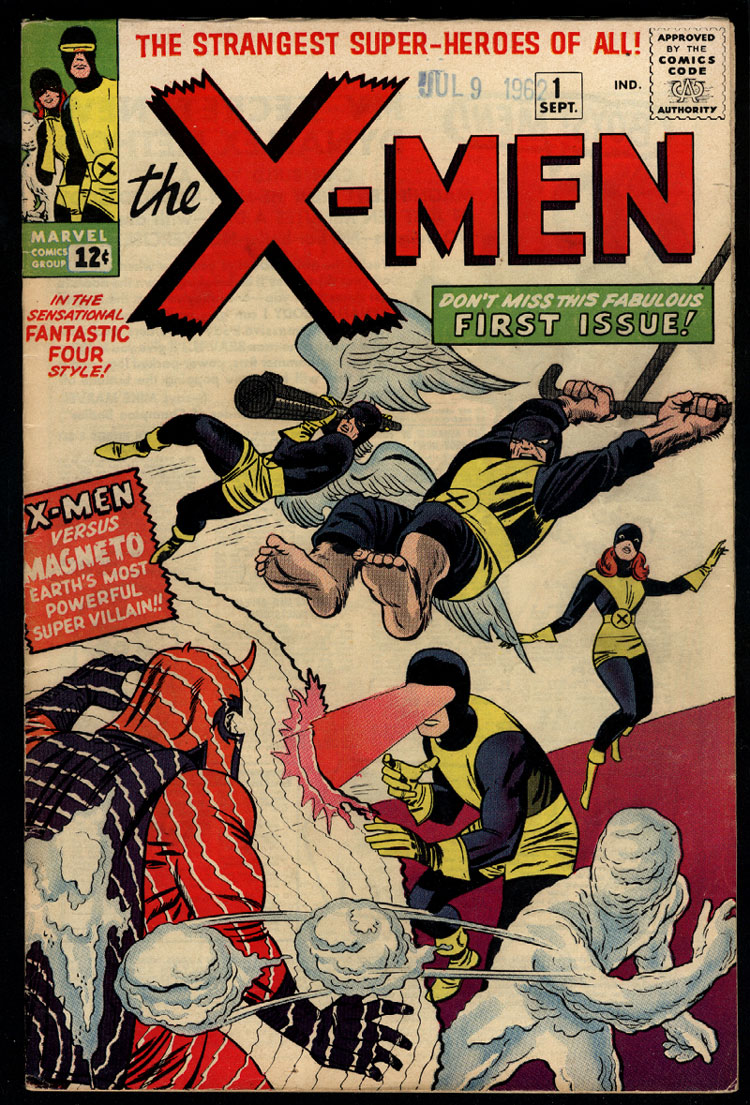
Finally, it is the 50th birthday of my top two favorite Marvel comics, X-Men and The Avengers. On September 10, 1963, issue #1 of both books was released. Both books were written by the great Stan Lee, with art from Jack “King” Kirby.

xmen1X-Men is the first comic I ever picked up and The Avengers has become one of my favorite titles, especially under the direction of Johnathan Hickman.

Also check out:

10 great X-Men stories from the last 50 years.

10 great Avengers stories from the last 50 years.

Leave a comment

Filed under Around the Web