Category Archives: Winning Science

Winning Science January 23, 2015

As I sit writing Winning Science, I am enjoying a nice, hot cup of coffee. As it turns out, this wonderful cup of joe might just save me from skin cancer. Researchers looked at nearly half a million retirees who were cancer free. They then looked at those who developed melanoma and found that those who drank 4 cups of coffee a day or more had a 20% lower risk of developing melanoma. This information, however, should not drive people’s coffee habits, given that there are other health risks associated with excessive coffee intake.

coffee

Continue reading

2 Comments

Filed under Weekly, Winning Science

Winning Science January 9, 2015

While the Sony hack might have made big headlines at the end of 2014, there was a far more dangerous and noteworthy hack that hasn’t been getting much attention. A steel plant in Germany was the target of a cyber attack that not only went after its business computers, but also its industrial control network. The attack resulted in a blast furnace shutting down improperly and suffering considerable damage. While this might not seem that bad in the grand scheme of things, it is actually rather terrifying, since the same thing could happen to a power plant or an oil refinery. This kind of attack has the potential to have a significant impact on our daily lives. The best way for industries to protect themselves from this kind of attack is to separate their industrial networks from the internet, or “air gap” them.

A Modern Blast Furnace.

A Modern Blast Furnace.

This is the second attack of this kind, the first being the Stuxnet attack on Iranian uranium enrichment facilities in 2010.

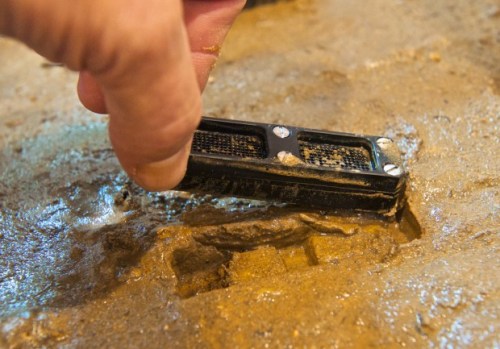
One of the greatest achievements of the 20th century is the discovery of antibiotics, and one of the greatest dangers that face us in the 21st century is the post-antibiotic age. A new invention may significantly reduce that threat: the iChip, a device which aids in developing cultures of bacteria which traditionally resist development in a petri dish. This has already allowed scientists to find a promising new bacteria, teixobactin. Instead of attacking the proteins of a cell, teixobactin binds to fatty lipids that make up cell walls. This makes it much more difficult for microbes to mutate and become resistant. While the new bacteria has yet to be tested in humans, it has shown incredible potential in mice and lab tests.
ichip-620x433

The iChip

I had better not be allergic to this stuff like I am to Amoxicillin.

THERE IS LIFE ON MARS!!!! Ok, that’s more than a little bit of an exaggeration. But according to a geobiologist at Old Dominion University, there is a potential that life did exist on Mars. According to Dr. Nora Noffke, there are geological formations on Mars that are similar to those on Earth near which microbial life is often found. This is based on pictures sent back by the Curiosity rover, which has discovered other evidence that life may have existed. While her argument has been made before, Dr. Noffke put it together in a very well thought out manner that makes it more convincing. Even one of NASA’s own scientists has recognized the careful analysis involved. Though it doesn’t prove that life once existed on Mars, it does give us more evidence that life was at least possible on the Red Planet.

blogs.smithsonianmag.com

I might have been listening to David Bowie’s “Life on Mars” while writing this.

Leave a comment

Filed under Weekly, Winning Science

Winning Science December 19, 2014

For the last Winning Science of 2014, we decided to start off by going back to one of our favorite tech geeks, Elon Musk. Sixteen months ago Musk announced a radical plan for a Hyperloop, a high speed transportation system that could run from LA to San Fransisco in just over 30 minutes. Musk’s paper was mostly theoritical, discussing likely means of accomplishing the idea without delving into the specifics. Since then, a company, Hyperloop Transportation Technologies, has brought in 100 engineers to start working out those details. While they are still in the early design stages, the teams have already evaluated Musk’s plan and determined that it is likely feasible in the time frame and for the amount of money that Musk projected. Additionally, they have been working on improving Musk’s original designs. The team has also made up a potential service map that they feel would provide the best possible service.

hyperloop Continue reading

Leave a comment

Filed under Weekly, Winning Science

Winning Science November 14, 2014

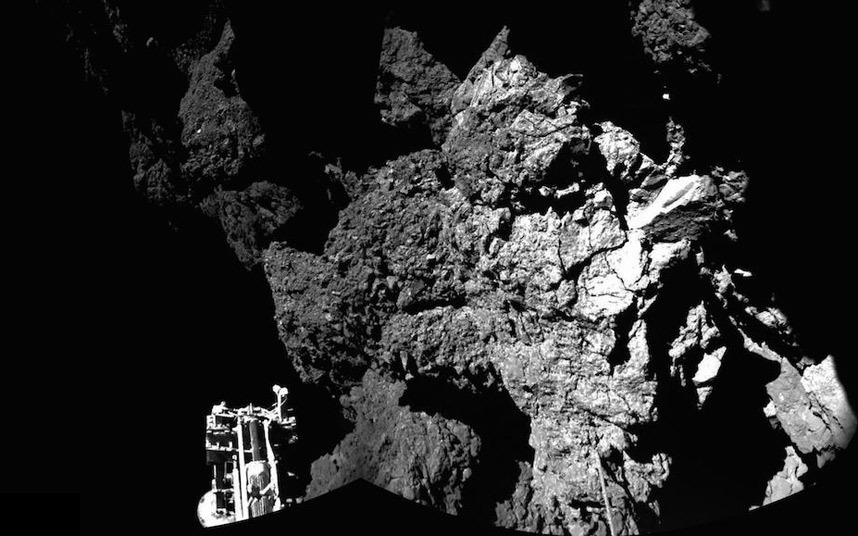
This week saw an amazing first as the European Space Agency’s Rosetta orbiter successfully landed the Philae probe on the surface of an asteroid, 300 millions miles from Earth. Philae is already providing us with some interesting information. Initially the surface of the comet was thought to be lumpy and potato like, but based on images already sent back, there are far more pronounced features including boulders, craters, and cliffs. These features presented a hazard to the probe as the lander bounced twice after landing, ending up in an area that the mission control hasn’t been able to positively identify (they have a rough idea). Aside from the historic nature of the landing, is also provides us with an amazing opportunity to study a previously unexplored celestial body. Some scientists have even theorized that comets are responsible for bringing water to the newly formed Earth.

One of several early images sent back from Rosetta and Philae.

One of several early images sent back from Rosetta and Philae.

Continue reading

Leave a comment

Filed under Weekly, Winning Science