Category Archives: Reviews

Review: The Hobbit: The Desolation of Smaug

***** SPOILER ALERT *****

This review will be discussing plot points which may be considered spoilers. Consider yourselves warned.
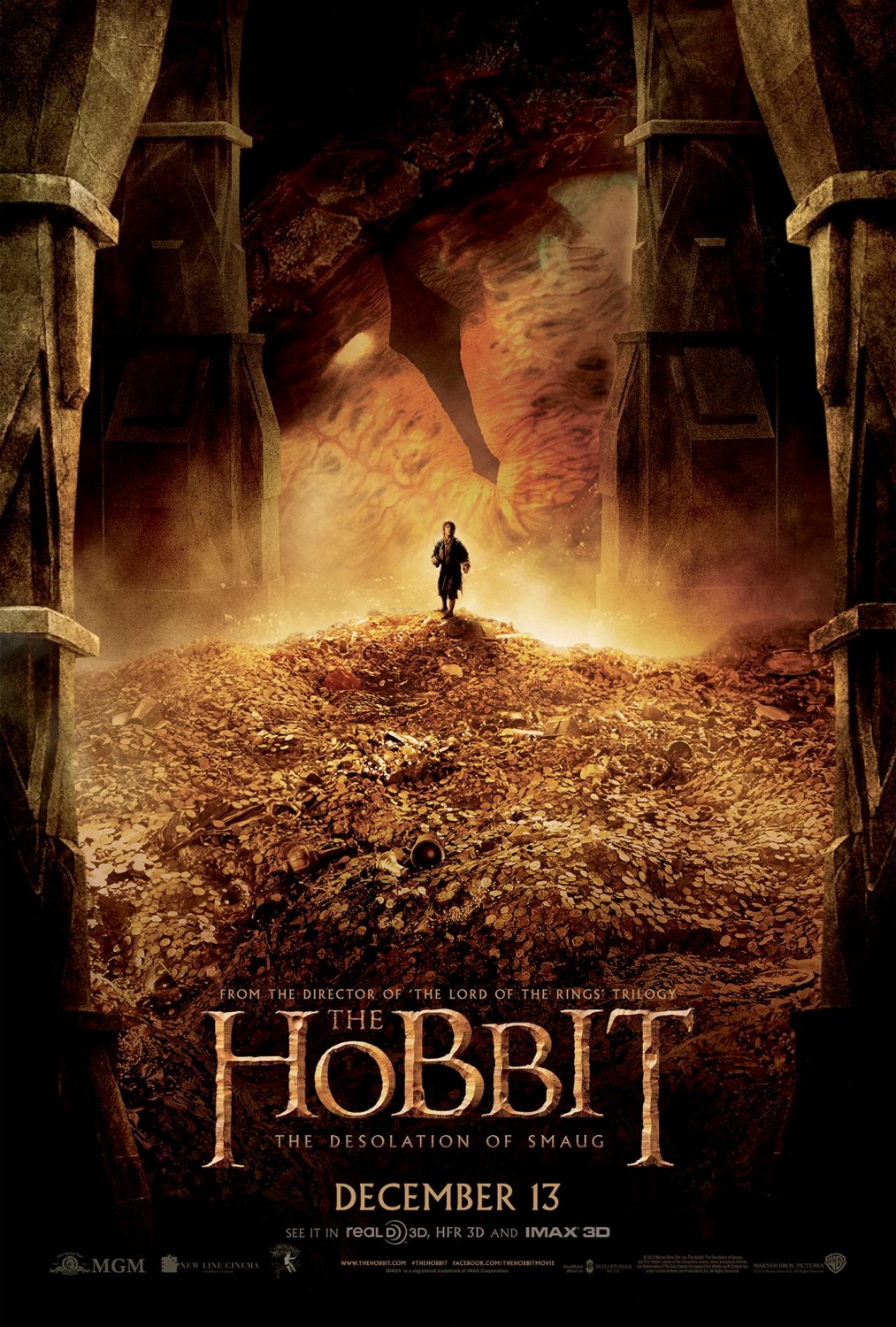
hobbit_the_desolation_of_smaug_ver30_xlg

As I write this review I am in the middle of a Lord of the Rings marathon. I have to admit that going to see The Hobbit: The Desolation of Smaug has put me in the mood for as much of Middle Earth as I can get my hands on. Unfortunately the reason I’m in this mood is because I’m longing for a good story from Middle Earth. As excited as I was for this movie, I afraid that it leaves much to be desired.

After an enjoyable introductory scene, much like those in Lord of the Rings, The Desolation of Smaug picks up just as Bilbo and the dwarves begin their passage into Mirkwood. I was pretty pleased with this portion of the film, but I just felt that it was over far too quickly. Several chapters of the book were dedicated to Mirkwood, and only around twenty or thirty minutes of the film were spent there. While the film portrays the confusion that the company feels admirably, it sets in far too quickly and then is resolved rather abruptly. This demonstrates the major flaw in the movie:  timing.  When these films were first announced, there were only supposed to be two films, but a third was added later. Regularly throughout The Desolation of Smaug some scenes which are canon from the books are compacted in order to make room from extra stuff, often to the movie’s detriment.

Now it’s pretty well known that I am a fanboy and that Lord of the Rings falls into the long list of things I love. Despite this love I am not a purist, which is to say I understand when changes must be made in order to actually make the film.  Some of this extra material I enjoyed—especially the parts which come from appendixes or other material from J.R.R. Tolkien. Watching Gandalf investigate and then confront the necromancer in Dol Guldur was great. This provides some great moments that really place The Hobbit in context. While the story is primarily about the dwarves’ return to Erebor, it is also the build up to Lord of the Rings, and there are scenes that allow us to see all the pieces moving into place.  My issue is that these changes come at the expense of the real story. Scenes from the book were compressed in order to make room for this extra material.
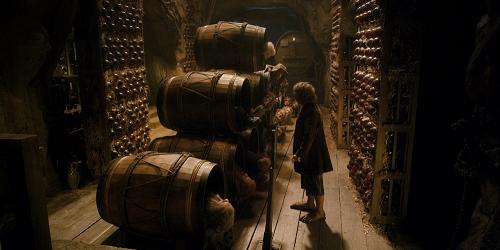
Shortly Bilbo will realize that there is a hole in his plan.

Shortly Bilbo will realize that there is a hole in his plan.

In other places, scenes were extended considerably. The prime example of this was the dwarves’ escape by barrel. There was a good long chase scene down the river that involved the dwarves getting away first from the wood elves and then from the same orc band that has been chasing them through most of the movie. Although an important scene in the book, and one that I have always felt was among Tolkien’s most clever, it was a relatively short part. Not only was this scene extended in the movie, parts of it became more than a little ridiculous. At one point the barrel carrying Bombur managed to get tossed out of the river and rolled down the river bank, taking out dozens of orcs in the process.  Then Bombur proceeds to pop his arms out of the barrel and take on several more orcs before jumping back into the river. Further on, Legolas rides down the river standing on the heads of two dwarves, all the while, shooting down orcs. This whole sequence becomes rather disappointing because of this outrageousness.

Still other portions are purely fictitious. The inclusion of the female elf Tauriel has no basis in the books. Her character was included almost exclusively to include additional female cast members, which is a questionable reason at best. I honestly didn’t mind her character, aside from the fact that she was obviously not part of the original book and therefore all her scenes seemed like someone trying to mimic Tolkien’s style. Tauriel also plays a part in the most egregious portion of the movie. During the barrel escape, Kili is shot in the leg by an orc and is eventually left behind in Laketown, along with three other dwarves, when the company proceeds on to Erebor. This whole plot point was completely unnecessary and only underscores the fact that the third movie should never have been added. If there were only two movies, filler material like this wouldn’t be needed and they would have been able to stick to the fantastic story that already existed.
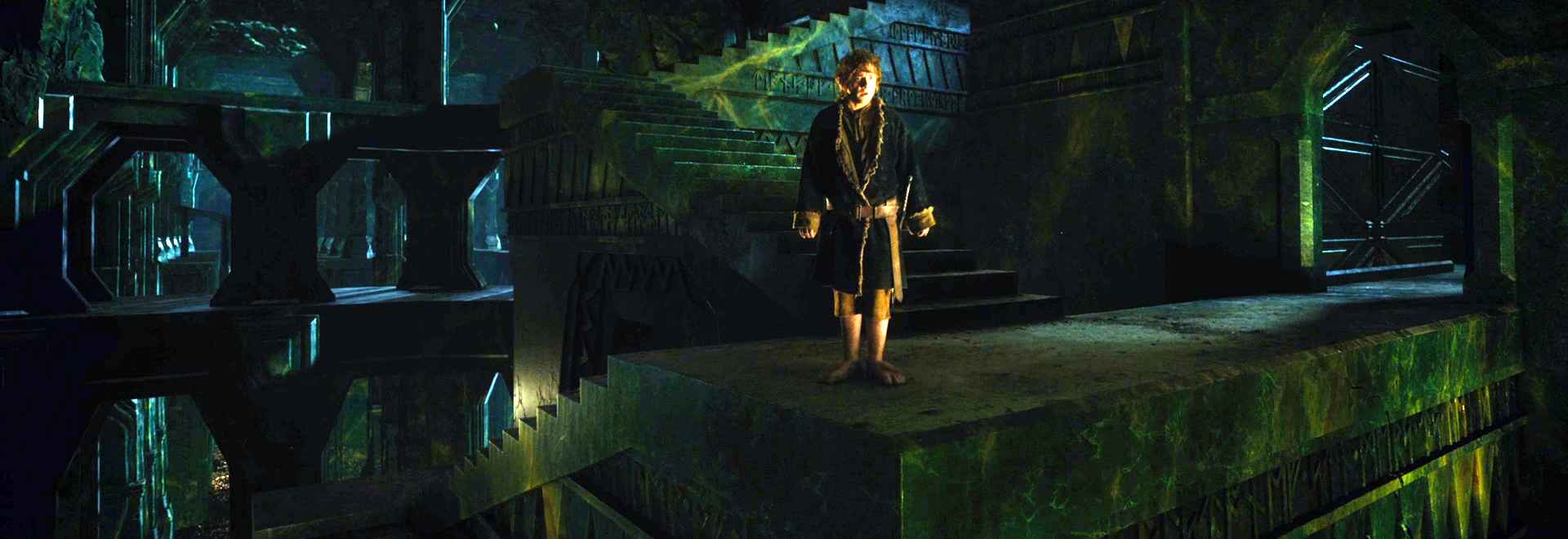
One of many great Erebor interior shots.

One of many great Erebor interior shots.

After all of that, it probably sounds like I hated the movie, and that just isn’t the case. For one, the movie looked absolutely amazing. From the halls of the Thranduil to the Lonely Mountain, the entire movie was a visual treat. I’m especially fond of the dwarven style. It all looks very angular but refined and elegant in its own way. Unlike the orcs who are angular in a jagged and chaotic way, dwarf creations show considerable thought and skill. Beyond the look of the dwarves is of course their grand nemesis, Smaug. I could not be more pleased with the way Smaug turned out. It’s obvious that the Peter Jackson drew upon available sources and previous artist renditions of Smaug when creating the visual for the character. Especially when compared to Bilbo, Smaug appears as more a force of nature than a fellow cast member. The dragon is absolutely enormous and terrifying. Jackson must be a firm believer in “Go big or go home” because the movie makers went all out on Smaug.
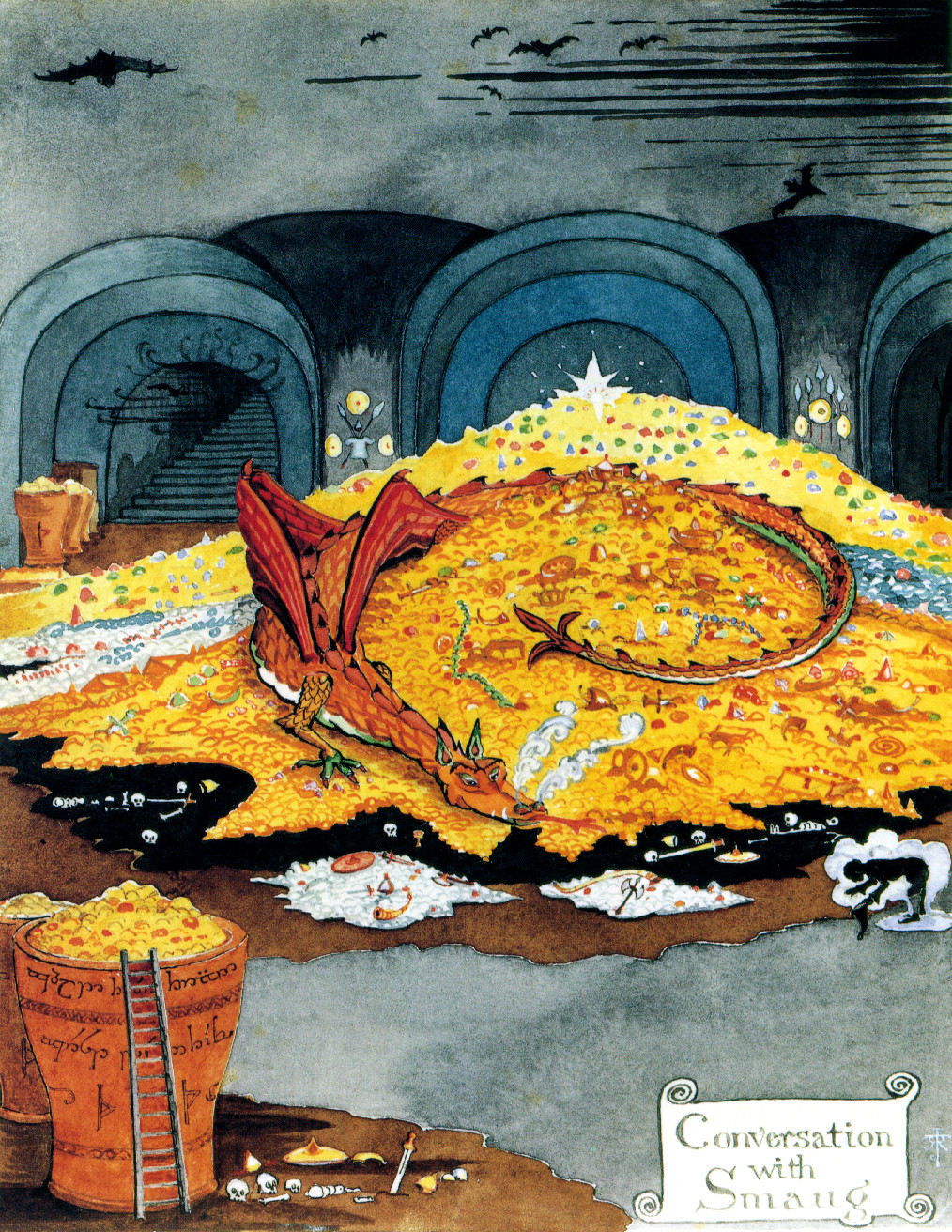
This is the image of Smaug I always think of, and it was pretty spot on, aside from relative size.

This is the image of Smaug I always think of, and it was pretty spot on, aside from relative size.

In no way, shape, or form do I regret seeing The Hobbit: The Desolation of Smaug, but I do think that there was plenty of room for improvement. The film suffered from being stretched too thin when it came to source material (like butter over too much bread), though when they stuck to the original content the movie was at its strongest. While not the movie I was hoping for, I am still excited to see the ending of the trilogy next year. Three out of five Death Stars.
3 Death Stars

3 Comments

Filed under Andrew Hales, Movie Reviews, Movies

Editorial | Review: League of Heroes

The “League of Heroes” is a simple RPG available both in the Android Play store and Apple App Store.  I really enjoyed the bright, playful graphics and the smooth game play, but there were some drawbacks to this game.

Welcome to the village of Froggnest

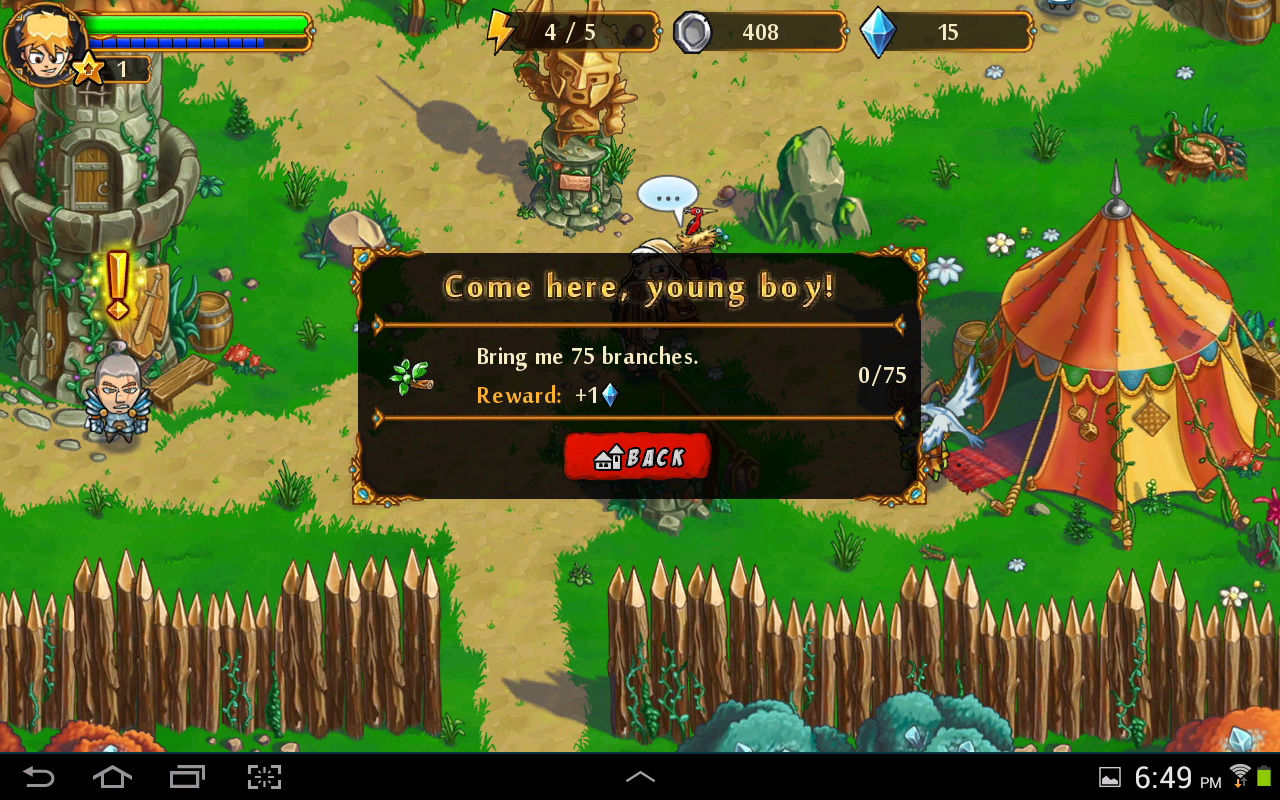
The hero of the game is asked to undertake a quest to rid the small village of Froggnest of the scourge of evil creatures that presumably want to destroy the inhabitants.  These inhabitants seem to consist of a Captain, an armorer, potion mistress, town troll, a trainer, and an elderly grandmother.  Most of these have obvious functions, such as the armorer and potion mistress, who both sell valuable items that are useful for completing quests.  The Captain gives the player missions and individual quests, and the trainer provides certain capabilities for a price—such as increased hardiness or stamina.  The town troll is the social feature of the village, and the grandmother provides small side quests for a reward, such as gathering sticks for her while the hero is on other larger quests.

The Grandmother's Quest

The Grandmother’s Quest

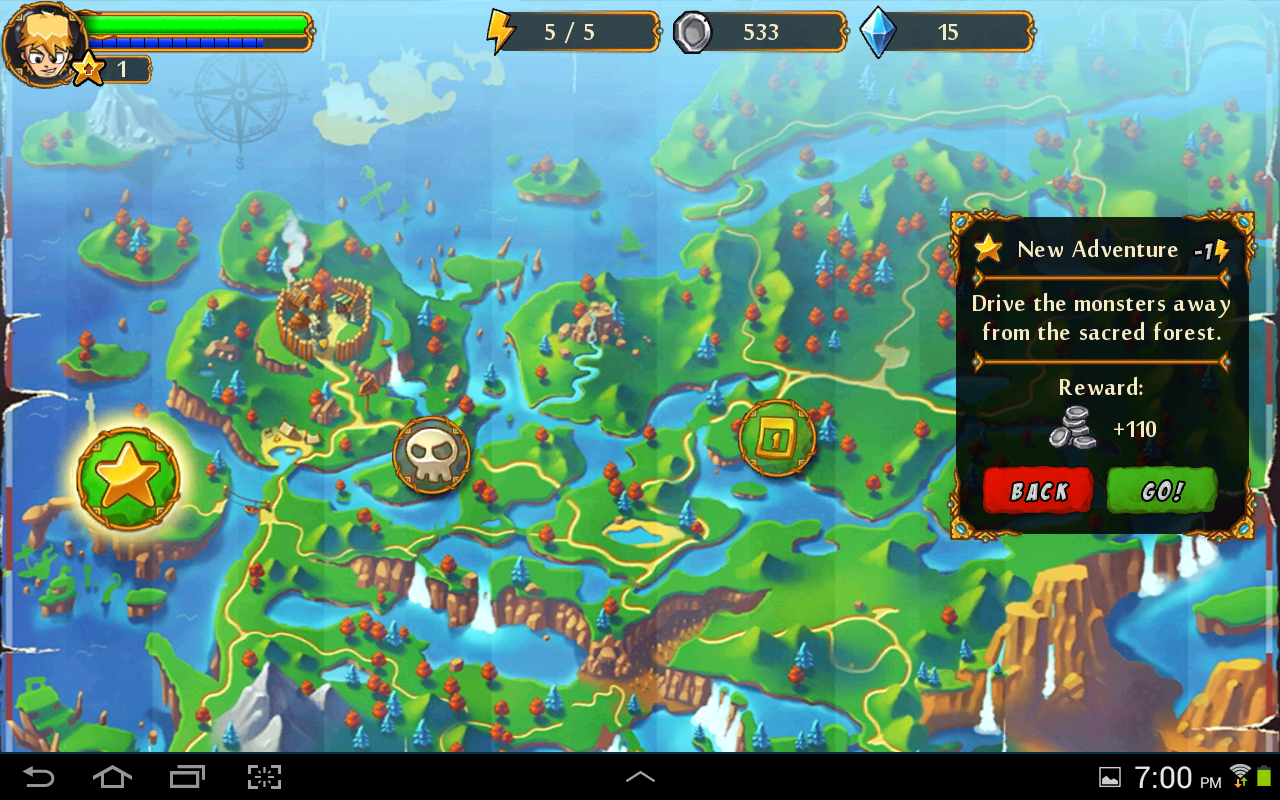
Each time the hero leaves the village, he is given a choice for his quest.  There is exploration, which allows him to continue to defeat ordinary monsters, the daily quest, which is pretty self explanatory, and the boss level.  I like this layout because the player can choose when to face the boss level.  If the hero has gone too long without facing a boss, the game will alert him that he can continue to accumulate coins and jewels, but that his XP will not increase until he has finished the boss level.

Choose your own adventure...

Choose your own adventure…

I like the smoothness of this little game and the ease with which the player can become immersed in the world.  The graphics are bright and pretty.  Quests are simple enough to be played in roughly three or four minutes—which is perfect for the adult player who just wants to take a brief break from work or homework.

There is a nice variety of monsters, and while most of the terrain looks similar, it is not exactly the same.  This helps keep it from being boring.  Also there are lots of little barrels and jugs scattered throughout each level that can be smashed to reveal the contents—coins, usually, but occasionally nothing.  Once a level has been cleared of monsters, the hero is given the option to go straight home to the village, or stick around and search for more treasure.

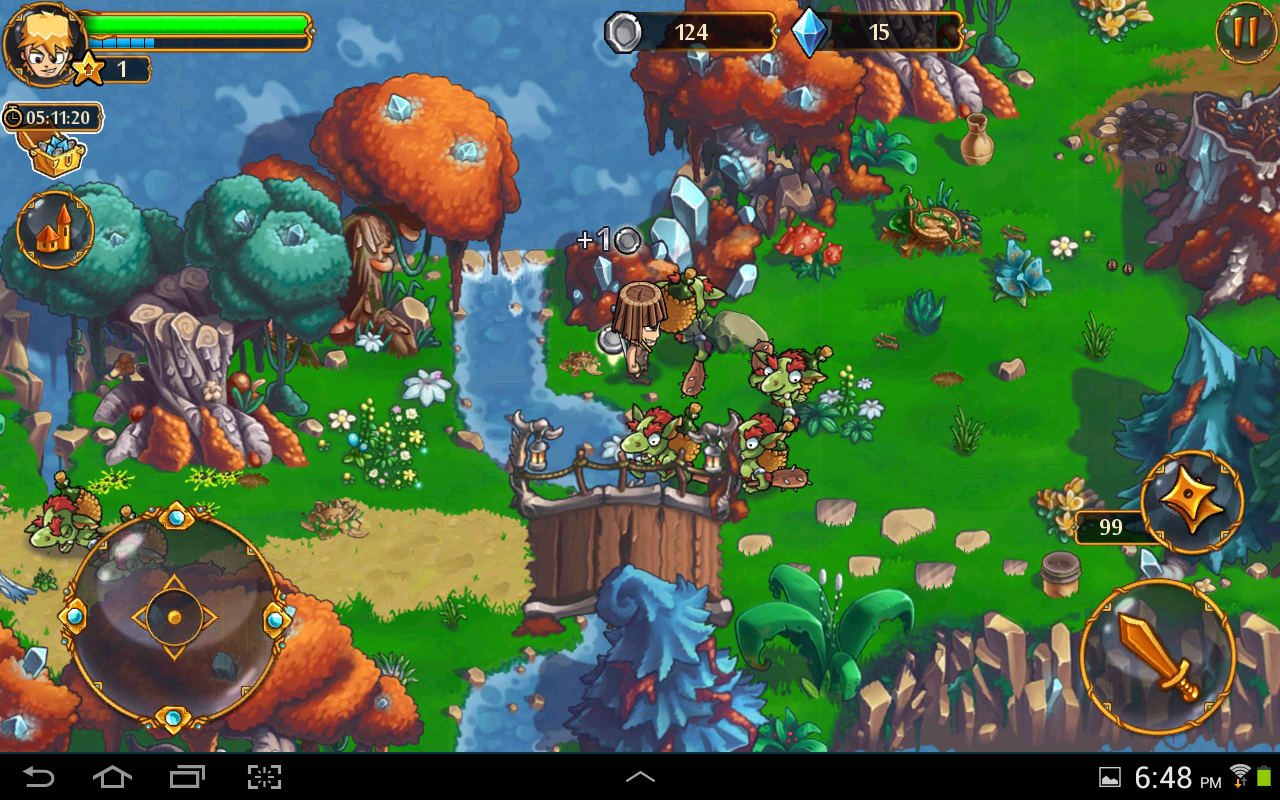
Where the game falls short is the controls.  The main character is controlled with a touch compass in the bottom left corner of the screen.  Moving the compass determines which way he goes.  The bottom right corner is the action button.  While the player is exploring, this is a sword.  At other times it can be used to interact (or “talk”) with other characters, or perform other actions.

I realize that the game has to work with the soft, onscreen buttons on most tablets and smart phones, but it makes the player work very hard to keep his character headed in the right direction.  I’ve been defeated during several levels because I was swinging my sword away from the monsters that were attacking me, and couldn’t get turned back around in time.

Here there be monsters

Here there be monsters

Overall, this is a bright, cute, fun game to idle away some hours, but it is easy to get frustrated over the difficulty of control due to a lack of physical buttons.  I give the game three out of four Death Stars.

3 Death Stars

Leave a comment

Filed under Editorial, Game Reviews, Gaming, Tracy Gronewold

Review: Thor: The Dark World

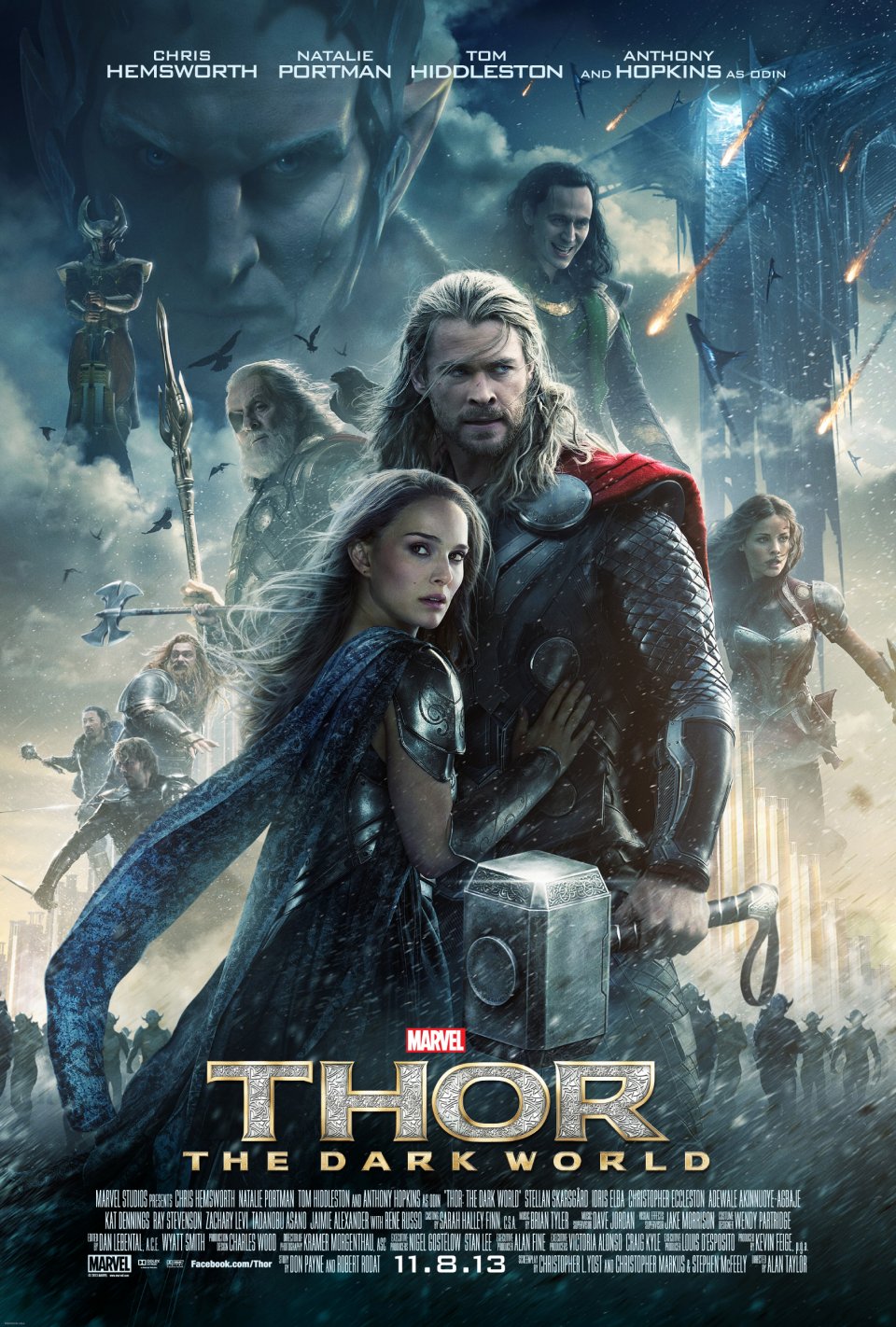
thor the dark world poster

Thor has returned and better than before.  Thor: The Dark World aptly takes the original concept and improves upon it with a nice mix of increased action, further character development, and great touches of humor.

Thor: The Dark World begins with Thor (Chris Hemsworth) and the Warriors Three in the middle of a battle. Since the destruction of the Bifrost, the Nine Realms have been at constant war and it falls to the Asgardian heroes to restore peace. While Thor strives to bring peace to other realms, Loki (Tom Hiddleston) has been brought back to Asgard in chains and sent to the dungeon to rot—though he is still visited by his mother, Frigga (Rene Russo).  Back on Earth, Jane Foster (Natalie Portman) and Darcy (Kat Dennings) are investigating strange phenomena that is very similar to what they witnessed when Thor first appeared. All is well until Jane stumbles across dimensional lines and discovers an ancient weapon, taken from the Dark Elves after they were defeated by Thor’s grandfather thousands of years ago. The phenomenon that Jane is studying turns out to be a convergence of the Nine Realms, which the surviving leader of the Dark Elves, Malekith (Christopher Eccleston), plans to use to return the world to darkness. Really, it’s just another day in the Marvel Universe.

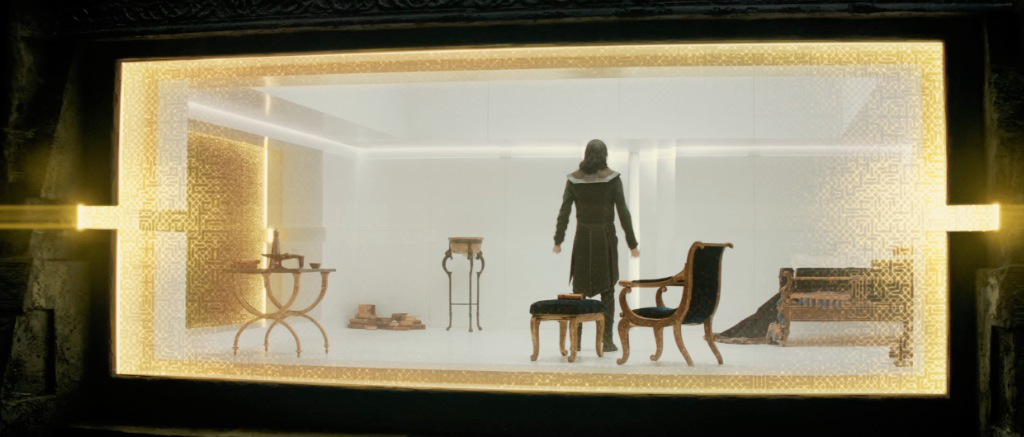
As jail cells go, Loki's isn't so bad.

As jail cells go, Loki’s isn’t so bad.

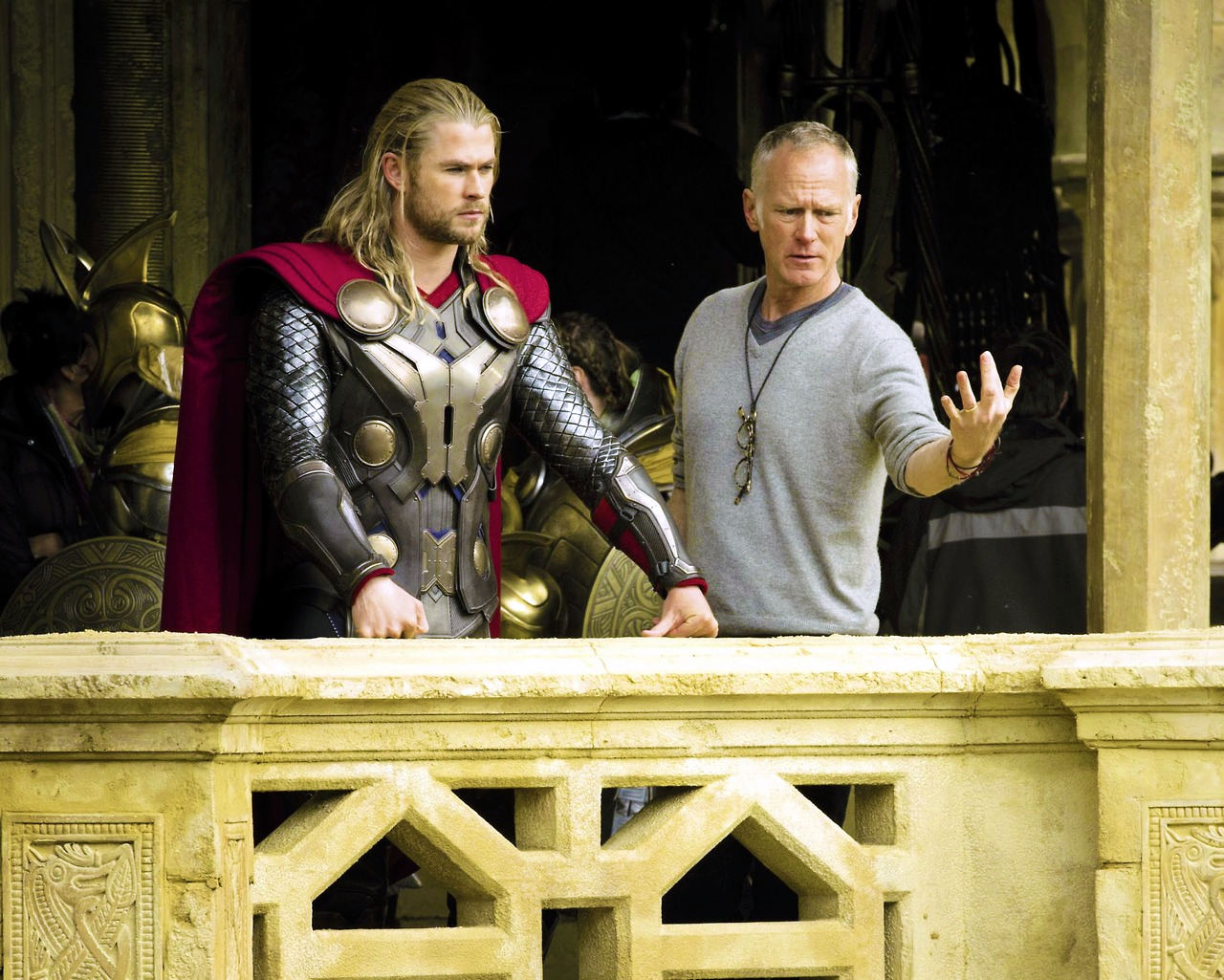
Between Thor and Thor: The Dark World there was a change in directors. While Kenneth Branagh was a capable director, I’m not sure that an action movie based on a comic book was really best suited to his Shakespearean training. The Dark World was directed by Alan Taylor, who can count six episodes of Game of Thrones as part of his considerable directing portfolio.  Taylor brings a different feel to the film with stronger action sequences and a greater sense of adventure. It certainly helps that The Dark World has an extra twenty million dollars in its budget—thanks, no doubt, to the success of The Avengers. That extra money shows in the addition of several locations, most of them in the various realms, as well as a much expanded Asgard.

Chris Hemsworth with director Alan Taylor.

Chris Hemsworth with director Alan Taylor.

Each of these locations has its own fight sequence, and some have more than one.  For my money, the best fight scenes are the opening flashback battle with the Dark Elves, and Malekith’s assault on Odin’s palace. Both were fantastically imagined, especially the Dark Elves. With a few exceptions, most of the Dark Elves wore masks that completely obscured their faces and made them appear to be mindless drones. Unfortunately, the fight between Thor and the Kursed didn’t really work for me. I had been looking forward to it for a significant part of the movie and, with the exception of the very end, it came off as lack luster.

With all the increased action, one might think that there would be less time for character development, but this is simply not the case. One of the things this film does well is to make use of existing characterization. Both Thor and Loki were in The Avengers, so The Dark World doesn’t try to cover the same ground.  Instead, it takes what is already there and expands upon it. Loki is a particularly interesting character this time around. For obvious reasons Loki despises Odin, but he still maintains an odd affection for Frigga, his adopted mother.  Even though he attempts to hide his feelings, he is often driven to act on these feelings. Loki will always be a difficult character to get a good handle on, purely based on his nature as the god of mischief.  His motivations are constantly hidden and shifting. This time around—more than either of his two previous appearances on the big screen—we really get to see this changeable and mysterious nature in action.

After the events of Thor and The Avengers, Thor demonstrates that he has also changed, showing that he has maintained his new found maturity. So often movies like this become repeats of the same plot:  prideful character is humiliated so they can learn the error of their ways and then rise up to beat the bad guy.  Audiences love stories like this, but when the same character keeps doing the same thing in every movie, it gets old.

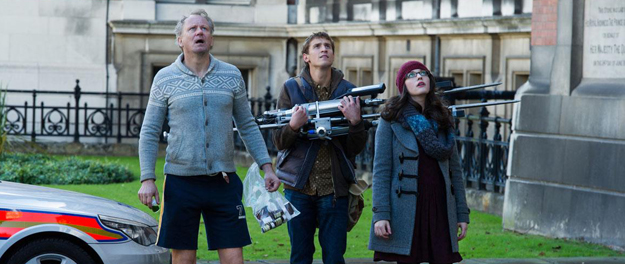
I also really enjoyed seeing more of one of my favorite characters, Darcy. While a fairly minor character in the first Thor movie, Darcy got more screen time this time around, adding to the film’s humorous elements.

A great trio that help provide comic relief.

A great trio that help provide comic relief.

The Dark World builds tonally off of The Avengers and is full of humor that helps keep the movie from being too dark. There is no one scene that is designed purely for humor, but there are little one and two line jokes and sight gags throughout the whole film that manage to prevent a fairly dark film from getting lost and becoming a real downer. While certainly not as clever as a Joss Whedon script, there are plenty of well developed sequences that lead to amusing payoffs. One setup in particular involved throwing trash and other random objects, especially shoes, through a dimensional rift and watching them reappear from another rift. Sometimes these objects don’t reappear, but of course they are discovered later in the movie.

My only serious complaint about the movie is with the last scene. While the acting was good and the scene itself wrapped up the movie nicely, it looked like utter crap. It looks as though the scene was shot during reshoots, against a green screen instead of a full throne room set, and was they rushed through post-production in order to meet the release date. No other part of the movie has this issue and in fact, I was very impressed with the visuals up until this point. With the constant change in location there is great potential for some of the lesser used places to not look as good, and this was just not the case.

Overall, I’m very pleased with the way Thor: The Dark World turned out. It was both a self-contained story and also helped to advance the overall Marvel Universe storyline. Without giving too much away, I was also very excited about the Easter Egg at the end of the credits. It’s a great setup for next summer’s big Marvel blockbuster. I give Thor: The Dark World four Death Stars.

2 Comments

Filed under Andrew Hales, Movie Reviews, Movies

Editorial | Review: The Book of Revelation

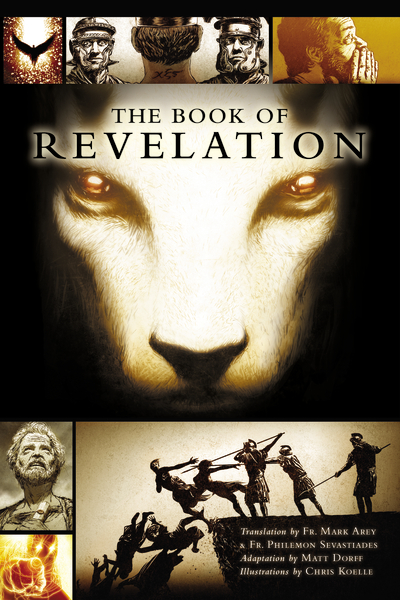
I have enough of a Christian background to be rather skeptical of any new translations of Biblical Scripture.  I’ve also never really believed that comics and the Bible mix well.  I was proven wrong at Comic Con this year by (of all people) a Greek Orthodox priest.

The language flows like poetry AND is easy to read.

The language flows like poetry AND is easy to read.

While I wasn’t excited about a graphic novel of the Bible, I AM always excited by words and language.  Father Mark Arey was so excited to talk about his translation work on this project that I could not help catching his enthusiasm.  This past weekend, for the first, time, I was actually able to sit down and read The Book of Revelation, as translated by Mark Arey and Philemon Sevastiades, and illustrated by Chris Koelle.

The first thing that hits the reader about this graphic novel is that the language is updated to current English.  The oft maligned thee’s and thou’s are replaced by you and the modern are replaces the archaic art.  However, I was pleased to realize that the English used is proper, and the style fits the content beautifully.  Behold as an exclamation still exists here.  The flow is reminiscent of the original King James Version of the Bible, but slightly easier to read.

Certain words have been more correctly translated from the Greek, also.  As with anything, an understanding of history must come into how the reader perceives any text from ages past.  King James of England was, of course, the head of the Anglican Church, which had split from the Catholic church under Henry VIII.  Therefore, a word which would have been most accurately translated priest was instead translated as elder in the KJV.  In this volume, it has merely been transposed into English characters as presbyter, which is easily understood by most English readers.

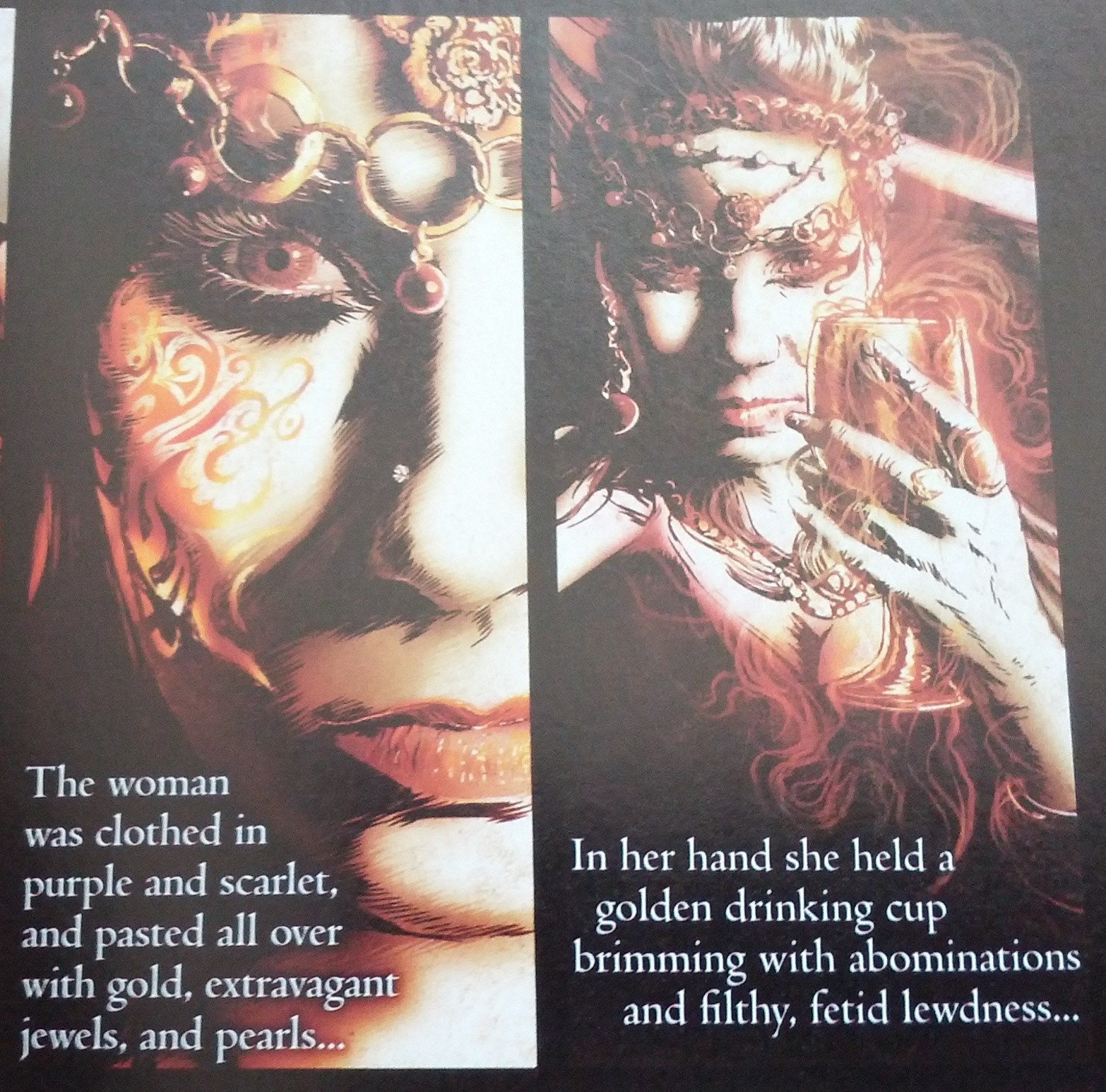
The illustrations support the text (and are really beautiful on their own).

The illustrations support the text (and are really beautiful on their own).

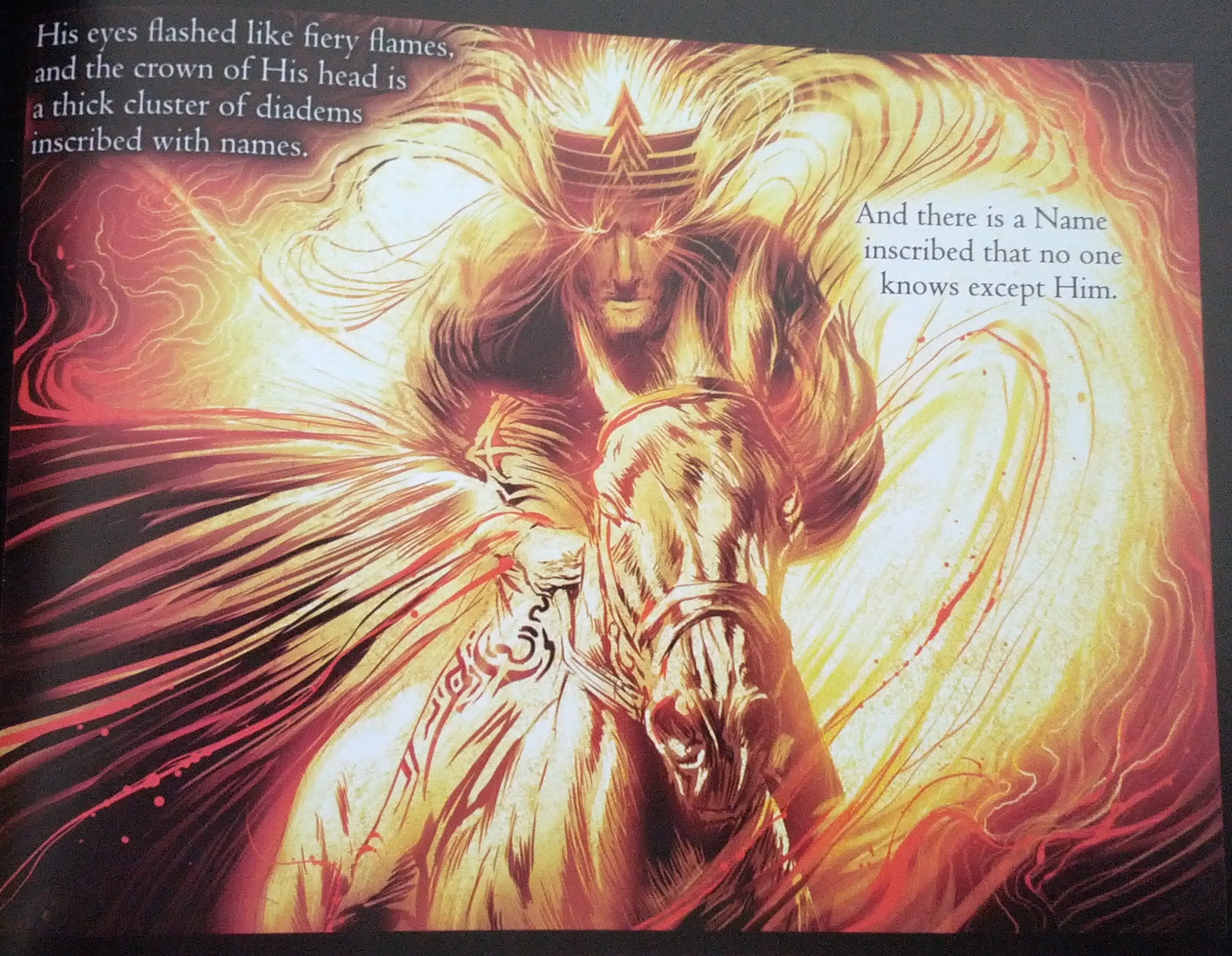
The prose is poetic, and beautiful.  I would say that it didn’t even need illustration, except that the illustrations in this novel are gorgeous.  Each panel illustrates roughly the amount of text that would be a verse or two in a normal Bible.  The pictures depict just enough to fire up the imagination of the reader, and direct it to shape the words into a comprehendible context.  As someone who has studied the Bible extensively in days gone by, I appreciate this, because many of the concepts in the book of Revelation are simply too complex to ever be properly pictured.

2013-11-11 13.22.29

Gorgeous images of complicated ideas.

To fans of the Bible, I would say read this book for the beautiful translation of Scriptural texts, and stay for the stunning artwork.  To fans of comics and graphic novels, I say open this book for mind blowing visuals, and let the poetry of the words sweep you away.

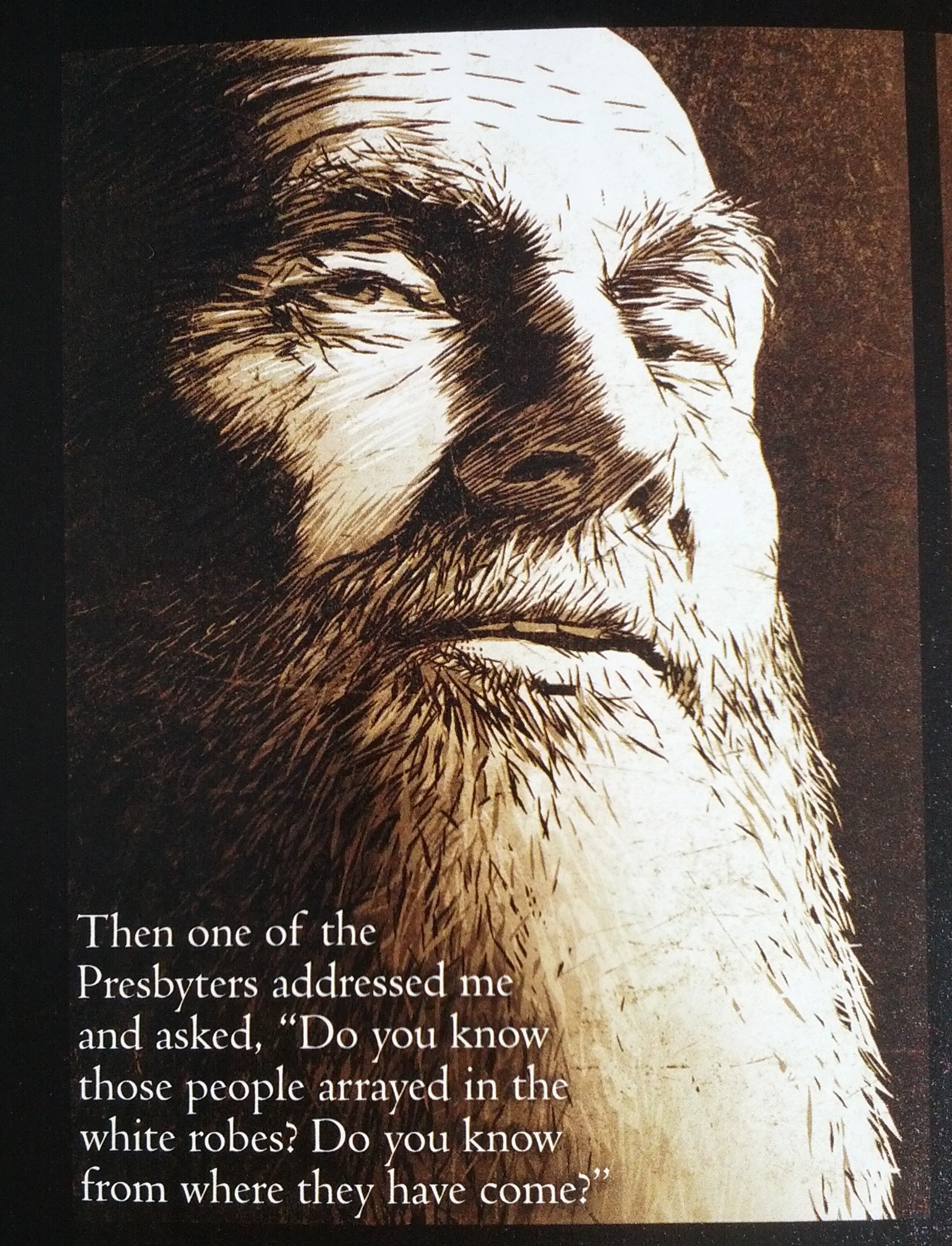
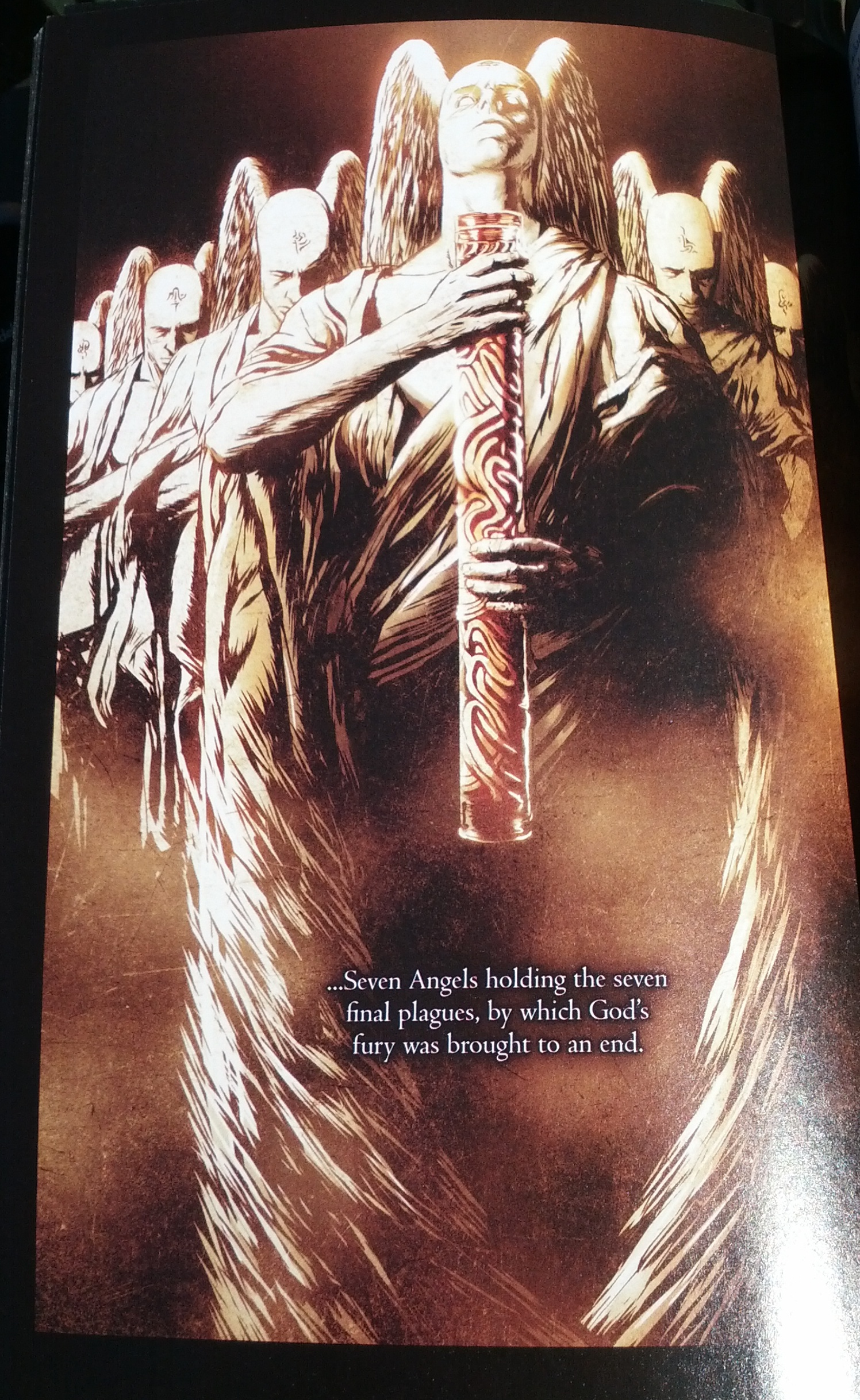
If I have a fault with this book, it is that the colors are very limited.  After speaking to Father Arey, I do understand that this was on purpose to avoid taking away from the text, but I would have loved to see some of the full page images in full color!

I would love to see this image in full color.

I would love to see this image in full color.

In our rating system, I would give this book a four and a half out of five Death Stars, and would encourage anyone to read it.

4.5 Death Stars

2 Comments

Filed under Comic Reviews, Comics, Editorial, Tracy Gronewold