Author Archives: Andrew Hales

DC’s New 52: How we got there

Just about two years ago, DC Comics decided it was time to shake things up. This was no surprise. A revolution had been coming for a while, but this time DC was starting over from issue #1 on everything in their universe. When they said everything, they meant everything, including titles that had been around since the beginning, such as Action Comics, Detective Comics, Superman and Batman. Previously these books were untouchable, the holy relics of the comic book industry, and to do something this radical to them was a risky undertaking to say the least. As we approach the two year mark of this experiment, I think it’s worth taking some time to look back and evaluate how each of the New 52 titles is doing. So each Thursday in September (and the last in August. I’m looking at you, Justice League) we’ll take a short look at those books that came out two years earlier.
New52logo1

Before we get into the books themselves, it’s probably a good idea to take a look even further back and see how DC got to the point of needing a completely clean slate. DC has a long and convoluted archive of continuity that has often been intimidating to new comic book readers trying to jump on. More than once DC has tried to pull off a universe-wide reboot, but it hasn’t always gone according to plan.

Back in 1985, DC came to the realization that fifty years of uncoordinated continuity had become too unwieldy. How could they explain to new readers that Golden Age Superman was old but alive and working with the Justice Society, while Silver Age Superman was young and a part of the Justice League? Were there two Supermans? The original attempt to explain things away was the Multiverse, an idea that many of these characters existed at the same time, but in parallel universes, each one with its own history. This worked for a while, but after time these different Earths began to cross over with an increasing frequency that once again made it difficult to keep things straight, and it was decided that something had to be done. Enter Crisis on Infinite Earths, a universe-spanning event comic that would radically alter the face of the DCU. By the end, whole swaths of characters had been removed from existence, the Multiverse was eliminated and a single Earth (with a single Superman) was left behind.
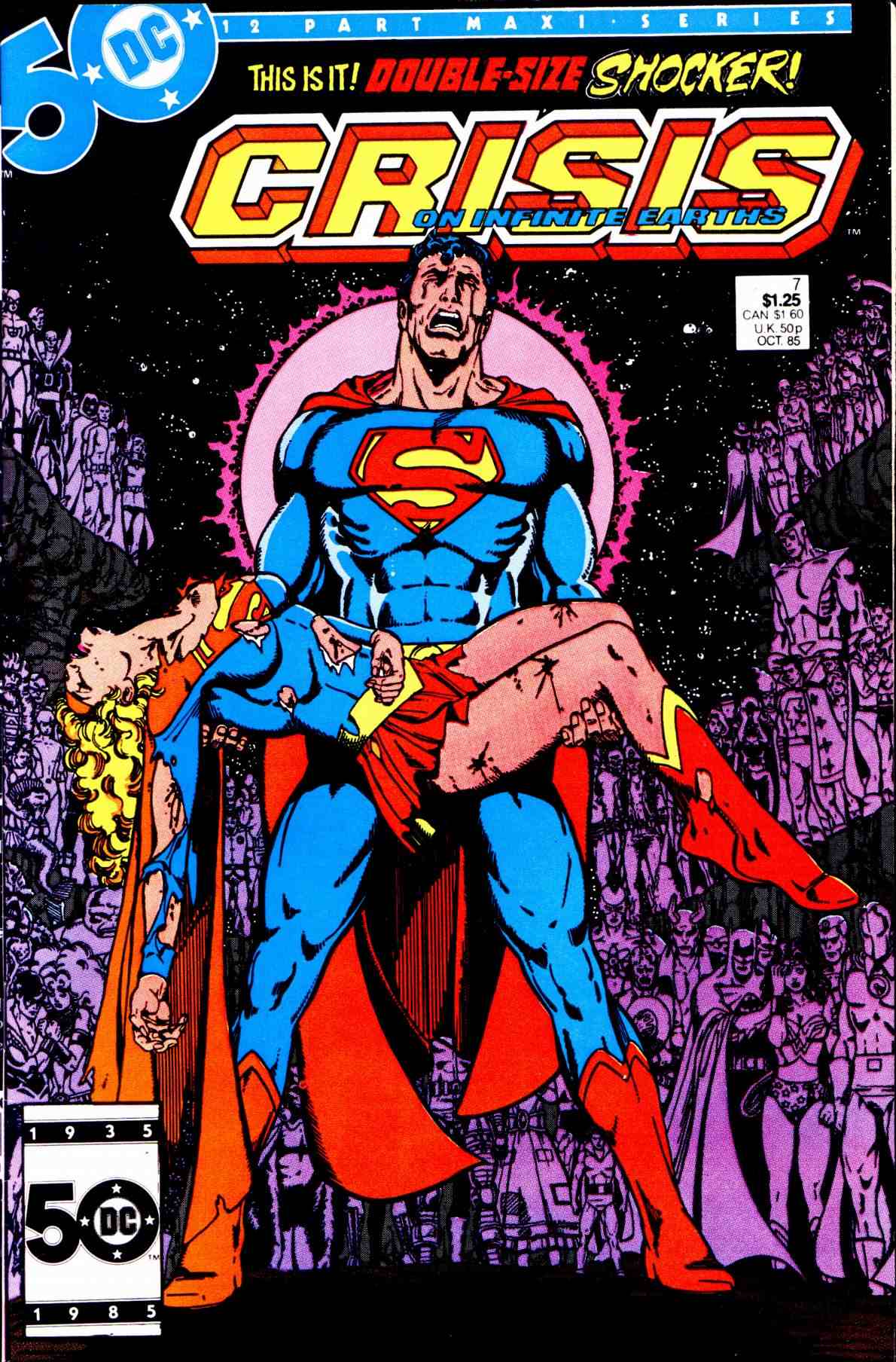
Though one of many characters killed during Crisis on Infinite Earths, Supergirl was probably the most popular character to meet her end.
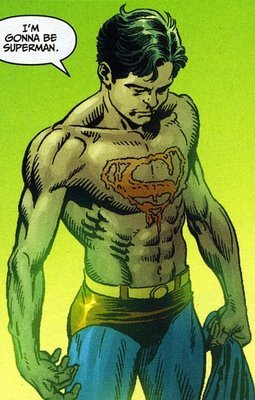
Though one of many characters killed during Crisis on Infinite Earths, Supergirl was probably the most popular character to meet her end.

Because carving a Superman logo into your chest is completely normal

Because carving a Superman logo into your chest is completely normal

Soon, events and characters were referred to as Pre- and Post-Crisis and all was well. At least for a little while. Over the next several years, writers began to reintroduce characters and plot elements that had been wiped out in Crisis. What was originally a pretty clean restart slowly began to resemble the Pre-Crisis DCU with all of its twists and turns. Throughout all of this, though, the Multiverse stayed gone. With no Multiverse there was still a limit on how crazy plotlines could get because all the characters had to exist within the same universe. That all came crashing down when the Multiverse was brought back in Infinite Crisis. Following several lead-in mini-series, Infinite Crisis revealed that Golden Age Superman had not perished during Crisis on Infinite Earths, but had, in fact, gone into hiding with his wife Lois, Superboy Prime, and Alexander Luthor (Lex Luthor from a different Earth). When Lois’ health starts to fail, Superman determines that her health will improve if she is returned to her Earth, and they leave their hiding place and begin an attempt to replace the current Earth-1 with their Earth-2. Eventually Superboy Prime goes crazy and kills several heroes and villains, including his Earth-1 counterpart, Connor Kent. Superboy Prime is stopped, but not without causing both Supermans to be depowered and a considerable body count.

The fallout from Infinite Crisis was taken up by the breakthrough series 52. An ambitious concept, 52 released an issue a week for a full year. Even more shocking was that this series would not include DC’s holy trinity of Superman, Batman, and Wonder Woman. This decision allowed writers to use lesser known heroes, relying on character development rather than just big names. The year started out with a series of stories which are interesting but mostly unrelated, but as the weeks passed the stories became more intertwined until it culminated with the reveal of the existence of fifty-two new parallel universes, created at the end of Infinite Crisis.
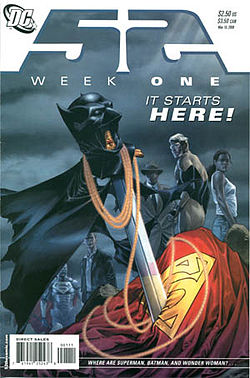
250px-Cover_52_Week_One_(May_10,_2006)

Now you may think “at least we’ve made it to the New 52”, but alas, you’d be wrong. Next, fans were made to suffer through Countdown to Final Crisis, a disasterous follow up to 52 which followed 52’s weekly release schedule, but lacked its overall appeal. The storytelling was questionable at best and it was populated by characters that most people didn’t really care about. Additionally, the plotlines became so skewed as the series progressed that by the time it ended they no longer lined up with Final Crisis. Subsequently most of the storylines were retroactively removed from continuity.

Thankfully Final Crisis turned out much better than its lead-in event. Written by DC’s powerhouse writers Grant Morrison and J.G. Jones, Final Crisis was a well written, if confusing story. Further tapping into lesser known characters, and adding more than a few of his own, Morrison made considerable use of Jack Kirby’s New Gods, most of whom had not seen much use in recent years. Additionally, the Multiverse played a major role in the Final Crisis with the inclusion of the Monitors, a whole race based on one of the key players from Crisis on Infinite Earths. While a great story, Final Crisis was anything but final and did little to help maintain the clean continuity that DC had attempted to setup all those years ago. And oh yeah, Batman died.
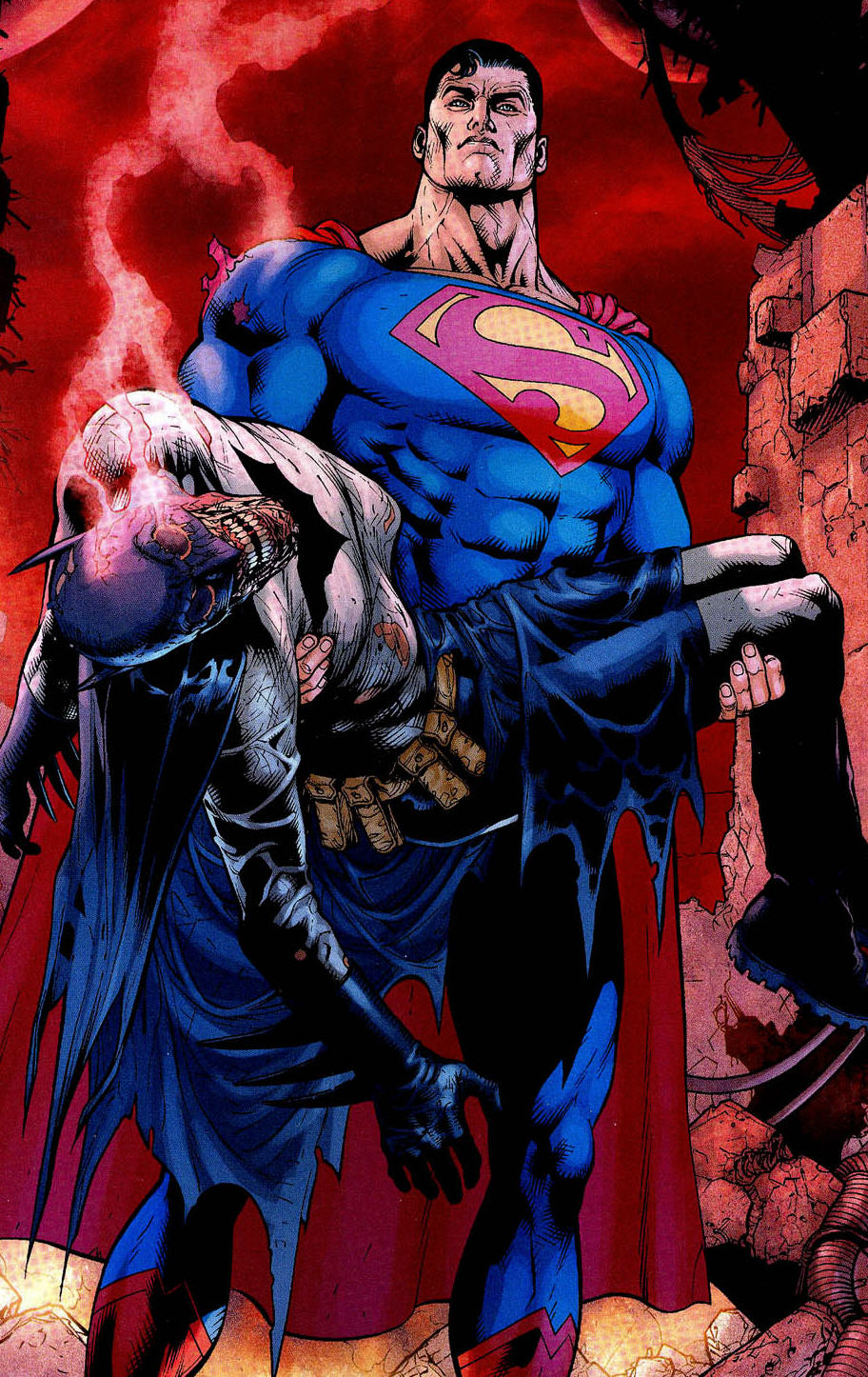
Are we starting to see a theme emerge?

Are we starting to see a theme emerge?

This being comics however, Batman came back (Turns out he was just trapped in the past. Happens to me all the time), just like many characters before him. While he was gone, however, readers were treated to Dick Grayson as Batman, as well as the DCU-spanning Green Lantern event, Blackest Night. As if things hadn’t been confusing enough, Blackest Night brought many dead heroes and their loved ones back to life as Black Lanterns (If your head wasn’t hurting before this, it should be right about now). While impressive for its cosmic scale, Blackest Night was a nightmare for those not intimately familiar with DC’s continuity.
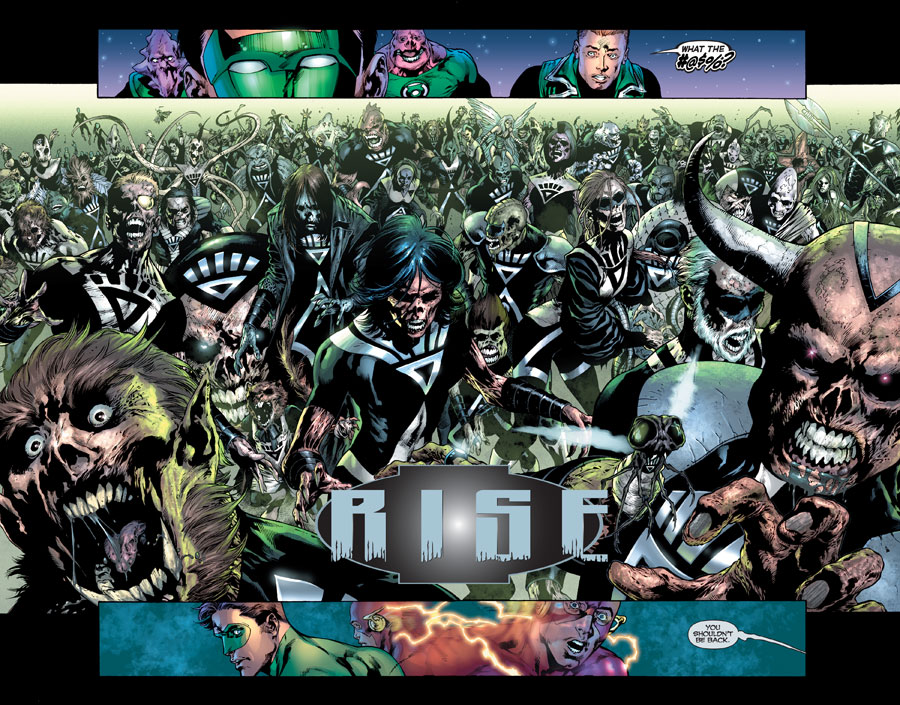
I see dead people...a lot of them.

I see dead people…a lot of them.

The final stop on our journey to the New 52 is Flashpoint. The Flash (Barry Allen) wakes up in what he believes to be an alternate timeline in which Wonder Woman and Aquaman are at war with one another and Batman is Thomas Wayne, whose son Bruce was killed in Crime Alley. Eventually Barry finds out that he is not in an alternate timeline, but in his own timeline that has changed after he attempted to travel back in time to save his mother from dying. Barry is eventually forced to undo what he has done and in the process the DC universe merges with those of its imprints, Vertigo and Wildstorm, and the timeline resets, leaving us with the New 52.

This controlled reboot of the DCU was twenty-six years in the making and took several failed attempts to get right. Through the next five weeks, Therefore I Geek will explore the things DC has gotten thing right and point out areas in which they took a misstep or two. Each week we will discuss the first wave books that were released that week two years ago and see where they’ve been, what’s going on now, and where they are headed. Lucky for you, Week One only consists of one book, Justice League. Stand by for Weeks Two through Five and join us for a look at the state of the DCU.

6 Comments

Filed under Andrew Hales, Comic Reviews, Comics

Winning Science August 21, 2013

Lately I’ve been hearing and reading a number of stories about how scientists are now looking into what role various collections of microbes  play in maintaining our health. For some people suffering from Clostridium difficile infections, the required antibiotics can throw these microbes out of whack. There is hope now for these people, however, in the form of fecal transplants. That’s right, you can be saved by someone else’s poop. And this is no laughing matter, 14,000 people die from this infection every year.

poop

Seriously though, if you have to put someone else’s poop into my bowels via a tube in my nose, I’d seriously consider dying instead.

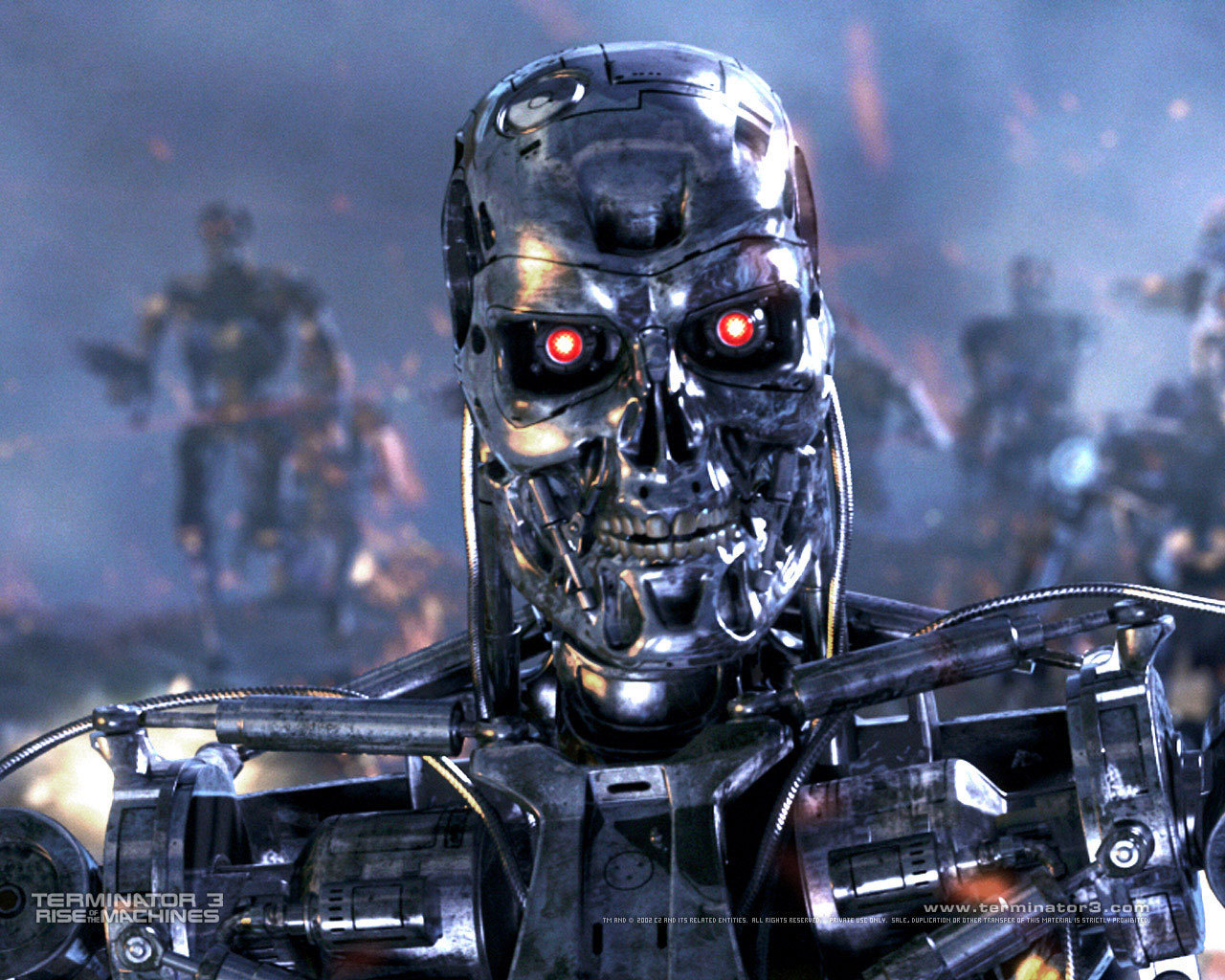
The Defense Advanced Research Projects Agency, commonly known as DARPA is attempting to create a computer that will mimic the neocortex, or the part of the brain responsible for higher brain functions. I’m uncertain what the actual purpose of this computer would be other than just being really powerful new computer, but I’m sure DARPA has something in mind.

Have these guys honestly never seen Terminator?

Have these guys honestly never seen Terminator?

It’s either the birth of Skynet or the backup plan to several failed “brain in jar” experiments.

My desire for coffee made by robots will soon become reality, all thanks to the Briggo Coffee Haus. Leaps and bounds above the old school coffee vending machines that usually serve out coffee I wouldn’t give to my worst enemy, this new industrial robot will make a custom cup of coffee just the way you like it by means of a touch screen or an iPhone app. The company plans to market their robots to places that don’t have coffee houses such as airports, hotels, and office buildings.

Where have coffee robots been all my life?

Where have coffee robots been all my life?

I love the fact that they aren’t trying to compete with actual coffee houses, but I’m also hopeful that this thing can make coffee quickly so I don’t have to wait ten minutes for a cup.

There is a ranch out in Texas that is a bit unusual. Instead of raising cattle or sheep, they raise the dead, in a manner of speaking. This ranch is used by the Forensic Anthropology Center at Texas State University in San Marcos to study how bodies decompose. All the bodies come from people who agreed to this before they died, which answers my long standing question of what happens to bodies donated to science. Every day students photograph the state of decay and note any insect activity present.

Look, just trust me when I tell you that this is way better than what comes up when you do a Google Image search for "body farm".

Look, just trust me when I tell you that this is WAY better than what comes up when you do a Google Image search for “body farm”.

This is admittedly a bit weird, but it also provides necessary scientific data to help in the investigation of how someone died. I’m also pretty sure I’ve seen something like this on an episode of Bones.

1 Comment

Filed under Winning Science

Review: Kickass 2

kick_ass_2_poster

Sometimes a movie comes out that changes everything. A movie so earth shattering that you are forced to re-evaluate your entire life. These movies are so rare that we must cherish them and walk away pondering their insights. Kickass 2 isn’t one of these movies. In fact, it’s nowhere close to being one of those movies. Even though I won’t be making any major life altering decisions after seeing Kickass 2, that doesn’t mean I didn’t enjoy it.

Kickass 2 is exactly what it set out to be: an edgy tale of real life superheroes who truly don’t have any clue what they’re doing. A sequel to 2010’s Kickass, and based on Mark Millar’s comic of the same name, Kickass 2 picks up after the events of the original. Kickass, the main character, is in retirement and Hit Girl is underground, though still training and preparing as if she weren’t. Much of the film deals with Kickass as he finds and joins a team of superheroes, all of whom are inspired by the actions he has taken as the world’s first superhero. There is almost a demented Avengers feel to the movie as the team is introduced, playing off the traditional comic book story of assembling the new team to fight a big threat. The plot fits within the already established world, but, like the first one, it’s still a bit farfetched. One scene in particular with supervillian Mother Russia really pushed the limits of what is believable. She manages to take out ten police officers in some particularly bizarre methods without so much as a scratch to herself. There have been many great movies (like The Matrix) that push the limits of the believable, but they tend not to be set in the present day reality. Certain elements of the movie, such as the training sessions, although exaggerated, were believable; while others like the attack on the poker game were over the edge.

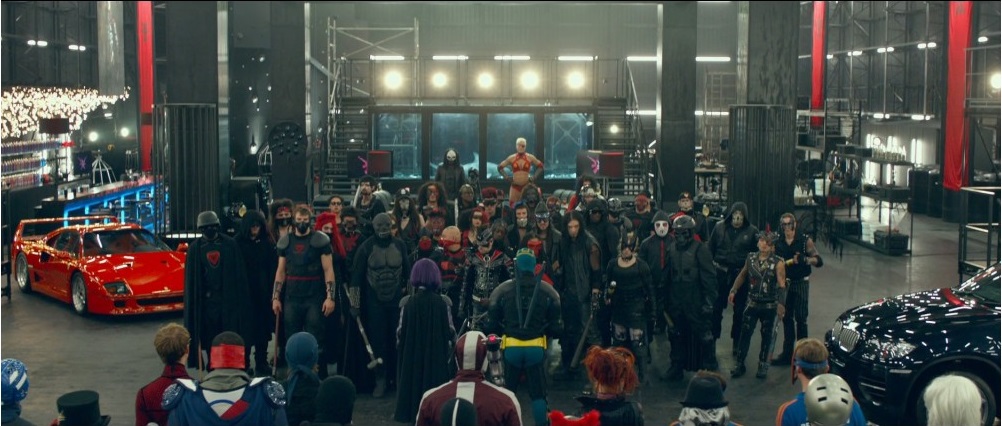
The action sequences provided a pleasant mix of choreographed fights and clever dialogue which moved the story forward, without an excessive amount of shaky camera work and without going too crazy with the gore. The first Kickass was as much about trying to shock the audience as it was about the story. This time around most of the serious violence was saved for the major fight at the end of the movie. There was, of course, some included throughout the movie, but not quite as much as Kickass. Also, the blood and violence was considerably less cartoonish. Speaking of the final fight scene, Kickass 2 had a nice comparison between the supervillains all dressed in black and red and the superheroes who were in a whole rainbow of different colored costumes. Although a bit obvious, it did make things clear who the villains and heroes were.

kick-ass-2

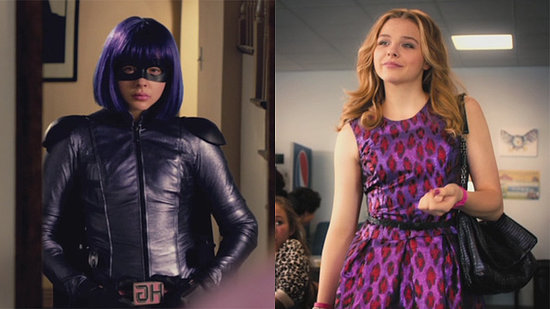
As far as the actors go, I enjoyed almost every performance. Aaron Taylor-Johnson plays a very believable geek but was able to get in fantastic shape for this role. Talk about making people feel inadequate; he has muscles I didn’t know existed. Recently Kickass 2 made news even before it was released due to Jim Carrey’s criticism of the violence in the film in the light of Newtown, CT. Carrey’s performance in the movie was respectable though not excellent. He was good, but I think his statements after the fact overshadowed the performance. The standout performance of the movie has to go to Chloe Grace Moretz as Hit Girl. She was good in Kickass, but she was even better this time around. A very talented 16 year old, Chloe was really the driving force behind the story. Although the story is about Kickass and is told by him, as times it seems like a Hit Girl story with bits of Kickass thrown in the middle to break things up. While I loved seeing Hit Girl beat the crap out of Kickass in an attempt to make him tougher, my favorite scene involved her getting even with the school bullies in an incredibly fitting way.

Chloe Grace Moretz as Hit Girl/Mindy

Chloe Grace Moretz as Hit Girl/Mindy

Overall there wasn’t anything specific I didn’t like; it’s just a second tier superhero movie. When compared to the original movie, Kickass 2 is a considerable improvement. There is a much more cohesive plot line, which is a result of the source material being completed well in advance of the movie (Due to health reasons, Mark Millar had to delay Kickass the comic significantly and the last issue was released at almost the same time as the film, leading to the plot of the movie being fuzzy at times.). Kickass 2 proved to be just about everything I look for in a sequel. It gave us further character development; introduced new and interesting characters, both good and bad; and most importantly it wasn’t just a pure rehash of the first film. If you really enjoyed the first one, then check out Kickass 2 in theaters. Otherwise, it’s worth the wait for Redbox. I give this movie 3.5 Death Stars.

1 Comment

Filed under Andrew Hales, Movie Reviews, Movies

Editorial | The Picky Entertainment Consumer

Due to a secluded childhood in a religious family, for many years my exposure to most entertainment was quite limited.  Now, as an adult, I am very often disappointed in the quality of entertainment in all forms, whether it be movies, comics, or games.  Don’t even ask me about popular books these days.  In order to suspend my disbelief (more on this in a later blog), entertainment must hit a number of points on the quality checklist I have in my head.  I have had my selective taste called into question by my friends many times, (::cough::Andrew::cough::) most recently as I prepared for my review of Saga; so I think it would be a good thing to point out why I am so demanding, and why a more discerning consumer can only be good for entertainment.  For your consideration, here is a rather foreshortened list.

This meme was based on my life.

This meme was based on my life.

First of all, any piece of entertainment—and in this case, that mostly refers to movies—that considers itself dumb entertainment (i.e. Dumb and Dumber, The Hangover 1-3, and anything with Will Ferrell) almost always gets a pass from me.  This isn’t the type of entertainment that I enjoy and I definitely have a little less respect for an individual who seeks out this type of entertainment.  At the same time, I also do not feel that these movies try to classify themselves as anything but stupid humor, so at least I don’t feel that the marketing hype is lying.

The next type that I see is entertainment that tries to be suspenseful and intriguing (“smart” entertainment), but in the end falls woefully short.  Often this happens when a piece of entertainment, such as a movie or a book, sets up a system of natural laws that apply within the created universe of the piece, and then breaks those laws by mistake.  My favorite example of this (and by favorite, I mean: the one to which I refer in my long-winded rants) is The Lake House.  The idea of the movie is that a woman is able to write letters to the man who previously owned her house.  The twist is that she is writing to the man two years before the present and he has since died.  In the end, he stops writing, and she realizes that in his timeline, he has died, but then she is somehow able to still write him before he has died to give him instructions to avoid his fatal car accident.  No matter how you work it out, the timeline of events isn’t even possible within the supernatural parameters of the of the movie.

But it has Keanu. How can you go wrong?

But it has Keanu. How can you go wrong?

Another issue I have that is related to item one, but can also be separated into its own class.  Inconsistencies in entertainment drive me completely bonkers.  Book series’s often fall into this trap in descriptions of characters—for instance, the heroine will be described with long, flowing, brunette hair and stunning, blue eyes in the first book, only to have green eyes by book three.

I’ve spoken before here on the blog about the frustration I feel with inaccurate historical portrayals, so I will not dwell on this point for too long.  Suffice to say that even small details, such as the moments in Gettysburg in which the Union army is shown scraping beans from the bottom of the can, juxtaposed with a Confederate officer announcing to General Lee that there is plenty of fruit and some buckwheat pancakes to eat, can give an audience completely the wrong idea about a historical event (and subconciously advise them on which side is right and which is wrong).

Last but not least, entertainment that heavy-handedly preaches the opinion or philosophy of its creators is perhaps the most grating frustration that I have with modern media of any kind.  Entertainment, for me, is an escape from a life filled with stress and frustration.  I highly dislike sitting down to enjoy a good book, only to realize that the author is not telling a story, but instead preaching a social more with which I do not agree.

All in all, across all forms of entertainment medium few pieces capture my undivided attention, and leave me satisfied.  This is not a bad thing!  After all, the classics that have remained from by-gone eras of literature, film, and music are the solitary beacons of excellence in a sea of medocrity of their time.  Therefore, with or without Andrew’s permission, I will continue to be a picky consumer with pride.

Leave a comment

Filed under Editorial, Tracy Gronewold