Author Archives: Andrew Hales

Winning Science February 26, 2014

I think at one point or another just about everyone takes a moment to ponder their own death. Certainly no one knows the exact moment that it will come, but now science is inching closer to giving us that information. Researchers in Finland and Estonia have determined that elevated levels of four biomarkers may indicate that otherwise healthy people are more susceptible to illness and are more likely to die within five years. Scientists involved, who refer to the test as a measure of general “frailty”, were so skeptical of the results from the initial 9842 participants they included an additional 7503, just to verify their results.

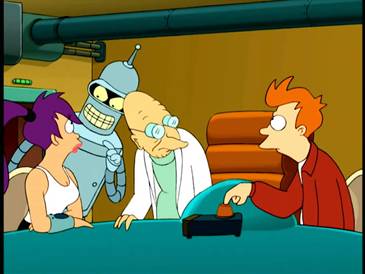
futurama_1_8_02

Things don’t look good for Fry.

Maybe in the future we will have Futurama‘s Death Clock.

Authorities in New Mexico are now prepared to send workers back into a salt mine that is being used to house nuclear waste left over from the creation of nuclear weapons. The facility was shut down when airborne contamination monitors tripped and secured the ventilation for the facility. While there was a small release to the desert surrounding the site, there was no danger to the public. The isotopes detected by remote monitors corresponded to the materials known to be stored in the plant.

Layout of WIPP facility.

Layout of WIPP facility.

My only real concerns here are that they seem to think that everything is fine despite the fact that they haven’t determined the cause yet. This all seems a little hasty.

Now it’s time for one of my favorite branches of science, the branch where we shoot lasers at stuff and see what happens. (I’m pretty sure this comes from watching too many science fiction movies as a kid.) Scientists at the National Institute of Standards and Technology have discovered a new quasiparticle that acts much like a drop of water.  Researchers discovered this unexpected response while pulsing a laser at a semiconductor. While there are currently no practical uses for this new information, it will help provide insight into how these materials work, and may lead to improvements in all kinds of things sooner than we think.

quantum-droplet-660x879

This article also provides a wonderful, plain English description on how conductors and semiconductors work.

Leave a comment

Filed under Winning Science

The Man Who Almost Killed Comics

Throughout history most forms of popular entertainment have had their moral detractors. In the 50’s Elvis was only allowed to be shot from the waist up due to his provocative hip movements. Tipper Gore went on a crusade against heavy metal music in the mid 80’s. A 2005 California law banning the sale of certain video games to minors was struck down by the U.S. Supreme Court in June of 2011.  For many industries, efforts to ban products for moral reasons have been ineffectual at best, and often when the legal system is actively discriminatory, these efforts are found to be unconstitutional. When it came to comic books however, censoring attacks were extremely successful and resulted in the near collapse of the entire industry. This near fatal blow was orchestrated in large part by one man:  Dr. Fredric Wertham.

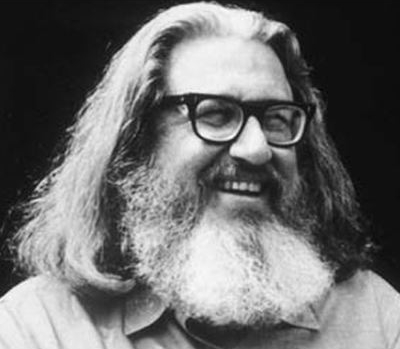
Dr. Fredric Wertham reading a comic book as part of his research.

Dr. Fredric Wertham reading a comic book as part of his research.

For the sake of fairness, Wertham cannot be wholly blamed for the attacks on the comic industry.  There were many other participating parties and several contributing factors that allowed this kind of censorship to take place.  However, Wertham’s role is the most important since he provided a scientific expertise around which the comic detractors could rally.  In the early 1950’s Wertham was a well-respected psychiatrist who often worked with the poor and juvenile delinquents.  It was his work with juvenile delinquents that actually began Wertham’s crusade for comic censorship.  As he interviewed the troubled youths, he noticed the pattern that most of the young men were regularly reading comic books.  Wertham assumed that a causal relationship existed between comics and deviant behavior, especially when it came to the more graphic horror and crime based comics. Wertham published his findings originally in a Ladies Home Journal article, and then later as book with the titillating title Seduction of the Innocent.

Wertham made many unsupported claims within the pages of Seduction of the Innocent including that Batman and Robin were homosexual lovers and that Wonder Woman was a lesbian.  He believed that these immoral influences, in addition to the violence in comics, lead to deviant behavior.  Soon Middle America was in uproar and the attack on comics was in full swing.  It was not uncommon for small towns to hold comic book burnings to rid themselves of the corrupting influence. This came to a head in 1953 with a hearing by the United States Senate Subcommittee on Juvenile Delinquency.  Over the course of three days, the Subcommittee heard testimony from Dr. Wertham, as well as EC Comics publisher William Gaines.

William Gaines

William Gaines

Much like the subcommittee overseeing the McCarthy hearings, which were being held during the same time period, this subcommittee came in to the hearings with less than open minds.  While Wertham was treated politely and respectfully, Gaines was questioned hostilely and treated with disdain. Gaines’ now famous exchange‡ with Chief Counsel Herbert Beaser is a prime example of how the committee members had already made up their minds before hearing all the testimony.

The infamous May issue.

The infamous May issue.

In the end the comic industry was forced to choose between imposing censorship on itself, or accepting the inevitable, and likely more restrictive government censorship that was coming their way. The new rules, called the Comics Code Authority, were loosely based on the film industry’s Hays’ Code and imposed a draconian list of limitations that crippled the comics industry. Among the most punitive measures were those banning all comics from using the words “horror” or “terror” in their titles and severely restricting the content of crime comics. These were both directed squarely at EC Comics, as punishment for Mr. Gaines testimony at the committee hearings. With these restrictions, almost of EC Comics’ books were forbidden, and EC was soon forced to cease publication. Within two years, sixty percent of all comic titles had ceased publication and those companies that remained in business were forced to slash their workforces.

The unfortunate reality surrounding these events has only just started to properly come to light. From the outset it was well known that Dr. Wertham’s methods were questionable.  A man who should have been well acquainted with the scientific method, he showed considerable disregard for it by failing to establish a control group to compare his findings.  If he had, Wertham might have realized that the overwhelming majority of kids at the time read comics.  Given that information, it would be impossible for someone to draw the causal relationship that Wertham claimed existed.  Dr. Wertham let his attempts to make a name for himself compromise his science.

Since Dr. Wertham’s notes became publically available in 2010, the full extent of his questionable methods has come to light. Prof. Carol Tilley of the University of Illinois has discovered several instances where Wertham exaggerated the findings of his interviews in order to tip the results more into his favor.

Despite all of this, Dr. Wertham is not without his redeeming qualities. Some of his other research was presented as evidence during Brown vs. Board of Education, where it provided scientific proof that racial segregation was harmful to the mental health of children, aiding in overturning fifty eight years of the “separate but equal” doctrine.

While the comics industry may have taken a dramatic hit due to Dr. Wertham’s work, it was not down for the count.  The majority of the superheroes we love—including nearly all of Marvel’s characters—were born in an era in which the Comic Code held sway. In spite of the restrictions, these characters flourished and have become deeply ingrained in our popular culture.  With the death of the Comics Code Authority in 2011, we can finally say we are rid of Wertham’s shadow, though we should remain vigilant for others who claim to protect common decency for no other reason than to attack those things they disagree with.

‡ The audio recording provides the testimony of Dr. Fredric Wertham as well as that of Mr. William Gaines. The most famous portion of Gaines’ testimony begins at 1:34:30

Further Reading:

Comic Book Legal Defense Fund – An excellent resource regarding the history of comic book censorship as well current efforts to fight censorship.

Thecomicbooks.com – Provides a full transcript of the Senate Subcommittee hearings.

4 Comments

Filed under Andrew Hales, Comics, Comics History

Around the Web February 21, 2014

This week ushered in a new chapter for The Tonight Show.  Jimmy Fallon has taken the helm of the long running late night comedy television show, but far more important for geeks was that the show also debuted the trailer for Guardians of the Galaxy. This has quickly become one of my favorite comics and I can’t wait for this movie. I’m not super thrilled that John C. Reilly has been cast as Nova, but I’m willing to go along with it for now. If you haven’t checked the trailer out yet, then take a look below.

There appears to be a healthy mix of action and humor, which has worked well for Marvel so far.

Keeping with the Guardians theme, Rocket Raccoon is one of the best characters on the team. He is a sarcastic, badass raccoon looking alien. What more could you want in a comic book hero?  Sadly, however, his creator, Bill Mantlo is in need of our help. Back in 1992 Mantlo suffered a traumatic brain injury after being struck by a hit-and-run driver and currently resides in a long term care facility in Queens. Mantlo’s story is terribly sad and he is in need of financial help to improve his quality of life, if only just a little.

RocketRaccoon

In the past, older comic creators have gotten the short end of a lot of things. Hopefully we can help prevent that from happening to current and future generations of comic writers and artists.

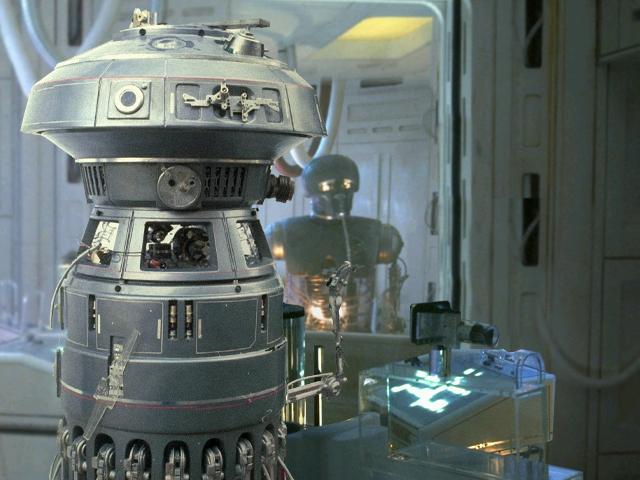
Do you have any old Star Wars action figures at home? While they could be worth a lot of money, I bet they’re not worth $13,000. Well that’s how much one Star Wars figure went for in a recent auction. The little known FX-7 medical droid figure started off at just under $100, but ended up going for just short of $13,000. A bidding war erupted over the figure due to the incredibly high quality of the “mint in box” figure.

FX-7 is the droid in the foreground.

FX-7 is the droid in the foreground.

I’m really tempted to go digging through all my old crap suddenly. Is that weird?

And finally, today is actress Sophie Turner’s 18th birthday. Turner is best known for her role as everybody’s least favorite Stark, Sansa, on HBO’s Game of Thrones.

She's 18...get your mind out of the gutter. Perv.

She’s 18…get your mind out of the gutter. Perv.

It’s a damn good thing she’s cute, otherwise I’d be rooting for horrible things to happen to Sansa. Ok, maybe I still do.

1 Comment

Filed under Around the Web

Review: Robocop *Spoiler Alert*

***** SPOILER ALERT *****

This review will be discussing plot points which may be considered spoilers. Consider yourselves warned.
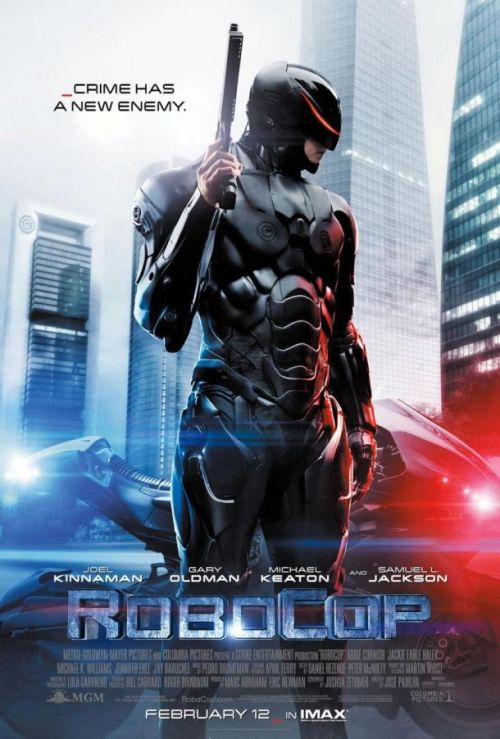
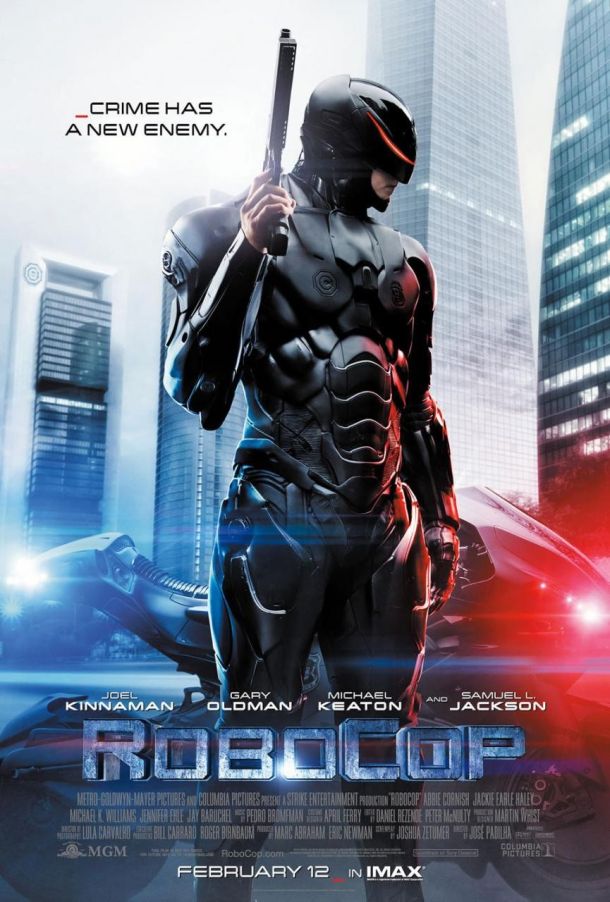
robocop_poster2-610x902

Seriously, who doesn’t love the original Robocop? It is one of the best examples of 1980’s action movies. It had over-the-top violence, a nearly comical amount of gore, catchy one-liners, and the acting skills of Peter Weller. When I heard they were remaking Robocop, my feelings were mixed. While I was excited about seeing the movie storyline enhanced with modern effects, I’ve seen so many movie remakes that fall short that I couldn’t help but be apprehensive. Now that I’ve seen it I realize my apprehension was misguided, though this does not mean the movie is perfect. I certainly enjoyed myself, but there were more than a few chinks in the armor.

Much like the original, this Robocop tells the story of Detroit police officer Alex Murphy (Joel Kinnaman) who is nearly killed by the city’s criminal element. After his accident–in this case a car bomb–his organic parts are salvaged and implanted into a robotic body, making him the world’s first cyborg cop. As a single minded, crime fighting cyborg, Murphy’s arrest numbers go through the roof, and he almost single handedly reduces Detroit’s crime rate by an astounding percentage.  Eventually Robocop becomes wrapped up in the events surrounding his own attempted murder, and the deeper he digs the more corruption he uncovers.  By the end of the movie, our hero is forced to confront Raymond Sellars (Michael Keaton) the CEO of Omnicorp, the company that helped rebuild him.

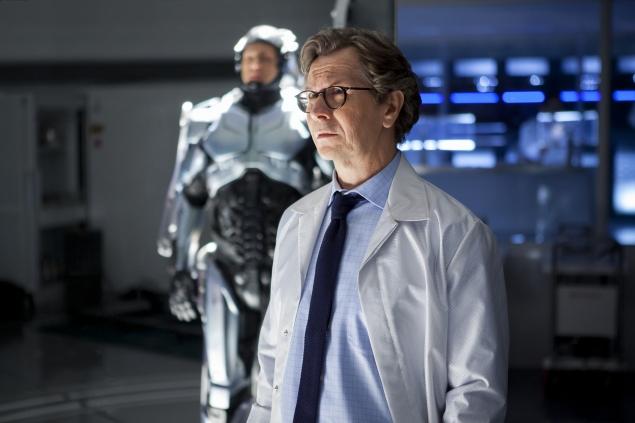
Although a lot of the specifics have changed, the overall plot of the new Robocop is the same as that of the original film. To be honest, I liked most of the changes. Most notable was the fact that Murphy doesn’t actually die.  Although he is gravely wounded, he remains alive after his accident and is only placed in the cyborg creation program after his wife signs a release form. This leads into another major change, the role of his family. In the original, Murphy’s family moves on because he has been declared dead and nothing of the man is supposed to remain. In the reboot, Murphy is chosen specifically because of his humanity, and his emotional stability and his family play a considerably expanded role in his post-rebuild life. There is also much more interaction between Robocop and the doctor in charge of the program, Dr. Dennett Norton (Gary Oldman). Dr. Norton helps guide the newly minted cyborg through his first and most difficult days, as well as playing a significant part in the movie’s conclusion.

For the reboot of a well-loved, but not particularly intelligent action movie, this thing is packed with stars putting on amazing performances. Gary Oldman is incredible in his role as Dr. Norton. In the past I have severely underestimated his ability to take on a character and make it different from every other character he has played, but no longer.  Oldman’s Norton is both a friend and a father figure to Robocop, helping guide him through his “rebirth” and then aiding him in his final quest for justice.
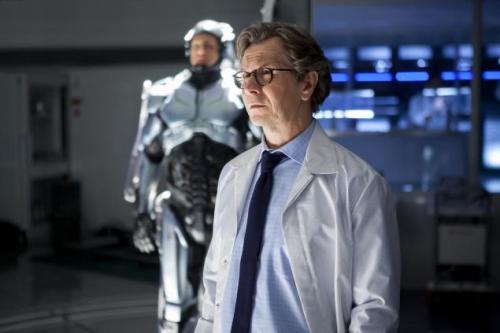
Gary Oldman is amazing as Dr. Norton.

Gary Oldman is amazing as Dr. Norton.

I’d also forgotten just how much I enjoy seeing Michael Keaton on screen. Sure he is great as Batman, but I think he really excels in roles where he gets to be a little slimy and gross, like Beetlejuice or Much Ado About Nothing. While his character may appear clean cut and aboveboard from the outside, Keaton is able to convey a sense of the filth that lurks just beneath the surface of these characters.

Even some of the actors in more minor roles, such as John Paul Ruttan who plays Murphy’s son David, are very talented. So often child actors seem very wooden on screen due to their inexperience as actors and their overall lack of life experiences to draw from.  Ruttan on the other hand showed himself capable of being very expressive, even when it comes to more complex emotions. With the near inevitability of a sequel, one can only hope Ruttan is among the cast again.

Finally I would just like to point out that even bleeped, nobody says “M*****F*****!” like Samuel L. Jackson.

While I will say that Kinnaman’s pre-transformation Alex Murphy was leaps and bounds beyond Peter Weller’s portrayal, his post-transformation acting was not much better. Both actors played the character extremely stiffly and emotionlessly and it becomes a bit annoying after a while. Robocop also seems to suffer from the same problem as Batman, in that he cannot turn his head, so he has to turn his entire torso. Unlike Batman, the cyborg seems unable to find a fix for the problem.  For a movie called Robocop, Robocop’s performance paled in comparison to the rest of the cast.

Overall I was pleased, though not overjoyed, with the look of Robocop. Robocop himself looked pretty darn good. While certainly not sleek, the new look is significantly more streamlined than the original. He was also better and more realistically equipped. I am pleased with the fact that the progression from the completely robotic EM-208’s to Robocop is very clear. They are obviously based on the same hardware; Robocop just has some gooey parts as well. My favorite change to the character came with the addition of the motorcycle. I’m not sure why, but this now seems like such a natural method of transportation for Robocop.

robocop motorcycle

The CGI effects looked pretty good in my opinion. Often when a movie is set in an actual city in the near future, it just doesn’t look quite right—especially when they do the near mandatory skyline shot. In this film I really didn’t notice any of those issues. I feel the film makers did a good job making the viewer believe that Detroit was so far gone that citizens were not safe even in the good parts of town.

While there was a lot to like in the visual department, it’s also where the most painful parts of the movie come from. There is an abundance of shaky-cam in this movie and it was particularly obnoxious. I can’t stand shaky-cam, but I’ve come to expect it from American action films.  I’ve learned to deal with it enough that I can still enjoy a movie despite the fact that the camera man shakes like he’s in the middle of an earthquake. Robocop had not one, but two major action sequences that were so unsteady that I had to stop watching them for a couple seconds because they were making me physically uncomfortable. One was so jarring that I still have no earthly idea what happened during the scene because my eyes wouldn’t focus.

What would a remake/reboot be without little homages to the original sprinkled through-out?  While this can often be overused, Robocop hit the sweet spot. There were many lines like “I’d buy that for a dollar” and “Dead or alive, you’re coming with me” that were lifted from the original and put in the reboot, but done in such a manner that you wouldn’t know where they were from, unless you were familiar with the original.  Of course, I would be remiss if I didn’t mention the classic ED-209.  Originally a competitor program to Robocop, the ED-209 were basically big dumb animals, which was underscored by the various animal noises they made. This time around ED-209 was like the bigger brother to the EM-208 and they weren’t in any kind of design completion against Robocop. Despite the fact that they were much better done this time around, I couldn’t help but laugh every time I saw them on screen.

Every time these guys were on screen I couldn't stop laughing.

Every time these guys were on screen I couldn’t stop laughing.

Overall Robocop was a fair reboot and a respectable addition to the existing film franchise. As I’ve said, I fully expect there to be a sequel, so hopefully they can take their current success and build on it, fixing those issues that are most egregious. I give it 3.5 Death Stars.


3.5 Death Stars

Leave a comment

Filed under Andrew Hales, Movie Reviews, Movies