
With the release of Jupiter Ascending, the movie-going public was once again subjected to a big budget film that didn’t quite live up to expectations. While I haven’t had the opportunity to see it (though I intend to at some point soon), I began wondering what it is that causes these movies to flounder at the box office.

As it currently stands, Jupiter Ascending has made $171 million according to Box Office Mojo, which, while impressive, is still five million short of the production budget, which doesn’t even include any marketing costs—which can often run nearly as high as the production budget. That is a lot of money that the studio to be out. Two years ago a similar trend was making its way through the beloved summer blockbuster season. Movies like The Lone Ranger, featuring proven hit making creators or cast members, were bombing left and right. By the time July rolled around, movie and entertainment blogs were all declaring the death of the blockbuster. In hindsight, that was obviously a bit of an overstatement, but at the time it seemed like a perfectly logical conclusion. The summer of 2012 was almost a non-stop hit parade, but 2013 was painful to watch. What is it, then, that causes a movie to fail so miserably?
The way I see it, the problem has to be issues internal to the movie. Internal issues stem from things like plot and pacing, which are independent of the opinions and prejudices of the viewer. These issues are structural and integral to the film. The biggest offender that I can think of in the last few years, is John Carter. Disney sank $300 million into this box office disaster, and to be honest, I actually enjoyed quite a bit of the movie. I thought the story had a lot of potential and that the characters were generally likable. What killed John Carter more than anything else was its pacing. At nearly three hours, the movie was just too long. A skilled editor could and should have cut thirty to forty minutes from that movie. The result would have been a much faster paced film that kept the audience’s attention and didn’t get lost in itself. As much as I enjoyed the film, on more than one occasion in the middle of it I found myself wondering why the movie was stuck on a specific topic and wishing it would just move on already.
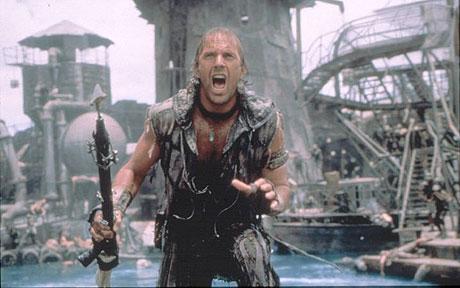
Looking further back, I can think of twin flops Waterworld and The Postman. These two movies nearly destroyed Kevin Costner’s career—only within the last few years has he been making any kind of comeback. While The Postman suffers from pacing problems much in the same way John Carter did (critics generally think the first two hours were good and the third killed the movie) both it and Waterworld suffered from massive plot issues. Waterworld has a much better critical acceptance, but both of these films had overly muddled plots that were nearly impossible for viewers to unravel. Tellingly, Joss Whedon was even flow out to the set of Waterworld to attempt to save the script, an effort which Whedon described as seven weeks of hell. If the final iteration of Waterworld was Whedon’s supposedly fixed script, then there was something distinctly wrong with the project and it should probably have been scrapped. The short answer to the question of what went wrong in this movie is that creators simply tried to do too much and were unable to make good on the film’s potential.
Of course, structural problems don’t have anything to do with the most important factor in a movie’s success or failure – the opinion of the movie-going public. There are plenty of successful movies, like Avatar, that make obscene amounts of money and that I cannot for the life of me figure out why. I guess that why I’m not in the movie business. Until I figure that out, I will just go and see whatever I damn well please, regardless of the box office totals.


 Therefore I Geek
I also liked John Carter; it wasn’t a bad movie. Disney just made so many mistakes with it, starting with the title and the marketing. Kind of a shame.