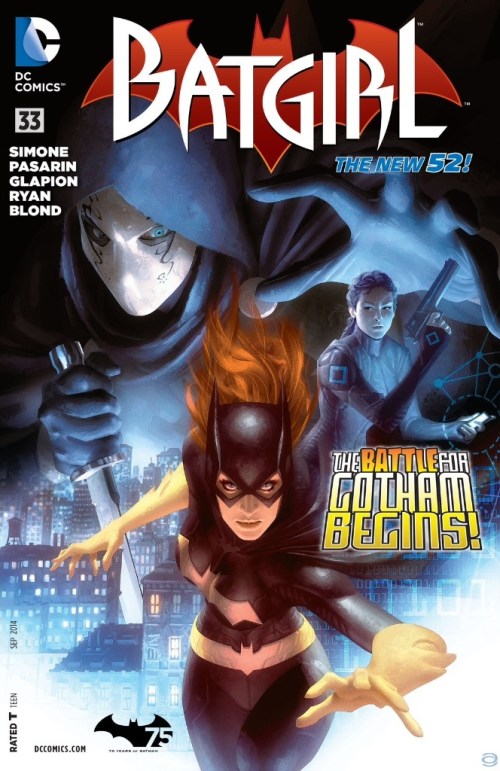
I’ve been behind on Batgirl for a while, but with this week’s announcement of a brand new creative team starting in October, I decided I should make an effort to finish out Gail Simone’s run. With that in mind I picked up Batgirl #33 and felt like I was right back home. Sure I’d missed several issues, but I had no problem jumping right back into the story. The ease with which I was able to slip into Batgirl’s world is one of the hallmarks of a great writer. Simone really knows the characters she is writing and it’s nice to see that even this deep into her time on the title, she’s still taking time to develop the character further. I also really enjoyed the fact that she is still making good use of Barbara’s inner dialogue. My only major complaint is that in a couple places the exposition was a little heavy. It felt a little like reading 70’s X-Men where everyone called everyone by name every time they spoke to one another.
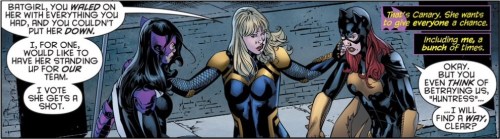
I’m fairly certain we know who is talking to whom.
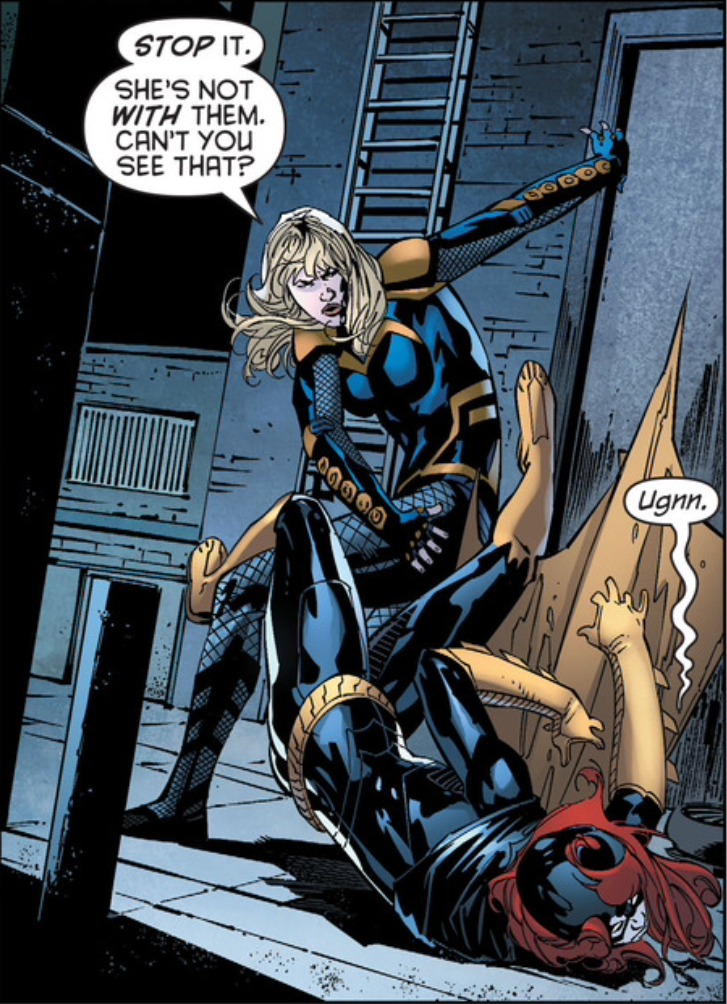
While I was once again in love with Simone’s writing, the same cannot be said for the art. I’m not going to say it was bad, but I did have a few complaints. One of the best parts of the New 52 was the push for more realistic looking costumes. Whether or not it DC actually managed to pull it off or not can be debated, but Batgirl’s great look cannot. However this book appears to be progressively moving back toward the days of spandex, or worse, pleather (the horror, the horror!).
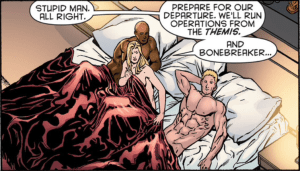
A nice twist on a cliche.
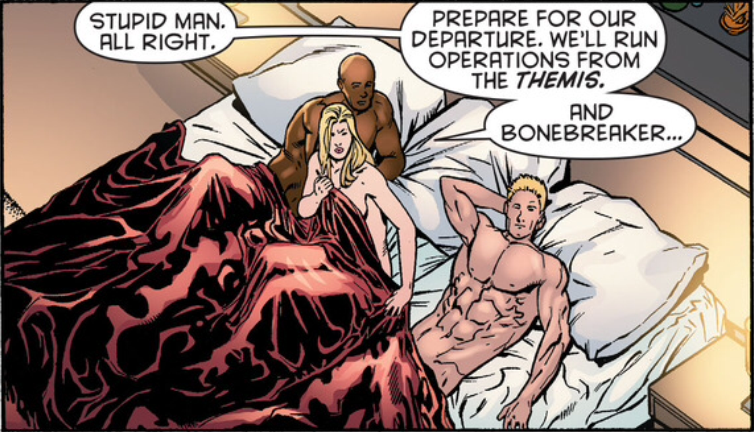
I’m inclined to believe the fault for this one falls mostly with the colorist. The pencils and inks seem solid but it’s the shiny looking colors that I dislike. This was also the first time I’d seen the new look of Black Canary and I’m not a fan. The art wasn’t all bad though, with one of my favorite panels catching the female villain, Knightfall, in bed with two “boy toys”. I thought it was an amusing twist on the stereotypical male villain with floozies.
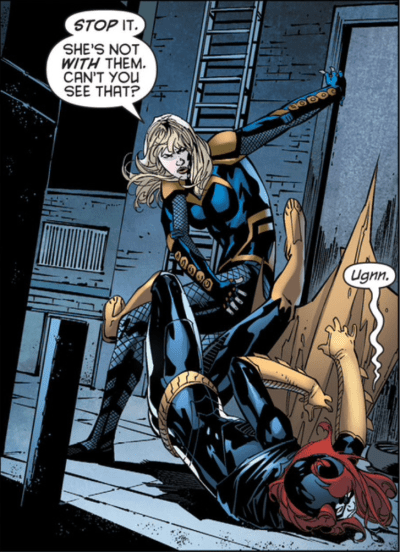
Shiny costume and the Black Canary re-design.
While I am excited about the new look and direction for Batgirl, I will certainly miss the current run and I’m going to make sure I savor every issue that Simone has left. 3.5/5 Death Stars.

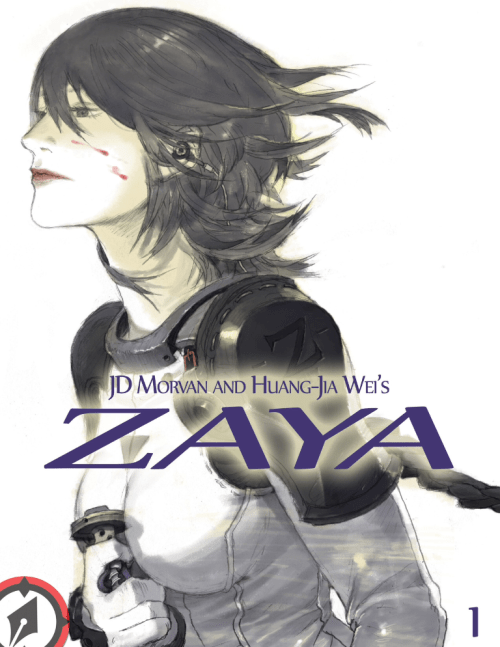
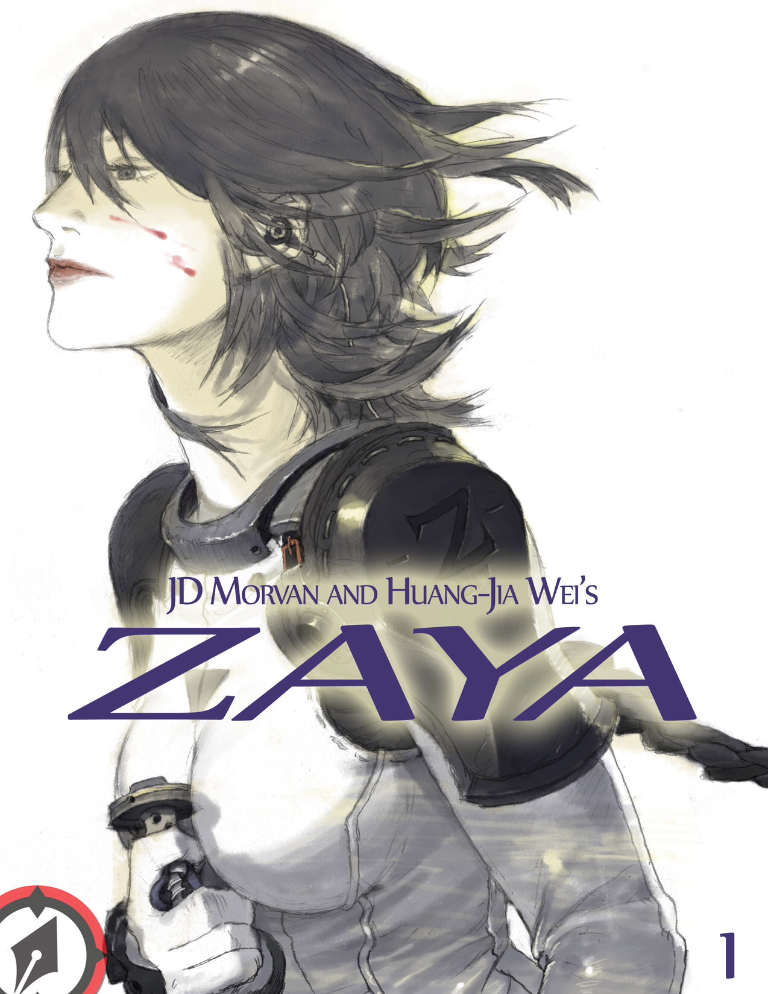
The second book on today’s review is Zaya #1 from Magnetic Press. Zaya is not something in my normal pull; however, as I was browsing Comixology, I came across it in the new releases and figured I’d give it a try. I certainly wasn’t disappointed, though I’m still not quite fully on board with this book. Even granting that this is the first issue, the story is somewhat ambiguous. The first half of the story introduces an attractive young woman, who I assume is the main character since she bears a striking resemblance to the woman on the cover. While at an art opening, the woman stops a drunk patron from abusing a waiter, in the process demonstrating that there is more to her than meets the eye, though beyond her martial arts skills it’s unclear what that might be. The second half of the book is a chase sequence with a man on the run from a “creature” that is intent on murdering him. It’s not clear how the two halves of the story will connect, but I’m certain JD Morvan will make this clear in the issues to come.
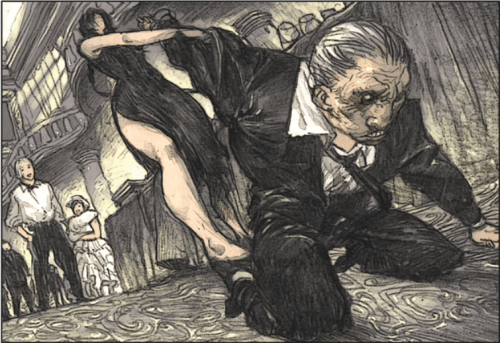
Beautiful art by Huang-Jai Wei.
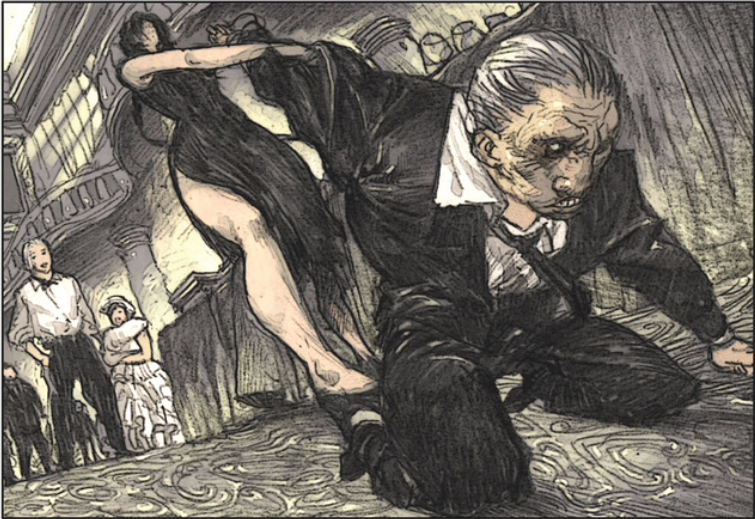
The art has a very Heavy Metal look to it, which for large parts of the book was quite enjoyable. I was most impressed with Huang-Jai Wei’s ability to mirror a person’s inner qualities in their appearance. The abusive drunk is shown as a handsome man until it becomes clear from his actions that he is a scumbag, at which point the art changes, subtly, to show the man’s inner ugliness externally. I also really liked that when he chose to show extreme violence, he draws it in a more artistic manner, instead of making it exceptionally gory. Gore is easy to do; it takes far more skill to show the same scene tastefully while still conveying the same emotions to the reader.
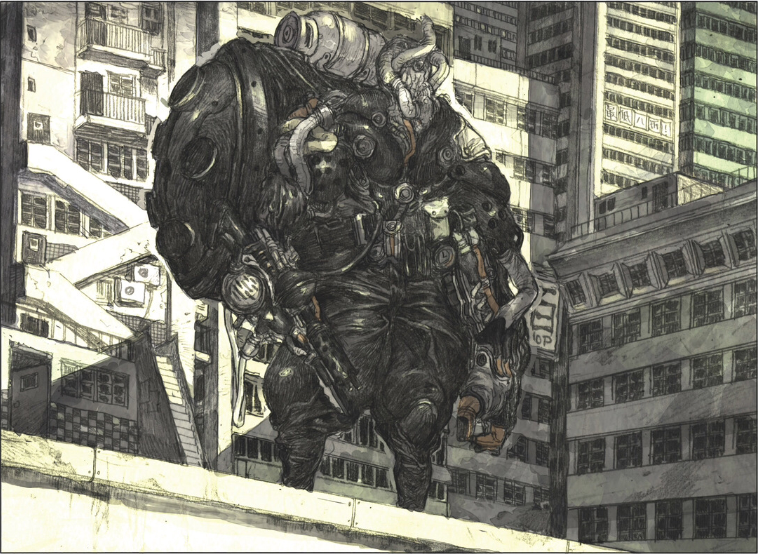
The one place where the art has issues is with the mysterious “creature” in the second half of the book. I use quotes because I’m honestly not sure what to call this thing. It’s large, black, and ill defined. At times, I’m fairly certain I was supposed to be looking at a face, but with the exception of one panel, I couldn’t see it. If Wei can clean this one portion up a little, I think this book will really be something special.
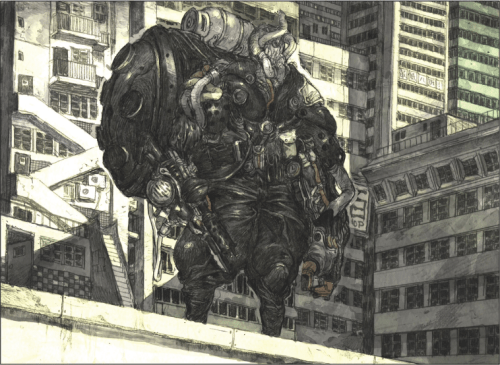
Honest to god, I don’t know what to make of this thing.
There is currently a very nice looking hardcover available for preorder, and for $30 I’m very tempted to get it, though I’ll wait an issue or two more before I do. I’m definitely on board for at least one more issue and I’ll see how it goes from there. 3/5 Death Stars.







 Therefore I Geek