Monthly Archives: December 2013

Winning Science December 18, 2013

At the University of Cambridge in England, British scientists have printed eye cells. Yes, that’s right, printed. These scientists were able to make two types of eye cells from rats. The next step is to attempt to make a photoreceptor cell that will translate light into signals that are understood by the brain. This type of research will hopefully lead to a cure for many forms of blindness, specifically those that are the result of diseases which cause loss of nerve cells.

An-Eye

I am constantly and pleasantly surprised by the new advances in medical technology.

New research from Oregon Health and Science University suggests that alcohol, when consumed in moderation, can actually increase your immune system. While several other studies have demonstrated other benefits of moderate drinking, this is the first to show the effects on the immune system. Alcohol was made free available to monkeys, and just like people they drank in various amounts. At various times during the fourteen month study the monkeys were given vaccinations and those monkeys who had an average blood alcohol content of 0.02-0.04 had a higher immune response to the vaccination. Not surprising however is that monkeys with a blood alcohol of 0.08, the legal limit in humans for driving, showed a significant decrease in immune response.

Shutterstock-monkey-drinking

With fourteen months of drunken monkeys, where are all the YouTube videos?

Wired provides us with a really informative and interesting opinion piece from Thad Starner, a lead working on Google Glass. Starner has been working on wearable technology since the mid 90’s and some of his goals with Google Glass are quite surprising. The most interesting to me was the fact that this kind of technology is actually designed to increase human to human interaction. The idea is to make the technology more rapidly available in order to reduce the interference that comes from using the technology. It takes on average twenty seconds for someone to pull out their phone and unlock it before they can even look at whatever it is they pulled the phone out for in the first place. Google Glass aims to reduce this to just a couple seconds. They’ve also designed the display to be out of a persons normal eye line so that it won’t interfere with people look at one another.

google-glass1

Now I really want to give Google Glass a test drive.

Leave a comment

Filed under Winning Science

Review: The Hobbit: The Desolation of Smaug

***** SPOILER ALERT *****

This review will be discussing plot points which may be considered spoilers. Consider yourselves warned.

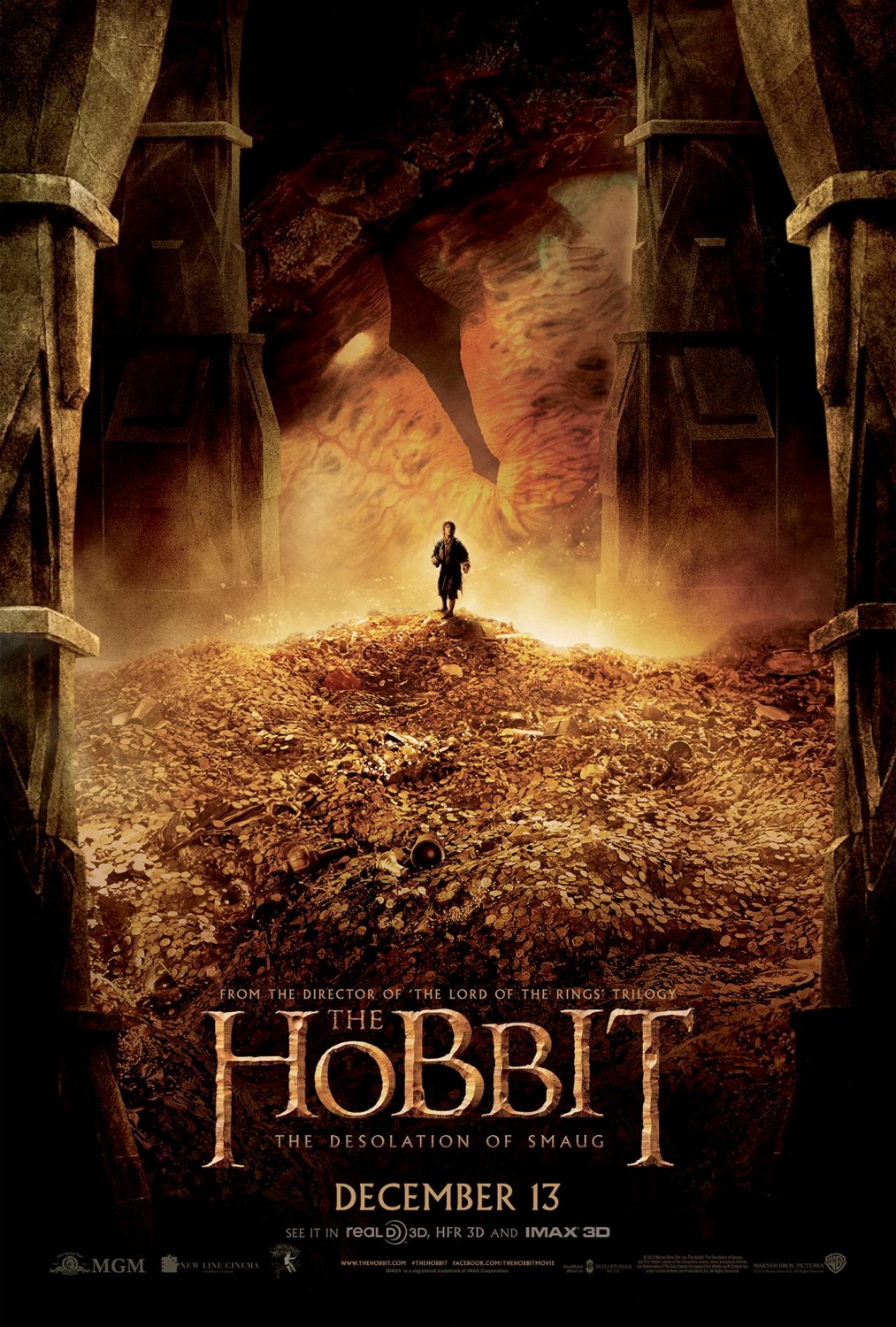
hobbit_the_desolation_of_smaug_ver30_xlg

As I write this review I am in the middle of a Lord of the Rings marathon. I have to admit that going to see The Hobbit: The Desolation of Smaug has put me in the mood for as much of Middle Earth as I can get my hands on. Unfortunately the reason I’m in this mood is because I’m longing for a good story from Middle Earth. As excited as I was for this movie, I afraid that it leaves much to be desired.

After an enjoyable introductory scene, much like those in Lord of the Rings, The Desolation of Smaug picks up just as Bilbo and the dwarves begin their passage into Mirkwood. I was pretty pleased with this portion of the film, but I just felt that it was over far too quickly. Several chapters of the book were dedicated to Mirkwood, and only around twenty or thirty minutes of the film were spent there. While the film portrays the confusion that the company feels admirably, it sets in far too quickly and then is resolved rather abruptly. This demonstrates the major flaw in the movie:  timing.  When these films were first announced, there were only supposed to be two films, but a third was added later. Regularly throughout The Desolation of Smaug some scenes which are canon from the books are compacted in order to make room from extra stuff, often to the movie’s detriment.

Now it’s pretty well known that I am a fanboy and that Lord of the Rings falls into the long list of things I love. Despite this love I am not a purist, which is to say I understand when changes must be made in order to actually make the film.  Some of this extra material I enjoyed—especially the parts which come from appendixes or other material from J.R.R. Tolkien. Watching Gandalf investigate and then confront the necromancer in Dol Guldur was great. This provides some great moments that really place The Hobbit in context. While the story is primarily about the dwarves’ return to Erebor, it is also the build up to Lord of the Rings, and there are scenes that allow us to see all the pieces moving into place.  My issue is that these changes come at the expense of the real story. Scenes from the book were compressed in order to make room for this extra material.

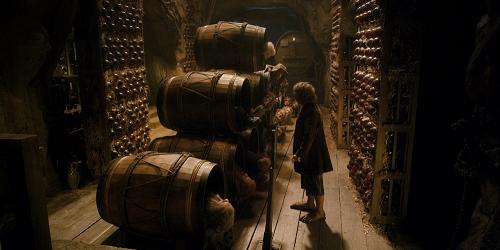
Shortly Bilbo will realize that there is a hole in his plan.

Shortly Bilbo will realize that there is a hole in his plan.

In other places, scenes were extended considerably. The prime example of this was the dwarves’ escape by barrel. There was a good long chase scene down the river that involved the dwarves getting away first from the wood elves and then from the same orc band that has been chasing them through most of the movie. Although an important scene in the book, and one that I have always felt was among Tolkien’s most clever, it was a relatively short part. Not only was this scene extended in the movie, parts of it became more than a little ridiculous. At one point the barrel carrying Bombur managed to get tossed out of the river and rolled down the river bank, taking out dozens of orcs in the process.  Then Bombur proceeds to pop his arms out of the barrel and take on several more orcs before jumping back into the river. Further on, Legolas rides down the river standing on the heads of two dwarves, all the while, shooting down orcs. This whole sequence becomes rather disappointing because of this outrageousness.

Still other portions are purely fictitious. The inclusion of the female elf Tauriel has no basis in the books. Her character was included almost exclusively to include additional female cast members, which is a questionable reason at best. I honestly didn’t mind her character, aside from the fact that she was obviously not part of the original book and therefore all her scenes seemed like someone trying to mimic Tolkien’s style. Tauriel also plays a part in the most egregious portion of the movie. During the barrel escape, Kili is shot in the leg by an orc and is eventually left behind in Laketown, along with three other dwarves, when the company proceeds on to Erebor. This whole plot point was completely unnecessary and only underscores the fact that the third movie should never have been added. If there were only two movies, filler material like this wouldn’t be needed and they would have been able to stick to the fantastic story that already existed.

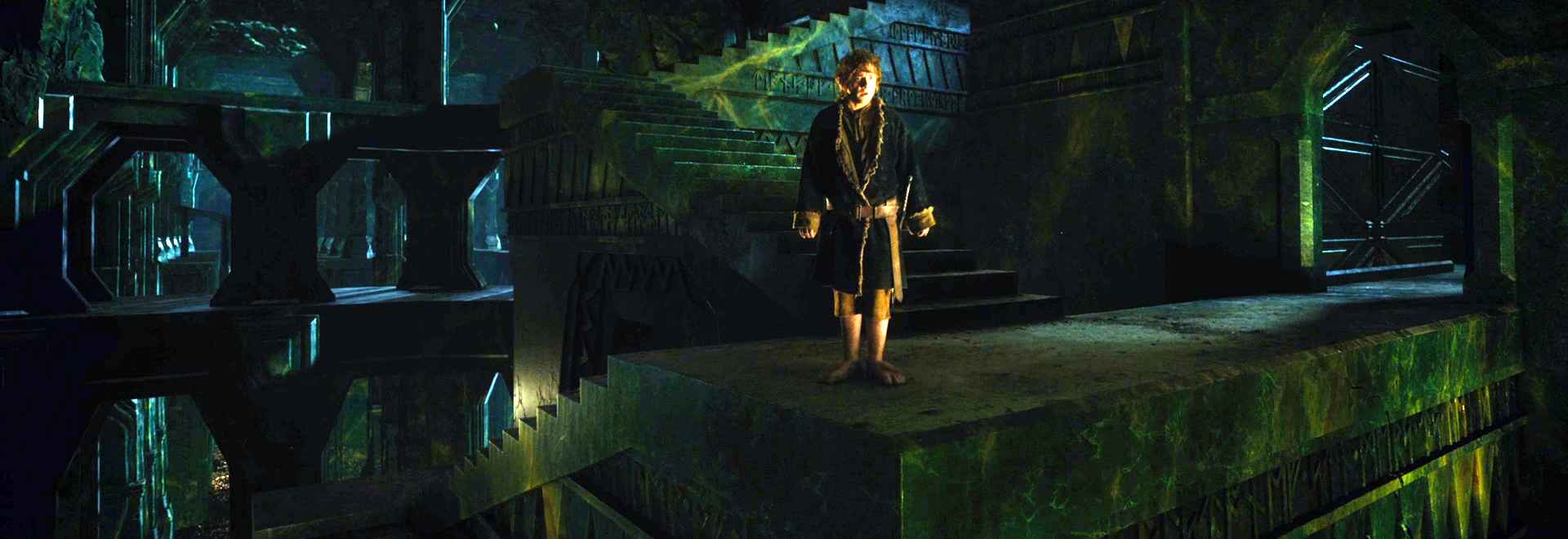
One of many great Erebor interior shots.

One of many great Erebor interior shots.

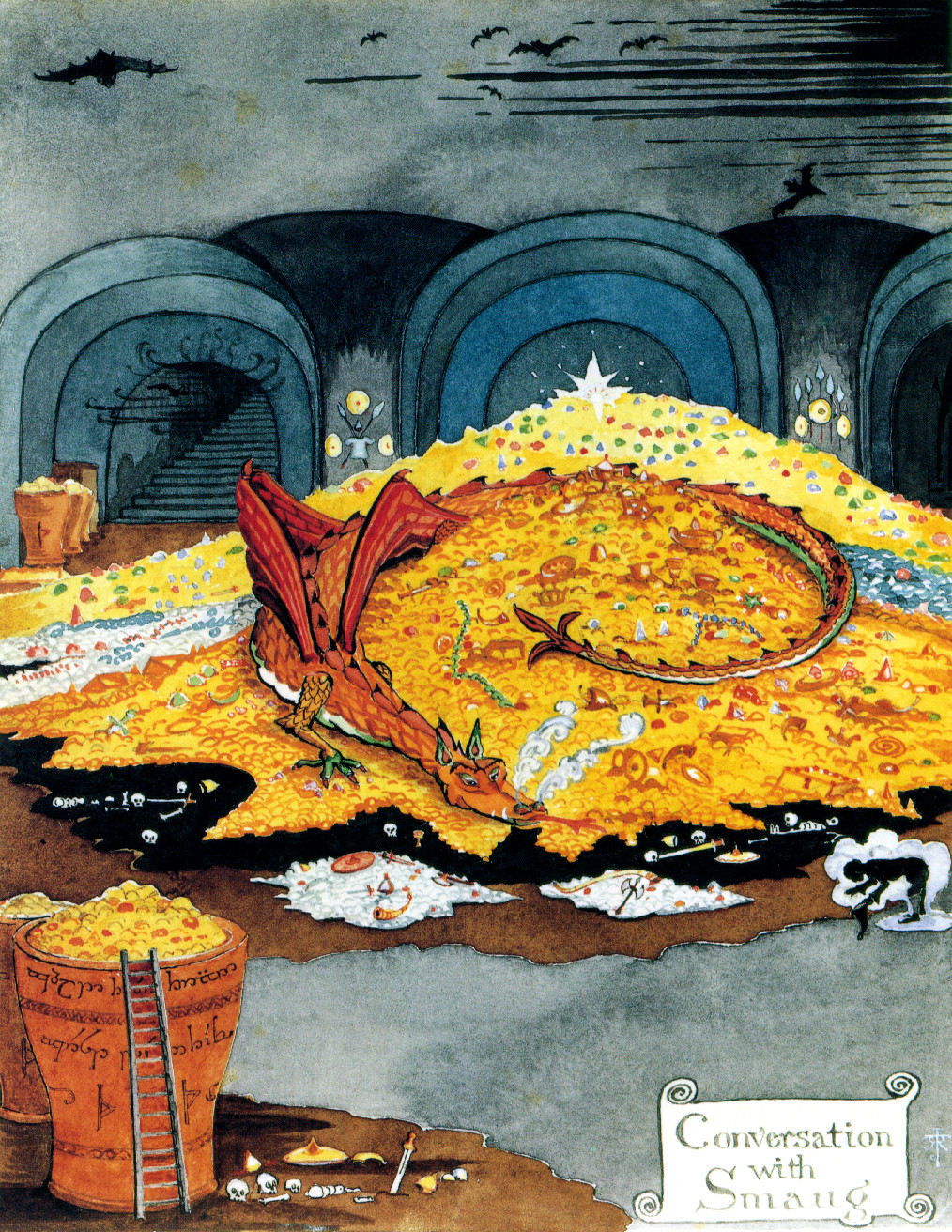
After all of that, it probably sounds like I hated the movie, and that just isn’t the case. For one, the movie looked absolutely amazing. From the halls of the Thranduil to the Lonely Mountain, the entire movie was a visual treat. I’m especially fond of the dwarven style. It all looks very angular but refined and elegant in its own way. Unlike the orcs who are angular in a jagged and chaotic way, dwarf creations show considerable thought and skill. Beyond the look of the dwarves is of course their grand nemesis, Smaug. I could not be more pleased with the way Smaug turned out. It’s obvious that the Peter Jackson drew upon available sources and previous artist renditions of Smaug when creating the visual for the character. Especially when compared to Bilbo, Smaug appears as more a force of nature than a fellow cast member. The dragon is absolutely enormous and terrifying. Jackson must be a firm believer in “Go big or go home” because the movie makers went all out on Smaug.

This is the image of Smaug I always think of, and it was pretty spot on, aside from relative size.

This is the image of Smaug I always think of, and it was pretty spot on, aside from relative size.

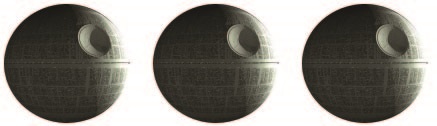
In no way, shape, or form do I regret seeing The Hobbit: The Desolation of Smaug, but I do think that there was plenty of room for improvement. The film suffered from being stretched too thin when it came to source material (like butter over too much bread), though when they stuck to the original content the movie was at its strongest. While not the movie I was hoping for, I am still excited to see the ending of the trilogy next year. Three out of five Death Stars.

3 Death Stars

3 Comments

Filed under Andrew Hales, Movie Reviews, Movies

Editorial | Editing 101: “How to… Avoid Pissing off the Writer”

As an editor, one of the scariest things I have to do is… edit someone else’s work.  It may sound odd, because it is my job, but it is the truth.  As an editor, I’m responsible for taking the brain child of another human being, and making just enough changes so that readers can understand it, while making sure the author’s voice is never lost.

A large part of the fear comes from the fact that telling another person that their work needs improvement is never easy for either party.  It is important that I as an editor point out the flaws in writing as gently as possible.  At the same time, it is always hard for anyone to accept criticism without taking it too personally.

First of all, it is important that an editor and a writer have a good working relationship.  It is a bonus if they have a solid friendship.  Often when two stubborn people bump heads over the correct word to use in a sentence—and believe me, both writers and editors are inherently stubborn; it’s in their genetics—only a healthy relationship will allow them to back away from the situation.  This relationship also allows them to see each other as humans, and not just the faceless creator or modifier of words on a page.  Often, this relationship (and sometimes a significant distance between them) is all that will keep an editor from killing her blog writer.  Not that I speak from personal experience, of course.

Secondly, as an editor, it is important to have respect for the person whose work is being edited.  I have found that when I personally respect the person whose writing I am editing, I am much more likely to be cautious in how I approach changes.

I never tell a writer that their ideas are stupid.  As far as I am concerned, every idea is excellent—it is sometimes merely a diamond in the rough.  It may require a little cut and polish to truly shine.  Instead I find ways to point out how their ideas can be improved, or that their particular audience may not be the most appreciative of a piece of writing.

I keep my words respectful as well.  Sometimes just the choice of language in discussing someone’s work is the difference between making them angry, and actually getting a fantastic final piece of writing.

Lastly, and I have mentioned this before, it is incredibly important to retain the author’s voice in his piece.  If I think that a sentence or paragraph is awkward or unclear, I usually will just say as much to the author, and allow him or her to rewrite it in the way that seems best.  If they prefer that I give them suggestions, then I do so, but in a style as close to theirs as I can write.  This is much easier if I do have a good working relationship or a friendship with the person.

Being a good editor comes down to the attitude with which I handle the person writing the piece.  To make sure that I don’t piss off the writer, I try to establish a good relationship with him, hold him and his work in regard, and I do my best to preserve his voice within his work.

Have you ever worked with someone that you pissed off too badly to continue working together?  Let us know in the comments.

Leave a comment

Filed under Editing 101, Editorial, Tracy Gronewold

Stan and Jack

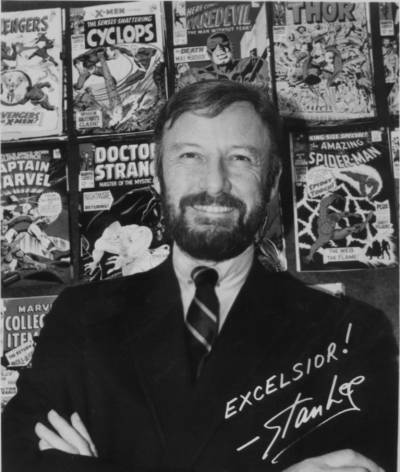
Aside from those of its beloved characters, Marvel itself has an amazing origin story.  In November of 1961 Stan Lee and Jack Kirby released the first issue of Fantastic Four. Soon the two had several more titles under their belts such as Iron Man, The Incredible Hulk, The Avengers and The X-Men.  All the while the two men worked together using the Marvel method of writing comics, which was born more out of necessity than anything else. The Marvel method consists of a writer giving a brief outline of the issue to the artist, the artist plotting out the story, and the writer coming back and adding in all the dialogue to match both the art and plot summary.  In the 50’s Stan was Editor-in-Chief and writing nearly all of Marvel’s comics, which required him to cut corners, hence the plot summaries—some of which were only a paragraph or two long. This has unfortunately lead to a rather ugly fight between Stan and Jack (and now Jack’s estate).

The underlying problem is that the Marvel method leaves quite a bit of room when it comes to determining who really gave these characters their shape. On one hand it is possible that Stan provided Jack with fairly clear details and descriptions for these characters in his summaries and that while Jack certainly added something to them, it was mostly based on what Stan had provided him.  It is also just as likely that Stan was somewhat vague on the details, as was often the case, and that it was Jack that filled in the missing parts in order to really flesh out the characters. With the exact details of events lost to history, it’s pure speculation at this point as to what actually happened.
Stan 68 bw

Over the last few decades the tension between the two has led to a growing schism among fans of classic Marvel comics, with fans picking sides between Jack and Stan (Teams Edward and Jacob can suck it!). For a very long time there was a general public consensus that Stan was responsible for most of Marvel’s characters in large part because Stan was both the public face of Marvel and was much more personable than Jack. Newspaper interviews would go on and on about how wonderful Stan was while dedicating only a paragraph or so to Jack, often describing him in unflattering and sometimes insulting terms. It’s much easier to give credit to someone who is amiable and intentionally doesn’t correct people when credit is given erroneously. I can’t imagine that in the beginning Stan went out of his way to discredit Jack, though it is apparent that he made little, if no attempt to correct people.
jack-kirby-museum

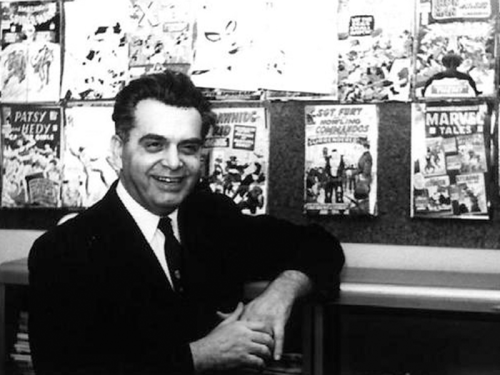
Of course Jack is not wholly without blame in this circumstance. There is some evidence that makes me believe that Jack was never a big fan of Stan’s. This stems from years earlier when Jack was fired from Timely Comics (the predecessor of Marvel) because he and Joe Simon were going to a hotel during their lunch breaks to do work for DC. The publisher of Timely (Stan’s cousin) found out about their deal shortly after a very young Stan began tagging along for their lunch time sessions, and Jack and Joe both blamed Stan for this discovery. Years later, both Joe and Jack would be working for Stan, a position, I’m sure, in which neither was thrilled to be.  Towards the end of his life Jack also made grandiose claims that he was solely responsible for the creation most of the Marvel characters created during the 60’s.

When it comes to actual ownership rights, I must admit I fall into the crowd that says Marvel has the rights.  Certainly I am no legal expert, but given the circumstances under which the work was done, it seems that Jack was hired to do specific work for Marvel and that at the time Marvel had expectations that they would own the work. No one ever expected comics to become the industry they are today, with multi-million dollar blockbuster movies and these characters plastered on thousands of products. Even though they are masterfully crafted, these were still just stories for kids. It seems more than a little revisionist to look back from today and say that these men should have known better and that contacts should have been made clearer with rights explicitly delineated.  There was just no way of knowing.

Although I believe Marvel owns the rights, there is still the matter of doing the right thing. There is no excuse for the way Marvel, as a corporation, treated Jack; and as the head of Marvel, Stan had an ethical responsibility to put a stop to it, and he didn’t.  From the rejection of requests to return old original pages, to the blatant refusal to grant any credit to Kirby, Marvel did the wrong thing every chance they got.

This is too often the case when it comes to older creators who never expected their work to amount to anything other than an immediate paycheck.  Both Marvel and DC have made considerable sums off the characters and have shown very little compassion and respect to the men who created them.  The whole situation is made worse by the fact that Jack Kirby is not alone in this situation.

In the end, I think Stan began to believe his own hype and Jack became overly bitter.  During a radio interview on his birthday, Jack Kirby received a phone call from Stan, calling to wish him a happy 70th birthday on the air.  To me this shows that somewhere inside, Stan had an affection and respect for Jack and the work they did together and that maybe if Stan had stopped with the birthday greeting, it might have been the first step towards mending fences. But Stan, always the self-promoter, couldn’t stop there, and once again had to throw some barbs at Jack. It is a great shame that even by the time that Kirby died, these two men couldn’t come close to seeing eye to eye.

I believe that Stan and Jack are both right and both wrong. Given the unique method in which the Marvel method works, it had to have taken a collaborative effort to make these wonderful comics. Stan provided some great ideas which Jack improved upon with some of his own ideas and both men shaped the final product. While both men have had some level of success separately, neither has come close to the magic they achieved together.


Links:

Interview with Jack Kirdy on his 70th birthday – Stan enters the conversation at minute 19, and throws barbs at minute 33:30.

Marvel Comics: The Untold Story – Provides even more details about how Marvel worked behind the scenes. Highest possible recommendation.

Jack Kirby Museum – Working to create a permanent museum dedicated to the work of Jack Kirby.
4 Comments

Filed under Andrew Hales, Comics, Comics History