Tag Archives: NASA

Winning Science December 4, 2013

The Michelin Man might be getting a green makeover. Michelin is going to spend $71 million over the next eight years investigating the possibility of making their tires out of plant based materials. Several other tire companies have started to incorporate other materials, like orange oil, into their tires. More companies are looking into this kind of innovation.  Given the increase in the cost of butadiene, a component of synthetic rubber, it’s not surprising.

Going green

Going green

Its also worth noting that most other companies that have incorperated other materials have done so for performance as opposed to going green.

With the holidays officially started, NPR is giving us a little lesson in the chemistry surrounding cookies, a classic holiday treat. With some help from TED Talks, they take us through all of the chemical reactions that lead to such deliciousness. From the melting of butter and creation of steam to the generation of carbon dioxide which cause the cookies to rise, they hit it all.

There be chemistry in that there oven!

There be chemistry in that there oven!

Now I really want cookies…

As many of you know, I’m a huge supporter of space exploration.  While I’d love to see NASA doing that exploration, it’s good to see another country jumping on the space bandwagon.  China is expecting its lunar rover Jade Rabbit to be reaching the moon shortly after a Monday lift off. This probe is important not only for China’s developing space program but also because it marks the first time since 1976 that a craft of any kind has attempted a “soft” landing on the moon.

If you're going to call it Jade Rabbit, the least you can do is paint it green and give it some bunny ears.

If you’re going to call it Jade Rabbit, the least you can do is paint it green and give it some bunny ears.

With over a billion people in the country, one would think they could come up with a better name than Jade Rabbit.
2 Comments

Filed under Winning Science

Winning Science November 20, 2013

First up this week, NASA has discovered life! Rather unfortunately for them, it’s in their clean rooms. The same bacteria was also found two years earlier in a European Space Agency clean room. This new strain of bacteria is capable of surviving the multiple sterilization methods used by NASA and most other space-faring nations. Not only is this stuff sturdy, it is so different from anything else ever seen that it justifies giving it a completely new genus, not just determining it to be a new species.

nasa_logo

At least NASA is finding new life forms, even if it is in their clean rooms. Maybe we should just move the clean rooms to Mars and claim victory.

Turns out that our primitive ancestors got around quite a bit. A mapping of ancient genomes shows that there was some cross breeding between Nethanderthals, Denisovans, and another, as of yet unidentified, primitive human ancestor. Various racial groups obtained different amounts DNA from this new source. Most groups from outside Africa have ~2%, while some of those living in Australia and New Zealand have as high as 4%.

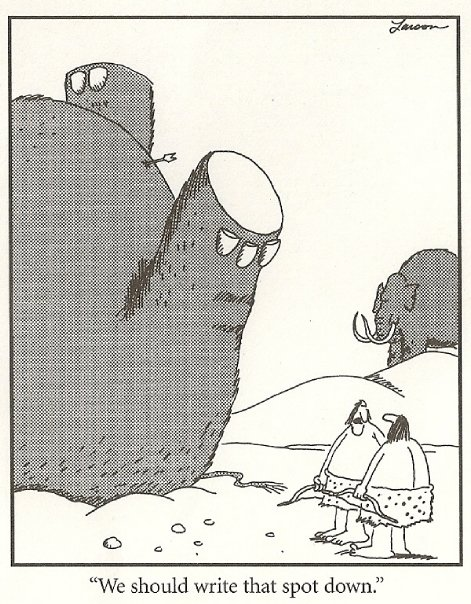
Thanks to Gary Larson this is how I always picture cavemen.

Thanks to Gary Larson this is how I always picture cavemen.

It’s a little depressing to know that my primitive ancestors were way better at picking up women than I am.

Graphene is a fantastic material that has been around for about ten years, but only recently have we begun to realize its true potential. The material is both super strong and more conductive than copper. This is one of those materials that, like plastics, has the potential to revolutionize our whole world and these are just a few possibilities.

This is just one of the things Graphene can prevent.

This is just one of the things Graphene can prevent.

My personal favorite didn’t make that particular list.

I’m a huge proponent of people taking jobs in the sciences. While everyone doesn’t need to be a scientist, I do believe that we need more people going into these fields to help propel us into the kind of future in which we all wish to live. Having said that, not all jobs in science are nice, clean jobs that only require sitting in a lab. As Popular Science shows us, there are many science jobs that are not for those with a weak stomach.

There is far too much science that revolves around poop.

There is far too much science that revolves around poop.

They’ve also thrown in a few awesome ones, just to tease us.

Leave a comment

Filed under Winning Science

Winning Science October 29, 2013

Ever wonder why it always seems that your awesome smartphone or computer starts to fall apart right about the same time that the manufacturer announces a brand new model? If the answer is yes, then you are not alone. The New York Times’ Technology section attempts to tackle this mystery. It turns out there is a very fine line between making a quality product that everyone loves and “planned obsolescence”. Stray a bit too far either way and your bottom line will be taking a considerable hit.

apple-logoIt’s reassuring to know that I’m not losing my mind when I notice these things.

The US Navy’s newest destroyer, the USS Zumwalt, has made its way into the water finally. The Zumwalt, named for former Chief of Naval Operations Admiral Elmo R. Zumwalt Jr., is significantly larger than its predecessor but requires a much smaller crew. While technologically advanced, the design program met with considerable problems and cost a lot more than the original budget, much in the way the earlier Seawolf Class Fast Attack Submarines did. Also like Seawolf,  the program was cut down to just three ships.

www.sinodefenceforum.comThe Zumwalt boasts advanced radar systems, a new 155mm gun, an electric propulsion system, significant computer automation, and a stealth hull.

Popular Science finally answers a question I’ve always had about the Apollo missions. What happened to Apollo 2 and 3? We all know about the tragic fire on Apollo 1 and the investigation that followed, but what happened to the next two missions? As it turns out, they never happened. Each of the Saturn rockets to be used was assigned to a mission, and so Apollo 2 and 3’s rockets were never used, due to the massive redesigns following the fire. With the introduction of the new and improved Saturn rockets, the mission number was maintained and the next unmanned Apollo flight became Apollo 4.

en.wikipedia.orgApollo 4, 5, and 6 were all unmanned test missions that were conducted prior to resuming manned missions with Apollo 7.

Leave a comment

Filed under Winning Science

Winning Science October 2, 2013

Although not all of us are feeling the pain of the current government shutdown, the folks at NASA sure are. With 97% of NASA employees furloughed, a continued shutdown may impact NASA’s next unmanned mission to Mars. The longer the shutdown runs, the more it will eat into the narrow launch window for MAVEN. If MAVEN is unable to launch in its current window, it will have to wait two years for the next one, and even then the probe will be operating at a reduced capacity due to solar activity.

blogs.smithsonianmag.com

I’d like to know where exactly one stores a Mars probe and rocket. Why do I feel that its going to be sitting in some dude’s garage for two years?

Since last year the FDA has a new, accelerated drug approval process. The “breakthrough therapy” designation is meant for drugs which treat serious or life threatening illnesses, like cancer. Drug companies have embraced the new process, filing almost one hundred applications, half of which have been denied. While that doesn’t sound good, it makes me feel reassured that the FDA is not rushing every drug that applies, and that they’re making some actual evaluations.

www.nbcnews.com

This is not the correct use for the “breakthrough therapy” process. Don’t even think about it.

I’m also glad they’re only allowing drugs for serious conditions to to be considered. Its not like we need a rush approval for a new version of Viagra.

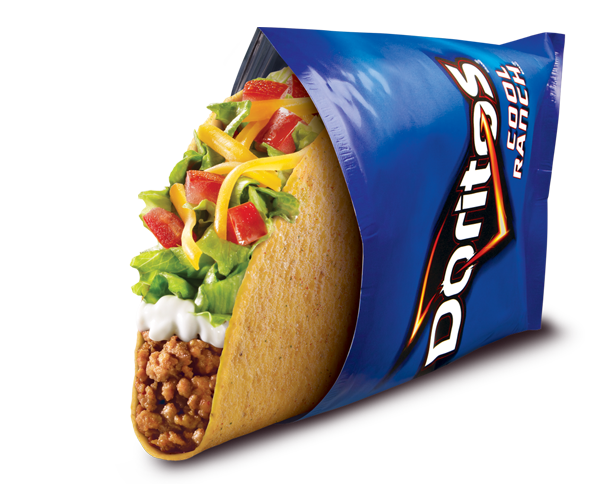
Finally, the New York Times has an amusing video out about why Taco Bell’s Doritos Tacos sell so well. This may not seem like science, but in fact there is tons of science behind this. These tacos appeal to us on several different levels and are designed to make you physically enjoy them and then want more.

http://www.tacobell.com/food/tacos/Cool_Ranch_Doritos_Locos_Tacos_Supreme

Om Nom Nom Nom!

I may or may not now have a case of the munchies.

Leave a comment

Filed under Winning Science