Tag Archives: NASA

Winning Science April 2, 2014

Night vision goggles are pretty standard military equipment. While not everyone may have them, they are readily available if needed. The problem is that goggles can be bulky and limit the field of view. University of Michagan researchers are looking into ways to make night vision contacts. Using graphene and an insulating material, with an electrical current applied, infrared light can be converted to visible light. Eventually, this technology could be used in contact lenses, removing the need for goggles.

The goggles, they do nothing!

The goggles, they do nothing!

One issue still to be figured out is the need for greater light sensitivity.

With the presumed crash of Malaysia Airlines Flight 370, the hunt is on to recover the infamous black box before the battery runs out. It turns out that the black box isn’t quite as good as one would assume. While they are remarkably durable, the sonar devices that are designed to allow searcher to find them have batteries that only last thirty days after a crash. This has resulted in the information from a handful of black boxes being lost because the boxes couldn’t be found before the batteries ran out. After one particularly bad crash in 2009, several improvements were recommended, however many American carriers have not yet updated their equipment. There is also the option that instead of using black boxes, airlines could wirelessly send all the data from the plane to a data center where the information can be stored. This of course would require significant improvements to the aircraft and would be costly for the airlines.
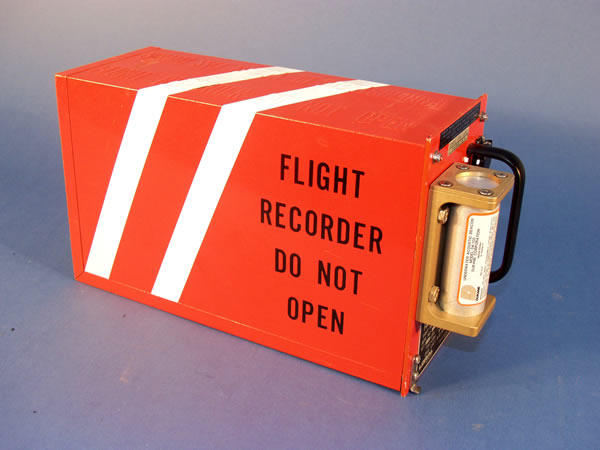
Also, it turns out Black Boxes aren't actually black.

Also, it turns out Black Boxes aren’t actually black.

Pilots are also not too hot on this idea because they would essentially be bugged the entire time they are at work.

Twin studies are important in scientific research as they represent the two most identical persons that can exist. The closer two people are to one another, the better scientists can control the experiment. With this in mind, NASA will be conducting a twin experiment of their own. The space agency will be sending Scott Kelly to the International Space Station for a year while his brother Mark will remain here on Earth. Both men will be subjected to the same experiments to determine what, if any, differences there are in humans after prolonged time in space.
nasa_logo

Mark Kelly is the husband of former Congresswoman Gabby Giffords and Scott is a graduate of my alma mater, SUNY Maritime College.
Leave a comment

Filed under Weekly, Winning Science

Winning Science March 5, 2014

All the way back in October, Motorola announced it would begin working on development of modular cellphones. Having just performed surgery on my “older” iPhone to remove the cameras, I’m a big fan of the idea that I could design my own phone that doesn’t have a camera, or at least a camera that is easily removable. As far as consumers go, I am not alone. Retailers and phone developers however are not quite so hot on this idea. They are very dependent on the majority of the population who stare at the calendar, waiting for that day they can ditch their old phone in order to get the latest and greatest. In order for these phones to catch on, retailers and manufactures will need to change their models a bit and we all know how much they love change.

www.macworld.com

Like this, just more versatile.

I’m very proud of my phone surgery… I only lost one screw.

Did you know that NASA estimates there to be 500,000 pieces of garbage in Earth orbit? 17,000 of those pieces are trackable (coffee cup size and larger). Over fifty years of manned space flight and satellites has resulted in considerable amounts of space junk that is beginning to cause problems. There have been several instances in recent memory in which the International Space Station has been required to adjust its orbit due to this debris. There are, however, several competing plans to help alleviate this problem, including a new European spacecraft which will attempt capture the offending debris. There are still several technical hurdles to overcome, such as fuel and how to deal with the debris that is tumbling.

Like this, only with space helmets.

Like this, only with space helmets.

This seems like the interstellar version of a guy using a stick with a nail on the end.

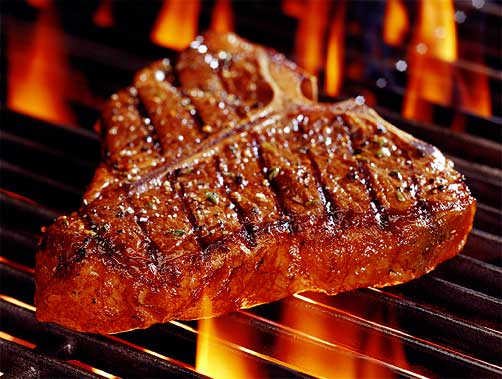
That protein rich diet might not be so good for you after all. According to a new study, a diet high in animal proteins (meat, dairy, etc) may significantly increase the risk of cancer in persons 50-65. The study followed people for 18 years and found a significant increase of cancer in those middle aged persons who had ate larger amounts of animal proteins. They also noticed a 75% increase in deaths from any cause in that group. Those who got their protein from other sources however did not have this increased risk. More astounding was that people who ate more animal protein after age 65 actually lived longer.

steak

Note to self, put down the steaks at 50, pick back up at 65.

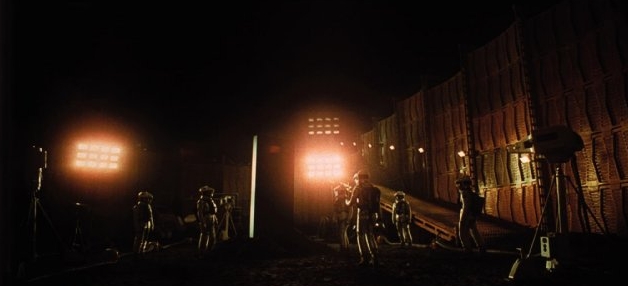
Those of us who support continuing space exploration got a bit of a boost in the President’s new budget. In the budget submitted by the President’s NASA administrator there is funding for a fly-by mission to Jupiter’s moon Europa. Scientists are excited by this prospect since Europa is thought to be made of ice with a vast ocean of liquid water beneath. This of course would make it an ideal place to send manned missions to, once we get to that stage. For now though, we will have to settle for more probes.

Bad things happen when you screw with the Monoliths.

Bad things happen when you screw with the Monoliths.

Personally though, I’ve seen 2001, I already know what’s out there.

Leave a comment

Filed under Winning Science

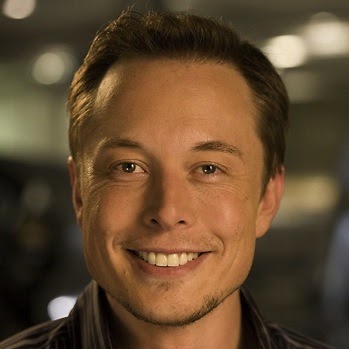
Geeks You Should Know: Elon Musk

empicThis month’s Geek You Should Know is billionaire entrepreneur and engineer Elon Musk. Born in South Africa, he began his career by selling computer code for a video game at age twelve.  By age seventeen he had moved to Canada to pursue a college degree, eventually graduating from the University of Pennsylvania with a degree in economics and physics.  During the Dot Com boom in the mid 1990’s, he founded Zip2, which was later bought for just over $300 million—not bad for a guy in his 20’s. For most people, these accomplishments would be enough, but that same year Musk co-founded X.com, which we all know now as PayPal.  Three years later Musk sold PayPal to Ebay, and moved on to even bigger projects. Lately he has been making waves with both SpaceX and Tesla Motors.

Why We Should Care

This guy is basically Tony Stark without (at least as far as we know) the Iron Man suit.  While he has been fortunate to get involved in tech companies at just the right time, Elon Musk has also made a startling habit of taking on industries dominated by monolithic companies and revolutionizing the business right in front of them.  Before PayPal, banks and credit card companies were the only way to make payments on the internet.  Musk challenged that and forced the industry to play by his rules.  Many of the services that have come about in online banking since 1998 are directly or indirectly a response to PayPal.

Not only is PayPal on their with all the big name credit card companies, but they're name is the biggest. That's impressive.

Not only is PayPal listed with all the big name credit card companies, but their name is the biggest. That’s impressive.

Musk’s current projects are taking on two industries at once:  automotive and aerospace. Currently, wannabe astronauts have to spend years training, studying, hoping and praying that they can get accepted into NASA and get to be part of a mission.  If Musk has his way—and there is every indication that he will—NASA’s monopoly on space travel will quickly become non-existent.  SpaceX has recently announced its desire to construct a permanent space port in southern Texas where they can launch commercial space flights.

As for the auto industry, Musk’s Tesla Motors has been making huge strides in the electric car market. Although Tesla has had a few high profile incidents lately, their cars are miles ahead of the competition. With Musk’s vision leading the company, Tesla is not only looking at the cars themselves, but also at the infrastructure required to make these cars viable while still maintaining their green designs.

l15325-tesla-motors-logo-44198

Tesla has also been involved in some legal battles recently due to its business model. Most states have laws requiring that cars be sold from dealers who buy from the manufacturer. Tesla would like to remove the middle man, and sell the cars directly to the general public. This fight has been particularly rough in Texas, which has deeply entrenched laws.  I’m pretty confident that Tesla will win in the end, though it may get messy before it’s all done.

The world needs more people like Elon Musk.  Men and women like him are the kinds that drive industries to do new and different things and that’s why Elon Musk is a Geek You Should Know.

Leave a comment

Filed under Andrew Hales, Geek Life, Geeks You Should Know

Winning Science December 24, 2013

Recently DARPA (Defense Advanced Research Projects Agency) held a robot Olympics in sunny Miami.  At stake is not only pride, but also one million dollars in additional research funding for any team that makes it through this first round.  The winning team after the second round will earn another two million. The robots are competing in several events which mimic tasks that humans might have to do in emergency situations, such as climbing ladders or turning valves. During the accident at Fukushima several valves could have been operated to significantly reduce the severity of the accident.  Unfortunately, due to radiation levels, human operators couldn’t reach them.  It’s hoped that these robots, or ones similar to them will be able to perform tasks where and when humans are unable to, preventing or at least reducing potential disasters.

lifesaving-robots-03-1213-lgnIt might be here to save my life, but this one looks way too much like Godzilla for my personal comfort.

Today is the 45th anniversary of the beautiful earthrise photo taken by the astronauts on Apollo 8. To commemorate this event, NASA’s Goddard Space Center has put together a computer generated recreation using photographs from the command module, the audio record of mission, as well as new data provided by NASA’s Lunar Reconnaissance Orbiter (LRO). It’s very interesting to listen to these events unfold (and more than a little humorous listen to Jim Lovell trying to find color film) and to hear the wonder in the voices of the astronauts.

I always like it when NASA takes the time to remember these cool little moments in the history of space exploration.

Yesterday Mikhail Kalashnikov, the inventor of the infamous AK-47 assault rifle died at the age of 94. No matter what your thoughts may be about guns and warfare, it is an undisputed fact that the AK-47 has been one of the most influential pieces of technology of the second half of the 20th century. The AK-47 has become synonymous with rebellions and insurgencies, cementing it’s place in the American collective memory during the Vietnam War. While the gun itself was more of a group effort and a conglomeration of several designs, Kalashnikov was likely chosen by Stalin because he best fit the image that the Soviets wanted to project. Regardless of how much of the design actually came from him, Kalashnikov became almost as much of a symbol as the rifle which carries his name.

Kalashnikov with his creation (kind of).

Kalashnikov with his creation (kind of).

Driving home the point of the rifle’s influence, the flags of Mozambique and Hezbollah and the coat of arms for Zimbabwe and East Timor all feature the AK-47

Leave a comment

Filed under Winning Science