
Tag Archives: Graphene

Winning Science April 2, 2014

Night vision goggles are pretty standard military equipment. While not everyone may have them, they are readily available if needed. The problem is that goggles can be bulky and limit the field of view. University of Michagan researchers are looking into ways to make night vision contacts. Using graphene and an insulating material, with an electrical current applied, infrared light can be converted to visible light. Eventually, this technology could be used in contact lenses, removing the need for goggles.

The goggles, they do nothing!

The goggles, they do nothing!

One issue still to be figured out is the need for greater light sensitivity.

With the presumed crash of Malaysia Airlines Flight 370, the hunt is on to recover the infamous black box before the battery runs out. It turns out that the black box isn’t quite as good as one would assume. While they are remarkably durable, the sonar devices that are designed to allow searcher to find them have batteries that only last thirty days after a crash. This has resulted in the information from a handful of black boxes being lost because the boxes couldn’t be found before the batteries ran out. After one particularly bad crash in 2009, several improvements were recommended, however many American carriers have not yet updated their equipment. There is also the option that instead of using black boxes, airlines could wirelessly send all the data from the plane to a data center where the information can be stored. This of course would require significant improvements to the aircraft and would be costly for the airlines.

Also, it turns out Black Boxes aren't actually black.

Also, it turns out Black Boxes aren’t actually black.

Pilots are also not too hot on this idea because they would essentially be bugged the entire time they are at work.

Twin studies are important in scientific research as they represent the two most identical persons that can exist. The closer two people are to one another, the better scientists can control the experiment. With this in mind, NASA will be conducting a twin experiment of their own. The space agency will be sending Scott Kelly to the International Space Station for a year while his brother Mark will remain here on Earth. Both men will be subjected to the same experiments to determine what, if any, differences there are in humans after prolonged time in space.

nasa_logo

Mark Kelly is the husband of former Congresswoman Gabby Giffords and Scott is a graduate of my alma mater, SUNY Maritime College.
Leave a comment

Filed under Weekly, Winning Science

Winning Science November 20, 2013

First up this week, NASA has discovered life! Rather unfortunately for them, it’s in their clean rooms. The same bacteria was also found two years earlier in a European Space Agency clean room. This new strain of bacteria is capable of surviving the multiple sterilization methods used by NASA and most other space-faring nations. Not only is this stuff sturdy, it is so different from anything else ever seen that it justifies giving it a completely new genus, not just determining it to be a new species.

nasa_logo

At least NASA is finding new life forms, even if it is in their clean rooms. Maybe we should just move the clean rooms to Mars and claim victory.

Turns out that our primitive ancestors got around quite a bit. A mapping of ancient genomes shows that there was some cross breeding between Nethanderthals, Denisovans, and another, as of yet unidentified, primitive human ancestor. Various racial groups obtained different amounts DNA from this new source. Most groups from outside Africa have ~2%, while some of those living in Australia and New Zealand have as high as 4%.

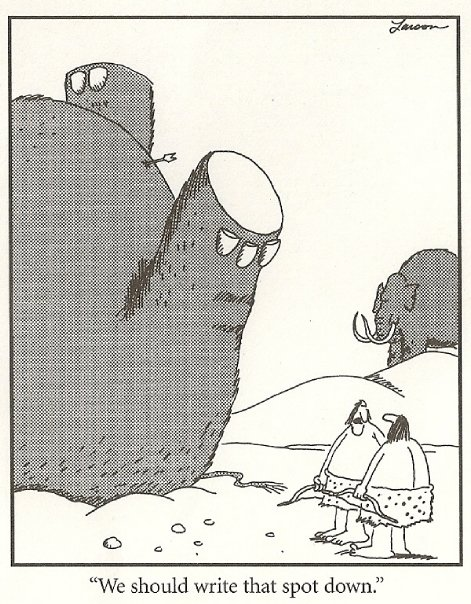
Thanks to Gary Larson this is how I always picture cavemen.

Thanks to Gary Larson this is how I always picture cavemen.

It’s a little depressing to know that my primitive ancestors were way better at picking up women than I am.

Graphene is a fantastic material that has been around for about ten years, but only recently have we begun to realize its true potential. The material is both super strong and more conductive than copper. This is one of those materials that, like plastics, has the potential to revolutionize our whole world and these are just a few possibilities.

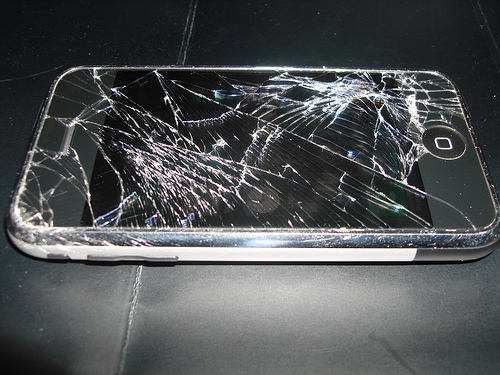
This is just one of the things Graphene can prevent.

This is just one of the things Graphene can prevent.

My personal favorite didn’t make that particular list.

I’m a huge proponent of people taking jobs in the sciences. While everyone doesn’t need to be a scientist, I do believe that we need more people going into these fields to help propel us into the kind of future in which we all wish to live. Having said that, not all jobs in science are nice, clean jobs that only require sitting in a lab. As Popular Science shows us, there are many science jobs that are not for those with a weak stomach.

There is far too much science that revolves around poop.

There is far too much science that revolves around poop.

They’ve also thrown in a few awesome ones, just to tease us.

Leave a comment

Filed under Winning Science