Tag Archives: Earth

Winning Science March 19, 2014

Ever wonder what’s really going on at the center of the galaxy? Later this month, scientists who ponder that exact question are getting a real treat. A cloud of gas roughly three times the size of earth appears to be on a direct course for the incredibly massive, black hole that resides at the center of our galaxy. Telescopes across the globe are being trained on the phenomenon in order to gather as much data as possible. No one is quite sure what is going to happen, but everyone agrees it will be worthy of study.

I am 99.99% certain this is NOT what they're going to find.

I am 99.99% certain this is NOT what they’re going to find.

Since the center of the galaxy is 26,000 light years away, all of this actually took place 26,000 years ago.

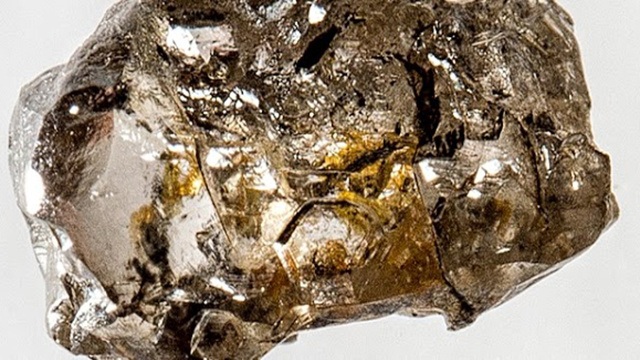
While we all live on this planet, it is easy to forget how little humanity actually knows about the make up of our home. Within a brown diamond found in Brazil, experts have found small amounts of ringwoodite, a substance that is only formed under extreme pressures and has previously never been found naturally on Earth. The ringwoodite is thought to have been formed in the transition layer between the upper and lower mantle where there appears to be considerable amounts of water present. It’s even possible that the amount of water in the mantle is equal to the amount in all the world’s oceans.
I actually find it quite pretty.

I actually find it quite pretty.

The article refers to the brown diamond as “worthless.” I have a hard time comprehending diamond and worthless in the same sentence.

There are many things that separate man from animal, but possibly the most profound is our curiosity–our desire to learn more.  That’s the topic of “The Editor’s Letter” in the April issue of Popular Science.  Humans, more than most creatures, are capable of deriving a physical high from the act of learning. We are built in a manner that encourages curiosity and learning, much to the benefit of our race.
Einstein described himself as having no special talents, only passionate curiosity.

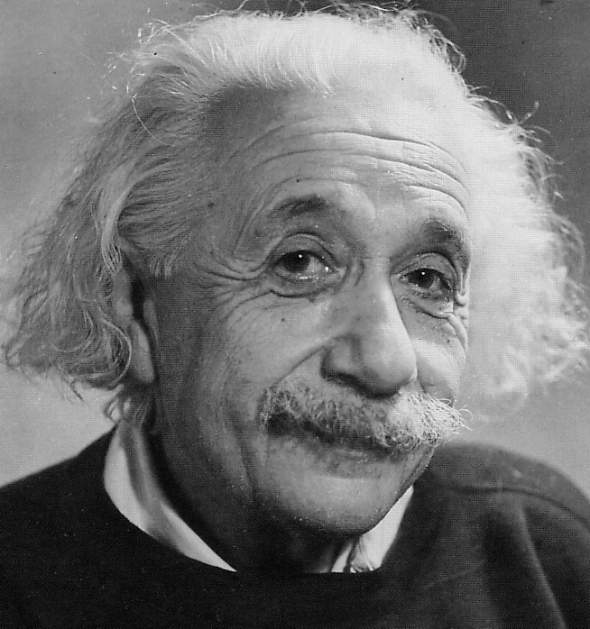
Einstein described himself as having no special talents, only passionate curiosity.

It doesn’t even matter what you’re learning about, the physical reaction is the same, though the topics of interest obviously vary from person to person.

Leave a comment

Filed under Weekly, Winning Science

Winning Science February 5, 2014

Hey, everyone!  This is Tracy taking the helm of Therefore I Geek for this week’s Winning Science, since it is Andrew’s birthday today.  Hang on!  It’s going to be a wild ride.

It turns out that some massive events in history may have changed humanity at its most fundamental level.  A group of geneticists, biologists, and other scientists now believe that European genetic DNA was modified by the Black Plague.  Researchers point to changes to twenty different genes that probably occurred when the Bubonic Plague’s bacteria interacted with the proteins in the genetic sequence.

A little of this would have done the trick.

Apparently a side affect of the genetic modifications may be more susceptibility to autoimmune disease, so I believe science has now explained Wolverine.

This new website has a beautiful model of the wind and weather patterns on the earth’s surface.  The model is completely interactive, allowing the user to zoom in and out, interchange between wind and current patterns, and even look at patterns that occurred in the past.

This still doesn’t explain why it seems so much windier when it is cold outside.

The James Webb Space Telescope, the planned replacement for Hubble, is on track to be launched in 2018, and Astronomers have pretty high hopes for it.  The last of the pieces have arrived at the Goddard Space Flight Center, and now must be assembled–a task which will take up to three years.  Scientists say it is possible that this telescope will be able to see back to the beginning of time.

Yes, yes, but will it catch a glimpse of this ship?

Maybe this will render the current hoopla over the Ken Ham vs. Bill Nye debate moot?  Too much to hope for?

That’s it for this week’s Winning Science, and I hope you all will join me in wishing Andrew a very happy Birthday.  Leave a message for him in the comments!

Leave a comment

Filed under Winning Science

Winning Science July 24, 2013

Here is an interesting experiment recently performed in Scotland using dolphins. It seems that dolphins might actually respond to unique whistles like we would our own name. Additionally, they suspect that we are underestimating the complexity of dolphin interactions. This is way better than the experiments they use to do with dolphins.

I have no words to describe this, just laughter.

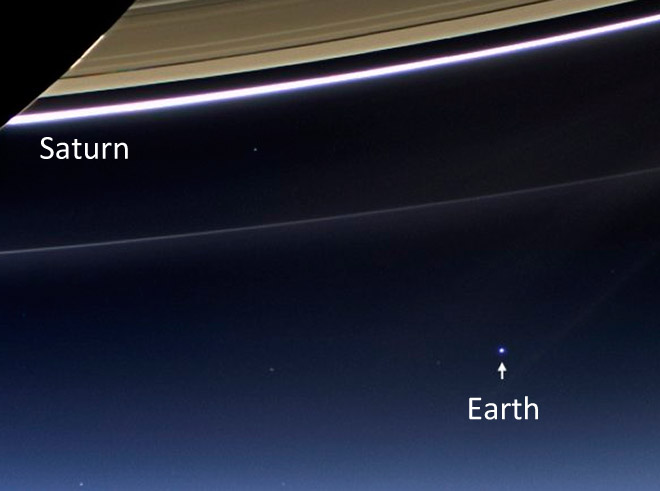
NASA’s Cassini spacecraft was able to take a rare, long distance shot of Earth. This feat is rare because it turns out the earth is usually to close to the sun to take a picture, at least from Cassini’s perspective.

201307_Cassini_Earth_SaturnI understand Cassini cost $3.27 billion, but that’s a fantastic picture, especially from 900 million miles away.  I can’t get my camera to take pictures that clear from 9 ft away.

In preparation for future production of Google Glass, Google has purchased a stake in a Taiwanese firm which manufactures some of the most necessary components for the tech device. They are preparing for an expected 2 million units in annual production. That’s crazy!

google glass

These glasses are really cool, but I’m still on the fence about them.  As companies spend the next few years attempting to give us the next big thing, commercialism is going to get very interesting.

Leave a comment

Filed under Winning Science