Editorial | Editing 101: “How to… Avoid Pissing off the Writer”

As an editor, one of the scariest things I have to do is… edit someone else’s work.  It may sound odd, because it is my job, but it is the truth.  As an editor, I’m responsible for taking the brain child of another human being, and making just enough changes so that readers can understand it, while making sure the author’s voice is never lost.

A large part of the fear comes from the fact that telling another person that their work needs improvement is never easy for either party.  It is important that I as an editor point out the flaws in writing as gently as possible.  At the same time, it is always hard for anyone to accept criticism without taking it too personally.

First of all, it is important that an editor and a writer have a good working relationship.  It is a bonus if they have a solid friendship.  Often when two stubborn people bump heads over the correct word to use in a sentence—and believe me, both writers and editors are inherently stubborn; it’s in their genetics—only a healthy relationship will allow them to back away from the situation.  This relationship also allows them to see each other as humans, and not just the faceless creator or modifier of words on a page.  Often, this relationship (and sometimes a significant distance between them) is all that will keep an editor from killing her blog writer.  Not that I speak from personal experience, of course.

Secondly, as an editor, it is important to have respect for the person whose work is being edited.  I have found that when I personally respect the person whose writing I am editing, I am much more likely to be cautious in how I approach changes.

I never tell a writer that their ideas are stupid.  As far as I am concerned, every idea is excellent—it is sometimes merely a diamond in the rough.  It may require a little cut and polish to truly shine.  Instead I find ways to point out how their ideas can be improved, or that their particular audience may not be the most appreciative of a piece of writing.

I keep my words respectful as well.  Sometimes just the choice of language in discussing someone’s work is the difference between making them angry, and actually getting a fantastic final piece of writing.

Lastly, and I have mentioned this before, it is incredibly important to retain the author’s voice in his piece.  If I think that a sentence or paragraph is awkward or unclear, I usually will just say as much to the author, and allow him or her to rewrite it in the way that seems best.  If they prefer that I give them suggestions, then I do so, but in a style as close to theirs as I can write.  This is much easier if I do have a good working relationship or a friendship with the person.

Being a good editor comes down to the attitude with which I handle the person writing the piece.  To make sure that I don’t piss off the writer, I try to establish a good relationship with him, hold him and his work in regard, and I do my best to preserve his voice within his work.

Have you ever worked with someone that you pissed off too badly to continue working together?  Let us know in the comments.

Leave a comment

Filed under Editing 101, Editorial, Tracy Gronewold

Stan and Jack

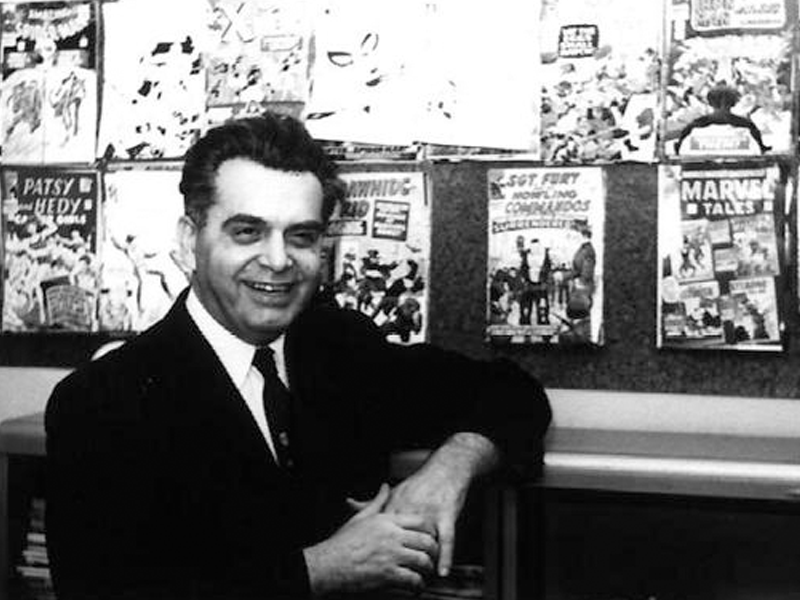
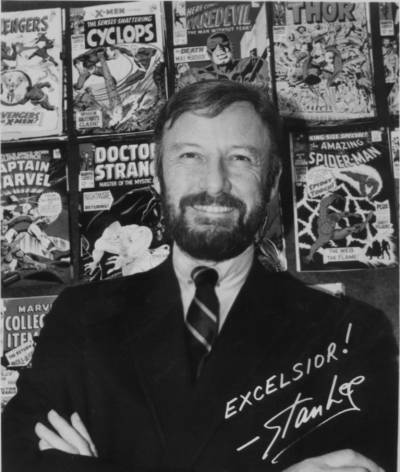
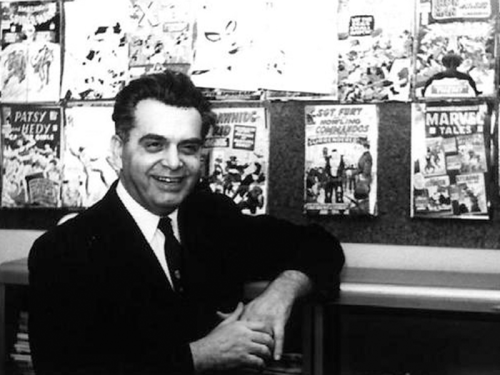
Aside from those of its beloved characters, Marvel itself has an amazing origin story.  In November of 1961 Stan Lee and Jack Kirby released the first issue of Fantastic Four. Soon the two had several more titles under their belts such as Iron Man, The Incredible Hulk, The Avengers and The X-Men.  All the while the two men worked together using the Marvel method of writing comics, which was born more out of necessity than anything else. The Marvel method consists of a writer giving a brief outline of the issue to the artist, the artist plotting out the story, and the writer coming back and adding in all the dialogue to match both the art and plot summary.  In the 50’s Stan was Editor-in-Chief and writing nearly all of Marvel’s comics, which required him to cut corners, hence the plot summaries—some of which were only a paragraph or two long. This has unfortunately lead to a rather ugly fight between Stan and Jack (and now Jack’s estate).

The underlying problem is that the Marvel method leaves quite a bit of room when it comes to determining who really gave these characters their shape. On one hand it is possible that Stan provided Jack with fairly clear details and descriptions for these characters in his summaries and that while Jack certainly added something to them, it was mostly based on what Stan had provided him.  It is also just as likely that Stan was somewhat vague on the details, as was often the case, and that it was Jack that filled in the missing parts in order to really flesh out the characters. With the exact details of events lost to history, it’s pure speculation at this point as to what actually happened.
Stan 68 bw

Over the last few decades the tension between the two has led to a growing schism among fans of classic Marvel comics, with fans picking sides between Jack and Stan (Teams Edward and Jacob can suck it!). For a very long time there was a general public consensus that Stan was responsible for most of Marvel’s characters in large part because Stan was both the public face of Marvel and was much more personable than Jack. Newspaper interviews would go on and on about how wonderful Stan was while dedicating only a paragraph or so to Jack, often describing him in unflattering and sometimes insulting terms. It’s much easier to give credit to someone who is amiable and intentionally doesn’t correct people when credit is given erroneously. I can’t imagine that in the beginning Stan went out of his way to discredit Jack, though it is apparent that he made little, if no attempt to correct people.
jack-kirby-museum

Of course Jack is not wholly without blame in this circumstance. There is some evidence that makes me believe that Jack was never a big fan of Stan’s. This stems from years earlier when Jack was fired from Timely Comics (the predecessor of Marvel) because he and Joe Simon were going to a hotel during their lunch breaks to do work for DC. The publisher of Timely (Stan’s cousin) found out about their deal shortly after a very young Stan began tagging along for their lunch time sessions, and Jack and Joe both blamed Stan for this discovery. Years later, both Joe and Jack would be working for Stan, a position, I’m sure, in which neither was thrilled to be.  Towards the end of his life Jack also made grandiose claims that he was solely responsible for the creation most of the Marvel characters created during the 60’s.

When it comes to actual ownership rights, I must admit I fall into the crowd that says Marvel has the rights.  Certainly I am no legal expert, but given the circumstances under which the work was done, it seems that Jack was hired to do specific work for Marvel and that at the time Marvel had expectations that they would own the work. No one ever expected comics to become the industry they are today, with multi-million dollar blockbuster movies and these characters plastered on thousands of products. Even though they are masterfully crafted, these were still just stories for kids. It seems more than a little revisionist to look back from today and say that these men should have known better and that contacts should have been made clearer with rights explicitly delineated.  There was just no way of knowing.

Although I believe Marvel owns the rights, there is still the matter of doing the right thing. There is no excuse for the way Marvel, as a corporation, treated Jack; and as the head of Marvel, Stan had an ethical responsibility to put a stop to it, and he didn’t.  From the rejection of requests to return old original pages, to the blatant refusal to grant any credit to Kirby, Marvel did the wrong thing every chance they got.

This is too often the case when it comes to older creators who never expected their work to amount to anything other than an immediate paycheck.  Both Marvel and DC have made considerable sums off the characters and have shown very little compassion and respect to the men who created them.  The whole situation is made worse by the fact that Jack Kirby is not alone in this situation.

In the end, I think Stan began to believe his own hype and Jack became overly bitter.  During a radio interview on his birthday, Jack Kirby received a phone call from Stan, calling to wish him a happy 70th birthday on the air.  To me this shows that somewhere inside, Stan had an affection and respect for Jack and the work they did together and that maybe if Stan had stopped with the birthday greeting, it might have been the first step towards mending fences. But Stan, always the self-promoter, couldn’t stop there, and once again had to throw some barbs at Jack. It is a great shame that even by the time that Kirby died, these two men couldn’t come close to seeing eye to eye.

I believe that Stan and Jack are both right and both wrong. Given the unique method in which the Marvel method works, it had to have taken a collaborative effort to make these wonderful comics. Stan provided some great ideas which Jack improved upon with some of his own ideas and both men shaped the final product. While both men have had some level of success separately, neither has come close to the magic they achieved together.


Links:

Interview with Jack Kirdy on his 70th birthday – Stan enters the conversation at minute 19, and throws barbs at minute 33:30.

Marvel Comics: The Untold Story – Provides even more details about how Marvel worked behind the scenes. Highest possible recommendation.

Jack Kirby Museum – Working to create a permanent museum dedicated to the work of Jack Kirby.
4 Comments

Filed under Andrew Hales, Comics, Comics History

Winning Science December 11, 2013

If you’re like me, you’ve tried escaping from the annoyances of real life by playing one of various MMOs. Personally, I have played World of Warcraft, Star Trek Online, and Star Wars: The Old Republic. It seems, however, that real life might be trying to follow us into these imaginary realms. The New York Times is reporting that federal intelligence services (NSA, FBI, CIA) have been snooping for terrorists inside games like WoW and Second Life. Because of the nature of these games, the potential covert communication and transferring of funds does exist.  While it’s true there is some risk, experts say that the risk is less than one might think since game companies collect considerable data about players, which might compromise the secrecy of any potential gamer terrorists.

Turns out the Lich King isn't the only bad guy in the game.

Turns out the Lich King isn’t the only bad guy in the game.

I really want to know where I apply to play WoW for the CIA.  I think I could live with that job.

Researchers at MIT are working on a new biosuit that may soon replace the bulky space suits to which we are all accustomed. Surprisingly, it only takes one third of an atmosphere (about 5 psi) to keep a human alive in a vacuum. Current space suits provide this pressure through a combination of rigid structure and positive air pressure, whereas these new suits use polymers, elastics, and a special, active material to achieve this. Additionally, the MIT team is working on a different suit that can be worn to help reduce the muscle loss that occurs in zero g.

This had better not be what the future of space travel looks like.

This had better not be what the future of space travel looks like.

If the future of space exploration is about to become more form-fitting, I really need to get in better shape.

Speaking of the future of space exploration, Mars One, the project that is planning a manned mission to Mars, is adding a new, more achievable mission to its plans. Mars One is intending to land an unmanned craft on the red planet in 2018. The probe will consist of two parts, an orbiter and a lander. The orbiter will remain in orbit as Mars’ first permanent satellite, while the lander will perform a water extraction experiment, as well as several other experiments designed by students and chosen in a competition.

mars-one-banner-set-1-720_300

Let’s hope Mars One will be better at successfully landing stuff on Mars than NASA is.

Finally, a little holiday DIY project for you. If you hate untangling Christmas lights, make your own. With some tape, an LED, a few pennies and a lemon (yes…a lemon) you can make your own little light. Now all you need is 69,999 more and you can make a truly spectacular holiday display.

It's ok little fellas, you can be useful too!

It’s ok little fellas, you can be useful too!

I wish I had known about this before I cashed in 638 pennies. This would have been way cooler than the $6.38 I got instead.

Leave a comment

Filed under Winning Science

Geeks You Should Know: Brian K. Vaughan

Like all people, we here at Therefore I Geek have heroes, but because we’re geeks many of those heroes are also geeks. With this in mind, we’re kicking off a new, reoccurring series featuring people in geek culture that we think you should know about, or at least know better and we’ve decided to start with Brian K. Vaughan.

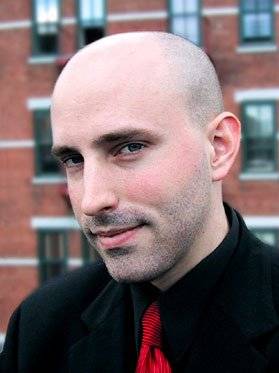
1923505-brian_k_vaughan_imageBrian K. Vaughan got involved in comics as student at NYU in the late 90’s through a program at Marvel called the Stan-hattan Project, which gave students in NYU’s Dramatic Writing department a chance for practical experience.  Vaughan started off with a few fill issues for several series, which included Cable and Wolverine, before moving over to DC where he helped re-launch Swamp Thing. Swamp Thing of course is known as a legacy title through which many of comic’s biggest names—such as Alan Moore, Grant Morrison, and Mark Millar—have come. When this particular Swamp Thing series didn’t last very long, Vaughan made his way back to Marvel for a Cyclops mini-series.

When Marvel decided to launch a new imprint, Vaughan wrote two series, one featuring Mystique and a second called Runaways which starred a new team of heroes who were the children of Marvel’s supervillains.  Following a successful run, Vaughan left Runaways and was succeeded by none other than Joss Whedon.

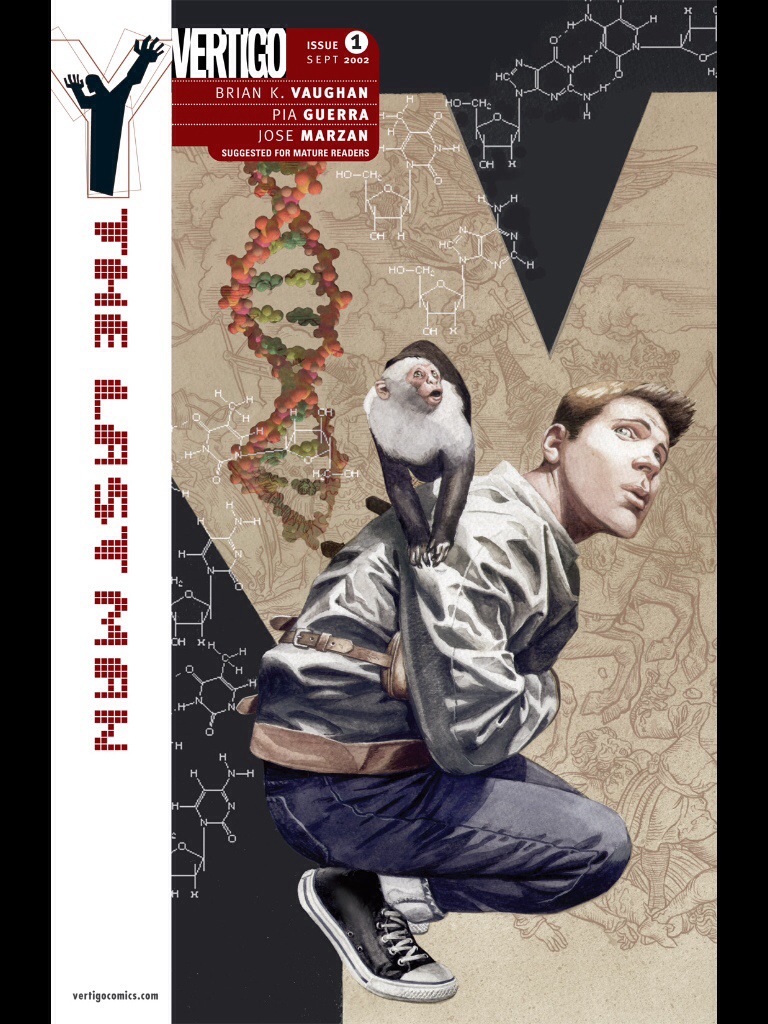
Prior to the release of Runaways, Vaughan started a creator-owned series at Vertigo called Y: The Last Man. This is hailed as Vaughan’s best work and with good reason.  It is the story of Yorick Brown and his monkey trying to survive in a world in which a mysterious event has left them the only two living males on the planet.  It is a masterpiece of comics, lasting sixty issues before coming to a wonderful conclusion.  Frequently Y: The Last Man is recommended to new comic readers as it exemplifies the art form.

A man and his monkey.

A man and his monkey.

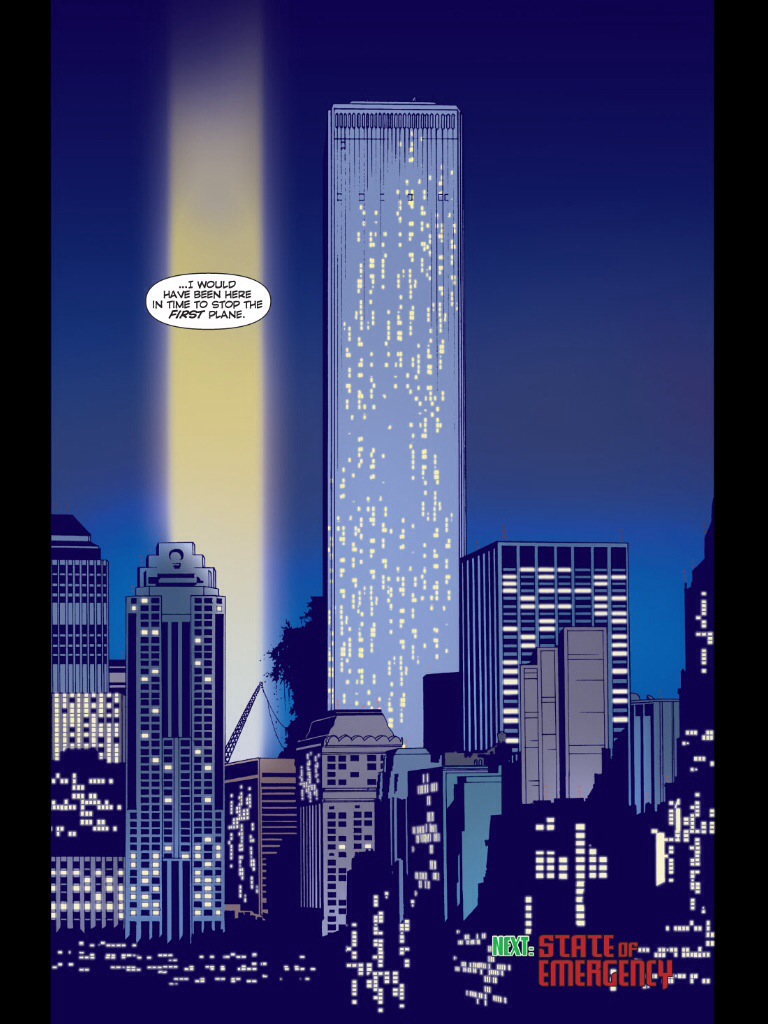
In 2004, around the middle of Y: The Last Man, Vaughan started a second major, creator-owned series:  Ex Machina. Where Y focused on a near future sci-fi story, Ex Machina mixed superheroes and politics, with the main character being a former superhero who has been elected mayor of New York City.  If there was any doubt that Vaughan was a master of comics, Ex Machina removed it by the end of issue one.  Only three years after Sept. 11, Vaughan left us breathless (with what?) and set the tone for the Ex Machina in one page.

This gives me chills every time I see it.

This gives me chills every time I see it.

Writing as good as Vaughan’s doesn’t go unnoticed outside comics for long.  Toward the end of Ex Machina, Vaughan began to write for the TV show Lost.  Many comic fans sadly believed he would never return once he’d seen the bright lights of Hollywood. Thankfully those doubters were wrong, and in 2012 Vaughan made a triumphant return to comics with Saga. The best thing I can say about Saga is that if you aren’t reading it, you should be and if you are, read it again.  It’s that good. While Vaughan has made his comeback to comics, he hasn’t left Hollywood completely as he is also performing writing and executive producer duties for Under the Dome, based on the Stephen King novel of the same name.

If you still have questions, it might be Brian K. Vaughan's fault.

If you still have questions, it might be Brian K. Vaughan’s fault.

Vaughan is a masterful storyteller in both comics and television and has worked on some of the most defining series of the last decade in both mediums. It’s this kind of contribution that makes Brian K. Vaughan a Geek to Know. Stay tuned to see who our next Geek to Know will be.

Leave a comment

Filed under Andrew Hales, Geek Life, Geeks You Should Know