Category Archives: Winning Science

Winning Science February 5, 2014

Hey, everyone!  This is Tracy taking the helm of Therefore I Geek for this week’s Winning Science, since it is Andrew’s birthday today.  Hang on!  It’s going to be a wild ride.

It turns out that some massive events in history may have changed humanity at its most fundamental level.  A group of geneticists, biologists, and other scientists now believe that European genetic DNA was modified by the Black Plague.  Researchers point to changes to twenty different genes that probably occurred when the Bubonic Plague’s bacteria interacted with the proteins in the genetic sequence.

A little of this would have done the trick.

Apparently a side affect of the genetic modifications may be more susceptibility to autoimmune disease, so I believe science has now explained Wolverine.

This new website has a beautiful model of the wind and weather patterns on the earth’s surface.  The model is completely interactive, allowing the user to zoom in and out, interchange between wind and current patterns, and even look at patterns that occurred in the past.

This still doesn’t explain why it seems so much windier when it is cold outside.

The James Webb Space Telescope, the planned replacement for Hubble, is on track to be launched in 2018, and Astronomers have pretty high hopes for it.  The last of the pieces have arrived at the Goddard Space Flight Center, and now must be assembled–a task which will take up to three years.  Scientists say it is possible that this telescope will be able to see back to the beginning of time.

Yes, yes, but will it catch a glimpse of this ship?

Maybe this will render the current hoopla over the Ken Ham vs. Bill Nye debate moot?  Too much to hope for?

That’s it for this week’s Winning Science, and I hope you all will join me in wishing Andrew a very happy Birthday.  Leave a message for him in the comments!

Leave a comment

Filed under Winning Science

Winning Science January 29, 2014

Well folks, once again we here at Therefore I Geek are snowed in. We are in fact, significantly more snowed in than last time. While we try to figure out our escape plans, take a few minutes and enjoy winning science.

I grew up in the desert so I’ve always been skeptical of the wind chill factor. I always had a sneaking suspicion that it was all just a bunch of crap, but once again, science has proved me wrong. While wind chill doesn’t actually lower air temperature, it’s based on a mathematical model that approximates how the outside air feels to your skin. Since our body temperature during the winter is warmer than the air, we generate a small layer of warmer air around our bodies which help keep us warm. When the wind is blowing that layer of air is swept away and past a certain point it is blown away faster than we can replace it, which is why we feel much colder despite the fact that the air temperature hasn’t changed.

the-shining-193757433

There are several different models. Some are relatively simple, using just wind speed, while other try to account for things like cloud cover and sun angle.

With the Winter Olympics coming up I recently found myself wondering how exactly skiers keep warm in those flimsy looking suits. Turns out the suits are actually very advanced garments. Scientists have been using electron microscopes to evaluate new materials that can be used for ski suits. The US team has settled on one that functions similarly to shark’s skin, maximizing warmth while minimizing drag. The team also used data gained from practice runs to perform wind tunnel tests under similar conditions to those at Sochi.

It looks good close up, but I'm still not completely convinced it'll keep me warm.

It looks good close up, but I’m still not completely convinced it’ll keep me warm.

The amount of science that goes into an athlete’s performance is almost equal to the amount of practicing they do the get there. Crazy.

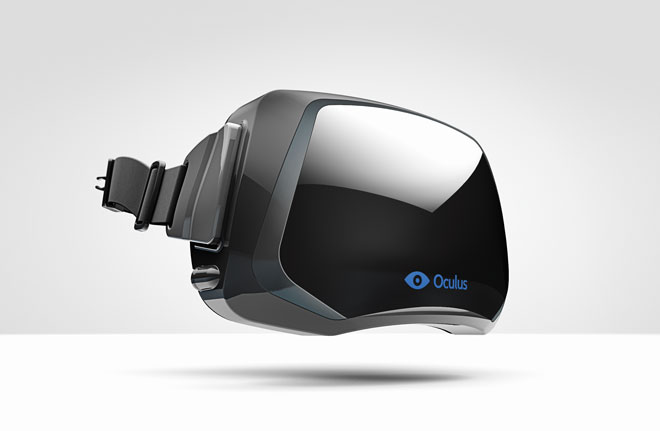
Stepping away from the wintery weather science for a minute, there is a really awesome new piece of video hardware called Oculus. Oculus is a 360 degree VR headset that was primarily designed for use with video games, but is finding new use with film. The writer describes the scene at a Beck concert like he was actually on stage with Beck. This is of course just a demonstation piece, but the possibilities in the film industry are endless. Imagine being able to look all around a movie, not just at the particular camera angle the director wants you to see. It’s a huge step forward in interactive entertainment. The biggest problem right now is waiting for the rest of the necessary technology to catch up. Shooting 360 will provide some interesting challenges.

Oculus Headset

Oculus Headset

The downside is having to wear the rather large headset, but hopefully the experience will be worth it.

1 Comment

Filed under Winning Science

Winning Science January 22, 2014

For those of you, like me, who are stuck at home due to the snow, we have some Winning Science here to keep you company.

It’s said that every generation has it’s war. For my generation, it’s the War on Terror, specifcally the conflicts in Iraq and Afghanistan. Whatever your political views might be, I think we can all agree that we must take care of those returning home from these wars, especially those who’s wounds have caused serious changes in their life. The FDA, in association with Walter Reed National Military Medical Center, has entered into clinical trials for a new prosthetic that will help these veterans, and all other amputees for that matter, take a step closer to their previous lives. The prosthetic requires the implantation of small sensors in the limb which read signals the signals coming directly from the brain. These signals are then transmitted to a belt pack which in turns controls the prosthetic.

The device is capable of 3 degrees of motion: wrist rotation, finger closing and extension, and lateral thumb movement. It does not yet allow a full range of motion, but is a significant step forward.

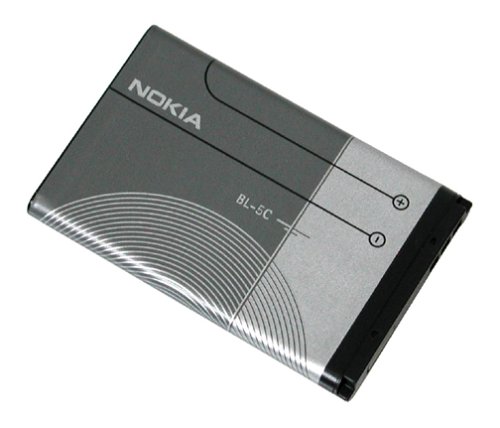
Generally speaking, it’s common knowledge that well ordered systems are more efficient that chaotic ones. Well scientists at the Brookhaven National Laboratory are turning common knowledge on its head. During experiments on lithium ion batteries, scientists discovered that batteries with less order, but excessive amounts of lithium performed equally as well as ordered batteries after 500 to 1000 charge cycles. Another benefit of more chaotic construction is volume stability (battery won’t expand as it ages). Researchers are now investigating what happens after even more charge cycles and exploring what other materials they can use.

lithium-ion-battery

Turns out my room wasn’t messy when I was a kid, it was more efficient. If only my mother had known that.

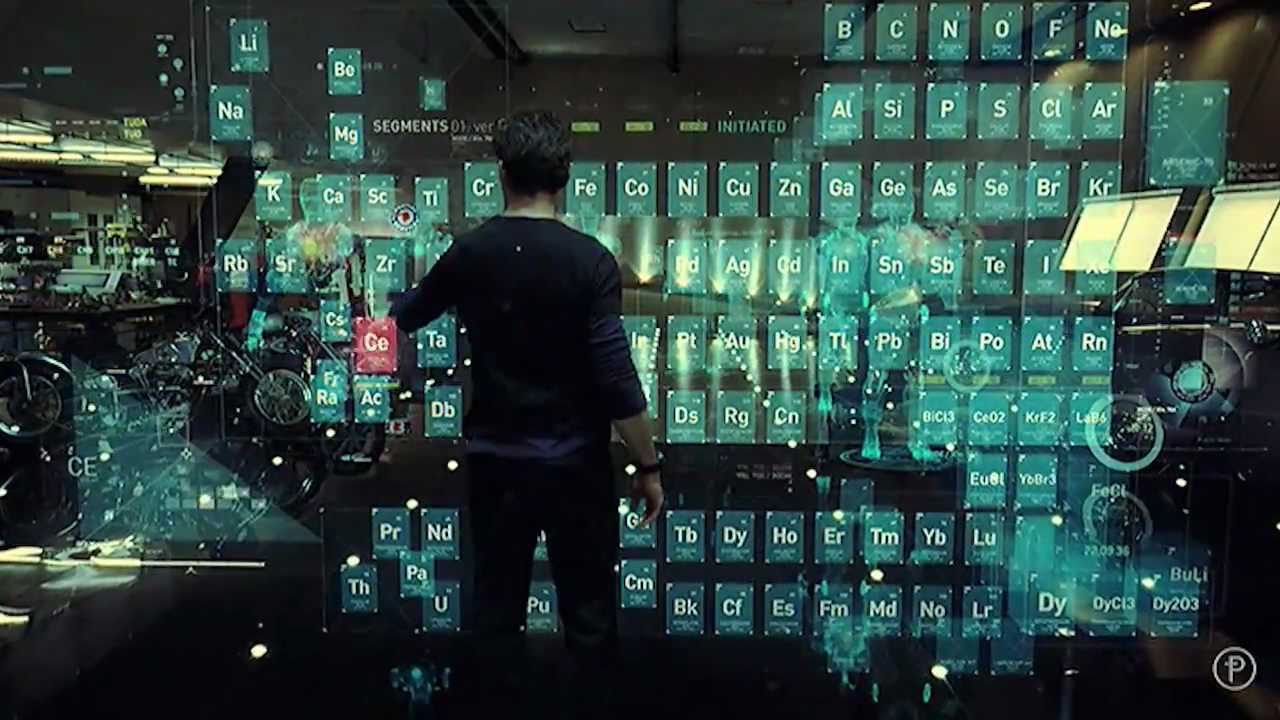
Who here doesn’t want a transparent computer screen, just like in the movies? I know I do. Thanks to MIT, that desire is a step closer to being reality. Not only that, but MIT managed to do it for about ten bucks. I am all about cheap cutting edge technology. The other fascinating part is that MIT’s screen, unlike many others, is visible from almost any vantage point.

maxresdefaultI may not be Iron Man, but a man can dream can’t he.

Leave a comment

Filed under Winning Science

Winning Science January 15, 2014

Shockingly, scientists have discovered a trench under the ice of Antartica that is nearly twice as deep as the Grand Canyon. Though not quite as wide or long as the Grand Canyon, the Ellsworth Trench is nearly two miles deep at its lowest point and dips an astonishing 6500 ft. below sea level. The trench was discovered while reviewing 3 years worth of geological survey data.

I think my ice maker may need to work a little over time for this job.

I think my ice maker may need to work a little over time for this job.

What completely blows my mind is that this whole thing is encased in ice. Try picturing the Grand Canyon completely filled with ice and then realize that this goes even deeper.

The World Health Organization is nearly ready to declare India polio free. Thanks to a massive vaccination effort it has been three years since India has had a reported case of the dibilitating virus. The WHO has been working to eradicate polio since 1988, when 200,000 cases were reported in India alone. With the help of local Rotary organizations even skeptical rural communities have been treated. One of the biggest helps in the fight as been the advocacy of popular Bollywood star Amitabh Bachchan. The WHO is hoping to replicate its success in Pakistan and Nigeria using popular actors and cricket players.

world-health-organization

When we really put our minds to something, it’s impressive what we can accomplish; Polio has been almost wiped out in my life time.

For most of its existance the internet has been about connecting people to other people through things like email, forums and now more recently social media. Recently the internet has been connecting people to things. You can now control your theromostat, lights, and even door locks right from your cellphone, all thanks to the internet.  In the near future however, the internet may become more about connecting devices to other devices. Several tech companies have gotten together to begin developing an open source language for all of these devices to communicate with each other. The hope is that this will improve the ability to interconnect all of these devices and increase the security by adding transparency.

An example of the future of technology.

An example of the future of technology.

I’m good with this as long as the fridge and toaster oven don’t start conspiring against me. I don’t trust that toaster oven.

John Brockman asked a number of the world’s leading thinkers “What scientific idea is ready for retirement?” and he got some very interesting answers. My favorite comes from Freeman Dyson (known for his idea of a Dyson Sphere) who wants to do away with the idea of a collapsing wave form. What made me love it was his description of what a probability really is. Dyson says “a probability is a statement of ignorance”, which is something I had never thought about, though he is absolutely right. There are wide variety of responses, some of which are even over my head (probably why these guys are the world’s leading thinkers).

John Brockman

John Brockman

I find it comforting that we can ask this question and that we aren’t afraid to discard outdated scientific models when we’ve decided they are no longer useful.

Leave a comment

Filed under Winning Science