Category Archives: Winning Science

Winning Science March 19, 2014

Ever wonder what’s really going on at the center of the galaxy? Later this month, scientists who ponder that exact question are getting a real treat. A cloud of gas roughly three times the size of earth appears to be on a direct course for the incredibly massive, black hole that resides at the center of our galaxy. Telescopes across the globe are being trained on the phenomenon in order to gather as much data as possible. No one is quite sure what is going to happen, but everyone agrees it will be worthy of study.

I am 99.99% certain this is NOT what they're going to find.

I am 99.99% certain this is NOT what they’re going to find.

Since the center of the galaxy is 26,000 light years away, all of this actually took place 26,000 years ago.

While we all live on this planet, it is easy to forget how little humanity actually knows about the make up of our home. Within a brown diamond found in Brazil, experts have found small amounts of ringwoodite, a substance that is only formed under extreme pressures and has previously never been found naturally on Earth. The ringwoodite is thought to have been formed in the transition layer between the upper and lower mantle where there appears to be considerable amounts of water present. It’s even possible that the amount of water in the mantle is equal to the amount in all the world’s oceans.
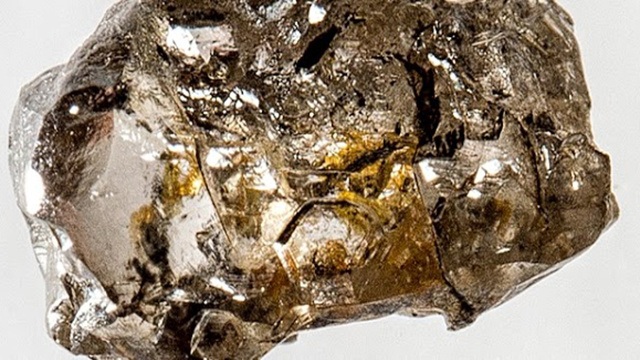
I actually find it quite pretty.

I actually find it quite pretty.

The article refers to the brown diamond as “worthless.” I have a hard time comprehending diamond and worthless in the same sentence.

There are many things that separate man from animal, but possibly the most profound is our curiosity–our desire to learn more.  That’s the topic of “The Editor’s Letter” in the April issue of Popular Science.  Humans, more than most creatures, are capable of deriving a physical high from the act of learning. We are built in a manner that encourages curiosity and learning, much to the benefit of our race.
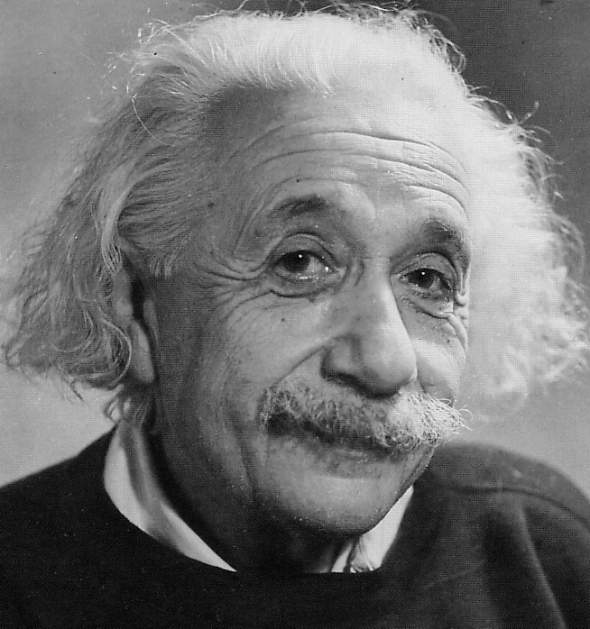
Einstein described himself as having no special talents, only passionate curiosity.

Einstein described himself as having no special talents, only passionate curiosity.

It doesn’t even matter what you’re learning about, the physical reaction is the same, though the topics of interest obviously vary from person to person.

Leave a comment

Filed under Weekly, Winning Science

Winning Science March 12, 2014

For years scientists have been pushing green technology. Things like solar panels and wind turbines are more ecologically friendly, but are they really green? One group of researchers is working tech that is both figuratively and literally green:  moss. Scientists at the University of Cambridge have been able to power a small radio using the energy generated by a particular form of moss, it what is called a photo microbial cell. Despite only being able to power the radio for a few minutes, this experiment shows that it might feasible to provide small charges for things like cellphones with some additional research.

"Green" tech...get it?

“Green” tech…get it?

Not only would this mean using less energy, but it also would help remove CO2 from the atmosphere thanks to photosythesis.

Happy 25th birthday to the internet. The internet as we understand it was the brain child of a CERN scientist named Tim Berners-Lee who submitted a memo in March of 1989 on how to link documents between computers that were networked together. While this project didn’t move forward for another year, the World Wide Web Consortium is choosing to celebrate the day on which the memo was first filed, as opposed to when the system began operating. I’m hoping they didn’t invite Al Gore to any of their parties.

CERN in Switzerland.

CERN in Switzerland.

Who still uses the terms World Wide Web or consortium any more?

There is a star in space that is 1300 times bigger than our sun!Researchers recently published a study of this hypergiant named HR5171. Now I realize that our sun is actually pretty small when it comes to stars, but the fact that HR5171 is that much bigger makes it insanely massive. Not only is HR5171 that large, but it is part of a binary star. So basically this star is so big it has it’s own star. untitled

We need to come up with a better way to name stars. This one sounds like a bill before Congress, and space is way cooler than Congress.

Leave a comment

Filed under Winning Science

Winning Science March 5, 2014

All the way back in October, Motorola announced it would begin working on development of modular cellphones. Having just performed surgery on my “older” iPhone to remove the cameras, I’m a big fan of the idea that I could design my own phone that doesn’t have a camera, or at least a camera that is easily removable. As far as consumers go, I am not alone. Retailers and phone developers however are not quite so hot on this idea. They are very dependent on the majority of the population who stare at the calendar, waiting for that day they can ditch their old phone in order to get the latest and greatest. In order for these phones to catch on, retailers and manufactures will need to change their models a bit and we all know how much they love change.

www.macworld.com

Like this, just more versatile.

I’m very proud of my phone surgery… I only lost one screw.

Did you know that NASA estimates there to be 500,000 pieces of garbage in Earth orbit? 17,000 of those pieces are trackable (coffee cup size and larger). Over fifty years of manned space flight and satellites has resulted in considerable amounts of space junk that is beginning to cause problems. There have been several instances in recent memory in which the International Space Station has been required to adjust its orbit due to this debris. There are, however, several competing plans to help alleviate this problem, including a new European spacecraft which will attempt capture the offending debris. There are still several technical hurdles to overcome, such as fuel and how to deal with the debris that is tumbling.

Like this, only with space helmets.

Like this, only with space helmets.

This seems like the interstellar version of a guy using a stick with a nail on the end.

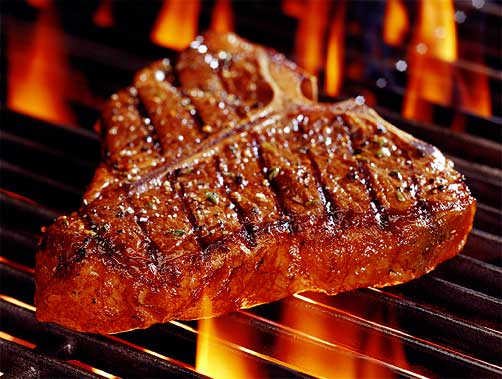
That protein rich diet might not be so good for you after all. According to a new study, a diet high in animal proteins (meat, dairy, etc) may significantly increase the risk of cancer in persons 50-65. The study followed people for 18 years and found a significant increase of cancer in those middle aged persons who had ate larger amounts of animal proteins. They also noticed a 75% increase in deaths from any cause in that group. Those who got their protein from other sources however did not have this increased risk. More astounding was that people who ate more animal protein after age 65 actually lived longer.

steak

Note to self, put down the steaks at 50, pick back up at 65.

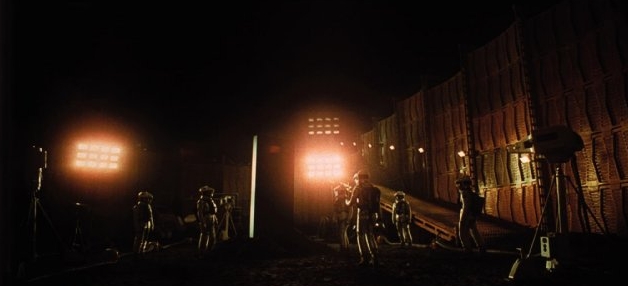
Those of us who support continuing space exploration got a bit of a boost in the President’s new budget. In the budget submitted by the President’s NASA administrator there is funding for a fly-by mission to Jupiter’s moon Europa. Scientists are excited by this prospect since Europa is thought to be made of ice with a vast ocean of liquid water beneath. This of course would make it an ideal place to send manned missions to, once we get to that stage. For now though, we will have to settle for more probes.

Bad things happen when you screw with the Monoliths.

Bad things happen when you screw with the Monoliths.

Personally though, I’ve seen 2001, I already know what’s out there.

Leave a comment

Filed under Winning Science

Winning Science February 26, 2014

I think at one point or another just about everyone takes a moment to ponder their own death. Certainly no one knows the exact moment that it will come, but now science is inching closer to giving us that information. Researchers in Finland and Estonia have determined that elevated levels of four biomarkers may indicate that otherwise healthy people are more susceptible to illness and are more likely to die within five years. Scientists involved, who refer to the test as a measure of general “frailty”, were so skeptical of the results from the initial 9842 participants they included an additional 7503, just to verify their results.

futurama_1_8_02

Things don’t look good for Fry.

Maybe in the future we will have Futurama‘s Death Clock.

Authorities in New Mexico are now prepared to send workers back into a salt mine that is being used to house nuclear waste left over from the creation of nuclear weapons. The facility was shut down when airborne contamination monitors tripped and secured the ventilation for the facility. While there was a small release to the desert surrounding the site, there was no danger to the public. The isotopes detected by remote monitors corresponded to the materials known to be stored in the plant.

Layout of WIPP facility.

Layout of WIPP facility.

My only real concerns here are that they seem to think that everything is fine despite the fact that they haven’t determined the cause yet. This all seems a little hasty.

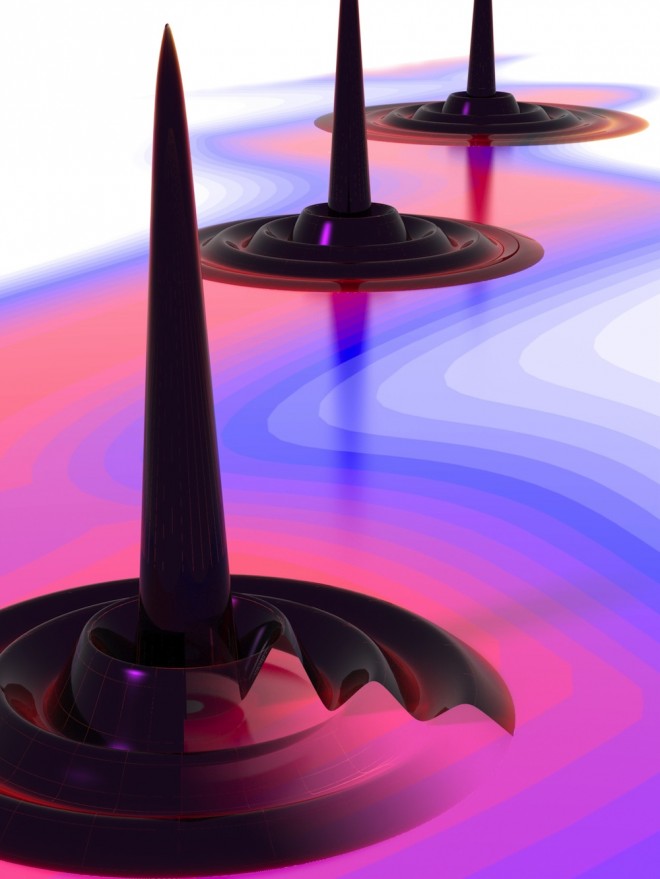
Now it’s time for one of my favorite branches of science, the branch where we shoot lasers at stuff and see what happens. (I’m pretty sure this comes from watching too many science fiction movies as a kid.) Scientists at the National Institute of Standards and Technology have discovered a new quasiparticle that acts much like a drop of water.  Researchers discovered this unexpected response while pulsing a laser at a semiconductor. While there are currently no practical uses for this new information, it will help provide insight into how these materials work, and may lead to improvements in all kinds of things sooner than we think.

quantum-droplet-660x879

This article also provides a wonderful, plain English description on how conductors and semiconductors work.

Leave a comment

Filed under Winning Science