Category Archives: Winning Science

Winning Science August 22, 2014

Until recently, most scientists thought that the difference between species was fairly clear cut and typically involved the inability for cross species mating. Thanks to modern technology however, that distinction has become much less clear. In a comparison of different crow species, it was discovered that only an incredibly small difference in DNA separated two species. While the crows in question were still able to cross-breed, there were very few examples of it actually happening. Scientists are currently working on various theories as to why these two compatible species might not prefer to mate with one another.

This might not be the crows they were referring to...

This might not be the type of crow they were referring to…

New information like this will make it more difficult to classify different species, though it has significantly improved our understanding of those things that make us different.

Like most people my age, I rarely use cash, instead relying on one of several credit or debit cards in my wallet. While they are convenient, they are still pretty low tech. Cards are really only a piece of molded plastic with a magnetic strip on the back encoded with some information encoded. One company, Coin, is working to take credit cards into the 21st century. The Coin is a digital credit card that can actually replace several different cards. All one has to do is swipe an existing debit or credit card using a reader and phone app and then upload it to the device, which allows you to select any card uploaded to it, and then use Coin like a normal credit card. Although the device is still in beta testing, it shows great promise to at least do what it says it will.

Whether it will become more than a novelty is still up for debate, though.

It is with some sadness that I read that Kari, Grant and Tory will be departing Mythbusters. Over the years I’ve really enjoyed the show and have come to appreciate the entire cast. While their methods were not always perfectly scientific (and they have on occasion had to revisit myths) as a whole, they’ve done a great job of digging up urban myths, breaking them down, and seeing whether there was actually anything to them, or if they were full of hot air. I was always a big fan of the sheer joy and excitement these three put into their jobs, as science doesn’t always provoke these responses from people.

Imahara-Byron-and-Belacci-courtesy-ecentry.my_

I’m also more than a little jealous of how many things they got to smash and blow up without being arrested.

Leave a comment

Filed under Weekly, Winning Science

Winning Science August 10, 2014

For most of history scientists have been forced to experiment on animal brains if they wanted to test the way a brain works. Obviously it’s unethical to experiment on a living human, and a dead one doesn’t really give you quite the same insight. With the use of stem cells however, scientists have been able to start growing mini-brains in the lab that can model certain brain functions. While these mini-brains won’t ever become fully functional brains, they develop all the same kinds of tissue that the real thing has, which then allows scientists to study their functions better.

Continue reading

1 Comment

Filed under Weekly, Winning Science

Winning Science July 25, 2014

Now I don’t know about other people but I really enjoy watching Scarlett Johansson. What I can’t stand is when movies are based on complete junk science, and unfortunately it seems that Scarlett’s newest movie Lucy is one such movie. The basic concept is that Johansson’s character begins gaining superpowers after being exposed to a drug that allows her to access her entire brain. The truth of the matter, however, is that humans really do use nearly all of our brains. While it is not all used for conscious actions, studies and experiments have shown that every part of our brain has an important function. This makes a lot of sense given that even when a very small percent of the brain has been damaged it can still have a major impact on a person’s ability to function.

brain_visualization-0b59ff84ad83e6cb2ee0f2fdacd1313022fe69dd-s6-c30

The article also has a humorous example of what happens when people without ADD take ADD meds like Ritalin.

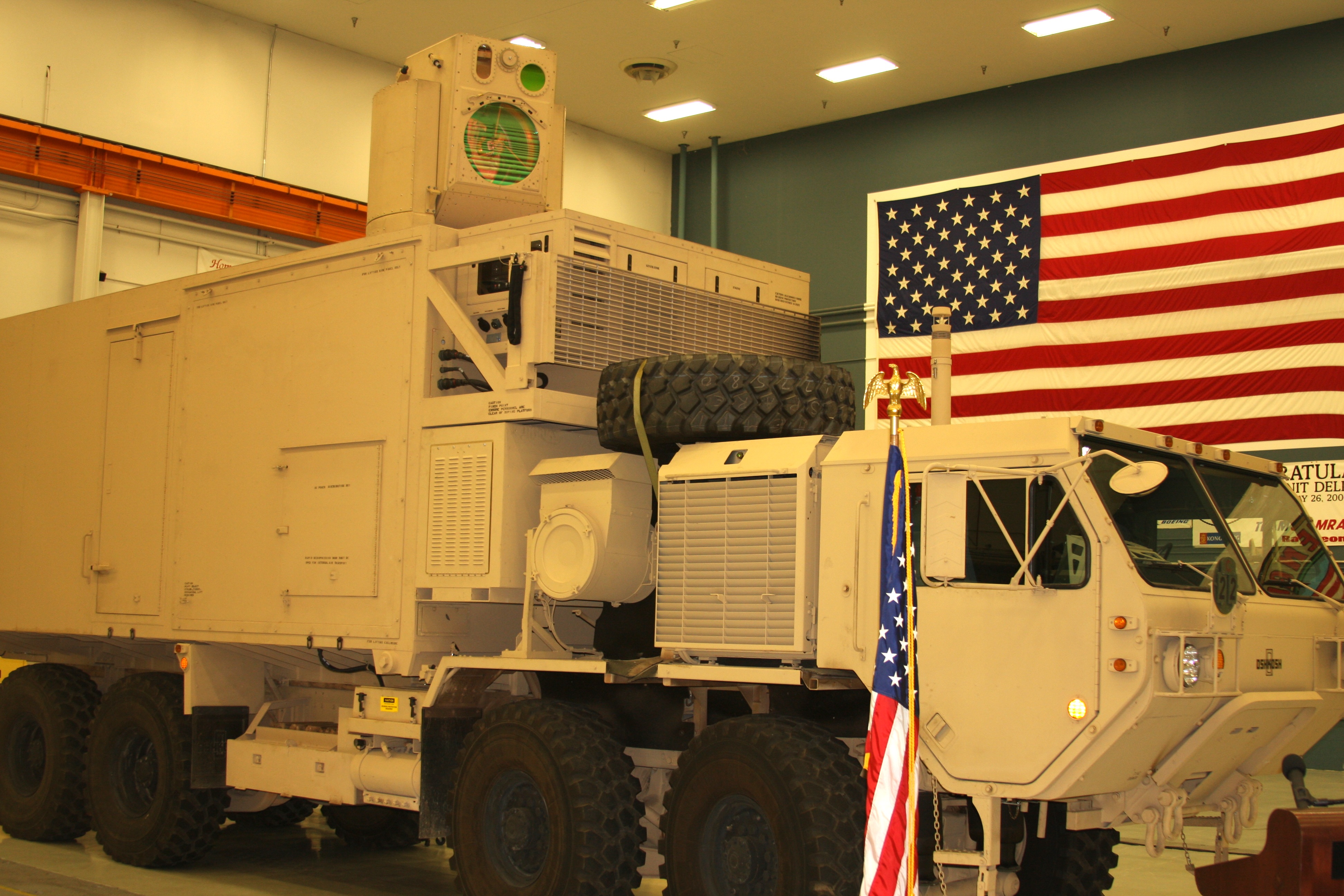
Given recent events in Ukraine and the Middle East, anti-missile technology has returned to the forefront of many people’s minds. While systems that use missiles to shoot down other missiles or rockets are the current standard, many military groups are turning to something from science fiction, lasers. Obviously lasers themselves aren’t science fiction, but the idea of using them to destroy missiles harkens back to the pulp novels of the 1950s. The star wars program of the 1980s made some attempts to use lasers, but they weren’t particularly successful. Recent tests however have met with much better results. One system was able to track and hit mortars as they were fired, though it is not yet powerful enough to destroy the mortar.

IMG_66291

There is still quite a long way to go, but lasers show surprising promise.

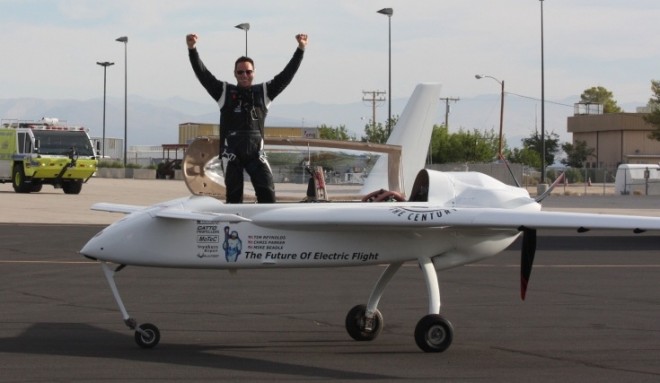
Most of the time when we think of green vehicles, we think of cars such as those from companies like Tesla. I would wager that most people wouldn’t think of airplanes, but Chip Yates does. Yates now holds five, world speed records, all using a battery powered aircraft. The small craft is equivalent to single engine aircraft like Cessna. Battery powered aircraft actually have several advantages over standard motor driven planes, the biggest of which is that the motor doesn’t need air. As a plane increases its altitude, the air gets thinner and therefore the engine output goes down. An electric plane doesn’t have that problem and can maintain an even climb speed, no matter the altitude. Of course battery powered planes suffer from the same weakness that other battery powered vehicles do: that of range. At full power, the plane can only stay in the air for fifteen minutes.

Chip Yates with his electric plane.

Chip Yates with his electric plane.

Despite the current limits, Yates dreams of someday recreating Charles Lindburg’s transatlantic flight in an electric plane.

1 Comment

Filed under Weekly, Winning Science

Winning Science June 19, 2014

Traffic is something that city dweller have accepted as a way of life. However, it seems that no matter how many new roads the Department of Motor Vehicles seems to build, it never does anything to help traffic.  As it turns out there is a one to one relationship between an increase in traffic and an increase in roads. As the number of roads increase, the more people feel they have the ability to travel and so they do, thus increasing traffic. It’s what economics professors call induced demand. To some extent, removing roads can actually help, as was done in Paris and Seoul, but there are obvious limitations to such a plan of action.

how-to-avoid-traffic-jams-35319_2

Despite my choosing to live fairly close to work, it still takes twenty five minutes for me to go only six miles.

It has been three years since the accident at Fukushima and still no one has a clear picture of what the area surrounding the reactor looks like. There is too much radiation to send in people, sending in cameras would risk further contamination leaks, and x-rays would be useless to penetrate the steel and concrete buildings.  However, an effort involving Los Alamos and Toshiba, a “new” form of detector will be utilized with relies on muons. Two billboard sized detectors will be placed on opposites sides and will measure muon strikes and use that to determine the arrangement and composition of materials between the detectors. Although it will take weeks to months to complete, this new mapping technology will provide an accurate picture of what’s going on in the damaged reactors.

One of Fukushima's three damaged reactors.

One of Fukushima’s three damaged reactors.

I say “new” because an early version of this technology was used in the 1960s to map the interior of the Great Pyramids.  Of course, this is a much more advanced version.

In recent years, most people have come to accept that space and time are actually one and the same–commonly referred to as spacetime. But what is spacetime? Well, researchers in Italy and Germany have been wondering the same thing. They’re proposing a fairly radical idea that perhaps it is a superfluid, which is a fluid with an extremely low viscosity. The whole idea of treating spacetime as a fluid came from an attempt to answer the problems between general relativity and quantum theory. Each is very good at accurately describing separate phenomena, but when you try to apply them together, they don’t seem to work. Treating spacetime like a fluid seemed to be a theory with promise, but in order to properly account from some behaviors, it was determined that it would need to be termed a superfluid.

Image from the Hubble Space Telescope.

Image from the Hubble Space Telescope.

While it is unlikely that the theory of spacetime as a superfluid answers all questions about the phenomenon, scientist point out that it is definitely within the realm of possibility, since no other proposed theory answers all questions either.

Leave a comment

Filed under Weekly, Winning Science