Category Archives: Editorial

Editorial | Review: ACID

***** SPOILER ALERT *****

This review will be discussing plot points which may be considered spoilers. Consider yourselves warned.

I have gotten my hot little hands on a copy of Acid, the first novel from author Emma Pass.  The author is from the Midlands, UK, and her European roots come out in certain word choices and, of course, measurements.  Fortunately for Therefore I Geek readers, I have read the book and am here to lay out the good, the bad, and the ugly about it.

The Good: The main character in this book is one Jenna Strong, who is in a maximum security, male only prison at the tender age of seventeen for parricide.  The book is set in 2113, in a UK that is completely cut off from the rest of the world.  A lackadaisical government has been thrown out of power by an anti-terrorist arm of the military/police force called ACID (Agency for Crime Investigation and Defense) and a police state has been in place for about 100 years.  As far as the good of this book goes, the well designed acronym is pretty much all it has to offer.  That, and the perfect use of the subjunctive tense.

Continue reading

Leave a comment

Filed under Book Reviews, Books, Editorial, Tracy Gronewold

Editorial | Special Feature Fatigue–the death of the DVD special feature disc

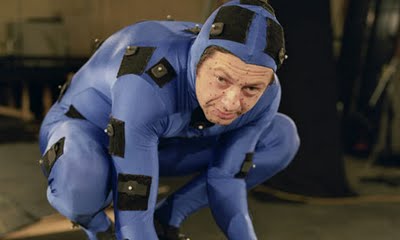
I remember the very first “behind the scenes” special feature I ever watched.  It was a video of Andy Serkis wearing a motion capture suit in a warehouse, acting out the part of Gollum.  At the time we had a 54K dialup modem, and since each of us kids were only allowed an hour of internet per day, we would all sacrifice our internet time to wait for the whole video to download so we could watch it all the way from the beginning.  I was fifteen years old, and that was the Golden Age of the special feature.

Hard to believe this method of motion capture is almost obsolete already.

Hard to believe this method of motion capture is almost obsolete already.

These days, special features are going the way of the Dodo.  I would mourn them, but to be honest, I cannot remember the last time I bothered to watch the DVD special features.  I think that this progression has been mostly organic, based on technological advances, but I also think that movie buffs are experiencing special feature fatigue.

The birth of the DVD suddenly provided extra space for producers and especially directors to show off all of the things that they do to create the amazing movies that their fans love.  At first, we were incredibly grateful!  Suddenly we fans felt as though we were right on set.  We learned about all the things that go into making one minute of Star Wars.  Then we watched as Mark Hamill got better and better at light saber choreography.

Later on, my siblings and I squirmed in anticipation as we waited for the special features from the official Lord of the Rings website to download.  (One of my favorite videos was the one entitled “Bringing Gollum to Life.”)

Another movie with great special features was Pixar’s The Incredibles.  We watched the voice actors talk into microphones (titillating stuff) and learned how Brad Bird, the director, became the official voice of Edna Mold.  I don’t know about other fans, but we watched these short videos over and over until we had almost memorized them as much as we memorized the movie from which they came.

In the early days, few DVDs came with very many special features.  A few had the music video to the credit song, and occasionally a blooper reel.  Before too long, however, every DVD had a host of special features, including the ever popular actor/director commentary—the entire movie, but being talked over by cast or crew member describing funny stories or explaining the technical reasons behind certain screen decisions.  DVDs were released in expensive two- and four-disc sets to have room for all the extras.  Even TV series were including commentaries on the DVD releases of each season.  Brian Collins of Badass Digest said it well:

“[G]uys actually had to dig out these elements and put them into the movie, not to mention create the other original content on the disc.  It probably cost almost as much to put together this DVD (including the remastering, rights acquisition, man hours spent digging up the materials, etc) as it did to make the movie in the first place.”

Since then, technology and the free market system has changed a lot about the way that fans watch movies.  Rental versions of DVD’s—once the full movie and all its features from a Blockbuster shelf—are now single discs in a paper sleeve.  Distributors wanted to encourage movie renters to purchase DVDs, so they stopped including all the special features on rental discs.  Now, many people get their movie fix by streaming videos or downloading digital versions, which come with even fewer features.  As time goes on, already fatigued viewers have gotten out of the habit of watching them.

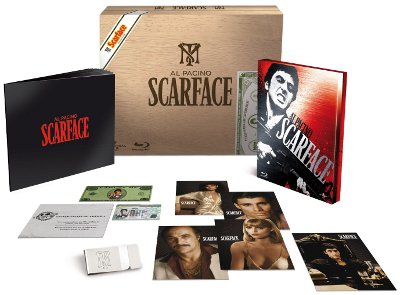
That's right, kids. DVD's used to come in sets like this.

That’s right, kids. DVDs used to come in sets like this.

I personally do not mourn the slow death of movie special effects for the most part.  Soon after The Lion, the Witch, and the Wardrobe came out on DVD, I sat down to watch the actor commentary.  It didn’t take long for me to be weary of the banal stories of actors in massive costumes tripping over their hooves, and of Georgie Henley’s (Lucy Pevensie) surprise on her first moment in the wintery world of Narnia.  While I thought of the older Director’s Cut DVD sets as something like film school at home, I also find myself experiencing special feature fatigue.

Now if you’ll excuse me, I found a video describing exactly how Peter Jackson got the runes on the doors of Khazad-Dum to glow.

2 Comments

Filed under Editorial, Movies, Tracy Gronewold

Editorial | Organizers and Explorers: Two Schools of Writing

There are two types of people in this world…  Ok, ok, there are many types of people in the world, but there are two schools of thought when it comes to writing.  Whether they write short stories, full length novels, academic research, or blog posts, most authors either are organizers or explorers.

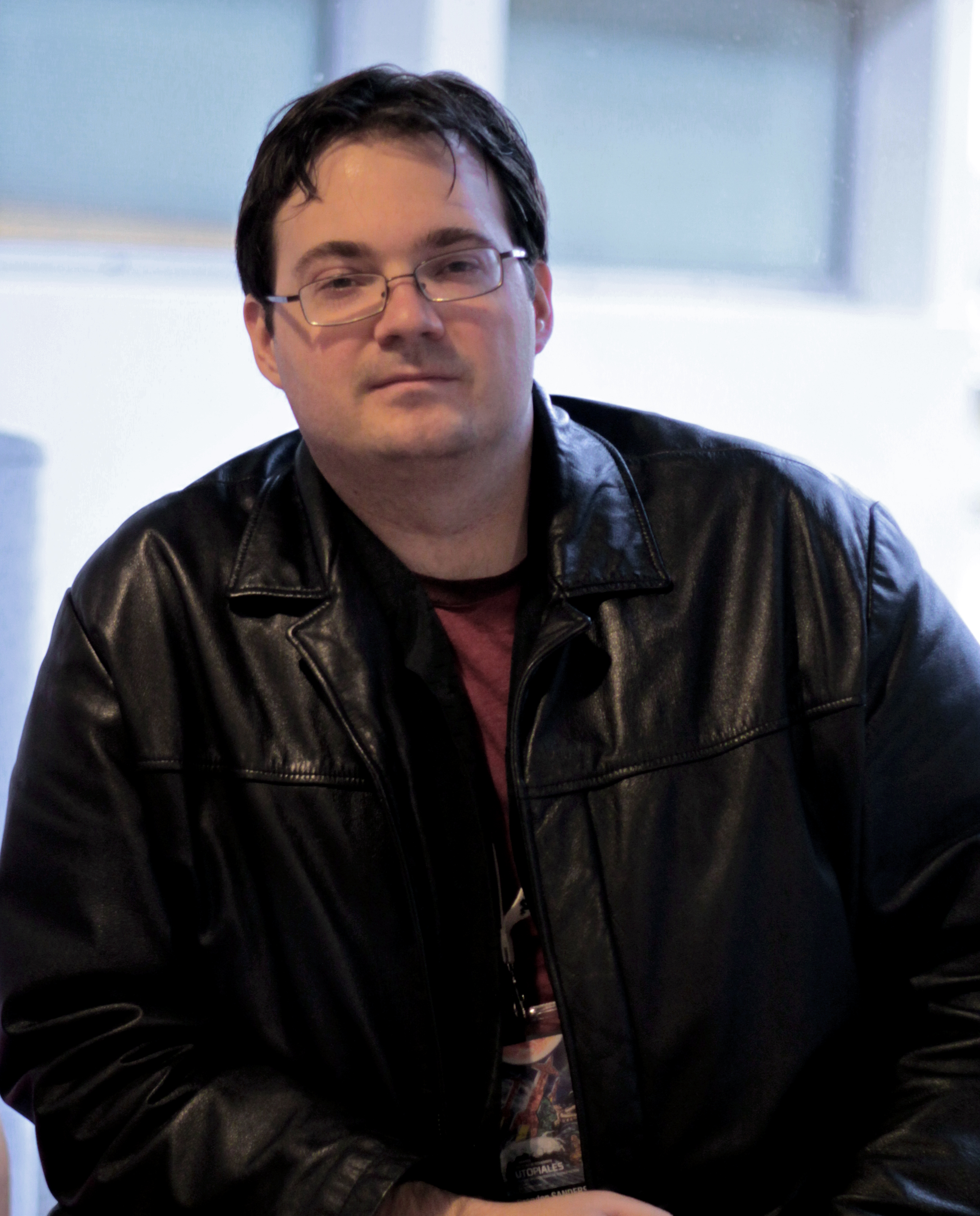
Organizers believe in brainstorming before they begin writing.  They know the direction in which they want to take their readers before they jump into the meat of their prose.  I personally enjoy this method most—especially in more formal writing.  If I don’t have an endgame in mind, it is difficult to get my writing to move from the beginning to the end at a decent pace.  George R. R. Martin, Therefore I Geek’s man of the month as we gear up for the premier of Game of Thrones Season 4, describes these writers as architects.

“I think there are two types of writers, the architects and the explorers. The architects plan everything ahead of time, like an architect building a house. They know how many rooms are going to be in the house, what kind of roof they’re going to have, where the wires are going to run, what kind of plumbing there’s going to be. They have the whole thing designed and blueprinted out before they even nail the first board up… “

Brandon Sanderson

The benefits to organizing are obvious.  The author knows exactly where he is going.  He may start with a bare bones outline and begin to add sub-points or blocks of text.  If he gets stuck on one point, it is much easier to move on to the next point or section of the story.  I often have short bursts of inspiration that don’t fit where I currently am in my writing.  As an organizer with a penchant for outlines, I find it easy to take a break from the parts of my project that I’m in the middle of and quickly jot down the bits that have sprung into my brain.  From there it is just a matter of fitting that section under the correct bulleted heading.

Unfortunately, the downside to having a detailed plan is that the author may feel like he’s already written the story, and may get bored of his work before it is complete.  This has happened to me several times.

One famous outliner is Brandon Sanderson, author of The Way of Kings, and the brand new Words of Radiance.

The other type of writer is an explorer.  These writers follow where their personal inspiration takes them, no matter how many twists and turns that entails.  It is less that they have an endgame in mind, and more that they trust their ability to come to a conclusion when the time is right.  G. R. R. Martin describes them as gardeners, “The gardeners dig a hole, drop in a seed and water it. They kind of know what seed it is, they know if they planted a fantasy seed or mystery seed or whatever. But as the plant comes up and they water it, they don’t know how many branches it’s going to have, they find out as it grows.”

George R. R. Martin

Explorers have an easier time of writing in that they don’t feel as much pressure to know where their plot line is going and under what conditions.  This style of writing is very story driven, and can feel more natural to the writer.

Unfortunately, the exploration style of writing can also lead to stymied authors, who have run into writer’s block, and cannot take a break to write another portion of their work, because they don’t know where the work is going.

Which type of writer is George R. R. Martin?  “I’m much more a gardener than an architect,” he tells fans

4 Comments

Filed under Books, Editorial, Tracy Gronewold

Editorial | Editing 101: Copy Editing

The human brain has two writing modes, creating and editing.  It cannot switch back and forth between the two efficiently or easily.  Because of this, I always advise writers—especially new writers—to stick to one mode or the other.  The very first thing to do is to get a draft on paper, even if it is terrible.  Then, the writer should go back to any areas he knows to be awkward or to phrases that he could not get right on the first try and attempt to smooth over them.  At this point, it is always best to have a pair of fresh eyes take a look at the draft.  This is where the copy editor comes in.

Some writers labor under the misapprehension that copy editors are only good for the final grammar and spelling check.  This is not the case at all!  Most word processing software will run a basic spell check, and most can find the common grammatical errors as well.  Copy editors do much more than that.

As a copy editor, the first thing that I do when I get a new article or essay is to read over the entire thing and look for glaring mistakes in context or inconsistencies in the layout.  I will also make sure that the progression of the topic makes sense and flows along an outline from beginning to end.  Anything that I miss in this editing stage gets caught in stage three.
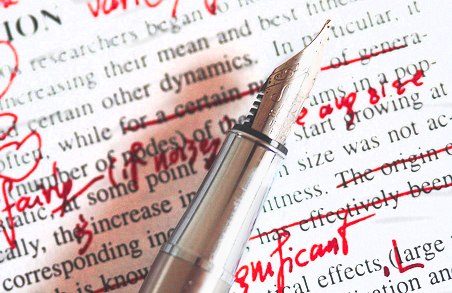
editingThe second read is for grammatical, spelling, and obvious syntax errors.  Some editors will leave this for last, but I usually cannot stand leaving them longer than this.  The mistakes that I most commonly find in this edit are homonym issues (e.g. they’re, there, their), verb conjugation—especially using past tense instead of subjunctive tense, and minor spelling errors, which usually occur because the author was writing in a hurry.

The next read through is to make sure that the overall story that the writer is conveying makes sense.  This is also the time that I take to cross out unnecessary details that obscure the author’s intention, and sometimes combine or separate sentences to flow more easily.

Depending on how well I know the writer’s style, I may also make suggestions for clarifying phrases or sentences.  Of course, while doing this, I have to be careful to not step on the author’s toes.  I always leave the original wording in the draft, with the strikethrough sign, and type my suggestions in a comment or another color font to make it clear that they are not a part of the original draft.

At this point in the editing process, I will return the draft with the first round of edits to the writer.  He or she can choose to take my suggestions, or may ask me why I have suggested certain clarifications.

Once his changes have been made, the writer sends me a second draft.  At this point, it is much like receiving a brand new manuscript, so I read through it three times in the order that I did the first time.  A lot of time and care goes into making sure that the author not only gets across his intended point, but also that he does it in a way that does not undermine his credibility, such as using vocabulary incorrectly, or having glaring grammar errors.

The draft goes back to the writer, and is checked over.  By the second draft, most edits are very minor, and are usually accepted.  I always insist on reading the final draft one more time before publishing, just to make sure everything is exactly right, and I have not missed a comma, or the double space after a period.  Then the “publish” button is hit, and the post is live!

Copy editing is time intensive and takes a lot of effort.  One of my favorite quotes is sometimes attributed to Justice Louis D. Brandeis, “There is no great writing, only great rewriting.”  This is true.  Behind every great author is a great copy editor.

You can find more interesting information about copy editing, and an interview with an editor here.
Leave a comment

Filed under Editing 101, Editorial, Tracy Gronewold