Author Archives: Andrew Hales

Around the Web November 9, 2013

Let start off today’s Around the Web with a little Star Wars news. Disney has released a new Star Wars mobile Tiny Death Star game based on the popular Tiny Tower. I’ve already downloaded the game and so far so good. I’m not all that far in, but I’m already loving the 8-bit graphics and the little goofy bits. The game starts off with a conversation between the Emperor and Darth Vader regarding how to pay for the new Death Star in which Vader offers to get a job to help out.

StarWarsOpeningLogo

The other news, a bit more disappointing, is that the yet unnamed Star Wars VII will not begin with the familiar Fox theme music. This makes sense given that Disney now owns the franchise, but Star Wars has one of those very memorable openings, and the Fox theme is part of that opening.

Popular Science has a clever little Do-It-Yourself project that many of you may find handy. It’s a stand that you can build to use your phone as a scanner. Best of all it only costs around $5.

PSC1113_H2_086

Even a broke college student can find five bucks. Just don’t do laundry for a few weeks and save the quarters. Don’t tell your room mate I said that.

In advance of the Sochi Winter Games the Russians have pulled out all the stops trying to show off and they may actually have a leg up this time. The Russians have sent the Olympic torch into space, which has never been done before, and then sent it on a space walk. The torch is, of course, not lit, because that would be bad, but at this point I’m not sure what anyone else can do to top it.

iss

The torch gets to go into space, and I’d kill for the chances. This isn’t very fair.

Leave a comment

Filed under Around the Web

What I Have Learned About Inkers

I’ve been reading comics pretty heavily for the last seven years and only recently have I started to truly appreciate the subtle art form that is inking. Now you may be asking yourself, what is inking? Aside from the answer given to us by Chasing Amy, inking is the intermediate process that takes a comic page from pencils to full colored pages. Back in the old days this actually involved an artist, usually a different artist than the one who drew the pages in pencil, going over the original pencil images in ink, providing additional definition and shading to the image. After being inked the image would then be colored—sometimes by the inker, sometimes by a third artist.  These days, artists usually do ink digitally.

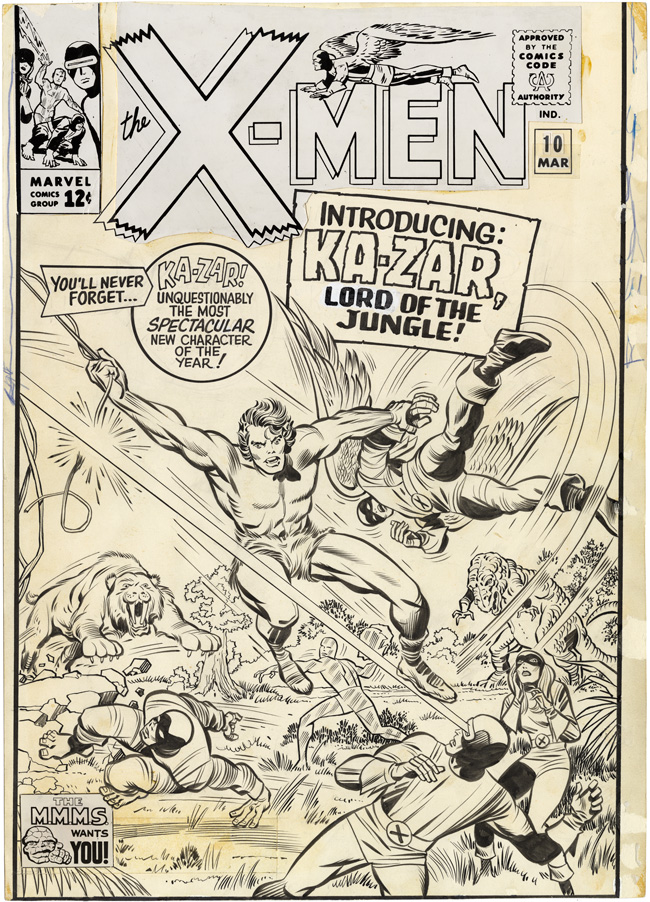
What had never really occurred to me was how important inkers actually are to the visual appeal of comics.  My New Year’s Resolution this past year was to read more X-Men comics and I figured there was no better place to start than the beginning:  X-Men #1 by Stan Lee and Jack Kirby.  In the world of comics it is well known that Jack Kirby is a big deal, to say the least, but in early X-Men issues I was very unimpressed with his art.  At some point around issue six however, something changed. The art was considerably better than in the previous issue. It took me longer than I care to admit to realize that the difference was a new inker on the book.

After this realization I sat down and started doing a comparison between the different inking styles. Flipping back and forth between different pages, I found that the difference was like night and day. The first several issues had very heavy lines with excessive amounts of black throughout the page. Details were barely visible and the overall aesthetic was rather unimpressive. The subsequent issues were amazing. The lines were light and clean with wonderful little details hidden all over the page. Not only did this change my opinion of Jack Kirby (which is probably more important) but it also made me realize how much the inker had to contribute to the final comic product.  Jack Kirby is recognized as one of the finest comic artists that has ever lived and if a bad inker can seriously detract from Kirby’s work, then one cannot underestimate the importance of an inker.

Beautiful Kirby art from X-Men #10.

Beautiful Kirby art from X-Men #10.

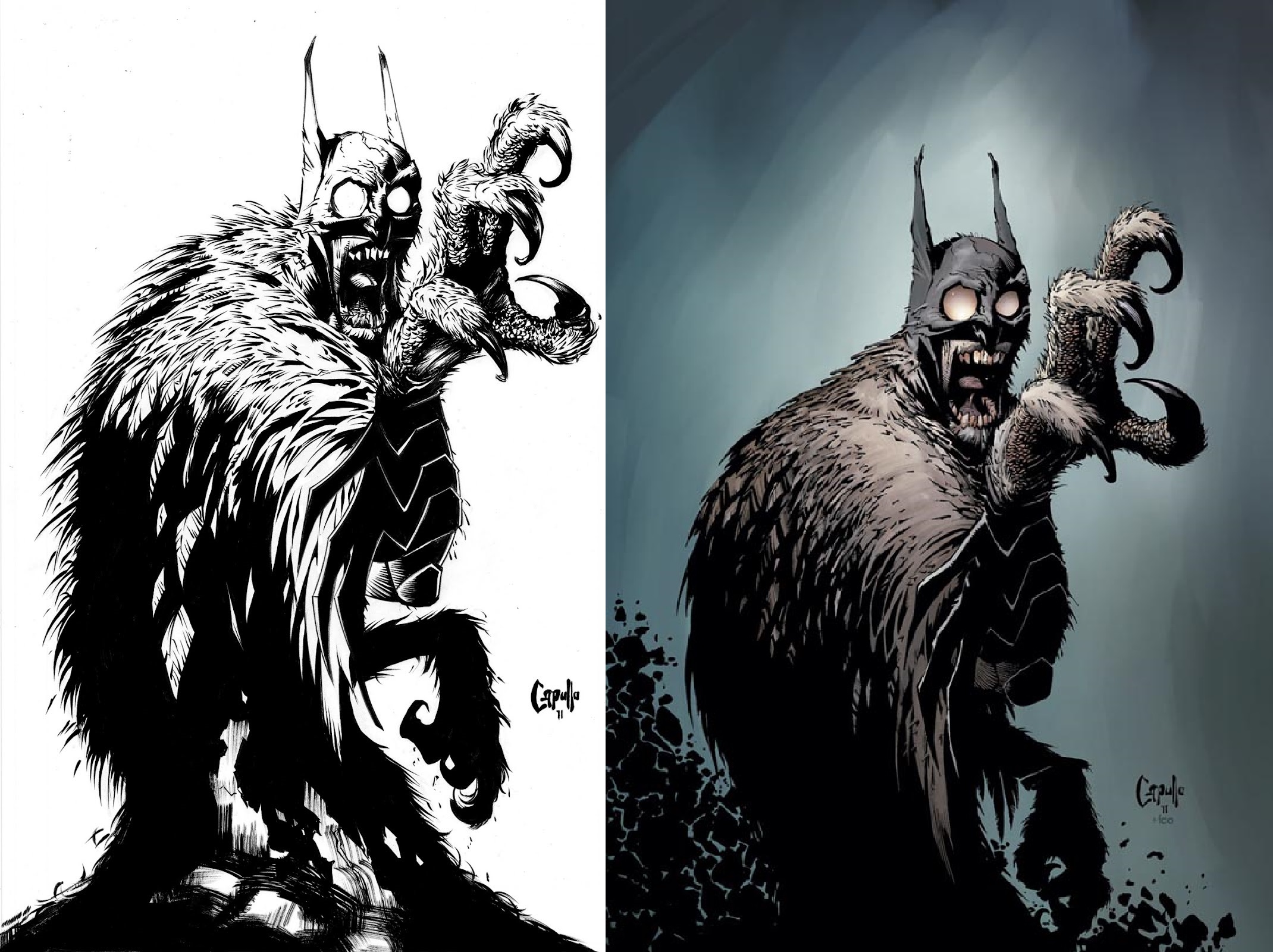
This is evident even in modern comics. Snyder and Capullo’s run on Batman has been the shining star of DC’s New 52 and it is in no small part due to Greg Capullo’s art. Even with this stand out art, with each change of inker (and there have been several) the art changes slightly, but noticeably. None of the inkers have done a bad job, and there is something to be said for every artist giving the work their own personal touch, but it would also be nice to maintain a certain level of consistency throughout a run, and especially through individual story lines.

Greg Capullo Batman #6

Greg Capullo Batman #6

I am far from completing my exploration of inkers. I have only just scratched the surface and I intend to continue learning until I have a much greater understanding of inkers, how they do what they do, and its importance to the comic industry.

3 Comments

Filed under Andrew Hales, Comics

Review: Ender’s Game

***** SPOILER ALERT *****

This review will be discussing plot points which may be considered spoilers. Consider yourselves warned.

***** DISCLAIMER *****

This is a review of the movie Ender’s Game and of the movie only. There will not be any discussion of the author or his personal politics. If you wish to discuss such things there are plenty of places for you to do so, however we request that you refrain from doing so here.

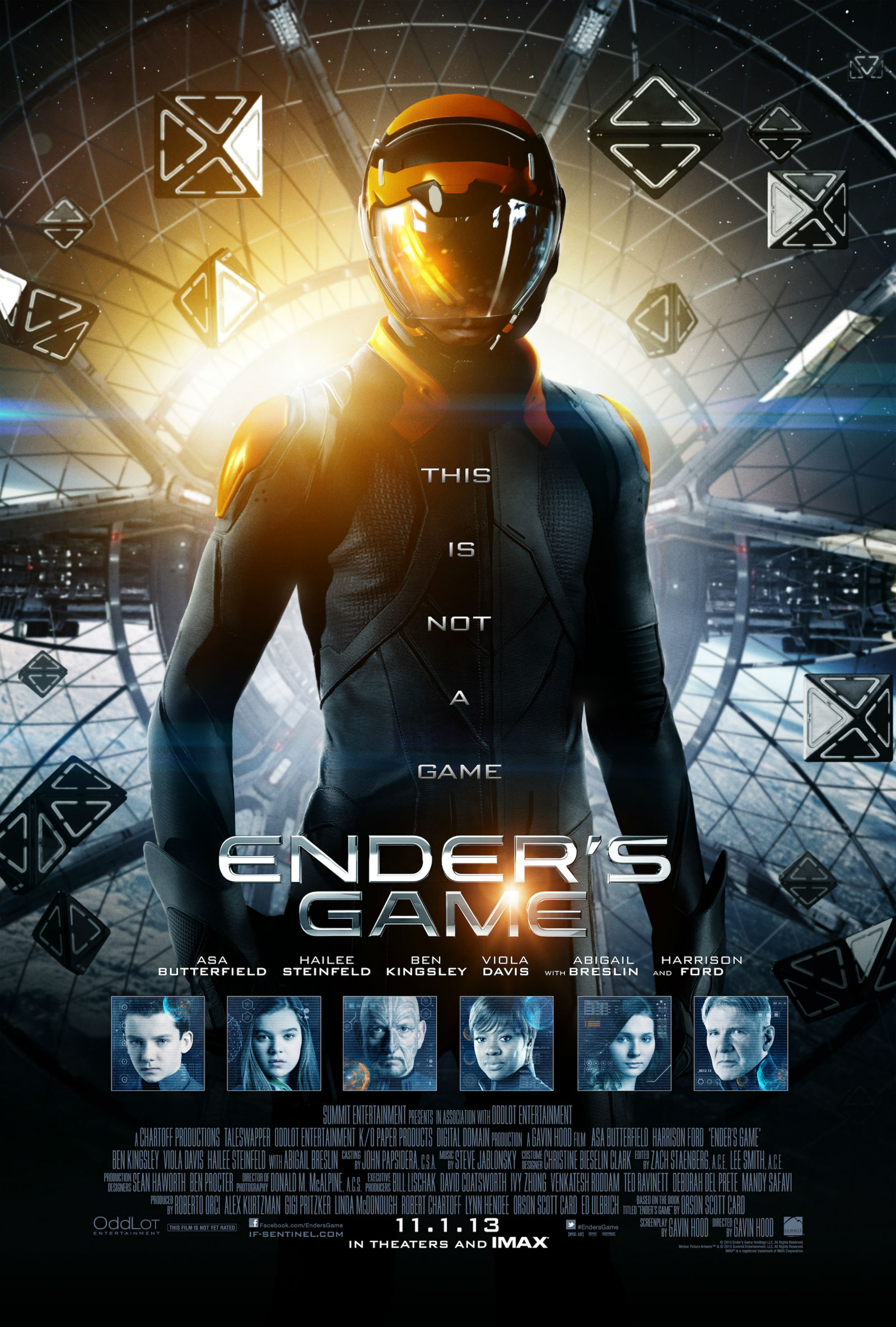
Enders-Game-Final-HR

Aliens attack Earth, kick our ass, and Earth barely survives. This basic setup is nothing new and yet it sets the scene for the beginning of Ender’s Game. What makes Ender’s Game special however is where the film takes this setup. Instead of running over the well trodden paths, this film chooses to take the road less travelled and does so quite well.

Ender’s Game is about Ender Wiggin (Asa Butterfield), a brilliant young boy who is part of a military selection program for training to be a military commander. When the monitoring device implanted in Ender’s neck is removed he thinks he has been passed over for entrance into the military school. Ender has very little time to be concerned about this, as he is attacked by older boys shortly thereafter and Ender beats one of them severely. That night at home, Ender and his family are approached by Col. Graff (Harrison Ford) who informs them that the monitor removal was the final test, and not only has Ender not washed out, but he has been selected to move on. Thus begins an incredible adventure that takes viewers from Earth all the way out into deep space.

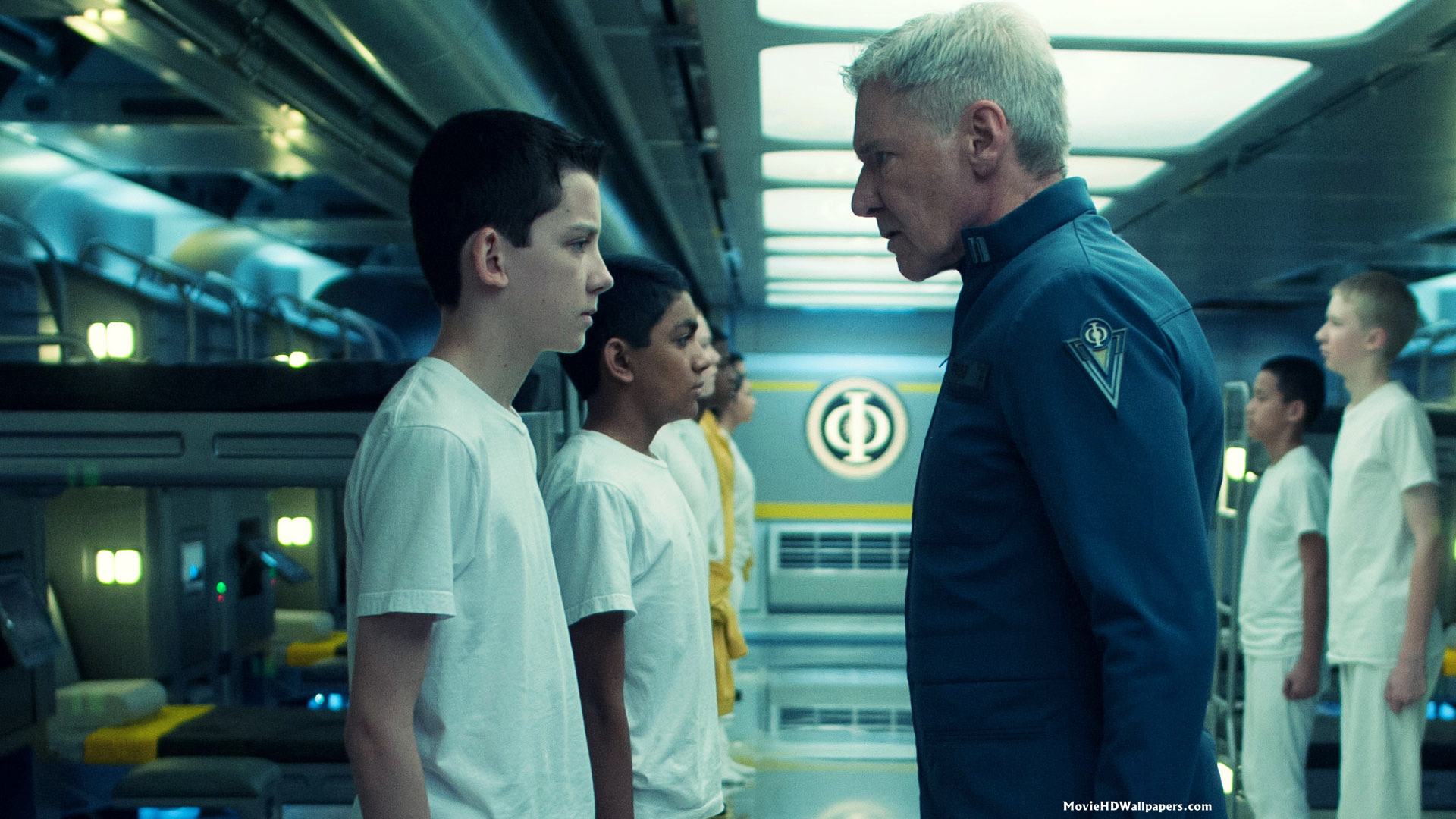
Asa Butterfield and Harrison Ford

Asa Butterfield and Harrison Ford

It’s been about ten years since I’ve read Ender’s Game, but this film seems pretty true to the book that I remember. Obviously the filmmakers can’t be expected to put the entire book into the movie and cuts had to be made, but I feel that they chose those cuts well. In fact, the cuts felt more like time compression. The most obvious instance of this is Battle School. This particular portion of Ender’s training takes up the majority of the book and while it is a major focus of the movie, the section has been clearly shortened. There are only a handful of training battles shown in the movie and—while they are even more fantastic looking than what I had imagined— far fewer battles than I remember from the book. The only real downside to this is that it doesn’t show the same progression of difficulty that is readily apparent in the book.  Any time where there is a repetitive action, like the battles, the time compression comes into play.

The other major cuts revolve around the Mind Game. The game still plays a significant part in the movie, but in the book Ender runs through the game over and over again until he solves a problem, at which point he runs into a new problem and starts the cycle over. By cutting out much of this, movie makers are able to maintain the importance of this plot device without spending too much time on it.

This plays into one of the movie’s strengths:  that of pacing. This is a movie that keeps on moving. At no point did I feel bogged down in obscure details of the story. The plot pushed forward at a brisk pace throughout the movie, developing characters and giving them challenges of ever increasing magnitude. The climax of the movie presents a stunning scenario that would be impossible for anybody but Ender to overcome.

I loved the way this movie looked. The zero g battle room is awesome. I love that because there is no gravity in the battle room the director doesn’t feel obligated to stick with conventional camera angles. It was very refreshing to see these unconventional angles interspersed with the more common shooting style.
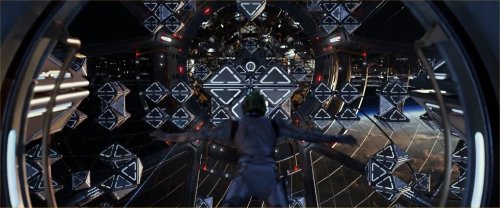
The Battle Room.

The Battle Room.

The other scenes I loved were those in the combat simulations at Command School. All the kids sit in an auditorium with Ender and his senior commanders on an elevated platform and all around them are wonderful looking projections of the ensuing battle simulation. Scenes like this made the movie visually appealing as well as engaging from a plot standpoint.
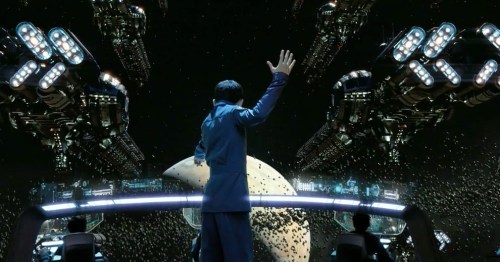
Command School

Command School

Historically, one of the toughest aspects of a film like this is the casting. It’s easy enough to find one or two good kids, but finding almost an entire child cast of this caliber is remarkable. Asa Butterfield does an amazing job as Ender. He provides the right mix of brilliance, empathy, and emotional detachment without being wooden—no easy feat!  It would have been very easy for Ender to come off as merely a bad impersonation of Data from Star Trek: The Next Generation.  Butterfield makes the viewer feel for Ender, by showing emotion when it’s required but not so much that he breaks character.

The supporting cast is also wonderful.  Ender’s sister Valentine, played by Abigail Breslin, provides a welcome bit of warmth.  Where Ender is mostly rational and only slightly warm, Valentine is empathy personified–the trait for which she was dropped from the military selection program. Among the best supporting actors in the film is Moises Arias who plays Bonzo Madrid, one of Ender’s company commanders. Bonzo is a complete control freak and mild sociopath and Arias plays this without being over the top and becoming silly. Even though Bonzo is honestly a little jerk, moviegoers still feel for him because he is just a kid, struggling to achieve his potential and impress those in power over him.

Ender’s Game demonstrates the disturbing nature of child soldiers in dystopian science fiction stories. Although it’s used less frequently than other plot devices, it’s one of the most unsettling, in part because onlookers see those who should be innocent acting with cunning and violent intent. In modern society, the international system has taken great pains to ensure that children like this are not forced to fight, and yet moviegoers find themselves rooting for a child soldier, in the form of Ender.  In the end Ender becomes the supreme commander he was born to be, and the audience is left asking what was the cost to Ender and to themselves as a society. I give Ender’s Game 4.5 Death Stars.


4.5 Death Stars

1 Comment

Filed under Andrew Hales, Movie Reviews, Movies

Editorial | To My Geeky Ladies…

Over the past six months with the blog (has it really been six months?!) I’ve spent quite a bit of time traveling to various geek events and mingling with other geeks in large groups.  I thoroughly enjoy my interactions with my fellow geeks, but there are a few things I want to point out, especially to the ladies of geekdom.  Many geek females complain that they are not taken seriously, or that they are downright degraded by other (often male) geeks.  Unfortunately, a woman has no true power over the choices or responses that others make toward her—only her own reaction.  To make the geek world a better place for herself and other geek women, I say to her, “Respect your physical health; respect your mental health; and respect your appearance.”

Respecting one’s physical health can be tough for a woman whose job AND recreation of choice are pretty stationary.  Both Andrew and I will be the first geeks to tell anyone that we could use a little more exercise a little more often.  Unfortunately, a vibrating X-Box controller is not a substitute for a Shake Weight™.  Many studies have proclaimed the benefits of just half an hour of walking per day to boost energy, metabolism, and even a positive outlook.  It is easy to take some time on a break at work, or perhaps just before or just after—before starting a Star Trek marathon on Netflix.

Looking good doesn’t require conforming to ridiculous standards of female beauty.

Respecting one’s mental health is a little bit more difficult.  Specifically, I often see and hear from geek women who hear negativity and really take it to heart.  They are upset that anyone would feel enough hate to actually say something out loud—and rightfully so.  However, my advice is to let the frustration go.  The only emotions anyone is responsible to change are their own.  Learning to live life happily regardless of what other people think is the first step to true personal freedom.

Lastly, but perhaps most importantly, respect your appearance.  I’m not telling women to starve themselves to be skinny, or wear extensive amounts of makeup, but there is a distinct line between attempting to adhere to silly ideas of female beauty, and just not looking like a slob.  For this, I offer the following tips:

  • Please bathe regularly.  This seems like an understood, but I have been forced to sit next to multiple women who smelled bad enough to put me off my feed for a while.  This is just basic courtesy to others, and also falls under the first category of respecting your physical health.

    I love the sentiment… the color scheme, not so much.

  • Double check those faded t-shirts.  I’m not sure why, but the favored color for t-shirts proclaiming fandom of almost anything is that bizarre camel brown, with dark brown words/pictures (or sometimes the reverse).  Sadly, there are very few people on whom this actually looks good.  Here is a great website for determining which colors will actually compliment your natural skin tones and eye/hair color. 
  • While I’m on the subject of faded t-shirts:  if your clothing has faded from the wash, or is shrunken or stretched with age, it’s time for it to retire.  I have a fabulous shirt with a Lord of the Rings style riddle that I adore, but it is no longer acceptable for public wear.
  • Dress for the occasion.  There is no need to wear a little black dress to a comic convention or trivia night at the local dive.  By the same token, jeans and a t-shirt (although my very favorite outfit) are also not always acceptable forms of dress.  Pajamas are never acceptable for wearing in public.
  • Dress according to your body type.  Certain women will always look good in sheath dresses, but many others look much better in an a-line.  Spend some time getting to know different styles, and how they should be worn.  Unfortunately, all body types are not the same.  Something that looks good on a comic book character or an actress will not necessarily complement every woman’s shape.  Choose the clothing that looks best on you.
  • Never underestimate the power of looking good to change how you feel about yourself and how others treat you.  It isn’t always fair, but it is true.

So why should you respect yourself enough to take care of your physical abilities, mental health, and appearance?  Quite honestly, it is because no one else will do it for you.  As geeks, we tend to focus entirely on cranial capacity—and while I firmly believe that is an incredibly important focus, I also believe that appearance and outlook also matter.  Ladies of Geekdom, take care of yourselves!!  You’ll gain a new appreciation for yourself and others will too.

Leave a comment

Filed under Editorial, Geek Life, Tracy Gronewold