
This week saw an amazing first as the European Space Agency’s Rosetta orbiter successfully landed the Philae probe on the surface of an asteroid, 300 millions miles from Earth. Philae is already providing us with some interesting information. Initially the surface of the comet was thought to be lumpy and potato like, but based on images already sent back, there are far more pronounced features including boulders, craters, and cliffs. These features presented a hazard to the probe as the lander bounced twice after landing, ending up in an area that the mission control hasn’t been able to positively identify (they have a rough idea). Aside from the historic nature of the landing, is also provides us with an amazing opportunity to study a previously unexplored celestial body. Some scientists have even theorized that comets are responsible for bringing water to the newly formed Earth.
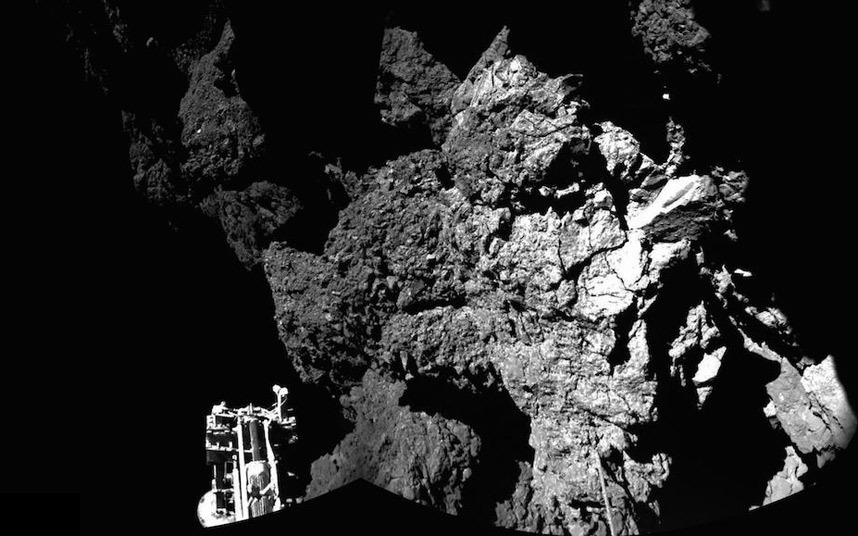
One of several early images sent back from Rosetta and Philae.
If you have some free time, watch some of the mission update videos. Giddy European scientists are amusing as hell.
A new permanent exhibit opens up this weekend at the Virginia Air and Space Center in Hampton, Virginia. The museum recently acquired a Gemini test module, had it restored and re-painted and added to its collection on display in the museum. They then had the Mercury 14 Spacecraft moved from its long-time home on the second floor of the museum to a custom made stand on the first floor next to the Apollo 12 command module and the Orion flight test module.


Other museums have completed their collections with reproduction models, but this makes the Center the only museum into the world that currently has all four generations of the spacecraft on display together at the same time with actual capsules used in the missions.
Consider that I’m on the internet all the time (even when my boss says to stay off it), I do a lot of my shopping online. I’m also sure that I’m not the only one to notice that prices seem to fluctuate depending on what device I’m using and if I’ve bothered to clear my browser history recently or not. As it turns out, a study by researchers at Northeastern have come to the same conclusion, though they are obviously supported by fact and not anecdote. By trying various browsers and devices on various online retailers (Amazon and Ebay were excluded due to their complex nature) the researchers discovered that some price variation did exist on otherwise identical products. Not only that, but the source of the variations are often not as clear cut as was originally thought. The discounts are not necessarily linked to simple browser history, browser or device, and in some cases the discount source couldn’t be readily identified. At least one company, Travelocity, could explain their differences, informing the researchers that they often offer mobile only prices for flights. This particular discount was originally identified as being only iPhone related, but is appearently available on any mobile platform (the researchers later acknowledged this fact).
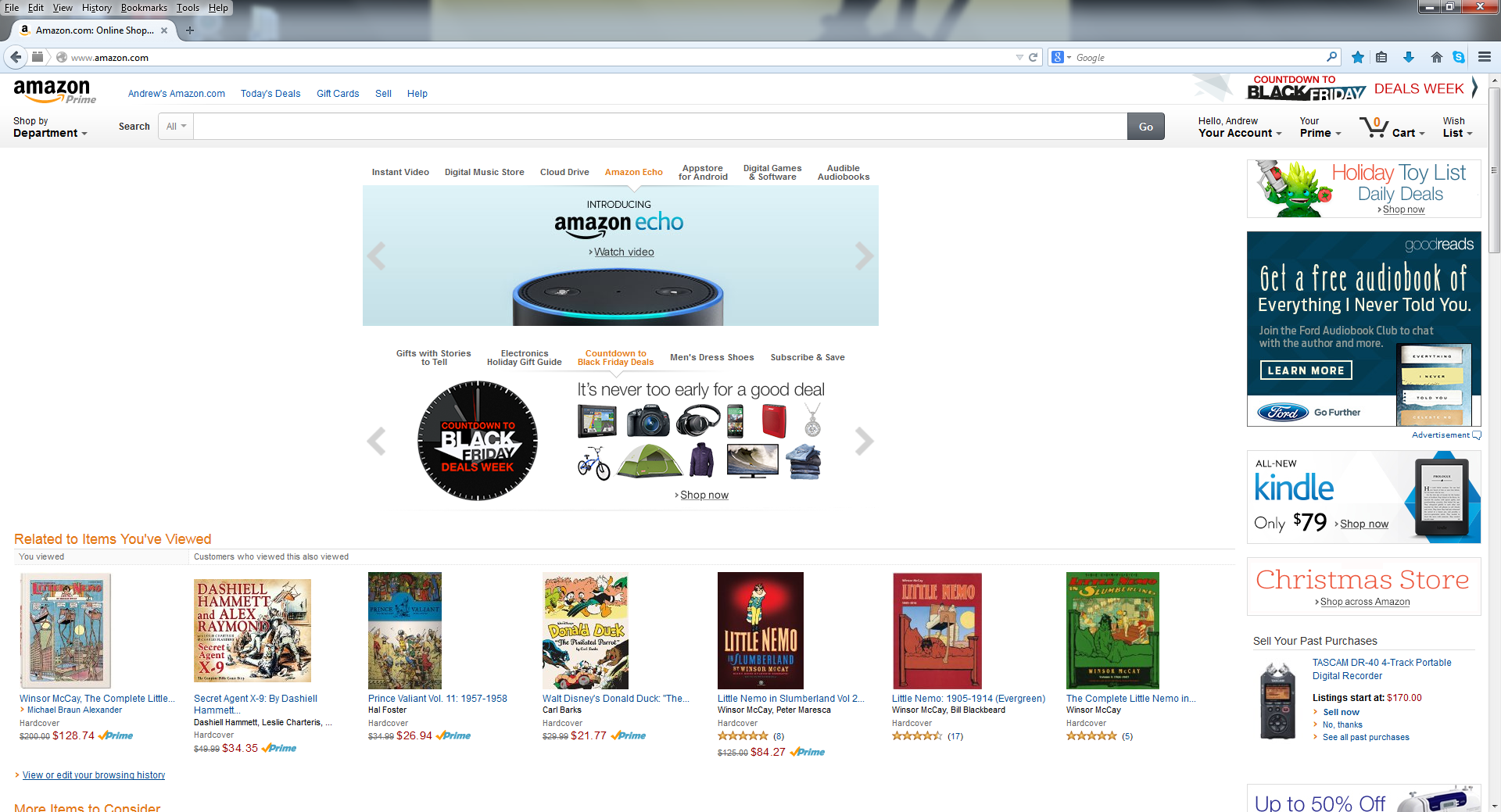
Where I do most of my shopping.
And here I thought that online shopping was easier than regular shopping. At least I still don’t have to put on pants.


 Therefore I Geek